Designing for Developing Hazards: Lessons from the Derrimut Crane Collapse

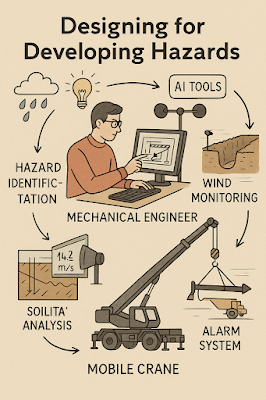
Designing for Developing Hazards

Crane accidents are among the most visible reminders of the risks inherent in construction. The collapse of a crane at a data centre site in Derrimut, Melbourne, brought attention once again to the vulnerability of temporary lifting structures. While formal investigations are still underway, and no conclusions should be drawn prematurely, the event provides a valuable opportunity for reflection within the engineering community.

This article considers the collapse not as an isolated failure but as a case study in hazard identification. In particular, it highlights how mechanical engineers must adapt from a static, design-phase view of risk to a dynamic, real-time approach to hazard monitoring. Wind, soil stability, and load conditions are well-known hazards. But with modern tools โ€” including LiDAR scanning for obstacle detection โ€” engineers can move toward a future where developing hazards are continuously tracked, anticipated, and controlled.

From Hazard Identification to Live Hazard Monitoring

Hazard identification has traditionally been a design-phase process: engineers anticipate risks, apply safety factors, and create conservative margins. This remains essential. Yet the Derrimut collapse illustrates the limits of a static model in a dynamic environment.

Cranes are exposed to evolving hazards:

  • Wind gusts that change minute by minute.
  • Soil stability that shifts with rainfall, excavation, or groundwater.
  • Obstacles such as power lines or nearby structures, which can create cascading risks if struck.
  • Load dynamics, including swinging or sudden movement.

What is needed is a transition from hazard identification to hazard monitoring: a continuous loop where design assumptions are validated against real-time data, and where developing risks are detected before they become failures.

Wind Hazards: Predicting the Unpredictable

Wind is a leading cause of crane collapses. Engineers know the mathematics: pressure rises with the square of velocity. A 50 km/h gust exerts twice the force of a 35 km/h breeze.

Most cranes today are fitted with anemometers and alarms, but these are often basic: a single reading at a single point, with alarms sounding when preset thresholds are exceeded. This approach can miss:

  • Local gust variability along a long jib.
  • Interaction with crane orientation (wind hitting the broadside is more critical than aligned wind).
  • Forecasted conditions that could deteriorate within minutes.

Next-generation wind monitoring could include:

  • Multi-point sensor arrays on cranes.
  • Integration with Bureau of Meteorology gust forecasts.
  • AI models predicting when risk thresholds will be exceeded, not just reporting when they are crossed.
  • Automatic crane repositioning to minimise wind exposure.

This transforms alarms from reactive to predictive โ€” the difference between warning after a hazard is present and anticipating before it materialises.


Soil Hazards: Stability Under Load

Ground conditions are another silent but critical hazard. Outriggers may impose hundreds of kilonewtons on pads, meaning even small soil weaknesses can lead to tilting or overturning.

Engineering practice already includes soil investigations: boreholes, CPT, SPT, and FEA models. But these tests capture conditions before installation, not necessarily during operation. Soil strength can change due to rainfall, groundwater shifts, or nearby excavation.

Live soil monitoring can be achieved with:

  • Load cells under mats to track ground reactions.
  • Settlement gauges to detect tilt.
  • Piezometers for pore pressure during rain events.
  • Integrated warnings when ground resistance trends downward.

This approach acknowledges soil as a living hazard that changes daily.

LiDAR and Obstacle Detection: Power Lines and Proximity Hazards

One striking feature of the Derrimut collapse was the craneโ€™s boom striking power lines. Contact with utilities is a recurrent hazard in crane operations worldwide. While operators are trained to maintain exclusion zones, in practice visibility, fatigue, or unexpected boom movement can still lead to contact.

LiDAR scanning offers a solution.

  • How it works: LiDAR (Light Detection and Ranging) emits laser pulses to map surroundings in 3D with centimetre accuracy. Mounted on a crane, it can create a live digital map of nearby obstacles.
  • Application in cranes:
    • Detecting and mapping power lines, buildings, or scaffolding in the lift path.
    • Setting proximity alarms when a boom, hook, or load approaches a defined clearance.
    • Combining with wind data to predict if gusts could push the load into restricted zones.

In aviation, LiDAR and radar-based systems are standard for obstacle detection. In construction, adoption is patchy. Yet the technology exists, is cost-effective, and could dramatically reduce risks of contact with hazards like live power lines.

LiDARโ€™s strength lies not only in static mapping but in detecting movement โ€” for example, when a suspended load begins to swing toward a power line due to a gust. This is a quintessential developing hazard, one that static design could never fully capture.

Integrated Hazard Dashboards

Wind, soil, and LiDAR obstacle detection all provide valuable data. But their true power lies in integration. Imagine a crane operatorโ€™s cabin equipped with a single dashboard displaying:

  • Wind speeds and gust forecasts, colour-coded for risk.
  • Soil reaction forces under each outrigger, with alerts if settlement is trending.
  • LiDAR mapping of nearby structures and power lines, with real-time clearance zones.
  • Predictive risk models showing probability of instability or contact over the next 30 minutes.

This integration mirrors aviationโ€™s cockpit: multiple inputs fused into actionable guidance. For cranes, such systems could shift the operatorโ€™s role from reactive decision-maker to proactive risk manager.


AI as a Predictive Partner

Artificial Intelligence has a natural role in hazard monitoring:

  • Sensor fusion: combining wind, soil, and LiDAR inputs into coherent risk profiles.
  • Prediction: learning from past crane incidents to forecast when risks are likely to escalate.
  • Decision support: providing operators with clear options (โ€œsafe to continue lift for 20 minutesโ€ / โ€œhalt operations โ€” clearance margin < 1mโ€).

The challenge is balance. AI should not replace human oversight, but augment it. Over-reliance could create new vulnerabilities if operators become complacent. The design challenge is to build AI into systems that support human judgment rather than substitute for it.


Ethics and Engineering Responsibility

The Derrimut collapse underscores the ethical responsibility of mechanical engineers. Hazard identification is not just a design requirement; it is a matter of public safety. The profession has a duty to anticipate, detect, and control risks wherever possible.

The tools now exist to monitor developing hazards โ€” wind sensors, soil gauges, LiDAR scanners, and AI dashboards. If lives and infrastructure can be protected through wider adoption of these tools, then the question becomes one of responsibility: should they be optional, or mandatory?

Open Questions for the Future

  1. Would integrated live monitoring have reduced the risks at Derrimut?
  2. Should all cranes be fitted with LiDAR obstacle detection as standard?
  3. Do we already have enough technology, but lack regulation and enforcement?
  4. What role should AI play in balancing predictive insight with operator autonomy?

The Derrimut incident remains under investigation. No conclusions can be drawn about its specific cause until findings are published. Yet as a case study, it illustrates the broader point that hazards in crane operations are dynamic. Wind, soil, obstacles, and loads evolve minute by minute.

Mechanical engineers have the tools โ€” wind sensors, soil monitors, LiDAR scanners, integrated dashboards, and AI โ€” to detect these developing hazards. The challenge is to move from a culture of static design assumptions to one of continuous hazard monitoring.

The ultimate professional question is this: If aviation can integrate multiple systems to monitor and predict hazards, why canโ€™t construction do the same for cranes? And if we can, how soon will we accept the ethical responsibility to make it standard?

References and Further Reading

  • ISO 4301 / AS 1418 โ€” Crane standards covering stability and wind.
  • ISO 12480-1:2003 โ€” Safe use of cranes; includes environmental hazard monitoring.
  • WorkSafe Victoria Guidance Notes โ€” Crane safety management.
  • Holickรฝ & Retief (2017) โ€” Probabilistic treatment of wind action in structural design.
  • Nguyen et al. (2020) โ€” Real-time monitoring of crane foundation response under variable soil conditions.
  • Liebherr LICCON โ€” Example of integrated load and geometry monitoring.
  • FAA LLWAS โ€” Aviationโ€™s real-time wind shear alert system, model for construction.
  • Recent research in LiDAR obstacle detection (e.g., IEEE Transactions on Intelligent Transportation Systems) โ€” showing LiDARโ€™s potential in complex environments.

Hamilton By Design logo displayed on a blue tilted rectangle with a grey gradient background
3D LiDAR scanning and 3D modelling service button โ€” laser scanner capturing a point cloud for engineering and CAD modelling
Mechanical engineering services

Our clients:

Name
Would you like us to arrange a phone consultation for you?
Address

Structural Drafting

3D CAD Modelling Australia service banner for Hamilton By Design
Australian Drafting logo featuring bold white text reading "Australian Drafting" centred on a blue rounded rectangle background.
Engineering Governance title graphic featuring bold white text reading "Engineering Governance" centred on a blue rounded rectangle background.
Mechanical, Structural & Pipework Drafting service banner by Hamilton By Design featuring white text on a blue background.
Mechanical engineering services
Blue rounded button with the text โ€œSolidWorks Designโ€ in white.
Finite Element Analysis (FEA) engineering simulation button
3D LiDAR Scanning Darwin for engineering surveys, laser scanning, reality capture and point cloud modelling services
3D LiDAR Scanning Australia engineering services for laser scanning, reality capture, scan-to-CAD, Scan-to-BIM and as-built documentation across Australia
3D LiDAR scanning services on the Central Coast providing engineering-grade laser scanning, point cloud capture, scan-to-CAD modelling and industrial reality capture for infrastructure and industrial projects.
3D LiDAR Scanning Perth for engineering surveys, laser scanning, reality capture and point cloud modelling services
3D LiDAR Scanning Sydney for engineering surveys, laser scanning, reality capture and point cloud modelling services
3D LiDAR Scanning Brisbane for engineering surveys, laser scanning, reality capture and point cloud modelling services
3D LiDAR Scanning Canberra for engineering surveys, laser scanning, reality capture and point cloud modelling services
3D LiDAR Scanning Newcastle for engineering surveys, laser scanning, reality capture and point cloud modelling services
3D LiDAR Scanning Adelaide for engineering surveys, laser scanning, reality capture and point cloud modelling services

Mechanical Drafting

3D Laser Scanning

Mechanical Engineering

Consulting Engineers

Elevating Engineering Precision with 3D CAD, Laser Scanning & Simulation

Elevating Engineering Precision: 3D CAD Design, Laser Scanning, and Simulation for Custom Steel Fabrication


In modern engineering, accuracy, efficiency, and adaptability are not just desiredโ€”they are essential. At Hamilton By Design, we combine cutting-edge tools like 3D CAD design, 3D laser scanning, and SolidWorks FEA Simulation with practical expertise in custom steel fabrication to deliver intelligent, end-to-end solutions for complex engineering projects.

From detailed CAD Modelling to field-accurate Faro Scanning, our consultancy supports Australian industries with precise, timely, and cost-effective design solutions.

The Role of 3D CAD Design in Modern Engineering

3D CAD design (Computer-Aided Design) forms the foundation of most modern engineering workflows. It transforms initial concepts into detailed digital models, enabling design validation, collaboration, and modification long before anything is physically built.

Using tools like SolidWorks, our experienced 3D CAD designers create accurate representations of components, assemblies, and entire systems. This not only reduces costly errors during fabrication but also allows clients to visualise and interact with their product in a virtual environment.

With 3D CAD design at the core, we help clients navigate engineering challengesโ€”from product development to mechanical infrastructureโ€”faster and with greater confidence.


3D Modelling: Bridging Concept and Construction

Closely integrated with CAD design is 3D modelling, which allows designers to create digital prototypes of physical objects. At Hamilton By Design, 3D modelling is used not just for form but also for function. Our models include precise dimensions, material properties, tolerances, and interaction points.

Whether itโ€™s reverse engineering an existing plant structure or designing custom brackets for a conveyor system, our 3D modelling ensures high fidelity and interoperability across platforms.


The Power of 3D Laser Scanning for Engineering Accuracy

To capture as-built environments with unmatched accuracy, we use 3D laser scan for engineering projects of all sizes. Leveraging Faro scanning technology, we generate detailed point clouds that map real-world environments down to millimetre accuracy.

This Faro scan data is then converted into actionable geometry for further CAD modelling or simulation. Itโ€™s particularly valuable in retrofit, maintenance, or upgrade projects, where existing site data is often incomplete or outdated.

Whether youโ€™re updating mechanical systems in a processing plant or ensuring compliance in a structural audit, 3D laser scanning delivers the reliable data you need for precise engineering decisions.


From Scan to Simulation: Enhancing Designs with SolidWorks FEA

After creating a digital model, itโ€™s crucial to understand how it will perform under real-world conditions. Thatโ€™s where SolidWorks FEA simulation comes in.

SolidWorks Simulation allows our team to perform finite element analysis (FEA) on assemblies, evaluating factors such as stress, strain, fatigue, and thermal distribution. By integrating FEA into the design process, we validate designs before they are fabricatedโ€”saving both time and material costs.

This proactive approach is particularly useful in custom steel fabrication, where load-bearing components must meet stringent safety and performance criteria.


CAD Modelling in Custom Steel Fabrication

Custom steel fabrication is both an art and a science. It requires a deep understanding of materials, tolerances, and manufacturing techniques. At Hamilton By Design, we combine advanced CAD modelling with practical fabrication experience to create components that meet your exact requirements.

Whether you need custom brackets, enclosures, chutes, or full-scale structural assemblies, our models are production-ready and tailored to your fabrication process. We provide DXFs, laser-cutting files, and BOMs that integrate seamlessly with your shop floor operations.


Why Choose a 3D CAD Designer?

A skilled 3D CAD designer does more than just draw. They anticipate fitment issues, consider manufacturing constraints, and collaborate across disciplines to create practical, buildable designs.

At Hamilton By Design, our team brings over a decade of experience across heavy industry, defence, mining, and manufacturing. We understand the nuances of real-world engineering and tailor our CAD services to each project’s unique needs.


Integrating Faro Scanning with SolidWorks

One of our key differentiators is the seamless integration of Faro scan data into SolidWorks. This workflow allows us to:

  • Overlay scanned data onto CAD designs

  • Identify deviations between as-built and as-designed models

  • Rapidly develop retrofit solutions with accurate field measurements

  • Conduct clash detection and ensure proper clearances

This end-to-end capability reduces rework, shortens project timelines, and increases overall design quality.


Applications Across Industry

Our services benefit a broad range of industries, including:

  • Mining & Processing โ€“ Reverse engineering plant infrastructure, scanning for shutdown planning, custom chute design

  • Manufacturing โ€“ Tooling, jigs, and production line modifications

  • Defence โ€“ CAD design and simulation for retrofit and upgrade works

  • Construction โ€“ Structural steel design and site validation

Whether you’re fabricating a single part or overseeing a multi-million-dollar infrastructure upgrade, our tools and experience help you deliver with confidence.


The Difference

At Hamilton By Design, we donโ€™t just deliver drawingsโ€”we provide engineering certainty. By combining the precision of 3D CAD, the power of SolidWorks simulation, and the real-world accuracy of Faro scanning, we help clients design, assess, and fabricate with confidence.

If you’re looking for an Australian mechanical engineering consultancy that delivers intelligent design, detailed modelling, and practical support for custom steel fabrication projects, we’re ready to help.


Letโ€™s Work Together

Visit www.hamiltonbydesign.com.au to learn more or contact us to discuss how we can support your next engineering challenge.

3D LiDAR scanning and 3D modelling service button โ€” laser scanner capturing a point cloud for engineering and CAD modelling
Mechanical engineering services

Our Clients:

Name
Would you like us to arrange a phone consultation for you?
Address
Finite Element Analysis (FEA) engineering simulation button
Mechanical engineering services

Pipework Drafting

Pipework Drafting

The team at Hamilton By Design Provides a pipework drafting service. In general terms our pipework 3d models are derived from 3D Point cloud scans.

If it is the case where you do not have a 3D point cloud scan, we can create one for you we can also develop 3D pipework route from tradition 2D drawings and or PID information.

From our 3D models our visualization tools offer the possibility of feasibility studies that can be created along with design reviews for fit functionality and safety.

The team at Hamilton By Design have been creating pipework design proposals with the option to progressing to fully detailed spool drawings once design approval has been received. For more than 20 years our team also offer engineering design drafting and detailing services to the mining, steelmaking, construction and infrastructure sectors across Australia.

With the latest in three dimensional parametric and virtual imagining technology in-house our forte has been derived to offer cost effective solutions not only in initial construction yet non going operational cost.

In terms of Pipework Drafting our services include:`

  • 2D / 3D Piping visualization
  • 2D spool manufacturing Drawings
  • Mechanical Design Drafting
  • Structural Design Drafting
  • Back drafting As Built
  • Fabrication shop drawings
  • Drafting Checking
  • Cad and Solid Modelling – CAD Conversion
  • Feasibility & Safety Studies
Hamilton By Design logo displayed on a blue tilted rectangle with a grey gradient background
3D LiDAR scanning and 3D modelling service button โ€” laser scanner capturing a point cloud for engineering and CAD modelling
Mechanical engineering services

Our Clients:
Name
Would you like us to arrange a phone consultation for you?
Address
Finite Element Analysis (FEA) engineering simulation button
Mechanical engineering services

Structural Drafting Australia

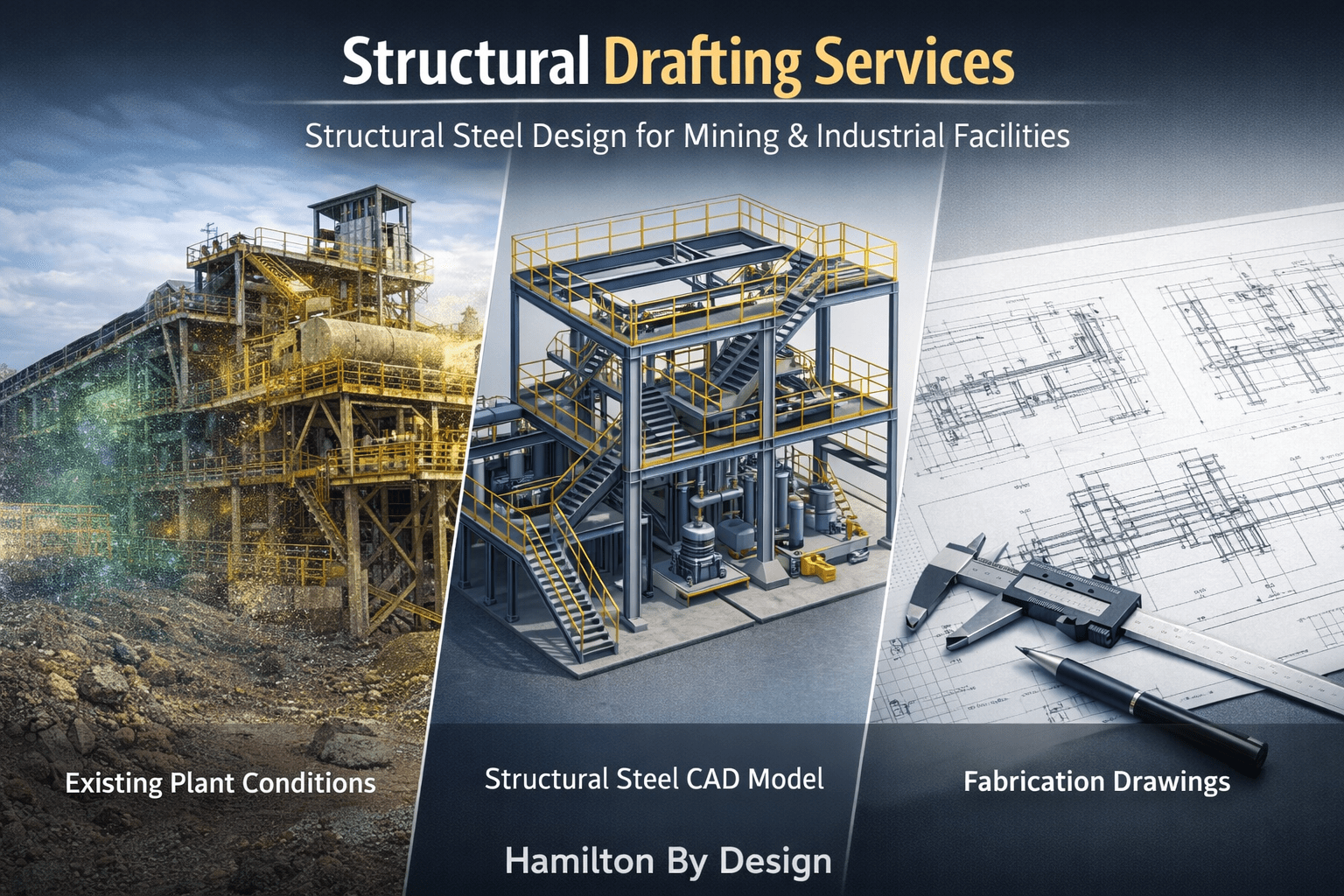
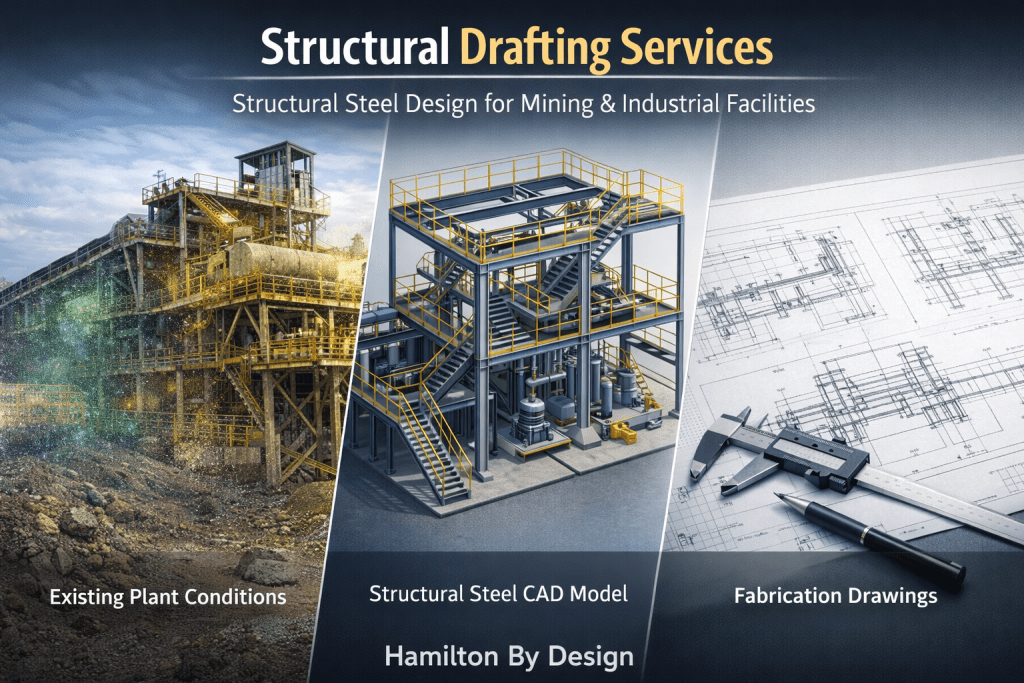
Structural drafting services workflow showing mining plant infrastructure, CAD structural steel model and fabrication drawings.

Structural Drafting Services

Structural Steel Detailing for Industrial and Mining Projects

Hamilton By Design provides structural drafting services for mining, industrial, and infrastructure projects across Australia. Our team prepares clear and accurate structural drawings that support fabrication, installation, and plant upgrades.

Many industrial sites require modifications to existing structures to support new equipment, conveyors, pipework systems, and maintenance access platforms. Our drafting services ensure these changes are documented with precise engineering drawings that contractors and fabricators can confidently work from.


Structural Steel Drafting for Industrial Facilities

Structural steel plays a critical role in most industrial plants. Hamilton By Design supports projects requiring structural drafting for:

  • Equipment support structures
  • Conveyor and materials handling structures
  • Pipework support frames
  • Access platforms and walkways
  • Plant structural modifications

Our drafting workflow ensures that structural designs integrate correctly with existing infrastructure, reducing installation issues and rework during construction.


Structural drafting services workflow showing mining plant infrastructure, CAD structural steel model and fabrication drawings.
3D LiDAR scanning and 3D modelling service button โ€” laser scanner capturing a point cloud for engineering and CAD modelling
Mechanical engineering services

Capturing Existing Conditions Before Drafting

One of the challenges in structural modifications is understanding the existing plant conditions before design begins. Hamilton By Design uses engineering-grade 3D laser scanning to capture accurate site geometry.

Laser scanning allows us to produce highly accurate point cloud data that can be used to develop detailed structural models and drawings.

Learn more about our scanning services:
Engineering-grade laser scanning for mining and industrial plants

Engineering-Grade 3D Laser Scanning Across Australia

3D laser scanning services across Australia

Capturing existing conditions before plant upgrades


From Point Cloud to Engineering Drawings

After scanning, point cloud data can be converted into accurate CAD models and structural layouts. This workflow allows engineers and fabricators to understand how new structural steel will interact with existing plant equipment.

More information about this workflow can be found here:

Supporting Mining and Industrial Projects

Hamilton By Design regularly supports projects including:

  • Mining plant upgrades
  • Processing plant modifications
  • Structural upgrades during shutdowns
  • Materials handling infrastructure

These projects often occur during limited shutdown windows where accurate drawings are essential for efficient installation.

You can learn more about how laser scanning supports shutdown projects here:


Structural Drafting Services Across Australia

Hamilton By Design supports engineering teams, contractors, and plant operators requiring structural drafting services for industrial environments. Our services combine practical engineering experience with modern digital capture technologies to deliver reliable structural documentation.

Learn more about our broader engineering services here:

Talk to Us – Contact Us


Name
Would you like us to arrange a phone consultation for you?
Address
Mechanical Engineers Structural Engineers
Name
Would you like us to arrange a phone consultation for you?
Address
3D CAD Modelling Australia service banner for Hamilton By Design
Australian Drafting logo featuring bold white text reading "Australian Drafting" centred on a blue rounded rectangle background.
Engineering Governance title graphic featuring bold white text reading "Engineering Governance" centred on a blue rounded rectangle background.
Mechanical, Structural & Pipework Drafting service banner by Hamilton By Design featuring white text on a blue background.
Mechanical engineering services
Blue rounded button with the text โ€œSolidWorks Designโ€ in white.
Finite Element Analysis (FEA) engineering simulation button
3D LiDAR Scanning Darwin for engineering surveys, laser scanning, reality capture and point cloud modelling services
3D LiDAR Scanning Australia engineering services for laser scanning, reality capture, scan-to-CAD, Scan-to-BIM and as-built documentation across Australia
3D LiDAR scanning services on the Central Coast providing engineering-grade laser scanning, point cloud capture, scan-to-CAD modelling and industrial reality capture for infrastructure and industrial projects.
3D LiDAR Scanning Perth for engineering surveys, laser scanning, reality capture and point cloud modelling services
3D LiDAR Scanning Sydney for engineering surveys, laser scanning, reality capture and point cloud modelling services
3D LiDAR Scanning Brisbane for engineering surveys, laser scanning, reality capture and point cloud modelling services
3D LiDAR Scanning Canberra for engineering surveys, laser scanning, reality capture and point cloud modelling services
3D LiDAR Scanning Newcastle for engineering surveys, laser scanning, reality capture and point cloud modelling services
3D LiDAR Scanning Adelaide for engineering surveys, laser scanning, reality capture and point cloud modelling services

Drafting

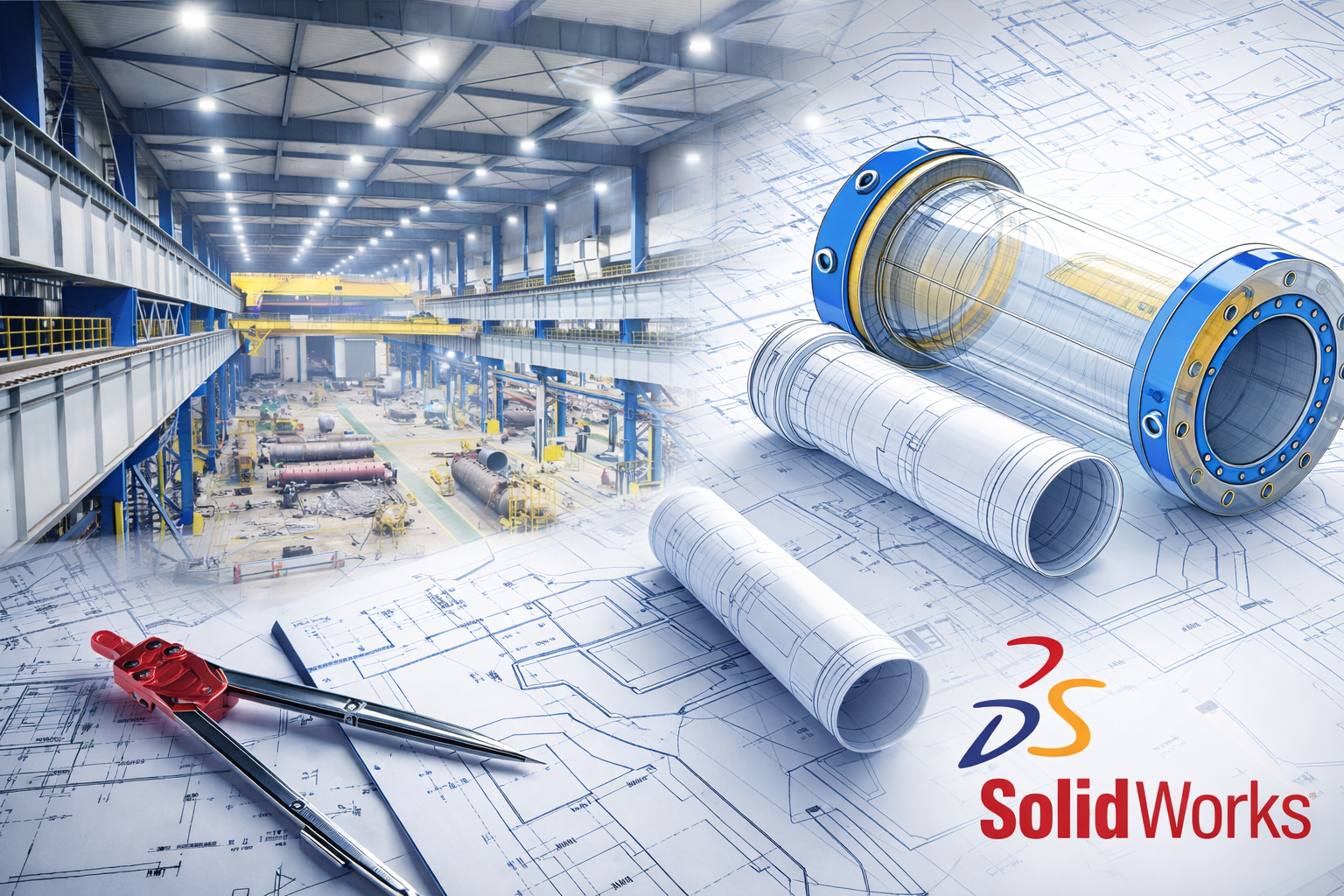
Composite industrial engineering image showing a fabrication workshop, technical drawings, 3D pipe models and SolidWorks branding.

Mechanical & Structural Drafting Services

Precision Drafting & LiDAR Scanning Services

At Hamilton By Design, we deliver high-quality mechanical and structural drafting services backed by engineering expertise and integrated 3D LiDAR scanning. Our team produces technically accurate, standards-compliant documentation that supports every stage of your project โ€” from initial concept and detailed design through to fabrication and construction.

Whether youโ€™re detailing complex machinery, developing steel structures, or capturing existing site conditions with advanced LiDAR scanning, our drafting outputs are engineered for clarity, accuracy, and reliable build-ready execution.

Why Work With Us

Accurate drafting is fundamental to reducing errors, improving communication, and keeping your project on schedule. Our drafting solutions help you:

  • Create fabrication-ready drawings compliant with Australian standards (e.g., AS 1100, AS 4100, AS 4041).
  • Enhance collaboration between design, engineering, and fabrication teams.
  • Minimise delays, costly rework, and onsite clashes.
  • Simplify procurement, workshop fabrication, and site installation.
  • Incorporate real-world site data using precise 3D LiDAR scans.

What We Produce

Structural Drafting: Detailed plans for steel frameworks, foundations, platforms, and industrial structures, prepared for compliance and constructability. Key outputs include structural layouts, foundation details, connection drawings, and shop drawings for fabricators.

Mechanical Drafting: Comprehensive documentation for plant layouts, machinery, piping systems, and assemblies. Deliverables include detailed part and assembly drawings, P&IDs, equipment layouts, bills of materials, and support for pressure piping and HVAC systems.

Detail Drafting & As-Built Capture

Our detail drafting services define every component clearly and accurately, ready for fabrication. By integrating high-accuracy 3D LiDAR scanning, we capture existing site geometry to support retrofit design, clash detection, reverse engineering, digital twin development, and upgrade planning.

Tools & Technologies

We use industry-standard software to deliver precise, efficient outcomes, including:

  • AutoCAD
  • SolidWorks
  • Inventor
  • FARO/Scene point cloud tools
  • Navisworks for coordination and review

Industries We Support

Our drafting and scanning services help across multiple sectors, such as:

  • Mining โ€“ structural platforms, conveyors, processing plant layouts.
  • Construction โ€“ steel detailing, infrastructure documentation.
  • Manufacturing โ€“ custom machinery and fabrication documentation.

Our clients

Precision Drafting Solutions by Hamilton By Design


Hamilton By Design logo displayed on a blue tilted rectangle with a grey gradient background
3D LiDAR scanning and 3D modelling service button โ€” laser scanner capturing a point cloud for engineering and CAD modelling
Mechanical engineering services

Name
Would you like us to arrange a phone consultation for you?
Address
Finite Element Analysis (FEA) engineering simulation button
Mechanical engineering services