Mechanical Design Consultants Broken Hill โ€“ Engineering for Mining, Materials Handling and Industrial Durability

Mechanical Design Consultants Broken Hill banner featuring mining conveyor system, chute transfers and governed engineering workflow.

Mechanical Design Consultants Broken Hill | Mining & Industrial Engineering

Broken Hill is more than an iconic Australian mining town โ€” itโ€™s a living industrial environment where mechanical design means engineering solutions that withstand harsh climate, challenging site conditions and highly specialised plant requirements.

At Hamilton By Design, we provide Mechanical Design Consultants Broken Hill services that go beyond drafting. We deliver practical engineering, fabrication-ready documentation and on-site validation for projects tied to mining, materials handling, industrial process systems and structural upgrades throughout the region.
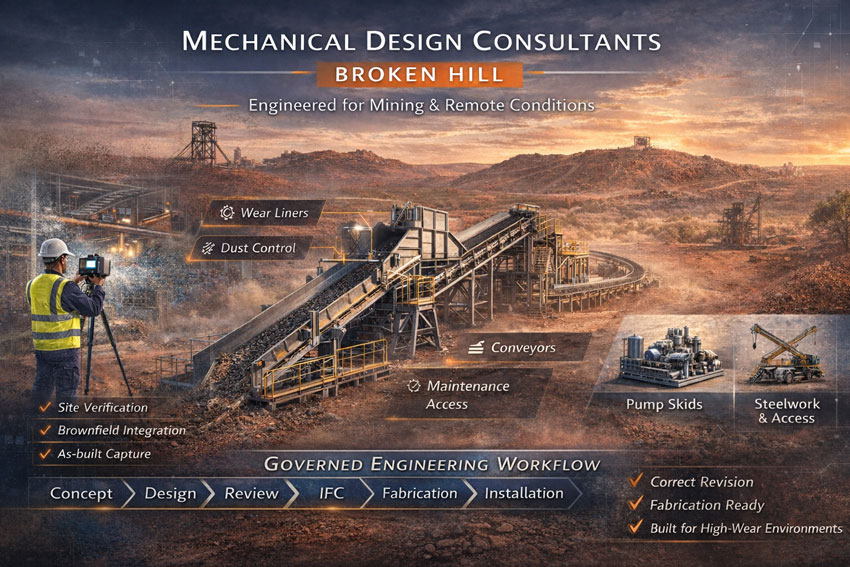

Broken Hill mining mechanical engineering visual with site verification, conveyors, pump skids and steelwork design.

Why Mechanical Design in Broken Hill Is Unique

Broken Hillโ€™s heritage and industrial character make it unlike typical metropolitan engineering contexts. Key factors influencing mechanical design here include:

Mining Legacy and Heavy Industry
Broken Hillโ€™s economy is centred on mining โ€” zinc, lead, silver and associated concentrates. Mechanical design solutions must integrate with existing plant infrastructure, high wear environments and heavy materials handling.

Harsh Climate Conditions
Extreme summer heat, dusty conditions and significant thermal expansion cycles impact equipment life and material performance. Engineering design must account for thermal stresses, corrosion resistance and maintainability over extended asset life.

Remote Logistics and Cost Sensitivity
Because Broken Hill is distant from major fabrication centres, rework and revision errors are expensive in both time and cost. Mechanical design must be right the first time with robust documentation and controlled revision systems.


Mechanical Design Services Tailored to Broken Hill Industry

Hamilton By Design provides a range of mechanical design consulting services that support Broken Hillโ€™s key industrial and mining projects.


Chute Design & Transfer Systems

Material flow equipment such as chutes and transfer points are critical in mining operations. We design and optimise:

  • Rock and ore chutes
  • Dust-controlโ€‰feed transfers
  • Wear-liner selection and replaceable panels
  • Structural support interfaces

Our designs minimise plugging, reduce abrasion wear and improve operational reliability within dusty and high-impact environments.


Conveyor Systems

Conveyors move heavy materials across site, often over extended distances and challenging terrain. Design considerations we incorporate include:

  • Conveyor frame layout and structural routing
  • Loading and take-up systems
  • Belt alignment and tensioning
  • Access platforms and maintenance walkways
  • Integration with processing plant interfaces

Our designs are 3D modelled, clash-checked and documented for first-time fabrication and installation.


Pump Skids and Process Mechanical

Hydraulic systems and processing modules require precise mechanical design, especially in mobile or modular mining applications:

  • Pump skid engineering
  • Piping layout and support design
  • Equipment anchoring and vibration isolation
  • Corrosion protection in abrasive or corrosive environments

We produce fabrication-ready documentation and coordinated layouts that fit site constraints and satisfy engineering governance.


Steelwork, Cranes and Structural Interfaces

Heavy steelwork and lifting systems are common in Broken Hill facilities. Our services include:

  • Structural support and lifting frame design
  • Workshop steel detailing
  • Light crane and jib crane integration
  • Lift points, access platforms and walkways
  • Compliance with Australian steelwork and crane standards

Whether upgrading existing infrastructure or designing new installations, our mechanical design integrates structure and mechanical integrity.


Brownfield Engineering and On-Site Validation

Many Broken Hill projects occur in live facilities with legacy equipment and tight access constraints. Hamilton By Design uses verification methods such as laser scanning and measured site capture to reduce design assumptions and ensure fit-for-site outcomes.

By combining 3D modelling with real-world site conditions, we eliminate costly guesswork and minimise installation revisions.


Governance and Documentation that Reduces Risk

High freight costs, remote fabrication and limited on-site rework options mean that mechanical design documentation must be perfectly controlled. We deliver:

  • Revision-controlled issue states (Concept โ†’ Design โ†’ Review โ†’ IFC)
  • Clear markups and revision histories
  • Digital engineering workflows
  • Maintainability-centred design

This structured approach improves contractor alignment, reduces RFIs and lowers risk across the project lifecycle.


Supporting Mining and Industrial Clients in Broken Hill

From conveyor upgrades to chute optimisation, pump skid engineering to structural crane work, Hamilton By Design applies disciplined mechanical design that solves real Broken Hill problems.

We work with:

  • Mining operations and concentrator plants
  • Materials handling facilities
  • Industrial process upgrades
  • Remote site mechanical installations

Our designs are engineered for durability, constructability and long-term performance.


Hamilton By Design logo displayed on a blue tilted rectangle with a grey gradient background
3D LiDAR scanning and 3D modelling service button โ€” laser scanner capturing a point cloud for engineering and CAD modelling
Mechanical engineering services

Mechanical Design Consultants Broken Hill โ€“ Letโ€™s Talk

If your project in Broken Hill or regional NSW requires experienced mechanical design consulting โ€” whether itโ€™s conveyors, chutes, steelwork, process modules or structural interfaces โ€” Hamilton By Design is ready to support you with practical engineering that works on site.

Contact us today to discuss your mechanical design needs and get solutions that are precise, controlled and ready to build.
Name
Would you like us to arrange a phone consultation for you?
Address

3D CAD Modelling Australia service banner for Hamilton By Design

3D Laser Scanning in Parramatta: Safer Conveyor Design with Engineering-Grade Accuracy

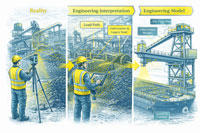
Engineering-grade LiDAR scanning of a brownfield industrial asset, showing the progression from site capture and point cloud interpretation to a fabrication-ready engineering model.

3D Laser Scanning for Conveyor Design & Safe Engineering in Parramatta

Parramatta continues to grow as a major industrial and infrastructure hub for Western Sydney. With ageing plant, frequent upgrades, and tighter safety expectations, many facilities are now turning to engineering-grade 3D laser scanning to improve the way conveyor systems and material handling equipment are designed, modified, and maintained.

At Hamilton By Design, we use high-accuracy LiDAR scanning to capture existing conditions and convert them into precise 3D models that engineers, designers, and maintenance teams can rely on โ€” before anyone picks up a spanner or starts cutting steel.

Why Conveyor Systems Are High-Risk Assets

Conveyors are involved in a significant number of serious workplace incidents across Australia. Common contributors include:

  • Inadequate guarding and access control
  • Poor visibility of nip points and transfer zones
  • Modifications made without updated drawings
  • Space constraints forcing unsafe maintenance practices

In many older facilities around Parramatta, conveyors have been extended, rerouted, or repaired multiple times over decades โ€” often without accurate as-built documentation. This creates real risk when new upgrades or safety improvements are planned.

Without reliable spatial data, design decisions are often made on assumptions, outdated drawings, or rough site measurements.

Engineering-Grade Scanning: Not Just โ€œPretty Picturesโ€

Not all 3D scans are suitable for engineering or safety-critical work.

We use engineering-grade LiDAR scanning capable of delivering dimensional accuracy of approximately ยฑ2 mm over 70 metres, which allows us to:

  • Model conveyor structures, walkways, guards, and transfer stations
  • Detect clashes before fabrication
  • Verify compliance with safe access and guarding requirements
  • Support certified engineering design and sign-off

The resulting point cloud and CAD models become the foundation for proper conveyor design, safety reviews, and fabrication drawings.

This is critical when safe design obligations must be demonstrated under WHS legislation.


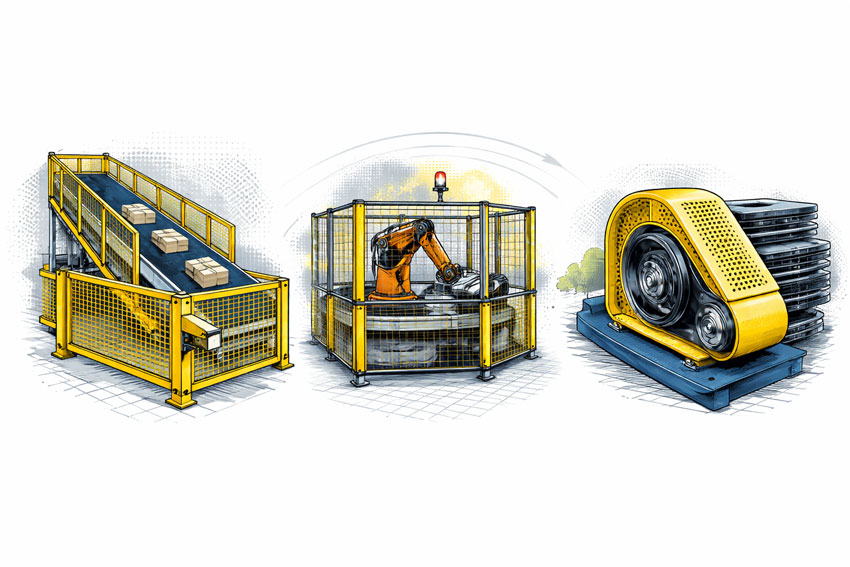
Industrial machine guards including a guarded conveyor, fenced robotic cell, and covered belt drive system

Supporting Safe Design from Concept to Commissioning

Safe Design is not just about guarding at the end of a project โ€” it starts at the design stage.

By scanning your existing plant, we can support:

  • Risk assessments using accurate spatial context
  • Redesign of transfer points and access platforms
  • Guarding upgrades that actually fit the site
  • Maintenance access improvements without production impact

Because models are generated from real geometry, engineers can confidently design modifications knowing they will physically fit when installed.

This reduces shutdown risk, rework, and last-minute site changes โ€” all common contributors to project delays and safety incidents.

Learning from Industry Incidents โ€” and Preventing the Next One

Many conveyor-related incidents share similar root causes:

  • Poor access for cleaning or inspection
  • Unplanned modifications
  • Incomplete hazard identification during design
  • Reliance on legacy drawings that no longer match reality

3D scanning allows hazards to be identified early and reviewed by multiple stakeholders โ€” engineering, safety, operations, and maintenance โ€” using the same accurate model.

It also creates a permanent digital record of the asset at a point in time, which is invaluable for:

  • Incident investigations
  • Compliance documentation
  • Future upgrade planning

In high-risk environments, accurate data is not a luxury โ€” it is a control measure.

Local Scanning and Engineering Support in Parramatta

Hamilton By Design provides on-site 3D scanning and engineering services across Parramatta and Western Sydney, supporting:

  • Conveyor upgrades and replacements
  • Safety improvement projects
  • Plant expansions and brownfield modifications
  • Fabrication and installation planning

Our team is engineering-led, meaning scanning is not treated as a standalone service โ€” it is directly integrated into mechanical design, drafting, and project delivery.

We also provide fabrication-ready drawings and can support workshops with shop details derived directly from scan-based models.


Hamilton By Design logo displayed on a blue tilted rectangle with a grey gradient background

3D LiDAR scanning and 3D modelling service button โ€” laser scanner capturing a point cloud for engineering and CAD modelling
Mechanical engineering services

From Point Cloud to Practical Outcomes

3D scanning is only valuable if it leads to better decisions on the ground.

Our workflow typically includes:

  1. On-site LiDAR scanning with minimal disruption to operations
  2. Registration and cleaning of point cloud data
  3. Conversion into CAD models suitable for engineering design
  4. Design development, safety reviews, and fabrication drawings

This ensures your project is driven by real-world data โ€” not assumptions.

Name
Would you like us to arrange a phone consultation for you?
Address

Related Sydney Services

Hamilton By Design provides engineering-led 3D scanning, LiDAR scanning, mechanical engineering and digital engineering services throughout Sydney and Greater Sydney.

Explore our related Sydney services:


  • 3D Scanning Sydney โ€“ Engineering-grade terrestrial laser scanning, as-built surveys and point cloud capture for industrial, infrastructure and commercial projects.
  • Reality Capture Sydney โ€“ High-accuracy reality capture, digital twins, asset documentation and engineering-grade site verification.
  • Scan to CAD Sydney โ€“ Convert point cloud data into AutoCAD, SolidWorks, Inventor and other engineering-ready CAD deliverables.
  • Point Cloud Modelling Sydney โ€“ Engineering-grade point cloud processing, clash detection, as-built verification and 3D modelling.
  • Mechanical Engineering Sydney โ€“ Mechanical design, plant upgrades, materials handling systems, conveyors, chutes, platforms and engineering support.
  • Structural Drafting Sydney โ€“ Structural steel drafting, fabrication drawings, GA drawings, workshop detailing and as-built documentation.

Hamilton By Design supports projects throughout Sydney CBD, Parramatta, Liverpool, Penrith, Blacktown, Chatswood, Alexandria, Mascot, Newcastle and the Central Coast.


Blue banner graphic displaying the text "Point Cloud to CAD - Australia" in large white lettering, representing point cloud processing, scan-to-CAD conversion and digital engineering services across Australia.
Blue banner graphic displaying the text "Scan to CAD Sydney" in large white lettering, representing engineering-led point cloud to CAD conversion, LiDAR scanning and digital engineering services in Sydney.
Blue banner graphic displaying the text "Reality Capture Sydney - CBD" in large white lettering, representing engineering-led reality capture, LiDAR scanning and digital engineering services within Sydney CBD commercial buildings and infrastructure.

Machine Guarding for Ship Loaders, Stackers & Reclaimers in Bulk Materials Handling

Machine Guarding for Ship Loaders, Stackers & Reclaimers | Bulk Materials Safety

Why guarding matters on large bulk material machines

Ship loaders, stackers and reclaimers combine elements of mobile plant, fixed plant and continuous conveying systems. Their scale, movement and operating envelopes introduce hazards that cannot be managed with ad-hoc or legacy guarding.

Most guarding failures are not caused by a single missing guard, but by brownfield modifications, undocumented changes, and loss of original design intent. This makes engineering-led guarding essential for safety, compliance and uptime.


Australian Standards framework for guarding

AS 4024 โ€“ Safety of Machinery

The AS 4024 series provides the primary principles for machine guarding, including hazard identification, risk assessment, guarding selection, and safe distances. For bulk materials handling equipment, it must be applied in context rather than as a checklist.

AS 1755 โ€“ Conveyors: Safety requirements

AS 1755 governs conveyor-specific hazards common to ship loaders, stackers and reclaimers, including:

  • Nip points and pulleys
  • Transfer and chute interfaces
  • Emergency stop systems
  • Access for inspection and maintenance

Most real-world non-conformances occur at head/tail pulleys, transitions, take-ups and return belts beneath walkways.

AS 1657 โ€“ Fixed access systems

Guarding must coexist with compliant access. AS 1657 covers walkways, stairs, ladders, handrails and edge protection. Poor integration often leads to guards being removed to regain access โ€” undermining safety intent.

AS 4324.1 โ€“ Mobile bulk materials handling equipment

AS 4324.1 recognises ship loaders, stackers and reclaimers as integrated machines, where guarding, access, structure and maintainability must be considered together.


Guarding challenges unique to ship loaders & reclaimers

Scale and movement
These machines include slew, luff and travel motions, requiring guarding to remain effective across all operating positions.

Brownfield evolution
Temporary or reactive guarding solutions often become permanent without verification against standards.

Shutdown constraints
Guarding changes made under shutdown pressure frequently prioritise constructability over defensible engineering.


Engineering-led guarding approach

Effective guarding is based on:

  • Engineering-grade spatial understanding of reach, envelopes and access paths
  • Risk-based selection of fixed, interlocked or removable guarding in line with AS 4024
  • Integration with maintenance and operations, avoiding unsafe workarounds

On large machines, guarding that cannot be safely removed, reinstated or inspected will not survive long-term operation.


Common high-risk interfaces

Guarding assessment typically focuses on:

  • Conveyor head, tail and bend pulleys
  • Transfer points and chutes
  • Slew, luff and drive mechanisms
  • Gearboxes, brakes and take-ups
  • Return belt zones beneath accessways

Each interface must be checked against AS 4024, AS 1755, AS 1657 and AS 4324.1 as a combined framework.


Our clients:


Building toward a bulk materials handling safety framework

This post forms part of a broader technical narrative around safe, maintainable bulk materials handling systems.
Future companion topics may include:

  • Conveyor transfer point guarding
  • Brownfield guarding upgrades during life-extension works
  • Balancing guarding and access on reclaimers
  • Using validated 3D data to de-risk shutdown modifications

Together, these posts naturally support a future Bulk Materials Handling / Stacker & Reclaimer Engineering landing page without forcing a sales message.


Hamilton By Design logo displayed on a blue tilted rectangle with a grey gradient background
3D LiDAR scanning and 3D modelling service button โ€” laser scanner capturing a point cloud for engineering and CAD modelling
Mechanical engineering services

Key takeaway

On ship loaders, stackers and reclaimers, guarding must be engineered, spatially validated and operationally practical. When aligned with Australian Standards, guarding becomes an enabler of safe production โ€” not a liability.

Discuss machine safety and guarding for bulk materials handling equipment

If you are reviewing or upgrading ship loaders, stackers, reclaimers or conveyor systems, early engineering input can reduce safety risk, rework and shutdown pressure.

For discussions relating to:

  • Machine guarding and conveyor safety
  • Brownfield compliance with Australian Standards
  • Engineering-led reviews for bulk materials handling equipment

Please connect with us by filling out the form below.

Name
Would you like us to arrange a phone consultation for you?
Address
3D LiDAR scanning and 3D modelling service button โ€” laser scanner capturing a point cloud for engineering and CAD modelling
Mechanical engineering services
Finite Element Analysis (FEA) engineering simulation button
Mechanical engineering services

AS 4324.1 Brownfield Bulk Handling Assets: Engineering Mobile Equipment for Todayโ€™s Mine Sites

AS 4324.1 Bulk Handling Equipment | Brownfield Stacker & Reclaimer Engineering

Mobile equipment for the continuous handling of bulk materialsโ€”such as stackers, reclaimers, and ship loadersโ€”forms the backbone of Australiaโ€™s mining and export infrastructure. Many of these assets operate continuously in demanding environments, often well beyond their original design life.

Australian Standard AS 4324.1 provides essential guidance for the design and safe operation of this class of equipment. However, on many Australian mine sites, the practical application of the standard is misunderstood or only partially implemented, particularly when dealing with legacy machines and brownfield upgrades.

For asset owners and engineering managers, the challenge is rarely about greenfield compliance. It is about managing risk, extending asset life, and implementing upgrades without unplanned downtime.


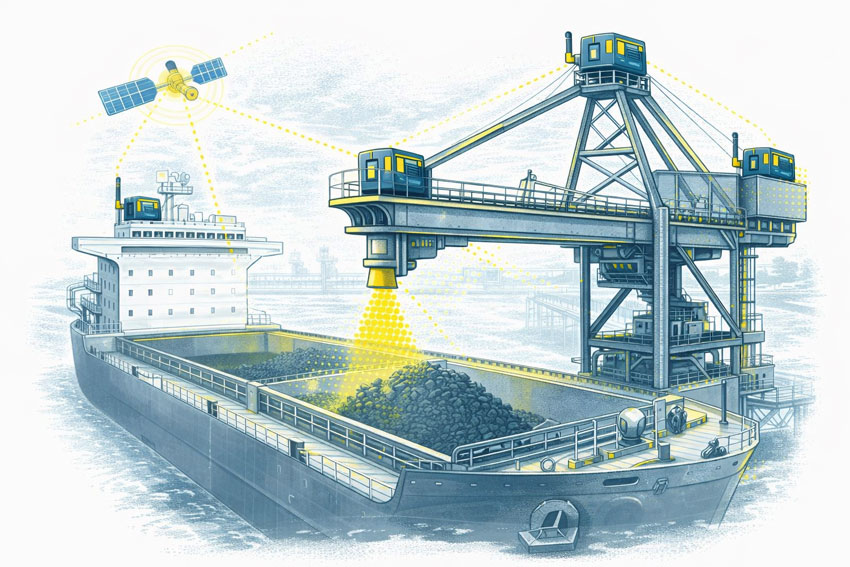
Ship loader and bulk cargo vessel with GPS monitoring units and sensor overlays illustrating controlled loading zones and engineering oversight under AS 4324.1

Understanding AS 4324.1 in a Brownfield Context

AS 4324.1 addresses mobile equipment used for continuous bulk handling, including:

  • Yard stackers and reclaimers
  • Bucket wheel reclaimers
  • Slewing and travelling machines
  • Ship loaders at export terminals

While the standard establishes a strong baseline for design and safety, many operating machines:

  • Pre-date the current revision of the standard
  • Have undergone multiple undocumented modifications
  • Operate under loading conditions that differ from original assumptions

In these situations, engineering judgement is required. Compliance becomes less about box-ticking and more about demonstrating that risks are understood, controlled, and managed over the asset lifecycle.


Common Challenges on Operating Mine Sites

Across coal handling plants, iron ore operations, and port facilities, several recurring issues emerge:

1. Incomplete or Outdated As-Built Information

Accurate geometry, slew limits, clearances, and structural interfaces are often unknown. This creates risk during upgrades and maintenance planning.

2. Fatigue and Structural Degradation

Large mobile machines experience cyclic loading across slewing, luffing, and travel motions. Fatigue cracking and unexpected failures require ongoing monitoring, not one-off assessments.

3. Access, Guarding, and Maintenance Compliance

Requirements evolve over time. Older machines may not meet current expectations for access systems, guarding, or safe maintenance practices.

4. Downtime Sensitivity

Stackers, reclaimers, and ship loaders are often production-critical assets. Upgrade windows are limited, and poor fit-up or rework can have significant commercial consequences.


Technology Supporting Modern Risk Management

While AS 4324.1 remains the foundation, modern technology allows asset owners to manage risk more effectivelyโ€”particularly on brownfield equipment.

GPS Positioning and Controlled Operating Zones

Where GPS positioning is enabled, defined operating zones can be established to:

  • Prevent interaction with stockpiles during rapid translation
  • Automatically reduce slew or travel speed in high-risk zones
  • Limit impact loads on critical components such as slew rings and fluffing gears

These systems are primarily productivity-driven, but they also reduce the likelihood of high-energy impacts that contribute to mechanical damage.


LiDAR Scanning as an Emerging Risk Layer

LiDAR scanning is not a replacement for traditional controls, and it is still evolving in this application. However, it can provide:

  • Accurate spatial awareness of surrounding structures
  • Verification of clearances and exclusion envelopes
  • A secondary risk-management layer supporting operator decision-making

When combined with engineering-led interpretation, LiDAR contributes to a layered risk approach rather than acting as a standalone safety system.


Condition Monitoring and Real Load Understanding

Accelerometers installed across a range of frequencies can deliver valuable insight into:

  • Actual operating loads
  • Dynamic response during slewing, reclaiming, and travel
  • Early indicators of fatigue-related issues

This data supports more informed maintenance decisions and provides evidence of how a machine is truly being usedโ€”often revealing load cases not considered in original designs.


Engineering-Led Compliance and Asset Life Extension

For brownfield assets, compliance with AS 4324.1 is best approached as a continuous engineering process, not a single milestone. This includes:

  • Accurate reality capture and digital models
  • Verification of clearances, interfaces, and structural geometry
  • Informed upgrade design that fits the first time
  • Risk-based decision-making supported by real operating data

This approach helps asset owners extend the life of critical machines while managing risk, performance, and availability.


How Hamilton By Design Supports Bulk Handling Assets

Hamilton By Design works with asset owners and engineering teams to support:

  • Brownfield upgrades of stackers, reclaimers, and ship loaders
  • Engineering-grade LiDAR scanning and as-built documentation
  • Fit-for-purpose mechanical design for modifications and life-extension
  • Independent engineering insight across OEM and site interfaces

Our focus is on engineering clarity, practical risk reduction, and minimising disruption to operations.


Talk to an Engineer About Your Asset

If you are planning a brownfield upgrade, life-extension, or risk review of mobile bulk-handling equipment, talk to an engineer at Hamilton By Design about how accurate data and practical engineering can support your next decision.

Hamilton By Design logo displayed on a blue tilted rectangle with a grey gradient background
3D LiDAR scanning and 3D modelling service button โ€” laser scanner capturing a point cloud for engineering and CAD modelling
Mechanical engineering services

Our clients:

Name
Would you like us to arrange a phone consultation for you?
Address
Finite Element Analysis (FEA) engineering simulation button
Mechanical engineering services