Why Low-Cost 3D Scanning Often Results in Higher Fabrication Costs

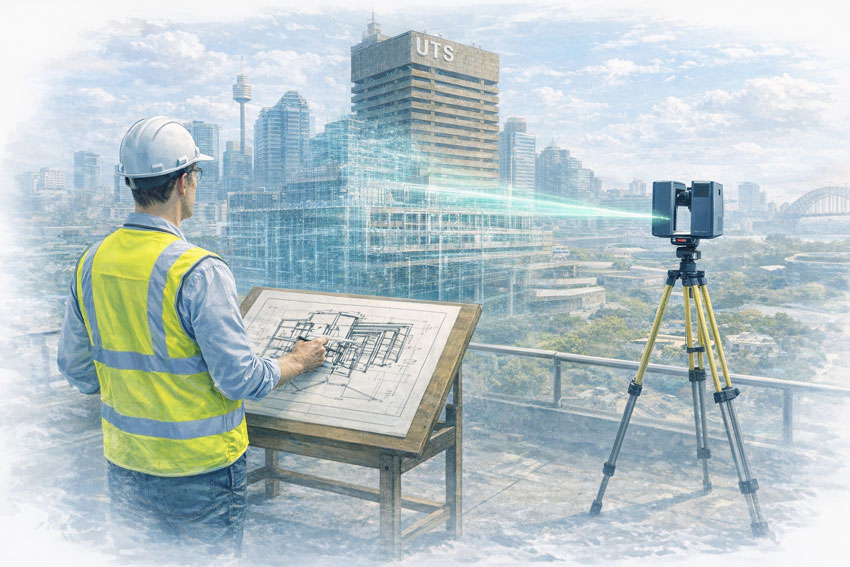
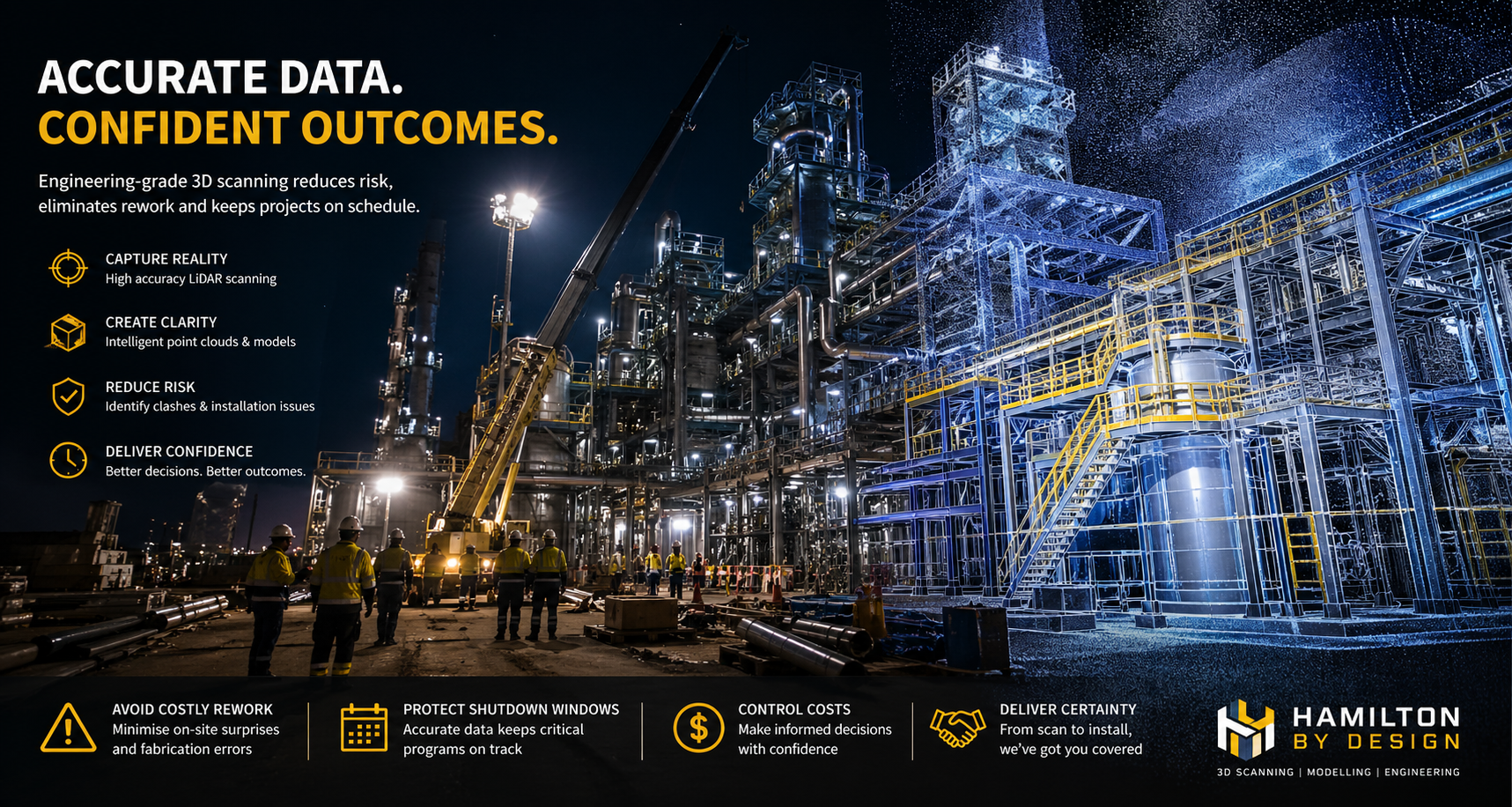
Engineering-grade LiDAR scan of an industrial plant showing point cloud and CAD overlay for fabrication accuracy

A Risk-Based Perspective for Project Managers and Company Directors

Executive Summary

The increasing availability of low-cost 3D scanning services has led to a perception that reality capture is a commoditised input to engineering projects. However, within fabrication-driven environmentsโ€”particularly in mining, heavy industry, and brownfield infrastructureโ€”this assumption is fundamentally flawed.

3D scanning is not an isolated deliverable; it is a foundational dataset upon which design, fabrication, and installation decisions are made. When this dataset lacks accuracy, completeness, or governance, downstream impacts emerge in the form of rework, delays, cost overruns, and elevated operational risk.

This paper outlines why low-cost scanning solutions frequently result in higher total project costs and provides a framework for evaluating scanning methodologies from a lifecycle and risk perspective.


1. The Role of Reality Capture in the Project Lifecycle

In modern engineering workflows, 3D scanning underpins a sequence of dependent activities:

  • Site capture (point cloud acquisition)
  • Data registration and validation
  • 3D modelling and design development
  • Detailing for fabrication
  • Installation and commissioning

Each stage inherits the quality of the preceding one. As a result, deficiencies in the initial scan propagate throughout the project lifecycle. Errors introduced at the data capture stage are rarely isolated and are often only fully realised during fabrication or installationโ€”when rectification costs are at their highest.


2. Accuracy as a Determinant of Fabrication Success

Fabrication processes require dimensional certainty. Tolerances associated with structural steel, piping systems, and mechanical assemblies are typically measured in millimetres. Deviations beyond these tolerances can render components unfit for purpose.

Lower-cost scanning methodologies, particularly those relying on unstructured workflows or drift-prone systems, often exhibit:

  • Accumulated positional error over distance
  • Inconsistent alignment between scan sets
  • Limited or absent survey control
  • Reduced reliability in complex industrial environments

While such datasets may appear visually acceptable, they frequently lack the dimensional integrity required for fabrication-grade outputs. The result is misalignment, rework, and increased reliance on site-based modification.


3. Cost Amplification Through Downstream Rework

The primary issue with low-cost scanning is not the initial saving, but the amplification of costs downstream.

A typical failure pathway includes:

  • Design based on inaccurate geometry
  • Fabrication to incorrect specifications
  • Installation conflicts and misalignment

At the installation stage, corrective actions may include:

  • Cutting and re-welding on site
  • Redesign under time constraints
  • Expedited fabrication of replacement components
  • Additional labour and supervision

A relatively small saving in scanning costs can therefore result in significant increases in total project cost, particularly in time-critical environments.
3D CAD Modelling Australia service banner for Hamilton By Design

4. Operational Risk and Downtime Implications

In industrial environments, downtime represents one of the most significant cost drivers. Inaccurate scan data introduces risks that extend beyond fabrication and into operations, including:

  • Extended shutdown durations
  • Delayed commissioning
  • Installation clashes
  • Disruption to production schedules

Given the high cost of downtime in mining and processing facilities, even minor delays can have substantial financial consequences. Low-cost scanning therefore introduces not only technical risk but also operational and commercial risk.


5. Visual Fidelity Versus Engineering Validity

A common misconception is that visually impressive scan data equates to engineering accuracy. Modern software platforms can present dense, colourised point clouds that appear complete and reliable.

However, visual quality does not guarantee:

  • Verified spatial accuracy
  • Consistent coordinate alignment
  • Defined tolerances
  • Reliable integration into engineering workflows

For decision-makers, the critical question is whether the data is demonstrably accurate and suitable for its intended engineering purposeโ€”not whether it appears visually convincing.


6. Data Completeness and Design Integrity

In addition to accuracy, completeness of data capture is essential.

Low-cost scanning approaches often result in incomplete datasets due to time constraints, access limitations, or insufficient planning. Common omissions include:

  • Undersides of structures
  • Connection points and bolt details
  • Congested or hard-to-reach areas
  • Critical interfaces between systems

Incomplete data forces engineers to make assumptions, which introduces uncertainty into the design process. This often leads to conservative design, increased material usage, additional site visits, and iterative revisions.


7. Governance and Traceability

Effective project delivery requires a clear and controlled data environment.

Engineering-grade scanning workflows typically include:

  • Registration reports and validation metrics
  • Defined coordinate systems
  • Version control and data management
  • Traceability from scan to model to drawing

Low-cost scanning services often lack these controls, resulting in:

  • Multiple conflicting datasets
  • Poor coordination between disciplines
  • Limited accountability
  • Increased risk during audits or dispute resolution

Without a single source of truth, project risk increases significantly.


8. Fabrication Constraints and Irreversibility

Fabrication environments operate on precision and adherence to documented design. Workshops do not reinterpret dataโ€”they execute it.

When inaccurate scan data informs fabrication:

  • Errors are embedded in physical components
  • Materials and labour are consumed unnecessarily
  • Corrections become costly and complex

By the time issues are identified, the opportunity for low-cost correction has passed.


9. Reframing the Investment Decision

The evaluation of scanning services should be based on total project cost rather than initial expenditure.

  • Low-cost scanning: lower upfront cost, higher downstream risk
  • Engineering-grade scanning: moderate upfront cost, reduced risk and greater predictability

Given that scanning represents a small proportion of overall project cost, decisions based solely on price are often misaligned with project objectives.


10. A Structured Approach to Risk Mitigation

To reduce risk and improve outcomes, the following approach is recommended:

  • Define accuracy requirements aligned with fabrication tolerances
  • Select appropriate scanning methodologies
  • Implement controlled data acquisition and registration
  • Validate datasets prior to design development
  • Integrate scan data into coordinated modelling workflows
  • Maintain governance and version control throughout the project lifecycle

This ensures that reality capture supports, rather than undermines, project delivery.


Conclusion

Low-cost 3D scanning services may appear cost-effective at the outset, but they frequently result in increased costs, delays, and risk when evaluated across the full project lifecycle.

For project managers and company directors, the critical consideration is the integrity of the data informing engineering decisions. In fabrication-driven environments, accuracy and reliability are essential.

Investment in engineering-grade scanning should therefore be viewed not as an optional expense, but as a risk mitigation strategy that underpins successful project delivery.


Related Services

To support fabrication certainty and reduce project risk, the following engineering-led services are available:

These services are specifically structured to deliver accurate, validated datasets suitable for engineering design and fabrication.


Ensuring Confidence in Fabrication Data

Where projects involve brownfield modifications, shutdown execution, or critical structural and mechanical installations, the reliability of underlying data is a key determinant of success.

Engineering-grade 3D LiDAR scanning provides a controlled and verifiable foundation for design, reducing uncertainty and enabling informed decision-making throughout the project lifecycle.

At Hamilton By Design, the focus is on delivering fit-for-purpose engineering dataโ€”ensuring that models, drawings, and fabrication outputs align with real-world conditions.

3D LiDAR scanning and 3D modelling service button โ€” laser scanner capturing a point cloud for engineering and CAD modelling
Mechanical engineering services

Independent Review of Existing Scan Data

Where scan data has already been captured, an independent review can be undertaken to assess its suitability for engineering and fabrication use.

This includes evaluation of:

  • Registration quality and alignment integrity
  • Dimensional accuracy relative to project requirements
  • Completeness of captured geometry
  • Suitability for downstream modelling and detailing

This approach provides clarity before further design or fabrication investment is committed.


Hamilton By Design logo displayed on a blue tilted rectangle with a grey gradient background

Contact Us – Talk to Us

For further discussion regarding project requirements or to review an existing scanning approach:

Hamilton By Design
Email: info@hamiltonbydesign.com.au
Website: www.hamiltonbydesign.com.au

Enquiries are welcome to arrange a brief discussion to determine the most appropriate approach for achieving reliable, fabrication-ready outcomes.

Name
Would you like us to arrange a phone consultation for you?
Address

Our clients
From 3D Scanning to Structured Control

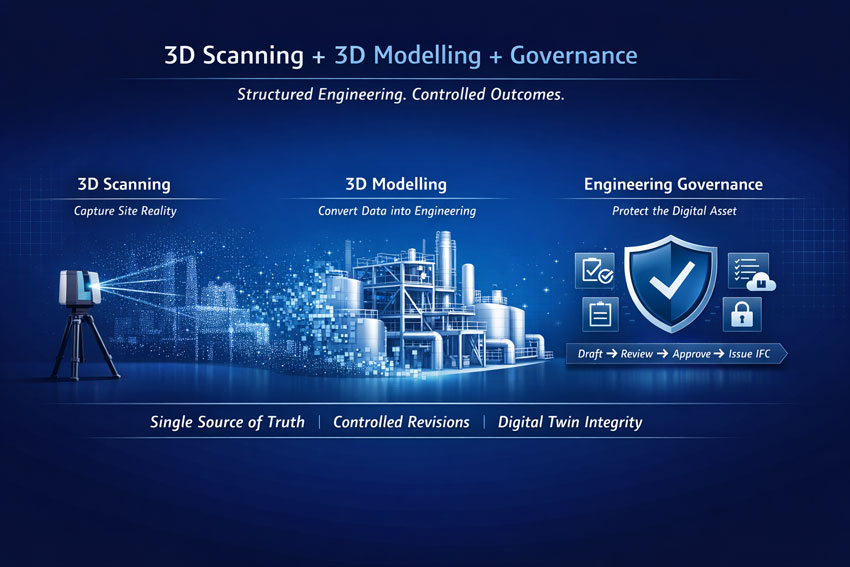
Executive infographic showing 3D scanning, 3D modelling and engineering governance integrated into a structured digital workflow.

Why 3D Modelling Must Be Governed

3D scanning captures reality.

3D modelling interprets reality.

Engineering governance protects reality.

In industrial environments, capturing a site with LiDAR is only the beginning. The real value is unlocked when scan data is structured, validated, controlled and maintained within a governed engineering framework.

At Hamilton By Design, we integrate 3D scanning, 3D modelling and engineering governance into a single structured workflow โ€” ensuring your digital environment becomes a reliable operational asset.


3D Scanning: Capturing the Truth

3D laser scanning creates an accurate representation of existing conditions. In brownfield facilities, this is critical.

It allows organisations to:

  • Understand spatial constraints
  • Identify clashes before construction
  • Reduce rework
  • Improve shutdown planning
  • Establish a baseline for upgrades

However, raw scan data alone does not provide governance.

It provides information โ€” not control.


Corporate engineering graphic illustrating the transition from LiDAR scanning to governed digital twin management.

3D Modelling: Turning Data into Usable Engineering

Once scanning is complete, modelling converts point clouds into structured engineering models.

This includes:

  • Parametric plant models
  • Equipment layouts
  • Structural frameworks
  • Pipe and services modelling
  • As-built verification

But modelling without revision discipline can quickly become fragmented.

If models are updated without control, version tracking is lost. If contractors modify geometry without approval workflows, digital twins become unreliable.

This is where governance becomes essential.


Engineering Governance: Protecting the Digital Asset

Engineering governance ensures that:

  • Scan-derived models follow structured revision control
  • Contractors work within defined digital environments
  • Updates are traceable and auditable
  • Digital twins reflect site-approved configurations
  • Brownfield upgrades do not corrupt master models

Without governance, a digital twin becomes a static snapshot.

With governance, it becomes operational infrastructure.


Why Governance Matters in Brownfield Environments

Live industrial facilities are complex and constantly evolving.

Multiple contractors.
Compressed shutdown windows.
Legacy drawings.
Unrecorded historical modifications.

In these environments, uncontrolled digital updates introduce risk.

Governance provides:

  • Role-based access control
  • Structured approval workflows
  • Defined issue status (IFR / IFA / IFC)
  • Change logs and audit trails
  • Platform-based collaboration

It prevents the common scenario where fabricated equipment arrives on site โ€” only to discover it was built to an outdated model or incorrect drawing revision.


Integrated with the 3DEXPERIENCE Platform

To ensure structured digital continuity, Hamilton By Design aligns scanning and modelling workflows within governed digital environments such as the 3DEXPERIENCE Platform:

https://www.3ds.com/3dexperience/

When properly configured, the platform supports:

  • Controlled document lifecycles
  • Revision management
  • Collaborative review environments
  • Secure cloud access
  • Single source of truth governance

The technology is powerful.

The governance framework ensures it delivers.


The Structured Workflow

Hamilton By Design delivers a disciplined process:

  1. 3D Scan โ€” Capture accurate site conditions
  2. Model Development โ€” Convert data into structured engineering models
  3. Governance Framework โ€” Apply revision control and document lifecycle management
  4. Platform Integration โ€” Align within controlled digital environments
  5. Ongoing Control โ€” Maintain digital twin integrity during upgrades

This transforms 3D data into a governed engineering asset.


3D LiDAR scanning and 3D modelling service button โ€” laser scanner capturing a point cloud for engineering and CAD modelling
Mechanical engineering services

More Than Scanning. Structured Engineering Control.

Many providers can scan.

Many can model.

Few provide structured engineering governance across the full lifecycle.

Hamilton By Design delivers the integration of all three โ€” ensuring digital engineering environments remain accurate, controlled and commercially protected.

If your organisation is investing in digital capture, ensure it is supported by governance.

Because a scan without structure is just data.

Governed data becomes infrastructure.

Name
Would you like us to arrange a phone consultation for you?
Address

3D CAD Modelling Australia service banner for Hamilton By Design
Finite Element Analysis (FEA) engineering simulation button
Mechanical engineering services

3D LiDAR Scanning with Engineering Governance: Securing Your Asset Data for the Long Term

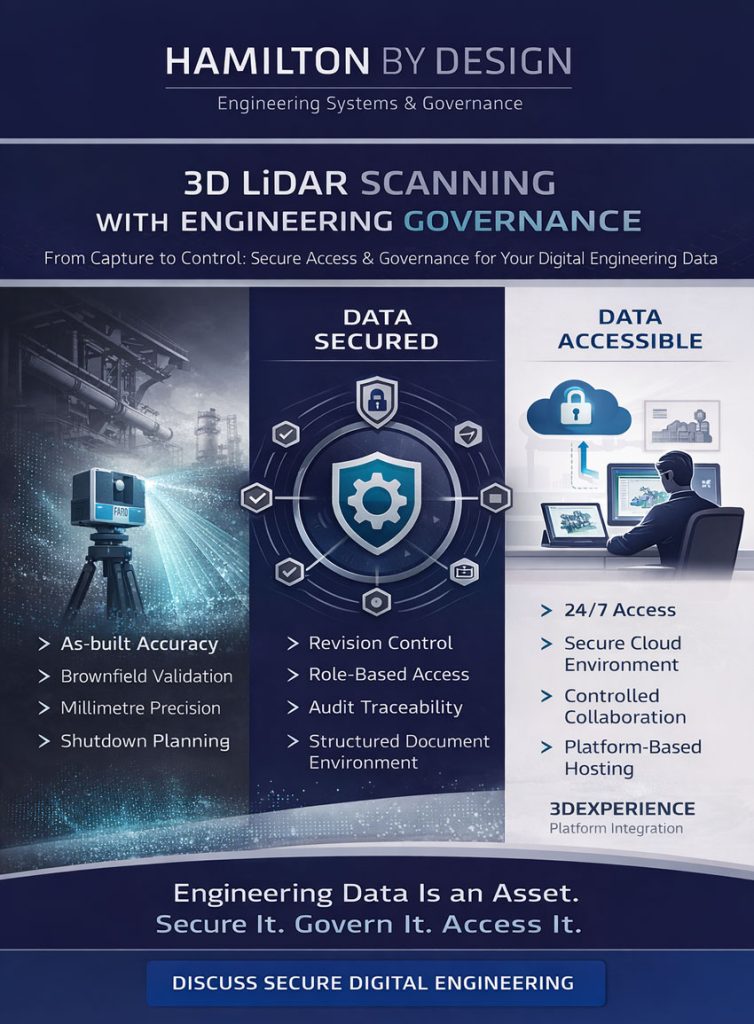
Industrial LiDAR scanning and digital engineering governance model demonstrating secure data capture, revision control and secure platform access.

3D LiDAR Scanning & Engineering Data Governance

3D LiDAR scanning has become a powerful tool in modern mechanical and industrial engineering.

It captures reality with millimetre precision.
It reduces site rework.
It improves brownfield design confidence.
It shortens shutdown risk.

But capturing data is only half the solution.

Without structured engineering governance, even the most accurate point cloud becomes just another unmanaged file sitting on a server.

At Hamilton By Design, we combine 3D LiDAR scanning with controlled digital environments โ€” ensuring your engineering data is not only captured, but secured, governed, and accessible when you need it.


The Risk: Uncontrolled Engineering Data

Across mining, manufacturing and heavy industry, we regularly see:

  • Point cloud files stored on local drives
  • Multiple uncontrolled drawing revisions
  • Contractors working from outdated geometry
  • Large scan files shared via unsecured links
  • No defined ownership of digital assets

When governance is absent, data degrades.

And when data degrades, engineering risk increases.


3D LiDAR Scanning Is the Starting Point โ€” Not the End

LiDAR scanning provides:

  • Accurate as-built geometry
  • Clash detection confidence
  • Brownfield validation
  • Structural and mechanical verification
  • Shutdown planning support

However, once the scan is complete, organisations must answer critical questions:

  • Who controls revision access?
  • Where is the master file stored?
  • How are updates managed after upgrades?
  • Who can access the model โ€” and when?
  • Is the data audit ready?

This is where engineering governance becomes essential.


Secure digital engineering workflow showing 3D point cloud capture, governance control and cloud-based 24-hour access.

Engineering Governance: Protecting Your Digital Assets

Engineering governance ensures:

  • Controlled document environments
  • Structured revision management
  • Defined user access permissions
  • Audit traceability
  • Secure cloud storage
  • Long-term digital asset stewardship

Without governance, digital engineering becomes fragmented.

With governance, it becomes a single source of truth.


Secured Access Through the 3DEXPERIENCE Platform

Hamilton By Design has partnered to support secure data environments through the 3DEXPERIENCE platform.

This allows clients to:

  • Access their 3D models 24 hours per day
  • Review point cloud data securely online
  • Manage drawing revisions in a controlled environment
  • Collaborate with contractors under structured permissions
  • Maintain engineering continuity across upgrades

Your data is not sent around via uncontrolled downloads.

It is hosted, governed, and managed within a structured platform environment.


Why 24/7 Access Matters

Industrial facilities do not operate between 9am and 5pm.

Shutdowns occur overnight.
Maintenance decisions happen urgently.
Capital approvals move quickly.

Having secure, controlled access to your digital engineering data โ€” at any time โ€” provides:

  • Faster decision-making
  • Reduced shutdown risk
  • Improved contractor coordination
  • Greater executive confidence

Engineering data becomes operational infrastructure.


Integrating LiDAR, Governance and Asset Integrity

When 3D LiDAR scanning is combined with structured governance and platform security, organisations gain:

  • A verified as-built model
  • Controlled revision history
  • Secure cloud-based storage
  • Role-based access control
  • Ongoing update capability following upgrades

This is particularly critical in:

  • Brownfield facilities
  • Mining operations
  • Manufacturing plants
  • Utilities infrastructure
  • Long-life industrial assets

Your scan data becomes a living engineering asset โ€” not a static deliverable.


From Capture to Control

At Hamilton By Design, we do not simply provide 3D scanning services.

We provide:

  • Site capture
  • Data processing
  • Model integration
  • Engineering governance
  • Secure platform hosting
  • Ongoing digital stewardship

The objective is simple:

To ensure your engineering data remains accurate, controlled, and accessible for the life of your asset.


3D laser scanning in Sydney with an engineer capturing as-built conditions using LiDAR technology.

Engineering Data Is Corporate Risk

Unsecured or unmanaged engineering data creates exposure:

  • Design errors
  • Compliance failures
  • Shutdown overruns
  • Contractor disputes
  • Loss of institutional knowledge

Structured governance reduces this exposure.

When supported by secure platform access, your engineering records become resilient.


A Single Source of Truth โ€” Available Anytime

Through the integration of 3D LiDAR scanning and the 3DEXPERIENCE platform, Hamilton By Design enables:

  • 24/7 secure access
  • Controlled collaboration
  • Audit-ready documentation
  • Brownfield upgrade support
  • Digital continuity

Engineering is not just about building systems.

It is about protecting them โ€” physically and digitally.


Hamilton By Design logo displayed on a blue tilted rectangle with a grey gradient background

Hamilton By Design
3D LiDAR Scanning | Engineering Governance | Secure Digital Platforms

If your organisation is investing in digital capture, ensure your data is governed, protected and available whenever you need it.

3D LiDAR scanning and 3D modelling service button โ€” laser scanner capturing a point cloud for engineering and CAD modelling
Mechanical engineering services

Name
Would you like us to arrange a phone consultation for you?
Address

3D CAD Modelling Australia service banner for Hamilton By Design

Supporting Australian Coal โ€“ Engineering-Led 3D Scanning for CHPP & Coal Wash Plants

CHPP wash plant illustration comparing shutdown rework with LiDAR scanning and prefabrication success.

3D Scanning Services for CHPP โ€“ Reduce Rework, Maximise Uptime

Australian coal operations depend on reliable Coal Handling & Preparation Plants (CHPP), wash facilities, conveyors and mechanical systems. Every shutdown, upgrade and modification must be delivered quickly and safely to protect production. The most effective way to achieve this is through engineering-led 3D scanning services that capture real site conditions before a single component is fabricated.

Hamilton By Design specialises in FARO LiDAR and structured-light 3D scanning for the coal sector, turning complex brownfield sites into accurate digital models that drive practical engineering outcomes. Our focus is simple: maximise plant uptime by reducing rework.


Why Shutdowns Need Better Information

Coal wash plants are dynamic environments. Over decades of modifications:

  • drawings no longer match reality
  • structures move under load
  • pipe routes are altered
  • access becomes restricted

Relying on tape measures and sketches during a shutdown invites risk. A bracket that is 20 mm wrong or a spool that fouls an existing service can cost days of lost production. Accurate 3D scanning before the outage removes those unknowns.


Coal wash plant shutdown workflow from delays to scan-led success using LiDAR.

Hamilton By Design 3D Scanning Services

Our scanning services are built specifically for industrial and mining applications:

FARO LiDAR As-Built Capture

  • full plant and conveyor surveys
  • transfer stations, bins and pump boxes
  • structural steel and foundations
  • tie-in points for new pipework
  • clearance verification for maintenance

Structured-Light Scanning (EinScan)

  • motors, gearboxes and legacy parts
  • guards, covers and small assemblies
  • reverse engineering for obsolete components
  • detailed capture for first-time-fit design

Point Cloud to CAD Workflows

  • modelling in SolidWorks & Fusion
  • fabrication drawings for local workshops
  • clash detection and installation planning
  • digital twins for ongoing maintenance

These services ensure that design decisions are based on measured reality, not assumptions.


Engineering-led LiDAR scanning sequence from downtime to online restart.

FARO LiDAR for CHPP As-Builts

Terrestrial LiDAR creates a high-density point cloud of the entire coal wash facility. Engineers can:

  • design new chutes and spools directly over site geometry
  • confirm conveyor alignments
  • plan access platforms and walkways
  • test installation sequences digitally

By linking scanning to engineering, components arrive on site ready to install โ€” protecting uptime and reducing rework during critical shutdown windows.

Practical Outcomes for Coal Plants
Conveyor & Transfer Upgrades

  • accurate chute replacements
  • skirt and belt line verification
  • drive and pulley modifications
  • minimal site adjustments

Pump Boxes & Pipework

  • prefabricated spools that fit first time
  • reverse engineering of worn equipment
  • safe tie-ins without surprises

Structural & Access Works

  • platform and handrail retrofits
  • screen support modifications
  • crane and lifting planning

Every task is driven by 3D scan data so workshops fabricate with confidence.


Visual comparison of EinScan object scanner and LiDAR terrestrial laser scanner in matching sketch style.

Engineering-Led, Not Just Surveying

Hamilton By Design treats scanning as part of the engineering process:

  1. 3D capture of the live plant
  2. engineering review of critical datums
  3. point cloud modelling in parametric CAD
  4. fabrication drawings for Australian workshops
  5. shutdown planning to ensure first-time fit

This approach directly supports the goal of maximum plant uptime.


Supporting Australian Capability

Scan-driven design keeps work local. Regional fabricators receive accurate models and drawings that reflect the real CHPP environment, enabling:

  • faster workshop production
  • fewer site variations
  • safer installations
  • reduced dependence on imported components

Committed to the Coal Sector

Hamilton By Design supports coal operations across NSW, the Central Coast, Sydney and regional Queensland including Mount Isa. Our 3D scanning services enhance every stage of shutdown planning and brownfield upgrades by eliminating guesswork and cutting rework.


Hamilton By Design logo displayed on a blue tilted rectangle with a grey gradient background
3D LiDAR scanning and 3D modelling service button โ€” laser scanner capturing a point cloud for engineering and CAD modelling
Mechanical engineering services

Our Services

  • FARO LiDAR scanning for CHPP as-builts
  • EinScan component capture
  • Point cloud to CAD modelling
  • Fabrication drawings & DXF outputs
  • Clash detection and digital twin support

Maximise your plant uptime by reducing rework โ€” talk to us before your next shutdown.

Name
Would you like us to arrange a phone consultation for you?
Address

3D CAD Modelling Australia service banner for Hamilton By Design
Finite Element Analysis (FEA) engineering simulation button
Mechanical engineering services