3D Point Cloud Modelling in Sydney

Engineer-led reverse engineering with 3D scanning and drafting overlooking Sydney Harbour and the Harbour Bridge

Engineering-Grade Digital Models Built from Reality

Across Sydney and the wider metropolitan region, engineering and construction projects increasingly depend on accurate digital representations of existing assets. As buildings become more complex and retrofit-driven, the gap between outdated drawings and on-site reality continues to widen. 3D Point Cloud Modelling in Sydney bridges this gap by transforming high-accuracy laser scan data into usable, engineering-ready digital models.

Hamilton By Design provides engineering-led 3D point cloud modelling services, converting LiDAR scan data into structured CAD models that support design, fabrication, verification, and asset management.


What Is 3D Point Cloud Modelling?

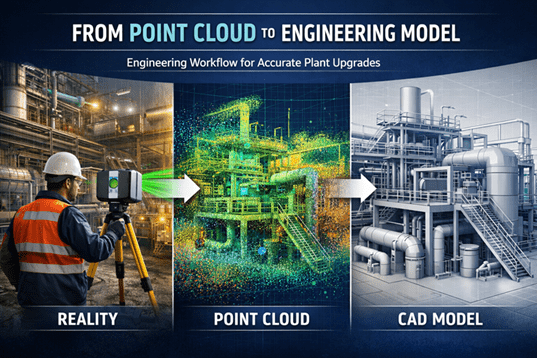
A point cloud is a dense collection of millions of spatially accurate points captured using terrestrial LiDAR laser scanning. Each point contains X, Y, Z coordinates and, where required, colour information.

3D point cloud modelling is the process of:

  • Interpreting scan data
  • Extracting relevant geometry
  • Converting raw points into structured 3D CAD models and drawings

Unlike visual-only models, engineering-grade point cloud modelling focuses on accuracy, constructability, and downstream usability.


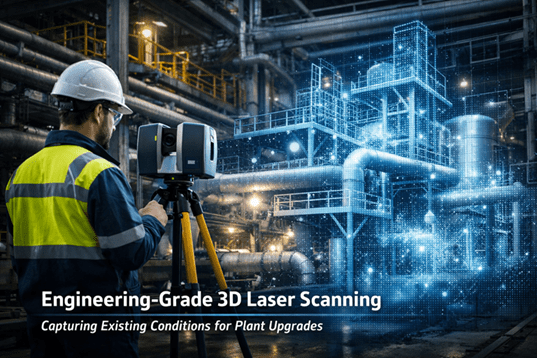
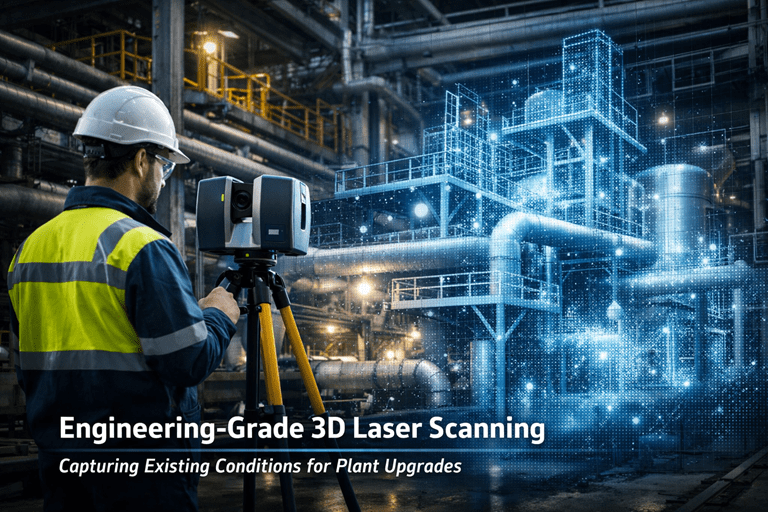
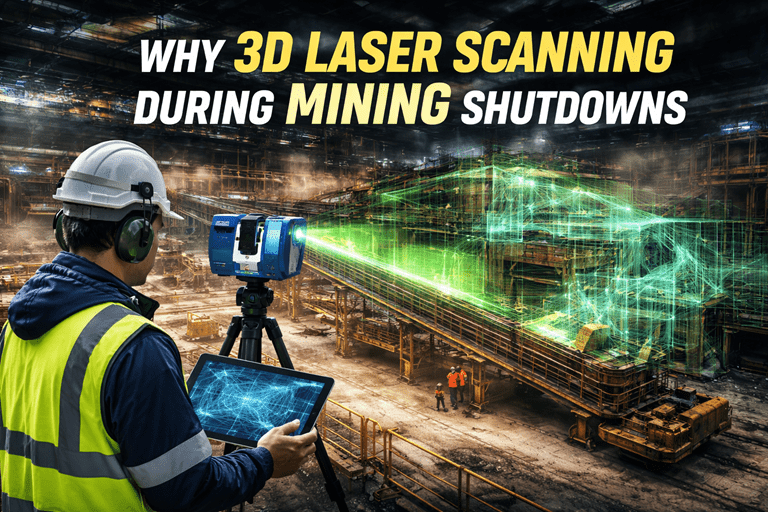
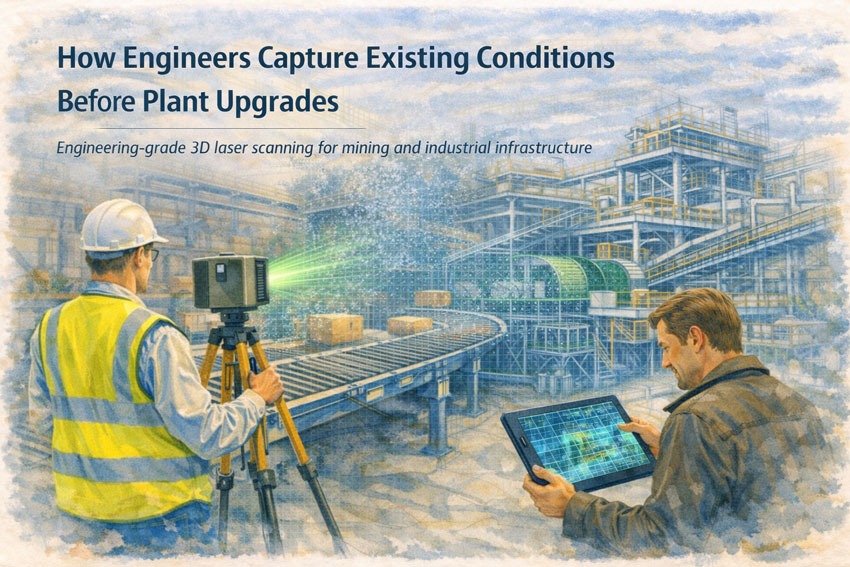
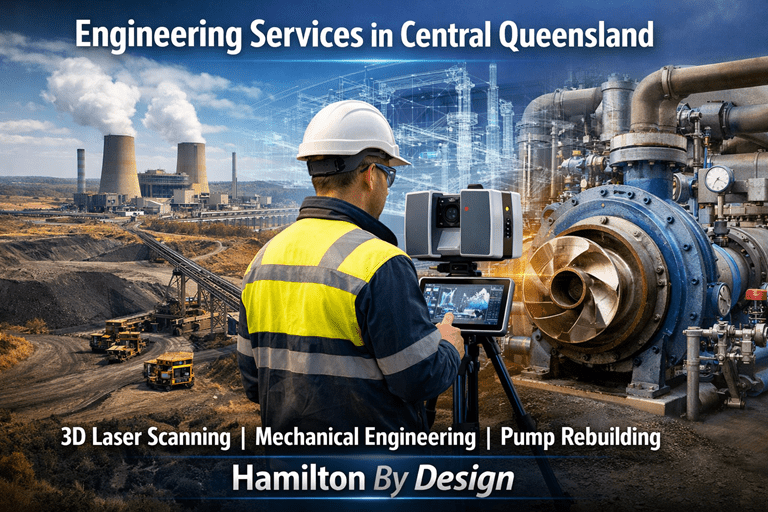
3D laser scanning in Sydney with an engineer capturing as-built conditions using LiDAR technology.

3D LiDAR scanning and 3D modelling service button — laser scanner capturing a point cloud for engineering and CAD modelling
Mechanical engineering services

Why 3D Point Cloud Modelling Is Critical in Sydney

Sydney’s built environment presents unique challenges:

  • High-density commercial buildings
  • Congested mechanical and electrical services
  • Limited access and live operational sites
  • A significant volume of ageing and undocumented assets

Traditional surveying and legacy drawings often fail to capture the true complexity of these environments. Point cloud modelling provides a single source of spatial truth, enabling engineers and designers to work with confidence.


Engineering-Led Point Cloud Modelling at Hamilton By Design

At Hamilton By Design, point cloud modelling is not treated as a drafting exercise. It is an engineering process.

Our workflow typically includes:

  • Engineer-supervised LiDAR scanning using high-accuracy terrestrial scanners
  • Controlled point cloud registration and validation
  • Interpretation of scan data by mechanical engineers
  • CAD modelling aligned with design, fabrication, and FEA requirements

This ensures the final model reflects engineering intent, not just geometry.


Typical Applications of 3D Point Cloud Modelling in Sydney

Mechanical and Services Modelling

One of the most common applications in Sydney is modelling of:

  • HVAC ductwork
  • Pipework and valves
  • Fire and hydraulic services
  • Electrical and cable tray systems

Accurate service models allow for:

  • Retrofit and upgrade design
  • Clash detection and coordination
  • Prefabrication planning

Plant Rooms and Industrial Spaces

Point cloud modelling is widely used for:

  • Basement and rooftop plant rooms
  • Mechanical equipment upgrades
  • Structural frames and access platforms

Models generated from scan data support fit-first-time design, reducing site rework and downtime.

Commercial Building As-Builts

For refurbishment and asset documentation, point cloud modelling delivers:

  • Accurate floor layouts
  • Structural elements
  • Ceiling and penetration data

These models form the foundation for architectural, structural, and mechanical design.

Construction Verification and Digital QA

Point cloud models are increasingly used for:

  • Installed versus design comparisons
  • Fit-up verification before fabrication
  • Quality assurance reporting

This provides a defensible digital record of site conditions at a specific point in time.


CAD Platforms and Deliverables

Hamilton By Design produces point cloud models and outputs suitable for:

  • SolidWorks-based mechanical design
  • Fabrication drawings and BOMs
  • FEA and structural assessments
  • IFC and exchange formats for multidisciplinary coordination

Deliverables can include:

  • Registered point cloud files
  • Fully modelled 3D CAD assemblies
  • GA drawings, sections, and details
  • Measurement and verification reports

Benefits of 3D Point Cloud Modelling

For Sydney projects, the benefits are tangible:

  • Reduced clashes and design uncertainty
  • Improved coordination across disciplines
  • Fewer site variations and rework
  • Faster design-to-fabrication cycles
  • Greater confidence in retrofit and brownfield projects

By working from reality rather than assumptions, teams make better decisions earlier.


Why Choose Hamilton By Design in Sydney

Hamilton By Design offers a single-source workflow that combines:

  • High-accuracy LiDAR scanning
  • Expert point cloud interpretation
  • Mechanical engineering design
  • Fabrication-ready documentation

This integrated approach ensures point cloud models are practical, accurate, and fit for purpose, not just visually impressive.


Hamilton By Design logo displayed on a blue tilted rectangle with a grey gradient background

3D Point Cloud Modelling in Sydney

Whether supporting a CBD refurbishment, a plant room upgrade, or a complex services retrofit, 3D Point Cloud Modelling in Sydney provides a reliable foundation for engineering design.

Hamilton By Design delivers models that engineers, builders, and fabricators can trust — because they are built from reality, with engineering intent embedded from the start.


Industries We Support

Point cloud modelling services are regularly used across manufacturing facilities, industrial plants, commercial buildings, hospitals, rail infrastructure and data centres throughout Sydney.

Hamilton By Design transforms registered point cloud data into accurate 3D models that support engineering design, clash detection, as-built verification and digital asset management.


Blue banner graphic displaying the text "Point Cloud to CAD - Australia" in large white lettering, representing point cloud processing, scan-to-CAD conversion and digital engineering services across Australia.
Blue banner graphic displaying the text "Scan to CAD Sydney" in large white lettering, representing engineering-led point cloud to CAD conversion, LiDAR scanning and digital engineering services in Sydney.
Blue banner graphic displaying the text "Reality Capture Sydney - CBD" in large white lettering, representing engineering-led reality capture, LiDAR scanning and digital engineering services within Sydney CBD commercial buildings and infrastructure.

Related Sydney Services

Hamilton By Design provides engineering-led 3D scanning, LiDAR scanning, mechanical engineering and digital engineering services throughout Sydney and Greater Sydney.

Explore our related Sydney services:


  • 3D Scanning Sydney – Engineering-grade terrestrial laser scanning, as-built surveys and point cloud capture for industrial, infrastructure and commercial projects.
  • Reality Capture Sydney – High-accuracy reality capture, digital twins, asset documentation and engineering-grade site verification.
  • Scan to CAD Sydney – Convert point cloud data into AutoCAD, SolidWorks, Inventor and other engineering-ready CAD deliverables.
  • Point Cloud Modelling Sydney – Engineering-grade point cloud processing, clash detection, as-built verification and 3D modelling.
  • Mechanical Engineering Sydney – Mechanical design, plant upgrades, materials handling systems, conveyors, chutes, platforms and engineering support.
  • Structural Drafting Sydney – Structural steel drafting, fabrication drawings, GA drawings, workshop detailing and as-built documentation.

Hamilton By Design supports projects throughout Sydney CBD, Parramatta, Liverpool, Penrith, Blacktown, Chatswood, Alexandria, Mascot, Newcastle and the Central Coast.

Hamilton By Design provides point cloud modelling services throughout Sydney CBD, Parramatta, Liverpool, Penrith, Chatswood, Alexandria, Mascot, Newcastle and the Central Coast. We transform LiDAR scan data into accurate 3D models that support engineering design, clash detection, asset verification and project delivery.

Our Clients

Name
Would you like us to arrange a phone consultation for you?
Address

Blue banner graphic displaying the text "Point Cloud to CAD - Australia" in large white lettering, representing point cloud processing, scan-to-CAD conversion and digital engineering services across Australia.
Blue banner graphic displaying the text "Scan to CAD Sydney" in large white lettering, representing engineering-led point cloud to CAD conversion, LiDAR scanning and digital engineering services in Sydney.
Blue banner graphic displaying the text "Reality Capture Sydney - CBD" in large white lettering, representing engineering-led reality capture, LiDAR scanning and digital engineering services within Sydney CBD commercial buildings and infrastructure.

3D CAD Modelling Australia service banner for Hamilton By Design


CHPP Engineering title graphic featuring bold white text reading "CHPP Engineering" centred on a blue rounded rectangle background.
Pipework Drafting title graphic featuring bold white text reading "Pipework Drafting" centred on a blue rounded rectangle background.
3D LiDAR Scanning for Engineering Projects title graphic featuring bold white text on a blue rounded rectangle background.


Finite Element Analysis (FEA) engineering simulation button
Structural drafting services button
Mechanical drafting services button


Australian Drafting logo featuring bold white text reading "Australian Drafting" centred on a blue rounded rectangle background.
Engineering Governance title graphic featuring bold white text reading "Engineering Governance" centred on a blue rounded rectangle background.
Engineering-Grade LiDAR Scanning title graphic featuring bold white text on a blue rounded rectangle background.


Mechanical drafting services button
Structural drafting services button


Fabrication and product design services
3D CAD Modelling Australia service banner for Hamilton By Design
Mechanical, Structural & Pipework Drafting service banner by Hamilton By Design featuring white text on a blue background.


3D LiDAR scanning and 3D modelling service button — laser scanner capturing a point cloud for engineering and CAD modelling
Mechanical engineering services

Scan to CAD Sydney

Engineering-Grade LiDAR to CAD Workflows for the Sydney CBD

Blue 3D LiDAR scanner icon on a tripod with scanning waves

In the Sydney CBD, engineering and construction projects rarely start with clean drawings. Buildings are dense, services are congested, and many assets have undergone decades of undocumented upgrades. For mechanical engineers, designers, and builders, relying on legacy drawings or assumptions can quickly lead to clashes, rework, and costly delays. This is where Scan to CAD Sydney workflows provide measurable value.

At Hamilton By Design, Scan to CAD is not just about capturing a point cloud. It is an engineering-led process that converts high-accuracy FARO Focus S70 LiDAR scanning into usable, fabrication-ready CAD models that support real-world decisions across design, retrofit, and construction.


What “Scan to CAD” Means in the Sydney CBD

Scan to CAD is the process of:

  1. Capturing existing site conditions using terrestrial LiDAR
  2. Registering and validating the point cloud
  3. Converting the scan data into structured CAD models and drawings

In the Sydney CBD, this workflow is commonly used for:

  • Commercial building refurbishments
  • Mechanical and services upgrades
  • Heritage and façade works
  • Plant room replacements
  • Fit-out coordination in live buildings

Unlike visual-only scanning, Scan to CAD focuses on engineering accuracy, not just appearance.


Why the FARO Focus S70 Is Used for Scan to CAD Projects

Hamilton By Design uses the FARO Focus S70 for Sydney CBD projects because it is purpose-built for high-accuracy, tripod-based terrestrial scanning in complex environments.

Key advantages include:

  • Millimetre-level local accuracy
  • Reliable geometry capture in tight interiors
  • Excellent colour data for identifying materials and services
  • Stable scanning in occupied and operational buildings

This makes the S70 ideal for office towers, retail spaces, basements, plant rooms, risers, and congested ceiling voids, where handheld or mobile scanners often lack the precision required for engineering design.


Typical Scan to CAD Applications in Sydney

Commercial Building As-Builts

Office buildings in the CBD often require accurate as-built documentation before refurbishment or tenant upgrades. FARO S70 scanning captures:

  • Structural grids and columns
  • Walls, slabs, stairs, and cores
  • Ceiling heights and penetrations

These are converted into CAD models and drawings that architects and engineers can trust.

MEP and Services Coordination

One of the most common Scan to CAD uses in Sydney is services coordination. LiDAR scanning accurately captures:

  • HVAC ductwork
  • Pipework and valves
  • Cable trays and electrical services
  • Fire systems and hydraulics

Hamilton By Design models these services in SolidWorks, enabling clash detection, retrofit design, and fabrication-ready outputs.

Plant Rooms and Building Services Spaces

CBD plant rooms are often space-constrained and undocumented. Scan to CAD workflows support:

  • Equipment replacement
  • Skid and frame design
  • Pipe rerouting and upgrades

Accurate models allow new equipment to be designed to fit first time, reducing shutdown risk.

Construction Verification and Digital QA

Scan to CAD is increasingly used for:

  • Installed vs design verification
  • Fit-up checks before fabrication
  • Quality assurance and compliance reporting

This provides a defensible digital record of what has actually been built.


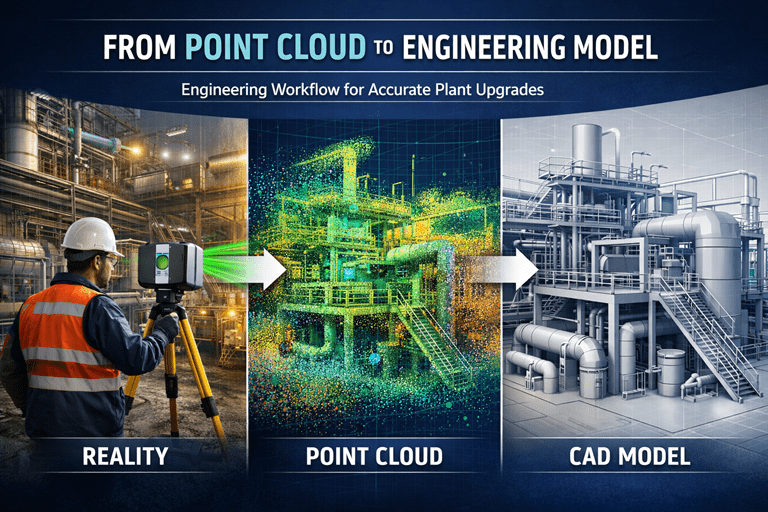
From Point Cloud to CAD: An Engineer-Led Process

At Hamilton By Design, Scan to CAD does not stop at data capture.

Our workflow includes:

  • Engineer-supervised scanning
  • Controlled point cloud registration
  • Interpretation of scan data by mechanical engineers
  • CAD modelling aligned to fabrication and FEA requirements

The result is not just a model, but engineering intent embedded in the CAD, suitable for downstream use in:

  • Fabrication drawings
  • Structural checks
  • Installation planning
  • Asset documentation

Why Scan to CAD Matters in the Sydney CBD

Sydney CBD projects are defined by:

  • Limited access
  • Tight construction tolerances
  • High labour and downtime costs
  • Zero tolerance for rework

Scan to CAD reduces risk by:

  • Eliminating assumptions
  • Providing accurate geometry
  • Supporting better design decisions early
  • Reducing clashes and site modifications

For builders, consultants, and asset owners, this translates directly into time and cost savings.


Industries We Support

Hamilton By Design delivers Scan to CAD services for manufacturing facilities, industrial plants, commercial buildings, rail infrastructure, water treatment facilities and mining-related infrastructure throughout Sydney.

Our team converts point cloud data into AutoCAD, SolidWorks, Inventor and engineering-ready deliverables to support design development, asset management and project execution.


Scan to CAD Sydney with Hamilton By Design

Hamilton By Design specialises in engineering-grade Scan to CAD services in Sydney, combining:

  • FARO Focus S70 LiDAR scanning
  • SolidWorks CAD modelling
  • Mechanical engineering expertise
  • Fabrication-ready documentation

Our approach is deliberately practical. Every scan is captured with a clear understanding of how the data will be used, whether for retrofit design, services coordination, or construction verification.

If your Sydney CBD project requires accurate as-built data you can actually design from, Scan to CAD Sydney provides a proven pathway from reality to reliable CAD.

Hamilton By Design logo displayed on a blue tilted rectangle with a grey gradient background
3D LiDAR scanning and 3D modelling service button — laser scanner capturing a point cloud for engineering and CAD modelling
Mechanical engineering services

Our clients:

Name
Would you like us to arrange a phone consultation for you?
Address

Related Sydney Services

Hamilton By Design provides engineering-led 3D scanning, LiDAR scanning, mechanical engineering and digital engineering services throughout Sydney and Greater Sydney.

Explore our related Sydney services:


  • 3D Scanning Sydney – Engineering-grade terrestrial laser scanning, as-built surveys and point cloud capture for industrial, infrastructure and commercial projects.
  • Reality Capture Sydney – High-accuracy reality capture, digital twins, asset documentation and engineering-grade site verification.
  • Scan to CAD Sydney – Convert point cloud data into AutoCAD, SolidWorks, Inventor and other engineering-ready CAD deliverables.
  • Point Cloud Modelling Sydney – Engineering-grade point cloud processing, clash detection, as-built verification and 3D modelling.
  • Mechanical Engineering Sydney – Mechanical design, plant upgrades, materials handling systems, conveyors, chutes, platforms and engineering support.
  • Structural Drafting Sydney – Structural steel drafting, fabrication drawings, GA drawings, workshop detailing and as-built documentation.

Hamilton By Design delivers Scan to CAD services throughout Sydney CBD, Parramatta, Liverpool, Penrith, Chatswood, Alexandria, Mascot, Newcastle and the Central Coast. Our team converts point cloud data into AutoCAD, SolidWorks and Inventor deliverables suitable for engineering, drafting and fabrication applications.


Scan to CAD Sydney

3D LiDAR Laser Scanning & Drafting Services in Chatswood & Greater Sydney

Mechanical Engineers in Sydney – Hamilton By Design

Blue banner graphic displaying the text "Point Cloud to CAD - Australia" in large white lettering, representing point cloud processing, scan-to-CAD conversion and digital engineering services across Australia.
Blue banner graphic displaying the text "Scan to CAD Sydney" in large white lettering, representing engineering-led point cloud to CAD conversion, LiDAR scanning and digital engineering services in Sydney.
Blue banner graphic displaying the text "Reality Capture Sydney - CBD" in large white lettering, representing engineering-led reality capture, LiDAR scanning and digital engineering services within Sydney CBD commercial buildings and infrastructure.

SolidWorks – Sydney

From Reality to Fabrication

From Reality to Fabrication: Engineering-Led 3D Modelling, Structural Verification and Build-Ready Documentation

In industrial and infrastructure projects, success is rarely determined by intent alone. It is determined by how accurately existing conditions are understood, how rigorously designs are validated, and how clearly fabrication information is communicated. At Hamilton By Design, we bridge the gap between site reality and fabrication by combining engineering-led 3D modelling, structural engineering, finite element analysis (FEA), and fabrication-ready documentation into a single, accountable workflow.

This integrated approach ensures that what is designed can be built, fits the first time, and performs as intended in service.

3D Modelling for Fabrication: Designing What Can Actually Be Built

3D modelling for fabrication is not simply about producing visually accurate geometry. It is about creating models that reflect real-world constraints, manufacturing tolerances, installation access, and structural behaviour. Hamilton By Design develops fabrication-grade 3D CAD models that are built around how components will be cut, welded, machined, lifted, and installed.

Our models are typically informed by site measurements, laser scanning, and as-built data to ensure alignment with existing structures and equipment. This is particularly critical in brownfield environments such as processing plants, material handling facilities, and industrial upgrades where assumptions based on legacy drawings are unreliable.

Each model is developed with downstream use in mind. Hole sizes, weld preparations, plate thicknesses, member sizes, and connection details are defined so fabricators can confidently transition from model to manufacture without reinterpretation or rework.

Structural Engineering Embedded in the Modelling Process

Structural engineering at Hamilton By Design is not a separate, downstream exercise. It is embedded directly within the 3D modelling process. Structural load paths, support conditions, connection behaviour, and serviceability requirements are considered as the model evolves, not after geometry is frozen.

This integrated method allows structural considerations to inform design decisions early, reducing late-stage redesigns and cost escalation. It also ensures compliance with relevant Australian Standards and industry-specific requirements, whether the project involves steel structures, plant support frames, access platforms, equipment foundations, or retrofit works.

By developing the structural model in parallel with the fabrication model, we maintain alignment between engineering intent and physical deliverables.

Finite Element Analysis: Verifying Performance, Not Guessing

Finite Element Analysis (FEA) plays a critical role in validating that a design will perform safely and efficiently under real operating conditions. Hamilton By Design applies FEA to assess stresses, deflections, load sharing, vibration response, and fatigue risk across a wide range of industrial applications.

FEA is particularly valuable where traditional hand calculations are insufficient or overly conservative. Complex geometries, dynamic loading, eccentric supports, impact forces, and non-uniform load distributions can all be assessed with greater confidence using simulation-based analysis.

Our FEA workflows are directly linked to the 3D CAD models used for fabrication. This ensures consistency between the analysed geometry and the manufactured outcome. Where analysis identifies areas of concern, design modifications are implemented directly in the model, creating a closed-loop engineering process that improves both safety and constructability.

As-Built Documentation: Capturing What Exists, Not What Was Assumed

Accurate as-built documentation is fundamental to effective engineering decision-making. In many facilities, original drawings are outdated, incomplete, or no longer representative of the installed condition. Hamilton By Design produces engineering-grade as-built documentation that reflects the true geometry and configuration of existing assets.

As-built documentation may include 3D models, general arrangement drawings, sectional views, and measured dimensions that form a reliable baseline for future upgrades, maintenance planning, and compliance assessments. This information reduces uncertainty, supports safer design decisions, and enables more efficient project planning.

For clients managing long-life assets, high-quality as-built data becomes a strategic resource rather than a one-off deliverable.

Fabrication Drawings That Reduce Risk on the Workshop Floor

Fabrication drawings are the point where engineering intent meets manufacturing reality. Poorly defined drawings lead to RFIs, delays, rework, and disputes. Hamilton By Design produces clear, unambiguous fabrication drawings that fabricators can trust.

Our drawings typically include detailed part drawings, assembly drawings, weld symbols, material specifications, tolerances, and notes aligned with the approved engineering model. Because these drawings are derived directly from fabrication-ready 3D models that have been structurally verified, inconsistencies between design and manufacture are minimised.

This approach supports faster fabrication turnaround, improved quality control, and smoother installation on site.

A Single, Accountable Engineering Workflow

One of the key advantages of Hamilton By Design’s approach is single-source accountability. By delivering 3D modelling for fabrication, structural engineering, FEA, as-built documentation, and fabrication drawings within a unified workflow, we remove the handover gaps that often exist between consultants, designers, and fabricators.

Clients benefit from clearer communication, reduced coordination risk, and designs that are technically sound, buildable, and aligned with operational requirements. Fabricators benefit from models and drawings that reflect real conditions and engineering intent. Asset owners benefit from safer, more reliable outcomes delivered with fewer surprises.

Hamilton By Design logo displayed on a blue tilted rectangle with a grey gradient background
3D LiDAR scanning and 3D modelling service button — laser scanner capturing a point cloud for engineering and CAD modelling
Mechanical engineering services

Engineering That Stands Up in the Real World

At Hamilton By Design, engineering is not about producing documents in isolation. It is about delivering outcomes that work in the real world—on site, in fabrication workshops, and over the life of an asset. By integrating 3D modelling for fabrication with structural engineering, finite element analysis, as-built documentation, and fabrication drawings, we provide a robust foundation for successful industrial projects.

This engineer-led, fabrication-focused approach ensures that designs are not only accurate on screen, but reliable, buildable, and fit for purpose in operation.

Our clients:


Name
Would you like us to arrange a phone consultation for you?
Address

3D CAD Modelling | 3D Scanning

Hamilton By Design

Finite Element Analysis (FEA) engineering simulation button
Mechanical engineering services

3D Scanning Engineering in Orange

3D Scanning Engineering in Orange

Orange is one of Australia’s most distinctive regional cities. Set high on the Central Tablelands, it combines a cool-climate environment with major health, education, agriculture, infrastructure, and mining-services activity. Engineering in Orange is shaped by altitude, frost, diverse industries, and a mix of modern and legacy assets—making accuracy, coordination, and practical design essential.

Hamilton By Design supports projects in and around Orange by combining 3D LiDAR laser scanning, mechanical and structural engineering, 3D CAD modelling, FEA, and fabrication-ready drafting. Our approach focuses on capturing real site conditions and turning them into buildable, engineering-approved outcomes.

Engineering challenges in a high-altitude regional city

Unlike many inland centres, Orange’s elevation brings colder temperatures, frost, and greater thermal movement. At the same time, the city supports critical assets such as hospitals, utilities, agricultural processing facilities, and infrastructure that must remain operational.

Engineering teams commonly deal with:

  • Brownfield sites with assets added over decades
  • Incomplete or outdated drawings
  • Tight staging requirements around live facilities
  • A need for conservative, reliable design

In this environment, assumptions introduce risk. Accurate as-built data is the foundation of successful projects.

3D Laser Scanning for Orange projects

Hamilton By Design uses high-accuracy 3D Laser Scanning to capture the true as-built condition of sites across Orange and the Central Tablelands. Laser scanning records millions of precise measurements, creating a detailed digital record of buildings, plant, structures, and surrounding interfaces.

3D laser scanning is particularly valuable in Orange for:

  • Health, education, and public infrastructure upgrades
  • Industrial and agricultural processing facilities
  • Mining-support and utilities assets
  • Sites where drawings no longer reflect reality

Scanning is typically completed during short, controlled site visits, minimising disruption while delivering data that can be relied on throughout the project.

Turning scan data into accurate 3D models

Once scanning is complete, the data is processed and converted into detailed 3D CAD Modelling. These models represent what actually exists on site—not what historic documentation suggests.

For Orange projects, scan-based 3D modelling supports:

  • Mechanical upgrades and equipment replacements
  • Structural additions such as platforms, supports, and access ways
  • Integration of new assets into existing facilities
  • Long-term digital records for future maintenance and expansion

Accurate models reduce uncertainty and allow design decisions to be made early and with confidence.

Mechanical and structural engineering built on real conditions

Engineering in Orange often involves coordinating multiple disciplines across constrained or operational sites. Working from scan-derived models allows engineers to:

  • Understand existing load paths and constraints
  • Check clearances and access early in the design
  • Coordinate mechanical and structural elements in a single environment

This leads to designs that are practical, buildable, and aligned with how assets are actually used—particularly important in a climate-affected region.

FEA to support performance and compliance

Where performance, safety, or compliance is critical, Hamilton By Design applies FEA Capabilities to support engineering decisions.

Finite Element Analysis is commonly used to:

  • Check structural capacity under operational and environmental loads
  • Assess modifications to existing steel and concrete
  • Review fatigue, vibration, and deflection
  • Support engineering approval and sign-off

Using FEA on scan-based geometry provides confidence that designs will perform as intended in real operating conditions.

Easy-to-build fabrication drawings with engineering approval

Clear documentation is essential for efficient construction—particularly in regional locations where rework can be costly. Hamilton By Design produces fabrication-ready Drafting directly from coordinated 3D models.

Typical deliverables include:

  • General arrangement and detail drawings
  • Fabrication and installation drawings
  • Engineering-reviewed and approval-ready documentation

This focus on clarity and constructability helps fabricators and contractors build accurately the first time.

Reducing risk through digital engineering

By capturing site conditions once and completing the majority of engineering off site, projects in Orange benefit from:

  • Reduced site visits and travel costs
  • Improved safety outcomes
  • Better coordination before fabrication
  • Fewer surprises during installation

This approach aligns well with Orange’s role as a regional hub supporting diverse industries across central NSW.

Hamilton By Design logo displayed on a blue tilted rectangle with a grey gradient background
3D LiDAR scanning and 3D modelling service button — laser scanner capturing a point cloud for engineering and CAD modelling
Mechanical engineering services

Supporting Orange with practical, buildable engineering

Orange’s strength lies in its balance—health, agriculture, infrastructure, mining services, and community all intersect here. Hamilton By Design’s integrated scanning and engineering workflow supports this complexity by delivering accurate data, sound engineering judgement, and clear documentation.

3D Scanning Engineering in Orange is about turning real-world site conditions into clear, buildable engineering outcomes that support growth, reliability, and long-term performance across the region.


Our clients:

Name
Would you like us to arrange a phone consultation for you?
Address
Finite Element Analysis (FEA) engineering simulation button
Mechanical engineering services

3D Scanning Engineering in Dubbo

3D Scanning Engineering in Dubbo

Dubbo is one of Australia’s most important inland cities. Often described as the capital of western New South Wales, it supports a vast region spanning agriculture, mining, infrastructure, health, education, and logistics. Unlike towns defined by a single industry, Dubbo’s strength lies in its diversity and its role as a regional engineering and services hub.

Engineering projects in and around Dubbo range from industrial facilities and infrastructure upgrades to mining support, utilities, and large-scale agricultural assets. Many of these projects involve brownfield conditions, legacy infrastructure, and tight delivery timelines—making accurate site data and practical engineering essential.

Hamilton By Design supports Dubbo projects with engineer-led 3D LiDAR laser scanning, mechanical and structural engineering, 3D CAD modelling, FEA, and fabrication-ready drafting. Our workflow is focused on accuracy, constructability, and delivering designs that work first time.

Engineering challenges in a regional hub like Dubbo

As a regional centre, Dubbo supports assets spread across a wide geographic area. Engineering teams often deal with:

  • Existing infrastructure that has been extended or modified over time
  • Limited or outdated drawings
  • Projects that must be delivered efficiently to minimise disruption
  • Assets that serve agriculture, mining, transport, and public infrastructure

In these environments, assumptions create risk. Reliable as-built information is critical before design, fabrication, or construction begins.

3D Laser Scanning for Dubbo projects

Hamilton By Design uses high-accuracy 3D Laser Scanning to capture the true as-built condition of sites in and around Dubbo. Laser scanning records millions of precise measurements, creating a detailed digital record of buildings, plant, structures, and surrounding interfaces.

3D laser scanning is particularly valuable for:

  • Brownfield industrial and infrastructure sites
  • Agricultural and processing facilities
  • Mining and quarry support assets
  • Projects where drawings no longer reflect site reality

Scanning is typically completed during short, controlled site visits, minimising disruption while providing data that can be relied on throughout the project.

From scan data to accurate 3D models

Once scanning is complete, the data is processed and converted into detailed 3D CAD Modelling. These models represent what actually exists on site, rather than what historic documentation suggests.

For Dubbo-based and regional projects, scan-based 3D modelling supports:

  • Mechanical upgrades and equipment replacements
  • Structural additions such as platforms, supports, and access ways
  • Integration of new assets into existing facilities
  • Long-term digital records for future maintenance and expansion

Accurate models reduce uncertainty and help project teams make informed decisions early.

Mechanical and structural engineering built on real conditions

Dubbo’s engineering projects often involve coordinating multiple disciplines across constrained or operational sites. Working from scan-derived models allows engineers to:

  • Understand existing load paths and constraints
  • Check clearances and access early in the design
  • Coordinate mechanical and structural elements within one environment

This leads to designs that are practical, buildable, and aligned with how assets are actually used.

FEA to support performance and compliance

Where performance, safety, or compliance is critical, Hamilton By Design applies FEA Capabilities to support engineering decisions.

Finite Element Analysis is commonly used to:

  • Check structural capacity under operational loads
  • Assess modifications to existing steel and concrete
  • Review fatigue, vibration, and deflection
  • Support engineering approval and sign-off

Using FEA on scan-based geometry gives confidence that designs will perform as intended in real operating conditions.

Easy-to-build fabrication drawings with engineering approval

Clear documentation is essential for successful delivery—particularly in regional locations where rework can be costly. Hamilton By Design produces fabrication-ready Drafting directly from coordinated 3D models.

Typical deliverables include:

  • General arrangement and detail drawings
  • Fabrication and installation drawings
  • Engineering-reviewed and approval-ready documentation

This focus on clarity and constructability helps fabricators and contractors build efficiently and accurately the first time.

Reducing risk through digital engineering

By capturing site conditions once and completing the majority of engineering off site, Dubbo projects benefit from:

  • Reduced site visits and travel costs
  • Improved safety outcomes
  • Better coordination before fabrication
  • Fewer surprises during installation

This approach is well suited to Dubbo’s role as a regional hub supporting diverse industries across western NSW.

Supporting Dubbo and regional NSW with practical engineering

Dubbo’s strength lies in its ability to support many industries across a wide region. Hamilton By Design’s integrated scanning and engineering workflow aligns with this role—providing accurate data, sound engineering judgement, and clear documentation to support reliable project delivery.

3D Scanning Engineering in Dubbo is about turning complex, real-world conditions into clear, buildable engineering outcomes that support infrastructure, industry, and growth across western New South Wales.

Hamilton By Design logo displayed on a blue tilted rectangle with a grey gradient background
3D LiDAR scanning and 3D modelling service button — laser scanner capturing a point cloud for engineering and CAD modelling
Mechanical engineering services

Our Clients:

Name
Would you like us to arrange a phone consultation for you?
Address

3D CAD Modelling | 3D Scanning

3D Scanning Engineering in Cobar

3D Scanning Engineering in Cobar

Cobar is one of Australia’s classic outback mining towns. Known for its deep underground copper and polymetallic mines, engineering in Cobar is shaped by heat, dust, isolation, and long-life assets that have been modified many times over decades. It is an environment where practical engineering, accurate information, and “right-first-time” delivery matter.

Hamilton By Design supports projects in and around Cobar by combining 3D LiDAR laser scanning, mechanical and structural engineering, 3D CAD modelling, FEA, and fabrication-ready drafting. This integrated approach helps mining and industrial projects move forward with confidence—without relying on assumptions or outdated drawings.

Engineering challenges unique to Cobar

Engineering in Cobar rarely starts with a blank slate. Most sites are brownfield, with infrastructure that has evolved over time and documentation that may be incomplete or no longer accurate. Combined with deep underground workings, extreme heat, and long supply chains, this creates a strong need for accurate as-built data before any design or fabrication begins.

This is where digital engineering workflows deliver real value.

3D Laser Scanning for Cobar mining and industrial sites

Hamilton By Design uses high-accuracy 3D Laser Scanning to capture the true as-built condition of mining and industrial assets in Cobar. Laser scanning records millions of precise measurements, creating a complete digital record of existing plant, structures, and interfaces.

3D laser scanning is particularly valuable in Cobar for:

  • Underground and surface mining infrastructure
  • Brownfield plant and steelwork
  • Assets with limited or outdated drawings
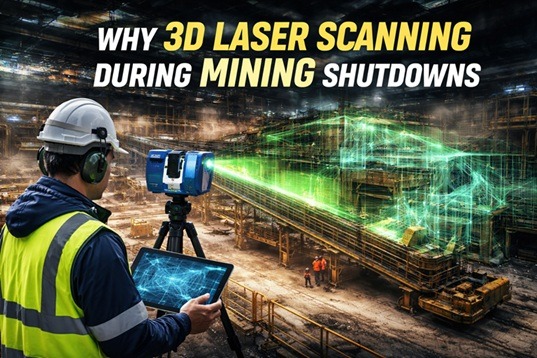
  • Projects with tight shutdown windows

Scanning is completed during short, controlled site visits, minimising disruption while providing reliable data that can be used throughout the project.

From scan data to accurate 3D models

Once scanning is complete, data is processed off site and converted into detailed 3D CAD Modelling. These models reflect what actually exists on site—not what legacy drawings suggest should exist.

For Cobar projects, scan-based 3D modelling supports:

  • Mechanical upgrades and equipment replacements
  • Structural additions such as platforms, supports, and access ways
  • Integration of new assets into constrained layouts
  • Long-term digital records for future maintenance and upgrades

Working from accurate models significantly reduces uncertainty and rework.

Mechanical and structural engineering built on reality

Engineering in Cobar often involves integrating modern equipment into ageing infrastructure. By working directly from scan-derived models, engineers can:

  • Understand existing load paths and constraints
  • Check clearances and access early
  • Coordinate mechanical and structural elements in a single environment

This leads to designs that are practical, buildable, and aligned with site realities.

FEA to verify performance and safety

Where performance, fatigue, or compliance is critical, Hamilton By Design applies FEA Capabilities to support engineering decisions.

Finite Element Analysis is commonly used in Cobar to:

  • Check structural capacity of existing assets
  • Assess modifications to ageing steel and supports
  • Review fatigue, vibration, and deflection
  • Support engineering approval and sign-off

Using FEA on scan-based geometry provides confidence that designs will perform as intended under real operating conditions.

Easy-to-build fabrication drawings with engineering approval

Clear documentation is essential for remote locations like Cobar, where rework is costly and time-consuming. Hamilton By Design produces fabrication-ready Drafting directly from coordinated 3D models.

Typical deliverables include:

  • General arrangement and detail drawings
  • Fabrication and installation drawings
  • Engineering-reviewed and approval-ready documentation

This focus on clarity and constructability helps fabricators and site teams build accurately the first time.

Reducing site risk through digital engineering

By capturing site conditions once and completing most engineering off site, projects benefit from:

  • Fewer site visits and lower travel costs
  • Reduced safety exposure
  • Better coordination before fabrication
  • Higher confidence during installation

For Cobar’s remote and demanding environment, this approach delivers measurable project benefits.

Hamilton By Design logo displayed on a blue tilted rectangle with a grey gradient background
3D LiDAR scanning and 3D modelling service button — laser scanner capturing a point cloud for engineering and CAD modelling
Mechanical engineering services

Practical engineering outcomes for Cobar

Cobar engineering demands solutions that are robust, maintainable, and grounded in reality. Hamilton By Design’s integrated scanning and engineering workflow brings together accurate data, sound engineering judgement, and clear documentation to deliver upgrades that work first time.

3D Scanning Engineering in Cobar is about turning complex, brownfield conditions into clear, buildable engineering outcomes—supporting mining operations now and into the future.

Our Clients:

Name
Would you like us to arrange a phone consultation for you?
Address

3D CAD Modelling | 3D Scanning