3D Scanning Engineering in Tamworth

3D Scanning in Tamworth

Tamworth is one of the most important inland cities in New South Wales โ€” a defence hub, agricultural powerhouse, logistics gateway and regional manufacturing centre. As the city continues to grow its industrial capability and upgrade infrastructure across defence, agriculture, transport, civil works and fabrication sectors, the need for modern engineering tools has never been stronger.

Hamilton By Design supports Wagga Wagga with 3D LiDAR scanning, mechanical and structural engineering, 3D CAD modelling, FEA simulation, and fabrication-ready drafting, delivering a complete digital engineering workflow from first site scan through to final drawings.

Whether youโ€™re upgrading a defence facility, redesigning an agricultural processing line, documenting a logistics depot, modernising a workshop or preparing a brownfield structure for retrofit โ€” our engineering-led approach gives you the confidence to build accurately and efficiently.

This article outlines how 3D scanning and digital engineering transform project outcomes in the Riverina region.


Why Wagga Wagga Is a Prime Location for 3D Scanning & Engineering

1. Dual Defence Bases โ€” RAAF Base Wagga + Kapooka Army Recruit Training Centre

Wagga is one of the only regional cities in Australia hosting two major defence establishments. Defence projects in the city require high levels of precision, compliance, digital documentation and engineering accuracy โ€” all supported by modern scanning and modelling tools.

2. Agricultural Powerhouse of the Riverina

Wagga supports one of the largest inland agricultural regions in the country. Facilities requiring regular upgrades include:

  • pump stations
  • irrigation systems
  • silos and grain-handling plants
  • processing equipment
  • machinery sheds
  • livestock and rural infrastructure

These sites often require accurate surveying, retrofit engineering and digital as-built documentation โ€” tasks perfectly suited to LiDAR scanning.

3. A Logistics, Freight & Manufacturing Hub

At the junction of the Sturt Highway, Olympic Highway and major freight routes, Wagga Wagga serves as:

  • a key transport centre
  • a manufacturing and fabrication district
  • a support hub for mining, defence, agriculture and civil construction

Accurate models, digital scans and engineering documentation help streamline upgrades, expansions and fabrication work across these sectors.

4. The Murrumbidgee River โ€” Civil & Hydrology Challenges

Riverside assets, bridges, levees, drainage systems and public structures require constant improvement. LiDAR scanning and digital modelling make civil engineering more predictable, safer, and easier to plan.


3D LiDAR Laser Scanning โ€” The Foundation of Accurate Engineering

Hamilton By Design provides high-accuracy 3D LiDAR scanning for buildings, industrial facilities, workshops, civil structures and brownfield environments. We capture millions of precise data points per second, producing millimetre-accurate digital twins used for engineering, modelling and drafting.

Our scanning service covers:

  • mechanical equipment
  • structural steel, platforms, walkways
  • pipework and tanks
  • sheds, workshops, farm facilities
  • buildings (internal and external)
  • terrain and drainage
  • defence and civil infrastructure

Learn more about our capabilities:
3D Laser Scanning

Benefits of 3D Scanning for Wagga Wagga Projects

  • Accurate as-built documentation
  • Reduced shutdown times
  • Less rework during fabrication
  • Better coordination between contractors
  • Improved safety (minimal manual measurement)
  • Faster engineering and design turnaround
  • Reliable models for upgrades and retrofits

In a city with ageing structures, brownfield facilities and diverse industrial activity, digital scanning creates clarity where traditional measurement falls short.


3D CAD Modelling โ€” Turning Scans into Intelligent Engineering Models

Once scanning is complete, Hamilton By Design transforms point-cloud data into detailed 3D CAD models, structural layouts and mechanical assemblies.

We model:

  • agricultural processing lines
  • pump systems and pipework
  • conveyors and mechanical equipment
  • structural frames, platforms and stairs
  • fabrication-ready steel structures
  • building layouts for redevelopment
  • defence facility upgrades

Our modelling supports precise engineering decision-making, alignment checks, clash detection and well-structured documentation.

Explore our modelling services:
3D CAD Modelling


FEA Analysis โ€” Engineering Confidence for Complex Projects

Many Wagga Wagga projects involve load-bearing structures, moving equipment, mechanical stress, fatigue risks or compliance requirements. Hamilton By Design performs Finite Element Analysis (FEA) to validate the safety, performance and reliability of your designs.

We analyse:

  • structural frames
  • mechanical components
  • tanks, brackets and supports
  • agricultural machinery
  • access platforms and retrofits
  • equipment subjected to vibration, pressure or fatigue

This ensures every design is safe, compliant and ready for construction.

Learn more about our simulation capability:
FEA Capabilities

(If youโ€™d like, I can correct the FEA URL if this is not the intended final link โ€” just tell me.)


Drafting Services โ€” Fabrication-Ready, Clear & Accurate

Wagga Waggaโ€™s industrial and agricultural workshops depend on drawings that are:

  • clear
  • accurate
  • fabrication-ready
  • compliant
  • easily interpreted by boilermakers, contractors and site crews

Hamilton By Design provides:

  • general arrangement drawings
  • fabrication detail drawings
  • isometrics and BOMs
  • structural drafting
  • mechanical drafting
  • P&ID updates
  • revision control and QA documentation

View our drafting services here:
Drafting

All drafting is generated from verified scan data and validated engineering models, ensuring first-time fit-up and reduced fabrication risk.


Where Hamilton By Design Adds Value in Wagga Wagga

1. Defence Projects and Facility Upgrades

Perfect for:

  • as-built modelling
  • mechanical/structural modifications
  • digital site capture
  • designing safe access systems
  • maintaining compliance records

2. Agricultural Infrastructure & Processing Plants

Ideal for:

  • pump stations
  • grain conveyors
  • silos and storage systems
  • livestock handling systems
  • machinery retrofits

3. Fabrication & Manufacturing Workshops

Supporting:

  • structural steel
  • machine frames
  • industrial components
  • site installations
  • complex fit-ups

4. Civil & Council Infrastructure

Including:

  • bridges
  • footpaths
  • drainage networks
  • public buildings
  • river-adjacent assets

5. Commercial & Industrial Redevelopment

Great for:

  • internal building scans
  • renovation planning
  • layout optimisation
  • service routing

Our clients:


End-to-End Workflow โ€” One Team, One Source of Accountability

Hamilton By Design ensures a smooth, unified digital engineering pipeline:

  1. 3D LiDAR Scan
  2. Point Cloud Registration & QA
  3. 3D CAD Modelling
  4. FEA Engineering Analysis
  5. Drafting & Fabrication Packages
  6. Digital QA & Final Documentation

No multi-contractor confusion.
No inconsistencies.
Just a clean, accurate workflow from measurement to construction.

Hamilton By Design logo displayed on a blue tilted rectangle with a grey gradient background
3D LiDAR scanning and 3D modelling service button โ€” laser scanner capturing a point cloud for engineering and CAD modelling
Mechanical engineering services

Wagga Waggaโ€™s Future Is Digital โ€” And Hamilton By Design Is Ready

With its growing defence, agricultural, logistics and manufacturing sectors, Wagga Wagga needs modern engineering methods to keep pace with development. Digital scanning, modelling, engineering analysis and drafting streamline the entire project lifecycle, reducing rework and increasing reliability.

Hamilton By Design delivers:

  • precision 3D scanning
  • engineering-grade modelling
  • validated FEA simulation
  • clear drafting
  • accurate, build-ready documentation
  • end-to-end project confidence

Whether your project is a shed, a defence facility, a processing plant, a workshop or a civil structure โ€” we are ready to support it from concept through to fabrication.
Name
Would you like us to arrange a phone consultation for you?
Address
3D LiDAR scanning and 3D modelling service button โ€” laser scanner capturing a point cloud for engineering and CAD modelling
Mechanical engineering services


Finite Element Analysis (FEA) engineering simulation button
Mechanical engineering services


3D CAD Modelling Australia service banner for Hamilton By Design


CHPP Engineering title graphic featuring bold white text reading "CHPP Engineering" centred on a blue rounded rectangle background.
Pipework Drafting title graphic featuring bold white text reading "Pipework Drafting" centred on a blue rounded rectangle background.
3D LiDAR Scanning for Engineering Projects title graphic featuring bold white text on a blue rounded rectangle background.


Finite Element Analysis (FEA) engineering simulation button
Structural drafting services button
Mechanical drafting services button


Australian Drafting logo featuring bold white text reading "Australian Drafting" centred on a blue rounded rectangle background.
Engineering Governance title graphic featuring bold white text reading "Engineering Governance" centred on a blue rounded rectangle background.
Engineering-Grade LiDAR Scanning title graphic featuring bold white text on a blue rounded rectangle background.

3D LiDAR Scanning for As-Built & Brownfield Engineering

3D LiDAR Scanning for As-Built & Brownfield Engineering

At Hamilton By Design, we use engineering-grade 3D LiDAR scanning to capture the true as-built condition of your plant, structures and equipment โ€” so you can design, fabricate and install with confidence.

From coal handling preparation plants (CHPP) and hard rock processing lines, through to power stations, manufacturing plants and commercial buildings, our engineer-led scanning process gives you accurate, clash-ready data for every brownfield project.


Why 3D LiDAR Scanning Matters for Brownfield Projects

Brownfield engineering is never โ€œlike the drawingsโ€.

Over years of operation, plants twist, deflect, corrode and get modified during shutdowns. Legacy drawings are often incomplete or out of date. Thatโ€™s where 3D LiDAR scanning changes the game:

  • Capture real geometry, not assumptions
    Record every beam, pipe, chute, cable tray and accessway as it actually exists today.
  • See deformations and historic repairs
    Pick up deflections, sagging, wear, corrosion loss and undocumented modifications that donโ€™t appear in old drawings.
  • De-risk shutdowns and fit-ups
    Use the scan-based model to check new designs for clashes, access, maintenance and installation sequence before you cut steel.
  • Improve safety and compliance
    Support structural integrity assessments, access/egress reviews and compliance checks with a trusted, measurable digital record.
  • Reduce site time for designers
    Capture everything once, then let your engineering and drafting team work from the digital plant model instead of repeated site visits.

What We Scan

Hamilton By Design can scan and model:

  • CHPP and coal handling infrastructure
    • Screens, crushers, transfer towers, chutes, hoppers, conveyors, tripper gantries, stackers and reclaimers
  • Hard-rock and mineral processing plants
    • Mills, cyclones, crushers, bins, slurry pipework, support structures
  • Power stations and energy infrastructure
    • Boiler houses, turbine halls, pipe racks, cable trays, access platforms
  • Manufacturing and industrial facilities
    • Production lines, material handling systems, automation cells, storage areas
  • Commercial and building services
    • Plant rooms, risers, roof services, faรงades and structural frames

If itโ€™s built and you need to understand it, we can scan it.


Engineer-Led Scanning, Not Just Survey

What sets Hamilton By Design apart is that our scanning is driven by mechanical engineers, not just surveyors.

That means we plan each scan campaign based on:

  • The future design work you need to do
  • The critical interfaces (bolt patterns, flanges, centre-lines, datum points)
  • The tolerances needed for fabrication and installation
  • The shutdown and access constraints on site

Because the same team that scans your plant is also involved in modelling, design and checking, we make sure the data captured is actually usable for engineering and drafting โ€” not just a pretty point cloud.


Typical Workflow: From Scan to Engineering Model

  1. Scope & Planning
    • Define the upgrade, problem area or shutdown scope
    • Agree survey tolerances, required deliverables and file formats
    • Plan access, shutdown windows and safety requirements
  2. On-Site 3D LiDAR Scanning
    • Set up control and scanning positions for full coverage
    • Capture high-density scans of structures, equipment and services
    • Minimise disruption to operations where possible
  3. Registration & Quality Checks
    • Register and align scans into a single, unified point cloud
    • Apply QA checks to confirm alignment and global accuracy
    • Provide initial visualisation for client review if required
  4. 3D Modelling & As-Built Geometry
    • Create engineering-ready 3D models in SolidWorks (or other CAD platforms as agreed)
    • Model structural steel, mechanical equipment, chutes, pipework and key interfaces
    • Prepare background models suitable for new design and layout work
  5. As-Built & Brownfield Engineering Support
    • Use the model to support new projects: upgrades, replacements, debottlenecking and layout changes
    • Run fit-up checks, clash detection and access/maintenance reviews
    • Prepare fabrication drawings and installation packages as required
  6. Handover & Ongoing Use
    • Provide point clouds, 3D models and drawings in agreed formats
    • Support future shutdowns and projects using the same trusted digital plant model

Deliverables You Can Expect

Depending on the project, we can provide:

  • Registered point clouds in industry-standard formats
  • 3D CAD models (SolidWorks or exchange formats such as STEP, IGES, DWG)
  • As-built drawings and GA layouts for mechanical and structural systems
  • Clash-check models for integration of new designs
  • Sections and detail views for critical interfaces (bolt patterns, flange faces, datum planes)
  • Visualisations to support stakeholder communication and approvals

All deliverables are produced with fabrication and construction in mind โ€” so your fabricators, installers and site team can act on them immediately.


Applications in As-Built & Brownfield Engineering

3D LiDAR scanning directly supports:

  • Shutdown-driven upgrades โ€“ de-risking installation windows by checking fit-up beforehand
  • Chute and hopper redesign โ€“ improving flow and wear life using accurate existing geometry
  • Conveyor and transfer tower modifications โ€“ adding new equipment or re-routing systems
  • Structural remediation and strengthening โ€“ understanding real load paths and condition
  • Pipework reroutes and tie-ins โ€“ locating existing lines, clashes and tie-in opportunities
  • Compliance and audit documentation โ€“ maintaining accurate records under Australian standards and site governance

Why Choose Hamilton By Design for 3D LiDAR Scanning?

  • Engineer-led, not equipment-led โ€“ we start with the engineering problem, then choose the scanning approach.
  • Single-source accountability โ€“ one team for scanning, modelling, engineering and drawings.
  • Brownfield experience โ€“ extensive work in CHPPs, mineral processing plants, power stations and heavy industry.
  • Fabrication-ready outputs โ€“ deliverables tailored for fabricators, installers and project engineers.
  • National coverage โ€“ servicing sites across NSW, QLD, WA, VIC and SA.

Hamilton By Design logo displayed on a blue tilted rectangle with a grey gradient background
3D LiDAR scanning and 3D modelling service button โ€” laser scanner capturing a point cloud for engineering and CAD modelling
Mechanical engineering services

Next Steps

Planning a shutdown, upgrade or brownfield modification?

Hamilton By Design can help you capture the plant once and then reuse that digital model across multiple projects โ€” reducing risk, improving accuracy and cutting rework.

Contact us to discuss your 3D LiDAR scanning requirements and weโ€™ll help you define:

  • The scanning scope
  • Required tolerances
  • Ideal deliverables for your designers, fabricators and site team

So your next project starts with facts, not assumptions.

Email โ€“ info@hamiltonbydesign.com.au

Phone – (+61) 047 700 2249

Our Clients

Name
Would you like us to arrange a phone consultation for you?
Address
Finite Element Analysis (FEA) engineering simulation button
Mechanical engineering services

3D Laser Scanning for Engineering

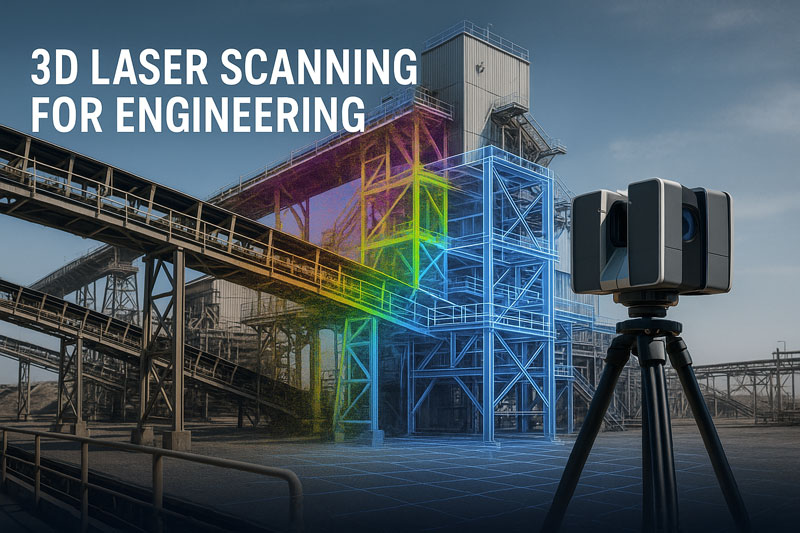
A 3D laser scanner on a tripod capturing an industrial plant structure, with a colourful point cloud and blue CAD wireframe overlay illustrating engineering-grade 3D laser scanning accuracy.

3D Laser Scanning for Engineering


At Hamilton By Design, we deliver high-accuracy 3D laser scanning tailored specifically for engineering projects across mining, heavy industry, manufacturing, buildings and infrastructure.

Whether youโ€™re planning a shutdown upgrade, solving a site fit-up problem or updating critical as-built documentation, our engineering-grade scans give your team the confidence to design, fabricate and install with millimetre-level accuracy.


Choosing the Right Scanner for the Right Engineering Discipline

One of the most overlooked aspects of 3D laser scanning is scanner selection.
Different scanners are designed for different forms of engineering work:

  • Civil works / road works scanners prioritise coverage and speed
  • Structural engineering scanners require higher accuracy across steelwork and vertical alignment
  • Mechanical engineering demands the highest level of precision for equipment tie-ins, rotating machinery, platework and interfaces

While some overlap exists between these disciplines, a single scanner cannot deliver optimal accuracy across all engineering environments. Using one device for civil, structural and mechanical scopes inevitably leads to accuracy losses, which then flow into the design, fabrication and installation phases.

At Hamilton By Design, we select the scanner and workflow that best matches your engineering discipline, ensuring the data you receive aligns with the tolerances required for your projectโ€”not just a โ€œone-size-fits-allโ€ output.


Why 3D Laser Scanning for Engineering Projects?

Traditional tape-measure surveys and hand sketches simply canโ€™t keep up with the complexity of modern plants and structures.

3D laser scanning for engineering replaces guesswork with precise digital data:

  • Capture true as-built conditions โ€“ including twists, deflections, corrosion losses and historic modifications
  • Eliminate rework and site clashes โ€“ check new designs against the point cloud before fabrication
  • Speed up shutdowns โ€“ reduce on-site measuring time and keep personnel out of hazardous areas
  • Create a single source of truth โ€“ supporting design, maintenance, safety and future expansion

Our 3D Laser Scanning Services

We provide end-to-end scanning solutions, from on-site data capture through to fabrication-ready models and documentation.


1. On-Site 3D Laser Scanning

  • High-accuracy terrestrial 3D LiDAR scanners matched to engineering discipline
  • Safe data capture in operational plants and confined access locations
  • Registration aligned to site grid, survey control or local benchmarks
  • Colourised or greyscale point clouds depending on scope needs

2. Engineering-Grade 3D Modelling

Using the scan data, we develop high-fidelity models in SolidWorks and other CAD platforms:

  • Structural steel, access systems and platforms
  • Chutes, hoppers, vessels, tanks and ductwork
  • Conveyors, transfer stations and materials handling systems
  • Mechanical equipment envelopes, mounting points and tie-ins
  • Building interiors, architectural features and services layouts

3. As-Built Documentation & Drawings

We produce clear, fabrication-ready documentation, including:

  • As-built GA drawings and layout packages
  • Detailed fabrication drawings and BOMs
  • Connection and interface detailing
  • Clearance envelopes and clash-review drawings for shutdown planning

4. Digital Quality Assurance

Our scanning workflows verify installation accuracy and compliance:

  • Compare new steelwork or equipment against the design model
  • Check critical dimensions pre- and post-shutdown
  • Provide QA evidence for clients, regulators and insurers

Industries We Support

Our engineering scanning services support:

  • Mining & CHPPs โ€“ draglines, bucket-wheel reclaimers, conveyors, chutes, screen decks, process plant steelwork
  • Power stations & energy โ€“ boilers, turbine halls, pipe racks, coal handling and ash systems
  • Heavy manufacturing โ€“ workshops, cranes, production lines, process equipment
  • Buildings & infrastructure โ€“ plant rooms, services, heritage structures, refurbishment projects
  • Data centres & critical facilities โ€“ equipment layouts, cable pathways, HVAC and expansion planning

If your project demands tight interfaces, shutdown precision or difficult-to-measure geometry, 3D laser scanning provides immediate value.


Our Typical Workflow

1. Scope & Planning

We meet with engineers, supervisors and project managers to define accuracy requirements, scanning areas and deliverables.

2. On-Site Scanning

We mobilise to site, complete inductions and capture the plant with minimal disruption.

3. Registration & QA

Scans are unified into a verified point cloud referenced to known control.

4. 3D Modelling & Design Support

We create engineering-grade models that integrate seamlessly into your CAD workflow.

5. Deliverables & Review

Point clouds, models and drawings are provided in your requested formats, with remote or in-person review.

6. Ongoing Support

Need to add new platforms, chutes or modifications later? We can extend the model and reuse existing scan data.


Benefits for Engineering Teams

Partnering with Hamilton By Design delivers:

  • Reduced shutdown risk โ€“ fewer installation surprises
  • Better design decisions โ€“ engineers see the actual plant, not outdated drawings
  • Shorter site time โ€“ thousands of measurements captured in hours
  • Improved safety โ€“ less exposure to heights, confined spaces and live equipment
  • Clear communication โ€“ 3D visualisations improve stakeholder understanding

Accuracy, Equipment & Data Formats

We use engineering-grade LiDAR scanners capable of millimetre-level accuracy at typical working distancesโ€”selected specifically to match your engineering discipline.

Typical deliverables include:

  • Registered point clouds (E57, RCP/RCS, LAS)
  • SolidWorks and STEP models
  • 2D DWG/DXF drawings
  • PDF QA reports and review packs
  • Navisworks-ready models for clash detection

We tailor outputs to fit your preferred software environment.


Why Work with Hamilton By Design?

  • Mechanical and structural engineering expertise โ€“ we scan with design intent in mind
  • Extensive heavy-industry background โ€“ mining, CHPPs, power and processing plants
  • Complete end-to-end capability โ€“ scanning, modelling, engineering and drawings
  • Australia-wide service โ€“ Central Coast, Hunter Valley, Newcastle, Bowen Basin, Surat Basin, Pilbara, Perth, Adelaide, Sydney and more

When you combine accurate data with real-world engineering experience, you get designs that are safe, buildable and cost-effective.


Ready to Talk About Your Next Project?

If youโ€™re planning a shutdown, upgrade or complex retrofit, now is the perfect time to integrate 3D laser scanning for engineering into your workflow.

๐Ÿ“ž Call:
๐Ÿ“ง Email:
๐ŸŒ Website: www.hamiltonbydesign.com.au

Weโ€™re ready to review your scope, assess your drawings and help you de-risk your next project.


Hamilton By Design logo displayed on a blue tilted rectangle with a grey gradient background
3D LiDAR scanning and 3D modelling service button โ€” laser scanner capturing a point cloud for engineering and CAD modelling
Mechanical engineering services

Ready to Talk About Your Next Project?

If youโ€™re planning a shutdown, upgrade or complex retrofit, now is the perfect time to integrate 3D laser scanning for engineering into your workflow.

Weโ€™re happy to review your scope, look over existing drawings and recommend how scanning and 3D modelling can de-risk your next project.

Name
Address
You would like to:

Engineering Projects

Mechanical Engineering Perth WA banner for Hamilton By Design featuring white text on a blue background.
3D Laser Scanning Perth WA banner for Hamilton By Design with white text on a blue background.
SolidWorks Perth WA banner for Hamilton By Design featuring white text on a blue background.
Finite Element Analysis (FEA) engineering simulation button
Mechanical engineering services

Engineering Services

3D CAD Modelling | 3D Scanning

SolidWorks

3D CAD Modelling Australia service banner for Hamilton By Design
3D LiDAR scanning and 3D modelling service button โ€” laser scanner capturing a point cloud for engineering and CAD modelling
Mechanical engineering services
3D CAD Modelling Australia service banner for Hamilton By Design
Mechanical, Structural & Pipework Drafting service banner by Hamilton By Design featuring white text on a blue background.
Australian Drafting logo featuring bold white text reading "Australian Drafting" centred on a blue rounded rectangle background.
Blue banner graphic displaying the text "Point Cloud to CAD - Australia" in large white lettering, representing point cloud processing, scan-to-CAD conversion and digital engineering services across Australia.
CHPP Engineering title graphic featuring bold white text reading "CHPP Engineering" centred on a blue rounded rectangle background.
Engineering Governance title graphic featuring bold white text reading "Engineering Governance" centred on a blue rounded rectangle background.
Mechanical engineering services
Australian Drafting logo featuring bold white text reading "Australian Drafting" centred on a blue rounded rectangle background.
3D LiDAR Scanning Hunter & Newcastle banner with white text on a blue background promoting engineering-grade laser scanning services for industrial, mining and infrastructure projects across the Hunter Valley and Newcastle region.
Mechanical Engineering Hunter & Newcastle banner promoting mechanical engineering services for mining, industrial plants, power generation, manufacturing and heavy industry throughout the Hunter Valley and Newcastle region.
Structural Drafting Hunter & Newcastle banner promoting structural drafting services for mining, industrial plants, power generation, manufacturing and infrastructure projects across the Hunter Valley and Newcastle region.
Mechanical Engineering Perth WA banner for Hamilton By Design featuring white text on a blue background.
3D Laser Scanning Perth WA banner for Hamilton By Design with white text on a blue background.
SolidWorks Perth WA banner for Hamilton By Design featuring white text on a blue background.
Fabrication and product design services
Finite Element Analysis (FEA) engineering simulation button
3D LiDAR scanning and 3D modelling service button โ€” laser scanner capturing a point cloud for engineering and CAD modelling
Blue rounded button with the text โ€œSolidWorks Designโ€ in white.
Mechanical drafting services button
Structural drafting services button

3D Scanning Sydney banner promoting engineering-grade 3D laser scanning, LiDAR scanning, and reality capture services by Hamilton By Design.
Mechanical Engineering Sydney banner with white text on a blue background representing Hamilton By Design's mechanical engineering services in Sydney.
Mechanical Drafting and 3D Modelling Sydney banner highlighting Hamilton By Design's CAD drafting, 3D modelling, and engineering design services in Sydney.

Mechanical Engineering | Structural Engineering


As-Built Drawings from a LiDAR Scanner

As-Built Drawings from a LiDAR Scanner

Turning reality capture into reliable documentation for the building industry

Blue 3D LiDAR scanner icon on a tripod with scanning waves

In modern construction, as-built drawings are no longer a โ€œnice to haveโ€ at the end of a project. Theyโ€™re critical for compliance, future upgrades, maintenance and dispute resolution. The problem is that traditional as-built drawings often rely on red-pen markups, partial measurements and rushed updates done after practical completion.

LiDAR scanning changes this completely. By capturing millions of accurate points in a matter of minutes, a LiDAR scanner allows engineers and drafters to create as-built drawings that reflect the real, built condition โ€“ not what was on the original design.

Hamilton By Design uses 3D LiDAR scanning to generate accurate as-built drawings from a LiDAR scanner, giving builders, architects, engineers and asset owners a defensible digital record of their building or plant.


What are as-built drawings from a LiDAR scanner?

As-built drawings from a LiDAR scanner are:

  • 2D plans, sections and elevations
  • 3D models and details
  • derived directly from a registered point cloud captured on site.

Instead of manually measuring walls, slab setouts, penetrations and services, a LiDAR scanner records the whole space. The point cloud is then brought into CAD (e.g. SolidWorks, Revit or other platforms), where key elements are modelled and documented.

Typical outputs include:

  • Architectural as-builts (floor plans, elevations, reflected ceiling plans)
  • Structural as-builts (columns, beams, slabs, penetrations, bracing)
  • Services as-builts (pipework, ductwork, cable trays, equipment locations)
  • Detailed shop drawings for plant rooms and complex interfaces

How the workflow works

  1. LiDAR scanning on site
    • Rapid capture of internal and external spaces
    • Minimal disruption to trades and building users
    • Safe access to congested or hard-to-reach areas
  2. Point cloud registration and cleaning
    • Multiple scans stitched together into a single, accurate model
    • Aligned to site control or building grid where available
  3. 3D modelling and drafting
    • Critical building elements are modelled from the point cloud
    • As-built geometry is used to produce 2D drawings and 3D models
  4. Issue of as-built drawing pack
    • PDF drawings for records and certifications
    • DWG / RVT / STEP or other formats for future projects
    • Optional viewer files so non-CAD users can navigate the 3D data

Pros of as-built drawings from a LiDAR scanner

1. High accuracy and completeness

  • Millions of measurement points capture true geometry, not assumptions.
  • Complex areas โ€“ plant rooms, risers, ceiling spaces โ€“ are fully documented, not just partially measured.

2. Reduced rework and disputes

  • Clear evidence of what was built supports defect resolution and variation claims.
  • Future contractors design to real as-built conditions, reducing clashes and site modifications.

3. Faster capture on busy sites

  • Scanning is quick compared to manual measurement.
  • Ideal for constrained programmes and after-hours access windows.

4. Better coordination between disciplines

  • Structural, architectural and services teams can all reference the same point cloud and models.
  • Less โ€œfinger-pointingโ€ when drawings donโ€™t match whatโ€™s on site.

5. Stronger compliance and asset management

  • As-built drawings support building approvals, fire safety certification and ongoing maintenance planning.
  • Facility managers gain a digital baseline for future upgrades.

Cons and limitations to consider

1. Not every point needs to become a line

LiDAR creates very detailed data. If over-modelled, projects can waste time modelling elements that donโ€™t impact decisions. The key is to define what actually needs to be modelled for compliance, maintenance and future work.

2. Line-of-sight constraints

Scanners work online-of-sight. Hidden voids, behind-ceiling spaces or crowded areas may still need additional access or targeted scans.

3. File sizes and hardware requirements

Point clouds can be large and require good hardware and workflows. We manage this for you, but project teams need suitable software or viewer tools if they want to work directly with the cloud.

4. Upfront cost vs basic markups

LiDAR-based as-builts cost more than simple red-pen drawings. However, they usually save money by reducing rework, clarifying liability and avoiding surprises on the next project phase.


What LiDAR technology offers the building industry beyond as-builts

LiDAR scanning doesnโ€™t just create better as-built drawings. It unlocks a broader digital toolkit for the building and construction industry.

1. BIM and clash detection

  • Point clouds can be used to validate BIM models, ensuring they match reality.
  • New designs can be checked against the as-built point cloud to spot clashes before anything is fabricated.

2. Digital QA and dimensional control

  • Verify column locations, slab levels, penetrations and set-outs against design tolerances.
  • Check fabricated elements (stairs, walkways, modules) against the point cloud before shipping to site.

3. Refurbishment and fit-out planning

  • Ideal for refurbishing existing buildings, heritage structures and occupied spaces.
  • Designers can test options in 3D, knowing the geometry reflects the real building.

4. Facilities management and digital twins

  • As-built models become the foundation for digital twin environments.
  • Facility managers can track assets, plan maintenance and visualise future upgrades in context.

5. Heritage documentation and risk management

  • Non-intrusive capture of historic facades and interiors.
  • Provides a permanent digital record if damage, fire or future alterations occur.

6. Off-site fabrication and modular construction

  • Accurate as-built geometry allows stair cores, plant skids and faรงade elements to be prefabricated with confidence.
  • Better fit-up on site, fewer hot-work modifications and reduced time at height.

Hamilton By Design logo displayed on a blue tilted rectangle with a grey gradient background
3D LiDAR scanning and 3D modelling service button โ€” laser scanner capturing a point cloud for engineering and CAD modelling
Mechanical engineering services

Why work with Hamilton By Design

Hamilton By Design combines LiDAR scanning, 3D modelling and engineering into one integrated service:

  • We understand both building and industrial environments.
  • We work with architects, builders, engineers and asset owners.
  • We tailor the level of as-built detail to what your project actually needs.

Whether youโ€™re closing out a project with reliable as-built drawings, planning a major refurbishment, or laying the groundwork for digital twins, as-built drawings from a LiDAR scanner provide a precise, future-proof record of your building.

Our clients:

Name
Address
You would like to:

3D Laser Scanning

Transforming Projects with 3D Scanning in Sydney

3D LiDAR Scanning โ€“ Digital Quality Assurance

3D LiDAR Laser Scanning & Drafting Services in Chatswood & Greater Sydney – Hamilton By Design

Reality Capture Brisbane title graphic with white text on a blue background promoting reality capture, LiDAR scanning and digital engineering services in Brisbane, Queensland.
3D Scanning Brisbane text graphic on a blue background promoting engineering-led laser scanning and reality capture services in Brisbane.

LiDAR Scanning Brisbane title graphic with white text on a blue background promoting terrestrial LiDAR scanning, point cloud capture and reality capture services in Brisbane, Queensland.
SolidWorks Brisbane title graphic with white text on a blue background promoting SolidWorks mechanical design, 3D CAD modelling and engineering drafting services in Brisbane, Queensland.


3D Scanning Sydney banner promoting engineering-grade 3D laser scanning, LiDAR scanning, and reality capture services by Hamilton By Design.
Mechanical Engineering Sydney banner with white text on a blue background representing Hamilton By Design's mechanical engineering services in Sydney.
Mechanical Drafting and 3D Modelling Sydney banner highlighting Hamilton By Design's CAD drafting, 3D modelling, and engineering design services in Sydney.

Mechanical Engineering | Structural Engineering


3D Laser Scanning Sydney | LiDAR & 3D Modelling

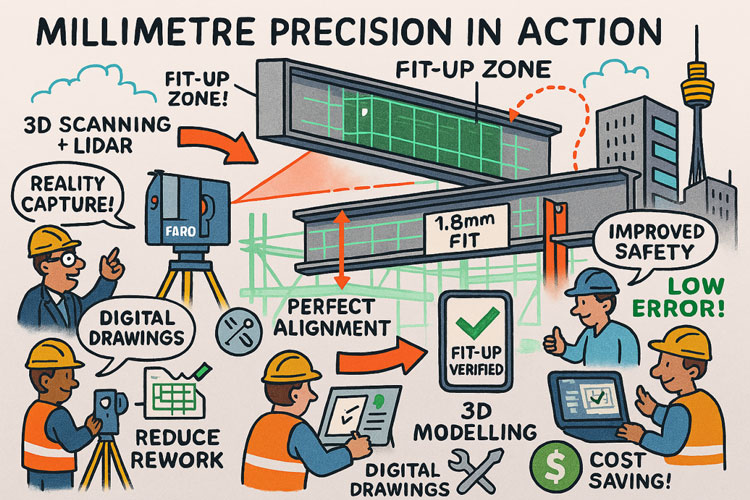
Illustrated diagram showing millimetre-precision 3D LiDAR scanning and digital modelling for construction fit-up verification. A FARO laser scanner captures reality data, generating digital drawings and a point cloud used for perfect alignment and a verified 1.8 mm fit-up. Engineers review models on tablets and laptops, highlighting reduced rework, improved safety, low error rates, and cost savings. Sydney tower landmark visible in background.

3D LiDAR Scanning and 3D Modelling in Sydney

Engineering-grade accuracy for brownfield upgrades, shutdowns and complex projects across Greater Sydney.

Hamilton By Design provides engineer-led 3D scanning in Sydney for industrial plants, fabrication projects, construction sites and brownfield upgrades. Using terrestrial LiDAR scanning, we capture accurate existing conditions and convert registered point clouds into SolidWorks, Inventor and AutoCAD models, drawings and fabrication-ready design information.

Sydneyโ€™s industrial plants, commercial buildings and infrastructure are under constant pressure to increase capacity, improve safety, meet compliance requirements and reduce downtime. Much of this work takes place in congested, operational brownfield environments where traditional tape measurements and hand-sketched site notes may not provide enough information for reliable engineering design.

Blue 3D LiDAR scanner icon on a tripod with scanning waves

Hamilton By Design provides 3D LiDAR scanning and 3D modelling across Sydney, capturing existing conditions in detail and converting the scan data into practical engineering models and drawings. From Sydney CBD plant rooms and commercial buildings to manufacturing facilities, power stations, port infrastructure and industrial sites, we help project teams plan upgrades with greater confidence.

3D Scanning Services in Sydney

Hamilton By Design provides 3D scanning services in Sydney for industrial plants, commercial buildings, infrastructure upgrades and fabrication projects. Using terrestrial LiDAR scanning, we can capture structural steel, industrial equipment, conveyors and chutes, pipework and ductwork, platforms and access structures, buildings and plant rooms, fabrication interfaces, connection points and surrounding obstructions.

The registered point cloud creates a detailed digital record of the existing site and can support Scan to CAD services in Sydney, SolidWorks modelling and fabrication documentation and industrial 3D scanning projects across Sydney.

This coordinated workflow helps engineers, designers and fabricators verify clearances, identify possible clashes and reduce the risk of workshop rework, site modifications and installation delays.

Why use 3D LiDAR scanning in Sydney?

Sydney projects often involve:

  • Tight CBD access and complex services
  • Limited shutdown windows
  • Congested plant rooms and pipe racks
  • Ageing assets with incomplete or outdated drawings
  • Multiple contractors needing to coordinate off the same information

3D LiDAR scanning solves these problems by creating a high-resolution digital record of your site before you start detailed design.

Key benefits:

  • Reduce rework and clashes โ€“ design to true, as-built geometry, not assumptions
  • Shorten shutdowns โ€“ fabricate offsite, install first time with fewer site mods
  • Improve safety โ€“ minimise time spent in hazardous or confined areas
  • Support compliance โ€“ maintain a defensible, digital record of existing conditions
  • Enhance collaboration โ€“ share point clouds, 3D models and eDrawings across your team

If youโ€™re planning complex works in Sydney โ€“ from a plant upgrade at Port Botany to a new services riser in the CBD โ€“ 3D LiDAR scanning gives your engineers and fabricators a reliable starting point.


Our workflow: from LiDAR scan to engineering-ready 3D model

Hamilton By Design combines 3D LiDAR scanning and 3D modelling in Sydney into one integrated workflow, so you donโ€™t have to juggle multiple vendors.

1. Site visit and LiDAR capture

  • Mobilisation to your site (Sydney CBD, Western Sydney, North Shore, Port Botany, etc.)
  • Safe access and scanning around your operations and shutdown constraints
  • Capture of plant rooms, structures, conveyors, chutes, pipework, equipment and building envelopes

2. Point cloud registration and clean-up

  • Registration of scans into a single, coherent point cloud
  • Alignment to your coordinate system or project grid where required
  • Noise reduction and cropping to focus on the area of interest

3. 3D modelling in SolidWorks

  • Creation of accurate 3D models from the point cloud for critical equipment and structures
  • Parametric modelling of steelwork, chutes, conveyors, platforms, mechanical items and services
  • Integration of new design concepts into the as-built environment for clash detection

4. Engineering checks (optional)

  • Use of SolidWorks Simulation / FEA for mechanical or structural checks where required
  • Validation of installation envelopes, maintenance clearance and access

5. Fabrication-ready outputs

  • General arrangement drawings (GA)
  • Detailed fabrication drawings with DXF outputs for plate and profile cutting
  • 3D formats compatible with your fabricator or EPCM
  • 3D viewer files (e.g. eDrawings) so supervisors and frontline teams can review designs without CAD software

Where 3D LiDAR scanning and 3D modelling add value in Sydney

We provide 3D LiDAR scanning and 3D modelling in Sydney across a wide range of sectors:

Data centres and critical infrastructure

  • Scanning of white space, plant rooms, battery rooms and switch rooms
  • Modelling of cable ladders, HVAC ductwork, chilled water, CRAC units and structural supports
  • Planning of new racks, containment, or UPS upgrades with minimal downtime

Commercial and CBD plant rooms

  • As-built capture of mechanical services in high-rise towers and commercial buildings
  • Modelling of pipework, pumps, chillers, heat exchangers, filters and ventilation systems
  • Feasibility checks for new equipment, risers and routes before cutting steel

Mining, power and heavy industry (Sydney & Hunter-connected assets)

  • Scanning of coal handling plant, chutes, conveyors and transfer towers feeding into Sydney supply chains
  • Support for shutdowns at power stations and terminals servicing the Greater Sydney region
  • Like-for-like replacements and upgrade designs that fit first time

Manufacturing and process plants

  • Capture of production lines, tanks, pipe bridges and structural frames
  • Layout changes, new equipment installations and debottlenecking works
  • Accurate set-outs for fabricators and installers to minimise site cutting and hot work

Heritage and brownfield structures

  • Non-intrusive digital capture of older buildings and structures
  • Support for adaptive reuse, fit-outs and services upgrades without damaging heritage fabric

Engineering-grade accuracy you can trust

LiDAR scanners can produce millions of points, but not all scanning and modelling workflows are equal. Hamilton By Design focuses on:

  • Practical engineering accuracy โ€“ suitable for fabrication, structural detailing and mechanical upgrades
  • Clear tolerances โ€“ we communicate what can be relied on to ยฑ1โ€“2 mm locally and how that translates to global fit-up
  • Model discipline โ€“ we model what you need for decision-making, design and fabrication, rather than over-complicating with unnecessary detail
  • Traceability โ€“ every modelled part is traceable back to the point cloud, so you can verify dimensions at any time

This approach is ideal for shutdown work, where every hour counts and โ€œnear enoughโ€ drawings are no longer acceptable.


Why Sydney clients work with Hamilton By Design

Choosing a partner for 3D LiDAR scanning and 3D modelling in Sydney is about more than just owning a scanner. Our clients value that we:

  • Understand heavy industry and engineering
    Weโ€™re mechanical engineers with real-world experience in CHPPs, hard rock plants, materials handling, pressure piping and structural steel โ€“ not just โ€œscan techsโ€.
  • Speak the same language as your fabricator or EPCM
    We produce models and drawings in formats your fabricators can use immediately, with realistic weld details, plate developments and shop-friendly outputs.
  • Support your whole project lifecycle
    From early feasibility and โ€œwill it fit?โ€ studies through to final fabrication drawings and as-built documentation.
  • Service the broader Sydney region
    Including Sydney CBD, North Sydney, Chatswood, Parramatta, Western Sydney, Port Botany, Kurnell and surrounding industrial hubs.

Industries We Support

Our engineering-grade LiDAR scanning services support manufacturing facilities, Sydney rail infrastructure, water and wastewater treatment plants, ports, commercial buildings, hospitals, data centres and industrial processing facilities throughout Sydney.

Accurate point cloud data enables engineers, designers and asset owners to make informed decisions during brownfield upgrades, shutdowns, maintenance projects and capital works programs.


Typical deliverables for your next project

When you engage Hamilton By Design for 3D LiDAR scanning and 3D modelling in Sydney, you can expect:

  • Site scanning and registered point cloud
  • 3D SolidWorks models of key plant, structures and new design concepts
  • 2D GA drawings and detailed fabrication drawings
  • DXF files for laser / plasma cutting
  • Optional FEA / engineering checks
  • Clear, practical advice on tolerances, fit-up and constructability

Weโ€™re happy to work directly for asset owners, OEMs, fabricators or EPCM firms.


Hamilton By Design logo displayed on a blue tilted rectangle with a grey gradient background
3D LiDAR scanning and 3D modelling service button โ€” laser scanner capturing a point cloud for engineering and CAD modelling
Mechanical engineering services

Letโ€™s talk about your Sydney project

If you have a shutdown, upgrade or brownfield project coming up in Sydney, now is the right time to talk about 3D LiDAR scanning and 3D modelling. Early digital capture and smart modelling cost far less than late-stage rework and site delays.

Our clients

Contact Hamilton By Design to discuss:

  • What area you need scanned
  • What decisions youโ€™re trying to make (or drawings you need)
  • Shutdown dates and access constraints
  • How we can package scanning, 3D modelling and drafting to suit your project and budget
Name
Address
You would like to:
3D Scanning Sydney banner promoting engineering-grade 3D laser scanning, LiDAR scanning, and reality capture services by Hamilton By Design.
Mechanical Engineering Sydney banner with white text on a blue background representing Hamilton By Design's mechanical engineering services in Sydney.
Mechanical Drafting and 3D Modelling Sydney banner highlighting Hamilton By Design's CAD drafting, 3D modelling, and engineering design services in Sydney.

3D Point Clouds Are a Game-Changer for Your Projects

Your Experts in 3D Laser Scanning & Mechanical Design

3D CAD Modelling | 3D Scanning

3D Scanning Sydney

How 3D Laser Scanning Supports As-Built Documentation Under Australian Building Codes & Legal Requirements

3D Scanning for Construction in Sydney

Transforming Projects with 3D Scanning in Sydney

3D LiDAR Scanning โ€“ Digital Quality Assurance


3D Scanning Sydney banner promoting engineering-grade 3D laser scanning, LiDAR scanning, and reality capture services by Hamilton By Design.
Mechanical Engineering Sydney banner with white text on a blue background representing Hamilton By Design's mechanical engineering services in Sydney.
Mechanical Drafting and 3D Modelling Sydney banner highlighting Hamilton By Design's CAD drafting, 3D modelling, and engineering design services in Sydney.

Mechanical Engineering | Structural Engineering


3-D Lidar Scanning Hunter Valley

3-D Lidar Scanning Hunter Valley: Transforming Industrial Projects with Accuracy, Safety and Engineering Confidence

The Hunter Valley is one of Australiaโ€™s most strategically important industrial regions. It supports large mining operations, CHPP facilities, fabrication workshops, energy infrastructure, civil projects and heavy manufacturing. These industries depend on precision, safety and efficient project delivery โ€” yet most operate in aging brownfield environments where original drawings are outdated, equipment has shifted over time, and modifications have occurred for decades without accurate documentation.

In environments like these, traditional measuring methods often fail to provide the precision required for confident engineering and fabrication. This is why 3-D Lidar scanning in the Hunter Valley has become a critical tool for engineers, supervisors, fabricators and project managers. It captures the real-world site conditions with millimetre accuracy, creating a digital foundation for smarter, safer and more efficient project execution.
This article explores the benefits, pros and cons of 3-D Lidar scanning, and explains why the Hunter Valley is uniquely positioned to gain massive value from this technology.


Understanding 3-D Lidar Scanning

3-D Lidar (Light Detection and Ranging) scanning is a non-contact measurement technology that uses lasers to capture millions of points in seconds. The scanner emits laser pulses and measures the return time to determine distances, building a dense โ€œpoint cloudโ€ of the environment.

This point cloud is a precise 3-D representation of:

  • Structural steel
  • Conveyors and transfer towers
  • Chutes, bins and hoppers
  • Tanks, pipework and mechanical equipment
  • Platforms, walkways and buildings
  • Industrial plant rooms and process areas

Once captured, this digital data becomes the foundation for engineering models, fabrication drawings, digital fit checks and project planning.


Why 3-D Lidar Scanning Matters in the Hunter Valley

The Hunter Valley contains some of the most complex and heavily used industrial assets in Australia. Many facilities have been in operation for decades, and almost all have undergone modifications, expansions and repairs. Over time, the real-world geometry diverges significantly from the old drawings stored on paper or outdated CAD files.

This creates major challenges:

  • Measurements taken by hand are inaccurate or unsafe
  • Shutdown windows are extremely tight
  • Fabricators rely on precise data to avoid costly rework
  • Engineers require true geometry for load calculations and interface design
  • Supervisors need reliable information to scope replacement work

3-D Lidar scanning provides a millimetre-accurate representation of what exists onsite, removing guesswork and supporting engineering best practice.


The Benefits of 3-D Lidar Scanning in the Hunter Valley

1. Millimetre Accuracy Improves Engineering Outcomes

In heavy industrial environments, small measurement errors can create large, expensive problems. Structural misalignment, worn steel, bent frames, sagging conveyors and distorted chutes are all common in brownfield plants.

3-D Lidar scanning captures:

  • True dimensions
  • Variations from design
  • Deformation and misalignment
  • Complex curved surfaces
  • Differences caused by wear and tear

Engineers design with confidence because the digital model reflects actual site conditions โ€” not assumptions.


2. Huge Reduction in Rework and Fabrication Errors

Fabricators in Singleton, Muswellbrook, Rutherford, Tomago and throughout the Hunter region rely on accurate measurements to ensure steel and mechanical components fit the first time.

Without accurate data, common fabrication issues include:

  • Bolt holes misaligned
  • Steel members too short or too long
  • Chutes or hoppers not matching openings
  • Pipe spools missing clearances
  • Platforms not sitting square

These problems lead to:

  • Onsite cutting and welding
  • Delayed installations
  • Extended shutdown time
  • Additional crane costs
  • Extra labour expenses

3-D Lidar scanning eliminates these risks, ensuring every component is manufactured to match the as-built site geometry.


3. Improved Shutdown Planning and Faster Execution

Mining and CHPP shutdowns in the Hunter Valley operate under strict time constraints. Any unexpected measurement issue can cause delays affecting production and safety.

With 3-D Lidar scanning:

  • Scope is defined accurately before shutdown
  • Fabrication is completed correctly the first time
  • Digital fit checks identify problems early
  • Installation is faster and safer

Shutdowns become more predictable and efficient.


4. Massive Safety Improvements

Manual measurement often requires workers to:

  • Enter confined spaces
  • Access heights
  • Work around operating equipment
  • Lean over conveyors
  • Navigate dirty, uneven or hazardous areas

3-D Lidar scanning minimises physical access requirements. Technicians can scan large areas from safe positions, reducing:

  • Fall risks
  • Pinch-point exposure
  • Hot-work hazards
  • Time on elevated structures

This is a major benefit for HSE and maintenance teams across the Hunter Valley.


5. Better Communication, Collaboration and Visualisation

Point clouds and 3-D models make it easier for teams to understand the project environment, especially when stakeholders are spread across:

  • Mine sites
  • Fabrication workshops
  • Design offices
  • Engineering consultancies
  • Projects teams and OEM vendors

Digital data allows remote review, reducing the need for repeated site visits and improving decision-making.


6. Ideal for Brownfield Upgrades and Congested Areas

Many Hunter Valley facilities are decades old, with layers of modifications. Clearances are tight, geometry is irregular, and equipment alignment has changed over the years.

3-D Lidar scanning is perfect for:

  • Transfer towers with layered steel
  • Congested plant rooms
  • Pipe networks
  • Stockpile conveyors
  • Old building footprints
  • Complex structural junctions

The scanner captures the complexity instantly and precisely.

Hamilton By Design logo displayed on a blue tilted rectangle with a grey gradient background

Pros and Cons of 3-D Lidar Scanning

While 3-D Lidar scanning is a game-changing tool, it is important to understand both the advantages and limitations.

3D Scanning in The Hunter Valley

3D Laser Scanning

Hunter Valley Laser Scanning: Transforming Engineering Accuracy Across Mining, Manufacturing and Infrastructure

3D Laser Scanning in Singleton and the Hunter: Delivering Accuracy for Mining, Manufacturing and Industrial Projects

Laser Scanning Hunter Valley: Delivering Engineering-Grade Accuracy for Mining, Manufacturing and Industrial Projects

Name
Address
You would like to:
Mechanical engineering services
Australian Drafting logo featuring bold white text reading "Australian Drafting" centred on a blue rounded rectangle background.
Finite Element Analysis (FEA) engineering simulation button
Mechanical engineering services