Project Management, Programme Control & Safety on Thai Infrastructure Projects

Engineers reviewing a project schedule beside live rail construction, illustrating the link between programme control, temporary works, and public safety in infrastructure projects.

Building the Case for Stronger Project-Management Governance on Thai Infrastructure Projects

Recent infrastructure failures in Thailand have highlighted an issue that extends beyond construction capability, technical standards, or nationality. The common thread running through these events is how large projects are governed, scheduled, and controlled.

This discussion is not about blame.
It is about delivery systems, incentives, and authority โ€” and whether current models are sufficiently robust for complex work undertaken beside live roads, rail, and the public.


The delivery context

Many major infrastructure projects in Thailand are delivered through government-to-government frameworks involving international state-linked partners, including Chinese state-owned enterprises such as China Railway Engineering Corporation and related entities.

Within these arrangements:

  • local contractors typically hold construction responsibility
  • international partners provide systems, standards, technical authority, or programme input
  • project milestones are tightly defined and politically significant

This model brings scale, funding certainty, and delivery speed. It also creates predictable pressure points that deserve closer examination.


Infrastructure project managers assessing schedules during crane operations near live rail, representing safety governance and programme control in complex urban construction.

What the recent failures tell us

The incidents that have triggered concern were not failures of rail technology or permanent structural design. They were predominantly:

  • temporary works failures
  • crane and staging incidents
  • work undertaken adjacent to live public corridors

These are execution and sequencing failures, not design failures โ€” and they are heavily influenced by programme structure and schedule control.

This leads to a fundamental governance question:

Who has the authority to change the programme when safe sequencing requires it?


Programme control is not neutral

When schedules are:

  • externally fixed
  • politically sensitive
  • commercially punitive to miss

risk does not disappear. It is transferred downward.

In practice, this often manifests as:

  • parallel work instead of sequential isolation
  • reduced exclusion zones
  • reliance on procedural controls rather than engineered separation
  • temporary works treated as โ€œmeans and methodsโ€ instead of engineered systems

None of this requires bad intent. It is a system response to inflexible programmes.


The role of Chinese state-owned enterprises

Chinese SOEs involved in these projects are not typically the principal construction contractors. However, they often exert significant influence over programme structure, milestones, and delivery expectations.

Across multiple countries, state-linked delivery models tend to exhibit consistent characteristics:

  • strong emphasis on schedule certainty
  • delegation of safety responsibility to downstream contractors
  • limited flexibility once programme commitments are set
  • incidents framed as execution issues rather than programme-design issues

Whether fair or not, this creates a perception that delivery behaviour is structurally stable and slow to change, even after serious failures.

That perception alone justifies a review of governance arrangements.


Why Australian project-management capability is relevant

Australian companies were not in project-management or programme-control roles on the projects that failed. As a result, Australian safety-governance practices were not embedded in the delivery model.

Australian project-management frameworks are shaped by:

  • acceptance that schedules must move to protect safety
  • independent temporary-works engineering and sign-off
  • explicit treatment of live-interface work as a programme risk
  • separation between commercial pressure and safety authority
  • deep experience in brownfield, shutdown, and live-asset environments

This does not make Australian firms better builders.
It makes them effective governance counterbalances in high-risk delivery environments.


The case for change

The argument is not to exclude existing partners.
It is to strengthen governance.

A more resilient delivery model could include:

  • Australian firms in programme-management or independent PM roles
  • independent temporary-works authorities reporting outside the construction chain
  • schedule-risk reviews with genuine authority to resequence work
  • clearer separation between political milestones and construction logic

These measures do not slow projects โ€” they prevent catastrophic delay caused by failure.


The central point

Safety outcomes are not determined by nationality or intent.
They are determined by who controls the programme, how flexible it is, and whether safety has real authority over time and cost.

Strengthening that authority is a rational, evidence-based step forward.


The power of the people

Real improvement in infrastructure delivery does not start with press releases.
It starts when engineers, supervisors, workers, and communities speak openly about how projects are actually delivered.

Those closest to the work experience programme pressure and safety trade-offs long before failures occur. Giving space to those voices is not about blame โ€” it is about learning, transparency, and better governance.

When people are allowed to speak, systems are forced to listen.


Hamilton By Design logo displayed on a blue tilted rectangle with a grey gradient background

Comments are open

This post is intended to encourage informed, professional discussion about project-management models, programme control, and safety governance.

The focus is on systems and incentives โ€” not nationality or individual blame.
Constructive perspectives from those with professional or on-the-ground experience are welcome.



3D LiDAR scanning and 3D modelling service button โ€” laser scanner capturing a point cloud for engineering and CAD modelling
Mechanical engineering services

Our clients:


Name
Would you like us to arrange a phone consultation for you?
Address
3D LiDAR scanning and 3D modelling service button โ€” laser scanner capturing a point cloud for engineering and CAD modelling
Mechanical engineering services
Finite Element Analysis (FEA) engineering simulation button
Mechanical engineering services

Mechanical Engineering | Structural Engineering


Mechanical Engineering Services Perth | Engineer-Led Industrial Support

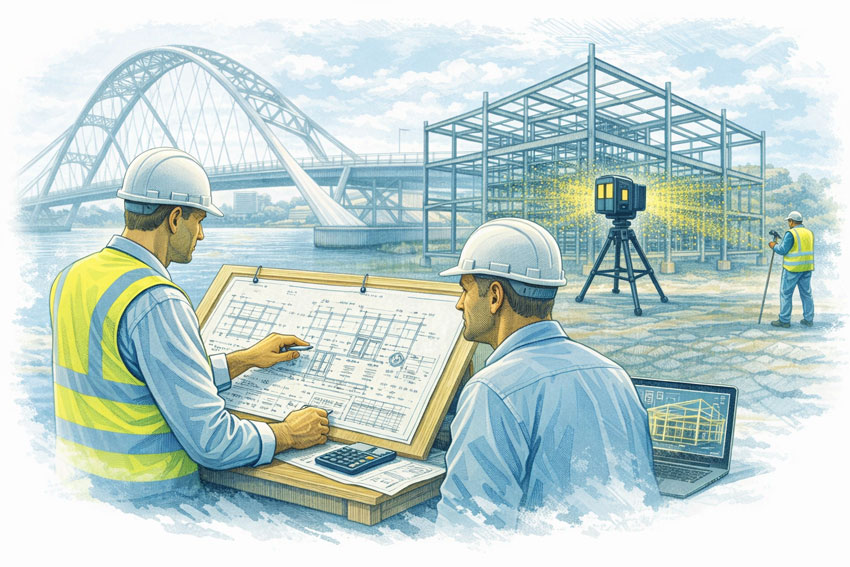
Mechanical engineer and client reviewing drawings while LiDAR scanning a site near Matagarup Bridge Perth

Engineer-Led Mechanical Engineering for Perth & WA Industrial Projects

Mechanical engineering projects across Perth and Western Australia are often defined by scale, remoteness, harsh environments, and shutdown-critical delivery. Many projects involve existing plant, legacy assets, incomplete documentation, and long lead times where errors are costly and rework is rarely simple.

Hamilton By Design provides engineer-led mechanical engineering services in Perth, supporting industrial operators and fabricators where accuracy, accountability, and constructability are essential.

This is mechanical engineering for projects where fit-up certainty and engineering ownership matter.


Engineer-led mechanical design review during LiDAR scanning at a Perth industrial site


Who This Service Is For

Our Perth mechanical engineering services are commonly engaged by:

  • Industrial and resources operators across WA
  • Steel fabricators and mechanical contractors supporting heavy-industrial scopes
  • Project teams delivering brownfield upgrades and plant modifications
  • Clients working with missing, outdated, or unreliable drawings
  • Contractors requiring engineering accountability, not drafting-only services

If your project involves remote delivery, shutdown works, or high fabrication risk, this service is designed for you.


Common Problems We Help Perth Clients Solve

We are often brought in after projects encounter issues such as:

  • Fabricated components that do not fit existing plant
  • Shutdown delays caused by unverified site conditions
  • Designs produced without understanding fabrication or installation constraints
  • Engineering scopes that stop at drawings, with no one owning the outcome

These challenges reflect the same systemic failures discussed in our published case studies, including the Kew Swimming Pool structural collapse and the sporting ground awning installation failure, both demonstrating the consequences of inadequate engineering judgement and accountability.


What โ€œEngineer-Ledโ€ Means in Western Australia

For Perth and WA projects, engineer-led means:

  • A qualified mechanical engineer is directly involved from early assessment through to fabrication-ready documentation
  • Engineering judgement is applied โ€” not blind replication of legacy drawings or unverified scans
  • Designs are developed with fabrication, transport, installation, and remote access in mind
  • Fit-up risk is actively managed before steel is cut
  • Documentation is defensible, sign-off-ready, and aligned with applicable Australian Standards

This approach is critical for WA projects where logistics, corrosion, and downtime costs amplify risk.


Mechanical Engineering Services We Provide in Perth

Our services are focused on industrial, resources, and fabrication-driven outcomes, including:

  • Brownfield mechanical upgrades and plant modifications
  • Tender-stage engineering support for fabricators and contractors
  • Equipment replacement where original drawings are missing or unreliable
  • Shutdown-critical mechanical works planning
  • Fabrication-ready mechanical design and detailing
  • Engineering verification and certification where required

We specialise in bridging the gap between site reality, engineering intent, and fabrication execution, particularly for heavy-industrial WA conditions.


Why Perth Fabricators Engage Us at Tender Stage

Many WA fabricators engage us before fabrication begins.

Early engineering involvement allows clients to:

  • Reduce pricing risk from unknown or poorly documented site conditions
  • Identify access, tolerance, and fit-up issues early
  • Avoid costly rework and transport of incorrect components
  • Submit tenders backed by engineering accountability, not assumptions

In Western Australia, early engineering involvement often determines whether a project succeeds or fails.


Our clients:


How We Differ from Large Consultancies

Perth clients engage Hamilton By Design because we offer:

  • Clear engineering ownership with minimal hand-offs
  • Direct access to the engineer doing the work
  • Practical, fabrication-aware engineering
  • Targeted scopes aligned to real construction and shutdown risk
  • Accountability through to fabrication and installation readiness

This is particularly valuable for WA projects where distance, scale, and environment demand experience-based judgement.


Hamilton By Design logo displayed on a blue tilted rectangle with a grey gradient background
3D LiDAR scanning and 3D modelling service button โ€” laser scanner capturing a point cloud for engineering and CAD modelling
Mechanical engineering services

Request a Tender-Stage Engineering Review

If youโ€™re preparing a tender, planning a shutdown, or dealing with uncertain site information, early engineering involvement can significantly reduce risk.

Request a tender-stage engineering review to discuss your Perth or WA project with a mechanical engineer who understands fabrication, installation, and real-world industrial constraints.

Use the contact form below to start the conversation.

Name
Would you like us to arrange a phone consultation for you?
Address
Mechanical Engineering Perth WA banner for Hamilton By Design featuring white text on a blue background.
3D Laser Scanning Perth WA banner for Hamilton By Design with white text on a blue background.
SolidWorks Perth WA banner for Hamilton By Design featuring white text on a blue background.
Mechanical Engineering Perth WA banner for Hamilton By Design featuring white text on a blue background.
3D Laser Scanning Perth WA banner for Hamilton By Design with white text on a blue background.
SolidWorks Perth WA banner for Hamilton By Design featuring white text on a blue background.
3D LiDAR scanning and 3D modelling service button โ€” laser scanner capturing a point cloud for engineering and CAD modelling
Mechanical engineering services

3D CAD Modelling Australia service banner for Hamilton By Design


CHPP Engineering title graphic featuring bold white text reading "CHPP Engineering" centred on a blue rounded rectangle background.
Pipework Drafting title graphic featuring bold white text reading "Pipework Drafting" centred on a blue rounded rectangle background.
3D LiDAR Scanning for Engineering Projects title graphic featuring bold white text on a blue rounded rectangle background.


Finite Element Analysis (FEA) engineering simulation button
Structural drafting services button
Mechanical drafting services button


Australian Drafting logo featuring bold white text reading "Australian Drafting" centred on a blue rounded rectangle background.
Engineering Governance title graphic featuring bold white text reading "Engineering Governance" centred on a blue rounded rectangle background.
Engineering-Grade LiDAR Scanning title graphic featuring bold white text on a blue rounded rectangle background.


Mechanical drafting services button
Structural drafting services button


Fabrication and product design services
3D CAD Modelling Australia service banner for Hamilton By Design
Mechanical, Structural & Pipework Drafting service banner by Hamilton By Design featuring white text on a blue background.


3D LiDAR scanning and 3D modelling service button โ€” laser scanner capturing a point cloud for engineering and CAD modelling
Mechanical engineering services
Mining & Processing Perth WA banner for Hamilton By Design featuring white text on a blue background.
Scan to BIM Perth WA banner for Hamilton By Design featuring white text on a blue background.
Ship Building Perth WA banner for Hamilton By Design featuring white text on a blue background.
Structural drafting services button
3D LiDAR scanning and 3D modelling services button
Mechanical drafting services button

Emergency Management Policy

Hamilton By Design – Emergency Management Policy

Hamilton By Design is committed to protecting the health and safety of employees, contractors, clients, and visitors by ensuring effective planning, preparedness, and response to emergency situations.

This Emergency Management Policy outlines the framework for identifying potential emergency situations and responding in a timely, coordinated, and effective manner to minimise harm to people, property, and the environment.


Scope

This policy applies to all Hamilton By Design activities, including:

  • Office-based engineering and design work
  • 3D LiDAR scanning and site data capture
  • Engineering inspections and site visits
  • Work performed at client, construction, industrial, and mining sites
  • Interaction with clients, contractors, and visitors

Emergency Preparedness

Hamilton By Design will:

  • Identify potential emergency situations relevant to its activities, including but not limited to:
    • Fire and smoke
    • Medical emergencies
    • Chemical exposure or spills
    • Electrical incidents
    • Structural instability or collapse
    • Vehicle incidents
    • Extreme weather events
  • Maintain emergency response procedures appropriate to the nature of work being undertaken
  • Ensure access to emergency contact information and first aid resources
  • Comply with client and site-specific emergency management requirements when working off-site

Emergency Response

In the event of an emergency, Hamilton By Design will:

  • Prioritise the safety of people above all other considerations
  • Follow established emergency response procedures and site-specific emergency plans
  • Evacuate or isolate areas as required
  • Notify emergency services and relevant authorities when required
  • Communicate clearly with affected personnel, clients, and contractors

Roles and Responsibilities

Management

Management is responsible for:

  • Ensuring emergency management procedures are in place and maintained
  • Providing appropriate resources, training, and support
  • Coordinating emergency response where reasonably practicable

Employees and Contractors

Employees and contractors are responsible for:

  • Familiarising themselves with emergency procedures relevant to their work
  • Following emergency instructions and site rules
  • Reporting emergencies, hazards, or near misses immediately

Training and Awareness

Hamilton By Design ensures that:

  • Personnel are informed of emergency procedures applicable to their workplace or site
  • Site-specific emergency inductions are completed where required
  • Emergency awareness is maintained through ongoing communication

Incident Reporting and Review

All emergency incidents, near misses, and significant events must be reported. Hamilton By Design will investigate incidents to identify causes and implement corrective actions to prevent recurrence.


Business Continuity Considerations

Where appropriate, Hamilton By Design will take reasonable steps to:

  • Protect critical data and digital assets
  • Maintain continuity of engineering services following an emergency
  • Support recovery and return-to-work activities

Review and Continuous Improvement

This Emergency Management Policy is reviewed periodically to ensure it remains current, effective, and aligned with legislative requirements, operational changes, and industry best practice.


Approved by:
Hamilton By Design Management

Effective Date: 06/12/2006

Hamilton By Design logo displayed on a blue tilted rectangle with a grey gradient background
3D LiDAR scanning and 3D modelling service button โ€” laser scanner capturing a point cloud for engineering and CAD modelling
Mechanical engineering services
3D LiDAR scanning and 3D modelling service button โ€” laser scanner capturing a point cloud for engineering and CAD modelling
Mechanical engineering services
Finite Element Analysis (FEA) engineering simulation button
Mechanical engineering services

Mechanical Engineering | Structural Engineering


Fatigue Management Policy

Hamilton By Design – Fatigue Management Policy

1. Purpose

Hamilton By Design is committed to providing a safe, healthy, and productive work environment.
The purpose of this Fatigue Management Policy is to identify, assess, and manage fatigue-related risks to ensure work is performed safely and effectively.

Fatigue can impair judgement, reaction time, decision-making, and situational awareness. In engineering and site-based environments, unmanaged fatigue presents a significant safety risk.


2. Scope

This policy applies to:

  • Employees
  • Directors and officers
  • Contractors and consultants
  • Subcontractors
  • Any person performing work on behalf of Hamilton By Design

This policy applies to office work, remote work, travel, and site-based activities, including shutdowns and extended work periods.


3. Definition of Fatigue

Fatigue is a state of physical and/or mental exhaustion that reduces a personโ€™s ability to perform work safely and effectively.

Fatigue may result from:

  • Long work hours
  • Insufficient sleep or rest
  • Extended travel or commuting
  • High mental workload or sustained concentration
  • Night work or early starts
  • Poor work-life balance

4. Responsibilities

4.1 Hamilton By Design

Hamilton By Design will:

  • Plan work to minimise fatigue risk
  • Monitor working hours, travel demands, and workload
  • Avoid scheduling excessive hours where practicable
  • Ensure fatigue risks are considered when planning site work and shutdown activities
  • Encourage open communication regarding fatigue concerns
  • Take reasonable action where fatigue risk is identified

4.2 Workers

All workers are responsible for:

  • Presenting fit for work and adequately rested
  • Managing personal fatigue and wellbeing
  • Not performing work when fatigued to the point it may affect safety
  • Reporting fatigue concerns to management as soon as practicable
  • Following client and site-specific fatigue management requirements

5. Working Hours and Rest

To manage fatigue, Hamilton By Design will, where reasonably practicable:

  • Plan work schedules to allow adequate rest between shifts
  • Consider cumulative fatigue during extended or consecutive workdays
  • Manage travel to avoid excessive driving hours, particularly after long workdays
  • Allow rest breaks during prolonged periods of work or travel

Workers must take reasonable steps to ensure they obtain sufficient sleep and rest prior to performing work.


6. Travel and Remote Work

Hamilton By Design recognises that travel and remote work can significantly contribute to fatigue.

  • Travel time will be considered when planning work schedules
  • Workers must not drive or operate vehicles when fatigued
  • Alternative arrangements (rest breaks, overnight accommodation, or schedule changes) will be implemented where practicable
  • Remote and isolated work will be planned to minimise fatigue risk

7. High-Risk and Safety-Critical Work

Additional fatigue controls may be implemented for:

  • Shutdowns and time-critical work
  • Work requiring high levels of concentration or judgement
  • Site activities with elevated safety risk

Where fatigue is identified as a risk, work may be modified, delayed, or suspended.


8. Reporting Fatigue

Workers are encouraged to report fatigue without fear of reprisal.

  • Fatigue reports will be treated seriously and confidentially
  • Reporting fatigue will not result in disciplinary action when raised in good faith
  • Early reporting helps prevent incidents and injuries

9. Non-Compliance

Failure to comply with this policy may result in:

  • Removal from work duties or site
  • Review of work arrangements
  • Disciplinary action where applicable
  • Termination of engagement in serious or repeated cases

10. Policy Review

This policy will be reviewed periodically to ensure alignment with:

  • Australian WHS legislation
  • Client and site requirements
  • Industry best practice

11. Commitment

Hamilton By Design is committed to managing fatigue proactively to protect the safety, wellbeing, and performance of all people engaged in our work.


Approved by:
Hamilton By Design Management

Effective Date: 06/12/2006

Hamilton By Design logo displayed on a blue tilted rectangle with a grey gradient background
3D LiDAR scanning and 3D modelling service button โ€” laser scanner capturing a point cloud for engineering and CAD modelling
Mechanical engineering services
3D LiDAR scanning and 3D modelling service button โ€” laser scanner capturing a point cloud for engineering and CAD modelling
Mechanical engineering services
Finite Element Analysis (FEA) engineering simulation button
Mechanical engineering services

Mechanical Engineering | Structural Engineering


Fitness for Work Policy

Hamilton By Design – Fitness for Work Policy

1. Purpose

Hamilton By Design is committed to providing a safe, healthy, and productive working environment for employees, contractors, clients, and visitors.
The purpose of this Fitness for Work Policy is to ensure that all persons performing work on behalf of Hamilton By Design are physically and mentally capable of safely carrying out their duties, without risk to themselves or others.

Fitness for work is critical to maintaining high standards of safety, engineering judgement, and professional performanceโ€”particularly when working on industrial sites, construction environments, and shutdown-critical projects.


2. Scope

This policy applies to:

  • Employees
  • Directors and officers
  • Contractors and consultants
  • Subcontractors
  • Any person performing work on behalf of Hamilton By Design

This policy applies to office-based work, remote work, and site-based activities, including travel to and from work sites where required as part of duties.


3. Definition of Fitness for Work

A person is considered fit for work when they are in a physical and mental condition that enables them to perform assigned tasks competently and safely.

Factors that may affect fitness for work include, but are not limited to:

  • Fatigue
  • Alcohol or drug use
  • Medical conditions or injuries
  • Stress or mental health concerns
  • Medication that may impair performance
  • Illness
  • Excessive working hours or insufficient rest

4. Responsibilities

4.1 Hamilton By Design

Hamilton By Design will:

  • Take reasonable steps to ensure workers are fit for work
  • Manage work hours, travel, and workload to reduce fatigue risk
  • Comply with client site fitness-for-work and drug & alcohol requirements
  • Provide a supportive environment where fitness-for-work concerns can be raised without fear of reprisal
  • Take appropriate action where fitness for work may be compromised

4.2 Workers

All workers are responsible for:

  • Presenting fit for work at all times
  • Managing personal health and fatigue
  • Not attending work while impaired by alcohol, drugs, fatigue, or illness
  • Complying with client and site-specific fitness-for-work requirements
  • Promptly reporting any condition that may affect their ability to work safely

5. Fatigue Management

Hamilton By Design recognises fatigue as a significant safety risk.

To manage fatigue:

  • Work hours and travel will be planned to allow adequate rest
  • Extended hours and high-risk activities will be assessed and managed
  • Workers must advise management if they believe fatigue may affect their safety or performance
  • Workers must not perform safety-critical tasks when fatigued

6. Alcohol and Drugs

Workers must not attend work while under the influence of alcohol or drugs that may impair judgement, coordination, or reaction time.

  • Zero tolerance applies where required by client or site rules
  • Workers must comply with client drug and alcohol testing requirements
  • Prescription and over-the-counter medications that may affect performance must be managed responsibly

Any concerns regarding impairment will be addressed immediately and may result in removal from work duties.


7. Medical Conditions and Medication

Workers must ensure that any medical condition, injury, or medication does not compromise their ability to work safely.

Where required:

  • Workers should inform management of any condition that may affect safety
  • Reasonable adjustments may be implemented where practicable
  • Medical clearance may be required for specific site or task requirements

All medical information will be treated confidentially.


8. Mental Health and Wellbeing

Hamilton By Design recognises that mental health is an important component of fitness for work.

  • Workers are encouraged to speak up if experiencing stress, anxiety, or other mental health concerns
  • Supportive and practical solutions will be considered where possible
  • No worker will be disadvantaged for raising genuine fitness-for-work concerns

9. Non-Compliance

Failure to comply with this policy may result in:

  • Removal from work duties or site
  • Further assessment of fitness for work
  • Disciplinary action, where applicable
  • Termination of engagement in serious cases

10. Review and Continuous Improvement

This policy will be reviewed periodically to ensure it remains current with legislative requirements, client expectations, and industry best practice.


11. Commitment

Hamilton By Design is committed to ensuring that all work is carried out by people who are fit for work, capable of exercising sound engineering judgement, and able to perform their duties safely and professionally.

Approved by:
Hamilton By Design Management

Effective Date: 06/12/2006

Hamilton By Design logo displayed on a blue tilted rectangle with a grey gradient background
3D LiDAR scanning and 3D modelling service button โ€” laser scanner capturing a point cloud for engineering and CAD modelling
Mechanical engineering services
3D LiDAR scanning and 3D modelling service button โ€” laser scanner capturing a point cloud for engineering and CAD modelling
Mechanical engineering services
Finite Element Analysis (FEA) engineering simulation button
Mechanical engineering services

Mechanical Engineering | Structural Engineering


AS 3774 Loads in Hopper Design

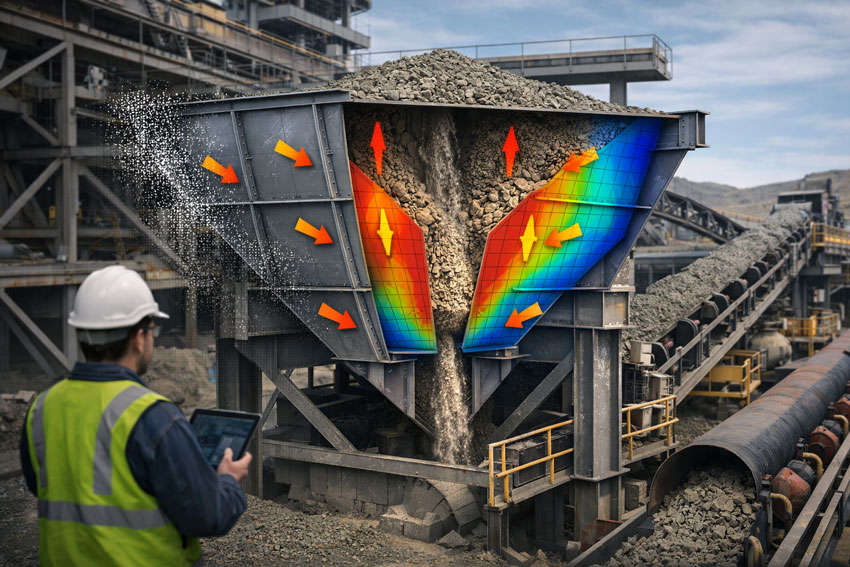
Cutaway view of an industrial mining hopper showing bulk material flow with AS 3774 load paths and FEA stress distribution on hopper walls.

AS 3774 Hopper Design Loads โ€“ Bulk Solids Handling Engineering

In bulk materials handling, the ultimate operational goal is steady-state production โ€” consistent throughput, predictable equipment loading, and minimal process disruption.

Hoppers play a critical role in achieving this outcome. However, the benefits they provide come with structural and load complexities that must be correctly understood and engineered. This is where AS 3774 โ€“ Loads on Bulk Solids Containers becomes essential.


Mining hopper in a transfer station shown in cutaway, illustrating steady-state material flow, structural load distribution, and engineered hopper design.

Why Do You Want a Hopper in Your Process?

In simple terms, having a hopper in your system allows you to maintain constant production.

Most industrial plants aim to operate in a steady-state condition, where material flow remains as uniform as possible. In reality, upstream and downstream equipment rarely operate at the same rate, and bulk materials themselves are inherently variable.

A hopper acts as a buffer.

By decoupling one part of the process from another, a hopper allows fluctuations in feed rate, equipment performance, or material behaviour to be absorbed without immediately impacting the rest of the plant.

As a general principle:

The more hoppers you have in the right locations, the more steady-state your operation becomes.


Buffering Variability and Increasing Capacity

Hoppers contribute to steady-state operation in two key ways:

1. Stabilising Flow

Hoppers smooth out:

  • Surging feed rates
  • Short interruptions upstream
  • Variations in material size and moisture

This allows downstream equipmentโ€”such as feeders, conveyors, screens, and millsโ€”to operate closer to their design point.

2. Providing Extra Capacity

Hoppers also introduce process capacitance.

This additional capacity:

  • Buys time during plant upsets
  • Reduces nuisance trips and shutdowns
  • Improves overall plant availability

From a production perspective, hoppers are one of the most effective tools available for improving consistency and utilisation.


The Engineering Reality: Hoppers Are Load-Critical Structures

While hoppers improve process stability, they also introduce complex structural load cases.

Bulk solids do not behave like liquids or static dead loads. As material is filled, stored, and discharged, the loads acting on hopper walls and supporting steelwork change significantly.

AS 3774 exists to address this exact problem.

The standard defines load cases associated with:

  • Filling conditions
  • Static storage
  • Flow and discharge
  • Eccentric and asymmetric draw-down

These load cases are often higher and more uneven than designers expect, particularly during discharge.


What Happens When AS 3774 Is Not Properly Applied?

When hopper loads are underestimated or simplified, common outcomes include:

  • Buckled or permanently deformed hopper walls
  • Cracking at welds and transitions
  • Fatigue issues in supporting structures
  • Excessive vibration during operation
  • Premature failure during throughput increases

Ironically, the very hoppers intended to stabilise production can become the source of downtime if not correctly designed or assessed.


Geometry Matters: Why As-Built Conditions Are Critical

AS 3774 calculations are highly sensitive to geometry.

In brownfield plants, hopper drawings are often:

  • Out of date
  • Incomplete
  • No longer representative of site conditions

Modifications, liner additions, repairs, and wear can all change how loads are transferred into the structure.

This is why engineering-grade as-built data is critical when assessing existing hoppers.


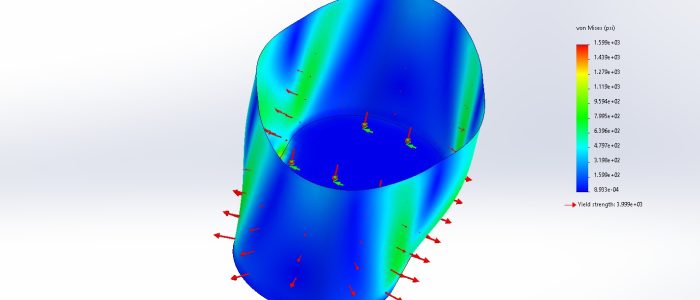
  • SolidWorks Simulation von Mises stress plot of an internally pressurised pressure vessel, viewed from above, showing colour-mapped stress distribution from low (blue) to high (red) with pressure arrows applied to the internal surfaces and deformation exaggerated for visualisation

Engineering-Led AS 3774 Assessment

At Hamilton By Design, hopper assessments are approached as a combined process and structural problem, not just a compliance exercise.

Our workflow typically integrates:

  • High-accuracy 3D LiDAR scanning to capture true geometry
  • SolidWorks 3D modelling of hoppers and support steelwork
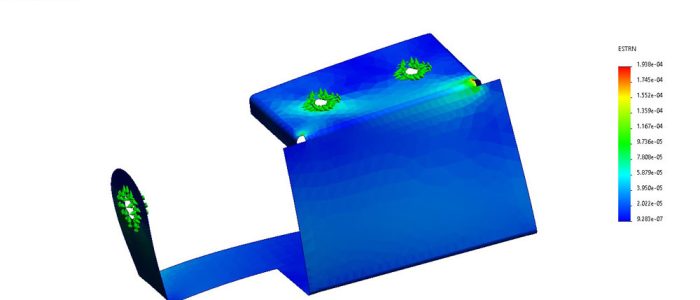
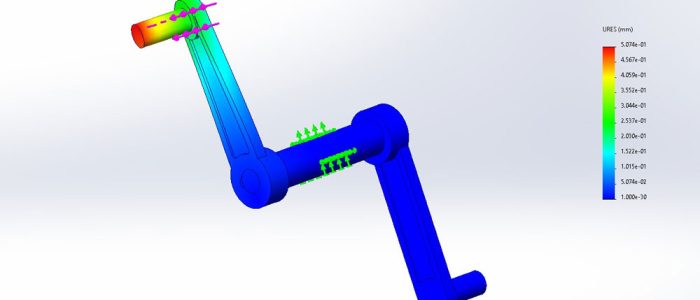
  • Structural FEA with AS 3774 load cases applied
  • Targeted strengthening or upgrade design where required

This allows clients to:

  • Increase throughput with confidence
  • Extend asset life
  • Avoid unnecessary replacement
  • Maintain steady-state operation safely

Hamilton By Design logo displayed on a blue tilted rectangle with a grey gradient background
3D LiDAR scanning and 3D modelling service button โ€” laser scanner capturing a point cloud for engineering and CAD modelling
Mechanical engineering services

Bringing It All Together

Hoppers are fundamental to stable, high-availability bulk materials processing.

They:

  • Enable steady-state production
  • Buffer variability
  • Provide valuable process capacity

But they also:

  • Introduce complex, non-intuitive loads
  • Demand careful application of AS 3774
  • Require accurate geometry and engineering verification

When hopper design and assessment are done correctly, they support production.
When they are not, they quietly become one of the highest structural risks in the plant.


Name
Would you like us to arrange a phone consultation for you?
Address

Our clients:


3D CAD Modelling Australia service banner for Hamilton By Design


CHPP Engineering title graphic featuring bold white text reading "CHPP Engineering" centred on a blue rounded rectangle background.
Pipework Drafting title graphic featuring bold white text reading "Pipework Drafting" centred on a blue rounded rectangle background.
3D LiDAR Scanning for Engineering Projects title graphic featuring bold white text on a blue rounded rectangle background.


Finite Element Analysis (FEA) engineering simulation button
Structural drafting services button
Mechanical drafting services button


Australian Drafting logo featuring bold white text reading "Australian Drafting" centred on a blue rounded rectangle background.
Engineering Governance title graphic featuring bold white text reading "Engineering Governance" centred on a blue rounded rectangle background.
Engineering-Grade LiDAR Scanning title graphic featuring bold white text on a blue rounded rectangle background.


Mechanical drafting services button
Structural drafting services button


Fabrication and product design services
3D CAD Modelling Australia service banner for Hamilton By Design
Mechanical, Structural & Pipework Drafting service banner by Hamilton By Design featuring white text on a blue background.


3D LiDAR scanning and 3D modelling service button โ€” laser scanner capturing a point cloud for engineering and CAD modelling
Mechanical engineering services

Mechanical Engineering | Structural Engineering