Mechanical Engineering Tasmania | Engineer-Led Industrial Support

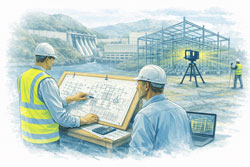
Mechanical engineer and client reviewing drawings while LiDAR scanning a site near a Hydro Tasmania power station

Mechanical Engineering Tasmania | Engineer-Led Industrial Support

Engineer-Led Mechanical Engineering for Tasmaniaโ€™s Industrial & Infrastructure Projects

Mechanical engineering projects across Tasmania often involve existing assets, remote or regional locations, limited fabrication rework options, and tight construction or shutdown windows. Many sites operate with legacy plant, incomplete drawings, and environments where corrosion, access, and logistics significantly influence design outcomes.

Hamilton By Design provides engineer-led mechanical engineering services in Tasmania, supporting industrial operators, manufacturers, and fabricators where accuracy, accountability, and constructability are essential.

This is mechanical engineering for projects where you need it right the first time.
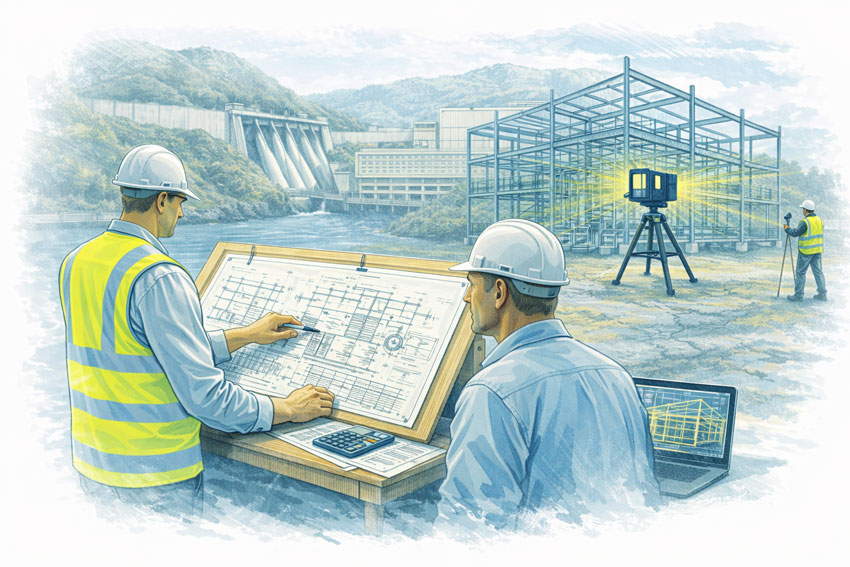

Engineer-led mechanical design review during LiDAR scanning at a Tasmanian hydro power facility

Who This Service Is For

Our Tasmania mechanical engineering services are commonly engaged by:

  • Industrial and manufacturing operators across Tasmania
  • Infrastructure and utilities asset owners
  • Steel fabricators and mechanical contractors
  • Project teams delivering brownfield upgrades and plant modifications
  • Clients dealing with missing, outdated, or unreliable drawings

If your project involves existing assets, remote delivery, or limited tolerance for rework, this service is designed for you.


Common Problems We Help Tasmanian Clients Solve

We are often brought in when Tasmanian projects encounter issues such as:

  • Fabricated components that do not fit existing plant
  • Installation delays due to unverified site conditions
  • Designs that fail to consider fabrication, transport, or access constraints
  • Engineering scopes that end at drawings, with no one owning fit-up risk

These challenges reflect the same systemic failures discussed in our published case studies, including the Kew Swimming Pool structural collapse and the sporting ground awning installation failure, which demonstrate the consequences of poor engineering judgement and lack of accountability.


What โ€œEngineer-Ledโ€ Means in Tasmania

For Tasmanian projects, engineer-led means:

  • A qualified mechanical engineer is directly involved from early assessment through to fabrication-ready documentation
  • Engineering judgement is applied โ€” not blind replication of legacy drawings or unverified data
  • Designs are developed with fabrication, transport, installation, and site access in mind
  • Fit-up risk is actively managed before fabrication begins
  • Documentation is defensible, sign-off-ready, and aligned with applicable Australian Standards

This approach is particularly important in Tasmania, where logistics and site access make rework costly.


3D Scanning


Mechanical Engineering Services We Provide in Tasmania

Our services are focused on industrial, infrastructure, and fabrication-driven outcomes, including:

  • Brownfield mechanical upgrades and plant modifications
  • Tender-stage engineering support for fabricators and contractors
  • Equipment replacement where original drawings are missing or unreliable
  • Shutdown-critical mechanical works planning
  • Fabrication-ready mechanical design and detailing
  • Engineering verification and certification where required

We specialise in bridging the gap between site reality, engineering intent, and fabrication execution.


Why Tasmanian Fabricators Engage Us Early

Many Tasmanian fabricators engage us before fabrication begins.

Early engineering involvement allows clients to:

  • Reduce pricing risk caused by incomplete site information
  • Identify tolerance, access, and fit-up issues early
  • Avoid costly rework and transport delays
  • Submit tenders backed by engineering accountability, not assumptions

In Tasmania, early engineering involvement often determines whether a project proceeds smoothly or becomes constrained by logistics.



Hamilton By Design logo displayed on a blue tilted rectangle with a grey gradient background
3D LiDAR scanning and 3D modelling service button โ€” laser scanner capturing a point cloud for engineering and CAD modelling
Mechanical engineering services

How We Differ from Large Consultancies

Clients across Tasmania engage Hamilton By Design because we offer:

  • Clear engineering ownership with minimal hand-offs
  • Direct access to the engineer performing the work
  • Practical, fabrication-aware engineering
  • Targeted scopes aligned to real construction and shutdown risk
  • Accountability through to fabrication and installation readiness

This is particularly valuable for Tasmanian projects, where experience-based engineering judgement is critical.


Request a Tender-Stage Engineering Review

If youโ€™re preparing a tender, planning a shutdown, or dealing with uncertain site information, early engineering involvement can significantly reduce risk.

Request a tender-stage engineering review to discuss your Tasmanian project with a mechanical engineer who understands fabrication, installation, and real-world site constraints.

Use the contact form below to start the conversation.

Name
Would you like us to arrange a phone consultation for you?
Address

Machine Guarding for Ship Loaders, Stackers & Reclaimers in Bulk Materials Handling

Machine Guarding for Ship Loaders, Stackers & Reclaimers | Bulk Materials Safety

Why guarding matters on large bulk material machines

Ship loaders, stackers and reclaimers combine elements of mobile plant, fixed plant and continuous conveying systems. Their scale, movement and operating envelopes introduce hazards that cannot be managed with ad-hoc or legacy guarding.

Most guarding failures are not caused by a single missing guard, but by brownfield modifications, undocumented changes, and loss of original design intent. This makes engineering-led guarding essential for safety, compliance and uptime.


Australian Standards framework for guarding

AS 4024 โ€“ Safety of Machinery

The AS 4024 series provides the primary principles for machine guarding, including hazard identification, risk assessment, guarding selection, and safe distances. For bulk materials handling equipment, it must be applied in context rather than as a checklist.

AS 1755 โ€“ Conveyors: Safety requirements

AS 1755 governs conveyor-specific hazards common to ship loaders, stackers and reclaimers, including:

  • Nip points and pulleys
  • Transfer and chute interfaces
  • Emergency stop systems
  • Access for inspection and maintenance

Most real-world non-conformances occur at head/tail pulleys, transitions, take-ups and return belts beneath walkways.

AS 1657 โ€“ Fixed access systems

Guarding must coexist with compliant access. AS 1657 covers walkways, stairs, ladders, handrails and edge protection. Poor integration often leads to guards being removed to regain access โ€” undermining safety intent.

AS 4324.1 โ€“ Mobile bulk materials handling equipment

AS 4324.1 recognises ship loaders, stackers and reclaimers as integrated machines, where guarding, access, structure and maintainability must be considered together.


Guarding challenges unique to ship loaders & reclaimers

Scale and movement
These machines include slew, luff and travel motions, requiring guarding to remain effective across all operating positions.

Brownfield evolution
Temporary or reactive guarding solutions often become permanent without verification against standards.

Shutdown constraints
Guarding changes made under shutdown pressure frequently prioritise constructability over defensible engineering.


Engineering-led guarding approach

Effective guarding is based on:

  • Engineering-grade spatial understanding of reach, envelopes and access paths
  • Risk-based selection of fixed, interlocked or removable guarding in line with AS 4024
  • Integration with maintenance and operations, avoiding unsafe workarounds

On large machines, guarding that cannot be safely removed, reinstated or inspected will not survive long-term operation.


Common high-risk interfaces

Guarding assessment typically focuses on:

  • Conveyor head, tail and bend pulleys
  • Transfer points and chutes
  • Slew, luff and drive mechanisms
  • Gearboxes, brakes and take-ups
  • Return belt zones beneath accessways

Each interface must be checked against AS 4024, AS 1755, AS 1657 and AS 4324.1 as a combined framework.


Our clients:


Building toward a bulk materials handling safety framework

This post forms part of a broader technical narrative around safe, maintainable bulk materials handling systems.
Future companion topics may include:

  • Conveyor transfer point guarding
  • Brownfield guarding upgrades during life-extension works
  • Balancing guarding and access on reclaimers
  • Using validated 3D data to de-risk shutdown modifications

Together, these posts naturally support a future Bulk Materials Handling / Stacker & Reclaimer Engineering landing page without forcing a sales message.


Hamilton By Design logo displayed on a blue tilted rectangle with a grey gradient background
3D LiDAR scanning and 3D modelling service button โ€” laser scanner capturing a point cloud for engineering and CAD modelling
Mechanical engineering services

Key takeaway

On ship loaders, stackers and reclaimers, guarding must be engineered, spatially validated and operationally practical. When aligned with Australian Standards, guarding becomes an enabler of safe production โ€” not a liability.

Discuss machine safety and guarding for bulk materials handling equipment

If you are reviewing or upgrading ship loaders, stackers, reclaimers or conveyor systems, early engineering input can reduce safety risk, rework and shutdown pressure.

For discussions relating to:

  • Machine guarding and conveyor safety
  • Brownfield compliance with Australian Standards
  • Engineering-led reviews for bulk materials handling equipment

Please connect with us by filling out the form below.

Name
Would you like us to arrange a phone consultation for you?
Address
3D LiDAR scanning and 3D modelling service button โ€” laser scanner capturing a point cloud for engineering and CAD modelling
Mechanical engineering services
Finite Element Analysis (FEA) engineering simulation button
Mechanical engineering services

As-Built Documentation

As-Built Documentation | Why Accurate Records Matter in Engineering


When drawings donโ€™t reflect what is actually installed on site, projects are exposed to design errors, safety risks, rework, and compliance issues. In industrial, mining, power, and construction environments, relying on outdated or assumed information can quickly lead to costly mistakes.

At Hamilton By Design, as-built documentation is treated as an engineering deliverable, not an administrative afterthought.


What is as-built documentation?

As-built documentation records the true, physical condition of an asset after construction, modification, or installation.
This can include:

  • As-built drawings (plans, sections, elevations)
  • As-built CAD models
  • Verified dimensions and interfaces
  • Documented deviations from original design
  • Digital records suitable for future upgrades and maintenance

Unlike โ€œdesign intentโ€ drawings, as-built documentation reflects what exists in reality, not what was originally planned.


Why poor as-built documentation causes problems

Many facilities operate with drawings that are:

  • Outdated
  • Incomplete
  • Never updated after modifications
  • Based on assumptions or manual measurements

This creates risk when:

  • Designing upgrades or tie-ins
  • Replacing equipment
  • Assessing compliance with Australian Standards
  • Planning shutdowns or maintenance works

Common outcomes include:

  • Components that donโ€™t fit
  • Unexpected clashes during installation
  • Delays during shutdown windows
  • Increased safety risk during construction and maintenance

How 3D laser scanning improves as-built accuracy

Modern as-built documentation increasingly relies on engineering-grade 3D laser scanning and LiDAR, rather than tape measures or legacy drawings.

3D scanning allows engineers to:

  • Capture accurate geometry of existing assets
  • Verify interfaces, clearances, and alignments
  • Identify undocumented changes and deviations
  • Produce reliable CAD models and drawings

When combined with engineering judgement, scanning provides defensible, fit-for-purpose as-built data suitable for design, fabrication, and compliance.


As-built documentation and Australian Standards

As-built documentation plays a critical role in supporting compliance with:

  • Australian Standards (e.g. access systems, steelwork, structures)
  • The National Construction Code (NCC)
  • Safety-in-design obligations
  • Asset integrity and maintenance requirements

Accurate as-built records enable engineers to:

  • Verify existing conditions against current standards
  • Design compliant upgrades and modifications
  • Demonstrate due diligence if designs or decisions are reviewed

Without reliable as-built data, compliance assessments are often based on assumptions โ€” increasing risk for owners and contractors alike.


Scan-to-CAD: turning reality into usable engineering information

Capturing a point cloud is only the first step.

True as-built documentation requires scan-to-CAD workflows, where scan data is converted into:

  • Structured 3D CAD models
  • Clear 2D drawings
  • Fabrication-ready geometry
  • Engineering documentation suitable for construction

This process requires:

  • Controlled datums
  • Appropriate tolerances
  • Engineering interpretation of scan data
  • Understanding of how drawings will be used on site

Poorly modelled scan data can be just as problematic as poor drawings.


Where as-built documentation adds the most value

As-built documentation is particularly valuable for:

  • Brownfield and live-site upgrades
  • Mining and industrial facilities
  • Power generation and utilities
  • Manufacturing plants
  • Existing buildings undergoing refurbishment
  • Assets with long operational life and multiple modifications

In these environments, accurate documentation reduces risk, improves safety, and enables better decision-making across the asset lifecycle.


Engineering-led as-built documentation

At Hamilton By Design, as-built documentation is delivered as part of an integrated engineering workflow, combining:

  • Engineering-grade 3D laser scanning
  • CAD modelling and drafting
  • Mechanical and structural engineering expertise
  • Standards-aware documentation

This ensures as-built records are:

  • Accurate
  • Buildable
  • Defensible
  • Suitable for future engineering use

Our clients:


Final thoughts

As-built documentation is not just about record-keeping โ€” it is about engineering confidence.

Accurate as-built information:

  • Reduces project risk
  • Improves safety
  • Supports compliance
  • Saves time and cost on future works

In complex industrial and construction environments, investing in proper as-built documentation pays for itself many times over.


Hamilton By Design logo displayed on a blue tilted rectangle with a grey gradient background
3D LiDAR scanning and 3D modelling service button โ€” laser scanner capturing a point cloud for engineering and CAD modelling
Mechanical engineering services

Need accurate as-built documentation?

If youโ€™re planning upgrades, maintenance, or new works and need engineering-grade as-built documentation, Hamilton By Design can help.

Accurate data today enables better decisions tomorrow.

Name
Would you like us to arrange a phone consultation for you?
Address
Finite Element Analysis (FEA) engineering simulation button
Mechanical engineering services

What Is the Difference Between a Terrestrial Scanner and a LiDAR Scanner?

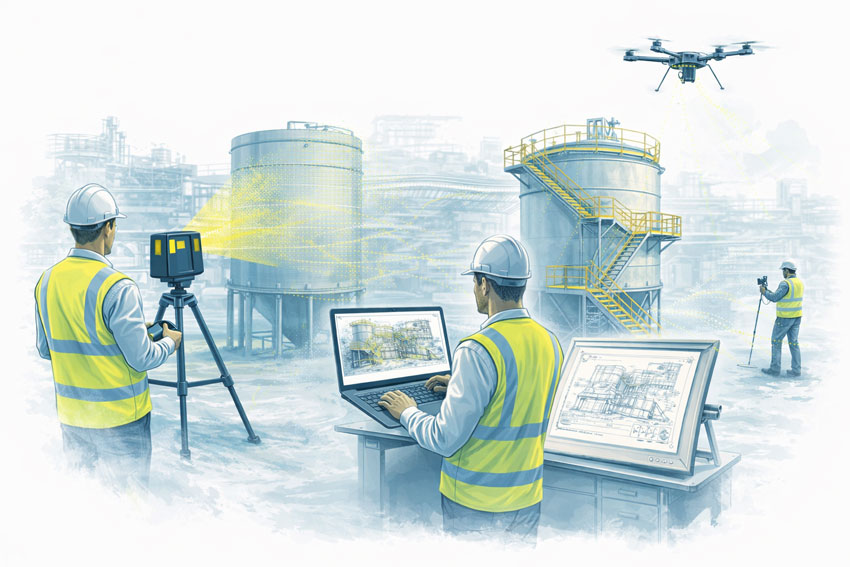
Terrestrial, mobile SLAM and drone LiDAR scanners capturing an industrial plant with engineers reviewing point cloud data and drawings

Terrestrial vs LiDAR Scanners | Whatโ€™s the Difference?

Confusion around terrestrial scanning and LiDAR scanning is common โ€” and understandable.
The two terms are often used interchangeably, even though they describe different things.

This page explains the difference in plain language, shows where each approach fits, and helps you decide what level of accuracy and risk is appropriate for your project.


Short Answer (If Youโ€™re in a Hurry)

LiDAR describes the laser measurement technology.
Terrestrial describes how and where that LiDAR scanner is deployed.

Most terrestrial scanners use LiDAR, but not all LiDAR scanners are terrestrial.


Illustration comparing terrestrial LiDAR, mobile SLAM LiDAR and drone scanning on an industrial facility

What Is LiDAR?

LiDAR (Light Detection and Ranging) is a method of measuring distance using laser light.

How LiDAR works

  • A laser pulse is emitted
  • The pulse reflects off an object
  • The return time is measured
  • Distance is calculated and stored as a 3D point

Millions of these points form a point cloud that represents real-world geometry.

What LiDAR is good for

  • Accurate 3D measurement
  • Complex geometry
  • Low-light or enclosed environments
  • Engineering, construction, and industrial sites

LiDAR answers: How is distance measured?


What Is a Terrestrial Scanner?

A terrestrial scanner is a ground-based scanning system, usually mounted on a tripod or fixed position.

Key characteristics

  • Fixed scan position
  • Controlled setup and coverage
  • Known geometry and reference
  • High repeatability and validation

Typical environments

  • Processing plants and CHPPs
  • Structural steelwork
  • Conveyor systems
  • Brownfield tie-ins
  • As-built verification
  • Shutdown-critical fit-up work

Terrestrial answers: Where and how is the LiDAR deployed?


How the Two Terms Relate (This Is the Important Part)

A terrestrial scanner is a platform.
A LiDAR scanner is a technology.

Most modern terrestrial scanners are terrestrial LiDAR scanners.

Example: a tripod-mounted system such as the FARO Focus S-Series is:

  • LiDAR-based (laser measurement)
  • Terrestrial (ground-based, fixed setup)

Other Common LiDAR Scanner Types (And Why It Matters)

Scanner TypeHow Itโ€™s UsedTypical Outcome
Terrestrial LiDARTripod / fixedHighest control & accuracy
Mobile / SLAM LiDARHandheld / walk-throughFast capture, lower control
Vehicle-mounted LiDARCar / trolleyCorridor mapping
Aerial LiDARDrone / aircraftLarge areas, low detail

All are โ€œLiDARโ€, but not all are suitable for engineering design or fabrication.


Why This Distinction Matters for Projects

Many issues occur when:

  • A LiDAR scan is assumed to be engineering-grade
  • A mobile or SLAM scan is used beyond its intent
  • Accuracy, validation, or limitations are not clearly understood

This doesnโ€™t mean one method is wrong โ€” it means each has a purpose.

The key is aligning the scanner type with:

  • Required accuracy
  • Risk tolerance
  • Fit-up criticality
  • Intended use of the data

Our clients:


Simple Decision Guide (Client in Control)

If you need:

  • Fabrication or replacement parts โ†’ Terrestrial LiDAR
  • Shutdown-critical fit-up โ†’ Terrestrial LiDAR
  • Structural verification โ†’ Terrestrial LiDAR
  • Rapid site context only โ†’ Mobile / SLAM LiDAR
  • Large terrain or stockpiles โ†’ Aerial LiDAR

There is no โ€œone best scannerโ€ โ€” only the right scanner for the outcome you want.


Comparison at a Glance

RequirementTerrestrial LiDARMobile / SLAM LiDAR
Accuracy controlHighModerate
RepeatabilityHighLower
Engineering defensibilityStrongLimited
Fit-up confidenceSuitableNot recommended
Capture speedSlowerFaster
Best use caseDesign & fabricationVisualisation & context

A Note on Engineering Use

Where scanning data feeds into engineering design, documentation, or fabrication, higher-control methods are typically required to align with engineering practice and Australian Standards expectations.

That doesnโ€™t remove choice โ€” it simply means the assumptions and limitations must match the intended use.


How We Approach This (Without Locking You In)

Weโ€™re happy to:

  • Work with terrestrial, mobile, or supplied scan data
  • Validate data before design where required
  • Align scanning effort with your risk, budget, and outcome
  • Clearly document assumptions and limitations

You stay in control of the approach โ€” our role is to make sure the data supports the outcome you expect.


Hamilton By Design logo displayed on a blue tilted rectangle with a grey gradient background
3D LiDAR scanning and 3D modelling service button โ€” laser scanner capturing a point cloud for engineering and CAD modelling
Mechanical engineering services

Next Step

If youโ€™re unsure which scanning method suits your project:

Fill out the contact form and tell us:

  • What you want to build, replace, or verify
  • How the data will be used
  • Any constraints (budget, time, shutdown windows)

Weโ€™ll help you select a fit-for-purpose scanning approach, not just a scanner.


Name
Would you like us to arrange a phone consultation for you?
Address
Finite Element Analysis (FEA) engineering simulation button
Mechanical engineering services

Reverse Engineering 3D Scanning Melbourne

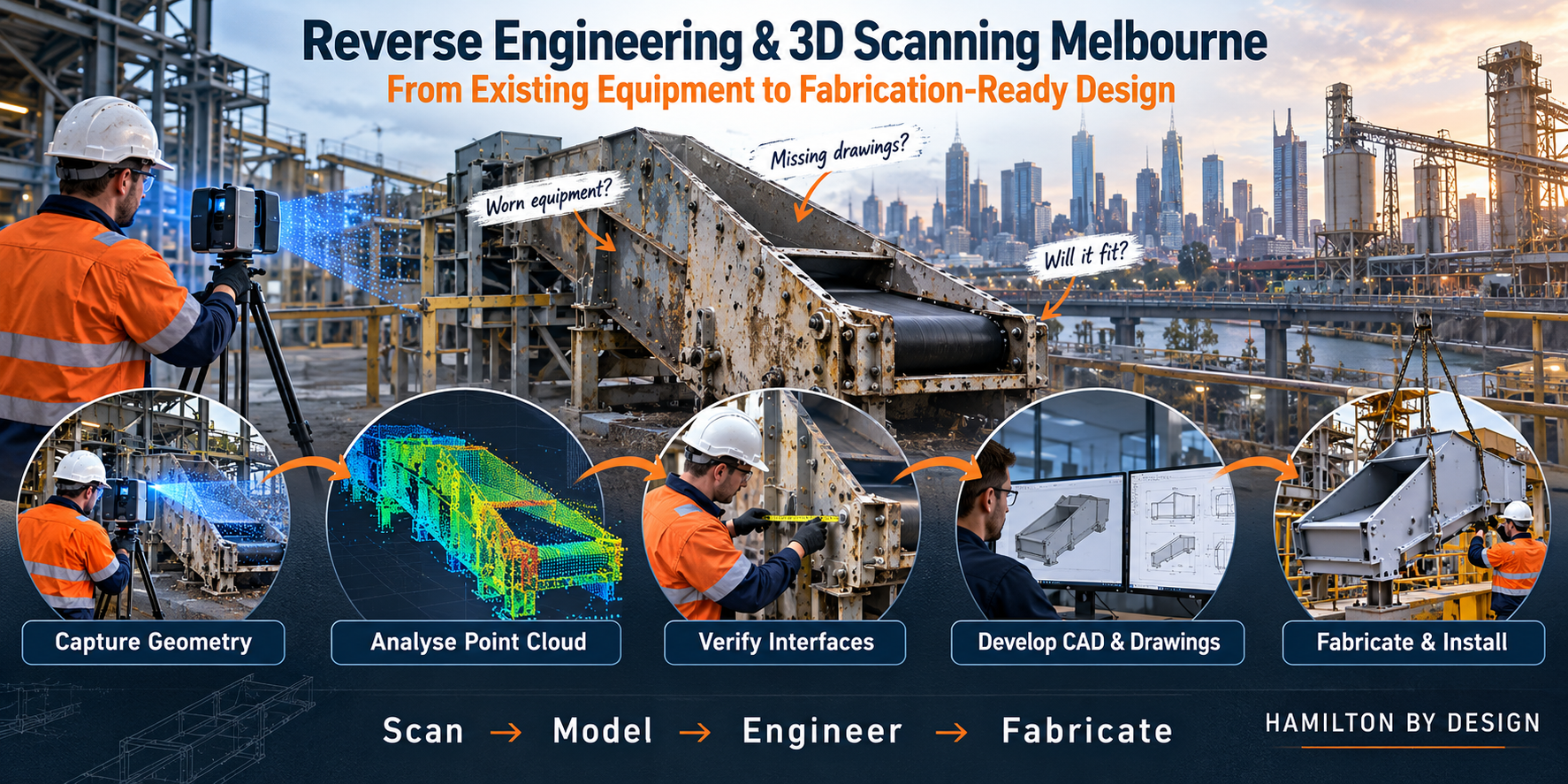
Illustration of industrial equipment reverse engineering in Melbourne, showing 3D scanning, point cloud analysis, interface checks, CAD drawings and replacement fabrication.

Engineer-Led Reverse Engineering from Scan to Fabrication โ€” Supporting Victoria & Remote Sites

At Hamilton By Design, we provide reverse engineering supported by engineering-grade 3D LiDAR scanning from our Melbourne engineering hub, helping maintenance teams, project engineers, and manufacturers replace, reproduce, or validate critical components when drawings are missing, obsolete, or no longer reflect site reality.

We specialise in like-for-like replacement and fit-for-purpose engineering, particularly for manufacturing facilities, bulk materials handling, brownfield infrastructure, and industrial plant, where shutdown windows are tight and first-time fit-up is critical.


Reverse Engineering Built on Real Site Data

Reverse engineering only works when it starts with what actually exists on site.

We use engineering-grade 3D LiDAR scanning to capture accurate geometry from worn, modified, or undocumented assets, then apply engineering judgement to develop engineered models and drawings suitable for fabrication and installation.

This removes reliance on:

  • Missing, outdated, or incomplete drawings
  • OEM data that no longer matches the asset
  • Manual measurements in live or congested environments
  • Assumptions that lead to rework during shutdowns

Managing Director Insight

โ€œReverse engineering isnโ€™t about copying geometry โ€” itโ€™s about understanding wear, interfaces, and how an asset needs to function once itโ€™s reinstalled. We use 3D scanning to capture reality, but itโ€™s engineering judgement that ensures replacement components fit and perform as intended.โ€

โ€” Anthony Hamilton, Managing Director, Hamilton By Design


What We Reverse Engineer

From our Melbourne base, we support Victorian and remote operations with reverse engineering of:

  • Conveyor components (pulleys, frames, guards, transfer assemblies)
  • Bulk materials handling equipment (chutes, hoppers, bins, screens)
  • Worn or damaged components requiring like-for-like replacement
  • Obsolete or unsupported OEM parts
  • Structural steel components and assemblies
  • Machined components, housings, and brackets

These assets are often located in brownfield, live, or space-constrained environments, where accurate capture and engineering ownership are essential.


Engineering-Grade Accuracy for Shutdown-Critical Fit-Up

Our reverse engineering approach is designed for shutdown-critical replacement work, not visual modelling.

We emphasise:

  • Engineering-grade LiDAR scanning suitable for fit-for-purpose replacement parts
  • Accuracy verified through engineering judgement, not point clouds alone
  • Manual verification of critical interfaces where required
  • Deliverables suitable for fabrication, installation, and inspection

Our work is engineering-grade and defensibleโ€”appropriate for mechanical and structural replacement in operating industrial environments.


Reverse Engineering as an Engineering Process

Reverse engineering is treated as a complete engineering process, with 3D scanning as one input.

Our typical workflow includes:

3D LiDAR scanning โ†’ point-cloud analysis โ†’ engineered 3D modelling โ†’ design intent definition โ†’ fabrication and installation drawings

Where required, this process may also include:

  • Mechanical or structural checks
  • Review of wear patterns and failure modes
  • Fit-for-purpose assessment against operational requirements

This ensures replacement components are engineered to work, not blindly replicated.


Engineering Ownership, Accountability & Risk Management

Reverse engineering carries real technical and commercial risk.

Our approach includes:

  • Engineering sign-off and accountability
  • Clear documentation of assumptions and limitations
  • Fit-for-purpose design intent aligned with operational reality
  • Engineering judgement consistent with Australian Standards
  • Lessons learned from real shutdowns, upgrades, and replacements

Deliverables are suitable for engineering review, audits, and compliance requirements.


Melbourne Engineering Hub Supporting Victoria & Remote Sites

We operate with Melbourne as our engineering base, supporting:

  • Manufacturing and industrial facilities across Victoria
  • Bulk materials handling and processing plants
  • Infrastructure and brownfield assets
  • Remote sites supported from Victoria
  • Fabricators and machine shops requiring accurate reverse-engineered data

This model provides local engineering accountability with the flexibility to support geographically dispersed assets.


Designed for Maintenance, Reliability & Project Engineers

This service is well suited to:

  • Maintenance and reliability engineers managing ageing assets
  • Project engineers planning shutdown replacements and upgrades
  • Manufacturers reproducing legacy or unsupported components
  • Asset owners dealing with undocumented modifications
  • Fabricators requiring accurate, fabrication-ready documentation

We work collaboratively with your teams, focusing on fit-first-time outcomes.


Hamilton By Design logo displayed on a blue tilted rectangle with a grey gradient background
3D LiDAR scanning and 3D modelling service button โ€” laser scanner capturing a point cloud for engineering and CAD modelling
Mechanical engineering services

Talk to Us About Reverse Engineering 3D Scanning in Melbourne

If youโ€™re dealing with missing drawings, obsolete components, or shutdown-critical replacements, weโ€™d welcome the opportunity to help.

Submit an enquiry via our contact form


Name
Would you like us to arrange a phone consultation for you?
Address


Related Engineering & 3D Scanning Services

Explore Hamilton By Design services supporting reverse engineering, equipment replacement and manufacturing projects across Melbourne and Victoria.

Reverse Engineering 3D Scanning Sydney

Engineer-led reverse engineering with 3D scanning and drafting overlooking Sydney Harbour and the Harbour Bridge

One Accountable Engineer from Scan to Fabrication โ€” Supporting NSW & Remote Sites

At Hamilton By Design, we provide reverse engineering supported by engineering-grade 3D LiDAR scanning from our Sydney engineering hub, helping maintenance teams, project engineers, and manufacturers replace, reproduce, or validate critical components when drawings are missing, obsolete, or no longer reflect reality.

We specialise in like-for-like replacement and fit-for-purpose engineering, particularly for CHPP plants, conveyors, and brownfield industrial assets, where shutdown time is limited and poor fit-up is not an option.


Mechanical engineer reverse engineering industrial equipment using 3D LiDAR scanning beside Sydney Harbour

Reverse Engineering Built on Real Site Data

Reverse engineering only works when it is based on accurate, defensible data.

We use engineering-grade LiDAR 3D scanning as the foundation for reverse engineeringโ€”capturing real geometry from worn, modified, or undocumented assets and converting that data into engineered models and drawings suitable for fabrication and installation.

This removes reliance on:

  • Missing or outdated drawings
  • OEM data that no longer reflects site reality
  • Assumptions made during manual measurement
  • โ€œBest guessโ€ modelling during shutdowns

Managing Director Insight

โ€œReverse engineering isnโ€™t about copying what you see โ€” itโ€™s about understanding how an asset actually works, how itโ€™s worn, and how it needs to fit during a shutdown. We use 3D scanning to capture reality, but itโ€™s engineering judgement that turns that data into something that can be fabricated and installed with confidence.โ€

โ€” Anthony Hamilton, Managing Director, Hamilton By Design


What We Reverse Engineer

From our Sydney engineering base, we support NSW and remote operations with reverse engineering of:

  • Conveyor components (pulleys, frames, guards, transfer assemblies)
  • CHPP plant equipment (chutes, hoppers, screens, wear liners)
  • Worn or damaged components requiring like-for-like replacement
  • Obsolete or unsupported OEM parts
  • Structural steel components and assemblies
  • Machined components and housings

These are typically assets that cannot be easily re-measured, are already worn or distorted, or must be replaced accurately within tight shutdown windows.


Engineering-Grade Accuracy for Shutdown-Critical Fit-Up

Our reverse engineering approach is designed for shutdown-critical fit-up, not visual modelling.

We emphasise:

  • Engineering-grade LiDAR suitable for fit-for-purpose replacement parts
  • Accuracy verified through engineering judgement, not just point clouds
  • Manual verification of critical interfaces where required
  • Deliverables suitable for fabrication and installation

Our work is engineering-grade and defensibleโ€”not survey-grade, but appropriate for mechanical and structural replacement in operating plant environments.


Reverse Engineering as an Engineering Process

We treat reverse engineering as a full engineering process, with 3D scanning as one inputโ€”not the answer by itself.

Our typical workflow includes:

3D LiDAR scanning โ†’ point-cloud review โ†’ engineered 3D modelling โ†’ design intent definition โ†’ drawings and fabrication documentation

Where required, this process may also include:

  • Mechanical or structural checks
  • Fit-for-purpose assessment
  • Review of wear patterns and failure modes

This ensures replacement components are designed to work, not simply copied.


Engineering Ownership, Accountability & Risk Management

Reverse engineering carries real risk, particularly during shutdowns.

Our approach includes:

  • Engineering sign-off and accountability
  • Clear documentation of assumptions and limitations
  • Fit-for-purpose design intent (not blind replication)
  • Engineering judgement aligned with Australian Standards
  • Lessons learned from real shutdowns and replacement projects

Our documentation is suitable for internal reviews, audits, and compliance checks.


Our clients:


Sydney Engineering Hub Supporting NSW & Remote Sites

We operate with Sydney as our engineering base, supporting:

  • NSW industrial and mining operations
  • CHPP plants and bulk materials facilities
  • Remote sites supported from NSW
  • Fabricators and manufacturers requiring accurate reverse-engineered data

This model combines local engineering accountability with support for geographically dispersed assets.


Designed for Maintenance, Reliability & Project Engineers

This service is ideal for:

  • Maintenance and reliability engineers managing ageing assets
  • Project engineers planning shutdown replacements
  • Manufacturers reproducing legacy components
  • Asset owners dealing with undocumented modifications
  • CHPP operators requiring like-for-like replacement

We work collaboratively with your teams and fabricators, focusing on getting it right the first time.


Hamilton By Design logo displayed on a blue tilted rectangle with a grey gradient background
3D LiDAR scanning and 3D modelling service button โ€” laser scanner capturing a point cloud for engineering and CAD modelling
Mechanical engineering services

Talk to Us About Reverse Engineering 3D Scanning in Sydney

If youโ€™re dealing with missing drawings, obsolete parts, or shutdown-critical replacements, weโ€™d welcome the opportunity to help.

Submit an enquiry via our contact form

Name
Would you like us to arrange a phone consultation for you?
Address
3D Scanning Sydney banner promoting engineering-grade 3D laser scanning, LiDAR scanning, and reality capture services by Hamilton By Design.
Mechanical Engineering Sydney banner with white text on a blue background representing Hamilton By Design's mechanical engineering services in Sydney.
Mechanical Drafting and 3D Modelling Sydney banner highlighting Hamilton By Design's CAD drafting, 3D modelling, and engineering design services in Sydney.

Hamilton By Design provides engineering-led 3D scanning, LiDAR scanning, mechanical engineering and digital engineering services throughout Sydney and Greater Sydney.

Explore our related Sydney services:


  • 3D Scanning Sydney โ€“ Engineering-grade terrestrial laser scanning, as-built surveys and point cloud capture for industrial, infrastructure and commercial projects.
  • Reality Capture Sydney โ€“ High-accuracy reality capture, digital twins, asset documentation and engineering-grade site verification.
  • Scan to CAD Sydney โ€“ Convert point cloud data into AutoCAD, SolidWorks, Inventor and other engineering-ready CAD deliverables.
  • Point Cloud Modelling Sydney โ€“ Engineering-grade point cloud processing, clash detection, as-built verification and 3D modelling.
  • Mechanical Engineering Sydney โ€“ Mechanical design, plant upgrades, materials handling systems, conveyors, chutes, platforms and engineering support.
  • Structural Drafting Sydney โ€“ Structural steel drafting, fabrication drawings, GA drawings, workshop detailing and as-built documentation.

Hamilton By Design supports projects throughout Sydney CBD, Parramatta, Liverpool, Penrith, Blacktown, Chatswood, Alexandria, Mascot, Newcastle and the Central Coast.


Mechanical Engineering | Structural Engineering


Blue banner graphic displaying the text "Point Cloud to CAD - Australia" in large white lettering, representing point cloud processing, scan-to-CAD conversion and digital engineering services across Australia.
Blue banner graphic displaying the text "Scan to CAD Sydney" in large white lettering, representing engineering-led point cloud to CAD conversion, LiDAR scanning and digital engineering services in Sydney.
Blue banner graphic displaying the text "Reality Capture Sydney - CBD" in large white lettering, representing engineering-led reality capture, LiDAR scanning and digital engineering services within Sydney CBD commercial buildings and infrastructure.