Fabrication & Product Design

Light Fabrication for Residential and Commercial Applications

Hamilton By Design provides product design and fabrication development for light steel fabrication used in residential and commercial environments. This service is focused on bespoke steel products that require accurate design, clear fabrication documentation, and reliable installation outcomes.

Our work sits between concept and fabrication. We develop fabrication-ready designs that integrate with existing buildings, services, and site conditions, supporting builders, fabricators, and property owners who require confidence that components will fit first time.

This service complements our mechanical engineering, 3D scanning, and CAD capabilities and is typically engaged where off-the-shelf products are unsuitable or where site-specific conditions must be addressed early.


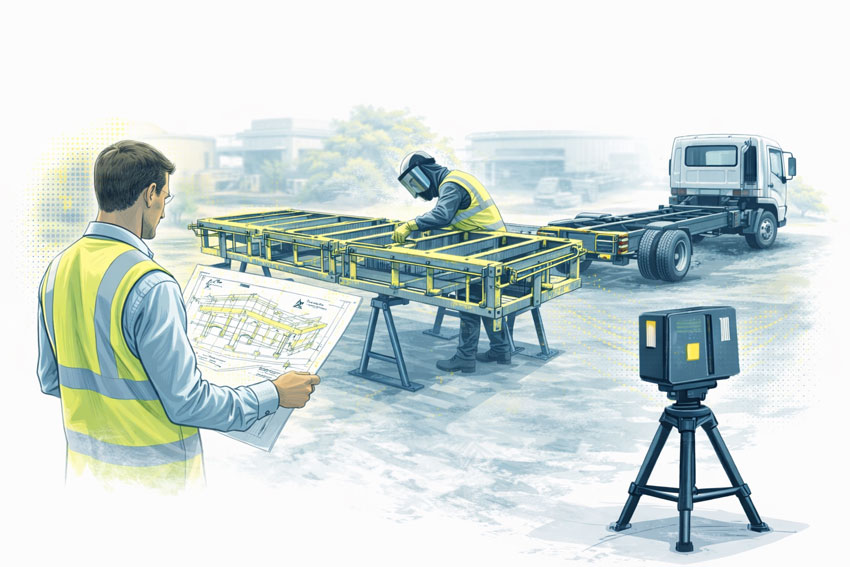
Engineer reviewing fabrication drawings beside a steel truck tray frame on trestles, with a fabricator working on the frame, a light commercial truck chassis waiting for installation, and a LiDAR scanner in the foreground.
3D LiDAR scanning and 3D modelling service button โ€” laser scanner capturing a point cloud for engineering and CAD modelling
Mechanical engineering services

Design-for-Fabrication Approach

All products within this category are developed using design-for-fabrication principles. This means geometry, tolerances, fixing methods, and installation constraints are considered during design, not left to be resolved on site.

Where required, designs are informed by existing-condition data captured through our 3D scanning services:
https://www.hamiltonbydesign.com.au/home/engineering-services/3d-laser-scanning/

Design development and detailing are carried out using SolidWorks-based 3D CAD workflows to produce fabrication-ready outputs:
https://www.hamiltonbydesign.com.au/home/engineering-services/3d-cad/


Gates & Access Steel

We design bespoke gates and access steel for residential and commercial properties, tailored to site geometry, fixing conditions, and operational requirements.

Typical applications include sliding gates, swing gates, cantilever gates, pedestrian access gates, and commercial entry gates. Designs consider post fixings, ground interfaces, clearances, and integration with surrounding structures.

Related engineering capability:
https://www.hamiltonbydesign.com.au/home/engineering-services/mechanical-engineering/


Door & Window Grills

Door and window grills are often required to balance security, ventilation, and architectural intent. We develop opening-specific grill designs that suit residential retrofits and commercial refurbishments.

Products may include security door grills, window grills, decorative architectural grills, and removable systems where access or maintenance is required. Geometry and fixing are resolved during design to support clean fabrication and installation.

Supporting drafting capability:
https://www.hamiltonbydesign.com.au/home/engineering-services/structural-drafting/


Balustrades, Handrails & Guarding

Balustrades, handrails, and guarding systems are safety-critical elements commonly introduced during upgrades and renovations. We provide fabrication-ready designs for residential and commercial settings where existing conditions vary and standard systems are unsuitable.

Designs consider fixing interfaces, load paths, and integration with existing slabs, stairs, or structures.

Engineering certification can be provided where required:
https://www.hamiltonbydesign.com.au/home/engineering-services/engineering-certification/


Screens & Architectural Steel

Steel screens and feature panels are used for privacy, shading, boundary definition, and architectural expression. We design lightweight fabricated steel screens suited to balconies, courtyards, faรงades, and internal spaces.

Design development includes panelisation, fixing strategy, finishes, and installation sequencing to ensure the product can be fabricated and installed efficiently.

Related CAD and documentation services:
https://www.hamiltonbydesign.com.au/home/engineering-services/3d-cad-drawings/


Stairs, Ladders & Access Systems

We design light-duty stairs, ladders, and access systems for residential and commercial environments where space constraints or existing geometry require a bespoke solution.

Applications include compact staircases, mezzanine access stairs, fixed ladders, and maintenance access systems. Accurate geometry is critical, and designs are developed to suit fabrication and on-site installation.

Mechanical engineering support:
https://www.hamiltonbydesign.com.au/home/engineering-services/mechanical-engineering/


Bollards, Barriers & Protective Steel

Protective steel elements such as bollards and barriers are commonly introduced to manage vehicle movement, protect assets, and improve pedestrian safety.

We design light fabricated protective steel for car parks, commercial sites, and mixed-use developments, resolving fixing, spacing, and integration with existing pavements or structures.


Custom Frames, Brackets & Light Steel Assemblies

Many light fabrication projects involve custom brackets, frames, or small assemblies to support equipment, services, or architectural elements.

We develop fabrication-ready designs for mounting frames, brackets, skids, and small steel assemblies, ensuring interfaces with client equipment and existing buildings are clearly defined.

Supporting CAD workflows:
https://www.hamiltonbydesign.com.au/home/engineering-services/3d-cad/


Ute Trays & Light Commercial Vehicle Trays

For residential and commercial trade use, we design custom ute trays and light commercial vehicle trays where off-the-shelf solutions do not meet operational requirements.

Designs consider vehicle mounting, load distribution, accessory integration, and fabrication practicality. This service is limited to light commercial use and does not extend to heavy vehicle manufacturing.


Van & Light Commercial Vehicle Fit-Outs

We provide design support for internal van fit-outs involving light steel fabrication only. Typical applications include shelving systems, equipment mounting frames, internal partitions, and support structures.

Designs are vehicle-specific and focused on safe mounting, durability, and ease of installation.

Engineering certification can be provided where required:
https://www.hamiltonbydesign.com.au/home/engineering-services/engineering-certification/


Engineering Certification

All products within this category can be mechanically engineered and certified where required. Certification scope is defined on a project-by-project basis and may support approvals, compliance requirements, or handover documentation.

Certification services are delivered in conjunction with documented design and fabrication information.


Hamilton By Design logo displayed on a blue tilted rectangle with a grey gradient background

Scope Clarification

This service category is limited to light steel fabrication for residential and commercial applications. It does not include heavy industrial fabrication, structural building frames, or large infrastructure works.

This clear scope ensures consistent quality, reliable delivery, and alignment with fabrication-ready outcomes.


Our clients

Name
Would you like us to arrange a phone consultation for you?
Address
3D LiDAR scanning and 3D modelling service button โ€” laser scanner capturing a point cloud for engineering and CAD modelling
Mechanical engineering services
Finite Element Analysis (FEA) engineering simulation button
Mechanical engineering services

Darwin LiDAR & Laser Scanning Services

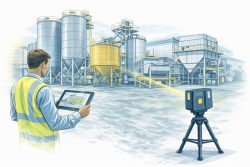
Industrial plant in Darwin being digitally captured with 3D scanning to support engineering design and upgrade planning.

Engineering-Grade Reality Capture for the Top End

Darwin projects operate in one of Australiaโ€™s most demanding environments. Remote logistics, extreme heat, cyclone exposure, corrosive coastal conditions and ageing infrastructure all place pressure on engineering projects to get it right the first time.

Hamilton By Design provides LiDAR and laser scanning services in Darwin that go beyond basic measurement. Our scanning is engineering-led, meaning data is captured with the end goal in mind โ€” mechanical design, structural verification, fabrication and construction.

This page complements our 3D Scanning Darwin landing page by focusing specifically on LiDAR and laser scanning and clearly explaining why these methods outperform traditional measurement techniques on Darwin-based projects.


What Is LiDAR & Laser Scanning?

LiDAR (Light Detection and Ranging) and terrestrial laser scanning use high-precision laser pulses to capture millions of spatial data points per second. These points form a 3D point cloud, accurately representing existing structures, plant, terrain and assets.

Unlike manual measurement, LiDAR captures entire environments, not just selected dimensions. This creates a permanent, revisit able digital record that engineers can interrogate long after leaving site.

In Darwin, where site access is costly and conditions are challenging, this capability is invaluable.


Why LiDAR & Laser Scanning Are Ideal for Darwin Projects

Darwin projects often involve:

  • Brownfield assets with poor documentation
  • Live facilities with limited access windows
  • Remote locations where repeat visits are expensive
  • Structures affected by corrosion, movement and deformation

LiDAR scanning directly addresses these challenges by replacing assumptions with measured reality.


LiDAR & Laser Scanning vs Traditional Measurement Methods

Traditional Measurement Methods

Common traditional approaches include:

  • Tape measures and laser distos
  • Total stations used selectively
  • Manual sketching and hand-marked dimensions
  • Assumptions based on legacy drawings

While these methods still have a place, they struggle in Darwinโ€™s complex industrial environments.


LiDAR & Laser Scanning โ€“ A Comparative Overview

AspectTraditional MethodsLiDAR & Laser Scanning
Data capturedLimited, selectiveMillions of points
AccuracyDepends on access & operatorConsistent, verifiable
Site timeHighReduced
Rework riskHighSignificantly reduced
Ability to revisit dataNoYes
SafetyManual access requiredReduced physical access
Suitability for brownfield sitesLimitedExcellent

Key Benefits of LiDAR & Laser Scanning in Darwin

1. Reduced Site Time in Remote Locations

Darwin projects often involve:

  • Fly-in/fly-out logistics
  • Restricted access windows
  • Live plant environments

LiDAR allows large, complex sites to be captured in a single visit, reducing the need for repeated trips.


2. Improved Safety in Harsh Conditions

Traditional measurement often requires:

  • Working at height
  • Accessing confined or hot spaces
  • Measuring near live equipment

Laser scanning significantly reduces the need for physical interaction with hazardous environments, improving safety outcomes.


3. Accurate Capture of Deformed & Corroded Assets

Darwinโ€™s tropical climate accelerates:

  • Steel corrosion
  • Structural movement
  • Alignment drift

LiDAR captures as-is geometry, not what drawings say should exist. This is critical for:

  • Port infrastructure
  • Marine assets
  • Industrial plant and pipework

4. Better Outcomes for Brownfield Engineering

Most Darwin projects are brownfield in nature. LiDAR supports:

  • Clash-free design
  • Accurate retrofit modelling
  • Confident fabrication

Designers can work knowing the model reflects reality, not assumptions.


5. Permanent Digital Record of Existing Conditions

Once scanned, a site becomes a digital asset. Engineers can:

  • Take additional measurements remotely
  • Validate future changes
  • Use scans as baseline data

This is particularly valuable for long-term asset management in the Northern Territory.


Engineering-Led LiDAR Scanning (Why It Matters)

Not all scanning services are equal.

Hamilton By Design delivers engineering-led LiDAR scanning, meaning:

  • Scans are planned around engineering outcomes
  • Data density suits mechanical and structural modelling
  • Critical interfaces and tolerances are prioritised

This ensures the point cloud transitions cleanly into design, analysis and fabrication, not just visualisation.


Typical Darwin Projects Using LiDAR & Laser Scanning

Defence & Government Facilities

  • Existing buildings with no drawings
  • Secure sites with limited access
  • Retrofit and upgrade projects

LiDAR reduces site exposure while improving design accuracy.


Ports & Marine Infrastructure

  • Wharf structures and steelwork
  • Bulk handling systems
  • Corrosion and deformation monitoring

Scanning enables fit-first-time fabrication in marine environments.


Oil, Gas & Energy Facilities

  • Congested process plants
  • Pipework tie-ins
  • Structural verification

LiDAR supports safe, efficient shutdown planning.


Mining & Bulk Materials

  • Crushing and screening plants
  • Conveyors and chutes
  • Remote site upgrades

Scanning allows design work to occur off-site with confidence.


Cyclone Remediation & Compliance

  • Structural assessment
  • Asset hardening
  • Documentation for compliance

LiDAR provides accurate baseline data for engineering decisions.


Utilities & Water Infrastructure

  • Pump stations
  • Treatment plants
  • Pipework routing

Scanning reduces excavation risk and coordination issues.


From LiDAR Scan to Engineering Deliverables

Hamilton By Design provides more than raw data.

Our Typical Deliverables Include:

  • Registered point clouds
  • 3D CAD models aligned to engineering standards
  • Fabrication-ready drawings
  • Structural and mechanical layouts
  • As-built documentation

This ensures scanning data is immediately useful, not an additional burden for project teams.


Integration With Hamilton By Design Services

LiDAR scanning in Darwin is often combined with:

Together, these services support a single-source, accountable workflow from capture to construction.


Why LiDAR Is Replacing Traditional Measurement in Darwin

In Darwin, traditional measurement methods often result in:

  • Missed dimensions
  • Rework and fabrication issues
  • Costly site returns
  • Program delays

LiDAR & laser scanning replace this uncertainty with measured reality, improving project certainty and reducing risk โ€” particularly in remote and high-cost environments.


Darwin LiDAR & Laser Scanning โ€“ Built for Real Conditions

Whether you are working on defence infrastructure, ports, LNG facilities, mining plant or cyclone-prone assets, LiDAR and laser scanning provide the foundation for better engineering outcomes.

Hamilton By Design delivers Darwin LiDAR scanning services that are practical, accurate and engineered for real-world construction โ€” not just data capture.

If your project requires certainty before design or fabrication begins, LiDAR scanning is not an optional extra โ€” itโ€™s the smart starting point.

Hamilton By Design logo displayed on a blue tilted rectangle with a grey gradient background
3D LiDAR scanning and 3D modelling service button โ€” laser scanner capturing a point cloud for engineering and CAD modelling
Mechanical engineering services

Our clients:

Name
Would you like us to arrange a phone consultation for you?
Address

From Scan to Shutdown

3D laser scanner capturing an industrial structure for engineering-grade digital modelling and verification

Why Hamilton By Design Is the Engineering Partner of Choice in Moranbah and the Bowen Basin – Engineering where it matters most

Moranbah and the surrounding Bowen Basin sit at the centre of Australiaโ€™s coal production engine. This is not a region defined by conceptual studies or theoretical designโ€”it is defined by tonnes per hour, shutdown windows, safety performance, and whether plant modifications fit first time.

For mining companies operating in this regionโ€”including major operators such as BHP Mitsubishi Alliance, Anglo American, Glencore, Whitehaven Coal, QCoal Group, Yancoal Australia, Coronado Global Resources, and Bowen Coking Coalโ€”engineering success is measured by outcomes, not promises.

Hamilton By Design exists specifically for environments like Moranbah: brownfield, high-risk, shutdown-driven, and unforgiving of design errors. This article explains why our engineer-led, scan-to-fabrication workflow aligns so closely with the realities of mechanical engineering in the Bowen Basinโ€”and how it delivers value across CHPPs, materials-handling plants, and mine infrastructure.


Moranbah: a convergence of mining, mechanics, and margin

Mechanical engineering in Moranbah is unique because it operates at the intersection of:

  • Live production assets
  • Harsh environmental conditions
  • Compressed shutdown schedules
  • Zero tolerance for rework

Almost every mine in the region is supported by a CHPP, conveyors, crushers, stackers, reclaimers, and complex transfer stations. These assets are often decades old, modified many times, and poorly documented.

For operators, this creates constant engineering risk:

  • Unknown as-built conditions
  • Dimensional uncertainty
  • Legacy structural fatigue
  • Congested plant layouts
  • Safety constraints during access and installation

Hamilton By Design was formed to remove this uncertainty.


The core problem: brownfield uncertainty

Most engineering failures in the Bowen Basin are not caused by poor calculations. They are caused by poor information.

Traditional workflows often rely on:

  • Outdated drawings
  • Manual tape measurements
  • Partial site access
  • Assumptions made under time pressure

In Moranbah, these assumptions are expensive.

A single clash during a CHPP shutdown can cascade into:

  • Lost production
  • Extended outages
  • Emergency site modifications
  • Safety exposure
  • Cost overruns

Hamilton By Design addresses this problem at its source: accurate, engineer-owned site data.


Engineer-led 3D laser scanning: data you can trust

4

Hamilton By Design delivers engineering-grade 3D LiDAR scanning, not generic survey capture. This distinction matters.

Our scans are:

  • Planned by mechanical engineers
  • Captured with fabrication tolerances in mind
  • Registered and verified for design use
  • Interpreted by the same engineers who model and draft the solution

For Bowen Basin operators, this means:

  • Confidence in clearances
  • Reliable tie-in locations
  • Accurate centre-lines and datum references
  • Reduced site revisits
  • Fewer RFIs during fabrication and installation

This approach underpins everything that follows.


From scan to CAD: turning reality into buildable models

Point clouds are only valuable if they are converted into usable engineering models.

Hamilton By Design specialises in:

  • SolidWorks-based mechanical modelling
  • CHPP equipment modelling
  • Conveyor and chute systems
  • Structural steel and platforms
  • Pipework, transfer chutes, and guards

Unlike generic drafting services, our models are:

  • Built for fabrication
  • Aligned to Australian Standards
  • Structured for downstream FEA where required
  • Designed with maintenance and installation in mind

For Moranbah projects, this means the model becomes a single source of truthโ€”shared between engineering, fabrication, and site teams.


Shutdown-driven design: engineering to the clock

Shutdowns in the Bowen Basin are short, expensive, and unforgiving.

Hamilton By Design engineers design specifically for shutdown execution by:

  • Preferring modular assemblies
  • Designing for pre-fabrication and trial-fit
  • Minimising hot work on site
  • Reducing installation complexity
  • Embedding lift and access considerations early

Our experience working with fabricators and site crews ensures that drawings are not just correctโ€”they are buildable under shutdown conditions.


Fabrication-ready drawings that reduce risk

4

In Moranbah, fabrication errors propagate directly to site risk.

Hamilton By Design produces:

  • Detailed fabrication drawings
  • Clear GA and assembly drawings
  • Accurate BOMs
  • Weld-ready detailing
  • Clear tolerances and notes

Fabricators value our drawings because they:

  • Reduce shop-floor guesswork
  • Minimise RFIs
  • Support first-time assembly
  • Align with real-world workshop practices

For mining companies, this translates to smoother shutdowns and fewer surprises.


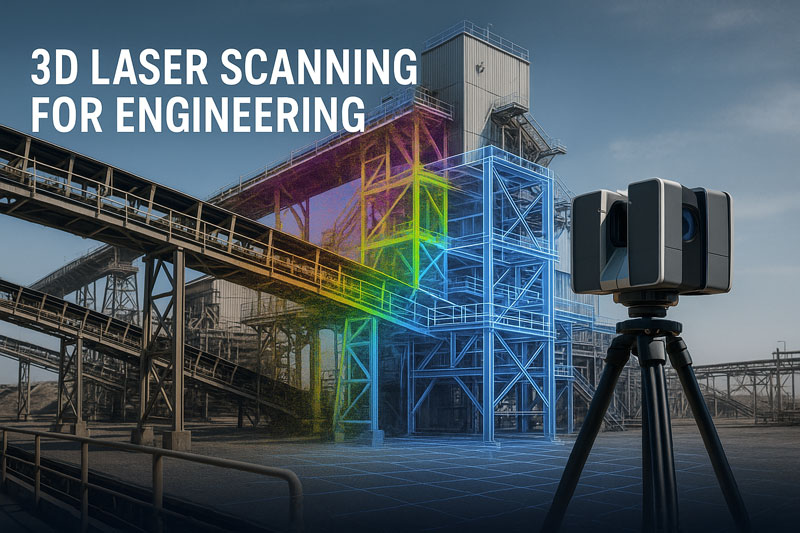
A 3D laser scanner on a tripod capturing an industrial plant structure, with a colourful point cloud and blue CAD wireframe overlay illustrating engineering-grade 3D laser scanning accuracy.
3D LiDAR scanning and 3D modelling service button โ€” laser scanner capturing a point cloud for engineering and CAD modelling
Mechanical engineering services

Structural verification and FEA where it counts

Many Bowen Basin assets were not designed for their current duty cycles. Increased throughput, equipment upgrades, and extended asset life introduce structural risk.

Hamilton By Design integrates:

  • Structural checks
  • Load-path verification
  • Fatigue considerations
  • Finite Element Analysis (where appropriate)

FEA is applied pragmaticallyโ€”not as an academic exercise, but as a decision-support tool to:

  • Validate modifications
  • Avoid over-design
  • Reduce unnecessary steel
  • Confirm safety margins

This approach supports compliance while respecting cost and schedule constraints.


Digital QA and as-built confidence

One of the most overlooked advantages of scan-based engineering is digital quality assurance.

Hamilton By Design can:

  • Validate fabricated components against the model
  • Confirm installed geometry post-shutdown
  • Provide updated as-built documentation
  • Support future modifications with confidence

For asset owners, this builds a cumulative digital assetโ€”each project improving the next.


Why this matters to Bowen Basin operators

For companies operating multiple sites across the region, the benefits compound:

  • Consistency across projects and sites
  • Reduced engineering rework
  • Improved shutdown reliability
  • Better collaboration with fabricators
  • Lower total project risk

Hamilton By Designโ€™s workflow aligns with how mining actually operates in Moranbahโ€”not how it is described in textbooks.


A partner, not just a consultant

Hamilton By Design does not operate as a detached design office. We work alongside:

  • Maintenance teams
  • Shutdown planners
  • Fabricators
  • Site supervisors

Our value lies in understanding why a design is needed, how it will be built, and when it must be installed.

This mindset resonates strongly in the Bowen Basin, where credibility is earned through delivery.


Why Moranbah companies choose Hamilton By Design

In summary, Hamilton By Design helps mining companies in Moranbah and the Bowen Basin because we:

  • Specialise in brownfield mining environments
  • Deliver engineer-led 3D scanning
  • Convert data into fabrication-ready models
  • Design for shutdown execution
  • Reduce risk across engineering, fabrication, and installation
  • Speak the language of site, not just design offices

Engineered for Moranbah

Moranbah is not a place for generic solutions. It demands engineering that is accurate, practical, and accountable.

Hamilton By Design was built for regions like thisโ€”where engineering decisions have immediate operational consequences and where doing it right the first time matters.

For mining companies across the Bowen Basin, we provide more than drawings.
We provide clarity, confidence, and constructable engineeringโ€”from scan to shut down.

Hamilton By Design logo displayed on a blue tilted rectangle with a grey gradient background

Our clients:

Name
Would you like us to arrange a phone consultation for you?
Address
Finite Element Analysis (FEA) engineering simulation button
Mechanical engineering services

Industrial Machinery & Plant Systems Design

Industrial Machinery & Plant Systems Design

Consulting-led mechanical engineering for mining, processing and manufacturing operations


Practical, engineered solutions for brownfield and greenfield industrial facilities

Hamilton By Design provides consulting-led mechanical engineering for complex industrial systems across mining, mineral processing, manufacturing and heavy industry.

We specialise in designing, upgrading and optimising machinery and plant systems that must perform reliably under real operating conditions โ€” high loads, abrasive materials, continuous duty cycles, demanding shutdown windows and strict compliance requirements.

Whether you’re introducing new equipment, modifying existing systems or expanding production capacity, we help you move from concept to construction with clarity, accuracy and confidence.


How We Support Your Plant & Machinery Projects

Our consulting team works from the problem outward โ€” understanding your operational objectives, constraints and shutdown timelines before we begin design.

We help clients:

  • Upgrade brownfield equipment while minimising downtime and rework
  • Design new machinery and plant systems aligned to production targets
  • Resolve recurring performance, wear, or reliability issues through redesign
  • Integrate OEM equipment into complex existing facilities
  • Coordinate mechanical, structural and access requirements in one model
  • Prepare fabrication-ready documentation that installers and workshops can rely on

Our engineering process combines real site experience, 3D CAD modelling, FEA where needed, and โ€” for brownfield work โ€” engineer-led 3D LiDAR scanning to ensure accuracy.


What We Design

Hamilton By Design delivers mechanical systems and plant layouts across a wide range of industrial applications:

Bulk Materials Handling Systems

  • Conveyors (fixed, shiftable, overland, tripper gantries)
  • Transfer towers and conveyor galleries
  • Chutes, hoppers, bins and wear lining systems
  • Feeders, vibratory equipment and discharge systems

Processing & Production Equipment

  • Screens, crushers, mills and separation equipment interfaces
  • Pumping systems, pipework, manifolds and slurry line transitions
  • Tanks, vessels, agitators and mechanical supports
  • Mechanical upgrades to maximise throughput or reliability

Plant Layouts & System Integration

  • Space-constrained brownfield layouts
  • New plant expansions and tie-ins
  • Mechanicalโ€“structural interface design
  • Access, maintenance and safety systems

Support Systems & Ancillary Equipment

  • Platforms, walkways, stairs and guarding
  • Maintenance stands, frames, skids and lifting/handling devices
  • Mobile and fixed equipment support structures

If it moves material, processes ore, mounts equipment or supports production, we can help design it.


Our Design Approach

Industrial plant design is never one-size-fits-all. Every project has operational realities, shutdown limits and site constraints. Our approach reflects that:

1. Understand the Operating Environment

We begin by understanding:

  • Production goals
  • Wear mechanisms
  • Availability targets
  • Maintenance constraints
  • Compliance and site standards

This ensures the design is grounded in how the plant is actually used โ€” not how it looks on paper.

2. Capture Accurate Existing Conditions

For brownfield sites, we integrate 3D LiDAR scanning to ensure all tie-ins, clearances and interfaces match reality.
This significantly reduces rework, clashes and on-site modification.

3. Develop Practical Mechanical Concepts

We generate design options that consider:

  • Material flow
  • Access and maintenance
  • Installation sequence
  • Transport and modularisation
  • Cost, complexity and risk

Options are presented with pros and cons so you can decide the best path forward.

4. Engineer the Details

Using SolidWorks and analysis tools, we refine:

  • Load paths and structural capacity
  • Wear management and replaceability
  • Supports, fixings and serviceability
  • Safety, guarding, access and compliance
  • Liner systems and flow optimisation

5. Verify Performance & Reliability

Where appropriate, we perform:

  • FEA for stress, fatigue and buckling
  • Check calculations for structural and mechanical compliance
  • Flow and material behaviour assessments
  • Vibration or modal checks for dynamic equipment

6. Produce Fabrication & Installation Documentation

We deliver:

  • 3D models
  • GA drawings
  • Fabrication details
  • BOMs and cutting lists
  • Installation notes
  • Tie-in and interface details

All documentation is prepared with fabricators, installers and shutdown teams in mind.


Where This Service Adds the Most Value

Hamilton By Designโ€™s industrial machinery and plant system design services are ideal for:

  • Shutdown-driven upgrades where every hour matters
  • Debottlenecking and throughput improvements
  • Wear and reliability redesigns of problem areas
  • Capacity expansions requiring new equipment or system reconfiguration
  • Brownfield integration of OEM machines into existing plants
  • New plant development where early layout and mechanical decisions set project success

Why Work With Hamilton By Design?

  • Engineer-led design process โ€” not drafting-first
  • Strong brownfield capability using 3D LiDAR for accuracy
  • Deep experience in mining and processing plants across Australia
  • Fabrication-ready deliverables developed with real workshops in mind
  • Clear, actionable advice grounded in practical engineering
  • Single-source accountability from site capture to drawings

We bridge the gap between concept and install โ€” reducing risk, improving reliability and ensuring your plant systems actually work in the real world.


Hamilton By Design logo displayed on a blue tilted rectangle with a grey gradient background
3D LiDAR scanning and 3D modelling service button โ€” laser scanner capturing a point cloud for engineering and CAD modelling
Mechanical engineering services

Letโ€™s Talk About Your Next Plant or Machinery Project

Whether youโ€™re planning a major upgrade, resolving a long-standing performance issue, or designing a new facility, our team can support you with clear, practical and engineering-driven solutions.

Contact Hamilton By Design to discuss your upcoming project, or explore our related services:

  • Mechanical Design & Custom Equipment Layouts
  • 3D CAD Modelling & Mechanical Drafting
  • 3D LiDAR Scanning for As-Built & Brownfield Engineering
  • FEA & Mechanical/Structural Assessment
  • SolidWorks Sustainability Tools & Material Optimisation

Weโ€™re ready to help you design industrial systems that perform โ€” safely, reliably and efficiently.

Our Clients

Finite Element Analysis (FEA) engineering simulation button
Mechanical engineering services

SolidWorks Mechanical Design Services

Hero image showing a LiDAR-coloured point-cloud model of an industrial conveyor system on the left transitioning into a detailed SolidWorks 3D CAD model on the right, with the heading โ€˜SolidWorks Mechanical Design Servicesโ€™ and a call-to-action button that reads โ€˜Start Your Projectโ€™

SolidWorks Design Services

The Many Faces of Mechanical Design: How SolidWorks Powers Modern Engineering Across Australia

At Hamilton By Design, we see the same pattern every day across mining, heavy industry, manufacturing, and complex brownfield environments: the quality of engineering outcomes depends directly on the quality of the models driving them. And when it comes to mechanical design, SolidWorks remains one of the most capable and versatile platforms on the planet.

From dragline components to sheet metal enclosures, from pressure vessel upgrades to bespoke robotics, SolidWorks enables engineers to turn ideas into precise, fabrication-ready models that reduce rework, eliminate uncertainty, and accelerate project delivery.

Below, we explore the full spectrum of mechanical design disciplines where SolidWorks excels โ€” and how Hamilton By Design uses this capability to deliver accurate, reliable, engineering-grade outcomes across Australia.


Why SolidWorks Remains the Backbone of Mechanical Design

SolidWorks brings together parametric modelling, simulation, large assembly performance, surfacing, sheet metal tools, weldments, routing and visualisation under a single environment. The result is powerful:

โœ” Engineering that is data-driven
โœ” Models that are precise and fabrication-ready
โœ” Assemblies that reflect true site conditions
โœ” Designs that respond intelligently to changes
โœ” Drawings that follow Australian Standards
โœ” Seamless integration with LiDAR-based as-builts

When paired with Hamilton By Designโ€™s LiDAR scanning workflows, SolidWorks becomes an engine for delivering zero-guesswork mechanical design.


Mechanical Design Disciplines Perfectly Suited to SolidWorks Modelling

SolidWorks supports a huge range of engineering tasks. Below is a deep dive into the disciplines where Hamilton By Design deploys it every day.


1. Machine Design: Precision for Moving Systems

SolidWorks is a natural fit for mechanical equipment upgrades and R&D design work, including:

  • Gearboxes, shafts, keys, couplings
  • Linear motion systems and actuators
  • Mechanical linkages, cams and levers
  • Robotic mechanisms
  • Safety guards, enclosures and subframes
  • Automation concept development

Whether weโ€™re modelling a drive assembly for a conveyor or designing a new piece of automated equipment, SolidWorks gives us full control over the mechanics, kinematics, clearances and manufacturability.


2. Structural Mechanical Design: Frames, Platforms & Fabrication

Mining and industrial plants rely heavily on welded structures and access systems. SolidWorks weldments excel at:

  • Platforms, walkways and stair systems
  • Equipment bases, skids and structural frames
  • Gantries, monorails and supports
  • Pipe supports and brackets
  • Structural reinforcements and upgrade scopes

Built-in cut lists, profile libraries and FEA ensure every frame is practical, safe and fabrication-ready.


3. Pressure Vessels, Tanks & Piping Systems

SolidWorks is an ideal tool for pressure-bound components and interconnected plant systems:

  • Tanks, vessels, bins and hoppers
  • Nozzles, flanges, stiffeners and ladders
  • Pipe routing and spooled sections
  • Chute systems, transitions and flow paths
  • Wear liners and maintenance-friendly redesigns

With stress linearisation, buckling analysis and accurate geometry import from LiDAR scans, we ensure designs meet engineering intent and fit up perfectly on site.


4. Sheet Metal: From Light Fabrication to Industrial Ducting

SolidWorks is the industry standard for sheet metal components:

  • Ducting and HVAC transitions
  • Guards, housings and folded enclosures
  • Electrical cabinets
  • Chute panels
  • Laser-cut and folded brackets

Automatic flat patterns and K-factor control mean fewer mistakes at the plasma/laser cutters and more predictable outcomes for fabricators.


5. Heavy Industry & Mining Equipment Modelling

Hamilton By Designโ€™s roots in mining and heavy industry make SolidWorks invaluable for:

  • Conveyor components and guarding
  • Diverter chutes, hoppers and flow-optimised transitions
  • Bucket-wheel reclaimer parts
  • Crusher and screen upgrades
  • Dragline component modelling
  • Structural deformation/realignment scopes

Combined with LiDAR scanning, SolidWorks becomes the tool that eliminates shutdown fit-up problems.


6. Product Design & Industrial Design

SolidWorksโ€™ surfacing and parametric tools are ideal for:

  • Consumer products
  • Power tools and ergonomic items
  • Injection-moulded components
  • Kitchen or appliance prototypes
  • Concept development for early-stage R&D

It supports rapid iterations, rendering, and export for 3D printing.


7. Robotics & Automation Systems

With the rise of automated processing and Industry 4.0, SolidWorks continues to shine in:

  • End effectors
  • Robotic arms and actuators
  • Kinematic studies
  • Sensor housings
  • Concept layouts for automated cells

We frequently pair this with our LiDAR models of existing plants to create automation solutions that genuinely fit the space.


8. Tooling, Jigs & Fixtures

Fabrication and machining rely on accurate tooling, and SolidWorks helps us design:

  • Welding jigs
  • Machining fixtures
  • Assembly tooling
  • Positioning and inspection gauges
  • Drill guides and alignment tooling

Parametric updates make future modifications simple and consistent.


9. Material Handling Systems

Across mining, ports, agriculture and waste facilities, SolidWorks supports:

  • Conveyor layouts
  • Screw and chain conveyors
  • Transfer chute redesigns
  • Feeders, bins and flow systems
  • Skids and support structures

We routinely pair mechanical redesign with simulation, checking wear patterns, stresses and clearances.


10. Reverse Engineering & As-Built Modelling from LiDAR

This is where Hamilton By Design leads the industry.

We scan sites with millimetre-level LiDAR, then rebuild clean parametric models in SolidWorks for:

  • Brownfield upgrades
  • Fit-up verification
  • Clash detection
  • Replacements and like-for-like manufacturing
  • Structural deformation assessments
  • Shutdown planning

It is the combination of LiDAR + engineering + SolidWorks that gives clients complete confidence in their next project.


How Clients Benefit from SolidWorks-Driven Mechanical Design

โœ” Reduced rework

โœ” Faster shutdown upgrades

โœ” Accurate manufacturing drawings

โœ” Better communication between engineers, fabricators and site teams

โœ” Safer and more predictable installations

โœ” Clear, simulation-backed decision-making

From CHPPs to ports, from power stations to manufacturing plants, SolidWorks modelling allows Hamilton By Design to deliver engineering outcomes you can trust.


Hamilton By Design logo displayed on a blue tilted rectangle with a grey gradient background
3D LiDAR scanning and 3D modelling service button โ€” laser scanner capturing a point cloud for engineering and CAD modelling
Mechanical engineering services

Partner With Hamilton By Design for SolidWorks Mechanical Design

We support clients across:

  • NSW (Sydney, Newcastle, Central Coast, Hunter Valley)
  • QLD (Bowen Basin, Surat Basin, Mount Isa)
  • WA (Perth, Pilbara)
  • SA, VIC and regional Australia

If your next project needs mechanical accuracy, design certainty or LiDAR-integrated engineering, our team is ready to support you.

Name
Address
You would like to:

Our clients

SolidWorks

Finite Element Analysis (FEA) engineering simulation button
Mechanical engineering services

3D Laser Scanning

Engineering Projects

Engineering Services

3D Laser Scanning for Engineering

3D Laser Scanning for Engineering

A 3D laser scanner on a tripod capturing an industrial plant structure, with a colourful point cloud and blue CAD wireframe overlay illustrating engineering-grade 3D laser scanning accuracy.

3D Laser Scanning for Engineering


At Hamilton By Design, we deliver high-accuracy 3D laser scanning tailored specifically for engineering projects across mining, heavy industry, manufacturing, buildings and infrastructure.

Whether youโ€™re planning a shutdown upgrade, solving a site fit-up problem or updating critical as-built documentation, our engineering-grade scans give your team the confidence to design, fabricate and install with millimetre-level accuracy.


Choosing the Right Scanner for the Right Engineering Discipline

One of the most overlooked aspects of 3D laser scanning is scanner selection.
Different scanners are designed for different forms of engineering work:

  • Civil works / road works scanners prioritise coverage and speed
  • Structural engineering scanners require higher accuracy across steelwork and vertical alignment
  • Mechanical engineering demands the highest level of precision for equipment tie-ins, rotating machinery, platework and interfaces

While some overlap exists between these disciplines, a single scanner cannot deliver optimal accuracy across all engineering environments. Using one device for civil, structural and mechanical scopes inevitably leads to accuracy losses, which then flow into the design, fabrication and installation phases.

At Hamilton By Design, we select the scanner and workflow that best matches your engineering discipline, ensuring the data you receive aligns with the tolerances required for your projectโ€”not just a โ€œone-size-fits-allโ€ output.


Why 3D Laser Scanning for Engineering Projects?

Traditional tape-measure surveys and hand sketches simply canโ€™t keep up with the complexity of modern plants and structures.

3D laser scanning for engineering replaces guesswork with precise digital data:

  • Capture true as-built conditions โ€“ including twists, deflections, corrosion losses and historic modifications
  • Eliminate rework and site clashes โ€“ check new designs against the point cloud before fabrication
  • Speed up shutdowns โ€“ reduce on-site measuring time and keep personnel out of hazardous areas
  • Create a single source of truth โ€“ supporting design, maintenance, safety and future expansion

Our 3D Laser Scanning Services

We provide end-to-end scanning solutions, from on-site data capture through to fabrication-ready models and documentation.


1. On-Site 3D Laser Scanning

  • High-accuracy terrestrial 3D LiDAR scanners matched to engineering discipline
  • Safe data capture in operational plants and confined access locations
  • Registration aligned to site grid, survey control or local benchmarks
  • Colourised or greyscale point clouds depending on scope needs

2. Engineering-Grade 3D Modelling

Using the scan data, we develop high-fidelity models in SolidWorks and other CAD platforms:

  • Structural steel, access systems and platforms
  • Chutes, hoppers, vessels, tanks and ductwork
  • Conveyors, transfer stations and materials handling systems
  • Mechanical equipment envelopes, mounting points and tie-ins
  • Building interiors, architectural features and services layouts

3. As-Built Documentation & Drawings

We produce clear, fabrication-ready documentation, including:

  • As-built GA drawings and layout packages
  • Detailed fabrication drawings and BOMs
  • Connection and interface detailing
  • Clearance envelopes and clash-review drawings for shutdown planning

4. Digital Quality Assurance

Our scanning workflows verify installation accuracy and compliance:

  • Compare new steelwork or equipment against the design model
  • Check critical dimensions pre- and post-shutdown
  • Provide QA evidence for clients, regulators and insurers

Industries We Support

Our engineering scanning services support:

  • Mining & CHPPs โ€“ draglines, bucket-wheel reclaimers, conveyors, chutes, screen decks, process plant steelwork
  • Power stations & energy โ€“ boilers, turbine halls, pipe racks, coal handling and ash systems
  • Heavy manufacturing โ€“ workshops, cranes, production lines, process equipment
  • Buildings & infrastructure โ€“ plant rooms, services, heritage structures, refurbishment projects
  • Data centres & critical facilities โ€“ equipment layouts, cable pathways, HVAC and expansion planning

If your project demands tight interfaces, shutdown precision or difficult-to-measure geometry, 3D laser scanning provides immediate value.


Our Typical Workflow

1. Scope & Planning

We meet with engineers, supervisors and project managers to define accuracy requirements, scanning areas and deliverables.

2. On-Site Scanning

We mobilise to site, complete inductions and capture the plant with minimal disruption.

3. Registration & QA

Scans are unified into a verified point cloud referenced to known control.

4. 3D Modelling & Design Support

We create engineering-grade models that integrate seamlessly into your CAD workflow.

5. Deliverables & Review

Point clouds, models and drawings are provided in your requested formats, with remote or in-person review.

6. Ongoing Support

Need to add new platforms, chutes or modifications later? We can extend the model and reuse existing scan data.


Benefits for Engineering Teams

Partnering with Hamilton By Design delivers:

  • Reduced shutdown risk โ€“ fewer installation surprises
  • Better design decisions โ€“ engineers see the actual plant, not outdated drawings
  • Shorter site time โ€“ thousands of measurements captured in hours
  • Improved safety โ€“ less exposure to heights, confined spaces and live equipment
  • Clear communication โ€“ 3D visualisations improve stakeholder understanding

Accuracy, Equipment & Data Formats

We use engineering-grade LiDAR scanners capable of millimetre-level accuracy at typical working distancesโ€”selected specifically to match your engineering discipline.

Typical deliverables include:

  • Registered point clouds (E57, RCP/RCS, LAS)
  • SolidWorks and STEP models
  • 2D DWG/DXF drawings
  • PDF QA reports and review packs
  • Navisworks-ready models for clash detection

We tailor outputs to fit your preferred software environment.


Why Work with Hamilton By Design?

  • Mechanical and structural engineering expertise โ€“ we scan with design intent in mind
  • Extensive heavy-industry background โ€“ mining, CHPPs, power and processing plants
  • Complete end-to-end capability โ€“ scanning, modelling, engineering and drawings
  • Australia-wide service โ€“ Central Coast, Hunter Valley, Newcastle, Bowen Basin, Surat Basin, Pilbara, Perth, Adelaide, Sydney and more

When you combine accurate data with real-world engineering experience, you get designs that are safe, buildable and cost-effective.


Ready to Talk About Your Next Project?

If youโ€™re planning a shutdown, upgrade or complex retrofit, now is the perfect time to integrate 3D laser scanning for engineering into your workflow.

๐Ÿ“ž Call:
๐Ÿ“ง Email:
๐ŸŒ Website: www.hamiltonbydesign.com.au

Weโ€™re ready to review your scope, assess your drawings and help you de-risk your next project.


Hamilton By Design logo displayed on a blue tilted rectangle with a grey gradient background
3D LiDAR scanning and 3D modelling service button โ€” laser scanner capturing a point cloud for engineering and CAD modelling
Mechanical engineering services

Ready to Talk About Your Next Project?

If youโ€™re planning a shutdown, upgrade or complex retrofit, now is the perfect time to integrate 3D laser scanning for engineering into your workflow.

Weโ€™re happy to review your scope, look over existing drawings and recommend how scanning and 3D modelling can de-risk your next project.

Name
Address
You would like to:

Engineering Projects

Finite Element Analysis (FEA) engineering simulation button
Mechanical engineering services

Engineering Services

3D CAD Modelling | 3D Scanning

SolidWorks