When You Donโ€™t Trust the Design โ€“ And Donโ€™t Know What Youโ€™re Getting

3D laser scanning Sydney Harbour Bridge and Opera House with point cloud overlay for engineering modelling and design verification

In industrial and mechanical projects, one of the most common โ€” and costly โ€” client concerns is simple:

โ€œI donโ€™t trust the designโ€ฆ and I donโ€™t really know what Iโ€™m going to get.โ€

It usually starts with an existing asset.

  • Old drawings that donโ€™t match reality
  • Missing documentation
  • Modifications made over time
  • Conflicting information between teams

At that point, every decision becomes a risk.


The Real Problem Isnโ€™t the Design โ€” Itโ€™s the Data

Most design issues donโ€™t come from bad engineers.

They come from bad inputs.

If your base information is wrong:

  • Models wonโ€™t fit
  • Steel wonโ€™t align
  • Pipework clashes on install
  • Fabrication needs rework

And suddenly, what looked like a solid design becomes a site problem.


3D LiDAR scanning and 3D modelling service button โ€” laser scanner capturing a point cloud for engineering and CAD modelling
Mechanical engineering services

What Clients Are Actually Searching For

When clients say they donโ€™t trust the design, theyโ€™re usually looking for:

  • point cloud to CAD conversion services
  • reverse engineering services
  • mechanical engineering models
  • engineering-grade verification

What they really mean is:

โ€œI need to know this will fit before I spend money building it.โ€


Step 1: Capture Reality โ€” Not Assumptions

The first step is removing uncertainty completely.

Using engineering-grade LiDAR scanning, you capture the real-world geometry of your asset โ€” not what the drawings say, but what actually exists on site.

This is where most projects go wrong:

  • Assumptions instead of measurements
  • Tape measures instead of full coverage
  • Missed geometry due to line-of-sight limitations

With proper scanning, you get:

  • Full spatial accuracy
  • Complete coverage
  • A true digital representation of your plant

Learn more: https://www.hamiltonbydesign.com.au/home/engineering-services/3d-scanning-sydney/


Step 2: Turn Data Into a Usable Engineering Model

A scan on its own isnโ€™t enough.

You need something your engineers and designers can actually use.

We convert point clouds into:

  • Clean 3D CAD models
  • Plant layouts
  • Mechanical assemblies
  • Structural frameworks

Not meshes. Not visuals.

Engineering models that support real design decisions.

Learn more: https://www.hamiltonbydesign.com.au/


Step 3: Design With Confidence

Once the model reflects reality, engineering becomes predictable again.

Now you can:

  • Design around real constraints
  • Eliminate clashes before site
  • Validate clearances and fitment
  • Reduce risk across the project

Learn more: https://www.hamiltonbydesign.com.au/


Step 4: Deliver Drawings That Actually Work on Site

This is where trust is either confirmed โ€” or lost.

With verified models behind them, drawings become:

  • Accurate
  • Buildable
  • Reliable for fabrication and install

This means:

  • Less rework
  • Faster installs
  • Fewer RFIs
  • Better project outcomes

Learn more: https://www.hamiltonbydesign.com.au/


From Uncertainty to Engineering Confidence

Most providers offer a piece of the puzzle.

  • Scanning only
  • Modelling only
  • Drafting only

The problem is โ€” gaps between those stages create risk.

At Hamilton By Design, we connect the full workflow:

Scan โ†’ Model โ†’ Design โ†’ Fabrication

So youโ€™re not left wondering:

  • Will this fit?
  • Are these drawings right?
  • What happens on site?

Instead, you get:

  • Confidence before fabrication
  • Accuracy before installation
  • Clarity before committing cost

Final Thought

If you donโ€™t trust the design, itโ€™s usually because you donโ€™t trust the data behind it.

Fix the data โ€” and the design follows.


Hamilton By Design
Engineering-led scanning, modelling, and design for real-world results.

Name
Would you like us to arrange a phone consultation for you?
Address

3D CAD Modelling Australia service banner for Hamilton By Design

Mechanical Engineering | Structural Engineering


SMP Projects: Enabling Project Success Through a Scan โ†’ Design โ†’ Scan Workflow

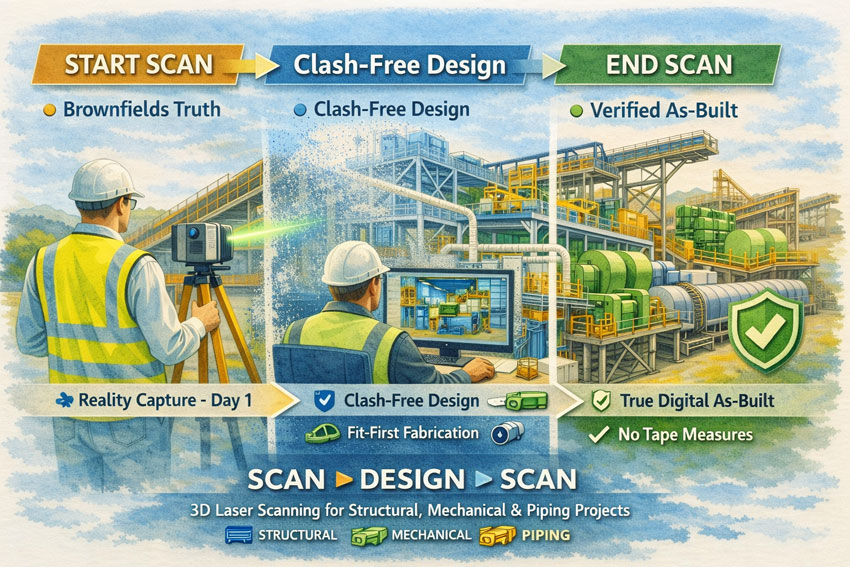
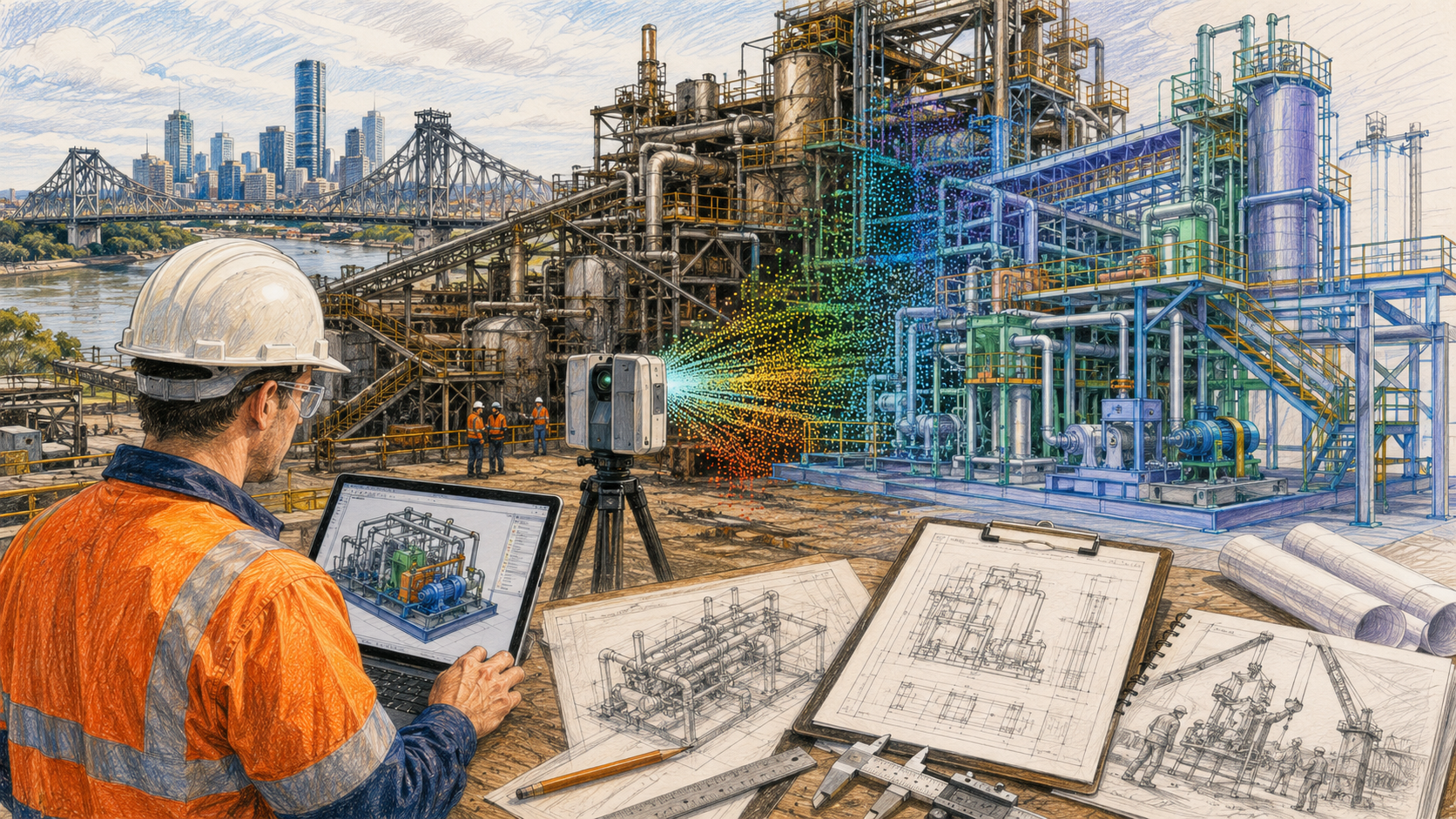
Watercolour-style illustration showing SMP 3D laser scanning workflow from start capture to clash-free design and final digital as-built.

Successful Structural, Mechanical and Piping (SMP) projects are built on one fundamental principle: decisions must be based on accurate knowledge of existing conditions. In brownfields industrial environments, legacy drawings and manual measurements rarely reflect the current state of an asset. Over years of operation, piping is rerouted, structures are strengthened, and equipment is modified to meet changing production demands.

Commencing design on the basis of incomplete or inaccurate information introduces uncertainty that can affect safety, cost, schedule, and quality. Modern 3D laser scanning provides a disciplined method to remove this uncertainty and establish a reliable foundation for project delivery.


Establishing a Reliable Baseline

An initial 3D laser scan captures a high-resolution digital representation of the facility, recording structural elements, mechanical equipment, and piping systems exactly as they exist. This dataset becomes the authoritative reference for all subsequent engineering activities.

By beginning with a comprehensive reality capture, project teams can:

  • Define accurate tie-in locations for new works
  • Understand spatial constraints and access requirements
  • Identify potential clashes before detailed design
  • Reduce reliance on manual surveys and assumptions
  • Provide designers with objective, measurable data

This approach aligns engineering decisions with actual site conditions, supporting informed planning and reducing the likelihood of downstream rework.


SMP scanโ€“designโ€“scan process illustrated with laser scanner, point cloud model and finished industrial plant.

Designing From Truth Rather Than Assumption

When the design phase is grounded in verified scan data, coordination across structural, mechanical, and piping disciplines becomes more effective. Engineers are able to develop models that reflect the real environment rather than an idealised interpretation of it.

The benefits to project success include:

  • Improved accuracy of fabrication documentation
  • Reduced design revisions and RFIs
  • Greater confidence in constructability
  • More reliable cost and schedule forecasting
  • Enhanced collaboration between designers, fabricators, and site teams

A scan-based workflow supports the objective of โ€œfit-firstโ€ construction, where components are manufactured with confidence that they will integrate with existing assets.


Verifying Outcomes With a Final Scan

Project success is not only measured by installation, but by the quality of information handed to the asset owner. A second 3D scan at project completion provides a verified digital as-built of all SMP works.
This final dataset delivers:

  • An accurate record of installed structural, mechanical, and piping systems
  • Validation that construction matches design intent
  • A foundation for maintenance and asset management
  • Reliable data for future modifications or expansions
  • Elimination of manual tape-based as-built surveys

The organisation is left with a living digital asset rather than static drawings that quickly lose relevance.


Supporting Measurable Project Outcomes

Adopting a Scan โ†’ Design โ†’ Scan methodology directly contributes to recognised measures of project success:

  • Safety: Reduced site rework and unplanned interventions
  • Cost Control: Fewer field modifications and claims
  • Schedule Reliability: Shorter shutdowns and predictable installation
  • Quality: Higher confidence in alignment and tolerances
  • Knowledge Retention: Creation of enduring digital records

These outcomes are particularly critical in SMP environments where interfaces between steel, equipment, and piping are complex and tolerances are unforgiving.


Applications Across Industrial Sectors

This workflow is suited to a wide range of SMP activities, including:

  • Conveyor and materials handling upgrades
  • Plant expansions and debottlenecking
  • Tank, hopper and bin modifications
  • Piping reroutes and tie-ins
  • Shutdown and turnaround works
  • Brownfields engineering studies

In each case, accurate spatial data enables better engineering judgement and more predictable project delivery.

3D LiDAR scanning and 3D modelling service button โ€” laser scanner capturing a point cloud for engineering and CAD modelling
Mechanical engineering services

Hamilton By Design logo displayed on a blue tilted rectangle with a grey gradient background

A Framework for Sustainable Project Success

For organisations seeking consistent performance from SMP projects, the integration of 3D laser scanning is not a survey exerciseโ€”it is a strategic project control measure. By capturing reality at project commencement and verifying it at completion, stakeholders gain confidence that engineering decisions, construction outcomes, and asset records are aligned.

Start with verified data.
Design with confidence.
Finish with a true digital as-built.

Hamilton By Design Co. partners with project teams to implement this approach, supporting safer, more reliable, and more successful SMP outcomes.

Name
Would you like us to arrange a phone consultation for you?
Address

Finite Element Analysis (FEA) engineering simulation button
Mechanical engineering services

Mechanical Engineering Services Brisbane | Engineer-Led Industrial Support

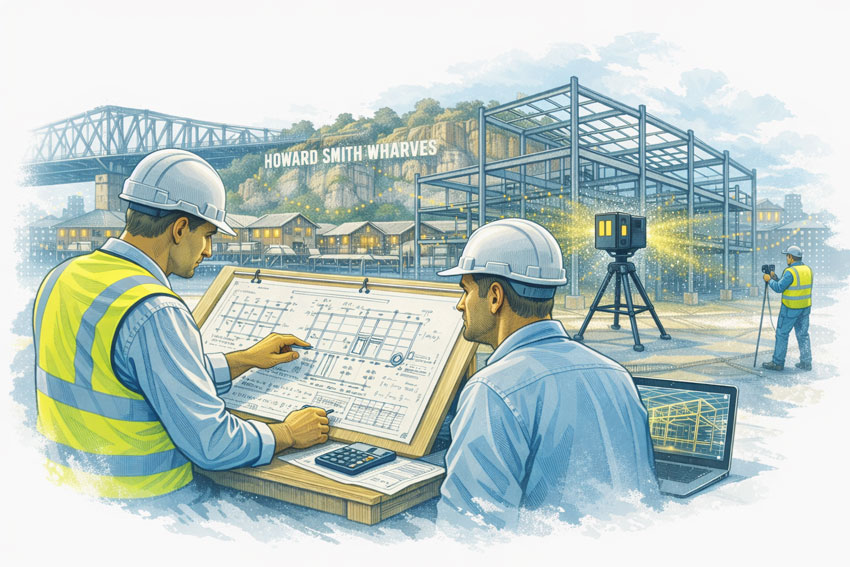
Engineer and client reviewing mechanical drawings while LiDAR scanning a Brisbane site at Howard Smith Wharves

Mechanical Engineering Services Brisbane | Engineer-Led Industrial Support

Engineer-Led Mechanical Engineering for Brisbaneโ€™s Industrial & Fabrication Projects

Industrial projects across Brisbane and South East Queensland are rarely clean, greenfield builds.
More often, they involve brownfield plant, legacy equipment, missing or unreliable drawings, and tight shutdown windows where mistakes translate directly into lost production.

Hamilton By Design provides engineer-led mechanical engineering services in Brisbane, supporting industrial operators and fabricators where accuracy, accountability, and constructability are critical.

This is mechanical engineering for projects where fit-up risk matters.


Mechanical engineer providing tender-stage support during LiDAR scanning at a Brisbane industrial site

Who This Service Is For

Our Brisbane mechanical engineering services are commonly engaged by:

  • Industrial and manufacturing operators upgrading or modifying existing plant
  • Steel fabricators and mechanical contractors seeking tender-stage engineering support
  • Project teams planning shutdown-critical works
  • Clients working with incomplete, outdated, or unverified drawings
  • Fabricators who need engineering ownership, not drafting-only support

If your Brisbane project involves existing assets, live operations, or no tolerance for rework, this service is designed for you.


Common Problems We Help Brisbane Clients Solve

We are often brought in after Brisbane projects experience issues such as:

  • Fabricated components that did not fit on site
  • Shutdown delays caused by unverified site conditions
  • Design documentation that ignored fabrication and installation constraints
  • Engineering scopes that stopped at drawings, with no one owning the outcome

These issues mirror real-world failures discussed on our website, including the Kew Swimming Pool structural collapse and the sporting ground awning installation failureโ€”both examples of what can happen when engineering judgement and accountability are missing.


What โ€œEngineer-Ledโ€ Means in Practice

For Brisbane industrial and fabrication clients, engineer-led means:

  • A qualified mechanical engineer is directly involved from early assessment through to fabrication-ready documentation
  • Engineering judgement is applied โ€” not blind replication of old drawings or unverified data
  • Designs are developed with fabrication, transport, and installation in mind
  • Fit-up risk is actively managed, not transferred downstream
  • Documentation is defensible, sign-off-ready, and aligned with applicable Australian Standards

This approach exists specifically to prevent costly rework and shutdown overruns.


Mechanical Engineering Services We Provide in Brisbane

Our Brisbane services are focused on industrial and fabrication-driven outcomes, including:

  • Brownfield mechanical upgrades and plant modifications
  • Tender-stage engineering support for fabricators and contractors
  • Equipment replacement where original drawings are missing or unreliable
  • Shutdown-critical mechanical works planning
  • Fabrication-ready mechanical design and detailing
  • Engineering verification and certification where required

We specialise in bridging the gap between site reality, engineering intent, and fabrication execution.


Why Brisbane Fabricators Engage Us at Tender Stage

Many Brisbane fabricators engage us before a job is awarded.

Tender-stage involvement allows clients to:

  • Reduce pricing risk from unknown or poorly documented site conditions
  • Identify access, tolerance, and fit-up issues early
  • Avoid scope gaps that lead to variations and disputes
  • Submit tenders backed by engineering accountability, not assumptions

This approach consistently improves bid confidence and downstream delivery.


Hamilton By Design logo displayed on a blue tilted rectangle with a grey gradient background
3D LiDAR scanning and 3D modelling service button โ€” laser scanner capturing a point cloud for engineering and CAD modelling
Mechanical engineering services

How We Differ from Large Consultancies

Brisbane clients engage Hamilton By Design because we offer:

  • Clear engineering ownership with minimal hand-offs
  • Direct access to the engineer performing the work
  • Practical, fabrication-aware engineering
  • Targeted scopes aligned to real construction risk
  • Accountability through to fabrication and installation readiness

This is particularly valuable in SE Queensland, where industrial projects often operate under tight timelines and live-site constraints.


Our Clients:


Request a Tender-Stage Engineering Review

If youโ€™re preparing a tender, planning a shutdown, or dealing with uncertain site information, early engineering involvement can significantly reduce risk.

Request a tender-stage engineering review to discuss your Brisbane project with a mechanical engineer who understands fabrication, installation, and real-world industrial constraints.

Use the contact form below to start the conversation.

Name
Would you like us to arrange a phone consultation for you?
Address
Finite Element Analysis (FEA) engineering simulation button
Mechanical engineering services
Reality Capture Brisbane title graphic with white text on a blue background promoting reality capture, LiDAR scanning and digital engineering services in Brisbane, Queensland.
3D Scanning Brisbane text graphic on a blue background promoting engineering-led laser scanning and reality capture services in Brisbane.

LiDAR Scanning Brisbane title graphic with white text on a blue background promoting terrestrial LiDAR scanning, point cloud capture and reality capture services in Brisbane, Queensland.
SolidWorks Brisbane title graphic with white text on a blue background promoting SolidWorks mechanical design, 3D CAD modelling and engineering drafting services in Brisbane, Queensland.