Rigid Body Dynamics vs Transient

Rigid Body Dynamics vs Transient Structural Analysis in Mining

Why Both Matter in Mechanical and Structural Engineering

In the fast-paced and high-stakes environment of the Australian mining industry, reliable engineering design isnโ€™t just a competitive advantage โ€” it’s a necessity. Across regions like the Pilbara, Kalgoorlie, the Hunter Valley, Bowen Basin, and Mount Isa, mining operations depend on complex mechanical systems that must perform under extreme loads, harsh conditions, and round-the-clock operation.

To ensure safety, reliability, and performance, mining engineers increasingly rely on advanced simulation tools like Rigid Body Dynamics (RBD) and Transient Structural Analysis (TSA). While these tools might appear similar, they serve fundamentally different purposes in mechanical and structural engineering. Using the right tool at the right time can dramatically reduce downtime, improve equipment longevity, and lower operating costs.

At Hamilton By Design, we bring the latest in engineering simulation and scanning technology directly to your mining operation โ€” wherever you are in Australia. Whether you’re operating in the iron-rich Pilbara, the gold-rich Kalgoorlie, or deep in Mount Isa’s underground hard rock mines, we deliver world-class engineering solutions on-site or remotely.


What is Transient Structural Analysis?

Transient Structural Analysis (TSA) is a Finite Element Analysis (FEA) technique that models how structures respond to time-varying loads. It provides insights into:

  • Displacement and deformation under dynamic loads
  • Stress and strain distribution over time
  • Vibrations and impact response
  • Fatigue life prediction

This type of simulation is essential when you’re dealing with high-frequency loading, shock events, or long-term structural wear and fatigue. TSA is invaluable for assessing risk in static and semi-dynamic systems across mining sites.

Typical TSA applications in mining include:

  • Vibrating screens and feeder structures
  • Crusher housings and foundations
  • Chutes and hoppers exposed to high-velocity ore impact
  • Structural skids for processing equipment
  • Equipment subject to cyclic fatigue (e.g., slurry pumps, reclaimer arms)

What is Rigid Body Dynamics?

Rigid Body Dynamics (RBD) focuses on the motion of bodies under the assumption they do not deform. This tool models:

  • Position, velocity, and acceleration
  • Reaction forces at joints and actuators
  • Dynamic behaviour of moving parts and linkages
  • Contact, impact, and frictional interaction

Unlike TSA, RBD doesnโ€™t solve for stress or strain. Instead, it calculates the kinematics and kinetics of motion systems โ€” making it ideal for analysing mechanical assemblies where movement, timing, and loads are key.

Common RBD applications in mining include:

  • Stacker-reclaimer arms and boom articulation
  • Mobile equipment with hydraulic or mechanical actuators
  • Diverter chutes and gating systems
  • Rockbreaker arm kinematics
  • Conveyor take-up and tensioning systems

RBD also plays a pivotal role in process optimisation and troubleshooting โ€” helping engineers simulate how mechanisms will respond under load, ensuring operational efficiency before physical prototypes are built.


Why TSA Canโ€™t Replace RBD (and Vice Versa)

While TSA includes rigid body motion as part of the total displacement field, it is not designed for efficient or accurate motion simulation. Trying to model the dynamics of a moving mechanism in TSA can:

  • Lead to slow solve times and high computational cost
  • Produce unstable results due to unconstrained motion
  • Provide limited insight into timing, velocity, or actuation behaviour

Conversely, using RBD for structures that flex, vibrate, or wear over time wonโ€™t give you the data needed to assess material failure or fatigue.

The takeaway? Use TSA when deformation matters. Use RBD when motion matters. Use both when you need the complete picture.


Regional Applications Across Australian Mining

Hamilton By Design supports clients across Australia’s mining regions with tailored simulation services designed to meet real operational needs.

Pilbara โ€“ Iron Ore

With high-capacity iron ore operations, this region depends on large-scale materials handling systems.

  • Use RBD to simulate boom movement, slewing systems, and travel paths of stackers.
  • Use TSA to assess fatigue on booms, rail frames, and conveyor supports exposed to cyclic load.

Hamilton By Design helps model these systems efficiently, ensuring both accurate motion control and structural durability. Contact us for help simulating your Pilbara handling systems.


Kalgoorlie โ€“ Goldfields (Eastern Gold Region)

Gold operations rely on compact, high-force machinery in confined processing facilities.

  • Use TSA to simulate vibration-induced stress in equipment frames and foundations.
  • Use RBD to model diverter gates, hydraulic arms, and transport carts in processing facilities.

Whether you’re retrofitting a plant or building a new line, Hamilton By Design provides flexible support wherever you operate. Email [email protected] to learn more.


Hunter Valley โ€“ Coal (Thermal)

Thermal coal operations in NSW require robust, wear-resistant infrastructure.

  • RBD helps simulate automated diverters, boom stackers, and actuated gates.
  • TSA ensures the wear-prone chutes and hoppers withstand repetitive impacts.

We provide quick-turn simulations for both brownfield and greenfield projects. Get in touch to scope your simulation needs.


Bowen Basin โ€“ Coal (Metallurgical)

Queenslandโ€™s met coal operations power the global steel industry.

  • RBD enables accurate simulation of take-up systems and longwall motion.
  • TSA supports design of structural supports under repetitive and impact loading.

Our experts work with surface and underground operators, reducing risk through advanced motion and stress analysis. Request a quote at [email protected].


Mount Isa โ€“ Hard Rock Mining

Mount Isaโ€™s deep and abrasive ore bodies test every piece of equipment.

  • RBD is ideal for simulating rockbreaker motion, loader paths, and mobile assets.
  • TSA provides insights into vibration effects on headframes, bins, and fixed plant.

Hamilton By Design offers full analysis support for operators in remote locations. Contact us today for tailored advice.


When to Use Both Tools Together

A real advantage emerges when RBD and TSA are used in combination:

  • RBD identifies dynamic forces and timing on moving parts
  • TSA then evaluates the structural response to those forces

For example, in a diverter chute:

  1. RBD determines the acceleration profile, impact forces, and system timing.
  2. TSA uses that input to analyse whether the chute will survive years of repeated service.

This integrated approach results in more accurate models, fewer design revisions, and significantly lower project risk.


Why Work with Hamilton By Design?

As mechanical engineering consultants with national reach, Hamilton By Design offers:

  • Combined RBD and TSA simulation capability
  • Lidar scanning and digital plant modelling
  • Experience with mining-specific assets and constraints
  • Mobile, responsive teams that bring technology to you

From site scoping to final design verification, we help our clients solve the right problem, the right way.

Have a project in mind? Reach out via our contact page or email [email protected].


Conclusion: Technology That Moves With You

Rigid Body Dynamics and Transient Structural Analysis are not interchangeable โ€” they are complementary. Each method offers unique insights into how a mining system performs โ€” whether moving, flexing, vibrating, or carrying tonnes of ore.

At Hamilton By Design, we believe engineering technology should move as fast and far as our clients do. Thatโ€™s why we bring simulation, scanning, and design tools directly to you, wherever you operate across Australia.

If your system moves, simulate it with RBD. If your structure flexes, vibrates, or wears, model it with TSA. For full insight? Use both.

Let us help you design smarter, safer mining systems.

Hamilton By Design โ€“ Bringing Engineering Technology to You, Wherever You Are in Australia

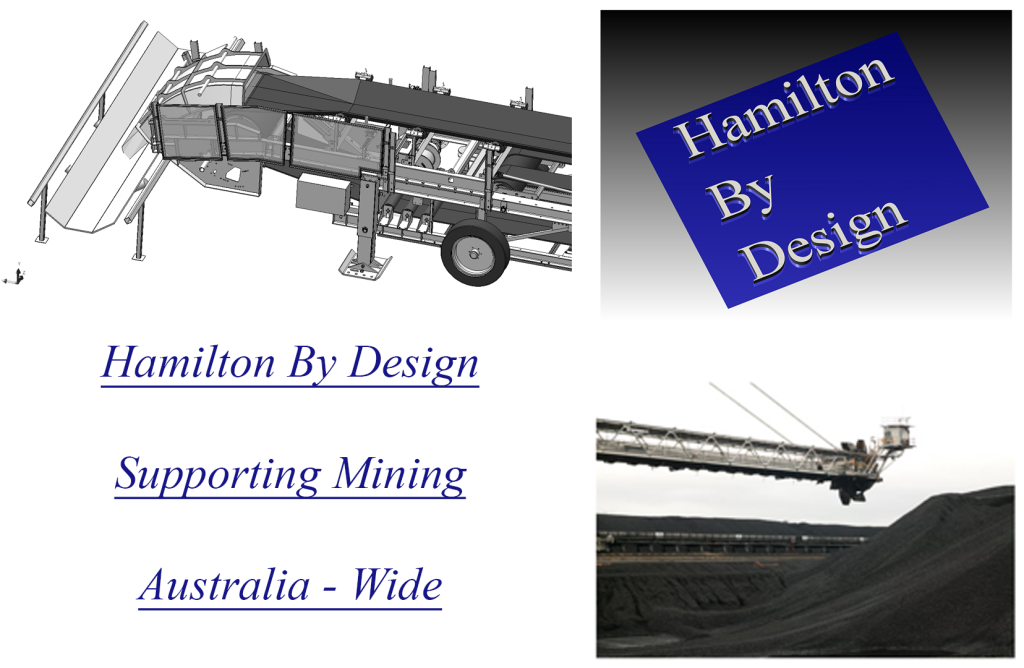
Hamilton By Design logo displayed on a blue tilted rectangle with a grey gradient background


3D LiDAR scanning and 3D modelling service button โ€” laser scanner capturing a point cloud for engineering and CAD modelling
Mechanical engineering services


Hamilton By Design | Mechanical Drafting | Structural Drafting | 3-D Lidar Scanning

Our clients:

Name
Would you like us to arrange a phone consultation for you?
Address

Rigid Body Dynamics vs Transient Structural Analysis in Mining: Why Both Matter in Mechanical and Structural Engineering

Rigid Body Dynamics vs Transient Structural Analysis – How does it apply to the Mining industry?

In the Australian mining industry โ€” where heavy equipment, high-value production, and harsh conditions are the norm โ€” the ability to simulate, test, and validate mechanical systems before they are fabricated or fail in the field is not just beneficial, it’s essential.

From iron ore operations in the Pilbara, to gold mining east of Perth, across to coal in the Hunter Valley and Bowen Basin, and up to hard rock mines in Mount Isa, mining operations rely heavily on engineered systems that move, load, transfer, and endure extreme forces. These systems are increasingly modelled using computer-aided engineering (CAE) tools to improve design accuracy, increase reliability, and reduce downtime.

Two of the most powerful tools in the mechanical and structural engineering toolbox are Rigid Body Dynamics (RBD) and Transient Structural Analysis (TSA). Both play key roles โ€” but they serve very different purposes.

At Hamilton By Design, we help clients across Australia choose and implement the right type of simulation, whether you’re evaluating motion, stress, fatigue, wear, or all of the above.


What is Transient Structural Analysis (TSA)?

Transient Structural Analysis is a finite element-based simulation used to evaluate how a structure deforms under time-dependent loads. It’s used to calculate:

  • Displacement and deformation

  • Internal stresses and strains

  • Vibrations and dynamic response

  • Fatigue or structural failure under repeated loading

TSA is essential for components subjected to impact, vibration, or varying loads over time โ€” all of which are common in mining.

Mining Applications of TSA:

  • Vibrating screens and feeders

  • High-speed chutes or hoppers handling large volumes

  • Crusher housings and rotating equipment supports

  • Structural skids and frames under mobile loads

  • Transfer stations experiencing dynamic load shifts


What is Rigid Body Dynamics (RBD)?

Rigid Body Dynamics is used to simulate the motion of objects under the influence of forces, assuming the bodies themselves do not deform. RBD calculates:

  • Positions, velocities, and accelerations of components

  • Reaction forces at joints and constraints

  • Behaviour of actuators, linkages, and arms

  • Impact and collision between rigid parts

Itโ€™s particularly useful for modelling complex mechanisms and moving systems, such as hydraulic rams, rotary actuators, diverter gates, and articulated machinery.

Mining Applications of RBD:

  • Transfer chutes with moving diverter arms

  • Stacker-reclaimers and shiploaders

  • Drill mast articulation and boom operations

  • Hydraulic take-up systems on conveyors

  • Rockbreaker arms and crusher feed assemblies


Why TSA Isnโ€™t a Substitute for RBD

Although TSA includes the ability to simulate rigid body motion as part of the total deformation field, it is not optimised for modelling systems where motion and kinematic behaviour are the primary focus. TSA solvers are geared towards tracking internal stresses, not joint movement or mechanical control.

If you try to use TSA for systems like diverter gates or mobile stackers:

  • The solver becomes slow and resource-heavy

  • You waste time calculating strain in components that are not expected to deform

  • You risk numerical instability if the system has insufficient structural constraints

RBD, on the other hand, is lean, fast, and perfectly suited for motion analysis. It handles joints, constraints, friction, impacts, and actuators efficiently without the complexity of a full finite element model.


Region-Specific Mining Examples

Letโ€™s explore how these principles apply across key Australian mining regions.

๐Ÿ”ถ Pilbara (Iron Ore โ€“ North of Perth)

In the Pilbara, high-throughput handling systems like stacker-reclaimers, conveyors, and train loadouts dominate. While TSA is critical for verifying the structural integrity of boom supports or transfer station bases, RBD is essential for simulating the precise motion of long booms, rotating car dumpers, and slewing mechanisms โ€” especially when automated systems are involved.

๐ŸŸก Kalgoorlie & Goldfields (Gold โ€“ East of Perth)

In this region, we often see compact yet high-capacity systems like ball mills, crushers, and slurry pumps. TSA is ideal for evaluating fatigue life, support frame stresses, and dynamic loading from mill vibration. However, diverter systems in process plants or mobile material handling arms often require RBD to evaluate motion paths and ensure smooth operation under hydraulic or pneumatic control.

โšซ Hunter Valley (Thermal Coal)

Bulk handling is central in this region. TSA is used to assess the wear and fatigue life of chutes, hoppers, and vibrating feeders. For moving equipment like stackers, tripper cars, or sampler mechanisms, RBD provides fast, accurate insight into system dynamics, travel time, and constraint loads.

โšซ Bowen Basin (Metallurgical Coal)

Here, systems like longwall supports, draglines, and hydraulic roof supports dominate. RBD plays a crucial role in simulating the interaction between actuators and supports, ensuring control logic matches physical capability. TSA is then applied to determine structural integrity and fatigue under repetitive stress.

๐Ÿ”ต Mount Isa (Hard Rock Mining)

With aggressive ores and complex underground networks, Mount Isa operations demand robust systems. TSA is vital for verifying vibration resistance and structural life of crushers, vibrating screens, and bin supports. But the motion of equipment like rockbreakers, boom arms, and autonomous loaders must be analysed with RBD to ensure precise control and motion under harsh conditions.


Combining Both for Complete Insight

The real power comes when TSA and RBD are used together. For example:

  • Use RBD to simulate the motion of a diverter arm and identify peak reaction forces.

  • Feed those forces into a TSA model to evaluate stress and fatigue in the pivot brackets or mounting plates.

This combination provides full lifecycle analysis โ€” motion, loads, stress, and safety.


Engineering Support from Hamilton By Design

At Hamilton By Design, we understand how to apply these tools to real-world mining problems. We specialise in:

  • Mechanical system simulation and analysis

  • Lidar scanning and digital plant modelling

  • Design for manufacturability and reliability

  • Integrated RBD + TSA solutions tailored to mining

Whether you’re developing a new materials handling system, upgrading an existing structure, or troubleshooting motion-related issues, our team can provide insight-driven solutions that save time and money.

๐Ÿ‘‰ Learn more at www.hamiltonbydesign.com.au or contact us to request a capability statement or project discussion.


Final Thoughts

Rigid Body Dynamics and Transient Structural Analysis arenโ€™t interchangeable โ€” they are complementary. In the demanding environment of the mining industry, knowing when and how to use each tool can make the difference between a reliable plant and one plagued by maintenance issues and inefficiencies.

If your system moves, RBD gives you clarity. If it bends, vibrates, or wears, TSA gives you answers.


Hamilton By Design โ€“ Engineering Australiaโ€™s Mining Future.


www.hamiltonbydesign.com.au
3D LiDAR scanning and 3D modelling service button โ€” laser scanner capturing a point cloud for engineering and CAD modelling
Mechanical engineering services
Finite Element Analysis (FEA) engineering simulation button
Mechanical engineering services
https://www.hamiltonbydesign.com.au/perth-wa
3D CAD Modelling Australia service banner for Hamilton By Design
3D LiDAR scanning and 3D modelling service button โ€” laser scanner capturing a point cloud for engineering and CAD modelling
Mechanical engineering services
3D CAD Modelling Australia service banner for Hamilton By Design
Mechanical, Structural & Pipework Drafting service banner by Hamilton By Design featuring white text on a blue background.
Australian Drafting logo featuring bold white text reading "Australian Drafting" centred on a blue rounded rectangle background.
Blue banner graphic displaying the text "Point Cloud to CAD - Australia" in large white lettering, representing point cloud processing, scan-to-CAD conversion and digital engineering services across Australia.
CHPP Engineering title graphic featuring bold white text reading "CHPP Engineering" centred on a blue rounded rectangle background.
Engineering Governance title graphic featuring bold white text reading "Engineering Governance" centred on a blue rounded rectangle background.
Mechanical engineering services
Australian Drafting logo featuring bold white text reading "Australian Drafting" centred on a blue rounded rectangle background.
3D LiDAR Scanning Hunter & Newcastle banner with white text on a blue background promoting engineering-grade laser scanning services for industrial, mining and infrastructure projects across the Hunter Valley and Newcastle region.
Mechanical Engineering Hunter & Newcastle banner promoting mechanical engineering services for mining, industrial plants, power generation, manufacturing and heavy industry throughout the Hunter Valley and Newcastle region.
Structural Drafting Hunter & Newcastle banner promoting structural drafting services for mining, industrial plants, power generation, manufacturing and infrastructure projects across the Hunter Valley and Newcastle region.
Mechanical Engineering Perth WA banner for Hamilton By Design featuring white text on a blue background.
3D Laser Scanning Perth WA banner for Hamilton By Design with white text on a blue background.
SolidWorks Perth WA banner for Hamilton By Design featuring white text on a blue background.
Fabrication and product design services
Finite Element Analysis (FEA) engineering simulation button
3D LiDAR scanning and 3D modelling service button โ€” laser scanner capturing a point cloud for engineering and CAD modelling
Blue rounded button with the text โ€œSolidWorks Designโ€ in white.
Mechanical drafting services button
Structural drafting services button

3D Scanning Sydney banner promoting engineering-grade 3D laser scanning, LiDAR scanning, and reality capture services by Hamilton By Design.
Mechanical Engineering Sydney banner with white text on a blue background representing Hamilton By Design's mechanical engineering services in Sydney.
Mechanical Drafting and 3D Modelling Sydney banner highlighting Hamilton By Design's CAD drafting, 3D modelling, and engineering design services in Sydney.

Mechanical Engineering | Structural Engineering


Conveyor Drives in U/ground Coal

Operation, Design Challenges, and the Role of Direct Drive Units
In the highly demanding and regulated world of underground coal mining, the reliable and efficient transport of coal from the mining face to the surface is critical. Among the many systems involved in this process, conveyor drives play a pivotal role. These systems are tasked with powering conveyor belts that haul coal over long distances through often confined and hazardous environments. A vital part of this setup includes the use of direct drive units (DDUs), particularly in low-profile applications such as underground operations.

This document explores the functionality of conveyor drives in underground coal mines, the unique challenges faced in their operation, the complexities design engineers encounter in their development, and the concept of the phase “outbye”โ€”a term widely used in underground mining to describe the direction and location of operations.


Conveyor Drives in Underground Coal Mining

A conveyor drive is a mechanical system that powers conveyor belts used to transport materials, in this case, coal. In underground mines, these conveyor belts often run for several kilometers, extending from the coal face (the area where coal is actively being cut and mined) to the shaft or drift that brings the coal to the surface.

The drive systems can be located at several points along the belt:

  • Head drive: Located at the discharge end of the conveyor.
  • Tail drive: Located at the loading end.
  • Mid-belt drives: Installed partway along long conveyors to help manage torque and reduce belt tension.

In the context of underground coal mines, the term “conveyor drive” is generally associated with the head or tail drive unit, which powers the movement of the belt.


Role of Direct Drive Units (DDUs)

Direct Drive Units are electric motors directly coupled to the drive shaft of the conveyor pulley, eliminating the need for intermediary gearboxes or belt drives. These units are especially advantageous in underground mining due to their compact design, reliability, and reduced maintenance.

Benefits of DDUs in Underground Coal Mines

  1. Compact Size: Ideal for low-profile mining applications where vertical space is restricted.
  2. Energy Efficiency: With fewer mechanical components, DDUs offer less friction and mechanical losses.
  3. Lower Maintenance: No gearboxes or belt couplings to service.
  4. Increased Reliability: Fewer parts mean fewer failure points.
  5. Improved Safety: The enclosed design minimizes exposure to moving parts and flammable materials.

Australian Mining, Hamilton By Design, Mechanical Engineering

Operational Challenges of Conveyor Drives Underground

Underground coal mining presents a set of challenges not commonly encountered in surface operations. Conveyor drives, as the lifeblood of coal transportation, are central to these operational difficulties.

1. Space Constraints

Underground roadways are typically narrow and low, especially in coal seams with minimal thickness. This limitation forces the use of low-profile conveyor systems, which in turn limits the size and configuration of the drive units.

2. Dust and Moisture Exposure

Coal dust is highly abrasive and, in certain concentrations, explosive. Moisture from groundwater or the mining process further complicates the reliability of drive components. Ensuring DDUs are properly sealed and rated for these harsh conditions is critical.

3. Heat and Ventilation

Electric motors generate heat, which must be dissipated. However, underground mines have limited ventilation. Overheating can be a major issue, requiring cooling systems or specialized motor enclosures.

4. Explosion-Proof Requirements

Due to the potential presence of methane gas and coal dust, all electrical equipment, including conveyor drives, must comply with stringent explosion-proof standards (e.g., IECEx or ATEX ratings).

5. Long Haul Distances

Modern coal faces can be several kilometers from the shaft bottom. Transporting coal over long distances places mechanical stress on conveyor belts and drive units, increasing the risk of failure if not properly engineered.

6. Maintenance Access

Accessing conveyor drives for inspection or maintenance can be difficult in tight underground environments. Failures that require replacement or repair can cause significant production delays.

7. Load Variability

The volume of coal being hauled can vary significantly during a shift, which places variable demands on the drive system. The control systems must be able to accommodate fluctuating loads without mechanical strain.


Hamilton By Design promotional graphic featuring industrial machinery imagesโ€”including a rotating mill, preventive maintenance gears, and a coal conveyorโ€”alongside the Hamilton By Design logo and the text โ€˜Mechanical Engineers โ€“ www.hamiltonbydesign.com.auโ€™.โ€

Engineering and Design Challenges

Design engineers are tasked with creating conveyor drive systems that are not only robust and efficient but also compact and compliant with mining regulations. Some of the key design challenges include:

1. System Integration in Confined Spaces

Engineering a system that fits into limited space while delivering the necessary power is a fundamental challenge. Direct drive units help address this by eliminating gearboxes, but the motor itself must still be sized correctly.

2. Material Selection

Materials used must be corrosion-resistant, non-sparking, and capable of withstanding vibration, dust ingress, and moisture. This often limits design options and increases costs.

3. Thermal Management

Ensuring that the drive units do not overheat requires careful thermal modeling and the use of heat-resistant components. In some cases, passive or active cooling systems are integrated.

4. Compliance with Standards

Designs must adhere to a host of mining and electrical standards for flameproof and intrinsically safe equipment. Certification processes can be lengthy and expensive.

5. Modularity and Transportability

Since access to underground sites is limited, equipment must be modular or transportable in pieces small enough to be moved through shafts or drifts. Assembling and commissioning underground adds another layer of complexity.

6. System Control and Monitoring

Advanced drives require smart control systems that can adjust to load demands, monitor for faults, and integrate with mine-wide automation systems. Designing these systems requires interdisciplinary expertise.

7. Redundancy and Reliability Engineering

System failure underground can halt production and pose safety risks. Engineers must design for redundancy and easy switch-over between drive systems when necessary.


Understanding the Term โ€œOutbyeโ€

In underground mining terminology, directionality is essential for communication and logistics. The terms โ€œinbyeโ€ and โ€œoutbyeโ€ are commonly used to describe relative directions underground.

What Does โ€œOutbyeโ€ Mean?

  • Outbye refers to the direction away from the coal face and toward the surface or the mine entrance.
  • Conversely, inbye means toward the coal face.

For example:

  • If a miner is walking from the coal face toward the conveyor belt transfer station, they are walking outbye.
  • If a service vehicle is heading toward the longwall face, it is moving inbye.

Relevance of โ€œOutbyeโ€ in Conveyor Systems

In conveyor operations:

  • The coal face is the inbye starting point.
  • The belt head drive and transfer points to the main conveyor system are located outbye.
  • Maintenance and service activities often take place outbye to avoid interfering with production at the face.

Understanding this term is critical for coordinating activities underground, as directions are often communicated using inbye and outbye references rather than compass points or distances.


Digital engineering graphic featuring a central robotic arm icon surrounded by futuristic interface elements, cloud and AI symbols, and motion-blurred technology backgrounds. The SolidWorks logo appears on the left and the Hamilton By Design logo on the right, representing advanced 3D modelling and digital engineering capabilities.

The mining industry continues to evolve, and conveyor drive systems are no exception. Some of the emerging trends and technologies include:

1. Variable Speed Drives (VSDs)

VSDs allow precise control over motor speed and torque, improving efficiency and reducing mechanical stress. They are increasingly paired with direct drive units to optimize performance.

2. Condition Monitoring

Sensors embedded in motors and drive systems can provide real-time feedback on vibration, temperature, and load. Predictive maintenance models reduce downtime.

3. Permanent Magnet Motors

These motors offer higher efficiency and torque density compared to traditional induction motors, making them well-suited for space-constrained environments.

4. Automation and Remote Control

Fully integrated systems that allow operators to monitor and control conveyor drives from surface control rooms are becoming standard.

5. Modular, Plug-and-Play Designs

Future drive units are being designed with ease of installation and replacement in mind, enabling faster deployment and lower maintenance impact.


Conclusion

Conveyor drive systems in underground coal mining are vital to the continuous flow of material and, by extension, the productivity of the entire mining operation. The adoption of direct drive units is helping to meet the unique demands of underground environments by providing compact, reliable, and efficient power transmission solutions.

However, these systems are not without their challenges. From the operational constraints of underground environments to the rigorous demands placed on design engineers, the development and maintenance of these systems require specialized knowledge, innovative thinking, and strict adherence to safety standards.

Moreover, understanding mining-specific terminology such as “outbye” provides important context for the deployment and maintenance of conveyor systems. As technology continues to advance, we can expect to see more intelligent, adaptive, and efficient conveyor drive systems that are better suited to the evolving demands of underground coal mining.

3D LiDAR scanning and 3D modelling service button โ€” laser scanner capturing a point cloud for engineering and CAD modelling
Mechanical engineering services

#CoalMining #EngineeringSolutions #MechanicalEngineering #ConveyorSystems #MiningIndustry #UndergroundMining #AustralianEngineering #HamiltonByDesign

Hamilton By Design | Mechanical Drafting | Structural Drafting | 3-D Lidar Scanning

Finite Element Analysis (FEA) engineering simulation button
Mechanical engineering services

How Mechanical Engineers Are Powering Mining on the Central Coast

Mechanical Engineers Are Powering Mining

The Central Coast of New South Wales is more than just pristine beaches and a relaxed lifestyle. Beneath its surface lies a strong industrial and mining support sector where mechanical engineers are playing a vital role in modernising, maintaining, and innovating heavy machinery and infrastructure.

At Hamilton By Design, we specialise in mechanical engineering consulting services across Australiaโ€”including support for clients right here on the Central Coast. Visit us at ๐Ÿ‘‰ www.hamiltonbydesign.com.au to explore our services.


๐Ÿ‘ท Why Mechanical Engineering Matters in Mining

Mechanical engineers are the invisible backbone of mining operations. In Central Coast-based support industries and nearby projects like Wallarah 2, mechanical engineers handle:

  • Design & Drafting of Mining Infrastructure

  • Maintenance Systems for Plant and Equipment

  • Automation, Robotics, and Sensor Integration

  • Environmental Engineering for Emission Reduction

  • Reliability and Safety Auditing

Whether it’s conveyor systems, processing plants, underground ventilation, or mobile plant maintenance, mechanical engineers ensure it all runs smoothly, safely, and efficiently.


๐Ÿ“ Mechanical Engineering Jobs on the Central Coast

The Central Coast is home to a growing number of engineering-based businesses and industrial hubs:

  • Somersby, Tuggerah, and Lisarow host major mechanical and fabrication workshops.

  • Companies like Wabtec, Coffey, and Boral regularly seek mechanical engineers.

  • The region supports jobs ranging from drafting and design to hands-on site-based maintenance.

At Hamilton By Design, we provide the expertise and consulting support these businesses needโ€”structural drafting, 3D laser scanning, plant design, and more.

๐Ÿ‘‰ Want to collaborate? Visit us at www.hamiltonbydesign.com.au


๐Ÿ”ง Trends Shaping Mechanical Engineering in Mining

If you’re working in, or supplying to, the mining industry, here are five key trends affecting mechanical engineers today:

  1. Automation & Remote Control Systems

  2. Data-Driven Predictive Maintenance

  3. Sustainable Design and Energy Efficiency

  4. Digitisation via Lidar & 3D Scan Models

  5. Multi-disciplinary Integration (Mech + Elec + Struct)

Hamilton By Design helps clients stay ahead of these trends with cutting-edge tools, qualified engineering support, and experienced consultants.


๐Ÿง‘โ€๐Ÿญ Training Pathways for Engineers on the Coast

  • TAFE NSW offers mechanical engineering and drafting training.

  • Central Coast Council and local employers provide apprenticeships and work experience.

  • Many local high schools and programs now promote STEM and engineering career pathways.

Are you a contractor, project manager, or engineering lead on the Coast looking for expert support? We’re ready to help.

๐Ÿ‘‰ Contact us at www.hamiltonbydesign.com.au


๐ŸŒŠ Why Base Yourself on the Central Coast?

  • Easy access to Newcastle and Sydney mining regions

  • Affordable living and coastal lifestyle

  • Thriving local industry with national project links

Whether youโ€™re managing a plant upgrade or need detailed mechanical drawings for a site modification, Hamilton By Design has the skills and tools to support your project.


Letโ€™s Talk Engineering

Hamilton By Design is a trusted name in mechanical and structural design, offering:

Mechanical design & consulting
Structural drafting
Lidar scanning & 3D modelling
Australia-wide service reach

Visit: www.hamiltonbydesign.com.au
Email: [email protected]


Your Central Coast Engineering Partner โ€“ Hamilton By Design
Supporting Australian mining and industry with precision and experience.


#CentralCoast #MechanicalEngineering #MiningSupport #HamiltonByDesign #EngineeringConsultants #MiningInnovation #NSWIndustry #LidarScanning #PlantDesign


ย 
ย 
ย 
Hamilton By Design logo displayed on a blue tilted rectangle with a grey gradient background
3D LiDAR scanning and 3D modelling service button โ€” laser scanner capturing a point cloud for engineering and CAD modelling
Mechanical engineering services

Our cliest:

Name
Would you like us to arrange a phone consultation for you?
Address
3D LiDAR scanning services on the Central Coast providing engineering-grade laser scanning, point cloud capture, scan-to-CAD modelling and industrial reality capture for infrastructure and industrial projects.
Drafting services on the Central Coast providing engineering drawings, fabrication detailing, as-built documentation, reverse engineering and CAD drafting for industrial and infrastructure projects.
Mechanical engineering services on the Central Coast providing industrial design, plant inspections, pump calculations, reverse engineering and engineering support for manufacturing, infrastructure and heavy industry projects.
Finite Element Analysis (FEA) engineering simulation button
Mechanical engineering services

3D Scanning Sydney banner promoting engineering-grade 3D laser scanning, LiDAR scanning, and reality capture services by Hamilton By Design.
Mechanical Engineering Sydney banner with white text on a blue background representing Hamilton By Design's mechanical engineering services in Sydney.
Mechanical Drafting and 3D Modelling Sydney banner highlighting Hamilton By Design's CAD drafting, 3D modelling, and engineering design services in Sydney.

Mechanical Engineering | Structural Engineering


Why 3D Laser Scanning Might Be the Best Thing You Havenโ€™t Tried Yet

In the world of building, maintaining, and improving anything physical โ€” from mining sites to machinery and industrial plants โ€” accuracy isnโ€™t a bonus; itโ€™s essential.

Thatโ€™s where 3D laser scanning comes in. And if you havenโ€™t explored how it works (or how easy it is to use), itโ€™s worth taking a moment to learn how Hamilton By Design is using it to help companies all over Australia.

Visit the full page here: Hamilton By Design โ€“ 3D Laser Scanning

ย 

What Is 3D Laser Scanning โ€“ and Why Should You Care?

Imagine being able to get an exact digital version of a building, a plant room, or even a set of steel structures โ€” all without needing to stop production or bring in tape measures and ladders. Thatโ€™s what 3D laser scanning does.

Using advanced scanning equipment, we can capture every detail of a structure or environment and turn it into a highly accurate digital model. No guesswork. No rework. No surprises.

Think of it like Google Street View โ€” but for your machinery, plant, or site.

ย 

ย 

ย 

Who Uses It โ€“ And What For?

At Hamilton By Design, we work with clients across the country in industries like:

  • Mining and minerals

  • Heavy industry

  • Construction and engineering

  • Manufacturing

  • Energy and infrastructure

They use 3D scans for things like:

  • Upgrading plant rooms without taking things apart first

  • Modifying equipment without clashing into existing structures

  • Creating “as-built” records of facilities for safety and compliance

  • Planning shutdowns with fewer risks and unknowns

Whether youโ€™re fixing, building, or upgrading, scanning gives you a smarter way to plan.


The Real Value: Less Downtime, More Certainty

One of the biggest wins our clients see is speed. A scan that takes a day can save weeks of redesigns, measurement errors, or clashes down the track.

Weโ€™ve scanned conveyor systems, CHPP facilities, tank farms, processing equipment, and even confined spaces โ€” all while the client kept working. The result? Better decisions, cleaner installs, and safer planning.


What Happens After the Scan?

After the scanning is complete, we deliver a digital 3D model of your asset. You can use this model to:

  • Design upgrades

  • Check clearances

  • Add new equipment into the space

  • Or just have a clean, accurate reference for future work

Our team also provides 3D CAD modelling, so if you want a fully engineered solution โ€” not just the scan โ€” we can help turn the model into your next design.


Weโ€™re Local โ€” But We Work Nationally

With offices and scanners based in Perth, Brisbane, Central Coast, Mount Isa, and Melbourne, weโ€™re never too far from where you are. And we work with all sorts of clients โ€” from large mine operators to local manufacturers.

Our flexibility is what clients value most โ€” whether itโ€™s a one-day site visit or an ongoing partnership.


Why Hamilton By Design?

Weโ€™re not just a scanning company. Weโ€™re mechanical design engineers who know what comes after the scan. That means your data isnโ€™t just collected โ€” itโ€™s actually useful, actionable, and ready for design, manufacturing, or project planning.

Weโ€™ve helped teams reduce rework, avoid shutdown delays, and get projects right the first time.


Ready to See What It Looks Like?

Whether you’re a site supervisor, a plant engineer, or just looking for a smarter way to manage infrastructure, 3D scanning could be the tool that makes your job easier.

Check out the full details here:

www.hamiltonbydesign.com.au/3d-laser-scanning

Or, if youโ€™d prefer to talk through how it might work for your site, weโ€™re just a call or email away.

Hamilton By Design logo displayed on a blue tilted rectangle with a grey gradient background
3D LiDAR scanning and 3D modelling service button โ€” laser scanner capturing a point cloud for engineering and CAD modelling
Mechanical engineering services
Name
Would you like us to arrange a phone consultation for you?
Address
Finite Element Analysis (FEA) engineering simulation button
Mechanical engineering services
https://www.hamiltonbydesign.com.au/perth-wa
3D CAD Modelling Australia service banner for Hamilton By Design
3D LiDAR scanning and 3D modelling service button โ€” laser scanner capturing a point cloud for engineering and CAD modelling
Mechanical engineering services
3D CAD Modelling Australia service banner for Hamilton By Design
Mechanical, Structural & Pipework Drafting service banner by Hamilton By Design featuring white text on a blue background.
Australian Drafting logo featuring bold white text reading "Australian Drafting" centred on a blue rounded rectangle background.
Blue banner graphic displaying the text "Point Cloud to CAD - Australia" in large white lettering, representing point cloud processing, scan-to-CAD conversion and digital engineering services across Australia.
CHPP Engineering title graphic featuring bold white text reading "CHPP Engineering" centred on a blue rounded rectangle background.
Engineering Governance title graphic featuring bold white text reading "Engineering Governance" centred on a blue rounded rectangle background.
Mechanical engineering services
Australian Drafting logo featuring bold white text reading "Australian Drafting" centred on a blue rounded rectangle background.
3D LiDAR Scanning Hunter & Newcastle banner with white text on a blue background promoting engineering-grade laser scanning services for industrial, mining and infrastructure projects across the Hunter Valley and Newcastle region.
Mechanical Engineering Hunter & Newcastle banner promoting mechanical engineering services for mining, industrial plants, power generation, manufacturing and heavy industry throughout the Hunter Valley and Newcastle region.
Structural Drafting Hunter & Newcastle banner promoting structural drafting services for mining, industrial plants, power generation, manufacturing and infrastructure projects across the Hunter Valley and Newcastle region.
Mechanical Engineering Perth WA banner for Hamilton By Design featuring white text on a blue background.
3D Laser Scanning Perth WA banner for Hamilton By Design with white text on a blue background.
SolidWorks Perth WA banner for Hamilton By Design featuring white text on a blue background.
Fabrication and product design services
Finite Element Analysis (FEA) engineering simulation button
3D LiDAR scanning and 3D modelling service button โ€” laser scanner capturing a point cloud for engineering and CAD modelling
Blue rounded button with the text โ€œSolidWorks Designโ€ in white.
Mechanical drafting services button
Structural drafting services button

3D Scanning Sydney banner promoting engineering-grade 3D laser scanning, LiDAR scanning, and reality capture services by Hamilton By Design.
Mechanical Engineering Sydney banner with white text on a blue background representing Hamilton By Design's mechanical engineering services in Sydney.
Mechanical Drafting and 3D Modelling Sydney banner highlighting Hamilton By Design's CAD drafting, 3D modelling, and engineering design services in Sydney.

Mechanical Engineering | Structural Engineering


Mechanical Engineering at the Heart of Mining on the Central Coast

ย  ๐Ÿ› ๏ธ

1. Setting the Scene: The Central Coast & Its Industrial Backbone

Home to nearly 350,000 people across Gosford, Wyong, Terrigal, and beyond, the Central Coast is well-known for its beaches and bushlandโ€”yet it also supports a robust industrial and miningโ€‘services sector (Jora, Wikipedia). With growing infrastructure demands and proximity to resource projects like the Wallarahโ€ฏ2 coal proposal near Wyong (Wikipedia), mechanical engineers play a pivotal role behind the scenes.

2. What Do Mechanical Engineers Do in Mining on the Coast?

Mechanical engineers in mining and related heavy industries are responsible for:

  • Design & Maintenance: Planning, designing, and overseeing maintenance of critical mineral processing plants, machinery, conveyors, trucks and drilling rigs (Jobsora).

  • Automation Integration: Implementing robotics, programmable logic controllers (PLCs), remote operation systems, and predictive maintenance tools .

  • Health & Safety Compliance: Ensuring mechanical systems meet stringent safety regulations and operator protection standards (Jora).

  • Environmental Efficiency: Optimising equipment to reduce energy use, emissions, and noiseโ€”all while supporting mine rehabilitation efforts .


3. Job Opportunities in the Region

Recent job listings highlight robust opportunities for mechanical engineers across the Coast:

  • Mining Mechanical Engineer roles are regularly advertised in Gosford/Lisarow, appearing in SEEK and Jora job postings (SEEK).

  • Roles span senior design positions to handsโ€‘on maintenance engineeringโ€”offering full-time opportunities with firms like Wabtec, Hyundaiโ€ฏRotem, Boral, and Coffey (SEEK).

  • Entry-level and graduate engineering roles are also available through pathways like Central Coast Council traineeships and TAFE NSW programs (Central Coast Council).


4. Industry Trends and What Youโ€™ll Need

As described by Titan Recruitment, the mining sector is embracing several transformative trends (Titan Recruitment):

  1. Automation & Robotics: Engineers are tasked with integrating autonomous machinery and control systems.

  2. Digital & Data Analytics: Skills in condition monitoring, sensors, and predictive analytics are in demand.

  3. Sustainability Focus: Thereโ€™s emphasis on clean, efficient systems that reduce environmental footprint.

  4. Complex Machine Design: As equipment sophistication grows, so does the need for mechanical expertise.

  5. Asset Reliability & Safety: Mechanical engineers must ensure zero-fault operation in harsh mining environments.

  6. Site-to-System Integration: Engineers coordinate across disciplinesโ€”mechanical, electrical, structuralโ€”to optimise operations.

  7. Continuous Upskilling: Ongoing educationโ€”through TAFE NSW, professional certifications, and in-house trainingโ€”is critical.


5. Training & Career Pathways on the Central Coast

๐ŸŽ“ Education & Apprenticeships

  • TAFE NSW (Hunter & Central Coast) offers mechanical and engineering trade training, forming a strong foundation for local roles (Wikipedia).

  • Central Coast Council provides apprenticeships and traineeships in mechanical fieldsโ€”ideal stepping stones into industry .

๐Ÿข Local Industry Experience

  • Firms like Wabtec, Hyundaiโ€ฏRotem, Boral, Coffey, and Wright Engineering in Somersby/Gosford offer vital on-the-job training and progression (SEEK).

  • Mining-support businesses across the Central Coast employ engineers to design, maintain, and improve heavy-duty plant and machinery.


6. Why the Central Coast Is a Great Base for Mining Engineers

  • Proximity to Projects: Infrastructure supporting coal drilling and mineral processing connects easily with local towns via major transport routes in and out of Gosford (Jobsora, Wikipedia).

  • Balanced Lifestyle: Work-life harmony blends regional industry jobs with coastal living and access to national parks (Indeed).

  • Clear Career Pathways: Education, apprenticeships, and employers form a supportive ecosystemโ€”from bedrock training to senior site leadership.


Final Takeaway

Mechanical engineers are essential to mining operations on the Central Coastโ€”ensuring machinery runs efficiently, safely, and sustainably. With strong local education pathways, active job markets, and growing tech trends, the region offers rewarding careers tied to both industrial innovation and community lifestyle.

Ready to design, maintain, and optimise the backbone of mining? The Central Coast has the foundationโ€”and the opportunityโ€”awaiting mechanical engineers eager to build the future.

Hamilton By Designย |ย Mechanical Draftingย |ย Structural Draftingย |ย 3-D Lidar Scanning

Central Coast | Mount Isa | Brisbane | Cairns | Darwin


Published on Hamiltonโ€ฏbyโ€ฏDesign โ€” shaping engineering futures in NSWโ€™s Central Coast

Hamilton By Design logo displayed on a blue tilted rectangle with a grey gradient background
3D LiDAR scanning and 3D modelling service button โ€” laser scanner capturing a point cloud for engineering and CAD modelling
Mechanical engineering services

Our clients:

Name
Would you like us to arrange a phone consultation for you?
Address
Finite Element Analysis (FEA) engineering simulation button
Mechanical engineering services