Engineering-Led 3D Scanning for Inner West Sydney Refurbishments

Engineer and client reviewing 3D laser scan data inside an Inner West Sydney heritage building with ANZAC Bridge and Sydney Fish Market in the background.

Refineries, Heritage Buildings & Industrial Retrofits Done Right

The Inner West of Sydney is home to some of the cityโ€™s most complex refurbishment environments.
From legacy refinery and industrial sites through to heritage-listed warehouses, factories, and commercial buildings, these assets were never designed with modern codes, loading requirements, or services in mind.

Yet today, theyโ€™re being asked to support:

  • New plant and equipment
  • Adaptive re-use and change of occupancy
  • Heavier floor loads
  • Updated fire, seismic, and structural standards
  • Modern services routing in very old structures

This is where many refurbishment projects run into trouble โ€” not because the design is poor, but because the starting information is wrong or incomplete.


The Inner West Problem: Old Buildings, New Standards

Much of the Inner Westโ€™s industrial and heritage building stock was constructed:

  • Under superseded Australian Standards
  • With unknown material properties
  • Using construction methods no longer permitted
  • With undocumented modifications over decades of use

What often looks acceptable visually may be:

  • Structurally marginal under modern load cases
  • Locally compromised due to corrosion, settlement, or fatigue
  • Modified in ways that no longer match original drawings

When these issues are discovered late in the design process, the outcome is almost always the same:

  • Redesign
  • Strengthening
  • Programme delays
  • Budget escalation

Engineering-led 3D scanning of an existing Inner West Sydney industrial building prior to refurbishment and structural assessment.

Why Waiting Until โ€œDetailed Designโ€ Is Too Late

A common scenario we see in Inner West refurbishments:

  1. Concept design proceeds based on legacy drawings or assumptions
  2. Floor layouts, equipment, and architectural intent are developed
  3. Engineering review begins
  4. Structural checks identify:
    • Inadequate floor capacity
    • Unsupported penetrations
    • Changed load paths
    • Degraded or altered members
  5. Design is forced to change โ€” often significantly

At this point, the engineer isnโ€™t blocking creativity โ€” theyโ€™re responding to reality.

The issue isnโ€™t engineering input.
The issue is when the true condition of the structure becomes visible.


Start With a Scan: Let Designers Create With Confidence

Engineering-grade 3D laser scanning at the very beginning of a refurbishment changes the entire dynamic of a project.

Instead of reacting to unknowns later, the project team starts with:

  • Verified geometry
  • True floor levels and deflection
  • Structural alignment and deformation
  • Accurate column, beam, and slab positions
  • Measured deviations from original drawings

This gives architects and designers something powerful:

Freedom to design within known constraints โ€” not guessed ones.


Heritage & Industrial Retrofits: Why Scanning Matters Even More

Heritage Buildings

Heritage structures often prohibit invasive investigation early on.
3D scanning allows:

  • Non-intrusive verification of geometry
  • Identification of movement or deformation
  • Assessment of tolerance drift over time
  • Planning of sympathetic strengthening solutions

Refineries & Legacy Industrial Sites

Inner West refinery and process facilities bring additional challenges:

  • Tight access
  • Live plant interfaces
  • Safety-critical environments
  • Brownfield congestion

Scanning provides:

  • Safe remote measurement
  • Clash-free retrofit design
  • Confidence before shutdowns
  • Reduced rework during construction

When Standards Change, Reality Matters

One of the most common late-stage surprises in refurbishments is floor capacity.

Buildings that performed adequately for decades may no longer comply with:

  • Current live load requirements
  • Change-of-use provisions
  • Equipment point loads
  • Modern safety factors

Without accurate structural geometry and context, engineers are forced to:

  • Assume worst-case scenarios
  • Over-design strengthening
  • Restrict layouts unnecessarily

Early scanning supports informed engineering judgement, often resulting in:

  • Targeted strengthening instead of blanket solutions
  • Retention of original fabric where possible
  • Reduced material and construction costs

Blue banner graphic displaying the text "Point Cloud to CAD - Australia" in large white lettering, representing point cloud processing, scan-to-CAD conversion and digital engineering services across Australia.
Blue banner graphic displaying the text "Scan to CAD Sydney" in large white lettering, representing engineering-led point cloud to CAD conversion, LiDAR scanning and digital engineering services in Sydney.
Blue banner graphic displaying the text "Reality Capture Sydney - CBD" in large white lettering, representing engineering-led reality capture, LiDAR scanning and digital engineering services within Sydney CBD commercial buildings and infrastructure.

From Point Cloud to Engineering Decisions

At Hamilton By Design, scanning is not a standalone service โ€” itโ€™s an engineering tool.

Our process typically supports:

  • Structural verification of existing buildings
  • Floor flatness, level, and deflection assessment
  • Alignment checks of columns and frames
  • Scan-to-CAD models for design integration
  • Fit-for-purpose information for refurbishment decisions

This is especially critical in Inner West projects, where:

  • Every millimetre matters
  • Access is limited
  • Heritage considerations are real
  • Late changes are costly

Design With Knowledge, Not Surprises

Refurbishments donโ€™t fail because buildings are old.
They fail because assumptions survive too long.

By starting with an engineering-led scan:

  • Designers get space to create
  • Engineers get data they can trust
  • Asset owners avoid late-stage shocks
  • Projects move forward with confidence

If youโ€™re planning a refinery upgrade, heritage refurbishment, or adaptive re-use project in Inner West Sydney, the smartest decision you can make is to scan first โ€” before concept becomes constraint.


Thinking about a refurbishment or retrofit in the Inner West?

Engineering-grade 3D scanning at the start gives your project clarity, confidence, and creative freedom โ€” not limitations.

3D LiDAR scanning and 3D modelling service button โ€” laser scanner capturing a point cloud for engineering and CAD modelling
Mechanical engineering services
Name
Would you like us to arrange a phone consultation for you?
Address
3D Scanning Sydney banner promoting engineering-grade 3D laser scanning, LiDAR scanning, and reality capture services by Hamilton By Design.
Mechanical Engineering Sydney banner with white text on a blue background representing Hamilton By Design's mechanical engineering services in Sydney.
Mechanical Drafting and 3D Modelling Sydney banner highlighting Hamilton By Design's CAD drafting, 3D modelling, and engineering design services in Sydney.

Mechanical Engineering | Structural Engineering

3D CAD Modelling Australia service banner for Hamilton By Design

Engineering-Led 3D Scanning for Brownfield Industrial Upgrades

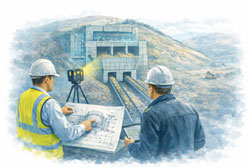
Mechanical engineer and client reviewing a ROM hopper with two discharge conveyors using LiDAR scanning at a mining bulk material handling facility

Engineering-Led 3D Scanning for Brownfield Industrial Upgrades

Safer Shutdowns, Smarter Design, and More Done With Fewer Resources

Brownfield industrial upgrades are some of the highest-risk engineering activities in mining and heavy industry. Existing assets, live plant interfaces, limited access, and tight shutdown windows leave little room for error.

At Hamilton By Design, we deliver engineering-led 3D LiDAR scanning to support brownfield upgradesโ€”providing accurate site data that enables safer design, efficient shutdown execution, and reliable outcomes when upgrading critical assets such as hoppers, chutes, pump boxes, conveyor transfers, and vertical shaft units.


Why Brownfield Upgrades Fail Without Accurate Site Data

Many brownfield failures trace back to the same root cause:

Design decisions made on assumptions, not reality.

Common issues include:

  • Outdated or incomplete drawings
  • Hidden interferences and undocumented modifications
  • Restricted access for survey and measurement
  • Time pressure during shutdowns

Engineering-led reality capture removes uncertainty before fabrication and installation begin.


Safety Starts Before the Shutdown

Safety in brownfield environments is largely determined during the design phase, not on site.

3D LiDAR scanning allows engineers to:

  • Design modifications without repeated site access
  • Reduce manual measurements in live plant areas
  • Identify clashes and pinch points early
  • Improve access, guarding, and maintainability outcomes

By reducing exposure hours and unplanned rework, scanning directly supports safer shutdown execution.


Typical Assets Upgraded in Brownfield Environments

Hamilton By Design supports upgrades to a wide range of industrial assets, including:

Hoppers & Chutes

  • ROM hoppers
  • Transfer chutes
  • Surge bins
  • Wear-prone interfaces

Conveyors & Transfer Stations

  • Conveyor head and tail stations
  • Transfer points
  • Discharge transitions
  • Supporting steelwork

Pump Boxes & Process Interfaces

  • Pump boxes and sumps
  • Pipework interfaces
  • Structural supports
  • Access platforms

Vertical Shaft & Drop Structures

  • Vertical shaft hoppers
  • Ore passes
  • Gravity-fed transfer systems

These assets are often deeply integrated into existing plant, making accurate as-built data critical.


Engineering-Led Scan-to-CAD for Upgrade Design

Our scan-to-CAD workflows are built around engineering outcomes, not just visual models.

This includes:

  • High-accuracy LiDAR capture of existing conditions
  • Engineering-intent CAD modelling
  • Design for fabrication and installation
  • Clash reduction across mechanical and structural scopes

The result is buildable design that aligns with real-world constraints.


Reliable Support for Shutdown-Driven Projects

Shutdowns demand precision. There is no time for re-measurements or redesign on site.

Engineering-led 3D scanning supports shutdown success by:

  • Allowing design to be completed well before shutdown
  • Supporting pre-fabrication of steelwork and chutes
  • Reducing RFIs and site queries
  • Increasing the amount of work completed per shutdown

When time and labour are limited, better information delivers better outcomes.


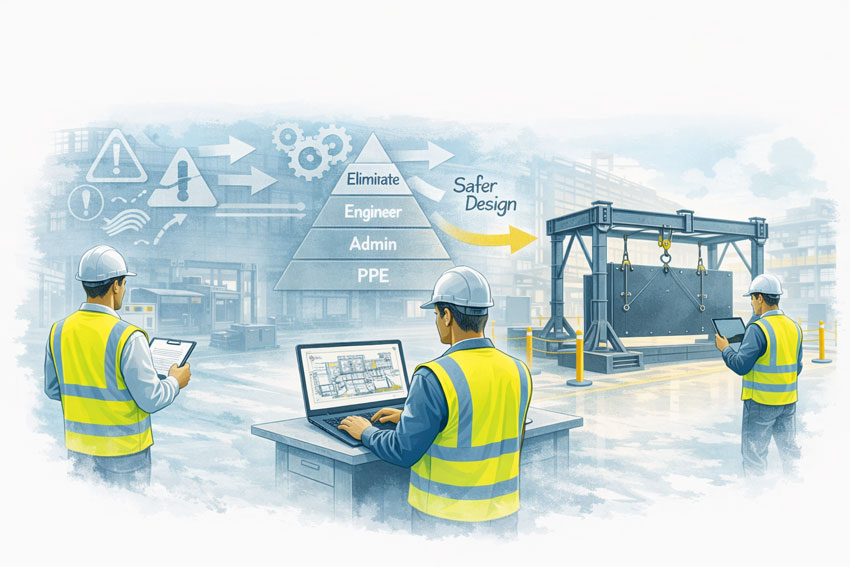
Mining engineers applying design-for-safety principles to improve material handling systems in an industrial workshop

Getting More Done With Fewer Resources

In todayโ€™s industrial environment, engineering teams are under pressure to:

  • Do more with fewer people
  • Reduce shutdown durations
  • Control capital and maintenance costs

Accurate digital site data allows teams to:

  • Minimise engineering rework
  • Reduce site-based labour
  • Improve coordination between disciplines
  • Make confident decisions faster

Reality capture becomes a force multiplier, not just a documentation tool.


Australian Engineering Quality You Can Rely On

Hamilton By Designโ€™s approach reflects Australian engineering standards and site experience.

We donโ€™t just scan โ€” we:

  • Understand how plant is built and maintained
  • Design with fabrication and installation in mind
  • Take responsibility for engineering outcomes

This sets our work apart from low-cost capture services that leave risk unresolved.


Hamilton By Design logo displayed on a blue tilted rectangle with a grey gradient background


3D LiDAR scanning and 3D modelling service button โ€” laser scanner capturing a point cloud for engineering and CAD modelling
Mechanical engineering services

Speak With an Engineer

If youโ€™re planning a brownfield upgrade involving:

  • Hoppers or chutes
  • Conveyor transfers
  • Pump boxes or sumps
  • Vertical shaft or drop structures
  • Shutdown-critical works

Hamilton By Design provides engineering-led 3D LiDAR scanning to support safer, more reliable brownfield upgrades.

Name
Would you like us to arrange a phone consultation for you?
Address

Our clients:


Finite Element Analysis (FEA) engineering simulation button
Mechanical engineering services

Mechanical Engineering | Structural Engineering

Engineering Integrity, Failure Evolution, and Energy Transition: A Mechanical Engineerโ€™s Perspective on Australiaโ€™s Ageing Coal Fleet

This paper examines the mechanical degradation, failure mechanisms, and system-level reliability implications of Australiaโ€™s ageing coal-fired power generation assets, focusing on Callide Power Station (Queensland) and Yallourn Power Station (Victoria). Both stations have experienced significant mechanical failures in the past five years, exposing vulnerabilities in maintenance, asset management, and risk governance under conditions of declining reinvestment.
From a mechanical engineering standpoint, these failures illustrate the predictable end-of-life behaviour of large rotating and pressure-bound systems when maintenance expenditure, material renewal, and operational monitoring decline. The paper argues that sustained industrial reliabilityโ€”and thus national energy and employment securityโ€”requires engineering-informed policy that balances decarbonisation with technical integrity management.


Coal-fired power stations are among the most complex mechanical systems ever built in Australia. They integrate high-temperature, high-pressure thermodynamic processes with massive rotating equipment, lubrication systems, and precision alignment tolerances.

From a mechanical engineerโ€™s perspective, their reliability depends on three interlinked pillars:

  1. Structural and material integrity,
  2. Lubrication and vibration control, and
  3. Predictive maintenance and monitoring.

However, as the nation accelerates toward renewable transition targets, investment in these legacy systems has declined. Mechanical failures at Callide and Yallourn are therefore not random accidents but the mechanical manifestation of economic and policy choices.

This analysis seeks to understand those failures in engineering terms, predict future risks, and outline how a re-commitment to industrial infrastructure and jobs requires a concurrent commitment to mechanical reliability.


Technical Overview of Recent Failures

Callide Power Station

Callideโ€™s units span several generations of design and material technology. The C4 explosion (2021) was catastrophic: the failure originated within the turbine hall, leading to structural collapse and large-scale ejection of debris.
Subsequent analysis by CS Energy and external investigators identified battery charger replacement errors, inadequate isolation protocols, and loss of process safety discipline as initiators.

From an engineering integrity perspective, the incident represents a compound failure:

  • Mechanical systems operated under degraded conditions;
  • Electrical and process-control systems failed to detect early anomalies;
  • Organisational maintenance controls were insufficient to interrupt escalation.

Later failures โ€” including the C3 boiler pressure event (2025) and cooling tower collapse (2022) โ€” further confirm that structural materials, corrosion protection, and load-carrying assemblies had entered the fatigueโ€“creep interaction phase of their service life.

Yallourn Power Station

At Yallourn, the August 2025 low-pressure turbine dislodgement occurred after decades of vibration monitoring alarms and bearing wear signals. Earlier (2024) shutdowns for โ€œhigh vibration alarmsโ€ indicated growing rotor dynamic instability.
When the Unit 2 turbine dislodged, the damage pattern suggested bearing wear, misalignment, or bolt relaxation leading to component displacement.

In mechanical engineering terms, this is a classic late-life failure sequence:

  1. Fatigue crack initiation in critical load-carrying components (rotor or coupling bolts),
  2. Progressive loosening and unbalance,
  3. Dynamic amplification under operating RPM,
  4. Catastrophic structural displacement.

The turbineโ€™s dislodgement was therefore an expected end-of-life event, accelerated by reduced overhaul investment and ageing metallurgical properties.


Comparative Engineering Analysis

Engineering DimensionCallideYallournComparison / Insight

Failure TypeExplosion / Pressure Containment BreachTurbine Mechanical DislodgementCallide shows energy-release failure; Yallourn a structural integrity loss.
Root Mechanical CauseOverpressure / process safetyFatigue, unbalance, bearing or bolt failureBoth reflect cumulative degradation.
Indicative Material StateCreep-fatigued pressure shells; corroded supportsThermal-fatigued steel, worn journalsMetallurgical ageing dominates both.
Maintenance CultureProcess-safety erosionReactive, โ€œrun-to-retirementโ€Organisational degradation common factor.
System OutcomeExplosion and total destructionSevere mechanical damage, unit outageBoth reduce grid reliability and reveal systemic neglect.

These failures share a unifying pattern recognised in mechanical reliability theory:

Late-life degradation compounded by maintenance deferral and organisational fatigue produces cascading mechanical failure modes that were once preventable.


Predicting Future Failure Behaviour

Mechanical engineers use reliability-centred maintenance (RCM) models to quantify end-of-life risk.
For rotating equipment, mean time to failure (MTTF) typically decreases exponentially once fatigue propagation exceeds ~70 % of material endurance life.

Data from the National Electricity Market (NEM) indicates:

  • Forced outage frequency has doubled since 2012.
  • Vibration and lubrication alarms are rising in frequency.
  • Unit unavailability correlates strongly (Rยฒ > 0.8) with turbine age and last major overhaul date.

Projected forward, these indicators imply that without major overhauls or component replacements, most Australian coal units will face critical mechanical reliability decline by 2032โ€“2035.


Engineering Economics and Policy Interaction

From an engineering management perspective, the problem is not purely technical โ€” it is thermo-economic.

  • A major turbine retrofit (~A$25โ€“40 million per unit) is uneconomic for plants scheduled for closure in under a decade.
  • Operators thus defer maintenance, accepting rising mechanical risk.
  • The probability of catastrophic failure increases sharply as the cost of prevention declines below the cost of repair.

This is the engineering expression of policy-induced obsolescence: political commitments to retire coal reduce the incentive to sustain its mechanical integrity, even while industries still depend on its output.


Industrial Reliability and the Employment Interface

Reliable baseload power is the foundation for industrial continuity.
From the standpoint of a mechanical engineer, industrial productivity is a function of mechanical uptime: Productivity=f(Power Reliability,Maintenance Efficiency)\text{Productivity} = f(\text{Power Reliability}, \text{Maintenance Efficiency})Productivity=f(Power Reliability,Maintenance Efficiency)

When power generation becomes intermittentโ€”whether from renewable intermittency or coal unreliabilityโ€”industrial operations must compensate with redundancy, backup generation, or load-shedding. These add capital and operational costs that ultimately affect employment.

Regional Implications

  • Queensland retains a stronger firm power horizon (coal + gas + hydro until ~2035), giving industry more operational certainty.
  • Victoria, by contrast, will face a reliability inflection point after Yallourn (2028) and Loy Yang A (2035) closures.

Without firm generation or large-scale storage online, manufacturing regions risk power volatilityโ€”directly translating to production downtime and job insecurity.


Engineering the Transition: Commitment to Jobs and Infrastructure

From a mechanical engineering ethics and systems standpoint, a commitment to industry must be synonymous with a commitment to mechanical reliability.
That requires three converging actions:

Asset Integrity Management:
Continuous structural health monitoring, vibration analysis, and overhaul planning for remaining thermal units.
Even in decline, they must be safely and predictably retired.

Design and Commissioning of Replacement Systems:
Engineers must ensure that renewable generation, storage, and transmission assets meet equivalent reliability and maintainability standards.
This includes redundancy design, grid inertia replacement, and mechanical resilience of large rotating machinery (e.g., pumped hydro, turbines, bearings).

Workforce Transition as Engineering Continuity:
The skills used to maintain turbines, bearings, and boilers are transferable to wind, hydro, and hydrogen equipment.
Protecting those jobs preserves both mechanical capability and national energy security.


Engineering Conclusions

From a mechanical engineerโ€™s viewpoint, the failures at Callide and Yallourn are textbook case studies of end-of-life degradation under policy-driven neglect.
They illustrate that:

  1. Mechanical degradation is predictable โ€” vibration, lubrication, and thermal-stress indicators were present years before failure.
  2. Organisational and policy decisions override engineering recommendations โ€” maintenance deferral was economic, not technical.

  3. Systemic reliability cannot be sustained without mechanical investment โ€” whether in turbines, batteries, or hydro equipment, engineering integrity remains central.
  4. A national commitment to industry equals a commitment to engineering.

If Australia seeks to safeguard its industrial base and employment, it must invest not only in new energy technologies but in the mechanical soundness of the systems that bridge the transition.
Neglecting this will reproduce the same failure patternsโ€”just in new forms of infrastructure.


References (Indicative)

  • CS Energy (2024). Callide C4 Incident Investigation Summary.
  • WattClarity (2025). Analysis of Yallourn Unit 2 Trip and Frequency Response.
  • AEMO (2025). Generator Reliability Performance Report.
  • EnergyAustralia (2025). Yallourn Mechanical Maintenance Overview.
  • IEEFA (2025). Delaying Coal Power Exits: Engineering and Economic Implications.
  • ASME (2023). Guidelines on Turbine Rotor Life Assessment and Remaining Life Prediction.
3D LiDAR scanning and 3D modelling service button โ€” laser scanner capturing a point cloud for engineering and CAD modelling
Mechanical engineering services


Finite Element Analysis (FEA) engineering simulation button
Mechanical engineering services


3D CAD Modelling Australia service banner for Hamilton By Design


CHPP Engineering title graphic featuring bold white text reading "CHPP Engineering" centred on a blue rounded rectangle background.
Pipework Drafting title graphic featuring bold white text reading "Pipework Drafting" centred on a blue rounded rectangle background.
3D LiDAR Scanning for Engineering Projects title graphic featuring bold white text on a blue rounded rectangle background.


Finite Element Analysis (FEA) engineering simulation button
Structural drafting services button
Mechanical drafting services button


Australian Drafting logo featuring bold white text reading "Australian Drafting" centred on a blue rounded rectangle background.
Engineering Governance title graphic featuring bold white text reading "Engineering Governance" centred on a blue rounded rectangle background.
Engineering-Grade LiDAR Scanning title graphic featuring bold white text on a blue rounded rectangle background.