Mechanical Engineering at the Heart of Mining on the Central Coast

  🛠️

1. Setting the Scene: The Central Coast & Its Industrial Backbone

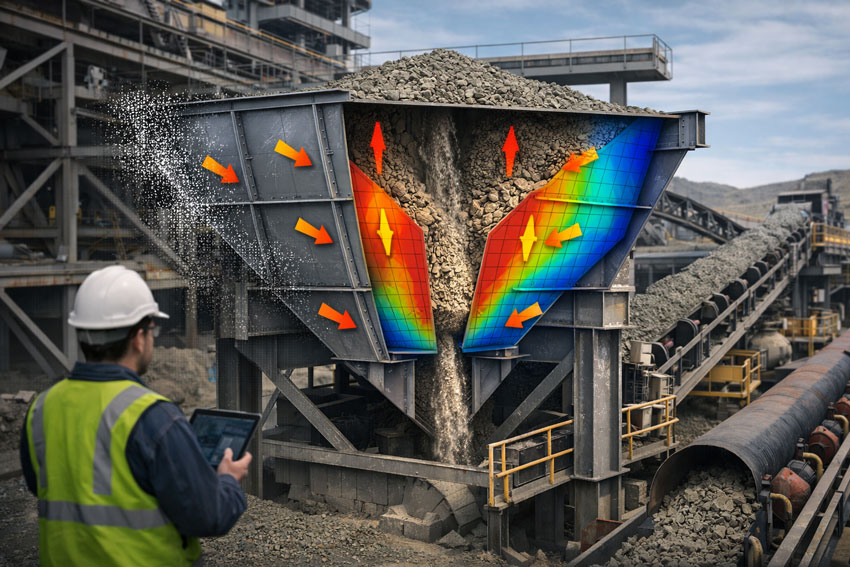
Home to nearly 350,000 people across Gosford, Wyong, Terrigal, and beyond, the Central Coast is well-known for its beaches and bushland—yet it also supports a robust industrial and mining‑services sector (Jora, Wikipedia). With growing infrastructure demands and proximity to resource projects like the Wallarah 2 coal proposal near Wyong (Wikipedia), mechanical engineers play a pivotal role behind the scenes.

2. What Do Mechanical Engineers Do in Mining on the Coast?

Mechanical engineers in mining and related heavy industries are responsible for:

  • Design & Maintenance: Planning, designing, and overseeing maintenance of critical mineral processing plants, machinery, conveyors, trucks and drilling rigs (Jobsora).

  • Automation Integration: Implementing robotics, programmable logic controllers (PLCs), remote operation systems, and predictive maintenance tools .

  • Health & Safety Compliance: Ensuring mechanical systems meet stringent safety regulations and operator protection standards (Jora).

  • Environmental Efficiency: Optimising equipment to reduce energy use, emissions, and noise—all while supporting mine rehabilitation efforts .


3. Job Opportunities in the Region

Recent job listings highlight robust opportunities for mechanical engineers across the Coast:

  • Mining Mechanical Engineer roles are regularly advertised in Gosford/Lisarow, appearing in SEEK and Jora job postings (SEEK).

  • Roles span senior design positions to hands‑on maintenance engineering—offering full-time opportunities with firms like Wabtec, Hyundai Rotem, Boral, and Coffey (SEEK).

  • Entry-level and graduate engineering roles are also available through pathways like Central Coast Council traineeships and TAFE NSW programs (Central Coast Council).


4. Industry Trends and What You’ll Need

As described by Titan Recruitment, the mining sector is embracing several transformative trends (Titan Recruitment):

  1. Automation & Robotics: Engineers are tasked with integrating autonomous machinery and control systems.

  2. Digital & Data Analytics: Skills in condition monitoring, sensors, and predictive analytics are in demand.

  3. Sustainability Focus: There’s emphasis on clean, efficient systems that reduce environmental footprint.

  4. Complex Machine Design: As equipment sophistication grows, so does the need for mechanical expertise.

  5. Asset Reliability & Safety: Mechanical engineers must ensure zero-fault operation in harsh mining environments.

  6. Site-to-System Integration: Engineers coordinate across disciplines—mechanical, electrical, structural—to optimise operations.

  7. Continuous Upskilling: Ongoing education—through TAFE NSW, professional certifications, and in-house training—is critical.


5. Training & Career Pathways on the Central Coast

🎓 Education & Apprenticeships

  • TAFE NSW (Hunter & Central Coast) offers mechanical and engineering trade training, forming a strong foundation for local roles (Wikipedia).

  • Central Coast Council provides apprenticeships and traineeships in mechanical fields—ideal stepping stones into industry .

🏢 Local Industry Experience

  • Firms like Wabtec, Hyundai Rotem, Boral, Coffey, and Wright Engineering in Somersby/Gosford offer vital on-the-job training and progression (SEEK).

  • Mining-support businesses across the Central Coast employ engineers to design, maintain, and improve heavy-duty plant and machinery.


6. Why the Central Coast Is a Great Base for Mining Engineers

  • Proximity to Projects: Infrastructure supporting coal drilling and mineral processing connects easily with local towns via major transport routes in and out of Gosford (Jobsora, Wikipedia).

  • Balanced Lifestyle: Work-life harmony blends regional industry jobs with coastal living and access to national parks (Indeed).

  • Clear Career Pathways: Education, apprenticeships, and employers form a supportive ecosystem—from bedrock training to senior site leadership.


Final Takeaway

Mechanical engineers are essential to mining operations on the Central Coast—ensuring machinery runs efficiently, safely, and sustainably. With strong local education pathways, active job markets, and growing tech trends, the region offers rewarding careers tied to both industrial innovation and community lifestyle.

Ready to design, maintain, and optimise the backbone of mining? The Central Coast has the foundation—and the opportunity—awaiting mechanical engineers eager to build the future.

Hamilton By Design | Mechanical Drafting | Structural Drafting | 3-D Lidar Scanning

Central Coast | Mount Isa | Brisbane | Cairns | Darwin


Published on Hamilton by Design — shaping engineering futures in NSW’s Central Coast

Hamilton By Design logo displayed on a blue tilted rectangle with a grey gradient background
3D LiDAR scanning and 3D modelling service button — laser scanner capturing a point cloud for engineering and CAD modelling
Mechanical engineering services

Our clients:
Name
Would you like us to arrange a phone consultation for you?
Address
Finite Element Analysis (FEA) engineering simulation button
Mechanical engineering services

3D Modelling 

SolidWorks 3D Modelling

 By Hamilton By Design | www.hamiltonbydesign.com.au

In the 1980s through to the early 2000s, AutoCAD ruled supreme. It revolutionised the way engineers and designers approached 2D drafting, enabling technical drawings to be created and shared with speed and precision across industries. For two decades, it set the benchmark for visual communication in engineering and construction. But that era has passed.

Today, we live and work in a three-dimensional world — not only in reality, but in design.

From 2D Drafting to Solid Modelling: The New Standard

At Hamilton By Design, we see 3D modelling not just as a tool, but as an essential evolution in how we think, design, and manufacture. The transition from 2D lines to solid geometry has reshaped the possibilities for every engineer, machinist, and fabricator.

With the widespread adoption of platforms like SolidWorks, design engineers now routinely conduct simulations, tolerance analysis, motion studies, and stress testing — all in a virtual space before a single part is made. Companies like TeslaFordEatonMedtronic, and Johnson & Johnson have integrated 3D CAD tools into their product development cycles with great success, dramatically reducing rework, increasing precision, and accelerating innovation.

Where 2D design was once enough, now solid models drive machininglaser cutting3D printingautomated manufacturing, and finite element analysis (FEA) — all from a single digital source.

A Growing Ecosystem of Engineering Capability

It’s not just the software giants making waves — a global network of specialised engineering services is helping bring 3D design to life. Companies like Rishabh EngineeringShalin DesignsCAD/CAM Services Inc.Archdraw Outsourcing, and TrueCADD provide design and modelling support to projects around the world.

At Hamilton By Design, we work with and alongside these firms — and others — to deliver scalable, intelligent 3D modelling solutions to the Australian industrial sector. From laser scanning and site capture to custom steel fabrication, we translate concepts into actionable, manufacturable designs. Our clients benefit not only from our hands-on trade knowledge but also from our investment in cutting-edge tools and engineering platforms.

So What’s Next? The Future Feels More Fluid Than Solid

With all these tools now at our fingertips — FEA simulation, LiDAR scanning, parametric modelling, cloud collaboration — the question becomes: what comes after 3D?

We’ve moved from pencil to pixel, from 2D lines to intelligent digital twins. But now the line between design and experience is beginning to blur. Augmented reality (AR), generative AI design, and real-time simulation environments suggest that the next wave may feel more fluid than solid — more organic than mechanical.

We’re already seeing early glimpses of this future:

  • Generative design tools that evolve geometry based on performance goals
  • Real-time digital twins updating with sensor data from operating plants
  • AI-driven automation that simplifies design iterations in minutes, not days

In short: the future of 3D design might not be “3D” at all in the traditional sense — it could be interactive, immersive, adaptive.

At Hamilton By Design — We’re With You Now and Into the Future

Whether you’re looking to upgrade legacy 2D drawings, implement laser-accurate reverse engineering, or develop a full-scale 3D model for simulation or manufacturing — Hamilton By Design is here to help.

We bring hands-on trade experience as fitters, machinists, and designers, and combine it with the modern toolset of a full-service mechanical engineering consultancy. We’re not just imagining the future of design — we’re building it.

Let’s design smarter. Let’s think in 3D — and beyond.

Hamilton By Design logo displayed on a blue tilted rectangle with a grey gradient background
3D LiDAR scanning and 3D modelling service button — laser scanner capturing a point cloud for engineering and CAD modelling
Mechanical engineering services


Our Clients

Contact Us

Name
Would you like us to arrange a phone consultation for you?
Address
Finite Element Analysis (FEA) engineering simulation button
Mechanical engineering services

3D Modelling with You Now — and 3D Modelling in the Future

 3D Modelling 

By Hamilton By Design | www.hamiltonbydesign.com.au

In the 1980s through to the early 2000s, AutoCAD ruled
supreme. It revolutionised the way engineers and designers approached 2D
drafting, enabling technical drawings to be created and shared with speed and
precision across industries. For two decades, it set the benchmark for visual
communication in engineering and construction. But that era has passed.

Today, we live and work in a three-dimensional world — not
only in reality, but in design.

From 2D Drafting to Solid Modelling: The New Standard

At Hamilton By Design, we see 3D modelling not just
as a tool, but as an essential evolution in how we think, design, and
manufacture. The transition from 2D lines to solid geometry has reshaped the
possibilities for every engineer, machinist, and fabricator.

With the widespread adoption of platforms like SolidWorks,
design engineers now routinely conduct simulations, tolerance analysis, motion
studies, and stress testing — all in a virtual space before a single part is
made. Companies like Tesla, Ford, Eaton, Medtronic,
and Johnson & Johnson have integrated 3D CAD tools into their
product development cycles with great success, dramatically reducing rework,
increasing precision, and accelerating innovation.

Where 2D design was once enough, now solid models drive
machining
, laser cutting, 3D printing, automated
manufacturing
, and finite element analysis (FEA) — all from a single
digital source.

A Growing Ecosystem of Engineering Capability

It’s not just the software giants making waves — a global
network of specialised engineering services is helping bring 3D design to life.
Companies like Rishabh Engineering,
Shalin Designs, CAD/CAM Services Inc., Archdraw Outsourcing,
and TrueCADD provide design and
modelling support to projects around the world.

At Hamilton By Design, we work with and alongside these
firms — and others — to deliver scalable, intelligent 3D modelling solutions to
the Australian industrial sector. From laser scanning and site
capture
to custom steel fabrication, we translate concepts into
actionable, manufacturable designs. Our clients benefit not only from our
hands-on trade knowledge but also from our investment in cutting-edge tools and
engineering platforms.

So What’s Next? The Future Feels More Fluid Than Solid

With all these tools now at our fingertips — FEA simulation,
LiDAR scanning, parametric modelling, cloud collaboration — the question
becomes: what comes after 3D?

We’ve moved from pencil to pixel, from 2D lines to
intelligent digital twins. But now the line between design and experience
is beginning to blur. Augmented reality (AR), generative AI design, and
real-time simulation environments suggest that the next wave may feel more
fluid than solid
— more organic than mechanical.

We’re already seeing early glimpses of this future:

  • Generative
    design tools that evolve geometry based on performance goals
  • Real-time
    digital twins updating with sensor data from operating plants
  • AI-driven
    automation that simplifies design iterations in minutes, not days

In short: the future of 3D design might not be “3D” at all
in the traditional sense — it could be interactive, immersive, adaptive.

At Hamilton By Design — We’re with You Now and into the
Future

Whether you’re looking to upgrade legacy 2D drawings,
implement laser-accurate reverse engineering, or develop a full-scale 3D model
for simulation or manufacturing — Hamilton By Design is here to help.

We bring hands-on trade experience as fitters, machinists,
and designers, and combine it with the modern toolset of a full-service
mechanical engineering consultancy. We’re not just imagining the future of
design — we’re building it.

Let’s design smarter. Let’s think in 3D — and beyond.

Hamilton By Design logo displayed on a blue tilted rectangle with a grey gradient background
3D LiDAR scanning and 3D modelling service button — laser scanner capturing a point cloud for engineering and CAD modelling
Mechanical engineering services

Our clients:
Name
Would you like us to arrange a phone consultation for you?
Address
Finite Element Analysis (FEA) engineering simulation button
Mechanical engineering services

Elevating Engineering Precision with 3D CAD, Laser Scanning & Simulation

Elevating Engineering Precision: 3D CAD Design, Laser Scanning, and Simulation for Custom Steel Fabrication


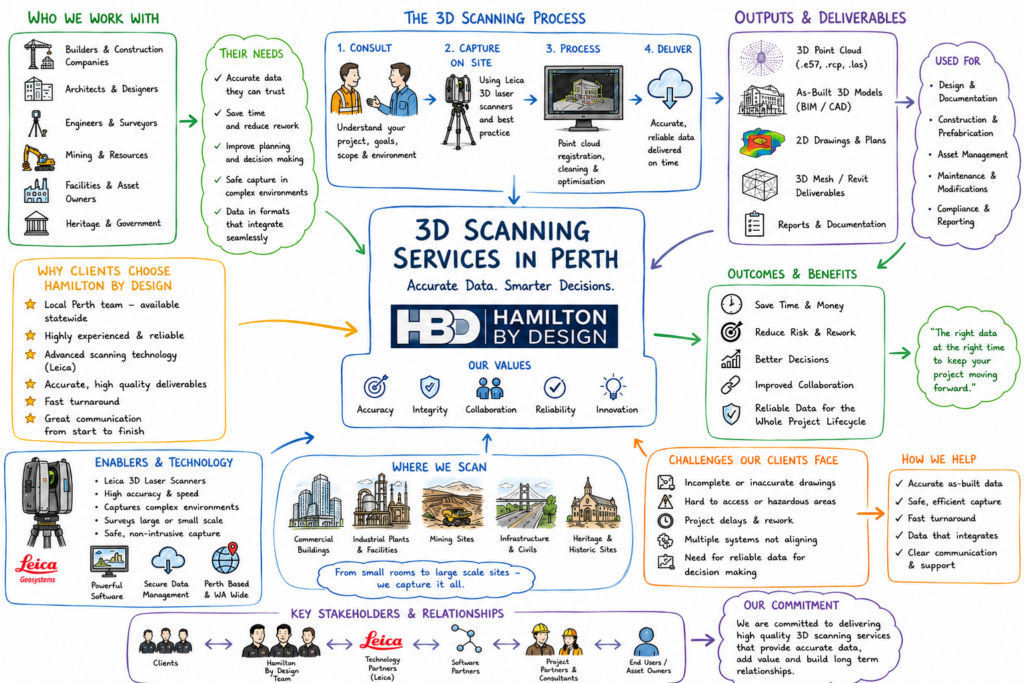
In modern engineering, accuracy, efficiency, and adaptability are not just desired—they are essential. At Hamilton By Design, we combine cutting-edge tools like 3D CAD design, 3D laser scanning, and SolidWorks FEA Simulation with practical expertise in custom steel fabrication to deliver intelligent, end-to-end solutions for complex engineering projects.

From detailed CAD Modelling to field-accurate Faro Scanning, our consultancy supports Australian industries with precise, timely, and cost-effective design solutions.

The Role of 3D CAD Design in Modern Engineering

3D CAD design (Computer-Aided Design) forms the foundation of most modern engineering workflows. It transforms initial concepts into detailed digital models, enabling design validation, collaboration, and modification long before anything is physically built.

Using tools like SolidWorks, our experienced 3D CAD designers create accurate representations of components, assemblies, and entire systems. This not only reduces costly errors during fabrication but also allows clients to visualise and interact with their product in a virtual environment.

With 3D CAD design at the core, we help clients navigate engineering challenges—from product development to mechanical infrastructure—faster and with greater confidence.


3D Modelling: Bridging Concept and Construction

Closely integrated with CAD design is 3D modelling, which allows designers to create digital prototypes of physical objects. At Hamilton By Design, 3D modelling is used not just for form but also for function. Our models include precise dimensions, material properties, tolerances, and interaction points.

Whether it’s reverse engineering an existing plant structure or designing custom brackets for a conveyor system, our 3D modelling ensures high fidelity and interoperability across platforms.


The Power of 3D Laser Scanning for Engineering Accuracy

To capture as-built environments with unmatched accuracy, we use 3D laser scan for engineering projects of all sizes. Leveraging Faro scanning technology, we generate detailed point clouds that map real-world environments down to millimetre accuracy.

This Faro scan data is then converted into actionable geometry for further CAD modelling or simulation. It’s particularly valuable in retrofit, maintenance, or upgrade projects, where existing site data is often incomplete or outdated.

Whether you’re updating mechanical systems in a processing plant or ensuring compliance in a structural audit, 3D laser scanning delivers the reliable data you need for precise engineering decisions.


From Scan to Simulation: Enhancing Designs with SolidWorks FEA

After creating a digital model, it’s crucial to understand how it will perform under real-world conditions. That’s where SolidWorks FEA simulation comes in.

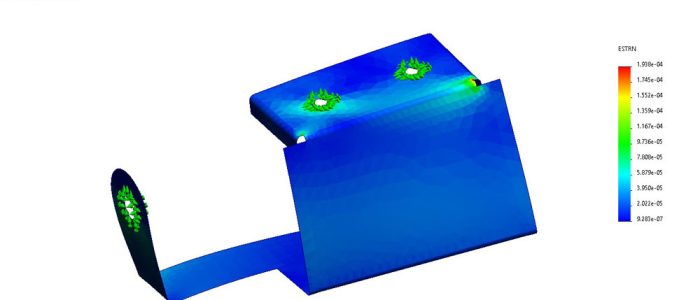
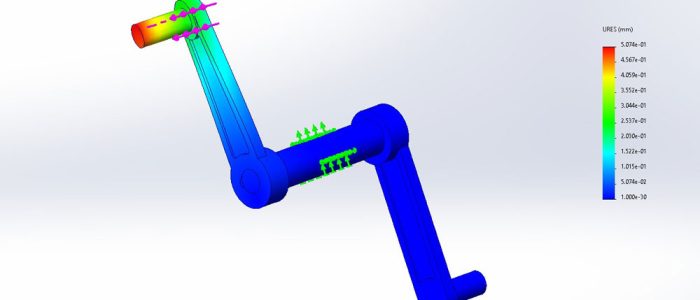
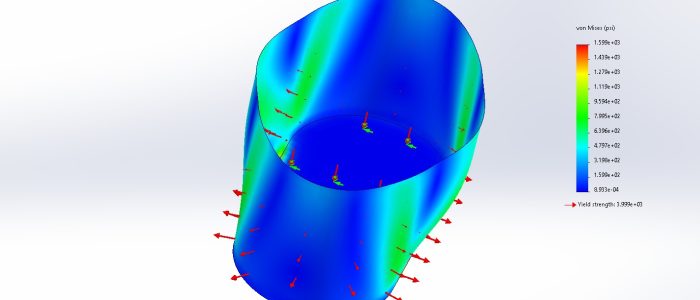
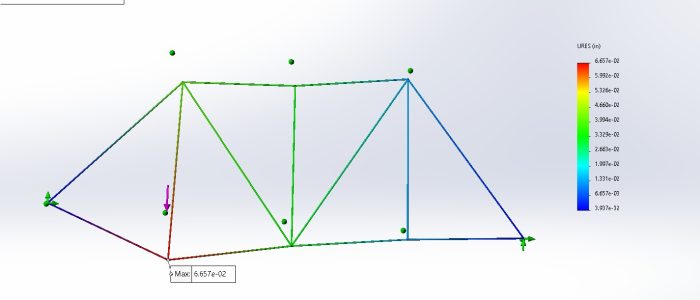
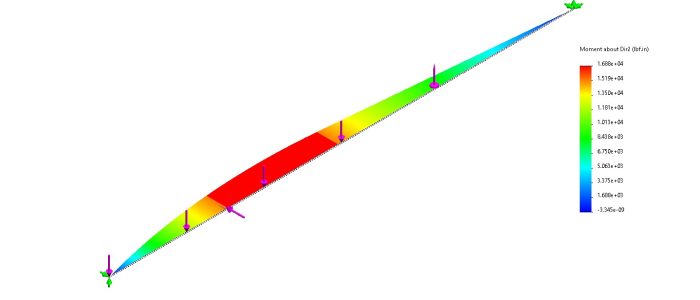
SolidWorks Simulation allows our team to perform finite element analysis (FEA) on assemblies, evaluating factors such as stress, strain, fatigue, and thermal distribution. By integrating FEA into the design process, we validate designs before they are fabricated—saving both time and material costs.

This proactive approach is particularly useful in custom steel fabrication, where load-bearing components must meet stringent safety and performance criteria.


CAD Modelling in Custom Steel Fabrication

Custom steel fabrication is both an art and a science. It requires a deep understanding of materials, tolerances, and manufacturing techniques. At Hamilton By Design, we combine advanced CAD modelling with practical fabrication experience to create components that meet your exact requirements.

Whether you need custom brackets, enclosures, chutes, or full-scale structural assemblies, our models are production-ready and tailored to your fabrication process. We provide DXFs, laser-cutting files, and BOMs that integrate seamlessly with your shop floor operations.


Why Choose a 3D CAD Designer?

A skilled 3D CAD designer does more than just draw. They anticipate fitment issues, consider manufacturing constraints, and collaborate across disciplines to create practical, buildable designs.

At Hamilton By Design, our team brings over a decade of experience across heavy industry, defence, mining, and manufacturing. We understand the nuances of real-world engineering and tailor our CAD services to each project’s unique needs.


Integrating Faro Scanning with SolidWorks

One of our key differentiators is the seamless integration of Faro scan data into SolidWorks. This workflow allows us to:

  • Overlay scanned data onto CAD designs

  • Identify deviations between as-built and as-designed models

  • Rapidly develop retrofit solutions with accurate field measurements

  • Conduct clash detection and ensure proper clearances

This end-to-end capability reduces rework, shortens project timelines, and increases overall design quality.


Applications Across Industry

Our services benefit a broad range of industries, including:

  • Mining & Processing – Reverse engineering plant infrastructure, scanning for shutdown planning, custom chute design

  • Manufacturing – Tooling, jigs, and production line modifications

  • Defence – CAD design and simulation for retrofit and upgrade works

  • Construction – Structural steel design and site validation

Whether you’re fabricating a single part or overseeing a multi-million-dollar infrastructure upgrade, our tools and experience help you deliver with confidence.


The Difference

At Hamilton By Design, we don’t just deliver drawings—we provide engineering certainty. By combining the precision of 3D CAD, the power of SolidWorks simulation, and the real-world accuracy of Faro scanning, we help clients design, assess, and fabricate with confidence.

If you’re looking for an Australian mechanical engineering consultancy that delivers intelligent design, detailed modelling, and practical support for custom steel fabrication projects, we’re ready to help.


Let’s Work Together

Visit www.hamiltonbydesign.com.au to learn more or contact us to discuss how we can support your next engineering challenge.

3D LiDAR scanning and 3D modelling service button — laser scanner capturing a point cloud for engineering and CAD modelling
Mechanical engineering services

Our Clients:

Name
Would you like us to arrange a phone consultation for you?
Address
Finite Element Analysis (FEA) engineering simulation button
Mechanical engineering services

Reconciliation Action Plan

Hamilton By Design acknowledges and supports Australia’s commitment to reconciliation. We recognise the importance of building meaningful and respectful relationships with Aboriginal and Torres Strait Islander peoples and communities—particularly within the regions where we operate.

As an Australian-owned business, we are committed to engaging with Indigenous communities in a way that promotes inclusion, respect, and long-term benefit. While we are a small consultancy, we take steps to support reconciliation through:

  • Procurement Practices: Where possible, we seek to engage Indigenous-owned suppliers and contractors, particularly for site-based services and materials.
  • Cultural Awareness: Our team acknowledges the Traditional Custodians of the lands on which we work and encourages cultural awareness across project engagements.
  • Community Engagement: On projects in regional areas, we actively support client-led initiatives aimed at community engagement, Indigenous employment, and skills development.

We are committed to growing our contribution to reconciliation efforts and aligning our operations. We welcome future opportunities to collaborate and support your engagement with Aboriginal and Torres Strait Islander communities.

3D LiDAR scanning and 3D modelling service button — laser scanner capturing a point cloud for engineering and CAD modelling
Mechanical engineering services
3D LiDAR scanning and 3D modelling service button — laser scanner capturing a point cloud for engineering and CAD modelling
Mechanical engineering services
Finite Element Analysis (FEA) engineering simulation button
Mechanical engineering services

Modern Slavery

Hamilton By Design is committed to ethical business practices and supports the objectives of the Modern Slavery Act 2018 (Cth). We recognise the importance of transparency and due diligence in managing the risk of modern slavery within our business operations and supply chains.

As a specialised engineering consultancy, our operations are primarily office-based and service-driven. Our internal workforce is directly employed, with all employees and contractors engaged under fair and lawful terms in accordance with Australian employment standards and awards.

In relation to our supply chain, which is largely domestic and involves procurement of software, technical equipment, and professional services, we take the following steps to minimise modern slavery risks:

  • Supplier Screening: We engage with reputable Australian-based suppliers who are expected to comply with all relevant workplace and human rights legislation.
  • Risk Awareness: We periodically review our procurement practices to identify any exposure to higher-risk sectors or regions, particularly when sourcing technical hardware or materials.
  • Ethical Conduct: We maintain open communication with our subcontractors and partners to promote ethical behaviour and responsible sourcing.
  • Continuous Improvement: As our business grows, we are committed to formalising our modern slavery policy, enhancing supplier due diligence, and aligning with best practices in social responsibility.

We remain committed to continuous improvement and support our clients in building ethical and transparent supply chains.

3D LiDAR scanning and 3D modelling service button — laser scanner capturing a point cloud for engineering and CAD modelling
Mechanical engineering services
Finite Element Analysis (FEA) engineering simulation button
Mechanical engineering services