Mechanical Engineering Services โ€“ Sydney

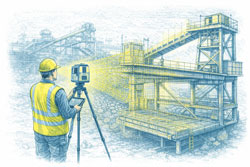
Mechanical engineer discussing fabrication-ready drawings during LiDAR scanning of a Sydney construction site

Mechanical Engineering Services Sydney | Engineer-Led Industrial Support

Engineer-Led Mechanical Engineering for Sydneyโ€™s Industrial & Fabrication Projects

Sydneyโ€™s industrial and fabrication projects rarely start with clean drawings or ideal conditions.
More often, they involve brownfield sites, missing or unreliable documentation, tight shutdown windows, and no margin for fit-up errors.

Hamilton By Design provides engineer-led mechanical engineering services in Sydney, focused on supporting industrial operators and fabricators where accuracy, accountability, and buildability matter.

This is mechanical engineering for projects where getting it wrong is expensive.


Engineer and client reviewing mechanical drawings while LiDAR scanner captures an industrial site near Anzac Bridge Sydney

Who This Service Is For

Our Sydney mechanical engineering services are typically engaged by:

  • Industrial and manufacturing operators upgrading or modifying existing plant
  • Steel fabricators and mechanical contractors requiring tender-stage engineering support
  • Project teams facing shutdown-critical works
  • Clients dealing with missing, outdated, or untrustworthy drawings
  • Fabricators who need engineering ownership, not just drafting

If your project involves existing assets, tight access, or zero tolerance for rework, this service is designed for you.


Common Problems Weโ€™re Brought In to Solve

Many Sydney clients come to us after experiencing issues such as:

  • Parts fabricated from drawings that didnโ€™t match site reality
  • Shutdown delays caused by fit-up problems
  • Designers who donโ€™t understand fabrication or installation constraints
  • Engineering scopes that stopped at drawings, with no one owning the outcome

These issues arenโ€™t theoretical. Theyโ€™re the same systemic failures seen in real-world incidents such as the Kew Swimming Pool structural collapse and the sporting ground awning installation failure, both of which are discussed in detail on our website and highlight the consequences of poor engineering judgement and lack of accountability.


An engineer reviews detailed structural steel drawings at a drafting table while an engineering-grade LiDAR scan captures an existing waterfront structure in Sydney, illustrating data-driven structural drafting based on accurate as-built conditions.

What โ€œEngineer-Ledโ€ Actually Means

For our Sydney clients, engineer-led is not a marketing term โ€” it defines how we work.

It means:

  • A qualified mechanical engineer is directly involved from early assessment through to fabrication-ready documentation
  • Engineering judgement is applied โ€” not blind replication of scans or legacy drawings
  • Designs are driven by fabrication and installation reality, not just theory
  • We take responsibility for fit-up risk, not just data delivery
  • Documentation is defensible, sign-off-ready, and aligned with applicable Australian Standards

This approach exists specifically to prevent the types of failures referenced above.


Mechanical Engineering Services We Provide in Sydney

Our services are tailored to industrial and fabrication-driven projects, including:

  • Brownfield mechanical upgrades and modifications
  • Tender-stage engineering support for fabricators and contractors
  • Equipment replacement where original drawings are missing or unreliable
  • Shutdown-critical mechanical works planning
  • Fabrication-ready mechanical design and detailing
  • Engineering verification and certification where required

Our strength lies in bridging the gap between site reality, engineering intent, and fabrication execution.


Why Fabricators Engage Us at Tender Stage

Many of our Sydney engagements start before a job is won.

Fabricators involve us during tendering to:

  • Reduce pricing risk caused by unknown site conditions
  • Identify fit-up and access issues early
  • Avoid scope gaps that turn into cost overruns
  • Present a stronger, lower-risk tender backed by engineering accountability

This approach consistently saves time, money, and reputation downstream.


Our clients:


How We Differ from Large Consultancies

Compared to large, multi-layered consultancies, clients engage Hamilton By Design because we offer:

  • Clear engineering ownership โ€” no hand-offs, no dilution of responsibility
  • Direct access to the engineer doing the work
  • Practical, fabrication-aware solutions
  • Focused scopes aligned to real construction risk
  • Accountability through to fabrication and installation readiness

This is particularly valuable on Sydney projects where complexity and cost pressure are high.


Hamilton By Design logo displayed on a blue tilted rectangle with a grey gradient background

Speak With a Mechanical Engineer Before You Fabricate

If youโ€™re preparing a tender, planning a shutdown, or dealing with unclear site information, engaging engineering early can prevent costly downstream issues.

Request a tender-stage engineering review to discuss your Sydney project with a mechanical engineer who understands fabrication, installation, and real-world risk.

Use the contact form below to start the conversation.

Name
Would you like us to arrange a phone consultation for you?
Address

3D Scanning Sydney โ€“ Engineering-Grade Reality Capture for Accurate Design & Fabrication

Mechanical engineer using a LiDAR laser scanner to capture a Sydney building site for accurate 3D modelling and engineering design.

Engineering-Led 3D Laser Scanning Services in Sydney

3D scanning in Sydney is no longer just about capturing point clouds โ€” itโ€™s about delivering engineering-grade data that can be trusted for design, verification, fabrication, and construction.

At Hamilton By Design, we provide engineer-led 3D laser scanning and reality capture services across Sydney and NSW, supporting projects where accuracy, accountability, and buildability matter.

Our workflows combine LiDAR scanning, CAD modelling, and engineering judgement, ensuring scan data is not only precise โ€” but fit-for-purpose.


Why Engineering-Grade 3D Scanning Matters

Not all 3D scanning is equal. Many projects fail not because scanning was done โ€” but because it was done without engineering context.

We routinely see issues such as:

  • Scan data captured without understanding fabrication tolerances
  • Models built directly from point clouds without verification
  • Shutdown or site work impacted by poor fit-up
  • Drawings that look accurate but fail on site

Our approach closes that gap by ensuring scanning is owned by the engineer, not handed off without accountability.


Our 3D Scanning Capabilities in Sydney

We support a wide range of Sydney projects, including:

  • Industrial plants & brownfield upgrades
  • Mechanical equipment & conveyor systems
  • Structural steelwork & platforms
  • Buildings, plant rooms & services coordination
  • Reverse engineering of legacy assets

Our deliverables typically include:

  • Registered point clouds (E57 / RCP / RCS)
  • Verified 3D CAD models (SolidWorks-based)
  • Fabrication-ready drawings
  • Engineering assumptions & limitations clearly documented

3D laser scanning in Sydney with an engineer capturing as-built conditions using LiDAR technology.

Typical Applications of 3D Scanning in Sydney

3D scanning Sydney services are commonly used for:

  • Fit-for-purpose replacement parts
  • Shutdown-critical upgrades
  • As-built documentation
  • Design validation prior to fabrication
  • Clash detection and retrofit planning
  • Asset verification where drawings no longer reflect reality

We focus on build outcomes, not just digital outputs.


Engineer-Led vs Scan-Only Providers

Scan-Only ServicesHamilton By Design
Technician-captured dataEngineer-led scanning
Point cloud delivery onlyCAD + engineering intent
No ownership of outcomesEngineering accountability
Survey or visual accuracyFit-for-fabrication accuracy

This difference is critical when scanning data is used for steelwork, machinery, or safety-critical assets.


Our clients


Local Sydney Experience, National Capability

While we deliver 3D scanning across Sydney, our experience extends to:

  • Mining & heavy industry
  • Manufacturing & infrastructure
  • Commercial & industrial facilities

This cross-industry experience ensures Sydney projects benefit from lessons learned in high-risk, high-consequence environments.


When Should You Consider 3D Scanning?

You should consider 3D scanning in Sydney if:

  • Existing drawings canโ€™t be trusted
  • OEM information is outdated or unavailable
  • Youโ€™ve had fit-up issues before
  • A brownfield upgrade has been approved
  • Fabrication needs to be right the first time

Hamilton By Design logo displayed on a blue tilted rectangle with a grey gradient background

Work With an Engineer-Led 3D Scanning Partner

Hamilton By Design doesnโ€™t just capture reality โ€” we take responsibility for it.

If you need defensible, engineering-grade 3D scanning in Sydney, backed by CAD modelling and real-world fabrication experience, we can help.

Connect with us by filling out the form below to discuss your 3D scanning requirements in Sydney.

Name
Would you like us to arrange a phone consultation for you?
Address

Drafting Capacity for Todayโ€™s Projects: An Integrated Scan โ†’ Model โ†’ Detail โ†’ Check Workflow

Drafting Capacity for Todayโ€™s Projects | Engineering-Led Documentation

Engineering and construction projects are increasingly delivered under compressed timeframes, constrained resources, and heightened compliance expectations. In this environment, access to reliable drafting capacityโ€”supported by robust processesโ€”is critical to maintaining quality and reducing project risk.

Hamilton By Design provides experienced drafting capacity, available for short-term support or longer-term secondment, delivered within a structured scan โ†’ model โ†’ detail โ†’ check workflow that aligns documentation with real-world conditions and engineering intent.


Drafting capacity aligned with contemporary project demands

Modern projects often require drafting support that can scale quickly to address:

  • Peak workloads during design development or shutdown preparation
  • Short-term resourcing gaps within engineering teams
  • Documentation demands driven by upgrades, modifications, or compliance works
  • Brownfield environments where existing information is incomplete or unreliable

In these situations, drafting capacity must be more than transactional. It must integrate with engineering workflows and reflect current site conditions.


Scan: establishing an accurate technical baseline

Where existing drawings cannot be relied upon, accurate documentation begins with engineering-grade reality capture.

Our team utilises 3D laser scanning to establish a defensible geometric baseline of existing assets. This approach supports drafting activities by ensuring that models and drawings are developed from verified site data, rather than assumptions or legacy documentation.


Model: structured CAD developed for engineering use

Scan data is translated into purpose-built CAD models, developed to suit the intended engineering and documentation outcomes. Models are structured with appropriate datums, tolerances, and levels of detail to support:

  • Engineering assessment and design coordination
  • Structural and mechanical detailing
  • As-built documentation and future modification

This modelling stage ensures drafting activities are grounded in usable, engineering-aligned data.


Detail: producing clear, buildable documentation

Drafting output remains one of the most critical interfaces between design and construction.

From verified models, our draftspersons produce clear, fabrication-ready drawings that communicate engineering intent accurately and unambiguously. Documentation is prepared with consideration for:

  • Constructability and sequencing
  • Fabrication practicality
  • Coordination between disciplines
  • Alignment with relevant Australian Standards

The emphasis is on documentation that can be confidently issued to site.


Check: verification as a formal step, not an afterthought

Before issue, drawings and models are subject to structured review to confirm:

  • Consistency with scan data and models
  • Coordination across views and drawing sets
  • Technical clarity and buildability

This checking step reduces the likelihood of downstream rework and supports defensible documentation outcomes.


Why integrated drafting capacity matters

When drafting is separated from scanning, modelling, or checking, risk is introduced at each handover.

An integrated scan โ†’ model โ†’ detail โ†’ check workflow:

  • Improves documentation reliability
  • Reduces errors caused by assumptions
  • Supports compliance and verification
  • Enhances confidence during fabrication and construction

This approach is particularly effective for existing assets, industrial facilities, and brownfield upgrades.


Flexible drafting support and secondment

Hamilton By Designโ€™s drafting capacity can be provided as:

  • Short-term drafting support
  • Longer-term secondment within client teams
  • Targeted assistance during high-demand project phases

Drafting support is delivered within an engineering-led environment, ensuring alignment between documentation and technical intent.

To learn more about flexible resourcing options, visit our Secondment Services page:
๐Ÿ‘‰ https://www.hamiltonbydesign.com.au/home/secondment-services/


Hamilton By Design logo displayed on a blue tilted rectangle with a grey gradient background

Conclusion

As project complexity and delivery pressures continue to increase, drafting capacity must be current, integrated, and accountable.

By providing experienced draftspersons supported by a structured scan โ†’ model โ†’ detail โ†’ check workflow, Hamilton By Design enables project teams to scale documentation capability without compromising accuracy, buildability, or engineering quality.

Name
Would you like us to arrange a phone consultation for you?
Address

Australian Standards That Shape Engineering, Scanning & Documentation Projects

Australian Standards play a critical role in how engineering, design, and construction work is delivered โ€” particularly on industrial, mining, power, and brownfield projects where safety, reliability, and compliance matter.

At Hamilton By Design, engineering services, 3D scanning, CAD modelling, and as-built documentation are delivered with a clear understanding of how Australian Standards inform real-world engineering decisions. Rather than treating standards as a checklist, they are applied as part of a practical, engineering-led workflow.


Why Australian Standards matter in real projects

Australian Standards exist to ensure that structures, equipment, and systems are:

  • Safe to build, operate, and maintain
  • Fit for their intended purpose
  • Designed and documented consistently
  • Defensible if designs are reviewed or audited

On existing sites, outdated drawings and undocumented modifications make standards-based assessment even more important. Accurate data, clear documentation, and sound engineering judgement are essential to applying standards correctly.


Key Australian Standards referenced across our work

The following Australian Standards are commonly referenced across Hamilton By Design projects and content, particularly where engineering, scanning, drafting, and compliance intersect.


AS 1657 โ€“ Fixed platforms, walkways, stairways and ladders

This standard governs access systems used for operation and maintenance.

It is frequently applied when:

  • Assessing existing platforms and walkways
  • Designing upgrades or retrofits
  • Verifying clearances, handrails, and access geometry

Engineering-grade as-built information is often required to accurately assess compliance on existing sites.


AS 3990 โ€“ Mechanical equipment steelwork

AS 3990 applies to steelwork that supports mechanical equipment.

It is commonly referenced for:

  • Equipment support frames
  • Plant steelwork and interfaces
  • Integration of access systems with equipment

Accurate geometry and documentation are essential when modifying or extending existing steelwork.


AS 4100 โ€“ Steel structures

AS 4100 forms the basis for the design and assessment of steel structures.

This standard is applied to:

  • Structural steel framing
  • Platforms, walkways, and support structures
  • Structural upgrades and strengthening works

Structural engineering decisions rely on accurate understanding of existing member sizes, connections, and load paths.


AS 4991 โ€“ Lifting devices

AS 4991 covers the design and use of lifting devices.

It is relevant when:

  • Designing or modifying lifting points
  • Documenting lifting arrangements
  • Assessing existing lifting equipment

Clear engineering documentation supports safe lifting operations and ongoing compliance.


AS 4024 โ€“ Safety of machinery

AS 4024 relates to machinery safety and risk control.

It is typically referenced where:

  • Machinery interfaces with structures or access systems
  • Guarding or safety systems are affected by modifications
  • Engineering changes may impact operator safety

AS 1100 โ€“ Technical drawing (implied through documentation workflows)

AS 1100 governs technical drawing conventions.

While not always referenced explicitly, it underpins:

  • Engineering drawings
  • Structural and mechanical drafting
  • As-built documentation

Clear, standardised drawings are essential for construction, fabrication, and future asset modifications.


National Construction Code (NCC)

The NCC provides a regulatory framework for building compliance.

Engineering and documentation workflows often support:

  • Existing building upgrades
  • Compliance verification
  • Safety-in-design obligations

Accurate as-built documentation helps ensure engineering decisions align with NCC requirements.


The role of 3D scanning and as-built data in standards-based engineering

Australian Standards often require engineers to understand what actually exists on site, not just what is shown on legacy drawings.

Engineering-grade 3D laser scanning and LiDAR are used to:

  • Capture accurate geometry of existing assets
  • Identify undocumented modifications
  • Support standards-based assessment and design
  • Produce reliable as-built documentation

This is particularly important on brownfield and live sites where assumptions introduce risk.


Applying standards with engineering judgement

Australian Standards do not replace engineering judgement โ€” they rely on it.

Effective application of standards requires:

  • Accurate site information
  • Understanding of real operating conditions
  • Clear documentation of assumptions and limitations
  • Coordination between engineering, drafting, and construction

This is why standards, scanning, drafting, and engineering must work together as part of a single workflow.


Our clients:


Final thoughts

Australian Standards provide the framework for safe and compliant engineering, but outcomes depend on how they are applied.

By combining engineering expertise with accurate data capture and clear documentation, standards can be applied confidently โ€” reducing risk, improving safety, and delivering better long-term asset performance.


Hamilton By Design logo displayed on a blue tilted rectangle with a grey gradient background

Need standards-aware engineering support?

If your project involves upgrades, existing assets, or compliance-driven design, engineering-led scanning, drafting, and documentation can make all the difference.

Hamilton By Design supports projects where Australian Standards, engineering judgement, and real-world conditions must align.

Name
Would you like us to arrange a phone consultation for you?
Address

Structural Engineering

Structural Engineering: Turning Structural Concepts into Buildable, Compliant Outcomes

Structural engineering plays a critical role in ensuring that structures are safe, stable, and fit for purposeโ€”not just on paper, but in the real world.

Across industrial facilities, mining sites, power infrastructure, and building projects, structural engineering is what turns concepts into buildable, verifiable outcomes. It requires more than calculations alone; it depends on accurate information, sound judgement, and clear documentation that can be understood and constructed on site.

At Hamilton By Design, structural engineering is delivered with a strong focus on existing conditions, constructability, and compliance, particularly for brownfield and live environments.


What structural engineering actually delivers

Structural engineering involves the assessment, design, and verification of structures that support loads safely over their intended life.

Typical applications include:

  • Structural steelwork and framing
  • Platforms, walkways, stairs, and access systems
  • Equipment support structures and foundations
  • Modifications to existing buildings and industrial assets
  • Strengthening, repair, and upgrade works

In many projects, especially upgrades and refurbishments, the challenge is not designing something newโ€”but understanding what already exists and how it behaves.


Our clients:


Structural engineering on existing and brownfield sites

Many industrial and construction projects rely on incomplete or outdated drawings. Over time, assets are modified, reinforced, or repaired without full documentation, increasing risk when new works are planned.

Structural engineering in these environments often involves:

  • Verifying existing steel sizes and connections
  • Assessing capacity against current load requirements
  • Identifying undocumented changes or deterioration
  • Designing upgrades that integrate with existing structures

Accurate engineering input at this stage reduces rework, improves safety, and avoids costly site changes during construction.


Hamilton By Design logo displayed on a blue tilted rectangle with a grey gradient background

The role of structural drafting in successful outcomes

Even the best structural design can fail if it is not clearly documented.

Structural drafting is the critical link between engineering intent and construction reality. It translates structural engineering decisions into clear, coordinated drawings that fabricators and builders can rely on.

Well-executed structural drafting ensures:

  • Load paths and connections are clearly communicated
  • Member sizes, levels, and interfaces are unambiguous
  • Drawings reflect actual site conditions
  • Fabrication and installation can proceed with confidence

For more detail on how drafting supports engineering outcomes, see our Structural Drafting services page

Name
Would you like us to arrange a phone consultation for you?
Address

Structural Drafting Software Is Only as Good as the Engineering Behind It

Engineer operating an engineering-grade LiDAR scanner to capture an industrial steel structure for structural drafting and fabrication documentation

Structural Drafting Software โ€” Why Engineering Leadership Matters

Structural drafting underpins how assets are designed, reviewed, fabricated, and built. While there is no shortage of powerful drafting software on the market, successful project outcomes are not defined by software alone โ€” they are defined by engineering judgement applied through the right tools.

At Hamilton By Design, we operate across multiple structural drafting platforms to suit asset risk, fabrication pathways, and project complexity. Below are the five most widely used structural drafting software platforms in industry today โ€” and how they fit into an engineering-led workflow.


AutoCAD โ€” The Industry Baseline for Structural Drafting

AutoCAD remains the most widely accepted platform for 2D structural drafting across Australia.

It is commonly used for:

  • General arrangement drawings
  • Structural sections and details
  • Retrofit and brownfield documentation
  • As-built drawings

AutoCADโ€™s strength lies in its universality and clarity, particularly for issuing IFC documentation. However, on complex or fabrication-heavy projects, AutoCAD alone relies heavily on the experience and discipline of the engineer and drafter producing the drawings.


Revit โ€” Coordinated Structural Documentation in a BIM Environment

Revit enables a model-driven approach to structural drafting, where plans, sections, elevations, and schedules are generated from a single coordinated model.

It is well suited to:

  • Building structures
  • Multidiscipline coordination
  • Projects requiring digital handover or asset information models

While Revit is a powerful coordination tool, its effectiveness depends on engineering control of modelling assumptions, member sizing, and load paths. Without that oversight, models can appear complete while concealing risk.


Engineering-led LiDAR scanning of an industrial steel platform to produce accurate structural drafting data

Tekla Structures โ€” Fabrication-Level Structural Drafting

Tekla Structures is widely recognised as the benchmark platform for steel and concrete detailing.

It is commonly used where:

  • Fabrication accuracy is critical
  • Connection design must be unambiguous
  • CNC data, BOMs, and shop drawings are required

Tekla excels in mining, heavy industry, and complex steel structures where what is modelled is what gets built. Its strength is not simply its software capability, but its ability to enforce constructability and clarity.


Advance Steel โ€” Steel Detailing Within an AutoCAD Environment

Advance Steel extends traditional AutoCAD workflows into 3D steel detailing.

It is often selected where:

  • Fabricators operate primarily in AutoCAD
  • 3D steel modelling is required without a full BIM transition
  • Fabrication drawings and NC data are needed

Advance Steel provides an efficient pathway from drafting to fabrication when applied within an engineering-controlled workflow.


Our clients:


SolidWorks โ€” Structural Drafting for Industrial and Mechanical Assets

SolidWorks is widely used for industrial structures integrated with mechanical equipment.

It is particularly effective for:

  • Platforms, frames, skids, and support structures
  • Conveyors and transfer stations
  • Structures requiring integration with machinery and FEA

For industrial environments, SolidWorks enables structural drafting to be developed in context, reducing interface risk between mechanical and structural elements.


Software Is a Tool โ€” Engineering Is the Outcome

No single software platform is โ€œbestโ€ in all circumstances. Each has strengths depending on:

  • Asset type
  • Fabrication method
  • Risk profile
  • Compliance requirements

The real differentiator is engineering leadership โ€” selecting the right platform, applying the correct standards, and ensuring drawings are fit-for-purpose and fit-for-fabrication.


Hamilton By Design logo displayed on a blue tilted rectangle with a grey gradient background

Structural Drafting Done Properly

At Hamilton By Design, structural drafting is delivered as part of an engineering-led service, not a drafting-only output. Our work is supported by:

  • Engineering-grade 3D LiDAR scanning
  • Fabrication-ready documentation
  • Australian Standards-aligned detailing
  • Clear accountability from concept through to construction

If your project requires structural drafting that stands up to fabrication, construction, and long-term operation, we can help.


Need Structural Drafting Support?

If youโ€™re planning a new structure, upgrading an existing asset, or preparing fabrication documentation, contact Hamilton By Design to discuss how an engineering-led drafting approach can reduce risk and improve outcomes.

Name
Would you like us to arrange a phone consultation for you?
Address