AS 3774 โ€“ Loads on Bulk Solids Containers: Why It Matters for Safety and Compliance

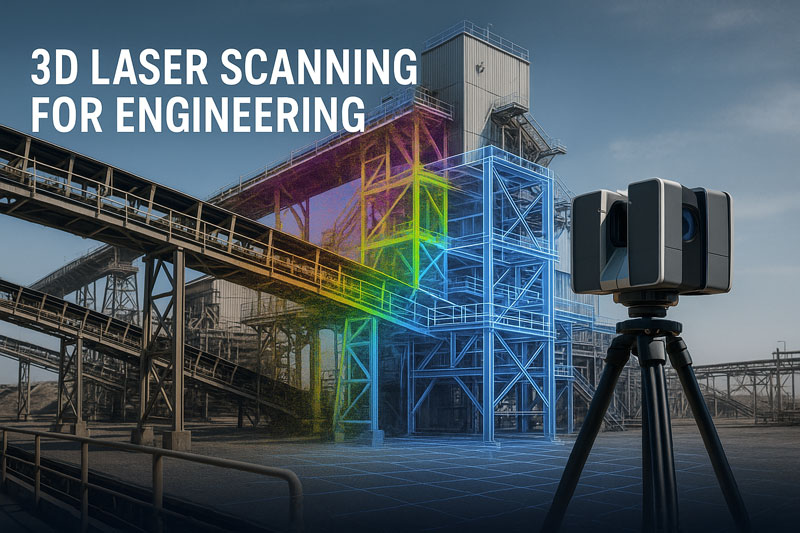
Engineer using 3D LiDAR scanner to capture silos, hoppers, bins, and bulk solids containers at an industrial processing plant.

AS 3774 โ€“ Loads on Bulk Solids Containers | Safety & Compliance

AS 3774 Loads on Bulk Solids Containers exists for a simple reason:
bulk solids do not behave like fluids, and incorrect load assumptions can create serious structural and safety risks.

For asset owners, engineers, and project teams involved in mining, mineral processing, manufacturing, and bulk materials handling, AS 3774 provides the framework for understanding how loads actually develop in silos, bins, hoppers, chutes, transfer stations, and surge bins.

Yet despite its long-standing availability, many new installations are still being delivered without full consideration of AS 3774 load cases.

The risks created by this gap are often not immediately visible โ€” but they are very real.


Engineer using 3D LiDAR scanner to capture silos, hoppers, bins, and bulk solids containers at an industrial processing plant.

What AS 3774 Is Designed to Address

AS 3774 recognises that bulk solids behave in complex and sometimes counter-intuitive ways. Unlike liquids, bulk materials:

  • Develop non-uniform wall pressures
  • Apply eccentric and asymmetric loads
  • Change load paths depending on flow behaviour
  • Generate dynamic and cyclic forces during filling and discharge

The standard provides guidance for determining realistic design loads based on how material actually flows and interacts with container geometry.

This applies across all bulk solids containers, including:

  • Silos
  • Bins and surge bins
  • Hoppers
  • Chutes and transfer stations
  • Rail and ship loading structures
  • Feeders integrated with bins

Why Safety and Compliance Depend on AS 3774

The purpose of AS 3774 is not academic. It exists to prevent outcomes such as:

  • Progressive wall deformation
  • Fatigue cracking and bolt failure
  • Local buckling or plate tearing
  • Uncontrolled discharge or blockage release
  • Unexpected load transfer into supporting structures

What makes these issues particularly dangerous is that they often develop over time, not at commissioning.

A structure can appear โ€œfineโ€ on day one โ€” while accumulating damage due to:

  • Cyclic loading
  • Eccentric discharge patterns
  • Inaccurate assumptions about material properties
  • Mixed construction materials behaving differently over time

Common Design Assumptions That Create Hidden Risk

In practice, many bulk solids containers are still designed using simplified or incorrect assumptions, including:

1. Treating Bulk Solids Like Fluids

Uniform hydrostatic pressure assumptions do not reflect real wall loading patterns and can significantly under-predict peak stresses.

2. Ignoring Eccentric Discharge

Off-centre outlets, partial blockages, or asymmetric flow paths can introduce large bending and torsional effects that are not obvious from geometry alone.

3. Incorrect or Assumed Material Properties

Bulk density, cohesion, moisture content, and flow behaviour are often assumed rather than verified โ€” yet small changes can have large load implications.

4. Mixed Materials Without Long-Term Consideration

It is not uncommon to see hoppers fabricated from a combination of stainless steel and mild steel, without adequate consideration of:

  • Differential stiffness
  • Fatigue behaviour
  • Corrosion mechanisms
  • Galvanic interaction

These issues may not present as immediate failures, but they can significantly reduce structural life and reliability.


Why the Risk Is Often Not Evident Today

One of the most concerning aspects of non-compliance with AS 3774 is that failure is rarely immediate.

Instead, risk accumulates quietly through:

  • Repeated filling and discharge cycles
  • Minor operational changes
  • Variations in material condition
  • Small geometric imperfections

By the time visible cracking, deformation, or operational issues appear, the structure may already be compromised.


The Role of Modern Engineering Tools (Briefly)

While AS 3774 is fundamentally about load determination, modern engineering tools can support compliance by helping teams:

  • Verify as-built geometry against design assumptions
  • Identify eccentric discharge paths and flow constraints
  • Review interfaces, wall angles, and structural continuity
  • Support independent engineering assessment without extended shutdowns

These tools do not replace the standard โ€” but they can help reveal whether its principles have been properly applied.


What Asset Owners and Project Managers Should Ask For

To demonstrate that AS 3774 has been adequately considered, asset owners and project managers should expect to see clear answers to questions such as:

  • What load cases were considered under AS 3774?
  • How were discharge conditions defined and assessed?
  • What assumptions were made about material properties?
  • How were eccentric and asymmetric loads addressed?
  • Was fatigue or cyclic loading considered?
  • How were mixed materials and interfaces assessed?
  • Has an independent engineering review been undertaken?

If this information cannot be clearly provided, compliance is difficult to demonstrate, regardless of how new the installation is.


Hamilton By Design logo displayed on a blue tilted rectangle with a grey gradient background
3D LiDAR scanning and 3D modelling service button โ€” laser scanner capturing a point cloud for engineering and CAD modelling
Mechanical engineering services

Why This Matters for New Installations

AS 3774 compliance is not about legacy assets or historical practices.
It is about ensuring that new installations are fit for purpose, safe, and defensible.

Where bulk solids containers are being delivered today without adequate consideration of realistic load behaviour, the risk is being transferred downstream โ€” to operators, maintainers, and asset owners.


Our clients


A Practical Closing Thought

If you are unsure whether AS 3774 has been properly applied to a bulk solids container, an independent engineering review can provide clarity.

The cost of verifying load assumptions and structural adequacy is typically minor compared to the consequences of discovering load-related issues after commissioning.

Hamilton By Design supports asset owners and project teams with engineering review, verification, and redesign of bulk solids containers, helping ensure that safety and compliance are addressed before problems develop.

Name
Would you like us to arrange a phone consultation for you?
Address
Finite Element Analysis (FEA) engineering simulation button
Mechanical engineering services

AS 4324.1 Brownfield Bulk Handling Assets: Engineering Mobile Equipment for Todayโ€™s Mine Sites

AS 4324.1 Bulk Handling Equipment | Brownfield Stacker & Reclaimer Engineering

Mobile equipment for the continuous handling of bulk materialsโ€”such as stackers, reclaimers, and ship loadersโ€”forms the backbone of Australiaโ€™s mining and export infrastructure. Many of these assets operate continuously in demanding environments, often well beyond their original design life.

Australian Standard AS 4324.1 provides essential guidance for the design and safe operation of this class of equipment. However, on many Australian mine sites, the practical application of the standard is misunderstood or only partially implemented, particularly when dealing with legacy machines and brownfield upgrades.

For asset owners and engineering managers, the challenge is rarely about greenfield compliance. It is about managing risk, extending asset life, and implementing upgrades without unplanned downtime.


Ship loader and bulk cargo vessel with GPS monitoring units and sensor overlays illustrating controlled loading zones and engineering oversight under AS 4324.1

Understanding AS 4324.1 in a Brownfield Context

AS 4324.1 addresses mobile equipment used for continuous bulk handling, including:

  • Yard stackers and reclaimers
  • Bucket wheel reclaimers
  • Slewing and travelling machines
  • Ship loaders at export terminals

While the standard establishes a strong baseline for design and safety, many operating machines:

  • Pre-date the current revision of the standard
  • Have undergone multiple undocumented modifications
  • Operate under loading conditions that differ from original assumptions

In these situations, engineering judgement is required. Compliance becomes less about box-ticking and more about demonstrating that risks are understood, controlled, and managed over the asset lifecycle.


Common Challenges on Operating Mine Sites

Across coal handling plants, iron ore operations, and port facilities, several recurring issues emerge:

1. Incomplete or Outdated As-Built Information

Accurate geometry, slew limits, clearances, and structural interfaces are often unknown. This creates risk during upgrades and maintenance planning.

2. Fatigue and Structural Degradation

Large mobile machines experience cyclic loading across slewing, luffing, and travel motions. Fatigue cracking and unexpected failures require ongoing monitoring, not one-off assessments.

3. Access, Guarding, and Maintenance Compliance

Requirements evolve over time. Older machines may not meet current expectations for access systems, guarding, or safe maintenance practices.

4. Downtime Sensitivity

Stackers, reclaimers, and ship loaders are often production-critical assets. Upgrade windows are limited, and poor fit-up or rework can have significant commercial consequences.


Technology Supporting Modern Risk Management

While AS 4324.1 remains the foundation, modern technology allows asset owners to manage risk more effectivelyโ€”particularly on brownfield equipment.

GPS Positioning and Controlled Operating Zones

Where GPS positioning is enabled, defined operating zones can be established to:

  • Prevent interaction with stockpiles during rapid translation
  • Automatically reduce slew or travel speed in high-risk zones
  • Limit impact loads on critical components such as slew rings and fluffing gears

These systems are primarily productivity-driven, but they also reduce the likelihood of high-energy impacts that contribute to mechanical damage.


LiDAR Scanning as an Emerging Risk Layer

LiDAR scanning is not a replacement for traditional controls, and it is still evolving in this application. However, it can provide:

  • Accurate spatial awareness of surrounding structures
  • Verification of clearances and exclusion envelopes
  • A secondary risk-management layer supporting operator decision-making

When combined with engineering-led interpretation, LiDAR contributes to a layered risk approach rather than acting as a standalone safety system.


Condition Monitoring and Real Load Understanding

Accelerometers installed across a range of frequencies can deliver valuable insight into:

  • Actual operating loads
  • Dynamic response during slewing, reclaiming, and travel
  • Early indicators of fatigue-related issues

This data supports more informed maintenance decisions and provides evidence of how a machine is truly being usedโ€”often revealing load cases not considered in original designs.


Engineering-Led Compliance and Asset Life Extension

For brownfield assets, compliance with AS 4324.1 is best approached as a continuous engineering process, not a single milestone. This includes:

  • Accurate reality capture and digital models
  • Verification of clearances, interfaces, and structural geometry
  • Informed upgrade design that fits the first time
  • Risk-based decision-making supported by real operating data

This approach helps asset owners extend the life of critical machines while managing risk, performance, and availability.


How Hamilton By Design Supports Bulk Handling Assets

Hamilton By Design works with asset owners and engineering teams to support:

  • Brownfield upgrades of stackers, reclaimers, and ship loaders
  • Engineering-grade LiDAR scanning and as-built documentation
  • Fit-for-purpose mechanical design for modifications and life-extension
  • Independent engineering insight across OEM and site interfaces

Our focus is on engineering clarity, practical risk reduction, and minimising disruption to operations.


Talk to an Engineer About Your Asset

If you are planning a brownfield upgrade, life-extension, or risk review of mobile bulk-handling equipment, talk to an engineer at Hamilton By Design about how accurate data and practical engineering can support your next decision.

Hamilton By Design logo displayed on a blue tilted rectangle with a grey gradient background
3D LiDAR scanning and 3D modelling service button โ€” laser scanner capturing a point cloud for engineering and CAD modelling
Mechanical engineering services

Our clients:

Name
Would you like us to arrange a phone consultation for you?
Address
Finite Element Analysis (FEA) engineering simulation button
Mechanical engineering services

Detailing Transfer Stations in the Age of Digital Engineering

Transfer stations and chutes sit at the intersection of bulk materials handling, structural engineering, and fabrication practicality. While the fundamentals of good detailing have not changed, the way engineers now capture, coordinate, and validate these details has evolved significantly over the past decade.

This article revisits the principles of transfer station detailing and places them in a modern digital-engineering context, where accurate site data, constructability, and lifecycle performance are critical.


Engineering illustration of a transfer chute showing a LiDAR point cloud overlay aligned with the same chute geometry for as-built verification.
3D LiDAR scanning and 3D modelling service button โ€” laser scanner capturing a point cloud for engineering and CAD modelling
Mechanical engineering services

Why Transfer Station Detailing Still Matters

Poorly detailed transfer stations remain one of the most common sources of:

  • Material spillage and dust generation
  • Accelerated liner and structure wear
  • Unplanned downtime and maintenance escalation
  • Safety risks to operators and maintainers

In many cases, the root cause is not the concept design, but inadequate detailing and incomplete understanding of site geometry.

Even well-intended designs can fail if:

  • Existing structures are misrepresented
  • Conveyor interfaces are assumed rather than measured
  • Fabrication tolerances are not realistically achievable on site

The Shift from Assumed Geometry to Measured Reality

Historically, detailing relied heavily on:

  • Legacy drawings
  • Manual tape measurements
  • Partial site surveys
  • โ€œBest guessโ€ alignment assumptions

Today, engineering-grade reality capture has fundamentally changed what is possible.

Using 3D laser scanning (LiDAR), engineers can now work from:

  • Millimetre-accurate point clouds
  • Verified conveyor centre lines
  • True chute-to-structure interfaces
  • Real as-installed conditions rather than design intent

This shift dramatically reduces site rework and fabrication clashes.

This approach is central to how Hamilton By Design supports bulk materials handling upgrades across mining, ports, and heavy industry.


Detailing Considerations That Still Get Missed

Even with modern tools, certain detailing fundamentals remain critical.

1. Interface Accuracy

Transfer stations often interface with:

  • Existing conveyors
  • Walkways and access platforms
  • Structural steelwork installed decades earlier

Without accurate as-built data, small errors compound quickly. Laser scanning eliminates this uncertainty.

Related reading:
https://www.hamiltonbydesign.com.au/3d-laser-scanning-engineering/


2. Wear Liner Integration

Good detailing must account for:

  • Liner thickness variation
  • Fixing access and replacement paths
  • Load paths through liners into structure

Digitally modelling liners within the chute geometry allows engineers to validate:

  • Clearances
  • Installation sequence
  • Maintenance access before steel is cut

3. Fabrication Reality

A detail that looks acceptable in 2D can become problematic when fabricated.

Modern workflows now link:

  • 3D scanning
  • Solid modelling
  • Fabrication drawings
  • Digital QA checks

This reduces site modifications and ensures components fit first time.

Example of fabrication-ready workflows:
https://www.hamiltonbydesign.com.au/mechanical-engineering-design-services/


Transfer Stations as Systems, Not Isolated Chutes

A key lesson reinforced over time is that transfer stations must be treated as systems, not standalone components.

Good detailing considers:

  • Upstream and downstream belt tracking
  • Material trajectory consistency
  • Structural vibration and dynamic loading
  • Maintenance access under real operating conditions

Digital engineering allows these interactions to be reviewed early, reducing operational risk.


The Role of Engineering-Led Scanning

Not all scans are equal.

For engineering applications, scanning must be:

  • Performed with known accuracy
  • Registered and verified correctly
  • Interpreted by engineers, not just technicians

This distinction matters when designs are used for fabrication and compliance.

Hamilton By Designโ€™s approach combines engineering-led LiDAR scanning with mechanical design, ensuring the data collected is suitable for real engineering decisions.

Learn more:
https://www.hamiltonbydesign.com.au/engineering-led-3d-lidar-scanning/


Closing Thoughts

While detailing principles for transfer stations have stood the test of time, the tools and expectations have changed.

Modern projects demand:

  • Verified geometry
  • Fabrication-ready models
  • Reduced site risk
  • Higher confidence before steel is ordered

By integrating reality capture, detailed modelling, and constructability thinking, transfer station detailing can move from a risk point to a performance advantage.


Hamilton By Design logo displayed on a blue tilted rectangle with a grey gradient background

Our clients:


Name
Would you like us to arrange a phone consultation for you?
Address

Further Reading

3D LiDAR scanning and 3D modelling service button โ€” laser scanner capturing a point cloud for engineering and CAD modelling
Mechanical engineering services
Finite Element Analysis (FEA) engineering simulation button
Mechanical engineering services

AS 1755 Conveyor Safety

Engineer reviewing a guarded conveyor system with fixed side and nip-point guards designed to prevent access to moving parts.

Designing Conveyor Guarding for Compliance, Safety, and Practical Operation

Conveyors are widely used across processing, manufacturing, and materials-handling environments, but they also present some of the most persistent safety risks in industrial operations. Entrapment, nip points, rotating components, and maintenance access are all recognised hazards that must be managed through proper design and guarding.

In Australia, these risks are addressed through AS 1755 โ€“ Conveyors โ€“ Safety Requirements, which establishes the minimum safety expectations for conveyor systems across their full lifecycle, from design and installation through to operation and maintenance.

This article outlines what AS 1755 requires, why compliant conveyor guarding is critical, and how engineering-led design plays a key role in achieving practical safety outcomes.


Bulk materials conveyor with compliant safety guarding at the hopper, tail end, and along the conveyor, shown with an engineer reviewing guarding design drawings.
3D LiDAR scanning and 3D modelling service button โ€” laser scanner capturing a point cloud for engineering and CAD modelling
Mechanical engineering services

What Is AS 1755?

AS 1755 is the Australian Standard that defines safety requirements for belt conveyors and other conveyor systems. It addresses both new and existing installations and applies to conveyors used in industrial, commercial, and processing environments.

Rather than focusing on individual guarding components in isolation, AS 1755 considers the conveyor system as a whole, including how people interact with it during normal operation, inspection, cleaning, and maintenance.

The standard is referenced by regulators, safety professionals, and engineers as the primary benchmark for conveyor safety in Australia.


Key Safety Principles in AS 1755

AS 1755 is built around a number of core safety principles that influence how conveyor guarding should be designed.

These include eliminating hazards where possible, controlling remaining risks through engineering solutions, and ensuring that guarding does not introduce new risks by restricting access or encouraging unsafe behaviour.

In practice, this means that compliant guarding must be effective, durable, and suitable for the operating environment, while still allowing conveyors to be inspected, cleaned, and maintained safely.


Conveyor Guarding Requirements

A major focus of AS 1755 is the control of access to hazardous areas. This includes guarding of:

  • Drive pulleys and tail pulleys
  • Return rollers and idlers
  • Nip points and shear points
  • Rotating shafts and couplings
  • Chain drives, belt drives, and gearboxes

Guarding must be designed so that body parts cannot access hazardous zones, taking into account reach distances, openings, and the position of the conveyor relative to walkways or platforms.

Importantly, AS 1755 recognises that guarding must be fit for purpose. Poorly designed guards that are difficult to remove, inspect, or maintain are often bypassed or removed altogether, creating new safety risks.


Fixed Guards vs Interlocked Guards

AS 1755 allows for different types of guarding depending on the application and risk profile.

Fixed guards are commonly used where access is not required during normal operation. These guards must be securely fixed and require tools for removal.

Interlocked guards may be required where regular access is necessary. These systems ensure that the conveyor cannot operate while the guard is open or removed, reducing the risk of exposure to moving parts.

Selecting the appropriate guarding strategy requires an understanding of how the conveyor is used in practice, not just how it appears on drawings.


Existing Conveyors and Retrofit Challenges

Many conveyors currently in service were installed before the latest versions of AS 1755 were adopted. In these cases, compliance is often achieved through retrofit guarding rather than full replacement.

Retrofitting guarding to existing conveyors introduces additional challenges, including:

  • Limited space around existing equipment
  • Incomplete or outdated drawings
  • Structural constraints
  • Ongoing operation during upgrades

Engineering-led assessment and accurate documentation of existing conditions are critical when designing retrofit guarding solutions that comply with AS 1755 without disrupting operations.


The Role of Engineering in Conveyor Guarding Design

AS 1755 does not provide prescriptive โ€œone-size-fits-allโ€ guard designs. Instead, it sets performance requirements that must be interpreted and applied by competent professionals.

Engineering input is essential to ensure that conveyor guarding:

  • Addresses all relevant hazards
  • Integrates with existing mechanical and structural systems
  • Can be fabricated and installed accurately
  • Supports safe maintenance and inspection activities

Poorly engineered guarding may appear compliant on paper but fail in real-world use.


Documentation, Verification, and Ongoing Safety

Compliance with AS 1755 is not a one-time activity. Conveyor systems evolve over time as layouts change, equipment is upgraded, and operating practices shift.

Clear documentation of guarding design, installation, and assumptions provides a baseline for future modifications and safety reviews. This documentation is also critical when demonstrating due diligence to regulators or during incident investigations.


Why AS 1755 Matters

AS 1755 exists to prevent serious injuries and fatalities associated with conveyor systems. When applied correctly, it provides a structured framework for identifying hazards, implementing effective controls, and maintaining safe operation over the life of the equipment.

Achieving compliance requires more than installing mesh around moving parts. It requires understanding how people interact with conveyors and designing guarding that supports safe behaviour rather than working against it.


Hamilton By Design logo displayed on a blue tilted rectangle with a grey gradient background

Conveyor guarding designed in accordance with AS 1755 is a critical component of safe industrial operations. Engineering-led design, accurate documentation, and practical consideration of maintenance and operation are essential to achieving compliance that works in practice.

When conveyor safety is treated as an engineering problem rather than a checkbox exercise, the result is safer equipment, fewer incidents, and more reliable operations.

Manufacturing and production services button

Our clients


Name
Would you like us to arrange a phone consultation for you?
Address

3D CAD Modelling Australia service banner for Hamilton By Design


CHPP Engineering title graphic featuring bold white text reading "CHPP Engineering" centred on a blue rounded rectangle background.
Pipework Drafting title graphic featuring bold white text reading "Pipework Drafting" centred on a blue rounded rectangle background.
3D LiDAR Scanning for Engineering Projects title graphic featuring bold white text on a blue rounded rectangle background.


Finite Element Analysis (FEA) engineering simulation button
Structural drafting services button
Mechanical drafting services button


Australian Drafting logo featuring bold white text reading "Australian Drafting" centred on a blue rounded rectangle background.
Engineering Governance title graphic featuring bold white text reading "Engineering Governance" centred on a blue rounded rectangle background.
Engineering-Grade LiDAR Scanning title graphic featuring bold white text on a blue rounded rectangle background.


Mechanical drafting services button
Structural drafting services button


Fabrication and product design services
3D CAD Modelling Australia service banner for Hamilton By Design
Mechanical, Structural & Pipework Drafting service banner by Hamilton By Design featuring white text on a blue background.


3D LiDAR scanning and 3D modelling service button โ€” laser scanner capturing a point cloud for engineering and CAD modelling
Mechanical engineering services

Machine Guarding in Australia: A Decade of Lessons for Leaders, Asset Owners, and Engineers

ndustrial machine guarding solutions showing a conveyor system, a robotic cell, and a belt drive with fixed guards designed to prevent access to hazardous moving parts.

Machine guarding examples showing a guarded conveyor, enclosed robotic cell, and belt drive with safety covers

3D LiDAR scanning and 3D modelling service button โ€” laser scanner capturing a point cloud for engineering and CAD modelling
Mechanical engineering services

Machine guarding remains one of the most persistent and preventable safety risks across Australian industry.
Despite improvements in automation, safety culture, and regulatory oversight, serious injuries and fatalities involving machinery continue to occur every year, particularly in manufacturing, mining, food processing, and materials handling.

Over the past decade, regulators, courts, and insurers have consistently reinforced one message:
machine guarding is not optional, not administrative, and not a โ€œfit-laterโ€ activity โ€” it is a core engineering and governance responsibility.

This article examines:

  • The international and Australian standards framework for machine guarding
  • Accident and injury trends over the past ten years
  • Legal and enforcement signals emerging from prosecutions
  • Why machine guarding must be treated as a strategic asset-risk issue, not just a safety task

The Global Framework: International Standards for Machine Guarding

Machine guarding is governed globally through standards developed by the International Organization for Standardization (ISO).


ISO standards portal
Core International Standards

ISO 12100 Risk assessment

ISO 14120 Guard design

ISO 13857 Safety distances

ISO 13849-1 Interlocks & control systems

These standards establish a risk-based engineering approach, requiring hazards to be:

  1. Identified
  2. Eliminated where possible
  3. Engineered out through guards and control systems
  4. Verified through geometry, distances, and fail-safe logic

This methodology underpins CE marking, global OEM compliance, and multinational EPC project delivery.


The Australian Context: AS 4024 and WHS Expectations

Australia adopts and localises ISO principles through AS 4024 โ€“ Safety of Machinery, referenced extensively by regulators under Work Health and Safety (WHS) legislation.

Standards Australia โ€“ AS 4024 Series
Key Australian Standards

AS 4024.1201 Risk assessment

AS 4024.1601 Guards

AS 4024.1602 Interlocks

AS 4024.1801 Safety distances

AS 4024.1501 Safety control systems

While standards themselves are not legislation, courts and regulators consistently use AS 4024 as the benchmark for determining whether risks have been managed so far as is reasonably practicable.


A Decade of Data: What the Accident Trends Tell Us

Australia does not publish a dedicated โ€œmachine guarding accidentโ€ metric. However, national data from Safe Work Australia clearly shows machinery remains a leading cause of serious harm.

Safe Work Australia โ€“ Key WHS statistics:
National Trends (Approximate โ€“ Last 10 Years)

MetricEvidence Source
~1,850+ traumatic work fatalitiesSafework Australia
~180โ€“200 fatalities per yearSafework Australia
Highest fatality rateMachinery operators & drivers
~130,000โ€“140,000 serious injury claims annuallyAustralian Institute of health and welfare
Common mechanismsTrapped by machinery, struck by moving objects

Machinery operators consistently record:

  • The highest fatality rates of all occupation groups
  • Disproportionate representation in serious injury claims
  • Higher exposure to entanglement, crush, shear, and impact hazards

These mechanisms are directly linked to guarding effectiveness, not worker behaviour alone.


What Hasnโ€™t Changed โ€” and Why It Matters

1. Legacy Plant Remains a Key Risk

Many incidents involve:

  • Older machinery
  • Brownfield modifications
  • Equipment altered without re-engineering guarding

Australian WHS law does not grandfather unsafe plant.


2. Guarding Is Still Added Too Late

Common failures include:

  • Guards designed post-fabrication
  • Inadequate reach distances
  • Interlocks added without validated performance levels

This often leads to bypassing, removal, or unsafe maintenance practices.


3. Lack of Engineering Documentation

Post-incident investigations frequently identify:

  • No formal risk assessment
  • No justification against AS 4024 or ISO standards
  • No evidence that guarding was engineered, tested, or validated

In legal proceedings, absence of documentation is treated as absence of control.


Legal and Enforcement Signals

Australian regulators (WorkSafe NSW, WorkSafe VIC, SafeWork QLD, SafeWork SA) have consistently prosecuted machine-guarding failures, particularly where:

  • Hazards were known
  • Improvement notices were ignored
  • Guards were removed or ineffective

Regulator portals:

Courts have reinforced that:

  • Training does not replace guarding
  • PPE does not replace guarding
  • Signage does not replace guarding

Guarding as a Governance Issue

For executives and boards, machine guarding intersects with:

  • Officer due diligence obligations
  • Asset lifecycle risk
  • Insurance and liability exposure
  • Business continuity and ESG performance

Well-designed guarding:

  • Reduces downtime
  • Enables safer automation
  • Improves workforce confidence
  • Creates defensible compliance positions

The Engineering Reality: Geometry Drives Compliance

Modern compliance relies on:

  • Verified reach distances
  • Measured openings and clearances
  • Validated interlock logic

This is why accurate:

  • As-built capture
  • 3D modelling
  • Engineering-grade spatial data

are increasingly essential for brownfield and high-risk plant.


Looking Ahead: The Next Decade

Trends indicate:

  • Greater scrutiny of legacy machinery
  • Stronger linkage between standards and prosecutions
  • Higher expectations for engineering evidence
  • Increased use of digital engineering to prove compliance

Organisations that integrate guarding early into engineering workflows will be better protected legally, operationally, and reputationally.


Hamilton By Design logo displayed on a blue tilted rectangle with a grey gradient background

Final Thought

Machine guarding is not about mesh and fences.
It is about engineering intent, risk ownership, and accountability.

The last decade of Australian data, prosecutions, and standards alignment is clear:
when guarding fails, the outcomes are predictable โ€” and preventable.

Structural drafting services button
3D LiDAR scanning and 3D modelling services button
Mechanical drafting services button

Our clients:

Name
Would you like us to arrange a phone consultation for you?
Address

#Machine guarding standards Australia #Machinery safety best practices #AS/NZS 4024 machine guarding #Workplace safety machinery #Industrial safety compliance #Machine guarding lessons for engineers

Finite Element Analysis (FEA) engineering simulation button
Mechanical engineering services

Mining & Mineral Processing

LiDAR laser scanner capturing a mining and mineral processing plant to create an accurate 3D digital model for engineering and fabrication
Blue icon of a conveyor belt carrying material into a crusher or processing unit

We support mining and mineral processing operations with engineering-grade LiDAR scanning and mechanical design for CHPPs, conveyors, transfer stations, plant upgrades, and brownfield modifications. Our experience in live operating environments helps reduce shutdown risk, rework, and costly fabrication errors.

Mining & Mineral Processing Engineering Services

Hamilton By Design supports mining and mineral processing operations with engineering-grade LiDAR scanning, mechanical engineering, and design support for complex, live operating environments.
Our work focuses on delivering accurate existing-condition data and engineering outcomes that reduce shutdown risk, minimise rework, and support safe, efficient plant upgrades.

We work across the full project lifecycle โ€” from early site capture and feasibility through to detailed design, fabrication support, and construction verification โ€” with a strong emphasis on brownfield and retrofit projects where getting the geometry right is critical.


Mining Engineering Services

Our mining engineering services are built around a clear principle: engineering decisions must be based on accurate site data. We combine reality capture with mechanical engineering to support informed design, modification, and execution of mining projects.

These services support:

  • Existing asset validation
  • Upgrade and modification planning
  • Engineering design development
  • Risk reduction in live operating plants

By integrating scanning and engineering under one workflow, we provide mining teams with confidence that designs reflect real-world conditions.


Mining & Industrial Engineering

Mining operations rely on complex industrial systems that must perform reliably under demanding conditions. Hamilton By Design works at the interface between mining infrastructure and industrial plant systems, supporting projects where mechanical, structural, and operational requirements overlap.

Our experience includes:

  • Mineral processing facilities and CHPPs
  • Materials handling systems
  • Industrial plant equipment within mining sites
  • Brownfield integration and asset upgrades

This cross-disciplinary approach allows us to support mining clients with solutions that are practical, buildable, and aligned with operational constraints.


Mining Services

Our mining services focus on practical project delivery support. We work alongside site teams, engineers, and contractors to capture existing conditions, verify designs, and support construction and shutdown activities.

Typical services include:

  • Engineering-grade LiDAR and as-built capture
  • Existing condition verification
  • Design coordination support
  • Construction and installation validation

These services help reduce uncertainty on site and provide a reliable digital foundation for engineering and fabrication activities.


Mechanical Engineering in Mining

Mechanical engineering is central to the safe and efficient operation of mining assets. Hamilton By Design provides mechanical engineering support informed directly by site-captured data, ensuring designs are suitable for real operating environments.

Our mechanical engineering capabilities support:

  • Conveyors, chutes, and transfer stations
  • Plant upgrades and modifications
  • Structural and mechanical interfaces
  • Fabrication-ready design documentation

Where required, our work can be supported by engineering verification and analysis to provide additional confidence in design outcomes.


Engineering-Led, Fit-for-Purpose Outcomes

Hamilton By Design operates with a strong focus on:

  • Accuracy over assumption
  • Engineering accountability
  • Fit-first-time outcomes
  • Reduced risk in brownfield environments

By combining reality capture with mechanical engineering, we help mining and mineral processing clients move from uncertain existing conditions to confident engineering decisions.


Hamilton By Design logo displayed on a blue tilted rectangle with a grey gradient background

If you are planning a mining or mineral processing upgrade, modification, or verification project, Hamilton By Design can support your team with engineering-grade scanning and mechanical design services tailored to live operating environments.


Structural drafting services button
3D LiDAR scanning and 3D modelling services button
Mechanical drafting services button

Our clients:

Name
Would you like us to arrange a phone consultation for you?
Address
3D LiDAR scanning and 3D modelling service button โ€” laser scanner capturing a point cloud for engineering and CAD modelling
Mechanical engineering services

3D Laser Scanning

3D LiDAR Scanning โ€“ Digital Quality Assurance

Mechanical Engineering Perth WA banner for Hamilton By Design featuring white text on a blue background.
3D Laser Scanning Perth WA banner for Hamilton By Design with white text on a blue background.
SolidWorks Perth WA banner for Hamilton By Design featuring white text on a blue background.

SolidWorks Mechanical Design Services

As-Built Drawings from a LiDAR Scanner

3D LiDAR Scanning and 3D Modelling – Hamilton By Design

3D CAD Modelling Australia service banner for Hamilton By Design
3D LiDAR scanning and 3D modelling service button โ€” laser scanner capturing a point cloud for engineering and CAD modelling
Mechanical engineering services
3D CAD Modelling Australia service banner for Hamilton By Design
Mechanical, Structural & Pipework Drafting service banner by Hamilton By Design featuring white text on a blue background.
Australian Drafting logo featuring bold white text reading "Australian Drafting" centred on a blue rounded rectangle background.
Blue banner graphic displaying the text "Point Cloud to CAD - Australia" in large white lettering, representing point cloud processing, scan-to-CAD conversion and digital engineering services across Australia.
CHPP Engineering title graphic featuring bold white text reading "CHPP Engineering" centred on a blue rounded rectangle background.
Engineering Governance title graphic featuring bold white text reading "Engineering Governance" centred on a blue rounded rectangle background.
Mechanical engineering services
Australian Drafting logo featuring bold white text reading "Australian Drafting" centred on a blue rounded rectangle background.
3D LiDAR Scanning Hunter & Newcastle banner with white text on a blue background promoting engineering-grade laser scanning services for industrial, mining and infrastructure projects across the Hunter Valley and Newcastle region.
Mechanical Engineering Hunter & Newcastle banner promoting mechanical engineering services for mining, industrial plants, power generation, manufacturing and heavy industry throughout the Hunter Valley and Newcastle region.
Structural Drafting Hunter & Newcastle banner promoting structural drafting services for mining, industrial plants, power generation, manufacturing and infrastructure projects across the Hunter Valley and Newcastle region.
Mechanical Engineering Perth WA banner for Hamilton By Design featuring white text on a blue background.
3D Laser Scanning Perth WA banner for Hamilton By Design with white text on a blue background.
SolidWorks Perth WA banner for Hamilton By Design featuring white text on a blue background.
Fabrication and product design services
Finite Element Analysis (FEA) engineering simulation button
3D LiDAR scanning and 3D modelling service button โ€” laser scanner capturing a point cloud for engineering and CAD modelling
Blue rounded button with the text โ€œSolidWorks Designโ€ in white.
Mechanical drafting services button
Structural drafting services button