Why Graduate Engineers Quickly Become Addicted to LiDAR Scanning

Graduate engineer and senior engineer using LiDAR scanning on a Parramatta River construction site, reviewing point cloud data for accurate design.

Why Graduate Engineers Quickly Become Addicted to LiDAR Scanning

Ask any graduate engineer what surprised them most in their first few years on the job and youโ€™ll often hear the same answer:

โ€œThe drawings were wrong.โ€

Not maliciously wrong. Not incompetently wrong. Justโ€ฆ out of date, incomplete, or disconnected from what actually exists on site.

That realisation is often the moment graduate engineers discover LiDAR scanning โ€” and once they do, itโ€™s very hard to go back.

Across Greater Sydney, from dense inner-city refurbishments to industrial upgrades in the west, graduate engineers are finding that 3D laser scanning becomes indispensable almost as soon as theyโ€™ve worked with it properly. Itโ€™s not just helpful. Itโ€™s addictive โ€” because it replaces uncertainty with clarity.


The graduate engineerโ€™s first shock: reality doesnโ€™t match the drawing

Most graduate engineers come out of university trained to think in:

  • idealised geometry
  • clean load paths
  • well-defined dimensions
  • drawings that represent truth

Then they step onto a live site in Sydney CBD, Surry Hills, Parramatta, Mascot, Alexandria, Chatswood, or North Sydney and realise something important:

Existing buildings, plant, and infrastructure are messy.

Services donโ€™t run straight. Columns arenโ€™t perfectly plumb. Steel has been modified, trimmed, plated, or shifted over decades. Mechanical equipment has been replaced multiple times, often without full documentation. In inner suburbs especially, space constraints mean โ€œcreativeโ€ solutions become permanent.

For a graduate engineer trying to do the right thing, this mismatch creates anxiety:

  • Am I designing to the right information?
  • What happens if this doesnโ€™t fit?
  • How confident should I be signing this off?

This is where LiDAR scanning changes everything.
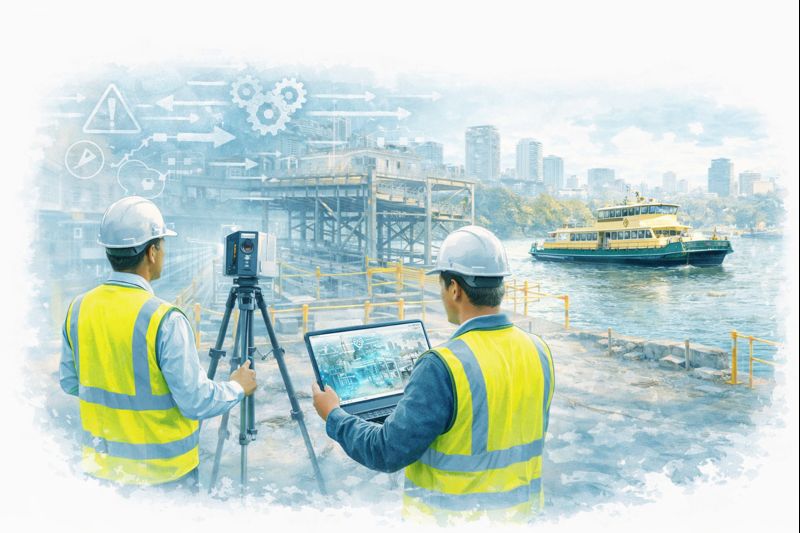

LiDAR scanning by engineers at a Sydney riverside construction site, capturing as-built data for digital quality assurance and design verification.

The first scan changes how graduates think

The first time a graduate engineer works with a real point cloud, something clicks.

Instead of guessing:

  • they can measure directly
  • they can see spatial relationships
  • they can verify assumptions
  • they can design in context

Suddenly, the question shifts from โ€œwhat does the drawing say?โ€ to โ€œwhat actually exists?โ€

Once that shift happens, itโ€™s very hard to go back to traditional workflows.

Hamilton By Designโ€™s approach to engineering-led LiDAR scanning highlights this transition clearly โ€” scanning isnโ€™t just data capture, itโ€™s digital quality assurance for engineering decisions.

๐Ÿ‘‰ 3D LiDAR Scanning & Digital Quality Assurance
https://www.hamiltonbydesign.com.au/home/3d-lidar-scanning-digital-quality-assurance/

For graduate engineers, this is often the first time they feel genuinely confident that their design inputs reflect reality.


Why LiDAR scanning becomes โ€œaddictiveโ€

LiDAR scanning is addictive to graduate engineers for one simple reason:

It removes doubt.

Once youโ€™ve experienced what itโ€™s like to design from verified geometry, going back to hand measurements and assumptions feels risky โ€” even irresponsible.

1. Confidence replaces guesswork

Instead of hoping clearances exist, graduates can prove they exist. Instead of estimating offsets, they can measure them. This builds technical confidence very quickly.

2. Mistakes become learning, not disasters

When designs are checked against a point cloud, errors are caught early โ€” in the model, not on site. Graduates learn faster because mistakes are visible and correctable.

3. Engineering judgement develops faster

Seeing real-world geometry helps graduates understand:

  • constructability
  • installation constraints
  • maintenance access
  • tolerance accumulation

These lessons are difficult to teach from textbooks alone.
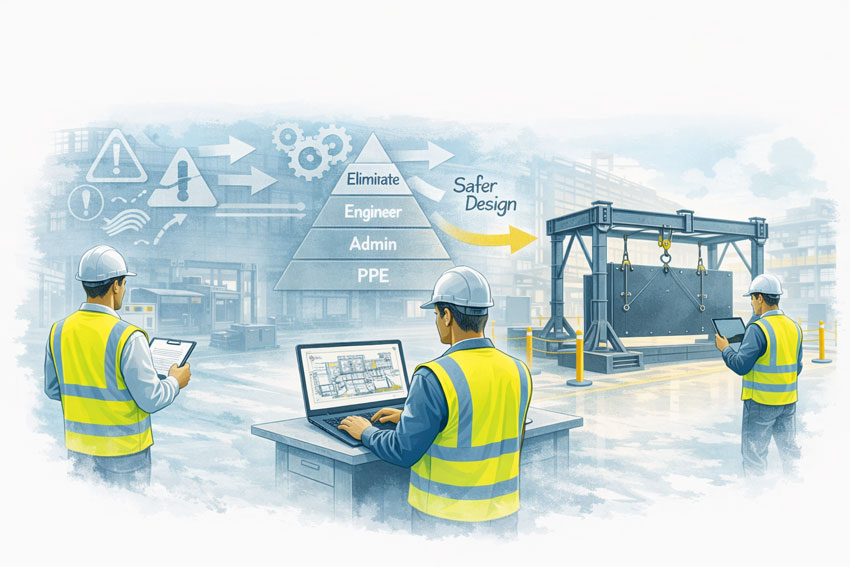


Mining engineers applying design-for-safety principles to improve material handling systems in an industrial workshop

Inner Sydney makes scanning essential, not optional

In inner Sydney suburbs, LiDAR scanning is not a luxury โ€” itโ€™s often the only practical way to work.

Areas like:

  • Sydney CBD
  • Ultimo
  • Pyrmont
  • Surry Hills
  • Redfern
  • Alexandria
  • Zetland
  • Newtown

are characterised by:

  • tight sites
  • layered services
  • heritage structures
  • mixed-use refurbishments
  • minimal tolerance for rework

Graduate engineers working on these projects quickly learn that:

  • traditional site measurement is slow and disruptive
  • access is limited and time-boxed
  • errors are expensive and highly visible

Scanning allows:

  • rapid capture without extended site shutdowns
  • remote review and collaboration
  • fewer repeat site visits
  • better coordination between disciplines

Once graduates experience this efficiency, they naturally push for scanning on future projects.


How scanning supports better engineering decisions

LiDAR scanning doesnโ€™t replace engineering judgement โ€” it supports it.

Hamilton By Design frames scanning as a core part of engineering projects, not a bolt-on service. That distinction matters, especially for younger engineers still developing confidence.

๐Ÿ‘‰ 3D Laser Scanning for Engineering Projects
https://www.hamiltonbydesign.com.au/home/engineering-services/3d-laser-scanning/3d-laser-scanning-for-engineering-projects/

For graduate engineers, scanning supports:

Design verification

They can check whether:

  • a beam is actually where the drawing says it is
  • a pipe has enough fall
  • a platform clears adjacent services
  • access zones meet safety requirements

Better communication

Point clouds make design reviews clearer. Instead of explaining issues abstractly, graduates can show the problem in 3D context โ€” especially helpful when working with senior engineers, fabricators, or clients.

Safer decisions

Designing from verified geometry reduces the risk of unsafe site improvisation. Graduates learn early that safety is tied directly to design certainty.


The โ€œdigital safety netโ€ for early-career engineers

For many graduates, LiDAR scanning acts as a digital safety net.

Early in a career, the fear of โ€œmissing something obviousโ€ is real. Scanning provides reassurance:

  • Have I considered the surrounding structure?
  • Did I allow enough clearance?
  • Is this installable?

Instead of relying solely on experience they havenโ€™t yet built, graduates can lean on measured reality.

Over time, this accelerates professional growth:

  • better spatial awareness
  • improved constructability thinking
  • stronger questioning of legacy documentation

Ironically, the more graduates use scanning, the faster they develop the intuition to know when itโ€™s needed โ€” and when itโ€™s not.


Greater Sydney: scanning as a standard workflow

Across Greater Sydney, LiDAR scanning is increasingly becoming standard practice for:

  • building refurbishments
  • industrial upgrades
  • mechanical plant modifications
  • structural alterations
  • asset verification and compliance work

In western Sydney industrial areas, scanning supports large-scale plant and warehouse projects. In the north and east, it supports constrained commercial and infrastructure upgrades. In the inner suburbs, it often makes projects feasible at all.

Graduate engineers exposed to this environment quickly learn:

  • projects that scan early run smoother
  • fewer RFIs come back from site
  • fabrication issues drop dramatically
  • install teams trust the drawings more

Once theyโ€™ve seen this pattern a few times, scanning stops being a โ€œspecial requestโ€ and becomes the default question:

โ€œCan we scan this first?โ€


Why engineers struggle to go back once theyโ€™ve scanned

After working with LiDAR scanning, graduates often struggle with projects that donโ€™t include it.

They notice:

  • more uncertainty
  • more site clarification calls
  • more โ€œweโ€™ll fix it on siteโ€ language
  • more reliance on assumptions

This is why scanning feels addictive โ€” not because itโ€™s flashy technology, but because it reduces friction at every stage of an engineering project.

For young engineers trying to build credibility, that reduction in friction is powerful. It allows them to:

  • deliver cleaner designs
  • ask better questions
  • contribute meaningfully earlier in their careers

Digital quality assurance becomes a mindset

Perhaps the biggest shift LiDAR scanning creates is cultural.

Graduate engineers exposed to scanning early start to think in terms of digital quality assurance:

  • verify before design
  • check before fabrication
  • confirm before installation

This mindset aligns closely with modern engineering governance, risk management, and professional accountability.

Hamilton By Designโ€™s emphasis on scanning as digital quality assurance reflects this evolution โ€” scanning isnโ€™t about technology for its own sake, itโ€™s about engineering confidence.

๐Ÿ‘‰ https://www.hamiltonbydesign.com.au/home/3d-lidar-scanning-digital-quality-assurance/


Hamilton By Design logo displayed on a blue tilted rectangle with a grey gradient background

Final thoughts: once you see clearly, you donโ€™t want to design blind again

For graduate engineers, LiDAR scanning often marks a turning point.

Itโ€™s the moment they realise engineering doesnโ€™t have to rely on best guesses, inherited drawings, or incomplete information. Itโ€™s the moment they understand that good engineering starts with seeing clearly.

In Greater Sydney, especially across dense inner suburbs, that clarity isnโ€™t optional โ€” itโ€™s essential.

Once graduate engineers experience what itโ€™s like to design from reality, not assumption, LiDAR scanning stops being a tool and becomes part of how they think. And thatโ€™s why, once theyโ€™ve scanned properly, most engineers never want to design without it again.
Name
Would you like us to arrange a phone consultation for you?
Address
3D LiDAR scanning and 3D modelling service button โ€” laser scanner capturing a point cloud for engineering and CAD modelling
Mechanical engineering services
Finite Element Analysis (FEA) engineering simulation button
Mechanical engineering services

Mechanical Engineering | Structural Engineering


3D Laser Scanning in Alexandria Sydney โ€“ Engineering-Grade Reality Capture for Industrial Facilities

Engineer-led reverse engineering with 3D scanning and drafting overlooking Sydney Harbour and the Harbour Bridge

3D Laser Scanning Alexandria Sydney | Point Cloud to CAD for Industrial Sites


Alexandria is one of Sydneyโ€™s most active industrial and mixed-use precincts, with ongoing refurbishment, services upgrades and plant modifications across manufacturing, logistics and commercial facilities.

Hamilton By Design provides engineering-grade 3D laser scanning and LiDAR services in Alexandria and across Inner Sydney, delivering accurate point cloud data that supports safe, buildable and cost-effective engineering outcomes for brownfield projects.


Why Accurate Site Data Matters in Alexandria

Industrial facilities in Alexandria often involve:

  • ageing structures and services
  • congested plant rooms and ceiling spaces
  • tight access and operational constraints
  • staged construction in live environments

Traditional survey methods frequently fail to capture:

  • complex service routes
  • structural interfaces
  • equipment clearances

3D laser scanning captures millions of spatial data points, creating a true digital record of existing conditions before design or fabrication begins โ€” significantly reducing design risk and costly site rework.


Engineering-led 3D LiDAR scanning at a Western Sydney construction site with a steel-frame building, client consultation, and Parramatta CBD visible in the background

From Point Cloud to Build-Ready CAD and BIM Models

Our service goes beyond data capture.

We convert scan data into:

  • engineering CAD models
  • fabrication and installation drawings
  • BIM-ready geometry
  • detailed as-built documentation

This enables reliable design for:

  • mechanical services upgrades
  • plant replacements and relocations
  • structural strengthening works
  • access and safety system modifications

All deliverables are produced with engineering and construction workflows in mind โ€” not just visualisation.


Typical Applications for 3D Scanning in Alexandria

3D scanning is commonly used for:

  • manufacturing plant upgrades
  • food and beverage processing facilities
  • warehouse mezzanine and conveyor installations
  • mechanical and electrical services coordination
  • compliance audits and access upgrades (AS 1657)

Scanning allows data capture to occur with minimal disruption to operations, making it well suited to live industrial environments.


Engineering-Led Scanning for Brownfield Projects

Hamilton By Design is an engineering-led consultancy, not just a scanning provider.

This means:

  • scans are planned around design requirements
  • critical mechanical and structural interfaces are prioritised
  • modelling supports fabrication and construction directly
  • risk is addressed early in the project lifecycle

This approach is particularly valuable in brownfield facilities where unknown site conditions frequently drive project delays and cost overruns.


Supporting Inner Sydney Industrial and Infrastructure Projects

In addition to Alexandria, we regularly support projects across:

  • Mascot
  • Banksmeadow
  • Port Botany
  • Zetland
  • Sydney CBD

And integrate scanning with mechanical, structural and drafting services where required, providing a single point of technical coordination from site capture through to construction-ready documentation.


Supporting Safe Design and Compliance Outcomes

Accurate reality capture enables:

  • early hazard identification
  • improved access and egress design
  • constructability reviews before shutdowns
  • reduced on-site modifications

This supports Safe Design obligations and improves project certainty in high-risk industrial environments.


Hamilton By Design logo displayed on a blue tilted rectangle with a grey gradient background

Talk to Us About 3D Scanning in Alexandria

If youโ€™re planning refurbishment, compliance upgrades or engineering works in Alexandria or across Inner Sydney, engineering-grade 3D scanning can eliminate costly unknowns before construction begins.

Contact Hamilton By Design to discuss site capture, modelling and engineering support for your project.


3D Scanning Sydney banner promoting engineering-grade 3D laser scanning, LiDAR scanning, and reality capture services by Hamilton By Design.
Mechanical Engineering Sydney banner with white text on a blue background representing Hamilton By Design's mechanical engineering services in Sydney.
Mechanical Drafting and 3D Modelling Sydney banner highlighting Hamilton By Design's CAD drafting, 3D modelling, and engineering design services in Sydney.

Hamilton By Design provides engineering-led 3D scanning, LiDAR scanning, mechanical engineering and digital engineering services throughout Sydney and Greater Sydney.

Explore our related Sydney services:


  • 3D Scanning Sydney โ€“ Engineering-grade terrestrial laser scanning, as-built surveys and point cloud capture for industrial, infrastructure and commercial projects.
  • Reality Capture Sydney โ€“ High-accuracy reality capture, digital twins, asset documentation and engineering-grade site verification.
  • Scan to CAD Sydney โ€“ Convert point cloud data into AutoCAD, SolidWorks, Inventor and other engineering-ready CAD deliverables.
  • Point Cloud Modelling Sydney โ€“ Engineering-grade point cloud processing, clash detection, as-built verification and 3D modelling.
  • Mechanical Engineering Sydney โ€“ Mechanical design, plant upgrades, materials handling systems, conveyors, chutes, platforms and engineering support.
  • Structural Drafting Sydney โ€“ Structural steel drafting, fabrication drawings, GA drawings, workshop detailing and as-built documentation.

Hamilton By Design supports projects throughout Sydney CBD, Parramatta, Liverpool, Penrith, Blacktown, Chatswood, Alexandria, Mascot, Newcastle and the Central Coast.


Mechanical Engineering | Structural Engineering


3D LiDAR scanning and 3D modelling service button โ€” laser scanner capturing a point cloud for engineering and CAD modelling
Mechanical engineering services
Finite Element Analysis (FEA) engineering simulation button
Mechanical engineering services

3D Laser Scanning in Kirribilli NSW โ€“ Engineering-Grade Reality Capture for Harbour-Side Projects

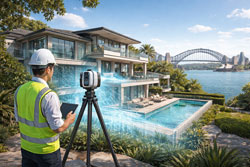
Engineer using a LiDAR scanner to capture a Sydney harbour-front residential property with Sydney Harbour Bridge in the background

3D Laser Scanning in Kirribilli NSW โ€“ Engineering-Grade Reality Capture for Harbour-Side Projects


Harbour-side buildings and infrastructure present unique challenges for refurbishment, compliance and upgrade works. Tight access, ageing structures and complex services make accurate site data critical before design or construction begins.

Hamilton By Design provides engineering-grade 3D laser scanning and LiDAR services in Kirribilli and across Sydneyโ€™s Lower North Shore, delivering accurate point cloud data that supports safe, buildable and cost-effective engineering outcomes.


Why 3D Scanning Is Critical in Kirribilli and Harbour Precincts

Kirribilli is characterised by:

  • heritage and character buildings
  • dense strata developments
  • limited access for survey and construction
  • proximity to critical transport and harbour infrastructure

Traditional measurement methods are often inadequate for:

  • structural modifications
  • mechanical plant upgrades
  • access compliance works
  • fabrication-ready design

3D laser scanning captures millions of accurate spatial data points, creating a true digital record of existing conditions before design begins โ€” reducing rework, RFIs and site clashes.


From Point Cloud to Build-Ready CAD and BIM Models

Our service does not stop at site capture.

We convert scan data into:

  • engineering CAD models
  • fabrication drawings
  • BIM-compatible geometry
  • detailed as-built documentation

This supports downstream workflows such as:

  • steel fabrication
  • mechanical installation
  • access system upgrades (AS 1657)
  • structural strengthening designs

Deliverables are tailored to suit engineers, architects and construction teams โ€” not just visualisation.


Typical Applications in Kirribilli and the Lower North Shore

3D scanning is commonly used for:

  • strata refurbishments and upgrades
  • heritage faรงade documentation
  • lift and stair compliance modifications
  • plant room reconfiguration
  • services routing and clash detection
  • harbour-adjacent infrastructure assessments

Because scanning is non-contact and fast to deploy, it allows data capture in occupied buildings with minimal disruption to residents and businesses.


Engineering-Led Scanning โ€” Not Just Survey Output

Hamilton By Design is an engineering-led consultancy, not just a scanning provider.

This means:

  • scan planning is driven by design requirements
  • critical interfaces are prioritised
  • modelling supports fabrication and construction
  • risk is addressed early in the project lifecycle

This approach is particularly valuable in brownfield and retrofit environments where unknown conditions often drive cost overruns.


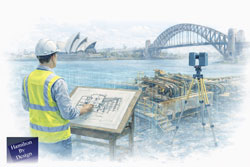
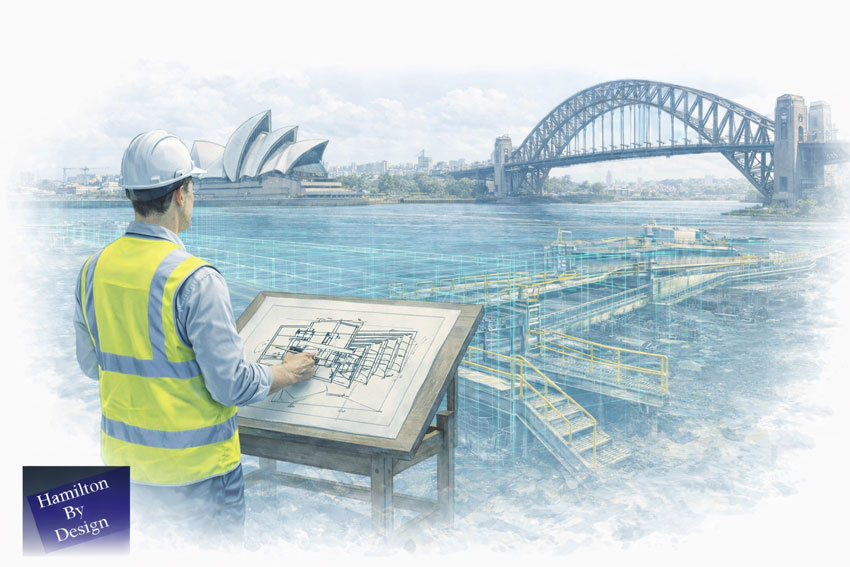
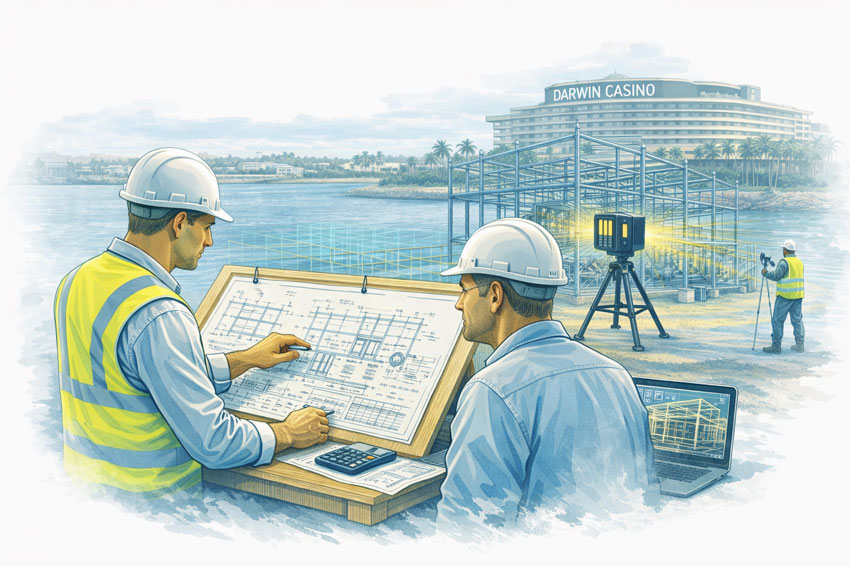
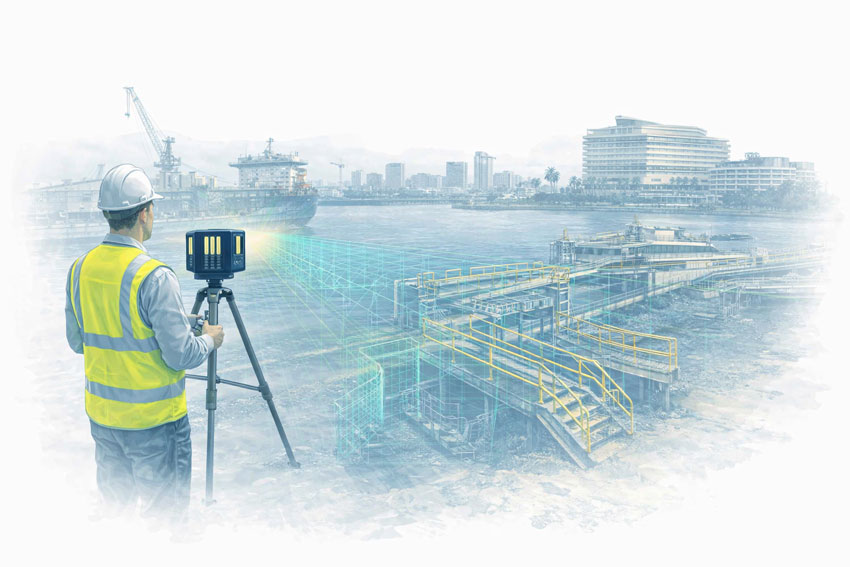
An engineer reviews detailed structural steel drawings at a drafting table while an engineering-grade LiDAR scan captures an existing waterfront structure in Sydney, illustrating data-driven structural drafting based on accurate as-built conditions.

Servicing Kirribilli, North Sydney and Sydney Harbour Precincts

We regularly support projects across:

  • Kirribilli
  • Milsons Point
  • North Sydney
  • Neutral Bay
  • Chatswood
  • Sydney CBD

And integrate scanning with mechanical, structural and drafting services where required.

Whether the project involves refurbishment, compliance or asset documentation, accurate reality capture forms the foundation for reliable engineering decisions.


Supporting Safe Design and Risk Reduction

Accurate site data enables:

  • early hazard identification
  • better access system design
  • improved constructability reviews
  • reduced site modifications during shutdowns

This aligns with Safe Design principles and reduces downstream safety and scheduling risks.


Hamilton By Design logo displayed on a blue tilted rectangle with a grey gradient background

3D LiDAR scanning and 3D modelling service button โ€” laser scanner capturing a point cloud for engineering and CAD modelling
Mechanical engineering services

Talk to Us About 3D Scanning in Kirribilli

If youโ€™re planning refurbishment, compliance upgrades or engineering works in Kirribilli or across Sydneyโ€™s harbour precincts, engineering-grade 3D scanning can eliminate costly unknowns before construction begins.

Contact Hamilton By Design to discuss site capture, modelling and design support for your project.

Blue banner graphic displaying the text "Point Cloud to CAD - Australia" in large white lettering, representing point cloud processing, scan-to-CAD conversion and digital engineering services across Australia.
Blue banner graphic displaying the text "Scan to CAD Sydney" in large white lettering, representing engineering-led point cloud to CAD conversion, LiDAR scanning and digital engineering services in Sydney.
Blue banner graphic displaying the text "Reality Capture Sydney - CBD" in large white lettering, representing engineering-led reality capture, LiDAR scanning and digital engineering services within Sydney CBD commercial buildings and infrastructure.
3D LiDAR scanning and 3D modelling service button โ€” laser scanner capturing a point cloud for engineering and CAD modelling
Mechanical engineering services
Finite Element Analysis (FEA) engineering simulation button
Mechanical engineering services

Mechanical Engineering | Structural Engineering


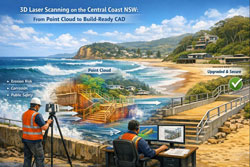
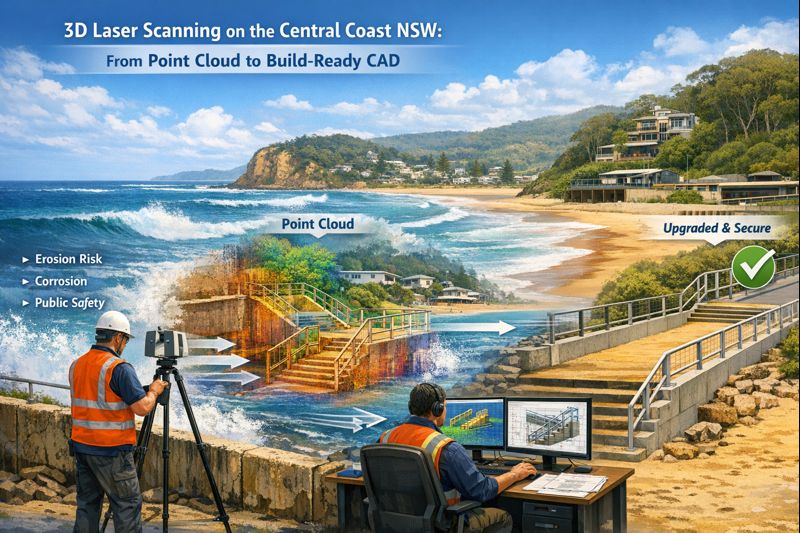
3D Laser Scanning on the Central Coast NSW: From Point Cloud to Build-Ready CAD

From laser scan to CAD: point cloud of Avoca Beach foreshore assets converted into build-ready engineering drawings.

Accurate site data is the difference between a smooth upgrade and a shutdown full of surprises.
At Hamilton By Design, we provide engineering-grade 3D laser scanning (LiDAR) across the Central Coast NSW โ€” including Wyong, Gosford, Tuggerah and Somersby โ€” and convert that data into design-ready CAD and 3D models for industrial and building projects.

If youโ€™re planning equipment upgrades, new conveyors, structural modifications or fabrication packages, scanning gives you reliable geometry before steel is cut or contractors mobilise.


Who this service is for

Our Central Coast scanning services are typically used by:

  • Project engineers planning plant or building upgrades
  • Maintenance teams preparing shutdown scopes
  • Fabricators needing accurate tie-in dimensions
  • Asset owners updating as-built records
  • Consultants managing brownfield modifications

If drawings donโ€™t match reality โ€” or donโ€™t exist at all โ€” scanning becomes the safest and fastest way to establish an accurate baseline.


3D LiDAR scanning services on the Central Coast providing engineering-grade laser scanning, point cloud capture, scan-to-CAD modelling and industrial reality capture for infrastructure and industrial projects.
Drafting services on the Central Coast providing engineering drawings, fabrication detailing, as-built documentation, reverse engineering and CAD drafting for industrial and infrastructure projects.
Mechanical engineering services on the Central Coast providing industrial design, plant inspections, pump calculations, reverse engineering and engineering support for manufacturing, infrastructure and heavy industry projects.

From scan to CAD: turning site data into buildable designs

A point cloud on its own doesnโ€™t solve project risk.
What matters is converting scan data into usable engineering outputs.

Our workflow supports:

  • 2D CAD drawings (plans, sections, elevations)
  • 3D CAD models for layout and clash detection
  • Tie-in modelling for new equipment and structures
  • Verification of clearances and access zones
  • Fabrication-ready geometry for workshop drawings

This scan-to-CAD process is especially valuable for retrofit projects where new components must integrate with existing assets.


Why 3D scanning is ideal for brownfield upgrades

Most Central Coast industrial and commercial sites are brownfield environments โ€” tight access, legacy equipment and undocumented modifications.

3D laser scanning helps to:

  • Reduce site re-visits and manual re-measuring
  • Identify clashes early in the design phase
  • Support off-site prefabrication
  • Shorten shutdown windows
  • Improve safety by limiting exposure time on site

When combined with engineering design, scanning becomes a risk-reduction tool, not just a survey method.


Engineer using 3D laser scanner at Avoca Beach foreshore with point cloud and CAD model showing upgrade of coastal stairs and seawall.

Typical Central Coast applications

We regularly support projects across:

Manufacturing and processing facilities

Equipment replacements, conveyor upgrades, access platform modifications.

Warehousing and logistics buildings

Structural modifications, mezzanine installations, services coordination.

Building services upgrades

Plantroom retrofits, mechanical services coordination, compliance verification.

Where Central Coast workshops are producing components for remote sites.


Local coverage: Wyong, Gosford, Tuggerah and Somersby

Being based on the Central Coast means we can support:

  • Rapid site capture
  • Staged scanning across multiple areas
  • Follow-up verification scans as scope evolves

That flexibility is important when designs change during live projects or shutdown preparation.


How accurate is engineering-grade LiDAR scanning?

Accuracy depends on site conditions and scope, but scanning provides consistent, repeatable geometry across complex environments that would be difficult and time-consuming to measure manually.

More importantly, it captures:

  • Spatial relationships
  • Real clearances
  • True equipment alignment

which are critical for retrofit engineering and fabrication.


When is scanning worth the investment?

Scanning typically delivers the best value when:

  • Drawings are outdated or incomplete
  • Fabrication must fit first time
  • Shutdown time is expensive
  • Access is restricted or unsafe
  • Multiple trades must coordinate in tight spaces

In many projects, preventing one major clash or rework cycle pays for the scan many times over.


Hamilton By Design logo displayed on a blue tilted rectangle with a grey gradient background

3D LiDAR scanning and 3D modelling service button โ€” laser scanner capturing a point cloud for engineering and CAD modelling
Mechanical engineering services

Planning an upgrade or fabrication project on the Central Coast?

If youโ€™re preparing for a shutdown, equipment upgrade or fabrication package across the Central Coast, early scanning can significantly reduce downstream risk.

Talk to Hamilton By Design about 3D laser scanning and point cloud to CAD support for your project.
Weโ€™ll help define the scope and deliverables that best suit your engineering and construction needs.

Name
Would you like us to arrange a phone consultation for you?
Address

3D Scanning Services Darwin: Industrial LiDAR for As-Builts, Shutdowns & Brownfield Upgrades


3D Scanning Services Darwin | Industrial LiDAR for Engineering Projects

In Darwinโ€™s industrial and infrastructure sectors, accurate site data is critical before any upgrade, shutdown or retrofit project begins. Many facilities are operating with outdated drawings, undocumented modifications and congested plant layouts โ€” making traditional site measurement slow, risky and unreliable.

Engineering-grade 3D LiDAR scanning provides fast, highly accurate as-built data that engineers can rely on for design, fabrication and installation planning. At Hamilton By Design, we deliver industrial 3D scanning services in Darwin that support brownfield upgrades, shutdown works and asset documentation across mining, ports, defence and utilities.


What Is Engineering-Grade 3D Scanning?

Unlike basic surveying or photogrammetry, industrial LiDAR scanning captures millions of measurement points per second to generate a true-scale point cloud of your facility.

This allows engineers to:

  • Measure clearances accurately
  • Verify structural geometry
  • Detect clashes before fabrication
  • Design directly from real-world data

Our workflows convert point cloud data into:

  • CAD models
  • Fabrication drawings
  • BIM and coordination models
  • As-built documentation

This means scanning is not just a survey โ€” it becomes the foundation of your entire engineering workflow.


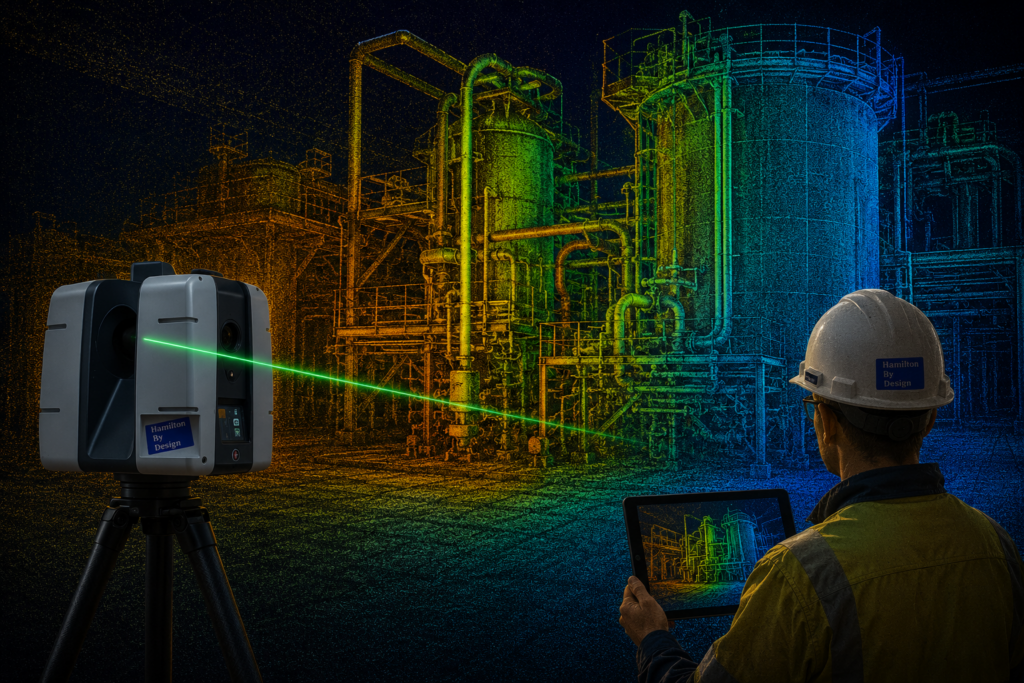
Industrial LiDAR scanning of a processing plant with colourful point cloud visualisation and engineer reviewing 3D scan data on site

Key Industries Using 3D Scanning in Darwin

Darwin is a major hub for industrial and infrastructure projects across Northern Australia. The most common users of LiDAR scanning include:

Defence & Secure Facilities

  • Hangars, workshops and logistics buildings
  • Fuel systems and plant rooms
  • Retrofit and compliance upgrades

Scanning allows engineers to design remotely while reducing on-site access requirements and security risks.


Ports, Marine & Bulk Handling Infrastructure

  • Conveyors and transfer stations
  • Wharf structures and ship loaders
  • Upgrade planning without interrupting operations

LiDAR scanning enables safe measurement of live operating assets and complex marine structures.


Mining Support & Materials Handling

While many mines are remote, engineering and fabrication is often coordinated through Darwin.
Typical applications include:

  • Transfer chute redesign
  • Conveyor upgrades
  • Structural tie-ins during shutdowns

Accurate scans reduce installation risk and minimise costly shutdown overruns.


Oil, Gas & LNG Support Facilities

  • Skid and modular plant design
  • Pipe routing and equipment replacement
  • Brownfield retrofit engineering

Scanning ensures new modules fit first time, even when original drawings are incomplete.


Government Infrastructure & Utilities

  • Water and wastewater treatment plants
  • Power generation and substations
  • Asset documentation and compliance works

As-built scanning supports long-term asset management and future upgrade planning.


Common Problems 3D Scanning Solves

Engineering teams typically engage scanning when they face:

  • Missing or inaccurate drawings
  • Congested plant layouts
  • High risk of installation clashes
  • Tight shutdown windows
  • Remote engineering coordination

By capturing the full environment, engineers can design with confidence and reduce rework during construction.


Typical Deliverables From a Darwin LiDAR Scan

Depending on your project, we can provide:

  • Registered point clouds (E57 / RCP formats)
  • 3D CAD models for design
  • Fabrication and installation drawings
  • Structural verification models
  • BIM coordination models
  • As-built documentation packages

This allows scanning data to be used directly by mechanical, structural and drafting teams.


Why Industrial Projects Choose Hamilton By Design

Hamilton By Design is an engineering-led scanning and modelling provider, not just a survey company.

Our clients value that we understand:

  • Shutdown scheduling pressures
  • Fabrication tolerances
  • Installation constraints
  • Australian Standards compliance
  • Mining and industrial safety requirements

This means the data we deliver is practical for real-world construction and maintenance projects, not just visually accurate.


When Should You Use 3D Scanning on Your Project?

3D scanning is most valuable when:

  • Modifying existing plant or structures
  • Designing replacement equipment
  • Planning shutdown installations
  • Verifying compliance or structural alignment
  • Preparing for major upgrades

Early scanning often prevents downstream engineering changes and costly site delays.


3D Scanning Services Available Across Darwin and the Top End

We support projects in:

  • Darwin industrial precincts
  • Port and marine facilities
  • Remote mining and processing sites
  • Defence infrastructure environments

Our team can mobilise scanning crews and deliver digital models suitable for immediate engineering use.


Hamilton By Design logo displayed on a blue tilted rectangle with a grey gradient background

3D LiDAR scanning and 3D modelling service button โ€” laser scanner capturing a point cloud for engineering and CAD modelling
Mechanical engineering services

Speak With an Engineer About Your Darwin Scanning Project

If you are planning upgrades, shutdown work or plant modifications, accurate site data is the first step toward reducing risk and improving delivery outcomes.

Contact Hamilton By Design to discuss industrial 3D scanning services in Darwin and how LiDAR data can support your engineering and fabrication workflow.

Name
Would you like us to arrange a phone consultation for you?
Address

3D CAD Modelling Australia service banner for Hamilton By Design


CHPP Engineering title graphic featuring bold white text reading "CHPP Engineering" centred on a blue rounded rectangle background.
Pipework Drafting title graphic featuring bold white text reading "Pipework Drafting" centred on a blue rounded rectangle background.
3D LiDAR Scanning for Engineering Projects title graphic featuring bold white text on a blue rounded rectangle background.


Finite Element Analysis (FEA) engineering simulation button
Structural drafting services button
Mechanical drafting services button


Australian Drafting logo featuring bold white text reading "Australian Drafting" centred on a blue rounded rectangle background.
Engineering Governance title graphic featuring bold white text reading "Engineering Governance" centred on a blue rounded rectangle background.
Engineering-Grade LiDAR Scanning title graphic featuring bold white text on a blue rounded rectangle background.


Mechanical drafting services button
Structural drafting services button


Fabrication and product design services
3D CAD Modelling Australia service banner for Hamilton By Design
Mechanical, Structural & Pipework Drafting service banner by Hamilton By Design featuring white text on a blue background.


3D LiDAR scanning and 3D modelling service button โ€” laser scanner capturing a point cloud for engineering and CAD modelling
Mechanical engineering services

3D Laser Scanning in Parramatta: Safer Conveyor Design with Engineering-Grade Accuracy

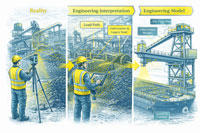
Engineering-grade LiDAR scanning of a brownfield industrial asset, showing the progression from site capture and point cloud interpretation to a fabrication-ready engineering model.

3D Laser Scanning for Conveyor Design & Safe Engineering in Parramatta

Parramatta continues to grow as a major industrial and infrastructure hub for Western Sydney. With ageing plant, frequent upgrades, and tighter safety expectations, many facilities are now turning to engineering-grade 3D laser scanning to improve the way conveyor systems and material handling equipment are designed, modified, and maintained.

At Hamilton By Design, we use high-accuracy LiDAR scanning to capture existing conditions and convert them into precise 3D models that engineers, designers, and maintenance teams can rely on โ€” before anyone picks up a spanner or starts cutting steel.

Why Conveyor Systems Are High-Risk Assets

Conveyors are involved in a significant number of serious workplace incidents across Australia. Common contributors include:

  • Inadequate guarding and access control
  • Poor visibility of nip points and transfer zones
  • Modifications made without updated drawings
  • Space constraints forcing unsafe maintenance practices

In many older facilities around Parramatta, conveyors have been extended, rerouted, or repaired multiple times over decades โ€” often without accurate as-built documentation. This creates real risk when new upgrades or safety improvements are planned.

Without reliable spatial data, design decisions are often made on assumptions, outdated drawings, or rough site measurements.

Engineering-Grade Scanning: Not Just โ€œPretty Picturesโ€

Not all 3D scans are suitable for engineering or safety-critical work.

We use engineering-grade LiDAR scanning capable of delivering dimensional accuracy of approximately ยฑ2 mm over 70 metres, which allows us to:

  • Model conveyor structures, walkways, guards, and transfer stations
  • Detect clashes before fabrication
  • Verify compliance with safe access and guarding requirements
  • Support certified engineering design and sign-off

The resulting point cloud and CAD models become the foundation for proper conveyor design, safety reviews, and fabrication drawings.

This is critical when safe design obligations must be demonstrated under WHS legislation.


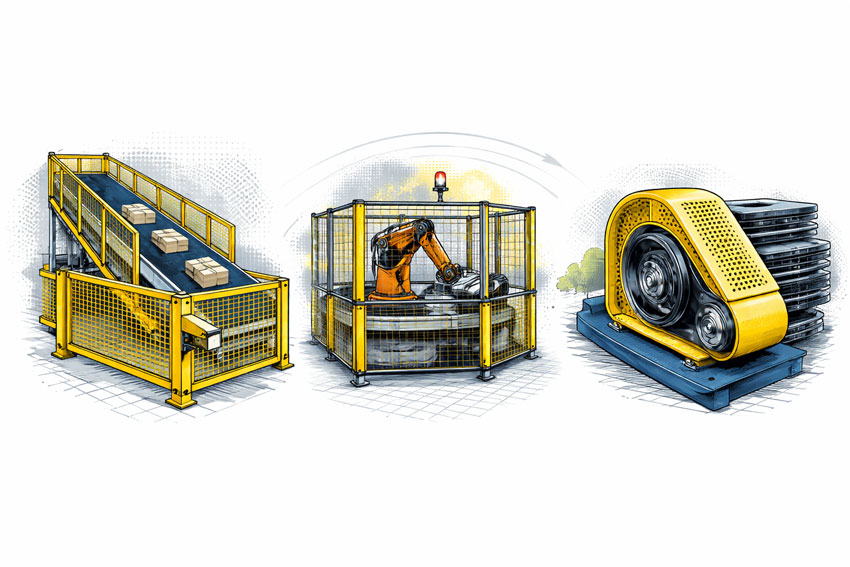
Industrial machine guards including a guarded conveyor, fenced robotic cell, and covered belt drive system

Supporting Safe Design from Concept to Commissioning

Safe Design is not just about guarding at the end of a project โ€” it starts at the design stage.

By scanning your existing plant, we can support:

  • Risk assessments using accurate spatial context
  • Redesign of transfer points and access platforms
  • Guarding upgrades that actually fit the site
  • Maintenance access improvements without production impact

Because models are generated from real geometry, engineers can confidently design modifications knowing they will physically fit when installed.

This reduces shutdown risk, rework, and last-minute site changes โ€” all common contributors to project delays and safety incidents.

Learning from Industry Incidents โ€” and Preventing the Next One

Many conveyor-related incidents share similar root causes:

  • Poor access for cleaning or inspection
  • Unplanned modifications
  • Incomplete hazard identification during design
  • Reliance on legacy drawings that no longer match reality

3D scanning allows hazards to be identified early and reviewed by multiple stakeholders โ€” engineering, safety, operations, and maintenance โ€” using the same accurate model.

It also creates a permanent digital record of the asset at a point in time, which is invaluable for:

  • Incident investigations
  • Compliance documentation
  • Future upgrade planning

In high-risk environments, accurate data is not a luxury โ€” it is a control measure.

Local Scanning and Engineering Support in Parramatta

Hamilton By Design provides on-site 3D scanning and engineering services across Parramatta and Western Sydney, supporting:

  • Conveyor upgrades and replacements
  • Safety improvement projects
  • Plant expansions and brownfield modifications
  • Fabrication and installation planning

Our team is engineering-led, meaning scanning is not treated as a standalone service โ€” it is directly integrated into mechanical design, drafting, and project delivery.

We also provide fabrication-ready drawings and can support workshops with shop details derived directly from scan-based models.


Hamilton By Design logo displayed on a blue tilted rectangle with a grey gradient background

3D LiDAR scanning and 3D modelling service button โ€” laser scanner capturing a point cloud for engineering and CAD modelling
Mechanical engineering services

From Point Cloud to Practical Outcomes

3D scanning is only valuable if it leads to better decisions on the ground.

Our workflow typically includes:

  1. On-site LiDAR scanning with minimal disruption to operations
  2. Registration and cleaning of point cloud data
  3. Conversion into CAD models suitable for engineering design
  4. Design development, safety reviews, and fabrication drawings

This ensures your project is driven by real-world data โ€” not assumptions.

Name
Would you like us to arrange a phone consultation for you?
Address
3D Scanning Sydney banner promoting engineering-grade 3D laser scanning, LiDAR scanning, and reality capture services by Hamilton By Design.
Mechanical Engineering Sydney banner with white text on a blue background representing Hamilton By Design's mechanical engineering services in Sydney.
Mechanical Drafting and 3D Modelling Sydney banner highlighting Hamilton By Design's CAD drafting, 3D modelling, and engineering design services in Sydney.

Hamilton By Design provides engineering-led 3D scanning, LiDAR scanning, mechanical engineering and digital engineering services throughout Sydney and Greater Sydney.

Explore our related Sydney services:


  • 3D Scanning Sydney โ€“ Engineering-grade terrestrial laser scanning, as-built surveys and point cloud capture for industrial, infrastructure and commercial projects.
  • Reality Capture Sydney โ€“ High-accuracy reality capture, digital twins, asset documentation and engineering-grade site verification.
  • Scan to CAD Sydney โ€“ Convert point cloud data into AutoCAD, SolidWorks, Inventor and other engineering-ready CAD deliverables.
  • Point Cloud Modelling Sydney โ€“ Engineering-grade point cloud processing, clash detection, as-built verification and 3D modelling.
  • Mechanical Engineering Sydney โ€“ Mechanical design, plant upgrades, materials handling systems, conveyors, chutes, platforms and engineering support.
  • Structural Drafting Sydney โ€“ Structural steel drafting, fabrication drawings, GA drawings, workshop detailing and as-built documentation.

Hamilton By Design supports projects throughout Sydney CBD, Parramatta, Liverpool, Penrith, Blacktown, Chatswood, Alexandria, Mascot, Newcastle and the Central Coast.


Blue banner graphic displaying the text "Point Cloud to CAD - Australia" in large white lettering, representing point cloud processing, scan-to-CAD conversion and digital engineering services across Australia.
Blue banner graphic displaying the text "Scan to CAD Sydney" in large white lettering, representing engineering-led point cloud to CAD conversion, LiDAR scanning and digital engineering services in Sydney.
Blue banner graphic displaying the text "Reality Capture Sydney - CBD" in large white lettering, representing engineering-led reality capture, LiDAR scanning and digital engineering services within Sydney CBD commercial buildings and infrastructure.

Mechanical Engineering | Structural Engineering