AS 3990 Mechanical Equipment Steelwork | Walkways, Platforms & Conveyor Structures

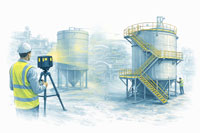
Engineer using LiDAR scanner to capture as-built tank steelwork, transitioning to compliant AS 3990 walkways and access platforms

AS 3990 โ€“ Mechanical Equipment Steelwork

Walkways, Conveyor Structures, Platforms and Gantries

Mechanical equipment steelwork is everywhere in industrial sites โ€” conveyor structures, access walkways, maintenance platforms, gantries and support frames. Over time, these structures are modified, loaded differently, repaired, and upgraded. Thatโ€™s where AS 3990 โ€“ Mechanical equipment โ€“ Steelwork becomes critical: it provides a framework for designing and verifying steelwork that supports mechanical equipment and associated access systems.

At Hamilton By Design, we help asset owners and project teams reduce risk by converting real as-built steelwork into engineering-grade digital models that can be checked, upgraded, and documented with confidence.
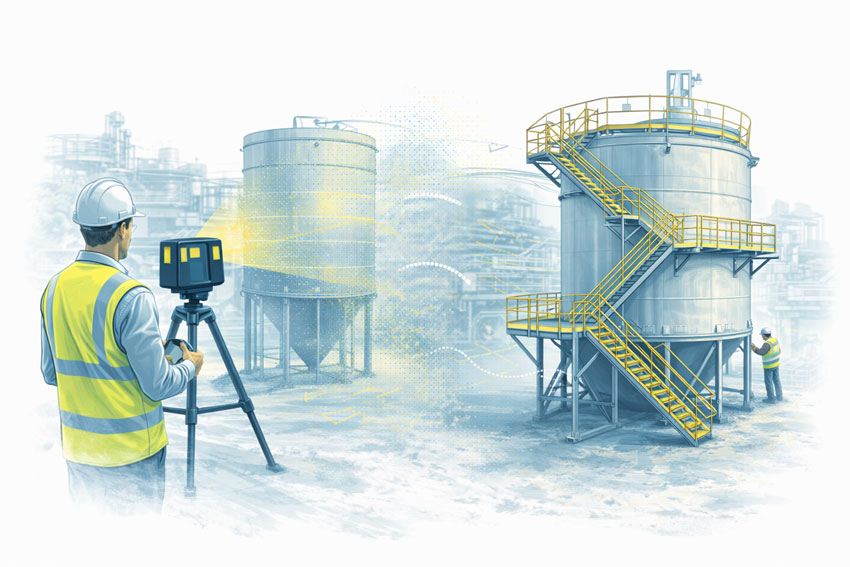

3D LiDAR scanning of industrial tank steelwork showing as-built condition and engineered walkways and stairs designed to AS 3990

When AS 3990 Steelwork Becomes a Problem in the Real World

Steelwork rarely fails because it was โ€œobviously wrongโ€ on day one. The most common issues develop gradually due to changes in loading, upgrades, corrosion, or incomplete documentation.

Common triggers we see on site

  • New conveyor drives, chutes, skirts, guards, or pull-wire systems added after commissioning
  • Extra services added: cable trays, hose reels, water lines, pipework, and supports
  • Walkway changes for access, maintenance, or guarding upgrades
  • Localised damage from impact, vibration, or operational fatigue
  • Corrosion or section loss in wash-down areas, coastal environments, or chemical exposure zones
  • Legacy steelwork with missing drawings or unknown load assumptions

If you canโ€™t prove what exists (accurately), it becomes difficult to prove compliance, fitness-for-purpose, or due diligence.


Key Engineering Risks with Walkways, Platforms, Gantries and Conveyor Structures

1) Design intent vs as-built reality

Many sites have steelwork that differs from drawings due to shutdown modifications or brownfield constraints. Small deviations in member size, connection detailing, or geometry can materially change structural performance.

2) Loads have changed โ€” but the steelwork didnโ€™t

A โ€œsimpleโ€ modification can add significant load: added services, heavier equipment, changed maintenance practices, or multiple personnel working in the same bay. These changes can push members or connections beyond the original assumptions.

3) Conveyor vibration and dynamic effects

Conveyor structures experience cyclic loading, start/stop effects, and vibration. Even if the structure looks acceptable, fatigue and resonance can become a long-term reliability problem โ€” particularly around drive stations, transfer points, and cantilevered platforms.

4) Connection adequacy often governs

Field-welded brackets, modified gussets, bolt slip, corroded fasteners, and non-standard connection geometry can become the weak link. Connection performance is frequently the true limiting factor in older or heavily modified steelwork.

5) Access and safety interfaces

Walkways and platforms often sit at the intersection of multiple requirements: safe access geometry, handrails, toe-boards, gates, and guarding. If access steelwork was modified without a proper verification step, the risk becomes both structural and safety-related.


What โ€œVerificationโ€ Looks Like in Practice

AS 3990 steelwork compliance is not just a box-tick. In a practical project environment, it means you can answer:

  • What steelwork exists right now (as-built)?
  • What loads and operational conditions apply today (not ten years ago)?
  • Are members and connections adequate under realistic scenarios?
  • What upgrades are required, and can they be fabricated to fit first time?
  • Can the asset owner document compliance and risk controls for governance?

Hamilton By Design supports this process by bringing LiDAR scanning + mechanical engineering + fabrication-ready outputs together under one roof.


How Hamilton By Design Helps (Our Typical Deliverables)

1) Engineering-grade 3D LiDAR scanning of steelwork

We capture accurate geometry of:

  • Walkways and access platforms
  • Conveyor stringers, trestles, and transfer towers
  • Gantries, monorails, and maintenance frames
  • Supports, bracing, ladders, stairs, and access interfaces

Related service:
3D Laser Scanning: https://www.hamiltonbydesign.com.au/3d-laser-scanning/

2) As-built CAD model for verification and design

We convert the scan into usable engineering outputs such as:

  • As-built 3D CAD models
  • Key dimensions, levels, and clearances
  • Interference checking and fit-up planning
  • Fabrication-ready drawings for retrofit steelwork

3) Engineering checks and upgrade design

Where required, we support structural verification and upgrade design using engineering workflows suited to brownfield assets.

Related capability:
SolidWorks FEA / simulation workflows: https://www.hamiltonbydesign.com.au/home/solidworks/solidworks-fea-simulation/


Where This Matters Most (Typical Applications)

  • Conveyor upgrades and transfer station modifications
  • Walkway widening, new stair access, and maintenance platform additions
  • Guarding upgrades, pull-wire additions, and access compliance programs
  • Corrosion repairs and local strengthening
  • Brownfield plant modifications with limited shutdown time
  • Audit readiness and engineering documentation clean-up

If youโ€™re working around conveyors, you may also find this relevant:
AS 1755 Conveyor Safety: https://www.hamiltonbydesign.com.au/as-1755-conveyor-safety/

And for safety leadership context:
Machine guarding lessons: https://www.hamiltonbydesign.com.au/machine-guarding-in-australia-a-decade-of-lessons-for-leaders-asset-owners-and-engineers/


Standards and Compliance Context (How AS 3990 Fits In)

AS 3990 typically sits alongside a broader compliance context depending on the asset and scope. In many industrial environments, it may interact with standards and guidance such as:

  • AS 1657 (fixed platforms, walkways, stairways and ladders)
  • AS 4100 (steel structures)
  • AS/NZS 1170 (structural actions / loading)
  • AS 1755 (conveyor safety and associated interfaces)

For official sources and governance context:

(Note: Always confirm the current revision and applicability of standards for your site, scope, and jurisdiction.)


Why Digital As-Built Matters for AS 3990 Steelwork

A verified as-built model reduces:

  • Upgrade risk and fabrication rework
  • Shutdown time lost to unexpected clashes
  • Safety risks from undocumented modifications
  • Compliance gaps during audits and governance reviews

It also supports โ€œfit-first-timeโ€ fabrication because designers, engineers, and fabricators are working from the same geometry โ€” not assumptions.


Talk to an Engineer About Your AS 3990 Steelwork

If youโ€™re planning an upgrade, responding to an audit, or unsure whether existing walkways, platforms, gantries or conveyor structures still meet their intended duty, we can help you quickly establish a reliable baseline.

Start with scanning, modelling, and engineering verification โ€” and build from facts.

Related service pages to explore:

Hamilton By Design logo displayed on a blue tilted rectangle with a grey gradient background
3D LiDAR scanning and 3D modelling service button โ€” laser scanner capturing a point cloud for engineering and CAD modelling
Mechanical engineering services

Our clients:

Name
Would you like us to arrange a phone consultation for you?
Address

3D Scanning Engineering in Parkes

3D Scanning in Parkes NSW

Parks (Parkes), NSW is one of Australiaโ€™s most strategically important inland engineering centres. Known globally for the Parkes Radio Telescope and nationally for its role as a freight, rail, and agricultural hub, engineering in Parks is driven by precision, logistics, and reliability. Projects here often support large catchment areas, seasonal peak demand, and long-distance supply chains โ€” which means there is little tolerance for rework or uncertainty.

Hamilton By Design supports Parks projects with engineering-led 3D LiDAR laser scanning, mechanical and structural engineering, 3D modelling, FEA, and easy-to-build fabrication drawings, helping clients move from site data to construction with confidence.


Engineering in Parks: Precision Meets Logistics

Engineering in Parks is shaped by several unique factors:

  • National-scale scientific and communications infrastructure
  • Inland rail, intermodal freight, and bulk logistics
  • Grain handling, storage, and agricultural processing
  • Emerging industrial development through the Special Activation Precinct

These environments demand engineering solutions that are accurate, robust, and practical, especially where assets operate continuously or are difficult to access once installed.


3D Laser Scanning for Parks Projects

Accurate 3D LiDAR laser scanning is the foundation of successful engineering in Parks.

Hamilton By Design captures high-resolution as-built data for:

  • Rail and logistics infrastructure
  • Grain silos, conveyors, and bulk-handling systems
  • Industrial buildings and plant
  • Existing assets with limited or outdated drawings

3D scanning records the true geometry of assets โ€” including misalignment, deflection, settlement, and undocumented modifications. This is critical in Parks, where infrastructure is often upgraded in stages and must remain operational during works.

The result is fewer assumptions, fewer site visits, and reduced construction risk.

Learn more here:
3D Laser Scanning


3D Modelling from Real As-Built Conditions

From the point cloud, Hamilton By Design develops accurate 3D CAD models that reflect what is actually on site.

Our 3D modelling services support:

  • Brownfield upgrades and capacity increases
  • Clash detection around existing services and structures
  • Modular and transportable designs
  • Fabrication planning and installation sequencing
  • Long-term digital asset records

For Parks projects โ€” where components are often fabricated offsite and installed under tight timeframes โ€” modelling from real data significantly improves build confidence.

Explore our modelling capability:
3D CAD Modelling


FEA to Verify Performance and Reliability

Many assets in Parks operate under high cyclic loading, seasonal peaks, and demanding inland conditions. Finite Element Analysis (FEA) is used to confirm performance and guide upgrade decisions.

Hamilton By Design applies FEA to:

  • Verify structural capacity of existing assets
  • Assess fatigue, stress concentrations, and deflection
  • Check modifications to silos, frames, and handling systems
  • Support strengthening and life-extension strategies

By analysing as-built geometry, FEA results are more representative of real behaviour โ€” critical for assets that must operate reliably during harvest and freight peaks.

Learn more about our analysis services:
FEA Capabilities


Easy-to-Build Fabrication and Installation Drawings

Clear, practical documentation is essential for regional projects where fabrication and installation teams rely on drawings to get the job done efficiently.

Hamilton By Design produces easy-to-build fabrication drawings, including:

  • General arrangement drawings
  • Fabrication and workshop details
  • Installation and lifting layouts
  • As-built documentation

Because drawings are developed directly from scanned data and validated 3D models, they align closely with site reality, reduce ambiguity, and minimise rework.

View our drafting services here:
Drafting Services


Hamilton By Design logo displayed on a blue tilted rectangle with a grey gradient background
3D LiDAR scanning and 3D modelling service button โ€” laser scanner capturing a point cloud for engineering and CAD modelling
Mechanical engineering services

Why Hamilton By Design in Parks?

Hamilton By Design provides an integrated digital engineering workflow โ€” from site capture through to modelling, analysis, and construction documentation.

For Parks clients, this means:

  • Fewer assumptions in complex logistics environments
  • Reduced risk during upgrades and expansions
  • Designs that suit inland conditions and heavy utilisation
  • Fabrication-ready drawings that support efficient construction

Whether you are upgrading grain infrastructure, expanding logistics facilities, or modifying existing industrial assets, Hamilton By Design delivers practical, build-ready engineering solutions tailored to the unique demands of Parks, NSW.

If youโ€™re planning a project in Parks, weโ€™re ready to help โ€” starting with accurate data and carrying it through to construction-ready outcomes.

Our clients

Name
Would you like us to arrange a phone consultation for you?
Address

3D CAD Modelling Australia service banner for Hamilton By Design


CHPP Engineering title graphic featuring bold white text reading "CHPP Engineering" centred on a blue rounded rectangle background.
Pipework Drafting title graphic featuring bold white text reading "Pipework Drafting" centred on a blue rounded rectangle background.
3D LiDAR Scanning for Engineering Projects title graphic featuring bold white text on a blue rounded rectangle background.


Finite Element Analysis (FEA) engineering simulation button
Structural drafting services button
Mechanical drafting services button


Australian Drafting logo featuring bold white text reading "Australian Drafting" centred on a blue rounded rectangle background.
Engineering Governance title graphic featuring bold white text reading "Engineering Governance" centred on a blue rounded rectangle background.
Engineering-Grade LiDAR Scanning title graphic featuring bold white text on a blue rounded rectangle background.


Mechanical drafting services button
Structural drafting services button


Fabrication and product design services
3D CAD Modelling Australia service banner for Hamilton By Design
Mechanical, Structural & Pipework Drafting service banner by Hamilton By Design featuring white text on a blue background.


3D LiDAR scanning and 3D modelling service button โ€” laser scanner capturing a point cloud for engineering and CAD modelling
Mechanical engineering services

The Importance of AS 3990 in Mechanical Equipment Steelwork

In the world of engineering, adhering to standards is more than just a formality; itโ€™s a fundamental aspect of ensuring safety, reliability, and efficiency. One such critical standard is AS 3990, “Mechanical Equipment โ€“ Steelwork.” This guideline plays a vital role in the design and construction of steel structures for mechanical systems, providing the framework for materials selection, construction practices, and stress analysis. Ignoring AS 3990 can lead to a host of issues, from structural failures to safety hazards, yet itโ€™s a challenge that some organizations still face. By contrast, companies like Hamilton By Design have built a reputation for excellence by consistently applying these standards in their projects, ensuring optimal outcomes for their clients.

The Risks of Ignoring AS 3990

One of the most alarming consequences of bypassing AS 3990 is the heightened risk of structural failure. Mechanical equipment steelwork is often subjected to extreme stresses and environmental conditions, and without proper design parameters, the results can be catastrophic. Whether itโ€™s the collapse of a support structure or the malfunction of a mechanical component, the costโ€”both human and financialโ€”is often irreparable.

In addition to physical failures, neglecting AS 3990 invites a host of compliance and legal issues. Regulatory bodies across industries mandate adherence to such standards to protect workers and ensure operational safety. Non-compliance can lead to fines, project delays, or even legal action, tarnishing the reputation of those involved.ย 

The impact doesnโ€™t stop there. Poorly designed steelwork can suffer from premature wear and fatigue, significantly reducing the lifespan of the equipment. This leads to frequent maintenance, unplanned downtime, and increased costsโ€”a scenario no company wants to face. Moreover, these recurring issues not only affect the bottom line but also compromise the safety of workers, posing risks of injury or fatality. Finally, the reputational damage from delivering substandard systems can be devastating, as it erodes client trust and tarnishes an organizationโ€™s standing in the industry.

Hamilton By Design: A Commitment to Excellence

Faced with these potential pitfalls, an engineering company like Hamilton By Design offers a reassuring solution. With extensive experience in mechanical design and steelwork, they prioritize adherence to AS 3990 in every project. This commitment translates into tangible benefits for their clients and sets them apart in the industry.

Hamilton By Design approaches every project with structural integrity at the forefront. By leveraging advanced modeling tools and stress analysis techniques, they ensure that every design adheres to the stringent guidelines of AS 3990. Their expertise spans diverse industries, enabling them to tailor solutions that are both robust and reliable.

Compliance is another area where Hamilton By Design excels. The team stays up-to-date with the latest iterations of AS 3990, incorporating these requirements seamlessly into their work. This not only streamlines the approval process but also gives clients the confidence that their projects meet all necessary regulatory standards.

Material selection and durability are cornerstones of the companyโ€™s design philosophy. By carefully analyzing the operational stresses and environmental factors that each structure will face, Hamilton By Design creates systems that are built to last. This focus on longevity reduces the need for maintenance and ensures uninterrupted performance, saving clients time and money.

Safety is non-negotiable for Hamilton By Design. Every project undergoes rigorous risk assessments to identify and mitigate potential hazards. By adhering to AS 3990โ€™s safety protocols, the company not only protects workers but also fosters a culture of trust and reliability.

The Advantages of AS 3990 Compliance

The advantages of working with engineers who consult AS 3990 are clear. First and foremost, it ensures structural reliability. Steelwork designed under this standard can handle expected loads and stresses with ease, delivering dependable performance across a range of applications. For Hamilton By Design, this translates into designs that consistently exceed client expectations.

Regulatory compliance is another significant benefit. Projects that adhere to AS 3990 face fewer hurdles during inspections, avoiding costly delays and potential penalties. Hamilton By Designโ€™s meticulous approach to compliance ensures smooth project execution, freeing clients to focus on their core objectives.

Optimized design is yet another hallmark of AS 3990. By balancing safety, functionality, and cost-efficiency, the standard empowers engineers to deliver solutions that are both practical and innovative. Hamilton By Design takes this a step further by using advanced tools and methodologies to craft designs that align perfectly with their clientsโ€™ operational goals.

Safety, of course, remains a top priority. AS 3990 includes comprehensive guidelines for risk minimization, creating a safer environment for workers and operators. Hamilton By Designโ€™s adherence to these principles underscores their commitment to safeguarding everyone involved in their projects.

Cost savings and increased equipment lifespan are additional advantages of compliance. Properly designed steelwork not only reduces maintenance needs but also enhances durability, maximizing the return on investment for clients. For Hamilton By Design, these outcomes are the natural result of their dedication to quality and precision.

Real-World Applications

Hamilton By Designโ€™s expertise in applying AS 3990 is evident in their extensive portfolio. For instance, in a mining project involving heavy conveyor systems, the company used AS 3990 to identify critical stress points and optimize the design for dynamic loads. The result was a durable support structure that minimized maintenance and exceeded client expectations.

Similarly, in an industrial manufacturing facility, Hamilton By Design tackled the challenge of custom steelwork for robotic assembly lines. By adhering to AS 3990, they ensured that the structures could withstand repetitive stresses and environmental factors, enhancing both safety and efficiency.

Their experience extends to renewable energy projects as well. In designing steel frameworks for wind turbine foundations, Hamilton By Design accounted for wind loads, fatigue stresses, and environmental conditions, delivering solutions that met stringent safety and performance requirements.

Conclusion

Ignoring AS 3990 is a risk no company should take. The challengesโ€”from structural failures and compliance issues to safety hazards and reputational damageโ€”are simply too great. By contrast, working with experienced engineers who prioritize this standard offers a host of benefits, from enhanced reliability and safety to cost savings and competitive advantage.

Hamilton By Design exemplifies the best practices in applying AS 3990, turning potential challenges into opportunities for innovation and excellence. Their commitment to quality, compliance, and client satisfaction ensures that every project not only meets but exceeds industry standards. For organizations seeking dependable, high-performing mechanical equipment steelwork, Hamilton By Design is the partner of choice.

For More information contact Hamilton By Design – Email info@hamiltonbydesign.com.au

3D LiDAR scanning and 3D modelling service button โ€” laser scanner capturing a point cloud for engineering and CAD modelling
Mechanical engineering services

Our Clients:
Name
Would you like us to arrange a phone consultation for you?
Address

3D CAD in Sydney

3D Construction Scan in Sydney

https://www.hamiltonbydesign.com.au/home/engineering-services/3d-laser-scanning/3d-scanning-sydney/3d-point-cloud-modelling-in-sydney/

3D LiDAR Laser Scanning & Drafting Services in Chatswood & Greater Sydney

Finite Element Analysis (FEA) engineering simulation button
Mechanical engineering services