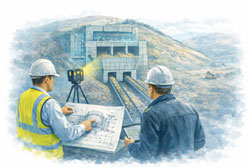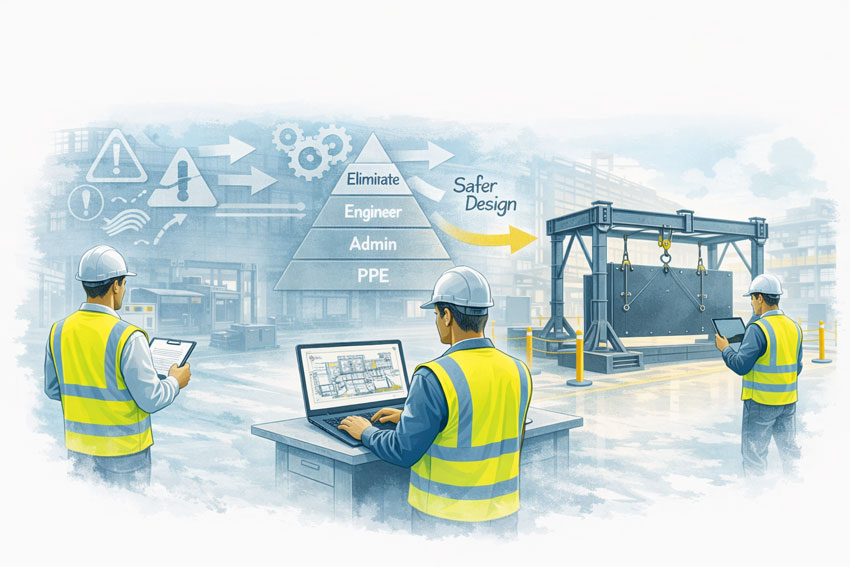
3D Laser Scanning in Kirribilli NSW โ€“ Engineering-Grade Reality Capture for Harbour-Side Projects

Engineer using a LiDAR scanner to capture a Sydney harbour-front residential property with Sydney Harbour Bridge in the background

3D Laser Scanning in Kirribilli NSW โ€“ Engineering-Grade Reality Capture for Harbour-Side Projects


Harbour-side buildings and infrastructure present unique challenges for refurbishment, compliance and upgrade works. Tight access, ageing structures and complex services make accurate site data critical before design or construction begins.

Hamilton By Design provides engineering-grade 3D laser scanning and LiDAR services in Kirribilli and across Sydneyโ€™s Lower North Shore, delivering accurate point cloud data that supports safe, buildable and cost-effective engineering outcomes.


Why 3D Scanning Is Critical in Kirribilli and Harbour Precincts

Kirribilli is characterised by:

  • heritage and character buildings
  • dense strata developments
  • limited access for survey and construction
  • proximity to critical transport and harbour infrastructure

Traditional measurement methods are often inadequate for:

  • structural modifications
  • mechanical plant upgrades
  • access compliance works
  • fabrication-ready design

3D laser scanning captures millions of accurate spatial data points, creating a true digital record of existing conditions before design begins โ€” reducing rework, RFIs and site clashes.


From Point Cloud to Build-Ready CAD and BIM Models

Our service does not stop at site capture.

We convert scan data into:

  • engineering CAD models
  • fabrication drawings
  • BIM-compatible geometry
  • detailed as-built documentation

This supports downstream workflows such as:

  • steel fabrication
  • mechanical installation
  • access system upgrades (AS 1657)
  • structural strengthening designs

Deliverables are tailored to suit engineers, architects and construction teams โ€” not just visualisation.


Typical Applications in Kirribilli and the Lower North Shore

3D scanning is commonly used for:

  • strata refurbishments and upgrades
  • heritage faรงade documentation
  • lift and stair compliance modifications
  • plant room reconfiguration
  • services routing and clash detection
  • harbour-adjacent infrastructure assessments

Because scanning is non-contact and fast to deploy, it allows data capture in occupied buildings with minimal disruption to residents and businesses.


Engineering-Led Scanning โ€” Not Just Survey Output

Hamilton By Design is an engineering-led consultancy, not just a scanning provider.

This means:

  • scan planning is driven by design requirements
  • critical interfaces are prioritised
  • modelling supports fabrication and construction
  • risk is addressed early in the project lifecycle

This approach is particularly valuable in brownfield and retrofit environments where unknown conditions often drive cost overruns.
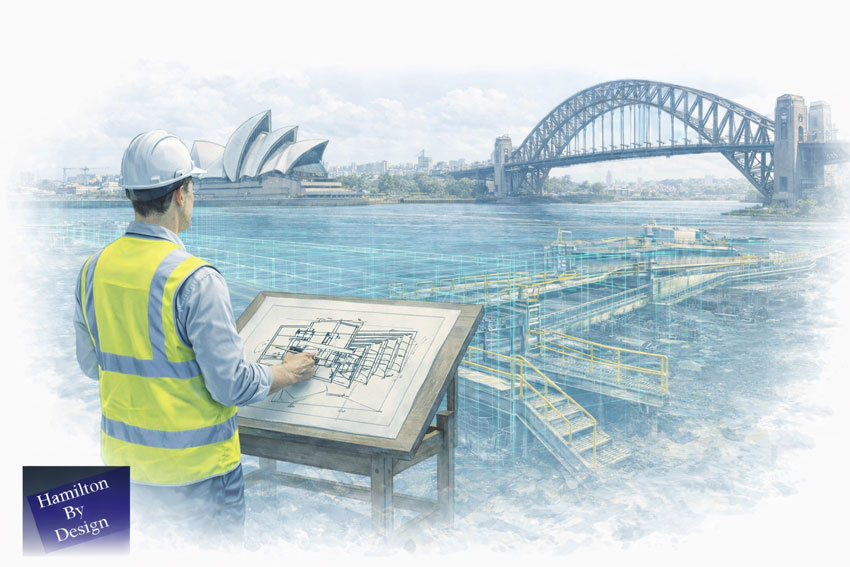

An engineer reviews detailed structural steel drawings at a drafting table while an engineering-grade LiDAR scan captures an existing waterfront structure in Sydney, illustrating data-driven structural drafting based on accurate as-built conditions.

Servicing Kirribilli, North Sydney and Sydney Harbour Precincts

We regularly support projects across:

  • Kirribilli
  • Milsons Point
  • North Sydney
  • Neutral Bay
  • Chatswood
  • Sydney CBD

And integrate scanning with mechanical, structural and drafting services where required.

Whether the project involves refurbishment, compliance or asset documentation, accurate reality capture forms the foundation for reliable engineering decisions.


Supporting Safe Design and Risk Reduction

Accurate site data enables:

  • early hazard identification
  • better access system design
  • improved constructability reviews
  • reduced site modifications during shutdowns

This aligns with Safe Design principles and reduces downstream safety and scheduling risks.


Hamilton By Design logo displayed on a blue tilted rectangle with a grey gradient background

3D LiDAR scanning and 3D modelling service button โ€” laser scanner capturing a point cloud for engineering and CAD modelling
Mechanical engineering services

Talk to Us About 3D Scanning in Kirribilli

If youโ€™re planning refurbishment, compliance upgrades or engineering works in Kirribilli or across Sydneyโ€™s harbour precincts, engineering-grade 3D scanning can eliminate costly unknowns before construction begins.

Contact Hamilton By Design to discuss site capture, modelling and design support for your project.
Blue banner graphic displaying the text "Point Cloud to CAD - Australia" in large white lettering, representing point cloud processing, scan-to-CAD conversion and digital engineering services across Australia.
Blue banner graphic displaying the text "Scan to CAD Sydney" in large white lettering, representing engineering-led point cloud to CAD conversion, LiDAR scanning and digital engineering services in Sydney.
Blue banner graphic displaying the text "Reality Capture Sydney - CBD" in large white lettering, representing engineering-led reality capture, LiDAR scanning and digital engineering services within Sydney CBD commercial buildings and infrastructure.
3D LiDAR scanning and 3D modelling service button โ€” laser scanner capturing a point cloud for engineering and CAD modelling
Mechanical engineering services
Finite Element Analysis (FEA) engineering simulation button
Mechanical engineering services

Brownfield Industrial Upgrades & Shutdown Engineering

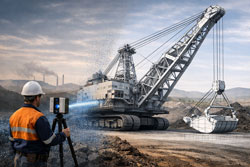
Engineering-grade LiDAR scanning of a dragline at a Hunter Valley mine producing CAD-ready data for SolidWorks and Autodesk Inventor

Brownfield Industrial Upgrades & Shutdown Engineering | Engineering-Led 3D Scanning

Engineering-Led Design, Reality Capture, and Scan-to-CAD for Existing Assets

Brownfield industrial upgrades are where engineering risk is highest โ€” and where assumptions cost the most.
Existing plant, undocumented modifications, restricted access, and shutdown-driven timeframes demand accurate site data, practical engineering judgement, and build-ready design. At Hamilton By Design, we support brownfield upgrades through an engineering-led digital workflow that connects reality capture, scan-to-CAD, and mechanical design to deliver safer, more reliable shutdown outcomes.

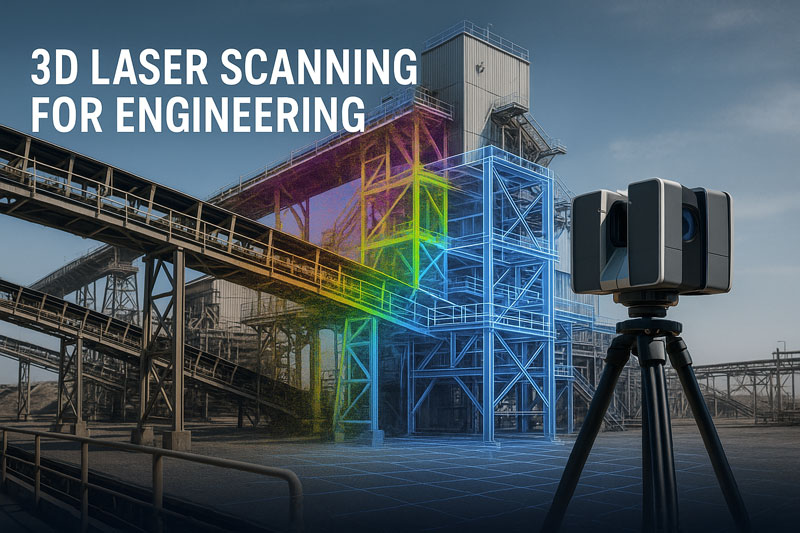
A 3D laser scanner on a tripod capturing an industrial plant structure, with a colourful point cloud and blue CAD wireframe overlay illustrating engineering-grade 3D laser scanning accuracy.

What Defines a Brownfield Upgrade?

A brownfield upgrade involves modifying, extending, or replacing existing operational assets, often under live plant or shutdown constraints.

Typical challenges include:

  • Incomplete or outdated drawings
  • Limited physical access for verification
  • Interfaces with existing structures and services
  • Shutdown windows measured in days, not weeks

These conditions make engineering-led verification essential before design and fabrication begin.


Engineering-Led Reality Capture for Existing Plant

Hamilton By Design uses engineering-grade 3D LiDAR scanning to capture existing conditions accurately, even in complex and congested environments.

This approach allows engineering teams to:

  • Verify as-built conditions without repeated site access
  • Identify clashes and interferences early
  • Design upgrades that fit first time
  • Reduce exposure hours in live plant environments

Reality capture becomes a risk-reduction tool, not just a documentation exercise.


Typical Brownfield Assets We Support

Brownfield upgrades frequently focus on high-wear, high-risk interfaces within industrial and mining facilities.

Hoppers & Chutes

  • ROM hoppers and surge bins
  • Transfer chutes and discharge transitions
  • Wear-prone interfaces and liners

Conveyors & Transfer Stations

  • Conveyor head and tail stations
  • Transfer points and discharge zones
  • Supporting steelwork and access structures

Pump Boxes & Process Interfaces

  • Pump boxes, sumps, and pipe interfaces
  • Structural supports and maintenance access
  • Integration with existing plant services

Vertical Shaft & Drop Structures

  • Vertical shaft hoppers
  • Ore passes and gravity-fed transfers
  • Confined and difficult-to-access assets

These assets are rarely isolated โ€” they sit within tightly constrained systems where accuracy matters.


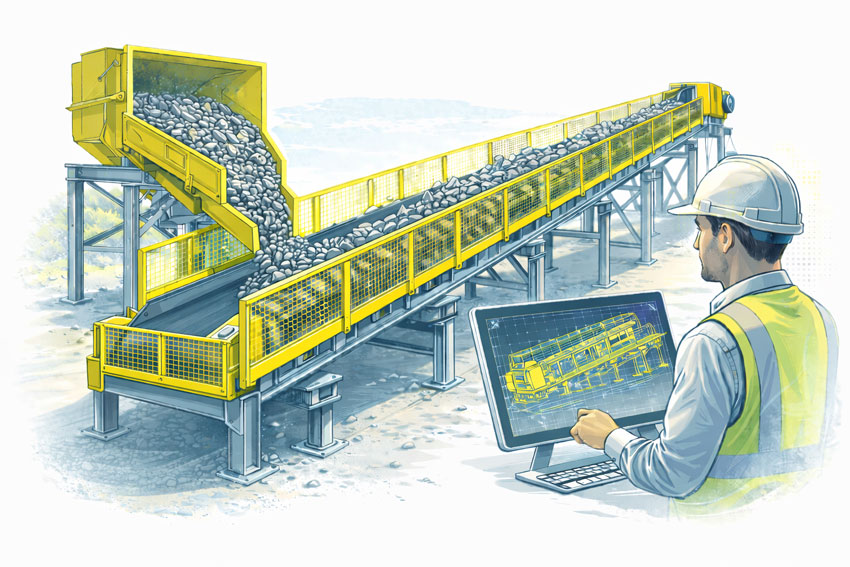
Bulk materials conveyor with compliant safety guarding at the hopper, tail end, and along the conveyor, shown with an engineer reviewing guarding design drawings.

Scan-to-CAD: Turning Reality Into Buildable Design

Point clouds alone donโ€™t deliver projects โ€” engineering-intent models do.

Our scan-to-CAD workflows are developed specifically for:

  • Mechanical and structural design
  • Fabrication-ready detailing
  • Brownfield integration and installation sequencing

By aligning LiDAR data directly with CAD and engineering workflows, we eliminate guesswork and support fit-first-time fabrication.


Reliable Support for Shutdown-Driven Projects

Shutdowns compress months of work into days. There is no tolerance for redesign on site.

Engineering-led reality capture supports shutdown success by:

  • Allowing design to be completed well in advance
  • Supporting off-site fabrication
  • Reducing RFIs and site queries
  • Increasing the amount of work completed per shutdown

Better information means more work done with fewer resources.


Safety Is an Engineering Outcome

Safety outcomes in brownfield environments are determined during planning and design, not during installation.

Accurate site data allows engineers to:

  • Design safer access and maintenance solutions
  • Reduce hot works and re-measurement on site
  • Identify hazards before shutdown execution
  • Improve compliance with Australian Standards

Engineering-led workflows reduce risk across the entire upgrade lifecycle.


Australian Engineering Quality You Can Rely On

Hamilton By Design delivers Australian engineering know-how, grounded in practical site experience.

We donโ€™t just capture data โ€” we:

  • Understand how plant is built and maintained
  • Design with fabrication and installation in mind
  • Take responsibility for engineering outcomes

This approach differentiates us from low-cost capture services that transfer risk downstream.


How This Integrates With Our Engineering Services

Brownfield upgrade support integrates directly with our broader capabilities, including:

  • Bulk material handling engineering
  • Mining and heavy-industry mechanical design
  • Engineering-led 3D scanning and scan-to-CAD workflows

This ensures continuity from site verification through to build-ready deliverables.


Hamilton By Design logo displayed on a blue tilted rectangle with a grey gradient background

3D LiDAR scanning and 3D modelling service button โ€” laser scanner capturing a point cloud for engineering and CAD modelling
Mechanical engineering services

Speak With an Engineer

If youโ€™re planning a brownfield upgrade involving:

  • Hoppers, chutes, or bins
  • Conveyor transfers
  • Pump boxes or process interfaces
  • Vertical shaft or gravity-fed systems
  • Shutdown-critical works

Early engineering-led verification can significantly reduce risk.

Speak with an engineer at Hamilton By Design to discuss your upgrade or shutdown requirements.

Name
Would you like us to arrange a phone consultation for you?
Address

Our clients:


Finite Element Analysis (FEA) engineering simulation button
Mechanical engineering services

3D Laser Scanning in Parramatta: Engineering-Grade Data for Safer Conveyor Systems and Better Risk Management

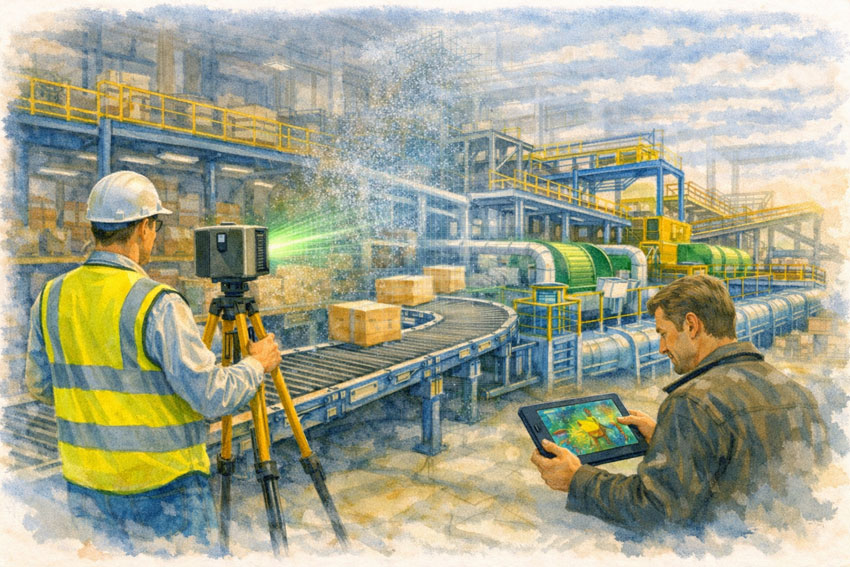
Watercolour illustration of engineers 3D laser scanning a warehouse conveyor system.

In consumer goods manufacturing, distribution centres and logistics facilities around Parramatta and Western Sydney, conveyor systems are mission-critical. Whether moving pallets, cartons, bottles, or bulk packaged goods, these systems must integrate with structural steel, mechanical equipment and building services without compromise.

Yet many existing facilities are built from legacy drawings, partial records or hand-measured surveys. This creates risk when planning upgrades, expansions or tie-ins โ€” especially where conveyors interface with mezzanines, sortation systems, robotics and utilities.

3D laser scanning provides a precise and reliable basis for understanding whatโ€™s actually on site before detailed engineering or shutdown activities begin.


Why Scan First? Engineering-Grade Reality Is the Backbone of Success

A good conveyor design solution depends on accurate understanding of:

  • where conveyors really sit in 3D space
  • how structural beams, columns and supports interact
  • exact locations of mechanical equipment
  • existing pipework, ducts and cable trays
  • access clearances for maintenance and shutdown execution

Traditional tape measures and manual field sketches are slow, error-prone and not suitable for complex conveyor networks. In contrast, 3D laser scanning captures millions of points in minutes and produces engineering-grade point clouds that reflect every surface, pipe, beam and conveyor geometry exactly as it exists.

This scan becomes the backbone of your engineering workflow โ€” a verified digital reference that informs design, reduces risk and underpins safe execution.


3D scanning of FMCG conveyor line shown in soft watercolour style.

From Reality Capture to Practical Engineering Outputs

A registered 3D point cloud delivers value throughout the project lifecycle. Typical deliverables include:

  • Full as-built point clouds: a complete digital record of existing conditions
  • Clash analysis models: identify conflicts between conveyors, structures and services
  • Fabrication-ready geometry: for skid frames, guards, support steel and pipe spools
  • DXF/STEP/Parasolid exports: for mechanical and structural drafting
  • Compatibility with Revit, AutoCAD, Navisworks: for design coordination

The result? Engineers spend more time solving real problems and less time correcting assumptions.


Designing for Safer Conveyor Integration

Upgrading or modifying conveyor systems in FMCG and logistics environments often involves:

  • adding sortation or scanning stations
  • rerouting belt paths to accommodate new equipment
  • expanding mezzanines or catwalks
  • integrating with automated storage and retrieval systems
  • adjusting utilities like compressed air, water or power services
  • installing guarding and safety infrastructure

Each of these tasks intersects with steelwork, services and building elements. Using 3D scan data for design coordination enables:

โœ” accurate spatial modelling
โœ” reduced field rework
โœ” clearer installation instructions
โœ” fewer late changes during shutdowns

This translates directly to lower cost, higher safety and greater schedule confidence.


Better Risk Management Through Verified Data

Conveyor upgrades and expansions are typically scheduled during short shutdown windows. Risk drivers commonly include:

  • uncertainty about existing conditions
  • interference with critical services
  • tight clearances that limit access
  • unexpected clashes on installation
  • insufficient documentation for permits or safety reviews

With scan-derived data, these risks are mitigated early. Design teams can model scenarios before fabrication, check for clashes electronically and articulate installation sequences with confidence.

This isnโ€™t just better practice โ€” itโ€™s good risk management.


As-Built Scanning for Handover Confidence

At project completion, a final 3D laser scan provides an accurate digital as-built model of the upgraded systems. This has several benefits:

  • avoids tape measure as-builts
  • records exact installation geometry
  • supports maintenance planning
  • provides a robust platform for future works
  • becomes an asset for ongoing risk assessments

The organisation receives not just installed equipment, but a verified digital twin for operations and design.


Applications Around Parramatta & Western Sydney

3D laser scanning is highly effective in these local industries:

โœ” FMCG production facilities
โœ” Beverage and food processing plants
โœ” Automated distribution centres
โœ” Parcel sortation hubs
โœ” Packaging and assembly lines
โœ” Warehouse conveyor networks
โœ” Industrial plant upgrades

Across these environments, conveyors are fundamental to throughput โ€” and accurate data is fundamental to success.


Hamilton By Design logo displayed on a blue tilted rectangle with a grey gradient background

3D LiDAR scanning and 3D modelling service button โ€” laser scanner capturing a point cloud for engineering and CAD modelling
Mechanical engineering services

Unlock Better Project Outcomes with 3D Scanning

A robust reality capture strategy delivers measurable improvements to:

  • safety protocols
  • design accuracy
  • fabrication efficiency
  • shutdown predictability
  • project cost control

In an industrial region like Parramatta โ€” where competitiveness depends on efficiency and certainty โ€” laser scanning is not just technology, itโ€™s a strategic engineering enabler.


Ready to Elevate Your Conveyor Project?

If youโ€™re planning a conveyor upgrade, system extension, or facility modification in the Parramatta or Western Sydney region, start with accurate reality capture.

Hamilton By Design Co. provides tailored 3D laser scanning services that support safer, more reliable, and more successful industrial outcomes.

Scan first.
Design with confidence.
Finish with a verified as-built.

Name
Would you like us to arrange a phone consultation for you?
Address

Related Sydney Services

Hamilton By Design provides engineering-led 3D scanning, LiDAR scanning, mechanical engineering and digital engineering services throughout Sydney and Greater Sydney.

Explore our related Sydney services:


  • 3D Scanning Sydney โ€“ Engineering-grade terrestrial laser scanning, as-built surveys and point cloud capture for industrial, infrastructure and commercial projects.
  • Reality Capture Sydney โ€“ High-accuracy reality capture, digital twins, asset documentation and engineering-grade site verification.
  • Scan to CAD Sydney โ€“ Convert point cloud data into AutoCAD, SolidWorks, Inventor and other engineering-ready CAD deliverables.
  • Point Cloud Modelling Sydney โ€“ Engineering-grade point cloud processing, clash detection, as-built verification and 3D modelling.
  • Mechanical Engineering Sydney โ€“ Mechanical design, plant upgrades, materials handling systems, conveyors, chutes, platforms and engineering support.
  • Structural Drafting Sydney โ€“ Structural steel drafting, fabrication drawings, GA drawings, workshop detailing and as-built documentation.

Hamilton By Design supports projects throughout Sydney CBD, Parramatta, Liverpool, Penrith, Blacktown, Chatswood, Alexandria, Mascot, Newcastle and the Central Coast.


Finite Element Analysis (FEA) engineering simulation button
Mechanical engineering services

3D Laser Scanning in Parramatta: Safer Conveyor Design with Engineering-Grade Accuracy

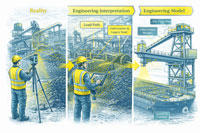
Engineering-grade LiDAR scanning of a brownfield industrial asset, showing the progression from site capture and point cloud interpretation to a fabrication-ready engineering model.

3D Laser Scanning for Conveyor Design & Safe Engineering in Parramatta

Parramatta continues to grow as a major industrial and infrastructure hub for Western Sydney. With ageing plant, frequent upgrades, and tighter safety expectations, many facilities are now turning to engineering-grade 3D laser scanning to improve the way conveyor systems and material handling equipment are designed, modified, and maintained.

At Hamilton By Design, we use high-accuracy LiDAR scanning to capture existing conditions and convert them into precise 3D models that engineers, designers, and maintenance teams can rely on โ€” before anyone picks up a spanner or starts cutting steel.

Why Conveyor Systems Are High-Risk Assets

Conveyors are involved in a significant number of serious workplace incidents across Australia. Common contributors include:

  • Inadequate guarding and access control
  • Poor visibility of nip points and transfer zones
  • Modifications made without updated drawings
  • Space constraints forcing unsafe maintenance practices

In many older facilities around Parramatta, conveyors have been extended, rerouted, or repaired multiple times over decades โ€” often without accurate as-built documentation. This creates real risk when new upgrades or safety improvements are planned.

Without reliable spatial data, design decisions are often made on assumptions, outdated drawings, or rough site measurements.

Engineering-Grade Scanning: Not Just โ€œPretty Picturesโ€

Not all 3D scans are suitable for engineering or safety-critical work.

We use engineering-grade LiDAR scanning capable of delivering dimensional accuracy of approximately ยฑ2 mm over 70 metres, which allows us to:

  • Model conveyor structures, walkways, guards, and transfer stations
  • Detect clashes before fabrication
  • Verify compliance with safe access and guarding requirements
  • Support certified engineering design and sign-off

The resulting point cloud and CAD models become the foundation for proper conveyor design, safety reviews, and fabrication drawings.

This is critical when safe design obligations must be demonstrated under WHS legislation.


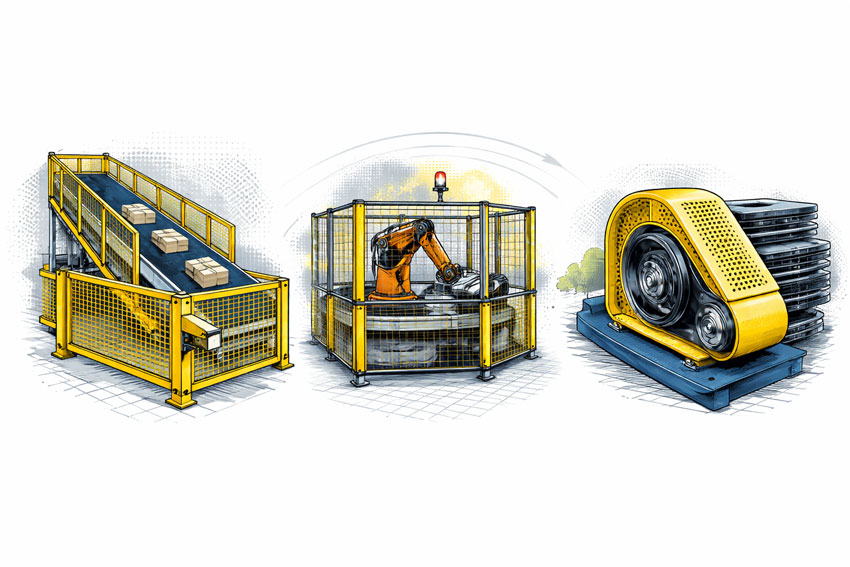
Industrial machine guards including a guarded conveyor, fenced robotic cell, and covered belt drive system

Supporting Safe Design from Concept to Commissioning

Safe Design is not just about guarding at the end of a project โ€” it starts at the design stage.

By scanning your existing plant, we can support:

  • Risk assessments using accurate spatial context
  • Redesign of transfer points and access platforms
  • Guarding upgrades that actually fit the site
  • Maintenance access improvements without production impact

Because models are generated from real geometry, engineers can confidently design modifications knowing they will physically fit when installed.

This reduces shutdown risk, rework, and last-minute site changes โ€” all common contributors to project delays and safety incidents.

Learning from Industry Incidents โ€” and Preventing the Next One

Many conveyor-related incidents share similar root causes:

  • Poor access for cleaning or inspection
  • Unplanned modifications
  • Incomplete hazard identification during design
  • Reliance on legacy drawings that no longer match reality

3D scanning allows hazards to be identified early and reviewed by multiple stakeholders โ€” engineering, safety, operations, and maintenance โ€” using the same accurate model.

It also creates a permanent digital record of the asset at a point in time, which is invaluable for:

  • Incident investigations
  • Compliance documentation
  • Future upgrade planning

In high-risk environments, accurate data is not a luxury โ€” it is a control measure.

Local Scanning and Engineering Support in Parramatta

Hamilton By Design provides on-site 3D scanning and engineering services across Parramatta and Western Sydney, supporting:

  • Conveyor upgrades and replacements
  • Safety improvement projects
  • Plant expansions and brownfield modifications
  • Fabrication and installation planning

Our team is engineering-led, meaning scanning is not treated as a standalone service โ€” it is directly integrated into mechanical design, drafting, and project delivery.

We also provide fabrication-ready drawings and can support workshops with shop details derived directly from scan-based models.


Hamilton By Design logo displayed on a blue tilted rectangle with a grey gradient background

3D LiDAR scanning and 3D modelling service button โ€” laser scanner capturing a point cloud for engineering and CAD modelling
Mechanical engineering services

From Point Cloud to Practical Outcomes

3D scanning is only valuable if it leads to better decisions on the ground.

Our workflow typically includes:

  1. On-site LiDAR scanning with minimal disruption to operations
  2. Registration and cleaning of point cloud data
  3. Conversion into CAD models suitable for engineering design
  4. Design development, safety reviews, and fabrication drawings

This ensures your project is driven by real-world data โ€” not assumptions.

Name
Would you like us to arrange a phone consultation for you?
Address

Related Sydney Services

Hamilton By Design provides engineering-led 3D scanning, LiDAR scanning, mechanical engineering and digital engineering services throughout Sydney and Greater Sydney.

Explore our related Sydney services:


  • 3D Scanning Sydney โ€“ Engineering-grade terrestrial laser scanning, as-built surveys and point cloud capture for industrial, infrastructure and commercial projects.
  • Reality Capture Sydney โ€“ High-accuracy reality capture, digital twins, asset documentation and engineering-grade site verification.
  • Scan to CAD Sydney โ€“ Convert point cloud data into AutoCAD, SolidWorks, Inventor and other engineering-ready CAD deliverables.
  • Point Cloud Modelling Sydney โ€“ Engineering-grade point cloud processing, clash detection, as-built verification and 3D modelling.
  • Mechanical Engineering Sydney โ€“ Mechanical design, plant upgrades, materials handling systems, conveyors, chutes, platforms and engineering support.
  • Structural Drafting Sydney โ€“ Structural steel drafting, fabrication drawings, GA drawings, workshop detailing and as-built documentation.

Hamilton By Design supports projects throughout Sydney CBD, Parramatta, Liverpool, Penrith, Blacktown, Chatswood, Alexandria, Mascot, Newcastle and the Central Coast.


Blue banner graphic displaying the text "Point Cloud to CAD - Australia" in large white lettering, representing point cloud processing, scan-to-CAD conversion and digital engineering services across Australia.
Blue banner graphic displaying the text "Scan to CAD Sydney" in large white lettering, representing engineering-led point cloud to CAD conversion, LiDAR scanning and digital engineering services in Sydney.
Blue banner graphic displaying the text "Reality Capture Sydney - CBD" in large white lettering, representing engineering-led reality capture, LiDAR scanning and digital engineering services within Sydney CBD commercial buildings and infrastructure.

Engineering-Led 3D Scanning for Brownfield Industrial Upgrades

Mechanical engineer and client reviewing a ROM hopper with two discharge conveyors using LiDAR scanning at a mining bulk material handling facility

Engineering-Led 3D Scanning for Brownfield Industrial Upgrades

Safer Shutdowns, Smarter Design, and More Done With Fewer Resources

Brownfield industrial upgrades are some of the highest-risk engineering activities in mining and heavy industry. Existing assets, live plant interfaces, limited access, and tight shutdown windows leave little room for error.

At Hamilton By Design, we deliver engineering-led 3D LiDAR scanning to support brownfield upgradesโ€”providing accurate site data that enables safer design, efficient shutdown execution, and reliable outcomes when upgrading critical assets such as hoppers, chutes, pump boxes, conveyor transfers, and vertical shaft units.


Why Brownfield Upgrades Fail Without Accurate Site Data

Many brownfield failures trace back to the same root cause:

Design decisions made on assumptions, not reality.

Common issues include:

  • Outdated or incomplete drawings
  • Hidden interferences and undocumented modifications
  • Restricted access for survey and measurement
  • Time pressure during shutdowns

Engineering-led reality capture removes uncertainty before fabrication and installation begin.


Safety Starts Before the Shutdown

Safety in brownfield environments is largely determined during the design phase, not on site.

3D LiDAR scanning allows engineers to:

  • Design modifications without repeated site access
  • Reduce manual measurements in live plant areas
  • Identify clashes and pinch points early
  • Improve access, guarding, and maintainability outcomes

By reducing exposure hours and unplanned rework, scanning directly supports safer shutdown execution.


Typical Assets Upgraded in Brownfield Environments

Hamilton By Design supports upgrades to a wide range of industrial assets, including:

Hoppers & Chutes

  • ROM hoppers
  • Transfer chutes
  • Surge bins
  • Wear-prone interfaces

Conveyors & Transfer Stations

  • Conveyor head and tail stations
  • Transfer points
  • Discharge transitions
  • Supporting steelwork

Pump Boxes & Process Interfaces

  • Pump boxes and sumps
  • Pipework interfaces
  • Structural supports
  • Access platforms

Vertical Shaft & Drop Structures

  • Vertical shaft hoppers
  • Ore passes
  • Gravity-fed transfer systems

These assets are often deeply integrated into existing plant, making accurate as-built data critical.


Engineering-Led Scan-to-CAD for Upgrade Design

Our scan-to-CAD workflows are built around engineering outcomes, not just visual models.

This includes:

  • High-accuracy LiDAR capture of existing conditions
  • Engineering-intent CAD modelling
  • Design for fabrication and installation
  • Clash reduction across mechanical and structural scopes

The result is buildable design that aligns with real-world constraints.


Reliable Support for Shutdown-Driven Projects

Shutdowns demand precision. There is no time for re-measurements or redesign on site.

Engineering-led 3D scanning supports shutdown success by:

  • Allowing design to be completed well before shutdown
  • Supporting pre-fabrication of steelwork and chutes
  • Reducing RFIs and site queries
  • Increasing the amount of work completed per shutdown

When time and labour are limited, better information delivers better outcomes.


Mining engineers applying design-for-safety principles to improve material handling systems in an industrial workshop

Getting More Done With Fewer Resources

In todayโ€™s industrial environment, engineering teams are under pressure to:

  • Do more with fewer people
  • Reduce shutdown durations
  • Control capital and maintenance costs

Accurate digital site data allows teams to:

  • Minimise engineering rework
  • Reduce site-based labour
  • Improve coordination between disciplines
  • Make confident decisions faster

Reality capture becomes a force multiplier, not just a documentation tool.


Australian Engineering Quality You Can Rely On

Hamilton By Designโ€™s approach reflects Australian engineering standards and site experience.

We donโ€™t just scan โ€” we:

  • Understand how plant is built and maintained
  • Design with fabrication and installation in mind
  • Take responsibility for engineering outcomes

This sets our work apart from low-cost capture services that leave risk unresolved.


Hamilton By Design logo displayed on a blue tilted rectangle with a grey gradient background


3D LiDAR scanning and 3D modelling service button โ€” laser scanner capturing a point cloud for engineering and CAD modelling
Mechanical engineering services

Speak With an Engineer

If youโ€™re planning a brownfield upgrade involving:

  • Hoppers or chutes
  • Conveyor transfers
  • Pump boxes or sumps
  • Vertical shaft or drop structures
  • Shutdown-critical works

Hamilton By Design provides engineering-led 3D LiDAR scanning to support safer, more reliable brownfield upgrades.

Name
Would you like us to arrange a phone consultation for you?
Address

Our clients:


Finite Element Analysis (FEA) engineering simulation button
Mechanical engineering services

Quality Policy

Hamilton By Design – Quality Policy

1. Purpose

Hamilton By Design is committed to delivering high-quality engineering services that meet client requirements, applicable standards, and regulatory obligations.

Our Quality Policy ensures that all work is performed with technical integrity, accuracy, accountability, and consistency, supporting safe, reliable, and fit-for-purpose outcomes across all projects.


2. Our Commitment to Quality

Hamilton By Design is committed to:

  • Delivering engineering solutions that are accurate, defensible, and fit for purpose
  • Applying sound engineering judgement, not blind replication
  • Meeting or exceeding client, regulatory, and contractual requirements
  • Continually improving our systems, processes, and services
  • Maintaining professional integrity and accountability in all work undertaken

3. Scope

This policy applies to all activities undertaken by Hamilton By Design, including:

  • Mechanical engineering and design
  • Engineering-grade LiDAR and 3D laser scanning
  • 3D CAD modelling and drafting
  • Structural and mechanical analysis
  • Fabrication-ready documentation
  • Engineering support for construction, mining, manufacturing, and industrial assets

The policy applies to employees, directors, contractors, and consultants working on behalf of Hamilton By Design.


4. Quality Objectives

Hamilton By Design achieves quality outcomes by:

  • Understanding client requirements and project objectives before commencing work
  • Defining scope, assumptions, and limitations clearly
  • Applying appropriate standards, codes, and best-practice engineering methods
  • Ensuring drawings, models, and deliverables are checked and reviewed
  • Delivering documentation suitable for construction, fabrication, and site use
  • Maintaining traceability of design decisions and changes

5. Engineering-Led Quality Approach

Quality at Hamilton By Design is underpinned by an engineering-led workflow, including:

  • Engineering-grade data capture suitable for downstream design and fabrication
  • Design intent based on function, safety, and service lifeโ€”not just geometry
  • Integration of scanning, modelling, analysis, and documentation under single-source accountability
  • Professional judgement informed by experience, standards, and site conditions

6. Continuous Improvement

Hamilton By Design is committed to continuous improvement through:

  • Regular review of processes and project outcomes
  • Learning from lessons identified during project delivery
  • Incorporating client feedback
  • Updating systems to reflect industry best practice and technological advancements

Opportunities for improvement are actively encouraged and supported.


7. Compliance and Standards

Hamilton By Design will:

  • Comply with applicable Australian Standards, codes, and legislation
  • Align quality processes with ISO 9001 quality management principles
  • Meet client-specific quality and documentation requirements
  • Ensure records are maintained to demonstrate compliance and traceability

8. Roles and Responsibilities

Management

Management is responsible for:

  • Establishing and maintaining this Quality Policy
  • Providing resources to support quality outcomes
  • Promoting a culture of accountability and continuous improvement

Workers and Contractors

All workers are responsible for:

  • Performing work in accordance with agreed procedures and standards
  • Identifying and reporting quality issues or risks
  • Taking ownership of the quality of their work

9. Review of Policy

This Quality Policy will be reviewed periodically to ensure it remains current, effective, and aligned with:

  • Business objectives
  • Client expectations
  • Legislative and industry requirements

10. Quality Commitment Statement

Hamilton By Design is committed to delivering engineering services you can rely onโ€”accurate, accountable, and fit for purposeโ€”every time.

Approved by:
Hamilton By Design Management

Effective Date: 06/12/2006

3D LiDAR scanning and 3D modelling service button โ€” laser scanner capturing a point cloud for engineering and CAD modelling
Mechanical engineering services
Finite Element Analysis (FEA) engineering simulation button
Mechanical engineering services