Engineering-Led 3D Laser Scanning in Bathurst

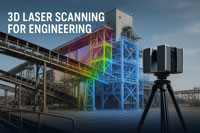
3D laser scanner capturing an industrial structure for engineering-grade digital modelling and verification

3D Scanning Bathurst | Engineering-Grade LiDAR & Scan-to-CAD

Bathurst and the Central West region support a diverse mix of manufacturing facilities, mining operations, quarries, infrastructure assets, utilities, and heritage structures. These environments demand more than survey-grade outputs.

Hamilton By Design combines LiDAR scanning with mechanical engineering expertise, ensuring that:

  • Scan coverage targets critical interfaces and load paths
  • Accuracy supports fabrication-ready design
  • Models reflect real-world constraints, not assumptions

This significantly reduces rework, clashes, and site uncertainty during upgrades or expansions.


Mechanical engineering services by Hamilton By Design, featuring industrial machinery, conveyors, and maintenance engineering.

Our 3D Scanning Services in Bathurst

We provide a complete scan-to-engineering workflow, including:

  • High-resolution terrestrial LiDAR scanning
  • Registered point clouds (colourised and structured)
  • Scan-to-CAD modelling (SolidWorks & engineering CAD)
  • As-built documentation for existing assets
  • Clash detection & design validation
  • Support for mechanical, structural, and fabrication design

All deliverables are tailored to your project scope โ€” from concept planning through to construction and installation.


Typical Bathurst Applications

Our 3D scanning services are commonly used for:

  • Industrial plant upgrades and brownfield modifications
  • Mining and quarry infrastructure
  • Conveyors, chutes, hoppers, and bulk materials handling systems
  • Mechanical equipment replacement and tie-ins
  • Structural steel verification and retrofits
  • Asset documentation and digital twins
  • Risk reduction for shutdown and live-site works

Where required, scanning data is integrated directly into engineering calculations, FEA models, and fabrication drawings.


Hamilton By Design logo displayed on a blue tilted rectangle with a grey gradient background

Why Hamilton By Design

Engineer-Led Scanning

Your scan is planned and executed by engineers who understand loads, tolerances, constructability, and compliance, not just data capture.

Fit-for-Purpose Accuracy

We capture only the data that matters โ€” at the accuracy required for design, fabrication, and installation.

Single-Source Accountability

One team responsible for scanning, modelling, and engineering, eliminating scope gaps between consultants.

Regional & Mobile Delivery

We regularly support projects across Bathurst, Orange, Lithgow, Dubbo, Mudgee, and the broader Central West NSW, mobilising to site as required.


Deliverables You Can Build From

Depending on your project, we can supply:

  • Registered point clouds (E57 / RCP / compatible formats)
  • 3D CAD models aligned to engineering workflows
  • GA drawings and interface layouts
  • Fabrication-ready references
  • Digital records for asset management and future upgrades

Our clients:

3D Scanning Bathurst โ€“ Get Started

If you are planning a retrofit, upgrade, or new installation in Bathurst or Central West NSW, early 3D scanning can significantly reduce risk and cost.

Talk to an engineer about your site
Request a Bathurst 3D scanning proposal
On-site scanning available across the Central West

Name
Would you like us to arrange a phone consultation for you?
Address

3D Construction Scan in Brisbane

Engineering-Grade Reality Capture for Live Construction Environments

Construction projects in Brisbane operate under conditions that place unique pressure on engineers, builders, and asset owners. Subtropical climate, flood-affected sites, reactive soils, dense CBD logistics, and a strong reliance on brownfield upgrades all increase one fundamental risk: designing and constructing from incorrect or outdated site information.

A 3D construction scan in Brisbane provides engineering-grade certainty by capturing what actually exists on site, enabling informed decisions during live construction, refurbishment, and staged delivery projects.


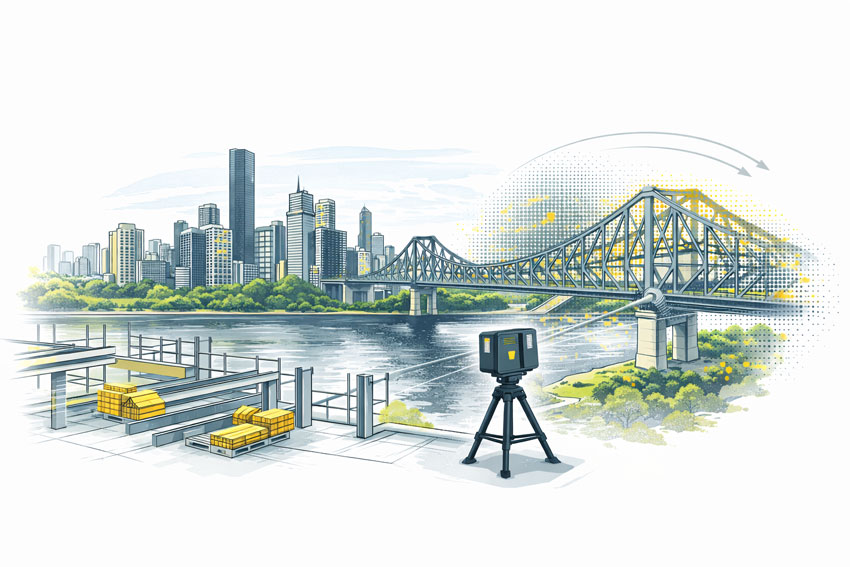
3D construction scanning in Brisbane using a FARO laser scanner at a building site overlooking the Story Bridge and Brisbane River

What Is a 3D Construction Scan?

A 3D construction scan uses high-accuracy LiDAR laser scanning to capture the true as-built condition of a site at a specific point in time. Unlike visual scans or phone-based capture, engineering-grade scanning produces registered point clouds that can be trusted for:

  • Construction coordination
  • Design verification
  • Clash detection
  • Fabrication-ready modelling
  • As-built documentation

Hamilton By Design delivers these outcomes through its engineering-led laser scanning services, where accuracy, downstream use, and construction risk are defined before scanning begins.


https://www.hamiltonbydesign.com.au/laser-scanning-engineering-brisbane-cbd/3d-scanning-brisbane/


Why Brisbane Construction Projects Require a Different Approach

Subtropical Climate & Structural Movement

Brisbaneโ€™s humidity and temperature cycles contribute to thermal expansion, contraction, and cumulative movement across steelwork, pipe runs, conveyors, faรงades, and plant installations.

When construction decisions rely on assumed geometry or legacy drawings, even small movements can result in:

  • Misaligned interfaces
  • Fabrication clashes
  • Installation delays

A 3D construction scan captures the current, in-situ geometry, allowing engineers to design and coordinate based on reality โ€” not historical intent.

Flood-Affected & Modified Assets

Many Brisbane sites โ€” particularly river-adjacent commercial and industrial facilities โ€” have undergone multiple flood recovery and modification cycles. Over time, this results in:

  • Changed floor levels
  • Unrecorded ramps and bunds
  • Altered drainage and gravity-dependent systems

Construction scanning establishes a true datum and elevation baseline, supporting engineering verification of falls, access clearances, and tie-in points.

This capability aligns directly with Hamilton By Designโ€™s broader reality capture and as-built verification workflows.


https://www.hamiltonbydesign.com.au/reality-capture-services/


Brownfield Construction Is the Norm

A significant proportion of Brisbane construction work occurs in live, operational environments, including:

  • Commercial refurbishments
  • Industrial plant upgrades
  • Infrastructure modifications
  • Asset life-extension projects

These sites often contain undocumented steelwork, legacy penetrations, and accumulated modifications. A 3D construction scan enables non-intrusive capture of this complexity, supporting engineering coordination without disrupting operations.

Tight CBD Logistics & Vertical Construction

Brisbaneโ€™s CBD presents unique logistical challenges:

  • Limited laydown space
  • Vertical risers and congested services zones
  • Restricted crane and hoist access
  • Staged installation sequencing

In these environments, components must fit first time. Construction scanning supports:

  • Early clash detection
  • Verification before fabrication
  • Confident off-site prefabrication

This process integrates directly with Hamilton By Designโ€™s 3D point cloud modelling and coordination services.

https://www.hamiltonbydesign.com.au/3d-point-cloud-modelling/

Reactive Soils & Differential Settlement

Reactive clay soils common throughout South-East Queensland contribute to long-term differential settlement, particularly where new construction interfaces with older structures. Over time, this can lead to:

  • Misaligned columns and beams
  • Drift in conveyors and pipe racks
  • Geometry that no longer matches design intent

A construction scan captures current condition, enabling engineers to design extensions and upgrades that reflect actual site geometry.


Construction Scanning vs Generic 3D Scanning

Not all scanning is suitable for construction engineering.

AspectGeneric ScanEngineering-Led Construction Scan
AccuracyVisual or indicativeMillimetre-grade
OutputMeshes or imagesRegistered point clouds
Engineering UseLimitedDesign & fabrication
Risk ReductionLowHigh
Construction ReadyNoYes

Hamilton By Design positions construction scanning as part of an integrated engineering workflow, not a standalone data capture exercise.


https://www.hamiltonbydesign.com.au/3d-engineering-services/


How 3D Construction Scans Are Used on Brisbane Projects

Engineering-grade construction scans are routinely used to support:

  • Clash detection across structure and services
  • Verification scans prior to fabrication
  • Construction sequencing and staging
  • As-built documentation for handover
  • Reduced RFIs, rework, and site delays

These outcomes are particularly valuable on commercial and construction projects where access, timing, and accuracy are critical.


https://www.hamiltonbydesign.com.au/commercial-construction-engineering/


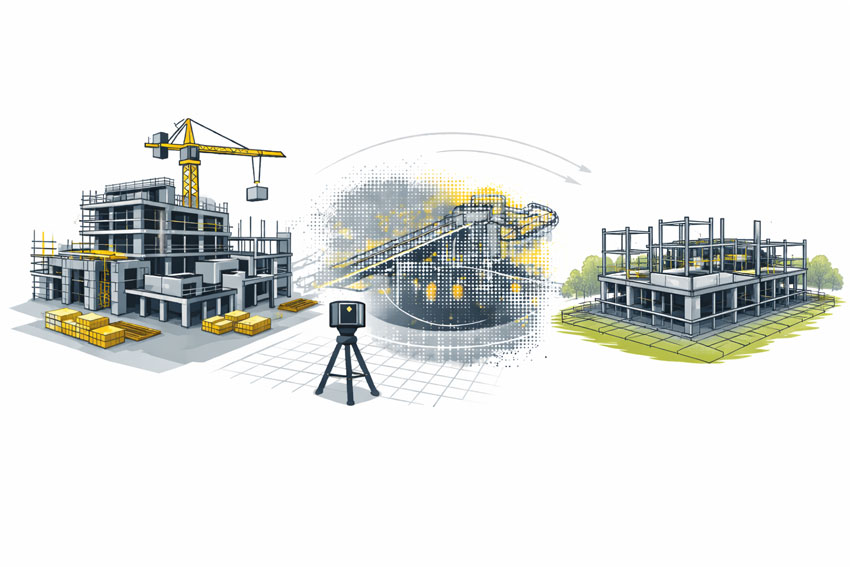
3D laser scanning of a commercial building under construction showing as-built capture and coordination before wall closure

The Hamilton By Design Difference

Hamilton By Design delivers engineering-grade 3D construction scanning with a clear focus on constructability and downstream use.

Our approach combines:

  • Engineer-led scanning strategies
  • Defined accuracy requirements
  • Integration with mechanical and structural design
  • Outputs suitable for fabrication and installation

This approach ensures construction teams can rely on scan data with confidence โ€” especially on complex Brisbane projects.


When should a 3D Construction Scan Be Used?

A 3D construction scan in Brisbane is most valuable when:

  • Working in brownfield or live environments
  • Verifying conditions before fabrication
  • Coordinating multiple trades in tight spaces
  • Managing staged refurbishments
  • Reducing construction risk and uncertainty

Hamilton By Design logo displayed on a blue tilted rectangle with a grey gradient background

In Brisbane, construction risk is rarely driven by poor engineering.
It is driven by decisions made using incorrect or outdated information.

A 3D Construction Scan in Brisbane provides one critical advantage:
certainty about what actually exists on site, at the moment decisions are made.

Finite Element Analysis (FEA) engineering simulation button
3D LiDAR scanning and 3D modelling services button
Building and construction services button

Our clients:

Name
Would you like us to arrange a phone consultation for you?
Address

From Reality to Fabrication

From Reality to Fabrication: Engineering-Led 3D Modelling, Structural Verification and Build-Ready Documentation

In industrial and infrastructure projects, success is rarely determined by intent alone. It is determined by how accurately existing conditions are understood, how rigorously designs are validated, and how clearly fabrication information is communicated. At Hamilton By Design, we bridge the gap between site reality and fabrication by combining engineering-led 3D modelling, structural engineering, finite element analysis (FEA), and fabrication-ready documentation into a single, accountable workflow.

This integrated approach ensures that what is designed can be built, fits the first time, and performs as intended in service.

3D Modelling for Fabrication: Designing What Can Actually Be Built

3D modelling for fabrication is not simply about producing visually accurate geometry. It is about creating models that reflect real-world constraints, manufacturing tolerances, installation access, and structural behaviour. Hamilton By Design develops fabrication-grade 3D CAD models that are built around how components will be cut, welded, machined, lifted, and installed.

Our models are typically informed by site measurements, laser scanning, and as-built data to ensure alignment with existing structures and equipment. This is particularly critical in brownfield environments such as processing plants, material handling facilities, and industrial upgrades where assumptions based on legacy drawings are unreliable.

Each model is developed with downstream use in mind. Hole sizes, weld preparations, plate thicknesses, member sizes, and connection details are defined so fabricators can confidently transition from model to manufacture without reinterpretation or rework.

Structural Engineering Embedded in the Modelling Process

Structural engineering at Hamilton By Design is not a separate, downstream exercise. It is embedded directly within the 3D modelling process. Structural load paths, support conditions, connection behaviour, and serviceability requirements are considered as the model evolves, not after geometry is frozen.

This integrated method allows structural considerations to inform design decisions early, reducing late-stage redesigns and cost escalation. It also ensures compliance with relevant Australian Standards and industry-specific requirements, whether the project involves steel structures, plant support frames, access platforms, equipment foundations, or retrofit works.

By developing the structural model in parallel with the fabrication model, we maintain alignment between engineering intent and physical deliverables.

Finite Element Analysis: Verifying Performance, Not Guessing

Finite Element Analysis (FEA) plays a critical role in validating that a design will perform safely and efficiently under real operating conditions. Hamilton By Design applies FEA to assess stresses, deflections, load sharing, vibration response, and fatigue risk across a wide range of industrial applications.

FEA is particularly valuable where traditional hand calculations are insufficient or overly conservative. Complex geometries, dynamic loading, eccentric supports, impact forces, and non-uniform load distributions can all be assessed with greater confidence using simulation-based analysis.

Our FEA workflows are directly linked to the 3D CAD models used for fabrication. This ensures consistency between the analysed geometry and the manufactured outcome. Where analysis identifies areas of concern, design modifications are implemented directly in the model, creating a closed-loop engineering process that improves both safety and constructability.

As-Built Documentation: Capturing What Exists, Not What Was Assumed

Accurate as-built documentation is fundamental to effective engineering decision-making. In many facilities, original drawings are outdated, incomplete, or no longer representative of the installed condition. Hamilton By Design produces engineering-grade as-built documentation that reflects the true geometry and configuration of existing assets.

As-built documentation may include 3D models, general arrangement drawings, sectional views, and measured dimensions that form a reliable baseline for future upgrades, maintenance planning, and compliance assessments. This information reduces uncertainty, supports safer design decisions, and enables more efficient project planning.

For clients managing long-life assets, high-quality as-built data becomes a strategic resource rather than a one-off deliverable.

Fabrication Drawings That Reduce Risk on the Workshop Floor

Fabrication drawings are the point where engineering intent meets manufacturing reality. Poorly defined drawings lead to RFIs, delays, rework, and disputes. Hamilton By Design produces clear, unambiguous fabrication drawings that fabricators can trust.

Our drawings typically include detailed part drawings, assembly drawings, weld symbols, material specifications, tolerances, and notes aligned with the approved engineering model. Because these drawings are derived directly from fabrication-ready 3D models that have been structurally verified, inconsistencies between design and manufacture are minimised.

This approach supports faster fabrication turnaround, improved quality control, and smoother installation on site.

A Single, Accountable Engineering Workflow

One of the key advantages of Hamilton By Designโ€™s approach is single-source accountability. By delivering 3D modelling for fabrication, structural engineering, FEA, as-built documentation, and fabrication drawings within a unified workflow, we remove the handover gaps that often exist between consultants, designers, and fabricators.

Clients benefit from clearer communication, reduced coordination risk, and designs that are technically sound, buildable, and aligned with operational requirements. Fabricators benefit from models and drawings that reflect real conditions and engineering intent. Asset owners benefit from safer, more reliable outcomes delivered with fewer surprises.

Hamilton By Design logo displayed on a blue tilted rectangle with a grey gradient background

Engineering That Stands Up in the Real World

At Hamilton By Design, engineering is not about producing documents in isolation. It is about delivering outcomes that work in the real worldโ€”on site, in fabrication workshops, and over the life of an asset. By integrating 3D modelling for fabrication with structural engineering, finite element analysis, as-built documentation, and fabrication drawings, we provide a robust foundation for successful industrial projects.

This engineer-led, fabrication-focused approach ensures that designs are not only accurate on screen, but reliable, buildable, and fit for purpose in operation.

Our clients:


Name
Would you like us to arrange a phone consultation for you?
Address

3D CAD Modelling | 3D Scanning

Hamilton By Design

3D Scanning Engineering in Cobar

3D Scanning Engineering in Cobar

Cobar is one of Australiaโ€™s classic outback mining towns. Known for its deep underground copper and polymetallic mines, engineering in Cobar is shaped by heat, dust, isolation, and long-life assets that have been modified many times over decades. It is an environment where practical engineering, accurate information, and โ€œright-first-timeโ€ delivery matter.

Hamilton By Design supports projects in and around Cobar by combining 3D LiDAR laser scanning, mechanical and structural engineering, 3D CAD modelling, FEA, and fabrication-ready drafting. This integrated approach helps mining and industrial projects move forward with confidenceโ€”without relying on assumptions or outdated drawings.

Engineering challenges unique to Cobar

Engineering in Cobar rarely starts with a blank slate. Most sites are brownfield, with infrastructure that has evolved over time and documentation that may be incomplete or no longer accurate. Combined with deep underground workings, extreme heat, and long supply chains, this creates a strong need for accurate as-built data before any design or fabrication begins.

This is where digital engineering workflows deliver real value.

3D Laser Scanning for Cobar mining and industrial sites

Hamilton By Design uses high-accuracy 3D Laser Scanning to capture the true as-built condition of mining and industrial assets in Cobar. Laser scanning records millions of precise measurements, creating a complete digital record of existing plant, structures, and interfaces.

3D laser scanning is particularly valuable in Cobar for:

  • Underground and surface mining infrastructure
  • Brownfield plant and steelwork
  • Assets with limited or outdated drawings
  • Projects with tight shutdown windows

Scanning is completed during short, controlled site visits, minimising disruption while providing reliable data that can be used throughout the project.

From scan data to accurate 3D models

Once scanning is complete, data is processed off site and converted into detailed 3D CAD Modelling. These models reflect what actually exists on siteโ€”not what legacy drawings suggest should exist.

For Cobar projects, scan-based 3D modelling supports:

  • Mechanical upgrades and equipment replacements
  • Structural additions such as platforms, supports, and access ways
  • Integration of new assets into constrained layouts
  • Long-term digital records for future maintenance and upgrades

Working from accurate models significantly reduces uncertainty and rework.

Mechanical and structural engineering built on reality

Engineering in Cobar often involves integrating modern equipment into ageing infrastructure. By working directly from scan-derived models, engineers can:

  • Understand existing load paths and constraints
  • Check clearances and access early
  • Coordinate mechanical and structural elements in a single environment

This leads to designs that are practical, buildable, and aligned with site realities.

FEA to verify performance and safety

Where performance, fatigue, or compliance is critical, Hamilton By Design applies FEA Capabilities to support engineering decisions.

Finite Element Analysis is commonly used in Cobar to:

  • Check structural capacity of existing assets
  • Assess modifications to ageing steel and supports
  • Review fatigue, vibration, and deflection
  • Support engineering approval and sign-off

Using FEA on scan-based geometry provides confidence that designs will perform as intended under real operating conditions.

Easy-to-build fabrication drawings with engineering approval

Clear documentation is essential for remote locations like Cobar, where rework is costly and time-consuming. Hamilton By Design produces fabrication-ready Drafting directly from coordinated 3D models.

Typical deliverables include:

  • General arrangement and detail drawings
  • Fabrication and installation drawings
  • Engineering-reviewed and approval-ready documentation

This focus on clarity and constructability helps fabricators and site teams build accurately the first time.

Reducing site risk through digital engineering

By capturing site conditions once and completing most engineering off site, projects benefit from:

  • Fewer site visits and lower travel costs
  • Reduced safety exposure
  • Better coordination before fabrication
  • Higher confidence during installation

For Cobarโ€™s remote and demanding environment, this approach delivers measurable project benefits.

Hamilton By Design logo displayed on a blue tilted rectangle with a grey gradient background

Practical engineering outcomes for Cobar

Cobar engineering demands solutions that are robust, maintainable, and grounded in reality. Hamilton By Designโ€™s integrated scanning and engineering workflow brings together accurate data, sound engineering judgement, and clear documentation to deliver upgrades that work first time.

3D Scanning Engineering in Cobar is about turning complex, brownfield conditions into clear, buildable engineering outcomesโ€”supporting mining operations now and into the future.

Our Clients:

Name
Would you like us to arrange a phone consultation for you?
Address

3D CAD Modelling | 3D Scanning

3D Scanning Engineering in Broome

3D Scanning Engineering in Broome

Precision Engineering, 3D LiDAR Scanning, Modelling & Drafting for WAโ€™s Northwest

Broome isnโ€™t just a tourism icon โ€” itโ€™s a strategic industrial gateway for the Kimberley and wider Northwest region. With its mix of coastal infrastructure, aviation hubs, port operations, aquaculture, remote-area logistics, defence presence, and fast-growing construction and industrial service sectors, Broome demands accurate engineering, resilient design, and clear digital documentation.

Hamilton By Design supports Broome and the Northwest with 3D LiDAR laser scanning, advanced engineering, 3D CAD modelling, and fabrication-ready drafting โ€” giving local operators, fabricators, builders, and councils the precise data they need to design, upgrade and maintain complex assets.


Why Broome Is Unique for Engineering & 3D Digital Capture

Broome presents engineering challenges unlike any other region in Australia:

1. Cyclone-Prone Coastal Conditions

Infrastructure must withstand extreme weather, high winds, saltwater exposure and corrosion cycles.

2. Remote-Region Logistics

Every upgrade, installation or fabrication effort must be done right the first time โ€” rework is costly due to distance, travel, and mobilisation requirements.

3. Diverse Infrastructure Portfolio

Broomeโ€™s economy spans:

  • Port and marine services
  • Aquaculture and pearling facilities
  • Aircraft/airport operations
  • Utilities and water assets
  • Community and tourism developments
  • Defence and government infrastructure

Each requires accurate as-built documentation and engineering certainty.

4. Heritage, Environment & Cultural Sensitivity

Design and construction must consider local heritage, Indigenous stewardship, and coastal environmental constraints.

This makes 3D scanning and digital engineering essential for project planning, structural upgrades, fabrication works, and long-term maintenance.


High-Accuracy 3D LiDAR Scanning for Broome Projects

Hamilton By Design provides millimetre-accurate scanning to document existing structures, marine assets, foundations, terrain, utilities, steelwork, and equipment layouts.

Learn more about our scanning capabilities:
3D Laser Scanning

3D scanning reduces site risk, improves precision, and allows remote teams to view and measure the site digitally without multiple visits โ€” ideal for Broomeโ€™s remote context.

We support:

  • Wharf and jetty upgrades
  • Aquaculture processing & pipeline systems
  • Industrial workshops
  • Remote utilities infrastructure
  • Structural condition assessment
  • Coastal facility expansion
  • New-build design coordination

3D CAD Modelling โ€” Digital Twins for Better Engineering Decisions

After scanning, our team converts point-clouds into detailed mechanical, structural and civil 3D models.

Learn more:
3D CAD Modelling

These models support:

  • concept layouts
  • clash detection
  • fabrication planning
  • equipment integration
  • structural and mechanical coordination
  • tender documentation
  • regulator submissions

For Broome operators, digital models mean fewer delays, improved communication, and precise fabrication โ€” even when suppliers are hundreds or thousands of kilometres away.


Engineering & FEA for Coastal, Industrial and Remote-Region Assets

Broome assets must handle corrosion, high wind loads, dynamic forces, mechanical wear and extreme temperatures.

Hamilton By Design provides:

  • structural analysis (steelwork, platforms, frames, supports)
  • mechanical design for machinery, conveyors, pipework and plant equipment
  • fatigue, stress, vibration and pressure modelling
  • load assessments for marine and coastal assets
  • design verification and documentation

Explore our analysis capabilities:
FEA Capabilities

This ensures projects in Broome are safe, compliant and resilient.


Drafting & Documentation for Fabricators, Builders & Councils

We produce complete drawing packages that Broomeโ€™s industries rely on, including:

  • GAs and layouts
  • Structural detailing
  • Isometrics
  • Workshop fabrication drawings
  • As-built records
  • Revision and modification documentation

Learn more:
Drafting

Our drafting aligns directly with field-accurate scan data, giving fabricators and contractors confidence from day one.


Hamilton By Design logo displayed on a blue tilted rectangle with a grey gradient background

Why Broome Operators Choose Hamilton By Design

  • Engineer-led scanning for accuracy, safety and context
  • End-to-end capability โ€” scan โ†’ model โ†’ engineer โ†’ draft
  • Reduced travel cost due to remote digital access
  • Fewer errors, clashes and fabrication issues
  • Fast turnaround even for remote locations
  • Proven experience in mining, marine, industrial and regional projects

Broomeโ€™s infrastructure is growing โ€” and precise engineering is essential. With 3D scanning, modern modelling, and strong engineering expertise, Hamilton By Design helps the Northwest build better, faster and with full confidence.
Our Clients

Name
Would you like us to arrange a phone consultation for you?
Address

SolidWorks Mechanical Design Services

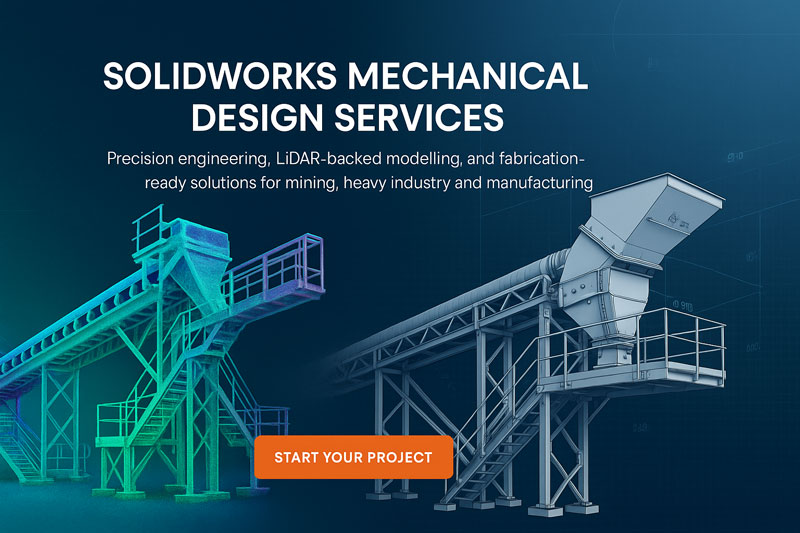
Hero image showing a LiDAR-coloured point-cloud model of an industrial conveyor system on the left transitioning into a detailed SolidWorks 3D CAD model on the right, with the heading โ€˜SolidWorks Mechanical Design Servicesโ€™ and a call-to-action button that reads โ€˜Start Your Projectโ€™

SolidWorks Design Services

The Many Faces of Mechanical Design: How SolidWorks Powers Modern Engineering Across Australia

At Hamilton By Design, we see the same pattern every day across mining, heavy industry, manufacturing, and complex brownfield environments: the quality of engineering outcomes depends directly on the quality of the models driving them. And when it comes to mechanical design, SolidWorks remains one of the most capable and versatile platforms on the planet.

From dragline components to sheet metal enclosures, from pressure vessel upgrades to bespoke robotics, SolidWorks enables engineers to turn ideas into precise, fabrication-ready models that reduce rework, eliminate uncertainty, and accelerate project delivery.

Below, we explore the full spectrum of mechanical design disciplines where SolidWorks excels โ€” and how Hamilton By Design uses this capability to deliver accurate, reliable, engineering-grade outcomes across Australia.

Why SolidWorks Remains the Backbone of Mechanical Design

SolidWorks brings together parametric modelling, simulation, large assembly performance, surfacing, sheet metal tools, weldments, routing and visualisation under a single environment. The result is powerful:

โœ” Engineering that is data-driven
โœ” Models that are precise and fabrication-ready
โœ” Assemblies that reflect true site conditions
โœ” Designs that respond intelligently to changes
โœ” Drawings that follow Australian Standards
โœ” Seamless integration with LiDAR-based as-builts

When paired with Hamilton By Designโ€™s LiDAR scanning workflows, SolidWorks becomes an engine for delivering zero-guesswork mechanical design.


Mechanical Design Disciplines Perfectly Suited to SolidWorks Modelling
SolidWorks supports a huge range of engineering tasks. Below is a deep dive into the disciplines where Hamilton By Design deploys it every day.

1. Machine Design: Precision for Moving Systems

SolidWorks is a natural fit for mechanical equipment upgrades and R&D design work, including:
  • Gearboxes, shafts, keys, couplings
  • Linear motion systems and actuators
  • Mechanical linkages, cams and levers
  • Robotic mechanisms
  • Safety guards, enclosures and subframes
  • Automation concept development

Whether weโ€™re modelling a drive assembly for a conveyor or designing a new piece of automated equipment, SolidWorks gives us full control over the mechanics, kinematics, clearances and manufacturability.


2. Structural Mechanical Design: Frames, Platforms & Fabrication

Mining and industrial plants rely heavily on welded structures and access systems. SolidWorks weldments excel at:

  • Platforms, walkways and stair systems
  • Equipment bases, skids and structural frames
  • Gantries, monorails and supports
  • Pipe supports and brackets
  • Structural reinforcements and upgrade scopes

Built-in cut lists, profile libraries and FEA ensure every frame is practical, safe and fabrication-ready.


3. Pressure Vessels, Tanks & Piping Systems

SolidWorks is an ideal tool for pressure-bound components and interconnected plant systems:

  • Tanks, vessels, bins and hoppers
  • Nozzles, flanges, stiffeners and ladders
  • Pipe routing and spooled sections
  • Chute systems, transitions and flow paths
  • Wear liners and maintenance-friendly redesigns

With stress linearisation, buckling analysis and accurate geometry import from LiDAR scans, we ensure designs meet engineering intent and fit up perfectly on site.


4. Sheet Metal: From Light Fabrication to Industrial Ducting

SolidWorks is the industry standard for sheet metal components:

  • Ducting and HVAC transitions
  • Guards, housings and folded enclosures
  • Electrical cabinets
  • Chute panels
  • Laser-cut and folded brackets

Automatic flat patterns and K-factor control mean fewer mistakes at the plasma/laser cutters and more predictable outcomes for fabricators.


5. Heavy Industry & Mining Equipment Modelling

Hamilton By Designโ€™s roots in mining and heavy industry make SolidWorks invaluable for:

  • Conveyor components and guarding
  • Diverter chutes, hoppers and flow-optimised transitions
  • Bucket-wheel reclaimer parts
  • Crusher and screen upgrades
  • Dragline component modelling
  • Structural deformation/realignment scopes

Combined with LiDAR scanning, SolidWorks becomes the tool that eliminates shutdown fit-up problems.


6. Product Design & Industrial Design

SolidWorksโ€™ surfacing and parametric tools are ideal for:

  • Consumer products
  • Power tools and ergonomic items
  • Injection-moulded components
  • Kitchen or appliance prototypes
  • Concept development for early-stage R&D

It supports rapid iterations, rendering, and export for 3D printing.


7. Robotics & Automation Systems

With the rise of automated processing and Industry 4.0, SolidWorks continues to shine in:

  • End effectors
  • Robotic arms and actuators
  • Kinematic studies
  • Sensor housings
  • Concept layouts for automated cells

We frequently pair this with our LiDAR models of existing plants to create automation solutions that genuinely fit the space.


8. Tooling, Jigs & Fixtures

Fabrication and machining rely on accurate tooling, and SolidWorks helps us design:

  • Welding jigs
  • Machining fixtures
  • Assembly tooling
  • Positioning and inspection gauges
  • Drill guides and alignment tooling

Parametric updates make future modifications simple and consistent.


9. Material Handling Systems

Across mining, ports, agriculture and waste facilities, SolidWorks supports:

  • Conveyor layouts
  • Screw and chain conveyors
  • Transfer chute redesigns
  • Feeders, bins and flow systems
  • Skids and support structures

We routinely pair mechanical redesign with simulation, checking wear patterns, stresses and clearances.


10. Reverse Engineering & As-Built Modelling from LiDAR

This is where Hamilton By Design leads the industry.

We scan sites with millimetre-level LiDAR, then rebuild clean parametric models in SolidWorks for:

  • Brownfield upgrades
  • Fit-up verification
  • Clash detection
  • Replacements and like-for-like manufacturing
  • Structural deformation assessments
  • Shutdown planning

It is the combination of LiDAR + engineering + SolidWorks that gives clients complete confidence in their next project.


How Clients Benefit from SolidWorks-Driven Mechanical Design

โœ” Reduced rework

โœ” Faster shutdown upgrades

โœ” Accurate manufacturing drawings

โœ” Better communication between engineers, fabricators and site teams

โœ” Safer and more predictable installations

โœ” Clear, simulation-backed decision-making

From CHPPs to ports, from power stations to manufacturing plants, SolidWorks modelling allows Hamilton By Design to deliver engineering outcomes you can trust.


Hamilton By Design logo displayed on a blue tilted rectangle with a grey gradient background

Partner With Hamilton By Design for SolidWorks Mechanical Design

We support clients across:

  • NSW (Sydney, Newcastle, Central Coast, Hunter Valley)
  • QLD (Bowen Basin, Surat Basin, Mount Isa)
  • WA (Perth, Pilbara)
  • SA, VIC and regional Australia

If your next project needs mechanical accuracy, design certainty or LiDAR-integrated engineering, our team is ready to support you.

Name
Address
You would like to:

Our clients

SolidWorks

3D Laser Scanning

Engineering Projects

Engineering Services

3D Laser Scanning for Engineering