AS ISO 5725 and 3D LiDAR Scanning

Why Accuracy, Precision, and Calibration Matter for Engineering Outcomes

When 3D LiDAR scanning is used for engineering, fabrication, or certification, the most important question is not how detailed the point cloud looks, but whether the measurements can be trusted.

This is where AS ISO 5725 โ€” Accuracy and Precision of Measurement becomes relevant. While AS ISO 5725 is not written specifically for LiDAR scanners, it defines the principles that determine whether any measurement system is suitable for engineering use.

In practical terms, AS ISO 5725 separates data that can support engineering decisions from data that is visually convincing but technically unreliable.
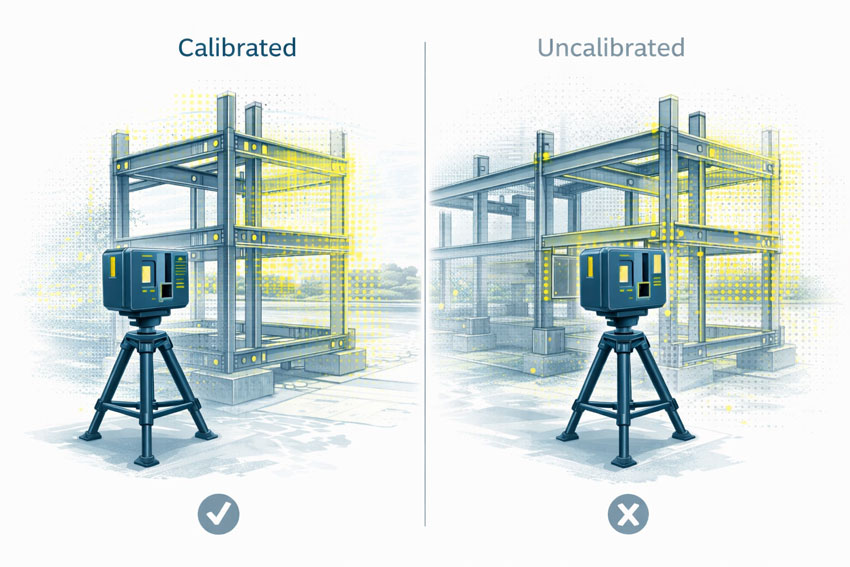

Comparison of calibrated and uncalibrated 3D LiDAR scanning, showing a calibrated scanner with aligned point cloud and steel frame geometry, and an uncalibrated scanner with visibly misaligned measurement data

What AS ISO 5725 Covers

AS ISO 5725 defines how measurement systems should be evaluated in terms of:

  • Accuracy
  • Precision
  • Repeatability
  • Reproducibility
  • Measurement uncertainty

These principles apply directly to 3D LiDAR scanning because a LiDAR scanner is, at its core, a measurement instrument. When scanning data is used to inform design, fabrication, or certification, the expectations set by AS ISO 5725 apply regardless of scanner brand or software.

This is why engineering-grade 3D LiDAR scanning requires more than simply capturing a dense point cloud. It requires controlled measurement, understood uncertainty, and validated outputs, as delivered through engineering-grade 3D laser scanning workflows:
https://www.hamiltonbydesign.com.au/home/engineering-services/3d-laser-scanning/


Accuracy vs Precision in LiDAR Scanning

AS ISO 5725 makes a clear distinction between accuracy and precision, a distinction that is often misunderstood in reality capture.

Accuracy describes how close a measurement is to the true value.
Precision describes how consistently the same measurement can be repeated.

A LiDAR scan can appear highly precise, with clean and consistent geometry, while still being inaccurate if the scanner is miscalibrated or poorly controlled. In engineering terms, repeatable errors are still errors.

For engineering and fabrication, both accuracy and precision are required.


The Role of Calibration

Calibration ensures that a scannerโ€™s distance and angular measurements align with known reference values. Without calibration, a LiDAR scanner may still operate normally and still produce visually impressive results, but the measurements no longer have a known or defensible level of uncertainty.

Calibration directly affects:

  • Distance measurement
  • Angular accuracy
  • Alignment between internal sensors
  • Registration between multiple scans

AS ISO 5725 does not prescribe how calibration must be performed, but it does establish the expectation that measurement uncertainty is understood and controlled.


What Happens When Scanning Is Not Calibrated

When LiDAR scanning is not properly calibrated or verified, errors propagate into every downstream deliverable.

Common outcomes include:

  • Fabricated steelwork that does not fit on site
  • Bolt holes and connection points outside tolerance
  • Frames requiring on-site modification or rework
  • Assumed clearances that do not exist in reality
  • Delays or challenges during engineering sign-off

These issues are often discovered late in a project, where the cost of correction is highest. The root cause is frequently measurement error introduced at the scanning stage, not fabrication quality.

This is particularly critical in design-for-fabrication workflows, where scanning data is used to develop fabrication-ready designs:
https://www.hamiltonbydesign.com.au/fabrication-product-design/


The Compounding Effect of Small Errors

One of the most significant risks in unverified scanning workflows is that errors are often small enough to go unnoticed early.

A few millimetres of error at the scanning stage can compound into much larger discrepancies once geometry is modelled, detailed, and fabricated. Across multiple interfaces, these small deviations can lead to misalignment, rework, or compromised installation quality.

For fit-first-time fabrication, this risk is unacceptable.
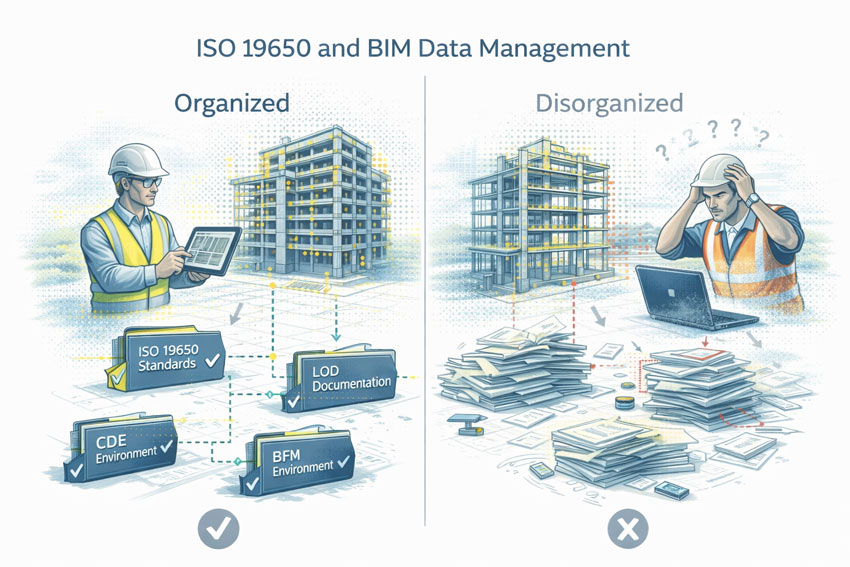

Illustrated comparison of ISO 19650 BIM information management, showing an organised digital model with structured data on one side and a disorganised model with fragmented documentation on the other.

Engineering Responsibility and Certification Risk

When LiDAR data is used to support engineering decisions, responsibility does not sit with the scanner or the software. It sits with the engineer relying on the data.

If measurements cannot be demonstrated as accurate, repeatable, and appropriately controlled, they are not suitable to support engineering sign-off. This is particularly relevant where scanning data contributes to certification outcomes, where accountability and defensibility are essential.

Engineering certification must be based on verified measurements, supported by controlled data capture and documented processes:
https://www.hamiltonbydesign.com.au/home/engineering-services/engineering-certification/


Why AS ISO 5725 Matters in Practice

AS ISO 5725 is not about paperwork or compliance for its own sake. It provides the framework that ensures measurement data used for engineering decisions is fit for purpose.

When LiDAR scanning is undertaken with accuracy, precision, and calibration treated seriously, it becomes a powerful engineering tool. When these principles are ignored, scanning becomes a source of hidden risk that only emerges when it is too late to correct cheaply.


Hamilton By Design logo displayed on a blue tilted rectangle with a grey gradient background

Final Thought

3D LiDAR scanning is only as reliable as the measurement discipline behind it.

AS ISO 5725 provides the foundation for understanding whether scanning data can be trusted. In engineering, fabrication, and certification contexts, that trust is not optional โ€” it is essential.


Structural drafting services button
Building and construction services button
Mechanical drafting services button

Our clients:

Name
Would you like us to arrange a phone consultation for you?
Address

3D Scanning Engineering in Broome

3D Scanning Engineering in Broome

Precision Engineering, 3D LiDAR Scanning, Modelling & Drafting for WAโ€™s Northwest

Broome isnโ€™t just a tourism icon โ€” itโ€™s a strategic industrial gateway for the Kimberley and wider Northwest region. With its mix of coastal infrastructure, aviation hubs, port operations, aquaculture, remote-area logistics, defence presence, and fast-growing construction and industrial service sectors, Broome demands accurate engineering, resilient design, and clear digital documentation.

Hamilton By Design supports Broome and the Northwest with 3D LiDAR laser scanning, advanced engineering, 3D CAD modelling, and fabrication-ready drafting โ€” giving local operators, fabricators, builders, and councils the precise data they need to design, upgrade and maintain complex assets.


Why Broome Is Unique for Engineering & 3D Digital Capture

Broome presents engineering challenges unlike any other region in Australia:

1. Cyclone-Prone Coastal Conditions

Infrastructure must withstand extreme weather, high winds, saltwater exposure and corrosion cycles.

2. Remote-Region Logistics

Every upgrade, installation or fabrication effort must be done right the first time โ€” rework is costly due to distance, travel, and mobilisation requirements.

3. Diverse Infrastructure Portfolio

Broomeโ€™s economy spans:

  • Port and marine services
  • Aquaculture and pearling facilities
  • Aircraft/airport operations
  • Utilities and water assets
  • Community and tourism developments
  • Defence and government infrastructure

Each requires accurate as-built documentation and engineering certainty.

4. Heritage, Environment & Cultural Sensitivity

Design and construction must consider local heritage, Indigenous stewardship, and coastal environmental constraints.

This makes 3D scanning and digital engineering essential for project planning, structural upgrades, fabrication works, and long-term maintenance.


High-Accuracy 3D LiDAR Scanning for Broome Projects

Hamilton By Design provides millimetre-accurate scanning to document existing structures, marine assets, foundations, terrain, utilities, steelwork, and equipment layouts.

Learn more about our scanning capabilities:
3D Laser Scanning

3D scanning reduces site risk, improves precision, and allows remote teams to view and measure the site digitally without multiple visits โ€” ideal for Broomeโ€™s remote context.

We support:

  • Wharf and jetty upgrades
  • Aquaculture processing & pipeline systems
  • Industrial workshops
  • Remote utilities infrastructure
  • Structural condition assessment
  • Coastal facility expansion
  • New-build design coordination

3D CAD Modelling โ€” Digital Twins for Better Engineering Decisions

After scanning, our team converts point-clouds into detailed mechanical, structural and civil 3D models.

Learn more:
3D CAD Modelling

These models support:

  • concept layouts
  • clash detection
  • fabrication planning
  • equipment integration
  • structural and mechanical coordination
  • tender documentation
  • regulator submissions

For Broome operators, digital models mean fewer delays, improved communication, and precise fabrication โ€” even when suppliers are hundreds or thousands of kilometres away.


Engineering & FEA for Coastal, Industrial and Remote-Region Assets

Broome assets must handle corrosion, high wind loads, dynamic forces, mechanical wear and extreme temperatures.

Hamilton By Design provides:

  • structural analysis (steelwork, platforms, frames, supports)
  • mechanical design for machinery, conveyors, pipework and plant equipment
  • fatigue, stress, vibration and pressure modelling
  • load assessments for marine and coastal assets
  • design verification and documentation

Explore our analysis capabilities:
FEA Capabilities

This ensures projects in Broome are safe, compliant and resilient.


Drafting & Documentation for Fabricators, Builders & Councils

We produce complete drawing packages that Broomeโ€™s industries rely on, including:

  • GAs and layouts
  • Structural detailing
  • Isometrics
  • Workshop fabrication drawings
  • As-built records
  • Revision and modification documentation

Learn more:
Drafting

Our drafting aligns directly with field-accurate scan data, giving fabricators and contractors confidence from day one.


Hamilton By Design logo displayed on a blue tilted rectangle with a grey gradient background

Why Broome Operators Choose Hamilton By Design

  • Engineer-led scanning for accuracy, safety and context
  • End-to-end capability โ€” scan โ†’ model โ†’ engineer โ†’ draft
  • Reduced travel cost due to remote digital access
  • Fewer errors, clashes and fabrication issues
  • Fast turnaround even for remote locations
  • Proven experience in mining, marine, industrial and regional projects

Broomeโ€™s infrastructure is growing โ€” and precise engineering is essential. With 3D scanning, modern modelling, and strong engineering expertise, Hamilton By Design helps the Northwest build better, faster and with full confidence.

Our Clients

Name
Would you like us to arrange a phone consultation for you?
Address

Digital Precision in Mining: How 3D Scanning Transforms Maintenance, Design, and Safety

Mining is no longer just about moving tonnes โ€” itโ€™s about precision, predictability, and performance.
Across Australiaโ€™s mining sector, the most forward-looking operators are adopting 3D scanning to transform the way they maintain and optimise chutes, hoppers, and material-handling systems.

At Hamilton By Design, weโ€™ve been applying advanced scanning technology to reduce downtime, improve plant design accuracy, and extend asset life.
You can read our detailed technical overview here:
๐Ÿ‘‰ 3D Scanning Chutes, Hoppers & Mining

But hereโ€™s the bigger picture โ€” why this shift matters for the future of mining.


From Manual Inspection to Measured Insight

Traditional inspections rely on tape measures, hand sketches, and assumptions.
3D laser scanning replaces that guesswork with millimetre-accurate data captured safely, often without shutting down production.

  • Reduced risk: Personnel spend less time inside confined spaces.
  • Shorter shutdowns: Entire structures can be captured in minutes.
  • Design-ready models: Engineers receive CAD-compatible data for modification or replacement.

This means decisions are made on facts, not estimates.


Integrating Data into the Design Cycle

The true value of scanning is unlocked when the data feeds directly into design and maintenance workflows.
Once a chute or hopper is scanned, engineers can:

  • Compare actual geometry to design intent.
  • Detect deformation, wear patterns, and misalignment early.
  • Pre-fit replacement liners or components in CAD โ€” reducing on-site rework.

This seamless link between field reality and digital design enables data-driven engineering, saving both time and capital.


A New Standard for Asset Reliability

3D scanning creates a living record of your assets.
Each scan becomes a baseline for future condition monitoring, allowing for proactive maintenance scheduling.

When combined with finite-element analysis (FEA) or wear modelling, site managers can predict failures before they happen.
That means safer plants, lower maintenance costs, and fewer unplanned stoppages.


Part of a Larger Digital Ecosystem

The rise of digital twins and predictive analytics in mining depends on accurate base geometry โ€” and thatโ€™s where scanning fits in.
By capturing exact dimensions, operators can:

  • Link asset data into their digital twin models.
  • Simulate flow behaviour and wear progression.
  • Train AI models using accurate 3D data.

3D scanning isnโ€™t just a tool โ€” itโ€™s the foundation of intelligent mining operations.


Why Hamilton By Design?

Our engineering approach combines field experience with digital precision.
We integrate scanning, modelling, and mechanical design into a single workflow โ€” from problem definition to implementable solutions.

Whether youโ€™re replacing a worn-out chute, upgrading a hopper, or building a new transfer station, our 3D scanning process gives you clarity, accuracy, and confidence.

Learn more about our methodology and recent projects here:
3D Scanning Chutes, Hoppers & Mining

Mechanical Engineering | Structural Engineering

Mechanical Drafting | Structural Drafting

3D CAD Modelling | 3D Scanning

Chute Design

SolidWorks Contractors in Australia

Hamilton By Design โ€“ Blog

Custom Designed – Shipping Containers

Coal Chute Design

Mechanical Engineers in Sydney

Precision Engineering with Hamilton By Design

In the world of modern design and engineering, precision is everything. Hamilton By Design has mastered the art of integrating cutting-edge technology to create seamless, high-quality solutions for their clients. Their approach combines advanced scanning tools with powerful design software to ensure every project is executed with accuracy and efficiency.ย ย 

The Power of 3D Scanningย ย 

Hamilton By Design utilizes state-of-the-art 3D scanning technology to capture detailed measurements of existing structures and components. This process allows them to create highly accurate digital representations of physical objects, ensuring that every design fits perfectly within the intended space. By leveraging this scanning capability, they eliminate guesswork and significantly reduce the margin for error in complex projects.ย ย 

ย 

Seamless Integration with Design Softwareย ย 

Once the scanned data is collected, Hamilton By Design employs industry-leading design software to transform raw point clouds into refined, functional models. This enables them to develop components that integrate flawlessly with existing structures, ensuring a perfect fit every time. Their expertise in working with scanned geometry allows them to streamline workflows, enhance efficiency, and deliver superior results.ย ย 

Innovation in Every Projectย ย 

Hamilton By Designโ€™s commitment to precision and innovation sets them apart in the industry. By combining advanced scanning technology with powerful design tools, they create solutions that are not only functional but also optimized for performance and longevity. Their approach ensures that every project meets the highest standards of accuracy and quality, making them a trusted partner for businesses seeking cutting-edge engineering solutions.ย ย 

Partner with Hamilton By Designย ย 

Looking to elevate your next project with unmatched precision and expertise? Hamilton By Design is ready to bring your vision to life. Connect with their team today and discover how their advanced approach can turn your ideas into reality.ย ย 

Our clients:

Name
Would you like us to arrange a phone consultation for you?
Address

Scan to CAD Sydney

3D LiDAR Laser Scanning & Drafting Services in Chatswood & Greater Sydney

Mechanical Engineers in Sydney โ€“ Hamilton By Design