Mechanical Engineering | 3D Scanning | 3D Modelling
Tag: Construction Services
Engineering services supporting the construction phase of projects, including site coordination, installation planning, interface management, design clarifications and as-built documentation for industrial and building facilities.
3D Laser Scanning New Caledonia | Hamilton By Design
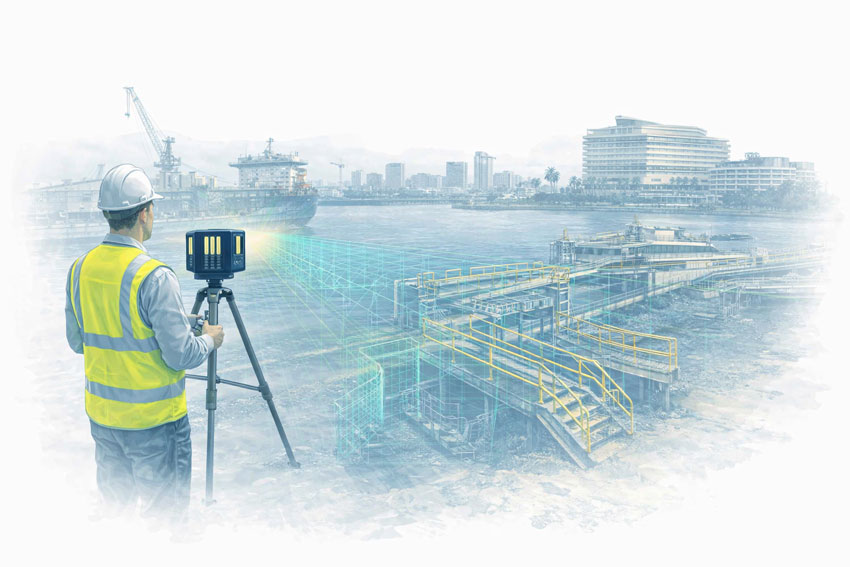
Engineering projects in New Caledonia operate in a unique environment. Nickel processing plants, port facilities, power stations and infrastructure are often decades old, heavily modified and located far from design offices. Accurate site information is the difference between a smooth project and an expensive lesson.
3D laser scanning has become the most reliable way to capture existing conditions across Noumรฉa, Konรฉ and the remote mine sites of the Grande Terre. Instead of relying on tape measures and assumptions, LiDAR technology records millions of precise measurements to create a true digital twin of the asset.
The Challenge of Brownfields Projects in New Caledonia
Many facilities in New Caledonia share the same constraints:
Limited shutdown windows
Corrosive coastal environments
Historical modifications with poor drawings
Logistics that make repeat site visits costly
Multi-discipline coordination between local and overseas teams
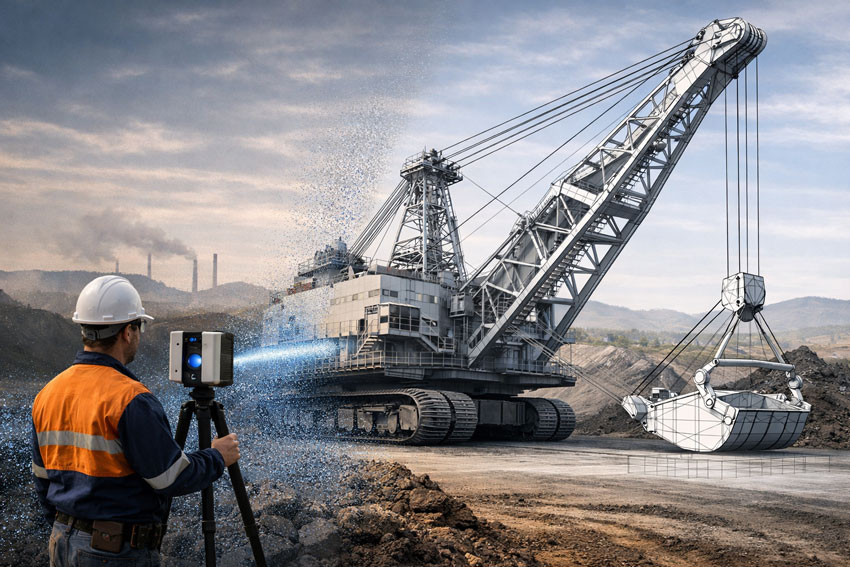
Traditional survey methods struggle to capture congested pipe racks, structural steel distortions or equipment that has shifted over time. When drawings do not match reality, fabrication delays and site rework quickly follow.
The Scan Is the Backbone of the Project
The initial scan quality sets the tone for every task that follows. The point cloud becomes the backbone of the projectโdesign, detailing, fabrication and construction all rely on it.
If you start with a broken backbone, you will have problems everywhere else:
Simple tasks become difficult
Measurements are questioned
models need rework
fabricators lose confidence
schedules start to slip
A clean, well-registered scan makes coordination easy. A poor scan multiplies effort for every member of the team.
Protecting the Whole Project Team
3D laser scanning is not just about creating a modelโit is about protecting everyone involved:
Project managers who must control time and cost
Engineers responsible for safe and compliant designs
Designers and draftspersons who need reliable geometry
Fabricators who must build components that fit
Construction crews who install the work on short shutdowns
When the as-built data is right, the entire chain works with confidence. When it is wrong, every discipline inherits the problem.
How 3D Laser Scanning Changes the Outcome
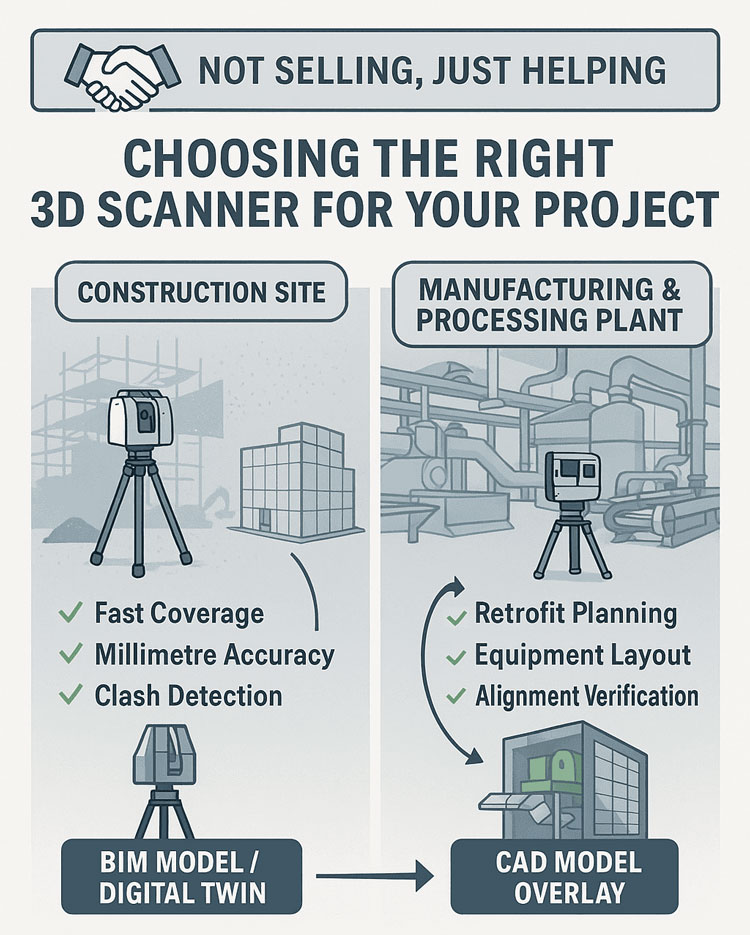
A terrestrial laser scanner captures a complete point cloud of the site in hours rather than weeks. The data can then be used for:
Accurate as-built models for upgrades and expansions
Tie-in design for new conveyors, tanks and platforms
Structural verification of aging infrastructure
Clash detection before fabrication
Shutdown planning and risk reduction
Asset documentation for long-term maintenance
For New Caledonian projects, the biggest benefit is capture once, design anywhere. Local scanning crews can collect the data while engineering teams in Australia or New Zealand work from the same digital environment without further travel.
Typical Applications Across New Caledonia
Mining & Processing
Nickel plant upgrades
Conveyor replacements
Chute and transfer redesign
Tank and thickener modifications
Access platforms and walkways
Ports & Infrastructure
Wharf structural assessments
Ship loader interfaces
Pipe bridges and services
Electrical and control building upgrades
Energy & Utilities
Power station retrofits
Water treatment facilities
Fuel storage terminals
From Point Cloud to Deliverables
A professional workflow generally includes:
On-site LiDAR capture with survey control
Registration and quality assurance
Creation of usable formats for Revit, AutoCAD, SolidWorks or Navisworks
Extraction of models, drawings or clash reports
Ongoing support during fabrication and installation
The result is engineering data you can trustโwithout the need for multiple trips to site.
Ready to De-Risk Your Project?
Whether your project is in Noumรฉa, Konรฉ or a remote mine site, 3D laser scanning provides the foundation for safe, predictable and efficient engineering. Get the backbone right at the start and the rest of the project becomes easier.
Why Graduate Engineers Quickly Become Addicted to LiDAR Scanning
Ask any graduate engineer what surprised them most in their first few years on the job and youโll often hear the same answer:
โThe drawings were wrong.โ
Not maliciously wrong. Not incompetently wrong. Justโฆ out of date, incomplete, or disconnected from what actually exists on site.
That realisation is often the moment graduate engineers discover LiDAR scanning โ and once they do, itโs very hard to go back.
Across Greater Sydney, from dense inner-city refurbishments to industrial upgrades in the west, graduate engineers are finding that 3D laser scanning becomes indispensable almost as soon as theyโve worked with it properly. Itโs not just helpful. Itโs addictive โ because it replaces uncertainty with clarity.
The graduate engineerโs first shock: reality doesnโt match the drawing
Most graduate engineers come out of university trained to think in:
idealised geometry
clean load paths
well-defined dimensions
drawings that represent truth
Then they step onto a live site in Sydney CBD, Surry Hills, Parramatta, Mascot, Alexandria, Chatswood, or North Sydney and realise something important:
Existing buildings, plant, and infrastructure are messy.
Services donโt run straight. Columns arenโt perfectly plumb. Steel has been modified, trimmed, plated, or shifted over decades. Mechanical equipment has been replaced multiple times, often without full documentation. In inner suburbs especially, space constraints mean โcreativeโ solutions become permanent.
For a graduate engineer trying to do the right thing, this mismatch creates anxiety:
Am I designing to the right information?
What happens if this doesnโt fit?
How confident should I be signing this off?
This is where LiDAR scanning changes everything.
The first scan changes how graduates think
The first time a graduate engineer works with a real point cloud, something clicks.
Instead of guessing:
they can measure directly
they can see spatial relationships
they can verify assumptions
they can design in context
Suddenly, the question shifts from โwhat does the drawing say?โ to โwhat actually exists?โ
Once that shift happens, itโs very hard to go back to traditional workflows.
Hamilton By Designโs approach to engineering-led LiDAR scanning highlights this transition clearly โ scanning isnโt just data capture, itโs digital quality assurance for engineering decisions.
For graduate engineers, this is often the first time they feel genuinely confident that their design inputs reflect reality.
Why LiDAR scanning becomes โaddictiveโ
LiDAR scanning is addictive to graduate engineers for one simple reason:
It removes doubt.
Once youโve experienced what itโs like to design from verified geometry, going back to hand measurements and assumptions feels risky โ even irresponsible.
1. Confidence replaces guesswork
Instead of hoping clearances exist, graduates can prove they exist. Instead of estimating offsets, they can measure them. This builds technical confidence very quickly.
2. Mistakes become learning, not disasters
When designs are checked against a point cloud, errors are caught early โ in the model, not on site. Graduates learn faster because mistakes are visible and correctable.
These lessons are difficult to teach from textbooks alone.
Inner Sydney makes scanning essential, not optional
In inner Sydney suburbs, LiDAR scanning is not a luxury โ itโs often the only practical way to work.
Areas like:
Sydney CBD
Ultimo
Pyrmont
Surry Hills
Redfern
Alexandria
Zetland
Newtown
are characterised by:
tight sites
layered services
heritage structures
mixed-use refurbishments
minimal tolerance for rework
Graduate engineers working on these projects quickly learn that:
traditional site measurement is slow and disruptive
access is limited and time-boxed
errors are expensive and highly visible
Scanning allows:
rapid capture without extended site shutdowns
remote review and collaboration
fewer repeat site visits
better coordination between disciplines
Once graduates experience this efficiency, they naturally push for scanning on future projects.
How scanning supports better engineering decisions
LiDAR scanning doesnโt replace engineering judgement โ it supports it.
Hamilton By Design frames scanning as a core part of engineering projects, not a bolt-on service. That distinction matters, especially for younger engineers still developing confidence.
Point clouds make design reviews clearer. Instead of explaining issues abstractly, graduates can show the problem in 3D context โ especially helpful when working with senior engineers, fabricators, or clients.
Safer decisions
Designing from verified geometry reduces the risk of unsafe site improvisation. Graduates learn early that safety is tied directly to design certainty.
The โdigital safety netโ for early-career engineers
For many graduates, LiDAR scanning acts as a digital safety net.
Early in a career, the fear of โmissing something obviousโ is real. Scanning provides reassurance:
Have I considered the surrounding structure?
Did I allow enough clearance?
Is this installable?
Instead of relying solely on experience they havenโt yet built, graduates can lean on measured reality.
Over time, this accelerates professional growth:
better spatial awareness
improved constructability thinking
stronger questioning of legacy documentation
Ironically, the more graduates use scanning, the faster they develop the intuition to know when itโs needed โ and when itโs not.
Greater Sydney: scanning as a standard workflow
Across Greater Sydney, LiDAR scanning is increasingly becoming standard practice for:
building refurbishments
industrial upgrades
mechanical plant modifications
structural alterations
asset verification and compliance work
In western Sydney industrial areas, scanning supports large-scale plant and warehouse projects. In the north and east, it supports constrained commercial and infrastructure upgrades. In the inner suburbs, it often makes projects feasible at all.
Graduate engineers exposed to this environment quickly learn:
projects that scan early run smoother
fewer RFIs come back from site
fabrication issues drop dramatically
install teams trust the drawings more
Once theyโve seen this pattern a few times, scanning stops being a โspecial requestโ and becomes the default question:
โCan we scan this first?โ
Why engineers struggle to go back once theyโve scanned
After working with LiDAR scanning, graduates often struggle with projects that donโt include it.
They notice:
more uncertainty
more site clarification calls
more โweโll fix it on siteโ language
more reliance on assumptions
This is why scanning feels addictive โ not because itโs flashy technology, but because it reduces friction at every stage of an engineering project.
For young engineers trying to build credibility, that reduction in friction is powerful. It allows them to:
deliver cleaner designs
ask better questions
contribute meaningfully earlier in their careers
Digital quality assurance becomes a mindset
Perhaps the biggest shift LiDAR scanning creates is cultural.
Graduate engineers exposed to scanning early start to think in terms of digital quality assurance:
verify before design
check before fabrication
confirm before installation
This mindset aligns closely with modern engineering governance, risk management, and professional accountability.
Hamilton By Designโs emphasis on scanning as digital quality assurance reflects this evolution โ scanning isnโt about technology for its own sake, itโs about engineering confidence.
Final thoughts: once you see clearly, you donโt want to design blind again
For graduate engineers, LiDAR scanning often marks a turning point.
Itโs the moment they realise engineering doesnโt have to rely on best guesses, inherited drawings, or incomplete information. Itโs the moment they understand that good engineering starts with seeing clearly.
In Greater Sydney, especially across dense inner suburbs, that clarity isnโt optional โ itโs essential.
Once graduate engineers experience what itโs like to design from reality, not assumption, LiDAR scanning stops being a tool and becomes part of how they think. And thatโs why, once theyโve scanned properly, most engineers never want to design without it again.
Engineering 3D Scanning for Mining Projects in Zambia
Supporting safer, faster and more accurate plant upgrades across the Copperbelt
Zambia is one of Africaโs most important copper-producing nations, with large-scale mining and mineral processing facilities operating across the Copperbelt region. Many of these sites are complex, brownfield environments that have evolved over decades, making accurate design and upgrade work challenging without reliable as-built information.
Engineering-grade 3D laser scanning is now playing a critical role in supporting safer, faster and more accurate mining projects by providing detailed digital representations of existing plant and infrastructure.
Why Accurate As-Built Data Matters in Mining
Mining and processing plants typically undergo continuous modification to improve capacity, efficiency and reliability. Unfortunately, legacy drawings and documentation are often incomplete or no longer reflect the current configuration of the plant.
This creates risks such as:
Design clashes with existing services or structures
Unexpected installation constraints
Increased shutdown durations
Safety risks from unverified site conditions
3D laser scanning addresses these risks by capturing high-density point cloud data that reflects the true geometry of the operating facility at the time of capture.
How Engineering-Grade Scanning Supports Mining Projects
Plant Upgrades and Expansions
When installing new crushers, mills, pumps, pipework or conveyors, accurate spatial data is essential. Laser scanning allows engineers to design new equipment layouts directly within the existing plant model, validating clearances and interfaces before construction begins.
Shutdown and Maintenance Planning
Shutdown work is high-risk and time-critical. Point cloud models enable teams to:
Assess access routes
Plan lifting and installation sequences
Identify congestion points
This improves safety outcomes and reduces downtime during critical maintenance windows.
Structural and Mechanical Retrofits
For structural strengthening, equipment replacement or capacity upgrades, scanning provides the geometry required to produce fabrication-ready drawings without relying on extensive manual site measurement in hazardous areas.
Digital Twin and Asset Management
Reality capture data can also be used to support longer-term asset management strategies, enabling:
Improved inspection planning
Better maintenance coordination
Faster future upgrade design
Digital plant models become a valuable operational asset, not just a project deliverable.
Why Engineering-Grade LiDAR Is Required for Industrial Sites
Not all 3D scanning technologies are suitable for mining environments.
While visual scanning systems are useful for building documentation and general layout capture, mining and processing facilities typically require:
Millimetre-level dimensional accuracy
Long-range scanning capability
Reliable reference data for CAD and BIM modelling
Engineering-grade LiDAR systems are designed for these conditions, making them suitable for mechanical and structural design workflows where tolerances and fit-up are critical.
For projects involving fabrication and installation, scanning must support engineering decisions โ not just visualisation.
Benefits for Mining Operators and Project Teams
Integrating engineering scanning into mining workflows delivers tangible benefits, including:
Reduced re-measurement on site
Fewer design clashes and construction rework
Improved constructability reviews
Safer design development off-site
Shorter shutdown durations
Higher confidence in project outcomes
In high-value mining projects, even small improvements in planning accuracy can result in significant cost and schedule savings.
Engineering-Led Reality Capture Workflows
The real value of 3D scanning is realised when it is integrated directly into engineering and design processes. At Hamilton By Design, reality capture is used to support:
Mechanical and structural design
Scan-to-CAD and Scan-to-BIM modelling
Fabrication drawing development
Installation planning and coordination
This ensures scan data is converted into practical engineering deliverables that support construction and long-term asset management.
Supporting Mining Projects Across Southern Africa
With ongoing investment in copper and critical minerals, Southern Africa continues to present strong demand for plant upgrades, expansions and reliability improvements.
Engineering-led reality capture provides a safer and more efficient way to support these projects, particularly in operating facilities where downtime and site access are highly constrained.
By combining laser scanning with mechanical and structural engineering expertise, project teams can reduce uncertainty and deliver upgrades with greater confidence.
Final Thoughts
For mining operations in Zambia, 3D laser scanning is no longer a specialist add-on โ it is becoming a core engineering tool that supports safer and more efficient project delivery.
When paired with strong design and project management workflows, reality capture enables better planning, better coordination and better construction outcomes in some of the worldโs most demanding industrial environments.
Digital Twin Asset Management Sydney | Hamilton By Design
From Point Cloud to Digital Twin: Better Asset Control for Sydney Precincts
For asset owners and facilities managers across Greater Sydney and the Central Coast, accurate and accessible building data is no longer a luxury โ it is critical for maintenance planning, compliance, risk management, and future upgrades.
Yet many facilities still rely on incomplete drawings, outdated asset registers, or disconnected documentation spread across multiple systems.
At Hamilton By Design, we use high-accuracy 3D scanning and engineering-led modelling to create digital twins โ intelligent, data-rich representations of real facilities that support long-term asset management, not just one-off construction projects.
Why Traditional Building Records Fall Short
Over the life of a facility, buildings change constantly:
Services are upgraded or rerouted
Plant is replaced or relocated
Structural movement occurs over time
Temporary works become permanent
Documentation becomes fragmented or lost
As a result, asset owners are often forced to make decisions based on assumptions instead of verified data, increasing operational risk and lifecycle costs.
Digital twins replace uncertainty with measurable, current, and verifiable building intelligence.
What Is a Digital Twin โ and Why It Matters
A digital twin is more than a 3D model. It is a continuously usable digital representation of your physical asset that can support:
Asset lifecycle management
Maintenance planning and scheduling
Retrofit and upgrade forecasting
Compliance verification and reporting
Insurance documentation and risk mitigation
Using LiDAR and reality capture, we first create highly accurate point cloud data of your facility. This is then converted into structured engineering models and documentation, forming the foundation of a usable digital twin environment.
Supporting the Full Asset Lifecycle
Digital twins created by Hamilton By Design are designed to support decision-making across the entire life of an asset.
Asset Lifecycle Management
Digital twins provide a verified reference for:
Plant locations and access paths
Service routing and capacity
Structural geometry and tolerances
Interface points between systems
This allows asset teams to plan interventions without repeated site surveys or intrusive investigations.
Maintenance Planning and Access Strategy
Maintenance activities often fail not due to equipment faults, but due to poor access planning and unknown service constraints.
Digital twins allow teams to:
Visualise maintenance access zones
Plan shutdown sequences
Coordinate contractor access safely
Reduce unexpected site conditions
This is particularly valuable in hospitals, transport facilities, and industrial plants where downtime is extremely costly.
Retrofit and Upgrade Forecasting
When assets age, upgrade programs become unavoidable โ but without accurate models, forecasting becomes unreliable.
With digital twins, asset owners can:
Test retrofit scenarios digitally
Assess spatial constraints early
Coordinate staged construction programs
Validate new services layouts before installation
This significantly reduces redesign cycles and programme risk.
Compliance, Insurance and Risk Documentation
High-accuracy digital records also support:
Compliance audits
Fire and safety system verification
Engineering certification
Insurance risk assessments
Digital twins provide verifiable evidence of current conditions, which is increasingly important for regulatory and insurer requirements.
Enterprise-Value Scanning, Not Just Project Scanning
Many scanning services stop at delivering point clouds. Hamilton By Design goes further by integrating scanning into an engineering and asset management workflow.
Our service extends beyond capture into:
Mechanical engineering interpretation
Systems modelling and coordination
Project and asset integration support
Fabrication and modification planning
This makes digital twins a strategic asset tool, not just a design input.
Construction, Operations and Future-Proofing โ All in One Model
Our digital twin workflows support:
Operational facilities
Construction planning
Ongoing modifications
Future asset strategies
By maintaining continuity between engineering, construction, and asset management data, digital twins become a single source of truth for multiple stakeholders.
Deliverables Designed for Asset Teams
We provide digital twin outputs in formats compatible with enterprise asset and design systems:
High-resolution point clouds (RCP / E57)
Revit asset models
AutoCAD documentation
SolidWorks equipment and systems models
Asset-aligned 2D drawings
Data structured for future updates
These can be used directly by engineering consultants, maintenance teams, and facilities management platforms.
Supporting Sydney and Central Coast Asset Portfolios
We work with asset owners across:
Healthcare precincts
Commercial property portfolios
Industrial facilities
Infrastructure and transport sites
Education campuses
Heritage and government assets
Our local support allows ongoing engagement as facilities evolve, not just one-off capture projects.
Turn Building Data into an Asset Strategy
Digital twins transform buildings from static structures into data-driven, manageable systems.
They allow asset owners to move from reactive maintenance to planned lifecycle control, improving reliability, safety, and financial predictability.
Arrange a Digital Twin Consultation
If you are responsible for long-term facility performance, compliance, or upgrade planning:
Please fill out the form below to arrange a phone consultation.
Weโll discuss your asset portfolio, operational requirements, and long-term objectives, and recommend a digital twin strategy that supports both current operations and future upgrades.
Wall Crack Monitoring & Structural Movement Baseline Scans | NSW
Know When Cracks Are Cosmetic โ and When Theyโre Not
Cracks in walls are common, but not all cracks are harmless. The real risk isnโt just that a crack exists โ itโs how fast itโs changing. Without a baseline, thereโs no reliable way to tell whether your property is stable or slowly moving toward serious structural damage.
Thatโs where our Property Wall Movement Baseline Scan comes in.
What Is a Baseline Scan?
A baseline scan is a highโaccuracy digital survey of your property taken at the moment cracking is first observed. Using precision scanning technology, we capture:
Wall alignment and deflection
Crack location, length, and width
Floor and ceiling reference planes
Structural reference points across the building
This scan becomes your timeโzero reference point โ a measurable snapshot of your buildingโs condition today.
Why a Baseline Matters
Without a baseline:
Cracks are judged visually (subjective and unreliable)
Engineers lack historical movement data
Insurance claims become harder to substantiate
Small issues can quietly become major repairs
With a baseline:
Movement can be quantified in millimetres
Crack growth rates can be tracked over time
Engineers can make confident, dataโdriven decisions
You gain early warning before damage becomes critical
How the Process Works
1. Initial Scan
We perform a nonโinvasive scan of affected areas and key structural zones to establish your baseline condition.
2. Data Archiving
All scan data is securely stored and referenced to fixed control points within your property.
3. FollowโUp Scans
Repeat scans (3, 6, or 12 months later) are compared against the baseline to calculate:
Crack propagation rate
Wall movement direction
Structural settlement or heave
4. Clear Reporting
You receive a clear, easyโtoโunderstand report showing:
Measured movement (if any)
Rate of change over time
Professional recommendations
Ideal For
Homeowners noticing new or worsening cracks
Properties affected by reactive soils or subsidence
Buildings near excavation or construction activity
Insurance documentation and dispute resolution
Engineers requiring longโterm movement data
Early Data Saves Money
Monitoring movement early often means minor intervention instead of major reconstruction. A baseline scan gives you certainty, evidence, and peace of mind.
If nothing is moving โ youโll know. If something is โ youโll know before itโs too late.
Book a Baseline Scan
If youโve noticed cracking, now is the right time to act.
Contact us today to establish your propertyโs movement baseline and protect its longโterm structural integrity.
Structural Engineering: Turning Structural Concepts into Buildable, Compliant Outcomes
Structural engineering plays a critical role in ensuring that structures are safe, stable, and fit for purposeโnot just on paper, but in the real world.
Across industrial facilities, mining sites, power infrastructure, and building projects, structural engineering is what turns concepts into buildable, verifiable outcomes. It requires more than calculations alone; it depends on accurate information, sound judgement, and clear documentation that can be understood and constructed on site.
At Hamilton By Design, structural engineering is delivered with a strong focus on existing conditions, constructability, and compliance, particularly for brownfield and live environments.
What structural engineering actually delivers
Structural engineering involves the assessment, design, and verification of structures that support loads safely over their intended life.
Typical applications include:
Structural steelwork and framing
Platforms, walkways, stairs, and access systems
Equipment support structures and foundations
Modifications to existing buildings and industrial assets
Strengthening, repair, and upgrade works
In many projects, especially upgrades and refurbishments, the challenge is not designing something newโbut understanding what already exists and how it behaves.
Our clients:
Structural engineering on existing and brownfield sites
Many industrial and construction projects rely on incomplete or outdated drawings. Over time, assets are modified, reinforced, or repaired without full documentation, increasing risk when new works are planned.
Structural engineering in these environments often involves:
Verifying existing steel sizes and connections
Assessing capacity against current load requirements
Identifying undocumented changes or deterioration
Designing upgrades that integrate with existing structures
Accurate engineering input at this stage reduces rework, improves safety, and avoids costly site changes during construction.
The role of structural drafting in successful outcomes
Even the best structural design can fail if it is not clearly documented.
Structural drafting is the critical link between engineering intent and construction reality. It translates structural engineering decisions into clear, coordinated drawings that fabricators and builders can rely on.
Well-executed structural drafting ensures:
Load paths and connections are clearly communicated
Member sizes, levels, and interfaces are unambiguous
Drawings reflect actual site conditions
Fabrication and installation can proceed with confidence
To provide the best experiences, we use technologies like cookies to store and/or access device information. Consenting to these technologies will allow us to process data such as browsing behaviour or unique IDs on this site. Not consenting or withdrawing consent, may adversely affect certain features and functions.
Functional
Always active
The technical storage or access is strictly necessary for the legitimate purpose of enabling the use of a specific service explicitly requested by the subscriber or user, or for the sole purpose of carrying out the transmission of a communication over an electronic communications network.
Preferences
The technical storage or access is necessary for the legitimate purpose of storing preferences that are not requested by the subscriber or user.
Statistics
The technical storage or access that is used exclusively for statistical purposes.The technical storage or access that is used exclusively for anonymous statistical purposes. Without a subpoena, voluntary compliance on the part of your Internet Service Provider, or additional records from a third party, information stored or retrieved for this purpose alone cannot usually be used to identify you.
Marketing
The technical storage or access is required to create user profiles to send advertising, or to track the user on a website or across several websites for similar marketing purposes.