Mechanical Engineering | 3D Scanning | 3D Modelling
Tag: 3D Point Cloud Scanning
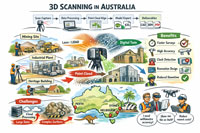
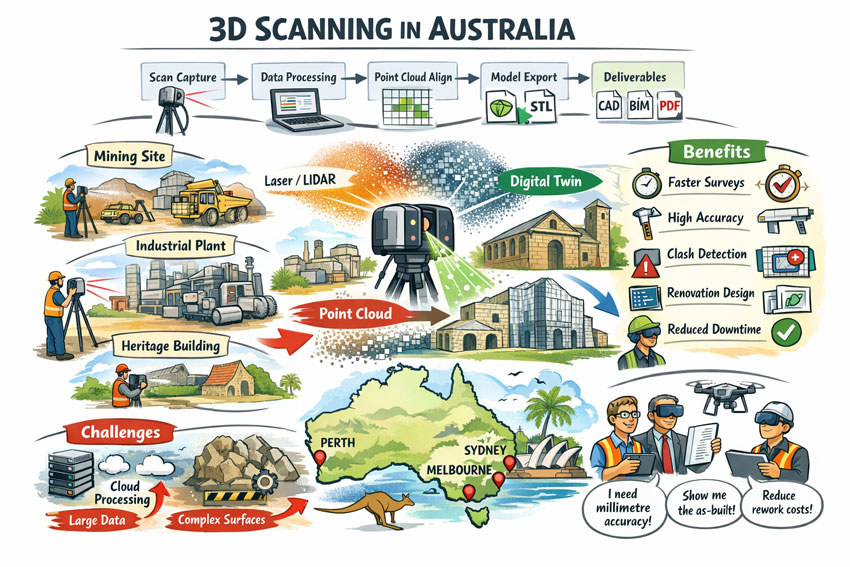
3D point cloud scanning covers the capture and use of dense point-cloud data generated from 3D laser scanning and LiDAR technologies. This tag brings together content showing how point clouds are used to represent real-world sites and assets accurately, supporting engineering design, modelling, analysis, and verification across industrial, mining, infrastructure, and construction projects.
🔧 Precision Engineering Meets Digital Innovation in the Mining Sector
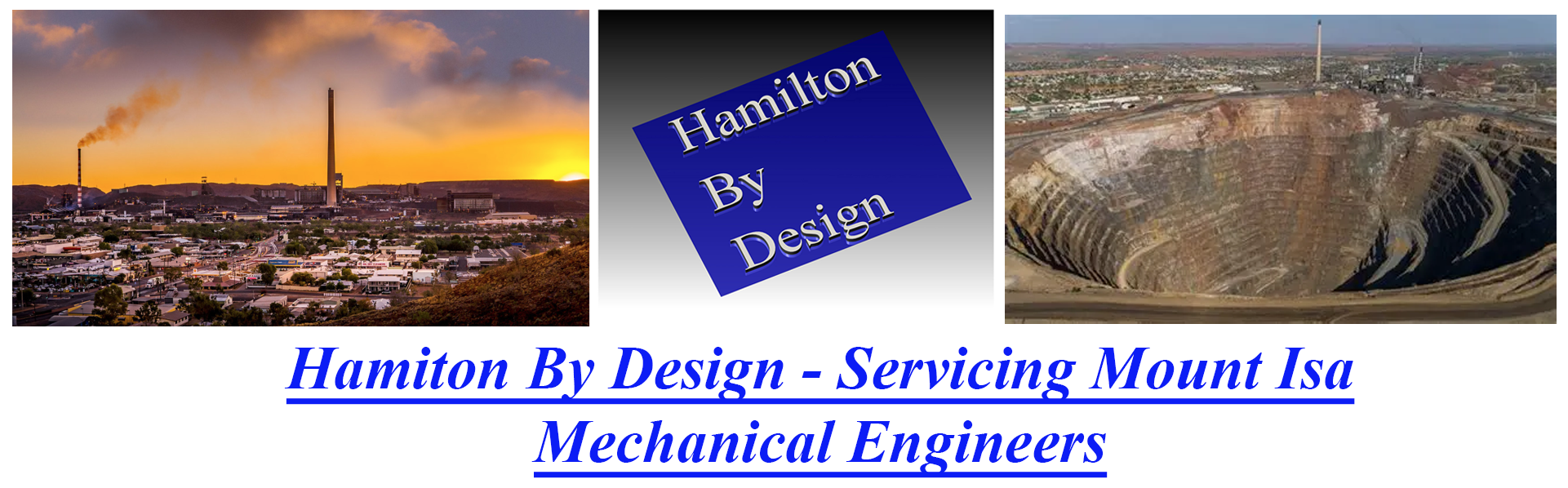
In the heart of Australia’s mining country—Mount Isa—Hamilton By Design is delivering cutting-edge mechanical engineering solutions powered by 3D Lidar scanning and point cloud modelling.
Whether you’re managing underground infrastructure, fixed plant upgrades, or brownfield expansions, our advanced tools and design expertise help you visualise, optimise, and execute projects with clarity and confidence.
How We Support the Mining Industry
As mechanical engineering consultants, we provide services that reduce project risk, increase design accuracy, and streamline construction workflows. Key areas include:
Lidar 3D Scanning of existing plant, pipework, and underground assets
Point Cloud Creation for clash detection and design validation
Mechanical & Structural Drafting using accurate site data
Reverse Engineering of legacy plant or undocumented assets
Detailed Design for Modifications & Upgrades
Compliance, Auditing, and Risk Reduction
By combining field-tested mechanical engineering with cutting-edge digital capture, we help mining teams make better decisions—faster.
Why Mount Isa?
Mount Isa is home to some of Australia’s largest and most complex mining operations. From Glencore’s copper and zinc mines to contracting hubs servicing the broader North West Minerals Province, this region demands precision, speed, and deep mining knowledge.
Hamilton By Design is based locally in Mount Isa, giving us the unique advantage of rapid site access, practical experience in mining environments, and a strong understanding of local challenges.
Why Use Lidar & Point Clouds?
Lidar scanning has transformed how we approach engineering projects in mining:
Capture complex environments in minutes, not days
Generate ultra-accurate point clouds for design, measurement, and planning
Minimise rework by designing to exact, as-built geometry
Visualise site constraints in 3D before committing to fabrication or install
Integrate scan data with CAD models for seamless design workflows
From underground crushers to surface pipe racks, our Lidar system captures the details—so you can design with certainty.
Use Cases in Mining Projects
Some real-world examples of how we apply mechanical engineering + Lidar scanning in mining:
Scanning underground pump stations for upgrade design
Reverse-engineering chutes and hoppers with no existing drawings
Capturing point clouds of processing plants for structural fit-out
Laser-accurate data for mobile plant modifications and safety guarding
Converting scan data into fabrication-ready models and drawings
Want to see a sample point cloud or project output? Just reach out through our website below.
Who We Work With
Mining Operators & Engineers
Shutdown Coordinators
Project Managers & Fabricators
EPCM Contractors
Surveyors & Design Teams
If you’re responsible for delivering accurate, efficient, and safe mechanical solutions on site—Hamilton By Design is your local partner.
Why Engineers, Designers & Project Managers Are Turning to 3D Scanning & CAD Modelling
Why Engineers, Designers & Project Managers Are Turning to 3D Scanning and CAD Modelling
In engineering and fabrication, the margin for error is razor-thin. A few millimetres off can mean costly rework, delays, or worse — safety issues. At Hamilton By Design, we believe the future of precision engineering lies in combining smart data capture with expert design workflows. That’s why more businesses are moving away from guesswork and toward 3D laser scanning and CAD modelling as standard practice.
We’ve put together a detailed overview of our services and methods in a recent blog post that explains how we help industry clients across Australia deliver with confidence.
Traditional site measurements and hand-drawn markups are time-consuming, error-prone, and hard to communicate between disciplines. With 3D laser scanning, we can capture complex geometry quickly and accurately — from plant layouts and piping to structural steel and mobile machinery.
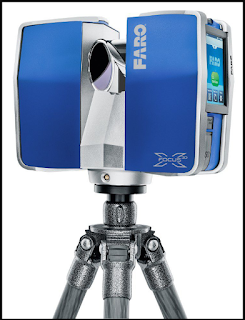
Using FARO laser scanning technology, we generate high-resolution point clouds that form the foundation for everything that follows — whether that’s clash detection, fabrication detailing, or a full digital twin.
It’s fast, accurate, and incredibly efficient — especially on live sites where access is limited and downtime is costly.
🧩 CAD Modelling That Fits — Literally and Logically
Once the scan is complete, our team of experienced mechanical designers converts that data into solid CAD models, tailored to your workflow.
Whether you need:
Accurate as-built documentation
Reverse-engineered mechanical components
Custom fabrication-ready drawings
Plant modification layouts
We deliver models that integrate seamlessly with your existing systems — whether you use SolidWorks, Inventor, Revit, or MicroStation.
Our CAD modelling isn’t just visual. It’s functional. It’s engineered for fit, fabrication, and future upgrades.
👷♂️ Real-World Applications Across Industry
Our clients range from mining operations and water utilities to fabrication shops and site-based engineering firms. In all cases, the common problem is the same: they need to understand what’s really there before they design what comes next.
Some recent use cases include:
Replacing worn mechanical components with no existing drawings
Planning plant upgrades where outdated PDFs weren’t reliable
Creating fabrication models from legacy assets
Capturing geometry for safety reviews and clearances
If your team still relies on measurements taken with a tape measure or outdated hand sketches, there’s a better way.
Don’t Guess. Scan. Model. Deliver.
At Hamilton By Design, we’ve been providing CAD modelling since 2001, and offering 3D scanning since 2017. We’ve built our reputation on doing it right the first time — with engineering logic, practical experience, and technology that works.
If you want to understand how 3D laser scanning and CAD modelling can reduce risk and deliver better results, we invite you to read our full blog post:
Elevating Engineering Precision: 3D CAD Design, Laser Scanning, and Simulation for Custom Steel Fabrication
In modern engineering, accuracy, efficiency, and adaptability are not just desired—they are essential. At Hamilton By Design, we combine cutting-edge tools like 3D CAD design, 3D laser scanning, and SolidWorks FEA Simulation with practical expertise in custom steel fabrication to deliver intelligent, end-to-end solutions for complex engineering projects.
From detailed CAD Modelling to field-accurate Faro Scanning, our consultancy supports Australian industries with precise, timely, and cost-effective design solutions.
The Role of 3D CAD Design in Modern Engineering
3D CAD design (Computer-Aided Design) forms the foundation of most modern engineering workflows. It transforms initial concepts into detailed digital models, enabling design validation, collaboration, and modification long before anything is physically built.
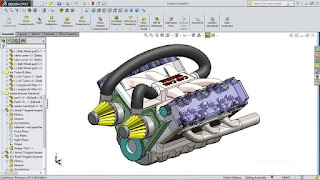
Using tools like SolidWorks, our experienced 3D CAD designers create accurate representations of components, assemblies, and entire systems. This not only reduces costly errors during fabrication but also allows clients to visualise and interact with their product in a virtual environment.
With 3D CAD design at the core, we help clients navigate engineering challenges—from product development to mechanical infrastructure—faster and with greater confidence.
3D Modelling: Bridging Concept and Construction
Closely integrated with CAD design is 3D modelling, which allows designers to create digital prototypes of physical objects. At Hamilton By Design, 3D modelling is used not just for form but also for function. Our models include precise dimensions, material properties, tolerances, and interaction points.
Whether it’s reverse engineering an existing plant structure or designing custom brackets for a conveyor system, our 3D modelling ensures high fidelity and interoperability across platforms.
The Power of 3D Laser Scanning for Engineering Accuracy
To capture as-built environments with unmatched accuracy, we use 3D laser scan for engineering projects of all sizes. Leveraging Faro scanning technology, we generate detailed point clouds that map real-world environments down to millimetre accuracy.
This Faro scan data is then converted into actionable geometry for further CAD modelling or simulation. It’s particularly valuable in retrofit, maintenance, or upgrade projects, where existing site data is often incomplete or outdated.
Whether you’re updating mechanical systems in a processing plant or ensuring compliance in a structural audit, 3D laser scanning delivers the reliable data you need for precise engineering decisions.
From Scan to Simulation: Enhancing Designs with SolidWorks FEA
After creating a digital model, it’s crucial to understand how it will perform under real-world conditions. That’s where SolidWorks FEA simulation comes in.
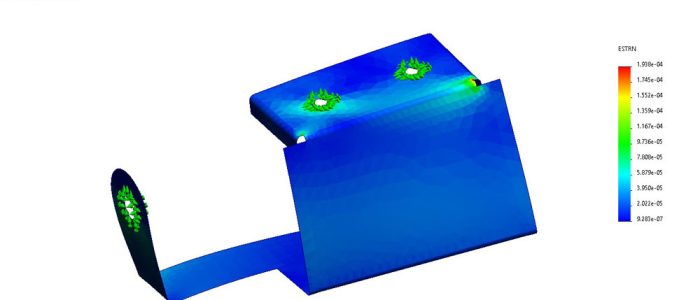
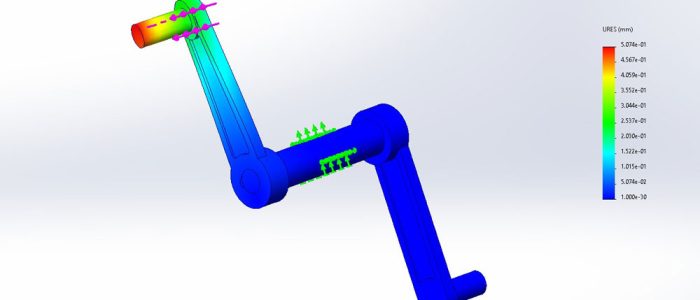
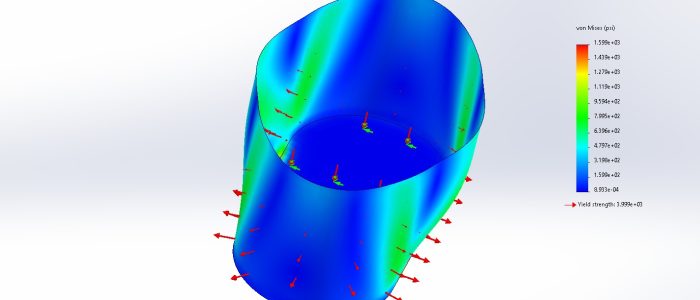
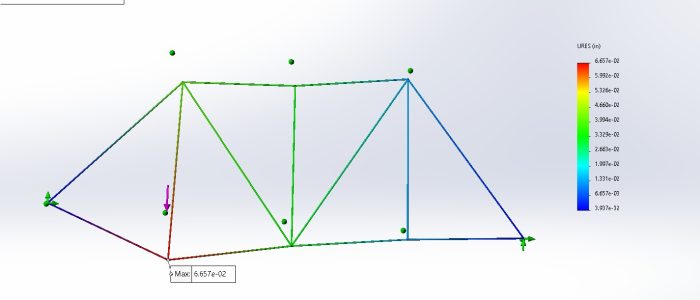
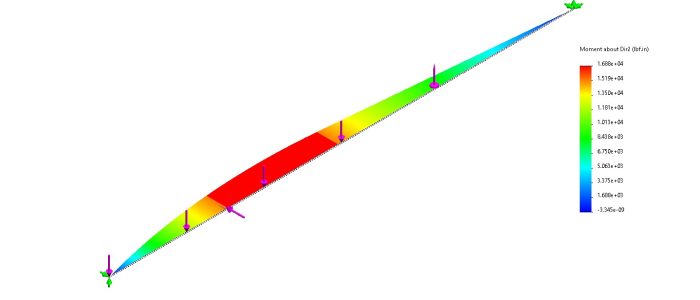
SolidWorks Simulation allows our team to perform finite element analysis (FEA) on assemblies, evaluating factors such as stress, strain, fatigue, and thermal distribution. By integrating FEA into the design process, we validate designs before they are fabricated—saving both time and material costs.
This proactive approach is particularly useful in custom steel fabrication, where load-bearing components must meet stringent safety and performance criteria.
CAD Modelling in Custom Steel Fabrication
Custom steel fabrication is both an art and a science. It requires a deep understanding of materials, tolerances, and manufacturing techniques. At Hamilton By Design, we combine advanced CAD modelling with practical fabrication experience to create components that meet your exact requirements.
Whether you need custom brackets, enclosures, chutes, or full-scale structural assemblies, our models are production-ready and tailored to your fabrication process. We provide DXFs, laser-cutting files, and BOMs that integrate seamlessly with your shop floor operations.
Why Choose a 3D CAD Designer?
A skilled 3D CAD designer does more than just draw. They anticipate fitment issues, consider manufacturing constraints, and collaborate across disciplines to create practical, buildable designs.
At Hamilton By Design, our team brings over a decade of experience across heavy industry, defence, mining, and manufacturing. We understand the nuances of real-world engineering and tailor our CAD services to each project’s unique needs.
Integrating Faro Scanning with SolidWorks
One of our key differentiators is the seamless integration of Faro scan data into SolidWorks. This workflow allows us to:
Overlay scanned data onto CAD designs
Identify deviations between as-built and as-designed models
Rapidly develop retrofit solutions with accurate field measurements
Conduct clash detection and ensure proper clearances
This end-to-end capability reduces rework, shortens project timelines, and increases overall design quality.
Applications Across Industry
Our services benefit a broad range of industries, including:
Manufacturing – Tooling, jigs, and production line modifications
Defence – CAD design and simulation for retrofit and upgrade works
Construction – Structural steel design and site validation
Whether you’re fabricating a single part or overseeing a multi-million-dollar infrastructure upgrade, our tools and experience help you deliver with confidence.
The Difference
At Hamilton By Design, we don’t just deliver drawings—we provide engineering certainty. By combining the precision of 3D CAD, the power of SolidWorks simulation, and the real-world accuracy of Faro scanning, we help clients design, assess, and fabricate with confidence.
If you’re looking for an Australian mechanical engineering consultancy that delivers intelligent design, detailed modelling, and practical support for custom steel fabrication projects, we’re ready to help.
Let’s Work Together
Visit www.hamiltonbydesign.com.au to learn more or contact us to discuss how we can support your next engineering challenge.
Unlocking Engineering Potential with the 3DEXPERIENCE Platform
At Hamilton By Design, we are committed to pushing the boundaries of innovation and efficiency in industrial design and engineering. One of the most powerful tools enabling this shift is the 3DEXPERIENCE platform by Dassault Systèmes — a cloud-based, integrated environment that transforms how engineering, design, and manufacturing teams collaborate and operate.
But what makes this platform such a game-changer, particularly in heavy industrial environments?
A Unified Digital Ecosystem
Traditional design and engineering workflows often involve disjointed software systems, siloed communication, and a lack of visibility across teams. The 3DEXPERIENCE platform solves these challenges by offering a centralised digital workspace. It unifies CAD, simulation, data management, and project collaboration under one roof.
At Hamilton By Design, this means we can collaborate with clients, suppliers, and internal teams in real time — reducing delays, increasing transparency, and ensuring version control is never an issue.
Smarter Collaboration and Real-Time Decision-Making
For industrial clients, time is money. Delays caused by miscommunication or outdated files can cost thousands in downtime. With the 3DEXPERIENCE platform, all stakeholders — from engineers and designers to procurement and management — can access a single source of truth, anytime, anywhere.
Changes to 3D models, drawings, or requirements are reflected instantly across the platform. That kind of visibility ensures we’re always aligned with the project vision, improving decision-making speed and accuracy.
Advanced 3D Modelling and Simulation
Designing for complex environments — such as processing plants, mines, or heavy machinery installations — requires robust tools. The 3DEXPERIENCE platform delivers powerful 3D modelling and simulation capabilities through applications like CATIA, SIMULIA, and ENOVIA.
Whether we’re reverse engineering existing assets from LIDAR scans or developing new plant layouts, the platform helps us validate designs early through simulation and stress testing. This leads to fewer surprises during fabrication or installation, and stronger, safer designs.
Integration with LIDAR Scanning and Point Cloud Data
At Hamilton By Design, we often start projects using high-resolution LIDAR scans, capturing real-world conditions with millimetre precision. The 3DEXPERIENCE platform allows seamless integration of point cloud data, enabling our team to design directly within real-world geometry — reducing fitment issues and rework.
This integration ensures we don’t just create models — we create smart, context-aware models that interact meaningfully with the physical world.
Scalability and Security
As a cloud-based system, the 3DEXPERIENCE platform is scalable and secure. Whether we’re working on a small component upgrade or a large-scale plant overhaul, we can expand our toolset, users, and data storage with ease — all while maintaining enterprise-level data protection.
Conclusion
The 3DEXPERIENCE platform empowers Hamilton By Design to deliver faster, smarter, and more integrated engineering solutions. For clients in the heavy industrial space, it means fewer risks, better collaboration, and a clear digital path from concept to completion.
Want to know how the 3DEXPERIENCE platform can help your next project? Get in touch today at sales@hmailtonbydesign.com.au
In the world of modern design and engineering, precision is everything. Hamilton By Design has mastered the art of integrating cutting-edge technology to create seamless, high-quality solutions for their clients. Their approach combines advanced scanning tools with powerful design software to ensure every project is executed with accuracy and efficiency.
Hamilton By Design utilizes state-of-the-art 3D scanning technology to capture detailed measurements of existing structures and components. This process allows them to create highly accurate digital representations of physical objects, ensuring that every design fits perfectly within the intended space. By leveraging this scanning capability, they eliminate guesswork and significantly reduce the margin for error in complex projects.
Seamless Integration with Design Software
Once the scanned data is collected, Hamilton By Design employs industry-leading design software to transform raw point clouds into refined, functional models. This enables them to develop components that integrate flawlessly with existing structures, ensuring a perfect fit every time. Their expertise in working with scanned geometry allows them to streamline workflows, enhance efficiency, and deliver superior results.
Innovation in Every Project
Hamilton By Design’s commitment to precision and innovation sets them apart in the industry. By combining advanced scanning technology with powerful design tools, they create solutions that are not only functional but also optimized for performance and longevity. Their approach ensures that every project meets the highest standards of accuracy and quality, making them a trusted partner for businesses seeking cutting-edge engineering solutions.
Partner with Hamilton By Design
Looking to elevate your next project with unmatched precision and expertise? Hamilton By Design is ready to bring your vision to life. Connect with their team today and discover how their advanced approach can turn your ideas into reality.
Innovation has always been the lifeblood of engineering, driving the relentless pursuit of precision, efficiency, and progress. In the field of measurement, where accuracy defines the success of a project, the evolution from traditional tools to modern 3D point cloud scanning has been nothing short of revolutionary. What was once a domain dominated by tape measures, calipers, and theodolites is now enhanced by cutting-edge technologies capable of capturing millions of data points in mere seconds. For engineers who thrive on precision, the advent of 3D point cloud scanning isn’t just a step forward—it is a leap into a new dimension of possibilities.
This essay explores why 3D point cloud scanning is superior to traditional measurement tools and how it has transformed industries reliant on meticulous measurements. From its unparalleled accuracy to its versatility across disciplines, 3D scanning has redefined what engineers can achieve. Moreover, understanding its historical context and transformative applications paints a vivid picture of its indispensability in modern engineering.
The Precision Revolution: Why Accuracy Matters
In engineering, precision is non-negotiable. Whether designing a suspension bridge, reverse-engineering a turbine, or analyzing a historical artifact, even the smallest measurement error can cascade into catastrophic results. Traditional measurement tools, such as rulers, micrometers, and even advanced total stations, have served well for centuries. However, they are inherently limited by human error, labor-intensive processes, and a lack of data richness.
Enter 3D point cloud scanning—a method capable of capturing reality in its entirety, down to sub-millimeter accuracy. Using lasers, structured light, or photogrammetry, these devices create dense clouds of data points that map every surface of an object or environment. This precision is not only reliable but repeatable, providing engineers with the confidence needed to tackle complex challenges. A tape measure might tell you the height of a column, but a 3D scanner reveals its curvature, texture, and deviations, offering insights that traditional tools simply cannot.
Speed Meets Sophistication: Efficiency Redefined
Time is often as critical as accuracy in engineering projects. Traditional methods of measurement require repetitive manual effort—measuring, recording, and verifying. This process, while effective, can be painstakingly slow, especially for large-scale projects such as construction sites, manufacturing plants, or natural landscapes.
3D point cloud scanning redefines efficiency. Imagine capturing a sprawling construction site, complete with every structural element, terrain feature, and anomaly, within hours. Such speed transforms workflows, allowing engineers to allocate time to analysis and design rather than tedious data collection. For example, laser scanners used in construction can document an entire building with intricate details, enabling real-time adjustments and reducing costly delays.
Moreover, this efficiency does not come at the expense of quality. A scanner’s ability to gather millions of data points in seconds ensures that no detail is overlooked, offering engineers a comprehensive dataset to work with.
Beyond Measurement: The Power of Data Richness
Traditional measurement tools excel at providing dimensions—length, width, and height. While sufficient for many applications, this linear data often falls short when dealing with irregular shapes, complex geometries, or intricate textures. The richness of data captured by 3D scanners, however, goes far beyond basic dimensions.
Point clouds provide a three-dimensional map of an object or space, capturing every nuance of its geometry. This data is invaluable in engineering disciplines such as reverse engineering, where understanding the intricacies of an object’s design is critical. For instance, when reconstructing a turbine blade, knowing its exact dimensions isn’t enough. Engineers need to understand its curvature, surface finish, and wear patterns—all of which are effortlessly captured by 3D scanning.
Furthermore, point clouds are digital assets, easily integrated into software like AutoCAD, Revit, and SolidWorks. This seamless compatibility enables engineers to create detailed models, run simulations, and even conduct structural analyses without revisiting the physical site. It is the bridge between physical and digital realms, offering possibilities limited only by imagination.
Non-Invasive Precision: The Gentle Touch of Technology
Engineers often face challenges where physical contact with a measurement object is either impractical or damaging. Traditional tools struggle in such scenarios, but 3D point cloud scanning thrives.
Take, for example, the preservation of historical monuments. Measuring tools like calipers or rulers could harm fragile artifacts or fail to capture their intricate details. Conversely, 3D scanners use non-contact methods to create accurate digital replicas, preserving the artifact’s integrity while providing a permanent record for future study. Similarly, in hazardous environments, such as inspecting a high-voltage power station or assessing structural damage post-earthquake, scanners allow engineers to collect precise data from a safe distance.
A Look Back: The Evolution of Measurement Tools
To appreciate the impact of 3D scanning, it’s worth understanding the tools it has replaced. The history of measurement dates back to ancient civilizations, where rudimentary tools like plumb bobs and measuring rods were used to construct awe-inspiring structures like the pyramids. Over centuries, tools evolved into more sophisticated instruments, including the theodolite for angular measurements and micrometers for minute details.
While these tools marked significant advancements, they remained limited by their analog nature and reliance on human skill. The 20th century introduced electronic and laser-based tools, bridging the gap between traditional methods and digital innovation. However, even these modern instruments are eclipsed by the capabilities of 3D point cloud scanning, which represents the culmination of centuries of progress in measurement technology.
Applications Across Industries: A Versatile Tool
The versatility of 3D scanning makes it indispensable in various engineering fields. In construction and architecture, it enables Building Information Modeling (BIM), where precise scans of a site are used to create digital twins. This helps architects and engineers visualize and plan projects with unmatched accuracy.
In manufacturing, 3D scanners streamline quality control by detecting defects or deviations from design specifications. They also facilitate reverse engineering, allowing engineers to replicate or improve existing products.
In surveying and mapping, scanners revolutionize topographical surveys by capturing vast terrains in remarkable detail. This data aids urban planning, flood risk analysis, and infrastructure development. Even in healthcare, engineers rely on 3D scans to design prosthetics and surgical implants tailored to individual patients.
Each application underscores the scanner’s ability to adapt to diverse challenges, proving its superiority over traditional tools.
Challenges with Traditional Tools: Lessons from the Past
Traditional tools, despite their utility, often fell short in large-scale projects. Consider the surveying of a mountainous region using theodolites—a task requiring days, if not weeks, of effort, with no guarantee of perfect accuracy. Similarly, in manufacturing, calipers and gauges might miss microscopic defects that compromise product quality. These limitations highlight the need for tools capable of capturing comprehensive and precise data.
Looking Forward: The Future of 3D Scanning
The future of 3D scanning is bright. Advances in technology promise even faster scanning, higher resolutions, and better integration with artificial intelligence and augmented reality. Engineers will soon work with real-time 3D data overlaid on physical objects, enabling on-the-spot analysis and decision-making.
A Paradigm Shift in Measurement
For engineers, measurement is more than a task—it is the foundation of innovation. The transition from traditional tools to 3D point cloud scanning represents a paradigm shift, offering unparalleled accuracy, efficiency, and versatility. Whether documenting the past, designing the present, or envisioning the future, 3D scanning empowers engineers to achieve what was once thought impossible. In embracing this technology, the engineering community not only enhances its craft but also lays the groundwork for a future where precision knows no bounds.
Our FEA Projects
Recent News & Reports on 3D Scanning / LiDAR / Laser Scanning
How AI & 3D Scanning Will Shape Manufacturing in 2025 Explores integration of scanning + AI in manufacturing sectors. https://manufacturingdigital.com/articles/ai-3d-scanning-impacting-manufacturing-verticals Manufacturing Digital
To provide the best experiences, we use technologies like cookies to store and/or access device information. Consenting to these technologies will allow us to process data such as browsing behaviour or unique IDs on this site. Not consenting or withdrawing consent, may adversely affect certain features and functions.
Functional
Always active
The technical storage or access is strictly necessary for the legitimate purpose of enabling the use of a specific service explicitly requested by the subscriber or user, or for the sole purpose of carrying out the transmission of a communication over an electronic communications network.
Preferences
The technical storage or access is necessary for the legitimate purpose of storing preferences that are not requested by the subscriber or user.
Statistics
The technical storage or access that is used exclusively for statistical purposes.The technical storage or access that is used exclusively for anonymous statistical purposes. Without a subpoena, voluntary compliance on the part of your Internet Service Provider, or additional records from a third party, information stored or retrieved for this purpose alone cannot usually be used to identify you.
Marketing
The technical storage or access is required to create user profiles to send advertising, or to track the user on a website or across several websites for similar marketing purposes.