

Structural Steel Design in Mining Infrastructure
Mining plants rely heavily on structural steel infrastructure to support processing equipment, conveyors, walkways, platforms, and maintenance access systems. From crushing circuits to materials handling systems, structural steel plays a critical role in maintaining safe and efficient plant operations.
Because mining environments are complex and often evolve through multiple upgrades over time, structural steel mining design requires careful engineering analysis to ensure that new infrastructure integrates properly with existing plant systems.
At Hamilton By Design, structural steel engineering is commonly used to support plant upgrades, equipment installations, and infrastructure modifications across mining and industrial facilities.
The Role of Structural Steel in Mining Plants
Mining processing plants contain large volumes of structural steel used to support equipment and provide safe access for operations and maintenance teams.
Typical structural steel infrastructure in mining plants includes:
• conveyor support structures
• transfer tower frameworks
• equipment support platforms
• access walkways and handrails
• maintenance platforms
• pipe and services supports
These structures must be designed to support heavy equipment loads while also allowing safe access for plant personnel.
Structural steel systems must also account for vibration, dynamic loads from conveyors, and environmental conditions such as dust, moisture, and corrosion.
Engineering Challenges in Structural Steel Mining Design
Mining plants present unique challenges for structural engineers. Unlike greenfield projects, many mining facilities have evolved through decades of maintenance and upgrades.
Common engineering challenges include:
• integrating new structures with existing infrastructure
• limited space around operating equipment
• unknown loads from legacy plant equipment
• structural modifications during shutdown periods
• coordinating mechanical and structural design
Because of these challenges, structural engineers must often analyse existing plant conditions before designing modifications or upgrades.
Capturing Existing Infrastructure Before Design
Before structural steel upgrades or modifications are designed, engineers often capture the existing plant infrastructure to ensure accurate integration.
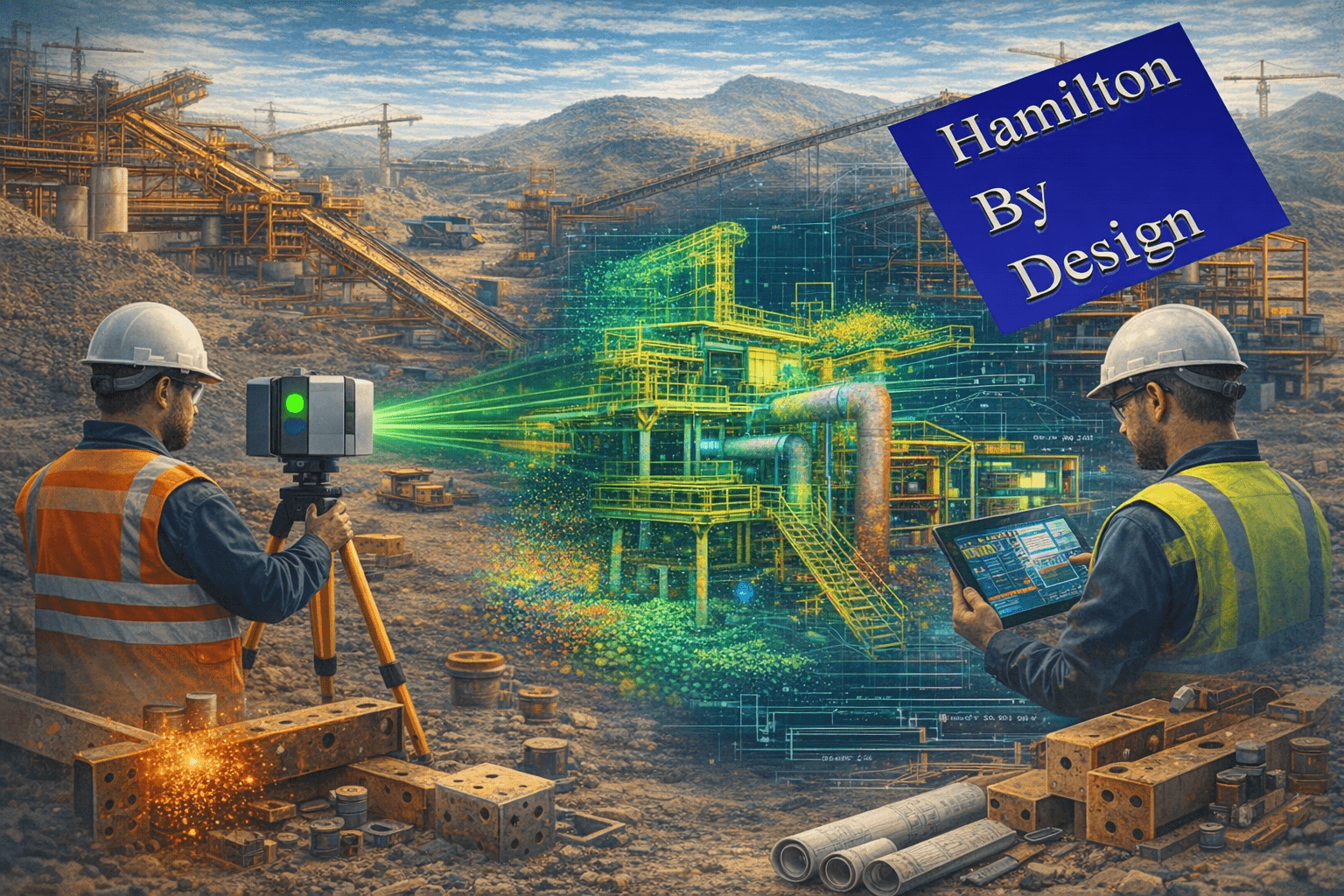
Many engineering teams now use 3D laser scanning to capture detailed measurements of plant structures.
Laser scanning records millions of measurement points and creates point cloud datasets representing the geometry of conveyors, structures, platforms, and equipment.
These datasets allow engineers to understand the real plant layout before designing new structures.
Learn more about capturing existing conditions here:
Structural Steel Modelling and Engineering Design
Once accurate plant data has been captured, engineers develop structural models used to design new steelwork.
Structural steel mining design often includes:
• support frames for new equipment
• conveyor support modifications
• access platform design
• structural reinforcements
• installation support structures
These models allow engineers to evaluate loads, verify clearances, and coordinate structural work with mechanical equipment and plant infrastructure.
Engineering modelling workflows can also support fabrication by providing accurate drawings and installation details.
More information about converting scan data into engineering models can be found here:
Structural Engineering for Plant Upgrades
Structural steel engineering is often required when mining plants undergo upgrades or modifications.
Typical projects may include:
• installation of new conveyors
• replacement of processing equipment
• upgrades to materials handling systems
• reinforcement of aging infrastructure
• modifications to transfer towers and chutes
Because much of this work occurs during scheduled shutdowns, structural engineering preparation must often be completed before the shutdown window begins.
Structural Steel and Infrastructure Design Integration
Structural steel engineering rarely occurs in isolation. It must be coordinated with other engineering disciplines including mechanical systems, materials handling equipment, and plant infrastructure.
Successful mining infrastructure design requires collaboration between engineers responsible for:
• mechanical systems
• materials handling equipment
• plant layout
• maintenance access systems
• structural support frameworks
Digital plant models and accurate engineering documentation allow these disciplines to work together more effectively.

Conclusion
Structural steel plays a vital role in supporting equipment and infrastructure within mining plants. Through careful structural steel mining design, engineers ensure that plant structures can support operational loads while providing safe access for maintenance and operations teams.
By combining accurate plant data, digital engineering models, and coordinated infrastructure design, engineering teams can develop structural steel solutions that integrate effectively within existing mining plants.
Hamilton By Design provides engineering services to support mining infrastructure design, plant upgrades, and structural steel engineering projects across industrial facilities.
Our clients
























