Mackayโ€™s Industrial Edge

Mackayโ€™s Industrial Edge โ€” How 3D LiDAR, Modern Engineering & Digital Modelling Supercharge Regional Projects

Located on the tropical Queensland coast but powering heavy industry, mining support and agricultural logistics, Mackay stands as a unique regional powerhouse. With its massive sugar industry, proximity to the Bowen Basin coalfields, thriving fabrication sector, marine and port operations โ€” plus a growing push toward industrial expansion โ€” the cityโ€™s infrastructure demands are both diverse and complex.

At Hamilton By Design, we recognise that projects in Mackay need more than โ€œold-schoolโ€ drawings or rough-site surveys. Thatโ€™s why we offer state-of-the-art 3D LiDAR laser scanning, comprehensive mechanical and structural engineering, advanced 3D modelling, and fabrication-ready drafting โ€” all designed to meet Mackayโ€™s rigorous industrial, mining-support and agricultural demands.

If youโ€™re planning an upgrade to a processing facility, expanding a plant or fabricating complex steelwork, our services ensure precision, efficiency and reliability from start to finish.


Why Mackay Is a Perfect Fit for Digital Engineering & 3D Scanning

Mackayโ€™s blend of industries โ€” sugar mills, mining, fabrication, marine, port logistics and heavy machinery โ€” means that most facilities are a patchwork of legacy infrastructure, ongoing modifications and high-demand production cycles.

That brings challenges like:

  • undocumented pipework, conveyors or structural changes;
  • tight tolerances for retrofits or new installations;
  • heavy mechanical equipment requiring accurate alignment and structural support;
  • short windows for shutdowns or maintenance;
  • mixed use of fabrication, mining-grade components, and agricultural processing equipment.

For these reasons, the old ways of tape-measure site surveys and manual sketches are often not enough.

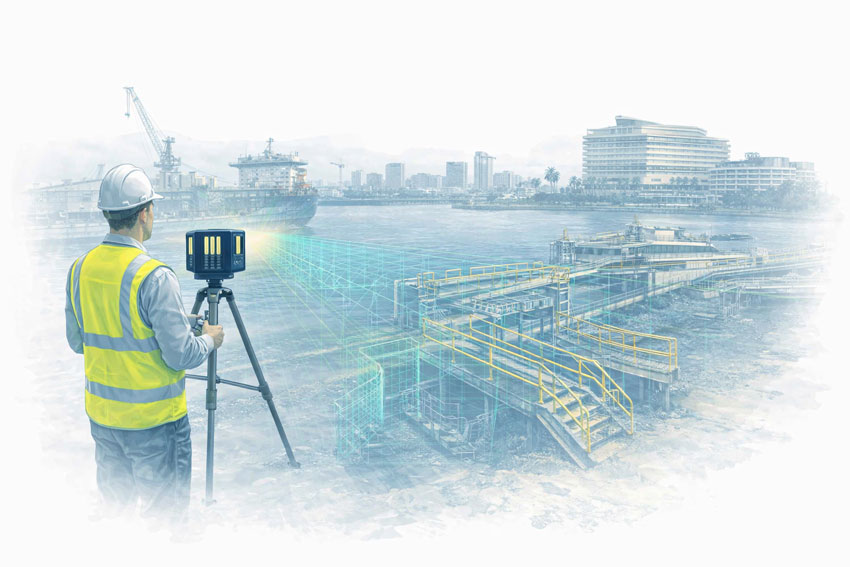
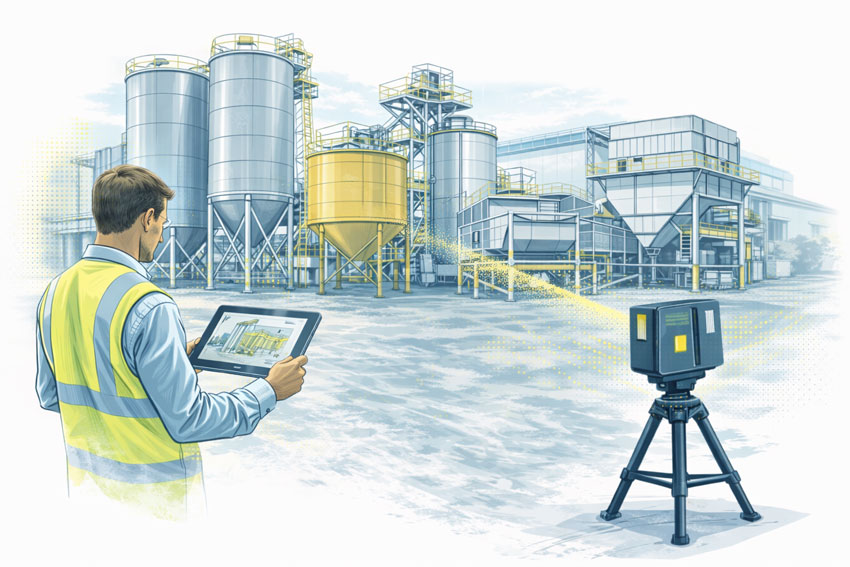
Enter 3D LiDAR scanning. By capturing the entire facility geometry with millimetre-level accuracy, you get a complete digital โ€œas-builtโ€ record โ€” capturing everything from structural steel, ductwork, conveyors, foundations, and terrain, to existing equipment and utilities.

Through Hamilton By Designโ€™s professional scanning services, Mackay clients receive real-world data that supports safer, faster and more accurate project planning, design and fabrication.


From Point Cloud to Precision Design: 3D Modelling & Drafting

Once your site is scanned, our team converts the raw scan data into intelligent 3D CAD models โ€” delivering:

  • accurate mechanical and structural layouts;
  • fabrication-ready drawings (GA, detail drawings, isometrics, BOMs);
  • clash detection and interference checking before fabrication starts;
  • easy visualisation for stakeholders, clients and contractors;
  • digital archives for future modifications or maintenance.

This kind of precision work dramatically reduces risk โ€” especially for brownfield sites or mixed-use facilities common in Mackayโ€™s industrial sector.


Engineering Support Built for Mackayโ€™s Key Industries

Whether itโ€™s a sugar mill retrofit, mining support workshop, marine fabrication yard, or industrial workshop expansion โ€” the range of engineering challenges in Mackay is enormous. Hamilton By Design brings specialist mechanical and structural engineering expertise to the table, offering:

  • structural assessments (supports, platforms, load-bearing frames, foundations)
  • alignment and vibration analysis for conveyors, heavy machinery, pumps
  • design of new equipment layouts, piping, ducting and supports
  • fatigue, stress and load-bearing analysis (FEA) when needed
  • compliance-ready drawings and design documentation for local regulations and safety standards

This level of engineering support is often critical for projects involving heavy loads, mining-grade equipment, or large-scale fabrication โ€” exactly the types of projects abundant across Mackay.


3D LiDAR Laser Scanning โ€” The Game Changer for Mackay Projects

Especially when plants are being upgraded, new modules added, or older sites refurbished, accurate spatial data is the foundation for success.

Our 3D LiDAR laser scanning service ensures:

  • complete, precise capture of existing site geometry โ€” steelwork, structure, terrain, utilities;
  • minimal site downtime โ€” faster capture than manual survey;
  • safer field operations (less need for manual measurements in active plants);
  • high-fidelity base for design, modelling and fabrication;
  • better coordination between contractors, fabricators and engineers.

Learn more about our 3D LiDAR services here: https://www.hamiltonbydesign.com.au/home/3d-lidar-scanning-digital-quality-assurance/3d-laser-scanning/

For a city like Mackay โ€” with fast-paced industrial demand, tight tolerances, and high-volume production โ€” this technology isnโ€™t just beneficial, itโ€™s essential.


One Integrated Workflow: From Scan to Delivery

What sets Hamilton By Design apart is our seamless, end-to-end service:

  1. Conduct 3D LiDAR scan of the facility or site
  2. Process point-cloud data and clean up for modelling
  3. Build detailed 3D CAD models โ€” mechanical, structural, architectural
  4. Perform engineering assessments, structural/ mechanical analysis or modifications as needed
  5. Produce fabrication-ready drawings and documentation
  6. Provide digital reports, QA data and as-built records for the client

Having a single point of accountability โ€” scan, model, engineer, deliver โ€” reduces miscommunication, avoids rework and ensures that every part of the project is aligned, documented, and traceable.


Hamilton By Design logo displayed on a blue tilted rectangle with a grey gradient background

Why Mackay Businesses Should Use Hamilton By Design

Whether youโ€™re running a sugar mill, a fabrication workshop servicing Bowen Basin mines, a workshop for heavy equipment repairs, or a marine engineering facility servicing port exports โ€” Mackayโ€™s industrial landscape is complex.

By using cutting-edge 3D laser scanning, accurate modelling, and expert engineering, Hamilton By Design helps you:

  • save time and money on site surveys;
  • avoid costly rework from inaccurate measurements;
  • ensure tighter tolerances, safer installations and compliance;
  • speed up design, fabrication and installation;
  • maintain digital records for ongoing maintenance or future upgrades.

For industries in Mackay that deal with heavy loads, tight schedules, and high-volume production โ€” this is a competitive advantage.

Our Clients

Name
Would you like us to arrange a phone consultation for you?
Address

Rockhampton a Unique Environment for Engineering

Why Rockhampton Is a Unique Environment for Engineering & Digital Technology

Rockhampton stands out for several reasons that directly influence how engineering and design work is executed in the region.

1. A City at the Centre of Agriculture, Mining and Defence

Few regional cities in Australia support as many sectors simultaneously:

  • cattle production & feedlots
  • abattoirs and food-processing plants
  • mining workflow (Bowen Basin)
  • fabrication and workshop environments
  • major road & rail logistics
  • defence operations at Shoalwater Bay

This diversity creates an environment where brownfield projects, plant upgrades and operational changes are constant โ€” and where accurate digital engineering is invaluable.

2. A Heritage-Rich Built Environment

Rockhamptonโ€™s colonial architecture and historic precincts add engineering complexity, especially for:

  • renovation and extension planning
  • capturing building geometry
  • ensuring compliance during upgrades
  • modelling concealed or irregular structures

Accurate scanning and modelling reduce the risks associated with modifying older buildings.

3. A Rapidly Growing Industrial Corridor

With expansions across Gracemere, Parkhurst and the Port Alma supply chain, Rockhampton is strengthening its role as a:

  • fabrication hub
  • transport distribution centre
  • industrial service precinct

Digital engineering ensures these facilities deliver maximum efficiency with minimal downtime.


3D LiDAR Laser Scanning: Rockhamptonโ€™s Path to More Accurate, Data-Driven Projects

One of the biggest challenges in Central Queensland is managing complexity in brownfield industrial environments: tight tie-in points, undocumented modifications, legacy equipment, unknown clearances and misaligned plant sections.

This is exactly where 3D LiDAR scanning becomes a game-changing tool.

Hamilton By Design uses engineering-grade scanning to produce:

  • complete as-built environments
  • millimetre-accurate spatial data
  • structural geometry and deflection insights
  • clash detection for new installations
  • alignment checks for equipment
  • precise digital documentation for tendering and fabrication

Learn more about our scanning process here:
3D Laser Scanning โ€“ https://www.hamiltonbydesign.com.au/home/3d-lidar-scanning-digital-quality-assurance/3d-laser-scanning/

For Rockhampton industries, the value is immediate:

  • reduced rework and fewer shutdown overruns
  • accurate fit-up when fabricators install new components
  • better engineering decisions based on real data
  • faster turnaround for designs and feasibility planning

From abattoirs to feed mills, mining workshops to energy infrastructure, LiDAR scanning ensures every project begins with precise, reliable site information.


3D Modelling & Drafting: Turning Reality Into Intelligent Engineering Models

Once the point cloud is captured, Hamilton By Design transforms the data into:

  • SolidWorks parts and assemblies
  • mechanical models for plant upgrades
  • fabrication-ready drawings (GA, detail, isometric & BOMs)
  • structural models for platforms, supports, conveyors and frames
  • mechanical layout concepts and optimisation studies

For Rockhampton businesses, this is particularly valuable because:

  • fabrication teams rely on correct geometry
  • shutdown windows are small
  • misaligned or undocumented equipment is common
  • design changes often must occur quickly

With 3D modelling, plant owners, contractors and fabricators can visualise the project before steel is cut โ€” dramatically improving accuracy and reducing cost.


Mechanical Engineering for Rockhamptonโ€™s Industrial & Agricultural Sectors

Rockhamptonโ€™s diverse economy means the region is constantly upgrading:

  • processing plants
  • abattoirs
  • feed mills
  • grain-handling systems
  • water-treatment infrastructure
  • conveyor systems
  • workshops and industrial machinery

Hamilton By Design provides engineering support such as:

  • mechanical design for new or upgraded equipment
  • structural assessments on frames, platforms, chutes and conveyors
  • vibration, deflection and alignment analysis
  • flow optimisation for materials-handling systems
  • FEA (Finite Element Analysis) for components and assemblies
  • lifting, access and maintenance design

Our engineer-led workflow ensures that every design is based on reality โ€” captured by LiDAR and validated through modelling and analysis.


How Digital Engineering Helps Rockhamptonโ€™s Key Industries

1. Beef Processing & Agri-Food Operations

Rockhamptonโ€™s processing facilities are often complex, space-constrained and continuously operating.

Scanning assists with:

  • plant upgrades
  • layout efficiency studies
  • tie-in accuracy for new conveyors or equipment
  • compliance documentation

2. Bowen Basin Mining Support

Rockhampton is a major hub for:

  • mining contractors
  • fabrication workshops
  • equipment repair
  • maintenance logistics

LiDAR scanning and engineering reduce rework in fabricated components destined for:

  • Moranbah
  • Blackwater
  • Middlemount
  • Dysart and surrounding mines

3. Industrial Precincts & Port Supply Chains

Industrial estates across Parkhurst and Gracemere benefit from:

  • warehouse fit-outs
  • crane runway checks
  • processing-line layout design
  • mechanical and structural upgrades

4. Heritage & Architectural Redevelopment

Scanning enables:

  • accurate modelling of old buildings
  • conflict detection for new internal services
  • faรงade preservation planning

No risk of relying on inaccurate tape-measure surveys.


A Fully Integrated Workflow: Scan โ†’ Model โ†’ Engineer โ†’ Deliver

One of the biggest advantages Hamilton By Design provides to Rockhampton businesses is single-source accountability.

Our streamlined process includes:

  1. 3D LiDAR scanning of the site
  2. Processing & registering point-cloud data
  3. SolidWorks modelling of the environment
  4. Engineering assessments & calculations
  5. Fabrication-ready drawings
  6. Digital QA for installation

Thereโ€™s no handover between scanning companies, designers and engineers โ€” everything is delivered by one team, reducing miscommunication and improving project outcomes.


Rockhamptonโ€™s Future Is Digital โ€” And Weโ€™re Ready to Support It

Rockhampton is experiencing a period of sustained growth driven by agriculture, mining, defence and industrial expansion. As facilities upgrade and capacity increases, accurate engineering data, digital design tools and advanced scanning technology will be central to delivering smarter, safer and more efficient projects.

Hamilton By Design logo displayed on a blue tilted rectangle with a grey gradient background

Hamilton By Design is proud to support Central Queensland with:

  • 3D LiDAR laser scanning
  • Mechanical engineering consulting
  • 3D modelling and drafting
  • Digital documentation and quality assurance

Whether youโ€™re planning an upgrade to a processing plant, modernising a workshop, designing a conveyor system or documenting an entire facility, our engineering-led team provides the precision and reliability your project needs.

Our Clients

Name
Would you like us to arrange a phone consultation for you?
Address

3D LiDAR Scanning Solutions Australia: Capturing Engineering-Grade Accuracy for Mining, Industrial & Infrastructure Projects

3D LiDAR scanning has rapidly become one of Australiaโ€™s most valuable engineering tools โ€” and for good reason. From mining CHPPs to power stations, manufacturing plants, processing facilities, marine infrastructure, and complex brownfield upgrades, LiDAR delivers accuracy, clarity, and reliability that traditional measurement methods simply canโ€™t match.

Across Australiaโ€™s most demanding industrial regions โ€” the Hunter Valley, Bowen Basin, Pilbara, Mount Isa, Central Coast, Sydney, Adelaide, and beyond โ€” Hamilton By Design provides engineering-grade 3D LiDAR scanning, mechanical design, and full digital-engineering workflows that help clients minimise shutdown duration, eliminate rework, and make better decisions.

This page explains what 3D LiDAR scanning is, why it matters, and how it delivers real, measurable benefits to Australian mining, industrial, and manufacturing operations.


What Is 3D LiDAR Scanning?

LiDAR (Light Detection and Ranging) uses laser pulses to measure millions of points per second, capturing the exact geometry of equipment, structures, and environments. The result is a high-resolution point cloud that serves as a digital replica of the asset โ€” precise down to the millimetre.

Hamilton By Design uses FARO engineering-grade scanners delivering:

  • ยฑ1โ€“2 mm accuracy
  • Full-colour point clouds
  • Safe, fast external and internal scanning
  • High-resolution data suitable for mechanical design and fabrication

This accuracy allows us to model steelwork, chutes, conveyors, piping, tanks, equipment frames, building interiors, structural interfaces, and entire wash plants with confidence.


Why Australian Industries Are Turning to LiDAR

Australiaโ€™s mining, energy, and industrial sectors face unique pressures:
tight shutdown windows, ageing infrastructure, safety constraints, limited access, and the constant demand for more accurate data.

LiDAR scanning solves these challenges by offering:

1. Fast, Safe, Non-Contact Measurement

No climbing into hazardous areas.
No lengthy tape measurements.
No assumptions.

LiDAR captures everything from a safe distance โ€” ideal for CHPPs, crushing circuits, transfer towers, power stations, and restricted plant rooms.


2. Zero Guesswork in Brownfield Engineering

Brownfield sites are messy. Nothing is straight, square, or built to the original drawing anymore.

With LiDAR:

  • Misalignment is captured
  • Deformation is visible
  • Corrosion and sag are measurable
  • Legacy drawings can be validated or corrected

This drastically reduces design error across upgrades, fabrication, and shutdown works.


3. Millimetre-Accurate 3D Models for Fabrication

After scanning, Hamilton By Design converts the point cloud into:

  • SolidWorks 3D models
  • GA drawings
  • Fabrication drawings
  • DXF profiles
  • Shop-ready detail packs

Fabricators love it because parts fit the first time, and rework is almost eliminated.


4. Better Shutdown Planning

LiDAR scanning provides clear digital visibility of:

  • Access routes
  • Lifting paths
  • Structural constraints
  • Tie-in locations
  • Clash points

This leads to safer, faster, more predictable shutdown execution.


5. Digital Twins for Long-Term Asset Management

A structured point cloud becomes a digital baseline for future planning.
Clients use it for:

  • Condition monitoring
  • Deviation tracking
  • Long-term upgrade planning
  • Documentation for compliance

It builds engineering resilience into the asset lifecycle.


Industries We Support Across Australia

Hamilton By Design delivers LiDAR scanning and mechanical engineering solutions nationwide, supporting:

Mining & Heavy Industry

  • CHPPs
  • Coal handling plants
  • Hard-rock processing facilities
  • Underground & surface operations
  • Conveyors, chutes, crushers, screen houses

Energy & Utilities

  • Power stations
  • Turbine halls
  • Boiler houses
  • Substations
  • Cooling water systems

Manufacturing & Industrial

  • Plants and factories
  • Production lines
  • Warehouses
  • Material-handling systems

Data Centres & Infrastructure

  • Fit-out scans
  • MEP coordination
  • Expansion planning
  • Brownfield integration

Wherever precision and clarity are required, LiDAR scanning adds value.


Our Digital Engineering Workflow

Hamilton By Design integrates LiDAR scanning into a full project lifecycle:

  1. On-site LiDAR scan using FARO engineering-grade equipment
  2. Processing in FARO Scene to create a clean, structured point cloud
  3. Import into SolidWorks for modelling of required geometry
  4. 3D modelling & mechanical design
  5. Clash detection & feasibility checks
  6. 3DEXPERIENCE reviews with clients
  7. Fabrication drawings, DXF files, and shop packs
  8. Handover + digital twin for future works

This ensures absolute clarity from the first scan to the final signed-off drawing.


Benefits for Australian Projects

โœ” Parts fit first time

โœ” Shutdown durations reduced

โœ” Fabricators receive complete, accurate information

โœ” Safer site access with fewer high-risk activities

โœ” Eliminates rework, delays, and measurement errors

โœ” Enhances engineering collaboration

โœ” Reduces total project cost

LiDAR scanning isnโ€™t just a measurement method โ€” itโ€™s a competitive advantage.


Why Choose Hamilton By Design

  • Over a decade of experience in heavy industry
  • Extensive CHPP and mining plant expertise
  • SolidWorks Simulation, FEA, and advanced modelling capability
  • Fast mobilisation across Australia
  • Detailed, fabrication-ready deliverables
  • LinkedIn-trusted and industry-proven
  • Engineering accuracy at every step

For clients across the Hunter Valley, Bowen Basin, Pilbara, NSW, QLD, WA, and SA โ€” we offer scalable, high-precision digital engineering that delivers reliability and confidence.


Hamilton By Design logo displayed on a blue tilted rectangle with a grey gradient background

Ready to Start Your Project?

Hamilton By Design offers 3D LiDAR scanning anywhere in Australia, from mine sites to manufacturing plants to data centres.

If youโ€™re planning:

  • an upgrade
  • a shutdown
  • a brownfield expansion
  • a feasibility study
  • or an equipment replacement

โ€ฆLiDAR scanning is the smartest starting point.

Contact us today to book a site scan or request a proposal.

Name
Address
You would like to:

3D Point Clouds Are a Game-Changer for Your Projects

Your Experts in 3D Laser Scanning & Mechanical Design

3D CAD Modelling | 3D Scanning

3D Experience Platform Login

3-D Lidar Scanning Hunter Valley: Transforming Industrial Projects with Accuracy, Safety and Engineering Confidence

The Hunter Valley is one of Australiaโ€™s most strategically important industrial regions. It supports large mining operations, CHPP facilities, fabrication workshops, energy infrastructure, civil projects and heavy manufacturing. These industries depend on precision, safety and efficient project delivery โ€” yet most operate in aging brownfield environments where original drawings are outdated, equipment has shifted over time, and modifications have occurred for decades without accurate documentation.

In environments like these, traditional measuring methods often fail to provide the precision required for confident engineering and fabrication. This is why 3-D Lidar scanning in the Hunter Valley has become a critical tool for engineers, supervisors, fabricators and project managers. It captures the real-world site conditions with millimetre accuracy, creating a digital foundation for smarter, safer and more efficient project execution.

This article explores the benefits, pros and cons of 3-D Lidar scanning, and explains why the Hunter Valley is uniquely positioned to gain massive value from this technology.


Understanding 3-D Lidar Scanning

3-D Lidar (Light Detection and Ranging) scanning is a non-contact measurement technology that uses lasers to capture millions of points in seconds. The scanner emits laser pulses and measures the return time to determine distances, building a dense โ€œpoint cloudโ€ of the environment.

This point cloud is a precise 3-D representation of:

  • Structural steel
  • Conveyors and transfer towers
  • Chutes, bins and hoppers
  • Tanks, pipework and mechanical equipment
  • Platforms, walkways and buildings
  • Industrial plant rooms and process areas

Once captured, this digital data becomes the foundation for engineering models, fabrication drawings, digital fit checks and project planning.


Why 3-D Lidar Scanning Matters in the Hunter Valley

The Hunter Valley contains some of the most complex and heavily used industrial assets in Australia. Many facilities have been in operation for decades, and almost all have undergone modifications, expansions and repairs. Over time, the real-world geometry diverges significantly from the old drawings stored on paper or outdated CAD files.

This creates major challenges:

  • Measurements taken by hand are inaccurate or unsafe
  • Shutdown windows are extremely tight
  • Fabricators rely on precise data to avoid costly rework
  • Engineers require true geometry for load calculations and interface design
  • Supervisors need reliable information to scope replacement work

3-D Lidar scanning provides a millimetre-accurate representation of what exists onsite, removing guesswork and supporting engineering best practice.


The Benefits of 3-D Lidar Scanning in the Hunter Valley

1. Millimetre Accuracy Improves Engineering Outcomes

In heavy industrial environments, small measurement errors can create large, expensive problems. Structural misalignment, worn steel, bent frames, sagging conveyors and distorted chutes are all common in brownfield plants.

3-D Lidar scanning captures:

  • True dimensions
  • Variations from design
  • Deformation and misalignment
  • Complex curved surfaces
  • Differences caused by wear and tear

Engineers design with confidence because the digital model reflects actual site conditions โ€” not assumptions.


2. Huge Reduction in Rework and Fabrication Errors

Fabricators in Singleton, Muswellbrook, Rutherford, Tomago and throughout the Hunter region rely on accurate measurements to ensure steel and mechanical components fit the first time.

Without accurate data, common fabrication issues include:

  • Bolt holes misaligned
  • Steel members too short or too long
  • Chutes or hoppers not matching openings
  • Pipe spools missing clearances
  • Platforms not sitting square

These problems lead to:

  • Onsite cutting and welding
  • Delayed installations
  • Extended shutdown time
  • Additional crane costs
  • Extra labour expenses

3-D Lidar scanning eliminates these risks, ensuring every component is manufactured to match the as-built site geometry.


3. Improved Shutdown Planning and Faster Execution

Mining and CHPP shutdowns in the Hunter Valley operate under strict time constraints. Any unexpected measurement issue can cause delays affecting production and safety.

With 3-D Lidar scanning:

  • Scope is defined accurately before shutdown
  • Fabrication is completed correctly the first time
  • Digital fit checks identify problems early
  • Installation is faster and safer

Shutdowns become more predictable and efficient.


4. Massive Safety Improvements

Manual measurement often requires workers to:

  • Enter confined spaces
  • Access heights
  • Work around operating equipment
  • Lean over conveyors
  • Navigate dirty, uneven or hazardous areas

3-D Lidar scanning minimises physical access requirements. Technicians can scan large areas from safe positions, reducing:

  • Fall risks
  • Pinch-point exposure
  • Hot-work hazards
  • Time on elevated structures

This is a major benefit for HSE and maintenance teams across the Hunter Valley.


5. Better Communication, Collaboration and Visualisation

Point clouds and 3-D models make it easier for teams to understand the project environment, especially when stakeholders are spread across:

  • Mine sites
  • Fabrication workshops
  • Design offices
  • Engineering consultancies
  • Projects teams and OEM vendors

Digital data allows remote review, reducing the need for repeated site visits and improving decision-making.


6. Ideal for Brownfield Upgrades and Congested Areas

Many Hunter Valley facilities are decades old, with layers of modifications. Clearances are tight, geometry is irregular, and equipment alignment has changed over the years.

3-D Lidar scanning is perfect for:

  • Transfer towers with layered steel
  • Congested plant rooms
  • Pipe networks
  • Stockpile conveyors
  • Old building footprints
  • Complex structural junctions

The scanner captures the complexity instantly and precisely.

Hamilton By Design logo displayed on a blue tilted rectangle with a grey gradient background

Pros and Cons of 3-D Lidar Scanning

While 3-D Lidar scanning is a game-changing tool, it is important to understand both the advantages and limitations.

3D Scanning in The Hunter Valley

3D Laser Scanning

Hunter Valley Laser Scanning: Transforming Engineering Accuracy Across Mining, Manufacturing and Infrastructure

3D Laser Scanning in Singleton and the Hunter: Delivering Accuracy for Mining, Manufacturing and Industrial Projects

Laser Scanning Hunter Valley: Delivering Engineering-Grade Accuracy for Mining, Manufacturing and Industrial Projects

Name
Address
You would like to:

3D Laser Scanning in Singleton and the Hunter: Delivering Accuracy for Mining, Manufacturing and Industrial Projects

Singleton sits at the heart of the Hunterโ€™s industrial engine room. Surrounded by major mines, CHPPs, power stations, fabrication workshops and heavy industrial precincts, the region depends on accurate information, efficient planning and safe, predictable project execution. With assets that have operated for decades, countless undocumented modifications and structures that no longer match original drawings, engineering teams face a constant challenge โ€” how to measure, model and design with confidence.

This is exactly where 3D laser scanning in Singleton and Hunter regions is transforming project workflows. Hamilton By Design provides millimetre-accurate digital capture that eliminates guesswork and supports engineering, fabrication, maintenance and shutdown planning across the entire industrial sector.

Whether you’re a CHPP superintendent in Singleton, a fabrication manager in Muswellbrook, a maintenance engineer in the Hunter Valley, or a project manager responsible for upgrades across multiple sites, accurate laser scanning has become essential. This article explores why the demand for 3D scanning has surged, how the technology works, and how Hamilton By Design uses it to support safer, more efficient and more reliable outcomes across the Hunter region.


Why Singleton and the Hunter Need 3D Laser Scanning

The Hunter region is home to some of Australiaโ€™s most active heavy industrial environments. These operations consist of massive structural steel assemblies, conveyors, process equipment, platforms, chutes, bins and pipework โ€” all subject to wear, deformation and ongoing modification. Many facilities were built long before digital documentation became standard. As a result:

  • Original drawings rarely reflect the current condition
  • Measurements taken by hand are slow, risky and often inaccurate
  • Shutdown windows are extremely tight
  • Brownfield constraints make new installations complex
  • Fabricators rely heavily on accurate data to ensure perfect fitment

Incorrect measurements donโ€™t just cause inconvenience โ€” they create costly fabrication errors, installation delays, safety risks and additional shutdown time.

3D laser scanning removes these risks entirely by creating a verified digital record of what is actually on site.


What 3D Laser Scanning Delivers

Hamilton By Design uses engineering-grade LiDAR scanners to capture millions of precise data points across a site. These points form a point cloud, which is a detailed 3D representation of the real environment. This data can then be used to create accurate models, drawings, simulations and digital checks.

With 3D laser scanning in Singleton and Hunter you get:

  • Accurate as-built geometry
  • Digital templates for fabrication
  • Reliable interface points for new steel or equipment
  • Precise alignment and clearance data
  • Clash identification before installation
  • Improved shutdown planning and safety

For engineers, fitters, boilermakers and fabricators, this accuracy becomes the foundation for smarter decision-making and better project outcomes.


Key Industries Using 3D Laser Scanning in Singleton and the Hunter

1. Mining & CHPP Operations

Singleton is surrounded by some of the most productive mines in the country. Mines and CHPP operations rely heavily on scanning for:

  • Chute and hopper replacements
  • Conveyor alignment checks
  • Transfer tower redesigns
  • Structural integrity assessments
  • Bin, screen and crusher upgrades
  • Digital twins for long-term planning

Because these plants operate continuously, shutdown windows are limited. Laser scanning allows accurate pre-planning, reducing time spent onsite during shutdowns and eliminating unexpected clashes.


2. Fabrication & Manufacturing

The Hunter has a strong fabrication industry, supplying steel structures, mechanical components, platforms, tanks and pipework to mining and energy clients. But fabrication quality relies on measurement quality.

3D laser scanning ensures:

  • Components fit the first time
  • Bolt holes align correctly
  • Flanges match perfectly
  • Structural steel connects without modification
  • Expensive rework on site is eliminated

Workshops across Singleton, Muswellbrook, Thornton and Rutherford increasingly depend on digital accuracy to remain competitive.


3. Power Stations & Energy Infrastructure

The Hunter region includes major power generation assets and critical energy infrastructure. Many structures are ageing, and modifications require absolute accuracy.

Laser scanning supports:

  • Platform replacements
  • Pipe rerouting
  • Structural upgrades
  • Boiler house modifications
  • Maintenance planning
  • Deformation analysis

Reliable as-built data ensures compliance and reduces risk during shutdowns.


4. Industrial, Civil and Commercial Upgrades

Singletonโ€™s industrial footprint is expanding, and many facilities require:

  • As-built documentation
  • Renovations and extensions
  • Spatial coordination
  • Facility redevelopment
  • BIM integration

Laser scanning provides the foundation for safe and efficient project planning across commercial and industrial facilities.


The Hamilton By Design Workflow

Hamilton By Design offers a complete digital engineering solution, from scanning to modelling to fabrication-ready drawings. Our workflow includes:

1. On-Site Scanning

We capture every detail โ€” structural steel, mechanical equipment, conveyors, platforms, bins, hoppers, pipework and building geometry.

2. Processing & Registration

Individual scans are stitched together into a single, accurate point cloud representing the full environment.

3. CAD Modelling

We convert point cloud data into:

  • 3D models
  • GA drawings
  • Fabrication details
  • DXF files for laser cutting
  • Assembly and installation references

4. Digital Fit Checks

Before fabrication begins, we overlay new designs to check for:

  • Clashes
  • Misalignments
  • Interference with existing structures
  • Access and maintenance constraints

5. Project Delivery

Clients receive data that supports safe installation and reduces downtime.


Benefits of 3D Laser Scanning in Singleton and the Hunter

Reduced Rework

Accurate digital data means fabricators build with confidence and installers avoid modifications on site.

Safer Data Capture

Laser scanning reduces the need for manual measuring in hazardous areas.

Faster Shutdown Execution

Pre-planning with accurate data speeds up installation and reduces plant downtime.

Improved Engineering and Design

Designers work from verified geometry rather than guessing from old drawings.

Better Communication

Point clouds and 3D models allow all stakeholders to visualise the site clearly.

Cost Savings from Start to Finish

Less rework, fewer delays and more efficient fabrication combine to deliver real financial value.


Why Choose Hamilton By Design?

Hamilton By Design is uniquely positioned to support Singleton and Hunter clients because:

  • We combine laser scanning expertise with real engineering capability
  • We understand mining, CHPP, fabrication and industrial environments
  • We provide end-to-end digital workflows, not just raw data
  • Our models and drawings are created with fabrication and installation in mind
  • We deliver millimetre-accurate results you can trust

Our team works closely with mine sites, fabricators, energy providers and industrial operators across the region, delivering practical solutions built on real data.


Hamilton By Design logo displayed on a blue tilted rectangle with a grey gradient background

Work With Hamilton By Design

If your project requires precise measurement, modelling, redesign or fabrication, 3D laser scanning in Singleton and the Hunter is the most reliable way to ensure accuracy and reduce risk.

Hamilton By Design is ready to support your next upgrade, shutdown, replacement or maintenance campaign with:

  • On-site laser scanning
  • Point cloud processing
  • CAD modelling
  • Fabrication drawings
  • Digital engineering support

Reach out to discuss your upcoming project โ€” and experience the confidence that only accurate, high-quality 3D data can provide.

Name
Would you like us to arrange a phone consultation for you?
Address

3D Scanning in The Hunter Valley

Hunter Valley Laser Scanning: Transforming Engineering Accuracy Across Mining, Manufacturing and Infrastructure

3D Laser Scanning

3D LiDAR Scanning โ€“ Digital Quality Assurance

Mechanical Engineering Lift Sydney: Why Standards Like AS 4991 Matter

Safety and Precision in Mechanical Engineering Lifts

In the fast-paced world of Sydney construction and infrastructure, precision lifting is an everyday necessity. From hoisting prefabricated modules on high-rise towers to positioning steel frameworks and heavy plant components, each lift depends on one critical factor โ€” the integrity of the lifting device.

A mechanical engineering lift is more than just machinery; itโ€™s the result of careful design, analysis, and compliance with national safety standards. The Australian Standard AS 4991: Lifting Devices provides the engineering framework to ensure that every lifting beam, clamp, and spreader frame is designed, tested, and certified for safe performance.

In the dynamic environment of Sydneyโ€™s construction and manufacturing sectors, adhering to AS 4991 is not only a compliance issue โ€” itโ€™s essential to safety, reliability, and professional reputation.

Illustrated infographic explaining AS 4991 mechanically engineered lifting devices, showing engineering design steps, safe lifting practices, compliance outcomes, and non-compliance risks, with Sydney landmarks in the background

What AS 4991 Means for Mechanical Engineering in Sydney

AS 4991: Lifting Devices is the Australian benchmark for the design, manufacture, proof testing, and maintenance of all mechanically engineered lifting attachments used with cranes and hoists.

It covers:

  • Design verification by qualified engineers
  • Proof load testing (typically 1.5 times the Working Load Limit)
  • Identification markings such as WLL, serial number, and manufacture date
  • Regular inspection and maintenance schedules
  • Documented certification and traceability

For Sydney-based mechanical engineering projects โ€” from Parramattaโ€™s commercial developments to the infrastructure of the Eastern Suburbs โ€” these requirements ensure every lift is carried out with confidence and safety.


The Role of Mechanical Engineers in Safe Lifting

Mechanical engineers play a vital role in ensuring every lifting device performs predictably under real-world conditions. Each lifting beam, frame, or clamp must be:

  • Designed for static and dynamic loading
  • Resistant to fatigue, buckling, and corrosion
  • Built from materials tested for strength and durability
  • Verified through engineering analysis and proof testing

By applying AS 4991, mechanical engineers in Sydney create lifting devices that not only meet technical standards but also withstand the operational demands of construction, mining, and industrial settings across New South Wales.


Why Non-Compliance is Never Worth the Risk

Sydneyโ€™s worksites are under strict safety scrutiny, and incidents involving lifting equipment failures have resulted in serious injuries, fatalities, and prosecutions.

Examples from across Australia include:

  • Unmarked or uncertified lifting beams that failed under load due to poor design.
  • Vacuum lifters that detached unexpectedly after seals deteriorated from lack of inspection.
  • Improvised lifting points on machinery leading to crush injuries and WHS enforcement actions.

These events share a common cause: failure to meet the design, inspection, and documentation requirements of AS 4991.

For any mechanical engineering lift in Sydney, non-compliance risks not just equipment damage but also:

  • Work Health and Safety (WHS) prosecutions
  • Civil negligence claims
  • Loss of accreditation and contracts
  • Damage to professional reputation

Compliance as a Legal and Professional Obligation

While AS 4991 is not legislation, it defines the expected standard of care under Australiaโ€™s WHS laws. Regulators such as SafeWork NSW use compliance with standards like AS 4991 as evidence of due diligence.

For mechanical engineers, fabricators, and construction managers, compliance means:

  • Designs verified by competent engineers
  • Devices tested and certified to meet load requirements
  • Inspection records that prove ongoing safety
  • Training to ensure operators understand correct usage

In Sydneyโ€™s competitive engineering market, adherence to AS 4991 isnโ€™t just about avoiding penalties โ€” itโ€™s about demonstrating leadership in professional safety.


Building a Culture of Inspection and Traceability

A key part of AS 4991 is documentation. Each lifting device should have a design verification report, proof load certificate, and inspection record.
This traceability ensures that every lift on a Sydney site can be traced back to certified engineering.

Companies should maintain:

  • A register of lifting devices with serial numbers and inspection dates
  • Clear tagging systems for quick identification
  • Routine re-certification for high-use environments
  • Operator awareness training on compliance indicators

These processes turn safety standards into practical habits that protect workers and ensure smooth site operations.


Mechanical Engineering Lift Sydney: Innovation Meets Safety

Sydney is a hub of engineering innovation, with advanced tools like 3D scanning, LiDAR, and Finite Element Analysis (FEA) enhancing how lifting devices are designed and validated.

At Hamilton By Design, our mechanical engineers use these technologies to create custom lifting systems for complex sites across Sydney โ€” from tight urban projects in Chatswood and Parramatta to industrial installations in the Inner West.

Yet, even with the latest modelling tools, every design is checked against AS 4991 to guarantee that each lift meets both engineering and safety expectations.


Conclusion: Lifting Sydney Safely

In mechanical engineering, safety begins long before the crane hook rises. It starts with standards โ€” and in Australia, AS 4991 is the foundation.

For every mechanical engineering lift in Sydney, compliance ensures more than safety: it provides reliability, traceability, and peace of mind. By following the standard, engineers not only protect lives but also elevate the quality and professionalism of Sydneyโ€™s construction and manufacturing industries.

At Hamilton By Design, our commitment is simple: lift Sydney safely, lift with engineering excellence, and lift to the standard โ€” AS 4991.


Hamilton By Design logo displayed on a blue tilted rectangle with a grey gradient background

Our clients:

Name
Would you like us to arrange a phone consultation for you?
Address