AutoCAD Is Still in the 1980s โ€” Gasping for Air in a 3D World

In the 1980s, AutoCAD was revolutionary. It replaced drafting boards and sharpened pencils with a digital drawing tool. Architects, engineers, and designers suddenly had a new way to bring ideas to life โ€” faster, cleaner, and more accurate than ever before.

But hereโ€™s the problem: itโ€™s 2025 now, and AutoCAD is still trying to breathe the same thin air it did back then.

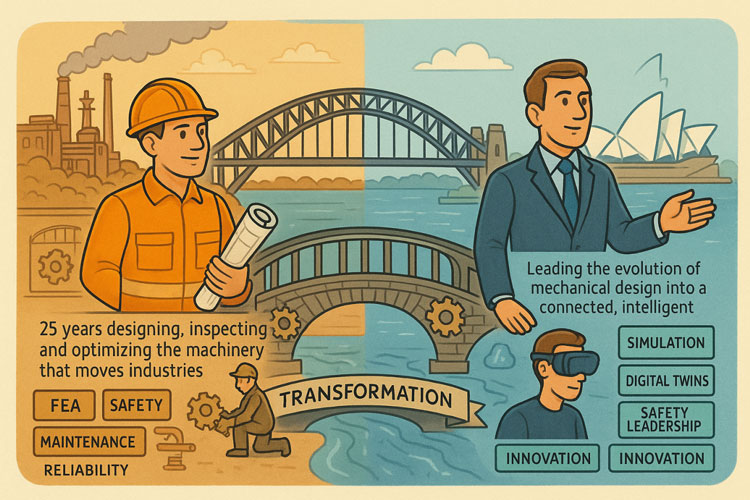
Illustrated comparison showing traditional mechanical engineering on one side and modern digital engineering on the other, with the Sydney Harbour Bridge and Opera House in the background, highlighting themes of maintenance, safety, reliability, simulation, digital twins, and innovation.

Stuck in 2D While the World Moved On

Todayโ€™s engineering isnโ€™t about drawing โ€” itโ€™s about designing.
Itโ€™s about simulating real-world forces, visualizing assemblies, testing tolerances, and producing manufacturable parts before a single prototype is built.

AutoCAD, at its core, is still a 2D drafting platform trying to wear a 3D mask. The workflows are fragmented, the feature set feels patched together, and it lacks the intelligence modern teams demand.

By contrast, SOLIDWORKS was built for this century โ€” fully parametric, model-driven, and collaborative. When you make a change to a design in SOLIDWORKS, every part, drawing, and assembly updates instantly. Thatโ€™s not an upgrade; thatโ€™s evolution.


Design Needs Intelligence, Not Layers

AutoCAD still asks you to think in layers and lines โ€” the language of draftsmen.
SOLIDWORKS speaks the language of relationships, assemblies, and constraints โ€” the language of engineers and innovators.

Modern design tools must integrate simulation, visualization, and manufacturability. They must predict behavior, test fit, and optimize before production. AutoCAD just canโ€™t breathe in that environment anymore โ€” itโ€™s stuck flipping between tabs while SOLIDWORKS users are already printing parts.


Collaboration and Data: The New Oxygen

The world doesnโ€™t design in isolation anymore. Teams are global, deadlines are tighter, and innovation cycles are shorter.
AutoCADโ€™s file-based approach is like passing blueprints across a fax machine.

SOLIDWORKS integrates cloud data management, real-time collaboration, and digital twin technology โ€” letting design teams iterate and innovate in real time, anywhere in the world.


The Future Is 3D โ€” and Itโ€™s Already Here

You wouldnโ€™t build an electric vehicle using a typewriter.
So why design modern products with 1980s software?

SOLIDWORKS represents the present and the future โ€” intelligent modeling, simulation-driven design, and integrated manufacturing tools that push boundaries instead of tracing them.

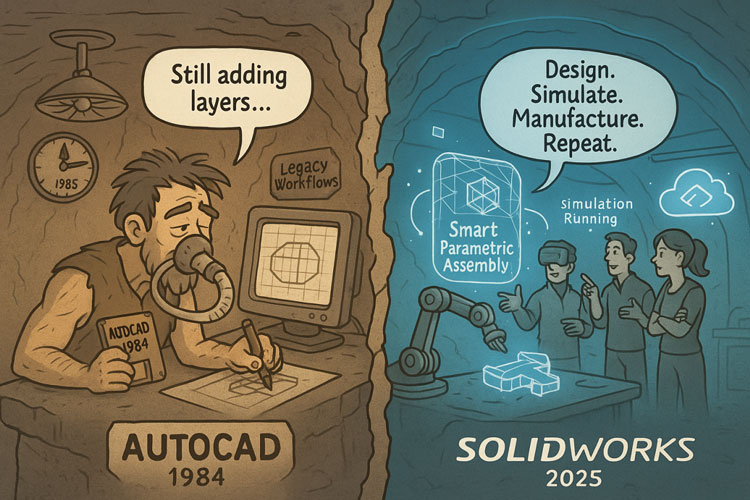
Humorous comparison illustration showing outdated AutoCAD workflows from 1984 versus modern SolidWorks 2025 with smart parametric assembly, simulation, and advanced design automation

Final Thoughts

AutoCAD made history โ€” no one can deny that. But history belongs in the museum, not the manufacturing floor.

If your software is still gasping for air in a 2D world, maybe itโ€™s time to give it a well-earned retirement.
SOLIDWORKS doesnโ€™t imitate innovation โ€” it defines it.

Mechanical Engineers in Sydney

Hamilton By Design logo displayed on a blue tilted rectangle with a grey gradient background

3D Scanning Sydney

Engineering Services

Our clients:

Name
Would you like us to arrange a phone consultation for you?
Address

Coal Chute Design

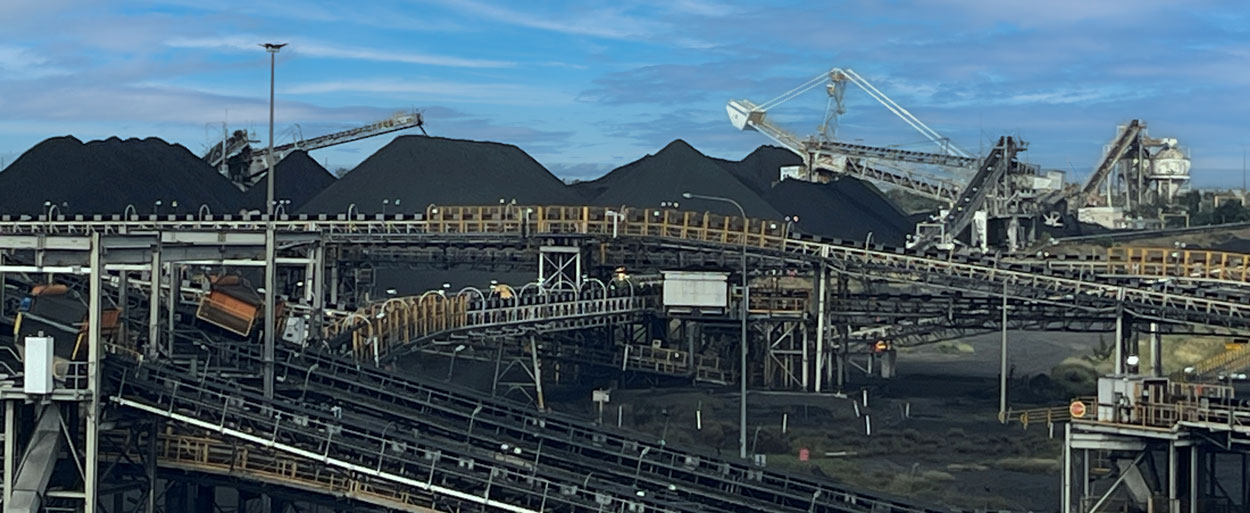
Coal handling and processing facility with multiple conveyors, stockpiles of coal, and stacking-reclaiming machinery operating under a blue sky

A Systems Engineering Approach for Reliable Coal Handling

In coal mining operations, transfer chutes play a deceptively small role with disproportionately large impacts. They sit quietly between conveyors, crushers, and stockpiles, directing tonnes of coal every hour. Yet when a chute is poorly designed or not maintained, the whole coal handling system suffers: blockages stop production, dust creates safety and environmental hazards, and worn liners demand costly maintenance shutdowns.

At Hamilton by Design, we believe coal chute design should be treated not as a piece of steelwork, but as a systems engineering challenge. By applying systems thinking, we connect stakeholder requirements, material behaviour, environmental factors, and lifecycle performance into a holistic design approach that delivers long-term value for mining operations in the Hunter Valley and beyond.


Coal Chutes in the Mining Value Chain

Coal chutes form the links in a chain of bulk material handling equipment:

  • ROM bins and crushers feed coal into the system.
  • Conveyors carry coal across site, often over long distances.
  • Transfer chutes guide coal between conveyors or onto stockpiles.
  • Load-out stations deliver coal to trains or ports for export.

Although they are small compared to conveyors or crushers, coal chutes are often where problems first appear. A well-designed chute keeps coal flowing consistently; a poorly designed one causes buildup, spillage, dust emissions, and accelerated wear. Thatโ€™s why leading operators now see chute design as a critical system integration problem rather than just a fabrication task.

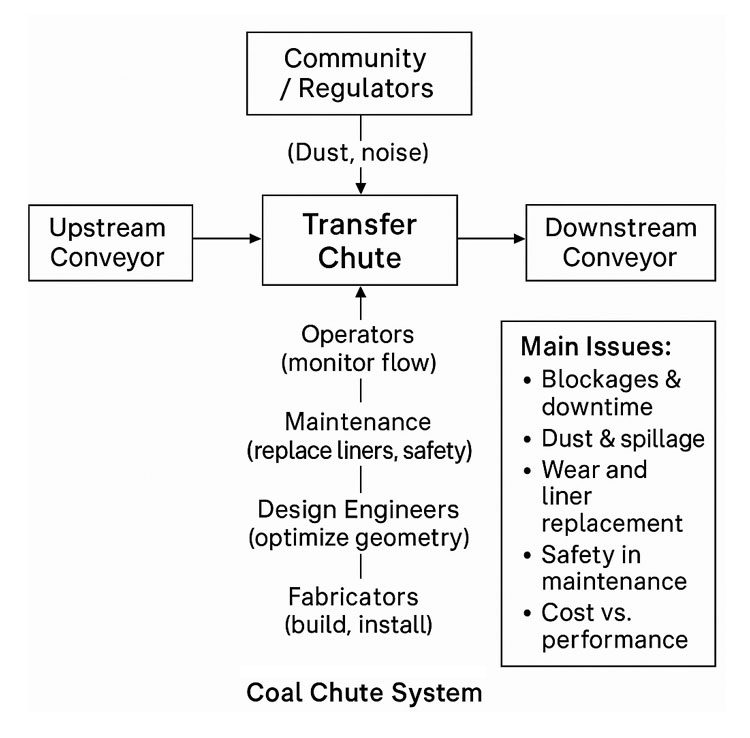
Flow diagram of a coal chute system showing upstream and downstream conveyors, the transfer chute, stakeholder interactions, and main issues such as blockages, dust, wear, maintenance safety, and cost versus performance

Systems Engineering in Coal Chute Design

Systems engineering is the discipline of managing complexity in engineering projects. It recognises that every component is part of a bigger system, with interdependencies and trade-offs. Applying this mindset to coal chute design ensures that each chute is considered not in isolation, but as part of the broader coal handling plant.

1. Requirements Analysis

The first step is gathering and analysing stakeholder and system requirements:

  • Throughput capacity: e.g. handling 4,000 tonnes per hour of coal.
  • Material properties: coal size distribution, moisture content, abrasiveness, stickiness.
  • Safety requirements: compliance with AS/NZS 4024 conveyor safety standards, confined space entry protocols, guarding, and interlocks.
  • Environmental compliance: dust, noise, and spillage limits.
  • Maintenance objectives: target liner life (e.g. 6 months), maximum downtime per liner change (e.g. 30 minutes with two workers).

A structured requirements phase reduces the risk of costly redesign later in the project.


2. System Design and Integration

Once requirements are defined, the design process considers how the chute integrates into the coal handling system:

  • Flow optimisation using DEM: Discrete Element Modelling allows engineers to simulate coal particle behaviour, test different geometries, and reduce blockages before steel is ever cut.
  • Dust control strategies: designing chutes with enclosures, sprays, and extraction ports to minimise airborne dust.
  • Wear management: predicting wear zones, selecting suitable liner materials (ceramic, Bisplate, rubber composites), and ensuring easy access for replacement.
  • Structural and safety design: ensuring the chute can withstand dynamic loads, vibration, and impact, while providing safe access platforms and guarding.
  • Interfaces with conveyors and crushers: alignment, skirt seals, trip circuits, and integration with PLC/SCADA control systems.

By treating the chute as a subsystem with multiple interfaces, designers avoid the โ€œbolt-onโ€ mentality that often leads to operational headaches.


3. Verification and Validation

The systems engineering V-model reminds us that every requirement must be verified and validated:

  • Component verification: weld inspections, liner hardness testing, nozzle spray checks.
  • Subsystem verification: chute section fit-up, guard gap measurements, coating checks.
  • Integration testing: conveyor-chute alignment, PLC spray interlocks, trip circuits.
  • System validation: commissioning with live coal flow, dust monitoring against limits, maintainability time trials for liner change.

By linking requirements directly to tests in a traceability matrix, operators can be confident that the chute is not only built to spec, but proven in operation.


Lifecycle Engineering: Beyond Installation

Good chute design doesnโ€™t stop at commissioning. A lifecycle engineering mindset ensures the chute continues to deliver performance over years of operation.

  • Maintainability: modular liners, captive fasteners, hinged access doors, and clear procedures reduce downtime and improve worker safety.
  • Reliability: DEM-informed designs and wear-resistant materials reduce the frequency of blockages and rebuilds.
  • Sustainability: dust suppression and enclosure strategies reduce environmental impact and support community and regulatory compliance.
  • Continuous improvement: feedback loops from operators and maintenance teams feed into the next design iteration, closing the systems engineering cycle.

A Rich Picture of Coal Chute Complexity

Visualising the coal chute system as a rich picture reveals its complexity:

  • Operators monitoring flow from control rooms.
  • Maintenance crews working in confined spaces, replacing liners.
  • Design engineers using DEM simulations to model coal flow.
  • Fabricators welding heavy plate sections on site.
  • Environmental officers measuring dust levels near transfer points.
  • Regulators and community monitoring compliance.

This web of relationships shows why coal chute design benefits from systems thinking. No single stakeholder sees the whole pictureโ€”but systems engineering does.


Benefits of a Systems Engineering Approach

When coal chute design is guided by systems engineering principles, operators gain:

  • Higher reliability: smoother coal flow with fewer blockages.
  • Lower maintenance costs: liners that last longer and can be swapped quickly.
  • Improved compliance: dust, spillage, and safety issues designed out, not patched later.
  • Lifecycle value: less unplanned downtime and a lower total cost of ownership.

In short, systems engineering transforms coal chutes from weak links into strong connectors in the mining value chain.


Case Study: Hunter Valley Context

In the Hunter Valley, coal mines have long struggled with transfer chute problems. Companies like T.W. Woods, Chute Technology, HIC Services, and TUNRA Bulk Solids have all demonstrated the value of combining local fabrication expertise with advanced design tools. Hamilton by Design builds on this ecosystem by applying structured systems engineering methods, ensuring each chute project balances performance, safety, cost, and sustainability.


Conclusion

Coal chute design might seem like a small detail, but in mining, details matter. When transfer chutes fail, production stops. By applying systems engineering principlesโ€”from requirements analysis and DEM modelling to verification, lifecycle planning, and continuous improvementโ€”we can design coal chutes that are reliable, maintainable, and compliant.

At Hamilton by Design, we believe in tackling these challenges with a systems mindset, delivering solutions that stand up to the realities of coal mining.


Are you struggling with coal chute blockages, dust, or costly downtime in your coal handling system?

Hamilton By Design logo displayed on a blue tilted rectangle with a grey gradient background

Contact Hamilton by Design today and discover how our systems engineering expertise in coal chute design can optimise your mining operations for performance, safety, and sustainability.

Mechanical Engineering | Structural Engineering

Mechanical Drafting | Structural Drafting

3D CAD Modelling | 3D Scanning

Chute Design

SolidWorks Contractors in Australia

Hamilton By Design โ€“ Blog

Our clients:
Name
Would you like us to arrange a phone consultation for you?
Address

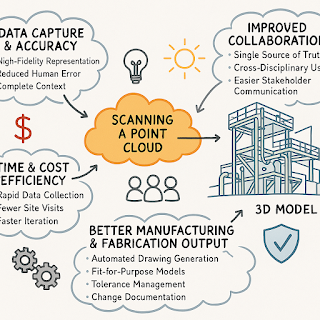
Are You Getting the Full Value from Your Point Cloud Data?

ย 

3D Scanning

The world of manufacturing and fabrication is moving faster than ever. Point cloud scanning and 3D modeling have made it easier to capture reality with incredible accuracy โ€” but simply collecting data isnโ€™t enough.

Without the right expertise, point clouds often sit unused, underutilized, or worse โ€” lead to costly mistakes when converted into incomplete or inaccurate drawings.

3D Scanning

ย 

ย 

Thatโ€™s why mechanical engineering consultants are becoming essential partners for forward-thinking businesses. They donโ€™t just process point clouds โ€” they turn them into:

  • High-precision 3D models that match real-world conditions

  • Fabrication-ready drawings that reduce errors and rework

  • Actionable insights that save time, money, and frustration

This is no longer just about technology โ€” itโ€™s about strategy and execution.

ย 

Read our full article to discover why now is the perfect time to engage consultants who can unlock the power of your point cloud data:


Itโ€™s Time to Level Up: Why Mechanical Engineering Consultants Are Key to Unlocking the Power of Point Cloud to 3D Modeling

ย 

ย 


Hamilton By Design logo displayed on a blue tilted rectangle with a grey gradient background

Our clients:
Name
Would you like us to arrange a phone consultation for you?
Address

Why Engineers, Designers & Project Managers Are Turning to 3D Scanning & CAD Modelling

Why Engineers, Designers & Project Managers Are Turning to 3D Scanning & CAD Modelling

ย 

Why Engineers, Designers & Project Managers Are Turning to 3D Scanning and CAD Modelling

In engineering and fabrication, the margin for error is razor-thin. A few millimetres off can mean costly rework, delays, or worse โ€” safety issues. At Hamilton By Design, we believe the future of precision engineering lies in combining smart data capture with expert design workflows. Thatโ€™s why more businesses are moving away from guesswork and toward 3D laser scanning and CAD modelling as standard practice.

Weโ€™ve put together a detailed overview of our services and methods in a recent blog post that explains how we help industry clients across Australia deliver with confidence.

๐Ÿ“Œ Read the full post here:
๐Ÿ‘‰ 3D Scanning & CAD Modelling Services

ย 

๐Ÿ” Whatโ€™s the Big Deal About 3D Scanning?

Traditional site measurements and hand-drawn markups are time-consuming, error-prone, and hard to communicate between disciplines. With 3D laser scanning, we can capture complex geometry quickly and accurately โ€” from plant layouts and piping to structural steel and mobile machinery.

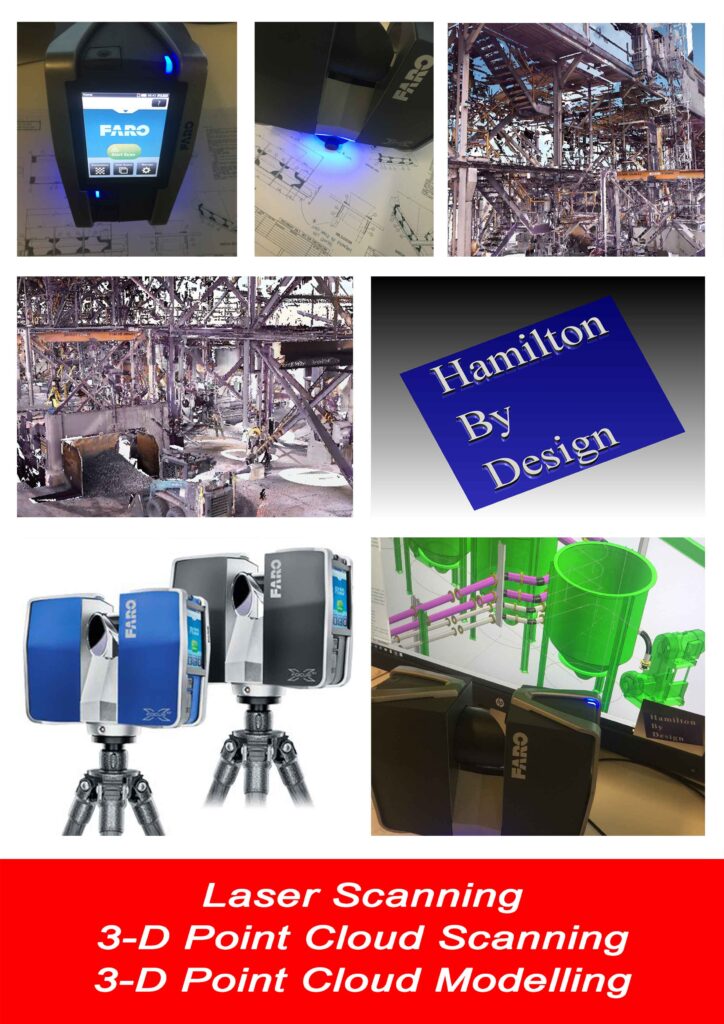
Using FARO laser scanning technology, we generate high-resolution point clouds that form the foundation for everything that follows โ€” whether thatโ€™s clash detection, fabrication detailing, or a full digital twin.

Itโ€™s fast, accurate, and incredibly efficient โ€” especially on live sites where access is limited and downtime is costly.

ย 

๐Ÿงฉ CAD Modelling That Fits โ€” Literally and Logically

Once the scan is complete, our team of experienced mechanical designers converts that data into solid CAD models, tailored to your workflow.

Whether you need:

  • Accurate as-built documentation

  • Reverse-engineered mechanical components

  • Custom fabrication-ready drawings

  • Plant modification layouts

We deliver models that integrate seamlessly with your existing systems โ€” whether you use SolidWorks, Inventor, Revit, or MicroStation.

Our CAD modelling isnโ€™t just visual. Itโ€™s functional. Itโ€™s engineered for fit, fabrication, and future upgrades.

ย 

ย 

ย 

๐Ÿ‘ทโ€โ™‚๏ธ Real-World Applications Across Industry

Our clients range from mining operations and water utilities to fabrication shops and site-based engineering firms. In all cases, the common problem is the same: they need to understand whatโ€™s really there before they design what comes next.

Some recent use cases include:

  • Replacing worn mechanical components with no existing drawings

  • Planning plant upgrades where outdated PDFs werenโ€™t reliable

  • Creating fabrication models from legacy assets

  • Capturing geometry for safety reviews and clearances

If your team still relies on measurements taken with a tape measure or outdated hand sketches, thereโ€™s a better way.

Donโ€™t Guess. Scan. Model. Deliver.

At Hamilton By Design, weโ€™ve been providing CAD modelling since 2001, and offering 3D scanning since 2017. Weโ€™ve built our reputation on doing it right the first time โ€” with engineering logic, practical experience, and technology that works.

If you want to understand how 3D laser scanning and CAD modelling can reduce risk and deliver better results, we invite you to read our full blog post:

3D Scanning & CAD Modelling Services

Letโ€™s take the guesswork out of your next project.

ย 

ย 

ย 

Mechanical Engineeringย |ย Structural Engineering

Mechanical Draftingย |ย Structural Drafting

3D CAD Modellingย |ย 3D Scanning

www.hamiltonbydesign.com.au

ย 

Our clients:

Name
Would you like us to arrange a phone consultation for you?
Address

3D Modellingย 

SolidWorks 3D Modelling

 By Hamilton By Design | www.hamiltonbydesign.com.au

In the 1980s through to the early 2000s, AutoCAD ruled supreme. It revolutionised the way engineers and designers approached 2D drafting, enabling technical drawings to be created and shared with speed and precision across industries. For two decades, it set the benchmark for visual communication in engineering and construction. But that era has passed.

Today, we live and work in a three-dimensional world โ€” not only in reality, but in design.

From 2D Drafting to Solid Modelling: The New Standard

At Hamilton By Design, we see 3D modelling not just as a tool, but as an essential evolution in how we think, design, and manufacture. The transition from 2D lines to solid geometry has reshaped the possibilities for every engineer, machinist, and fabricator.

With the widespread adoption of platforms like SolidWorks, design engineers now routinely conduct simulations, tolerance analysis, motion studies, and stress testing โ€” all in a virtual space before a single part is made. Companies like TeslaFordEatonMedtronic, and Johnson & Johnson have integrated 3D CAD tools into their product development cycles with great success, dramatically reducing rework, increasing precision, and accelerating innovation.

Where 2D design was once enough, now solid models drive machininglaser cutting3D printingautomated manufacturing, and finite element analysis (FEA) โ€” all from a single digital source.

A Growing Ecosystem of Engineering Capability

It’s not just the software giants making waves โ€” a global network of specialised engineering services is helping bring 3D design to life. Companies like Rishabh EngineeringShalin DesignsCAD/CAM Services Inc.Archdraw Outsourcing, and TrueCADD provide design and modelling support to projects around the world.

At Hamilton By Design, we work with and alongside these firms โ€” and others โ€” to deliver scalable, intelligent 3D modelling solutions to the Australian industrial sector. From laser scanning and site capture to custom steel fabrication, we translate concepts into actionable, manufacturable designs. Our clients benefit not only from our hands-on trade knowledge but also from our investment in cutting-edge tools and engineering platforms.

So Whatโ€™s Next? The Future Feels More Fluid Than Solid

With all these tools now at our fingertips โ€” FEA simulation, LiDAR scanning, parametric modelling, cloud collaboration โ€” the question becomes: what comes after 3D?

Weโ€™ve moved from pencil to pixel, from 2D lines to intelligent digital twins. But now the line between design and experience is beginning to blur. Augmented reality (AR), generative AI design, and real-time simulation environments suggest that the next wave may feel more fluid than solid โ€” more organic than mechanical.

Weโ€™re already seeing early glimpses of this future:

  • Generative design tools that evolve geometry based on performance goals
  • Real-time digital twins updating with sensor data from operating plants
  • AI-driven automation that simplifies design iterations in minutes, not days

In short: the future of 3D design might not be โ€œ3Dโ€ at all in the traditional sense โ€” it could be interactive, immersive, adaptive.

At Hamilton By Design โ€” Weโ€™re With You Now and Into the Future

Whether youโ€™re looking to upgrade legacy 2D drawings, implement laser-accurate reverse engineering, or develop a full-scale 3D model for simulation or manufacturing โ€” Hamilton By Design is here to help.

We bring hands-on trade experience as fitters, machinists, and designers, and combine it with the modern toolset of a full-service mechanical engineering consultancy. We’re not just imagining the future of design โ€” we’re building it.

Letโ€™s design smarter. Letโ€™s think in 3D โ€” and beyond.

Hamilton By Design logo displayed on a blue tilted rectangle with a grey gradient background

Contact Us
๐ŸŒ 

www.hamiltonbydesign.com.au
โœ‰๏ธ anthony@hamiltonbydesign.com.au๐Ÿ“ž 0477 002 249By Hamilton By Design | www.hamiltonbydesign.com.au

Harnessing the Power of LiDAR: Revolutionizing Engineering with 3D Scanning & SolidWorks

Title: Harnessing the Power of LiDAR: Revolutionizing Engineering with 3D Scanning & SolidWorks

Introduction

At Hamilton By Design, we are committed to integrating cutting-edge technologies to enhance our engineering processes. One such technology that has transformed the landscape of design and construction is LiDAR (Light Detection and Ranging). This advanced 3D scanning tool offers unparalleled precision and efficiency, enabling us to deliver superior outcomes for our clients.

The Evolution of LiDAR Technology

LiDAR technology has come a long way since its inception in the 1960s. Initially developed for meteorological and atmospheric research, it has evolved into a versatile tool used across various industries, including civil engineering, architecture, and environmental monitoring. The integration of GPS and advancements in laser technology have significantly enhanced LiDAR’s accuracy and applicability.

Advantages of Incorporating LiDAR into Engineering

  1. Exceptional Accuracy and Detail LiDAR systems emit laser pulses to measure distances with remarkable precision, creating high-resolution point clouds that capture intricate details of structures and terrains. This level of accuracy is crucial for tasks such as topographic mapping, structural analysis, and as-built documentation.
  2. Efficiency in Data Collection Traditional surveying methods can be time-consuming and labor-intensive. LiDAR, on the other hand, can rapidly collect vast amounts of data, significantly reduce field time and accelerate project timelines.
  3. Enhanced Safety and Accessibility LiDAR enables remote data collection in hazardous or hard-to-reach areas, minimizing risks to personnel. Whether it’s scanning a deteriorating structure or surveying rugged terrain, LiDAR ensures safety without compromising data quality.
  4. Integration with BIM and Digital Twins The detailed 3D models generated by LiDAR can be seamlessly integrated into Building Information Modeling (BIM) systems, facilitating better design visualization, clash detection, and project coordination. This integration supports the creation of digital twins, allowing for real-time monitoring and maintenance planning.
  5. Cost-Effectiveness By reducing the need for repeated site visits and minimizing errors through accurate data capture, LiDAR contributes to cost savings throughout the project lifecycle. Its efficiency translates into reduced labor costs and optimized resource allocation.

Applications in Engineering Projects

At Hamilton By Design, we’ve leveraged LiDAR technology across various projects:

  • Infrastructure Development: Accurate terrain modeling for road and bridge design.
  • Heritage Conservation: Detailed documentation of historical structures for preservation efforts.
  • Urban Planning: Comprehensive city modeling to inform sustainable development.

Conclusion

The integration of LiDAR 3D scanning tools into our engineering processes has revolutionized the way we approach design and construction. Its precision, efficiency, and versatility align with our commitment to delivering innovative and high-quality solutions.

As technology continues to advance, we remain dedicated to adopting tools like LiDAR that enhance our capabilities and set new standards in engineering excellence.

Laser Scan | Hamilton By Design

For more information on how Hamilton By Design utilizes LiDAR technology in our projects, visit our website at www.hamiltonbydesign.com.au.

Mechanical Engineers Structural Engineers

Structural Drafting | Mechanical Drafting | 3D Laser Scanning

Mechanical Engineering

Want to know how 3D Scanning can help your next project?
Get in touch todayย atย sales@hamiltonbydesign.com.au