Brownfield Industrial Upgrades & Shutdown Engineering

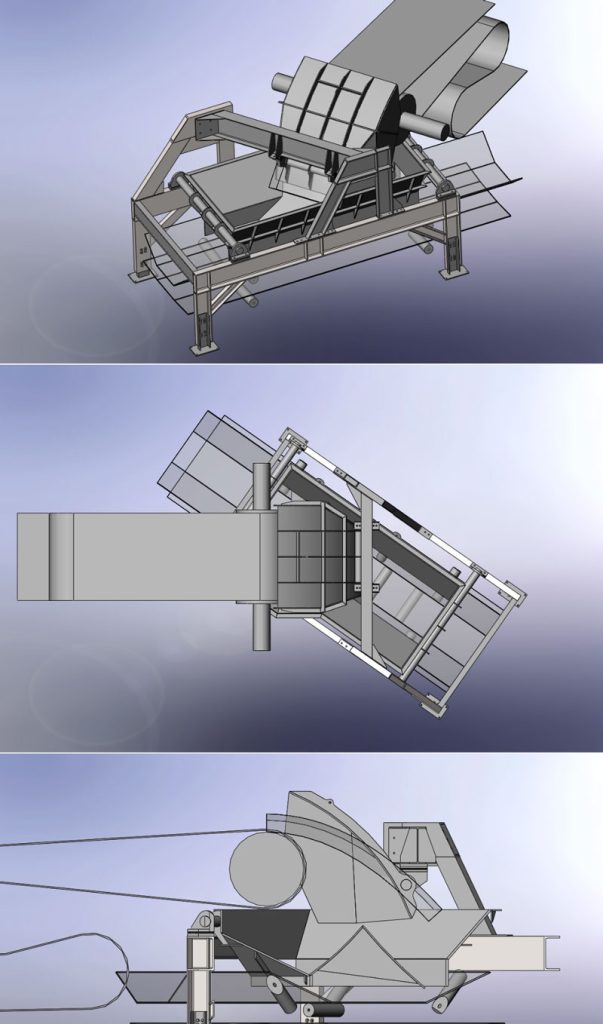
Engineering-grade LiDAR scanning of a dragline at a Hunter Valley mine producing CAD-ready data for SolidWorks and Autodesk Inventor

Brownfield Industrial Upgrades & Shutdown Engineering | Engineering-Led 3D Scanning

Engineering-Led Design, Reality Capture, and Scan-to-CAD for Existing Assets

Brownfield industrial upgrades are where engineering risk is highest โ€” and where assumptions cost the most.

Existing plant, undocumented modifications, restricted access, and shutdown-driven timeframes demand accurate site data, practical engineering judgement, and build-ready design. At Hamilton By Design, we support brownfield upgrades through an engineering-led digital workflow that connects reality capture, scan-to-CAD, and mechanical design to deliver safer, more reliable shutdown outcomes.
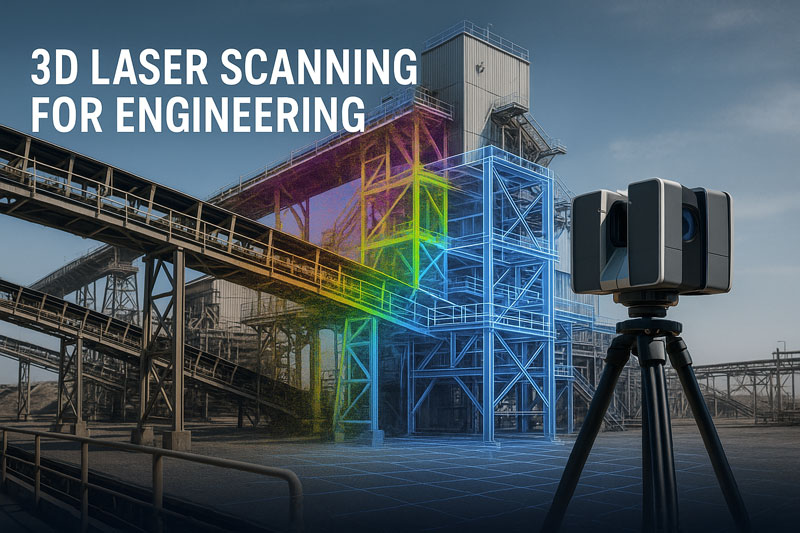

A 3D laser scanner on a tripod capturing an industrial plant structure, with a colourful point cloud and blue CAD wireframe overlay illustrating engineering-grade 3D laser scanning accuracy.

What Defines a Brownfield Upgrade?

A brownfield upgrade involves modifying, extending, or replacing existing operational assets, often under live plant or shutdown constraints.

Typical challenges include:

  • Incomplete or outdated drawings
  • Limited physical access for verification
  • Interfaces with existing structures and services
  • Shutdown windows measured in days, not weeks

These conditions make engineering-led verification essential before design and fabrication begin.


Engineering-Led Reality Capture for Existing Plant

Hamilton By Design uses engineering-grade 3D LiDAR scanning to capture existing conditions accurately, even in complex and congested environments.

This approach allows engineering teams to:

  • Verify as-built conditions without repeated site access
  • Identify clashes and interferences early
  • Design upgrades that fit first time
  • Reduce exposure hours in live plant environments

Reality capture becomes a risk-reduction tool, not just a documentation exercise.


Typical Brownfield Assets We Support

Brownfield upgrades frequently focus on high-wear, high-risk interfaces within industrial and mining facilities.

Hoppers & Chutes

  • ROM hoppers and surge bins
  • Transfer chutes and discharge transitions
  • Wear-prone interfaces and liners

Conveyors & Transfer Stations

  • Conveyor head and tail stations
  • Transfer points and discharge zones
  • Supporting steelwork and access structures

Pump Boxes & Process Interfaces

  • Pump boxes, sumps, and pipe interfaces
  • Structural supports and maintenance access
  • Integration with existing plant services

Vertical Shaft & Drop Structures

  • Vertical shaft hoppers
  • Ore passes and gravity-fed transfers
  • Confined and difficult-to-access assets

These assets are rarely isolated โ€” they sit within tightly constrained systems where accuracy matters.
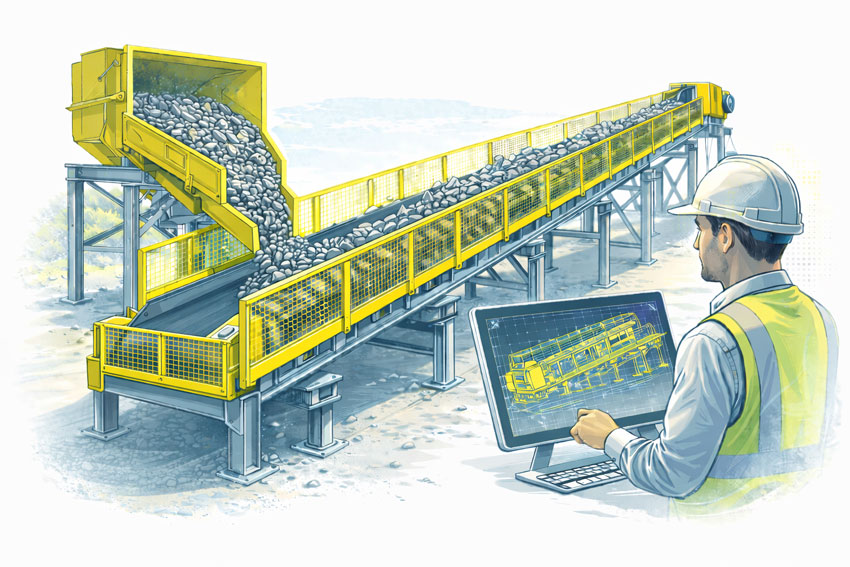

Bulk materials conveyor with compliant safety guarding at the hopper, tail end, and along the conveyor, shown with an engineer reviewing guarding design drawings.

Scan-to-CAD: Turning Reality Into Buildable Design

Point clouds alone donโ€™t deliver projects โ€” engineering-intent models do.

Our scan-to-CAD workflows are developed specifically for:

  • Mechanical and structural design
  • Fabrication-ready detailing
  • Brownfield integration and installation sequencing

By aligning LiDAR data directly with CAD and engineering workflows, we eliminate guesswork and support fit-first-time fabrication.


Reliable Support for Shutdown-Driven Projects

Shutdowns compress months of work into days. There is no tolerance for redesign on site.

Engineering-led reality capture supports shutdown success by:

  • Allowing design to be completed well in advance
  • Supporting off-site fabrication
  • Reducing RFIs and site queries
  • Increasing the amount of work completed per shutdown

Better information means more work done with fewer resources.


Safety Is an Engineering Outcome

Safety outcomes in brownfield environments are determined during planning and design, not during installation.

Accurate site data allows engineers to:

  • Design safer access and maintenance solutions
  • Reduce hot works and re-measurement on site
  • Identify hazards before shutdown execution
  • Improve compliance with Australian Standards

Engineering-led workflows reduce risk across the entire upgrade lifecycle.


Australian Engineering Quality You Can Rely On

Hamilton By Design delivers Australian engineering know-how, grounded in practical site experience.

We donโ€™t just capture data โ€” we:

  • Understand how plant is built and maintained
  • Design with fabrication and installation in mind
  • Take responsibility for engineering outcomes

This approach differentiates us from low-cost capture services that transfer risk downstream.


How This Integrates With Our Engineering Services

Brownfield upgrade support integrates directly with our broader capabilities, including:

  • Bulk material handling engineering
  • Mining and heavy-industry mechanical design
  • Engineering-led 3D scanning and scan-to-CAD workflows

This ensures continuity from site verification through to build-ready deliverables.


Hamilton By Design logo displayed on a blue tilted rectangle with a grey gradient background

Speak With an Engineer

If youโ€™re planning a brownfield upgrade involving:

  • Hoppers, chutes, or bins
  • Conveyor transfers
  • Pump boxes or process interfaces
  • Vertical shaft or gravity-fed systems
  • Shutdown-critical works

Early engineering-led verification can significantly reduce risk.

Speak with an engineer at Hamilton By Design to discuss your upgrade or shutdown requirements.

Name
Would you like us to arrange a phone consultation for you?
Address

Our clients:

3D Laser Scanning in Rockhampton QLD: Engineering-Grade Data for Safer Conveyor Design and Risk Management

Engineering-led SolidWorks drafting in Australia with 25 years of Hamilton By Design experience

3D Laser Scanning in Rockhampton QLD for Safer Conveyor Design & Risk Management

Rockhampton plays a critical role in Central Queenslandโ€™s heavy industry, supporting mining, bulk materials handling, agriculture, and transport infrastructure. Across these sectors, conveyor systems are essential โ€” and they are also one of the highest-risk assets on site.

As facilities age and production demands increase, many operators are upgrading or modifying conveyors within tight shutdown windows. In these environments, engineering-grade 3D laser scanning (LiDAR) is becoming a key tool for reducing design risk, improving safety outcomes, and avoiding costly site rework.

At Hamilton By Design, we use high-accuracy 3D scanning to capture existing plant conditions and convert them into reliable engineering models that support safer conveyor design and more effective risk management.

Conveyor Systems and Industry Incidents: Where Things Go Wrong

Industry incident investigations across Queensland repeatedly identify similar contributing factors in conveyor-related injuries:

  • Inadequate guarding at transfer points and pulleys
  • Restricted access forcing unsafe maintenance practices
  • Plant modifications made without updated drawings
  • Design reviews based on outdated or incomplete site data

In regional facilities around Rockhampton, conveyors are often extended, repaired, and repurposed over many years. What starts as a temporary modification can become permanent, and original drawings no longer reflect reality on the ground.

When new upgrades are designed using assumptions instead of accurate geometry, risk is built into the project from day one.


Bulk materials conveyor with compliant safety guarding at the hopper, tail end, and along the conveyor, shown with an engineer reviewing guarding design drawings.

Why Engineering-Grade Scanning Matters for Conveyor Design

Not all 3D scans are suitable for mechanical design or safety-critical decisions.

We use engineering-grade LiDAR scanning capable of delivering accuracy in the order of ยฑ2 mm over 70 metres, allowing engineers to:

  • Model conveyor structures, frames, and supports
  • Accurately locate rollers, drives, guards, and transfer chutes
  • Verify clearances for new equipment and walkways
  • Identify clashes before fabrication and installation

The resulting point clouds and CAD models form a reliable digital baseline that engineers, safety teams, and maintenance planners can all work from.

When plant modifications are driven by accurate data, both design quality and safety outcomes improve.

Safe Design Starts with Knowing What Actually Exists

Safe Design is not something that can be retrofitted easily once steel is fabricated and installed.

Scan-based models allow hazards to be assessed during the design phase, including:

  • Access and egress routes for maintenance
  • Reach distances and pinch point exposure
  • Guarding coverage around rotating equipment
  • Space constraints that may encourage unsafe shortcuts

This is particularly important in conveyor corridors where multiple services, structures, and walkways compete for limited space.

Designing from accurate site geometry allows risks to be eliminated or reduced before they reach the worksite.


Risk Management Through Reality Capture

From a risk management perspective, 3D scanning supports more than just design accuracy. It also improves:

  • Hazard identification and risk assessments
  • Method statements and installation planning
  • Shutdown coordination and contractor interfaces
  • Compliance documentation and audit trails

Point cloud data also provides a permanent record of asset condition at a point in time, which can be invaluable for:

  • Future upgrade planning
  • Incident investigations
  • Asset integrity assessments

In high-risk conveyor environments, reliable data is a control measure in its own right.

Supporting Rockhampton Industry with Integrated Engineering Services

Hamilton By Design provides on-site 3D scanning and mechanical engineering support for projects in Rockhampton and Central Queensland, including:

  • Conveyor upgrades and replacements
  • Transfer point redesigns
  • Guarding and access improvements
  • Brownfield plant modifications
  • Fabrication and installation planning

Because we are an engineering-led team, scanning is directly integrated into mechanical design, drafting, and fabrication support โ€” not treated as a standalone survey service.

This ensures models are built to suit engineering workflows and deliver practical, buildable outcomes.


Hamilton By Design logo displayed on a blue tilted rectangle with a grey gradient background

From Point Cloud to Practical Results

Our typical workflow includes:

  1. On-site LiDAR scanning with minimal operational disruption
  2. Registration and processing of point cloud data
  3. Conversion into CAD models suitable for mechanical design
  4. Design development, safety reviews, and shop drawings

This approach reduces shutdown risk, improves installation accuracy, and helps ensure safety improvements are achieved in practice โ€” not just on paper.

Name
Would you like us to arrange a phone consultation for you?
Address

Machine Guarding in Australia: A Decade of Lessons for Leaders, Asset Owners, and Engineers

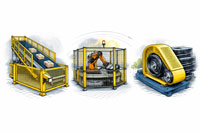
ndustrial machine guarding solutions showing a conveyor system, a robotic cell, and a belt drive with fixed guards designed to prevent access to hazardous moving parts.

Machine guarding examples showing a guarded conveyor, enclosed robotic cell, and belt drive with safety covers

Machine guarding remains one of the most persistent and preventable safety risks across Australian industry.
Despite improvements in automation, safety culture, and regulatory oversight, serious injuries and fatalities involving machinery continue to occur every year, particularly in manufacturing, mining, food processing, and materials handling.

Over the past decade, regulators, courts, and insurers have consistently reinforced one message:
machine guarding is not optional, not administrative, and not a โ€œfit-laterโ€ activity โ€” it is a core engineering and governance responsibility.

This article examines:

  • The international and Australian standards framework for machine guarding
  • Accident and injury trends over the past ten years
  • Legal and enforcement signals emerging from prosecutions
  • Why machine guarding must be treated as a strategic asset-risk issue, not just a safety task

The Global Framework: International Standards for Machine Guarding

Machine guarding is governed globally through standards developed by the International Organization for Standardization (ISO).


ISO standards portal
Core International Standards

ISO 12100 Risk assessment

ISO 14120 Guard design

ISO 13857 Safety distances

ISO 13849-1 Interlocks & control systems

These standards establish a risk-based engineering approach, requiring hazards to be:

  1. Identified
  2. Eliminated where possible
  3. Engineered out through guards and control systems
  4. Verified through geometry, distances, and fail-safe logic

This methodology underpins CE marking, global OEM compliance, and multinational EPC project delivery.


The Australian Context: AS 4024 and WHS Expectations

Australia adopts and localises ISO principles through AS 4024 โ€“ Safety of Machinery, referenced extensively by regulators under Work Health and Safety (WHS) legislation.

Standards Australia โ€“ AS 4024 Series
Key Australian Standards

AS 4024.1201 Risk assessment

AS 4024.1601 Guards

AS 4024.1602 Interlocks

AS 4024.1801 Safety distances

AS 4024.1501 Safety control systems

While standards themselves are not legislation, courts and regulators consistently use AS 4024 as the benchmark for determining whether risks have been managed so far as is reasonably practicable.


A Decade of Data: What the Accident Trends Tell Us

Australia does not publish a dedicated โ€œmachine guarding accidentโ€ metric. However, national data from Safe Work Australia clearly shows machinery remains a leading cause of serious harm.

Safe Work Australia โ€“ Key WHS statistics:
National Trends (Approximate โ€“ Last 10 Years)

MetricEvidence Source
~1,850+ traumatic work fatalitiesSafework Australia
~180โ€“200 fatalities per yearSafework Australia
Highest fatality rateMachinery operators & drivers
~130,000โ€“140,000 serious injury claims annuallyAustralian Institute of health and welfare
Common mechanismsTrapped by machinery, struck by moving objects

Machinery operators consistently record:

  • The highest fatality rates of all occupation groups
  • Disproportionate representation in serious injury claims
  • Higher exposure to entanglement, crush, shear, and impact hazards

These mechanisms are directly linked to guarding effectiveness, not worker behaviour alone.


What Hasnโ€™t Changed โ€” and Why It Matters

1. Legacy Plant Remains a Key Risk

Many incidents involve:

  • Older machinery
  • Brownfield modifications
  • Equipment altered without re-engineering guarding

Australian WHS law does not grandfather unsafe plant.


2. Guarding Is Still Added Too Late

Common failures include:

  • Guards designed post-fabrication
  • Inadequate reach distances
  • Interlocks added without validated performance levels

This often leads to bypassing, removal, or unsafe maintenance practices.


3. Lack of Engineering Documentation

Post-incident investigations frequently identify:

  • No formal risk assessment
  • No justification against AS 4024 or ISO standards
  • No evidence that guarding was engineered, tested, or validated

In legal proceedings, absence of documentation is treated as absence of control.


Legal and Enforcement Signals

Australian regulators (WorkSafe NSW, WorkSafe VIC, SafeWork QLD, SafeWork SA) have consistently prosecuted machine-guarding failures, particularly where:

  • Hazards were known
  • Improvement notices were ignored
  • Guards were removed or ineffective

Regulator portals:

Courts have reinforced that:

  • Training does not replace guarding
  • PPE does not replace guarding
  • Signage does not replace guarding

Guarding as a Governance Issue

For executives and boards, machine guarding intersects with:

  • Officer due diligence obligations
  • Asset lifecycle risk
  • Insurance and liability exposure
  • Business continuity and ESG performance

Well-designed guarding:

  • Reduces downtime
  • Enables safer automation
  • Improves workforce confidence
  • Creates defensible compliance positions

The Engineering Reality: Geometry Drives Compliance

Modern compliance relies on:

  • Verified reach distances
  • Measured openings and clearances
  • Validated interlock logic

This is why accurate:

  • As-built capture
  • 3D modelling
  • Engineering-grade spatial data

are increasingly essential for brownfield and high-risk plant.


Looking Ahead: The Next Decade

Trends indicate:

  • Greater scrutiny of legacy machinery
  • Stronger linkage between standards and prosecutions
  • Higher expectations for engineering evidence
  • Increased use of digital engineering to prove compliance

Organisations that integrate guarding early into engineering workflows will be better protected legally, operationally, and reputationally.


Hamilton By Design logo displayed on a blue tilted rectangle with a grey gradient background

Final Thought

Machine guarding is not about mesh and fences.
It is about engineering intent, risk ownership, and accountability.

The last decade of Australian data, prosecutions, and standards alignment is clear:
when guarding fails, the outcomes are predictable โ€” and preventable.

Structural drafting services button
3D LiDAR scanning and 3D modelling services button
Mechanical drafting services button

Our clients:
Name
Would you like us to arrange a phone consultation for you?
Address

#Machine guarding standards Australia #Machinery safety best practices #AS/NZS 4024 machine guarding #Workplace safety machinery #Industrial safety compliance #Machine guarding lessons for engineers