

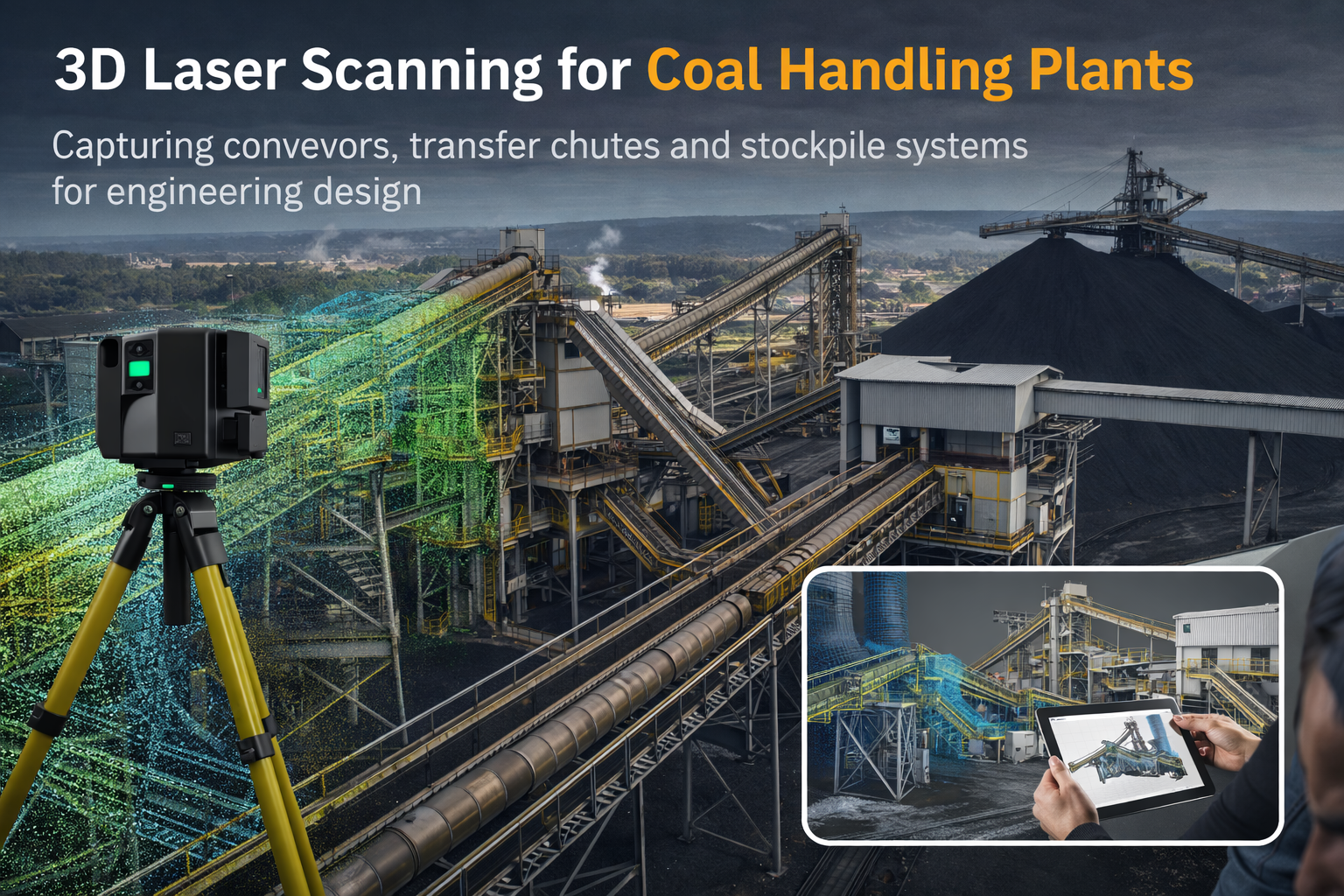
Coal handling plants are complex facilities designed to move, process, and store large volumes of bulk material. These systems often include:
- conveyor networks
- transfer chutes
- crushers and screens
- stacker and reclaim systems
- stockpile infrastructure
Over time, these plants evolve as equipment is upgraded or modified during shutdowns. As a result, original drawings can become outdated or incomplete.
This is where coal handling plant laser scanning becomes an essential engineering tool. By capturing the exact geometry of existing infrastructure, engineers can develop accurate models of the plant before designing modifications or upgrades.
Capturing Existing Plant Infrastructure
3D laser scanning allows engineers to capture millions of measurement points across a facility, creating a highly detailed digital representation of the plant environment.
In coal preparation plants, this technology is particularly valuable for capturing:
- conveyor structures
- transfer chute geometry
- stockpile conveyor systems
- structural steel frameworks
- access platforms and walkways
The resulting point cloud provides a precise reference for engineering teams working on plant upgrades, equipment replacements, or shutdown planning.
Scanning Conveyor Systems and Transfer Points
Conveyors are the backbone of most coal handling facilities. They transport coal between crushers, screening plants, stockpiles, and load-out systems.
Transfer points between conveyors are often some of the most complex areas of the plant. Engineers must understand:
- material flow paths
- chute geometry
- clearances around structures
- maintenance access areas
Using coal handling plant laser scanning, engineers can accurately capture the existing transfer arrangements. This allows them to analyse the system and develop improved designs for:
- transfer chutes
- conveyor upgrades
- dust control systems
- maintenance access improvements
Accurate digital data significantly reduces the risk of errors when modifying these critical systems.
Capturing Stockpile and Stacker Systems
Coal handling plants typically include large stockpile areas where material is stored before transport or processing.
These systems may include:
- stacker conveyors
- reclaim tunnels
- feeder systems
- radial stackers
Laser scanning can capture the entire geometry of these systems, including the surrounding structural infrastructure. Engineers can then model the stockpile equipment and evaluate:
- conveyor alignment
- discharge geometry
- reclaim system layout
- structural clearances
This information is essential when planning equipment upgrades or improving plant reliability.
Creating Digital Engineering Models
Once scanning is complete, the point cloud data can be converted into a digital engineering model of the plant.
These models allow engineers to:
- design new equipment within existing infrastructure
- identify clashes before fabrication
- plan structural modifications
- improve materials handling systems
Digital plant models are particularly valuable in large facilities where physical measurement would otherwise be difficult or unsafe.
For more information on this approach, see:
Supporting Shutdown Engineering Projects
Many upgrades in coal handling plants occur during planned shutdowns where installation time is limited.
Accurate digital models allow engineering teams to prepare in advance by:
- confirming equipment fits within existing structures
- planning installation sequences
- producing fabrication drawings based on real plant geometry
This preparation helps reduce risk during shutdowns and ensures that new equipment can be installed efficiently.
Improving Reliability in Coal Handling Infrastructure
Coal handling plants rely on complex mechanical systems that must operate continuously to support mining operations.
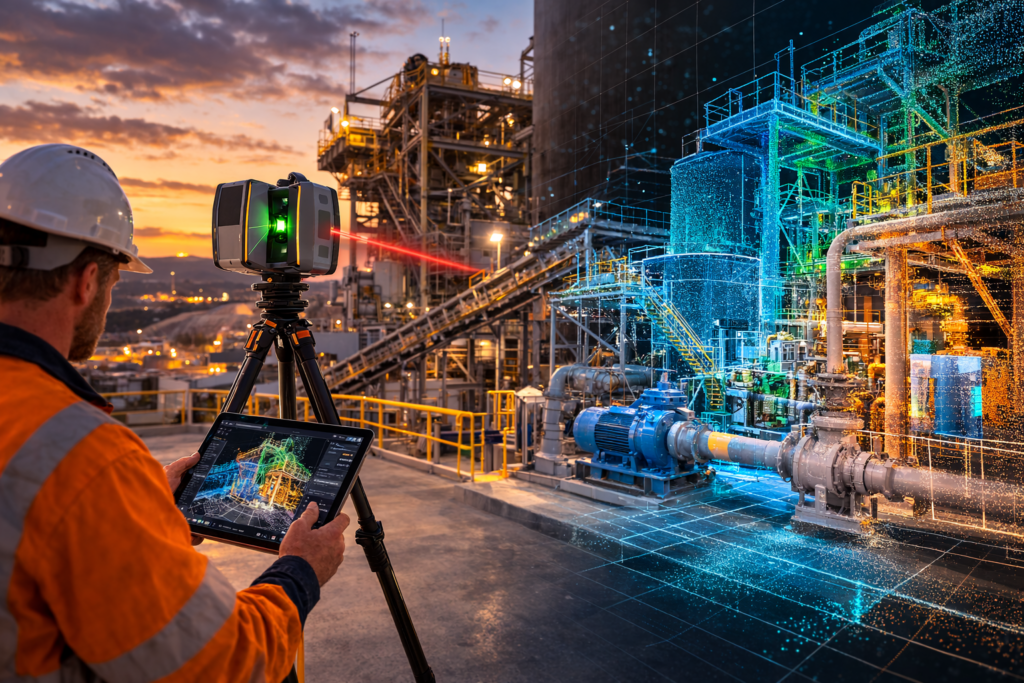
Using coal handling plant laser scanning provides engineers with a reliable foundation for improving these systems. With accurate digital information, engineering teams can design upgrades that improve:
- conveyor reliability
- transfer chute performance
- maintenance access
- overall plant efficiency
As mining operations continue to modernise their infrastructure, laser scanning is becoming a key tool for engineers working on bulk materials handling systems.