Engineering-Led 3D Scanning for Inner West Sydney Refurbishments

Engineer and client reviewing 3D laser scan data inside an Inner West Sydney heritage building with ANZAC Bridge and Sydney Fish Market in the background.

Refineries, Heritage Buildings & Industrial Retrofits Done Right

The Inner West of Sydney is home to some of the cityโ€™s most complex refurbishment environments.
From legacy refinery and industrial sites through to heritage-listed warehouses, factories, and commercial buildings, these assets were never designed with modern codes, loading requirements, or services in mind.

Yet today, theyโ€™re being asked to support:

  • New plant and equipment
  • Adaptive re-use and change of occupancy
  • Heavier floor loads
  • Updated fire, seismic, and structural standards
  • Modern services routing in very old structures

This is where many refurbishment projects run into trouble โ€” not because the design is poor, but because the starting information is wrong or incomplete.


The Inner West Problem: Old Buildings, New Standards

Much of the Inner Westโ€™s industrial and heritage building stock was constructed:

  • Under superseded Australian Standards
  • With unknown material properties
  • Using construction methods no longer permitted
  • With undocumented modifications over decades of use

What often looks acceptable visually may be:

  • Structurally marginal under modern load cases
  • Locally compromised due to corrosion, settlement, or fatigue
  • Modified in ways that no longer match original drawings

When these issues are discovered late in the design process, the outcome is almost always the same:

  • Redesign
  • Strengthening
  • Programme delays
  • Budget escalation

Engineering-led 3D scanning of an existing Inner West Sydney industrial building prior to refurbishment and structural assessment.

Why Waiting Until โ€œDetailed Designโ€ Is Too Late

A common scenario we see in Inner West refurbishments:

  1. Concept design proceeds based on legacy drawings or assumptions
  2. Floor layouts, equipment, and architectural intent are developed
  3. Engineering review begins
  4. Structural checks identify:
    • Inadequate floor capacity
    • Unsupported penetrations
    • Changed load paths
    • Degraded or altered members
  5. Design is forced to change โ€” often significantly

At this point, the engineer isnโ€™t blocking creativity โ€” theyโ€™re responding to reality.

The issue isnโ€™t engineering input.
The issue is when the true condition of the structure becomes visible.


Start With a Scan: Let Designers Create With Confidence

Engineering-grade 3D laser scanning at the very beginning of a refurbishment changes the entire dynamic of a project.

Instead of reacting to unknowns later, the project team starts with:

  • Verified geometry
  • True floor levels and deflection
  • Structural alignment and deformation
  • Accurate column, beam, and slab positions
  • Measured deviations from original drawings

This gives architects and designers something powerful:

Freedom to design within known constraints โ€” not guessed ones.


Heritage & Industrial Retrofits: Why Scanning Matters Even More

Heritage Buildings

Heritage structures often prohibit invasive investigation early on.
3D scanning allows:

  • Non-intrusive verification of geometry
  • Identification of movement or deformation
  • Assessment of tolerance drift over time
  • Planning of sympathetic strengthening solutions

Refineries & Legacy Industrial Sites

Inner West refinery and process facilities bring additional challenges:

  • Tight access
  • Live plant interfaces
  • Safety-critical environments
  • Brownfield congestion

Scanning provides:

  • Safe remote measurement
  • Clash-free retrofit design
  • Confidence before shutdowns
  • Reduced rework during construction

When Standards Change, Reality Matters

One of the most common late-stage surprises in refurbishments is floor capacity.

Buildings that performed adequately for decades may no longer comply with:

  • Current live load requirements
  • Change-of-use provisions
  • Equipment point loads
  • Modern safety factors

Without accurate structural geometry and context, engineers are forced to:

  • Assume worst-case scenarios
  • Over-design strengthening
  • Restrict layouts unnecessarily

Early scanning supports informed engineering judgement, often resulting in:

  • Targeted strengthening instead of blanket solutions
  • Retention of original fabric where possible
  • Reduced material and construction costs

From Point Cloud to Engineering Decisions

At Hamilton By Design, scanning is not a standalone service โ€” itโ€™s an engineering tool.

Our process typically supports:

  • Structural verification of existing buildings
  • Floor flatness, level, and deflection assessment
  • Alignment checks of columns and frames
  • Scan-to-CAD models for design integration
  • Fit-for-purpose information for refurbishment decisions

This is especially critical in Inner West projects, where:

  • Every millimetre matters
  • Access is limited
  • Heritage considerations are real
  • Late changes are costly

Design With Knowledge, Not Surprises

Refurbishments donโ€™t fail because buildings are old.
They fail because assumptions survive too long.

By starting with an engineering-led scan:

  • Designers get space to create
  • Engineers get data they can trust
  • Asset owners avoid late-stage shocks
  • Projects move forward with confidence

If youโ€™re planning a refinery upgrade, heritage refurbishment, or adaptive re-use project in Inner West Sydney, the smartest decision you can make is to scan first โ€” before concept becomes constraint.


Thinking about a refurbishment or retrofit in the Inner West?

Engineering-grade 3D scanning at the start gives your project clarity, confidence, and creative freedom โ€” not limitations.

Name
Would you like us to arrange a phone consultation for you?
Address

3D Scanning in Greater Sydney NSW: From Point Cloud to BIM and Digital Twins for Smarter Projects

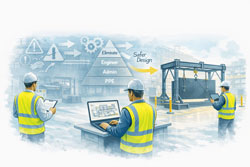
Engineers reviewing industrial design improvements in a mining fabrication workshop using engineering controls to reduce safety risks

3D Scanning in Greater Sydney NSW | Point Cloud to BIM & Digital Twins for Smarter Projects

Across Greater Sydney โ€” including industrial hubs like Blacktown โ€” asset owners and project teams are under increasing pressure to deliver upgrades, expansions, and maintenance projects with less downtime and lower risk. In congested brownfield environments, the biggest challenge is often not design โ€” it is knowing exactly what already exists on site.

This is where engineering-grade 3D laser scanning and point cloud to BIM workflows are transforming the way projects are planned and delivered across NSW.

At Hamilton By Design, we support industrial and infrastructure projects by converting accurate site data into practical engineering models that improve project certainty from concept through to construction.


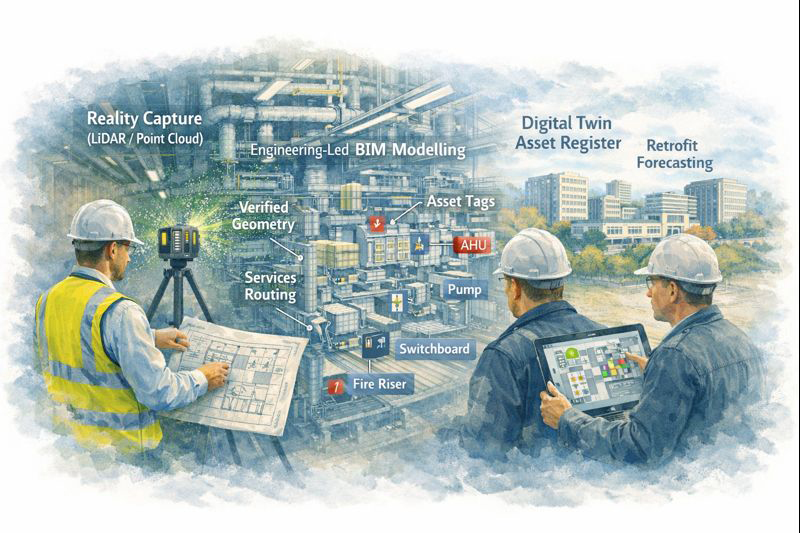
From point cloud to digital twin for lifecycle management of Sydney industrial and precinct assets

Why Accurate Site Data Matters in Greater Sydney

Many industrial facilities across Greater Sydney have evolved over decades. Services are added, conveyors rerouted, platforms extended, and temporary fixes become permanent. Unfortunately, drawings are rarely updated to reflect these changes.

For project managers, this creates risks such as:

  • Late discovery of clashes during installation
  • Unplanned scope changes and shutdown delays
  • Increased safety exposure during site rework
  • Cost overruns due to fabrication errors

Without accurate as-built data, project planning becomes reactive instead of proactive.

From 3D Scanning to Point Cloud to BIM

Using engineering-grade LiDAR scanners, we capture millions of spatial data points across entire facilities, producing highly accurate point clouds that represent the real-world geometry of structures, conveyors, services, and equipment.

These point clouds are then converted into:

  • BIM-ready 3D models
  • Fabrication-ready CAD geometry
  • Digital twins for ongoing asset management

This point cloud to BIM process allows project teams to design, coordinate, and review upgrades in a digital environment before any physical work begins.

For project management, this means fewer surprises and far better control over scope, schedule, and cost.

Digital Twin Creation for Ongoing Asset Management

Beyond individual projects, many asset owners in NSW are now adopting digital twins to manage facilities across their full lifecycle.

A digital twin created from accurate scan data allows teams to:

  • Visualise plant layouts remotely
  • Plan future upgrades with confidence
  • Improve maintenance access planning
  • Support safety reviews and training

In multi-site operations across Greater Sydney, digital twins also support consistent engineering standards and faster project scoping.

Rather than starting from scratch for every shutdown, project teams can build on a continually updated digital asset model.


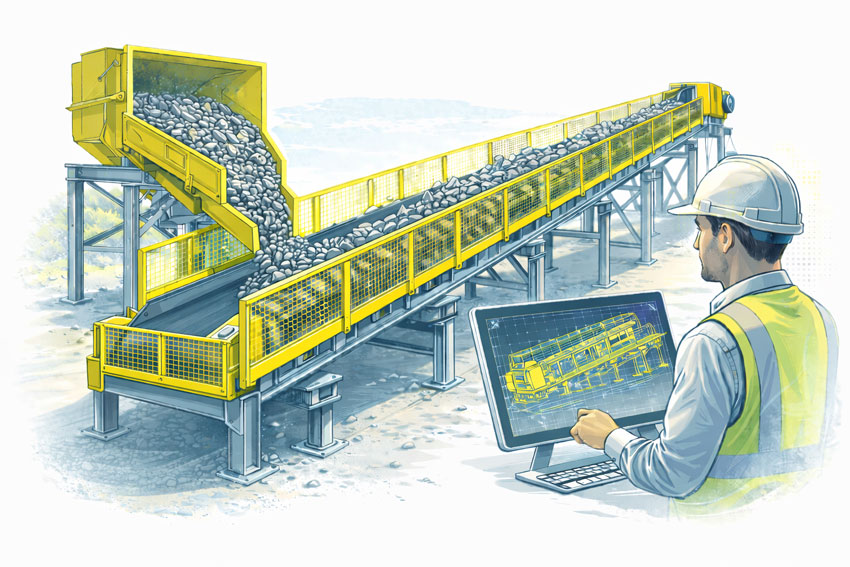
Bulk materials conveyor with compliant safety guarding at the hopper, tail end, and along the conveyor, shown with an engineer reviewing guarding design drawings.

Supporting Conveyor Design in Brownfield Environments

Conveyor systems remain critical to manufacturing, logistics, waste processing, and bulk materials handling facilities across Sydneyโ€™s western suburbs, including Blacktown and surrounding industrial precincts.

When conveyors are upgraded or rerouted, spatial constraints often drive:

  • Poor maintenance access
  • Compromised guarding
  • Clashes with services and structures

Scan-based conveyor modelling allows engineers to:

  • Verify belt paths, transfer points, and head drives
  • Design guarding that fits existing structures
  • Improve access platforms and walkways
  • Reduce installation time during shutdowns

For project managers, this directly translates into reduced safety risk and fewer installation delays.

Project Management Benefits of 3D Scanning

From a project delivery perspective, engineering-grade scanning supports:

  • More accurate scope definition
  • Better contractor coordination
  • Improved constructability reviews
  • Reduced variation claims
  • Safer installation planning

When all stakeholders are working from the same verified model, communication improves and decision-making becomes faster and more reliable.

This is particularly valuable on fast-tracked shutdown projects where every hour of downtime has a production cost.

Local Support Across Greater Sydney NSW

Hamilton By Design provides on-site 3D scanning, BIM modelling, and mechanical engineering support across Greater Sydney, including:

  • Blacktown
  • Western Sydney industrial precincts
  • Central Sydney infrastructure sites
  • Logistics and manufacturing facilities across NSW

As an engineering-led business, we integrate scanning directly into design, drafting, and fabrication support โ€” ensuring that digital models deliver practical, buildable outcomes.

Our focus is not just capturing data, but turning it into engineering solutions that reduce risk and improve project performance.

Turning Reality Capture into Project Confidence

Whether planning a conveyor upgrade, plant expansion, or long-term asset management strategy, accurate site data is the foundation of successful delivery.

By moving from point cloud to BIM and digital twins, project teams across Greater Sydney are gaining better visibility, stronger risk control, and far greater confidence in their project outcomes.


Name
Would you like us to arrange a phone consultation for you?
Address