3D Laser Scanning in Rockhampton QLD: Engineering-Grade Data for Safer Conveyor Design and Risk Management

Engineering-led SolidWorks drafting in Australia with 25 years of Hamilton By Design experience

3D Laser Scanning in Rockhampton QLD for Safer Conveyor Design & Risk Management

Rockhampton plays a critical role in Central Queenslandโ€™s heavy industry, supporting mining, bulk materials handling, agriculture, and transport infrastructure. Across these sectors, conveyor systems are essential โ€” and they are also one of the highest-risk assets on site.

As facilities age and production demands increase, many operators are upgrading or modifying conveyors within tight shutdown windows. In these environments, engineering-grade 3D laser scanning (LiDAR) is becoming a key tool for reducing design risk, improving safety outcomes, and avoiding costly site rework.

At Hamilton By Design, we use high-accuracy 3D scanning to capture existing plant conditions and convert them into reliable engineering models that support safer conveyor design and more effective risk management.

Conveyor Systems and Industry Incidents: Where Things Go Wrong

Industry incident investigations across Queensland repeatedly identify similar contributing factors in conveyor-related injuries:

  • Inadequate guarding at transfer points and pulleys
  • Restricted access forcing unsafe maintenance practices
  • Plant modifications made without updated drawings
  • Design reviews based on outdated or incomplete site data

In regional facilities around Rockhampton, conveyors are often extended, repaired, and repurposed over many years. What starts as a temporary modification can become permanent, and original drawings no longer reflect reality on the ground.

When new upgrades are designed using assumptions instead of accurate geometry, risk is built into the project from day one.
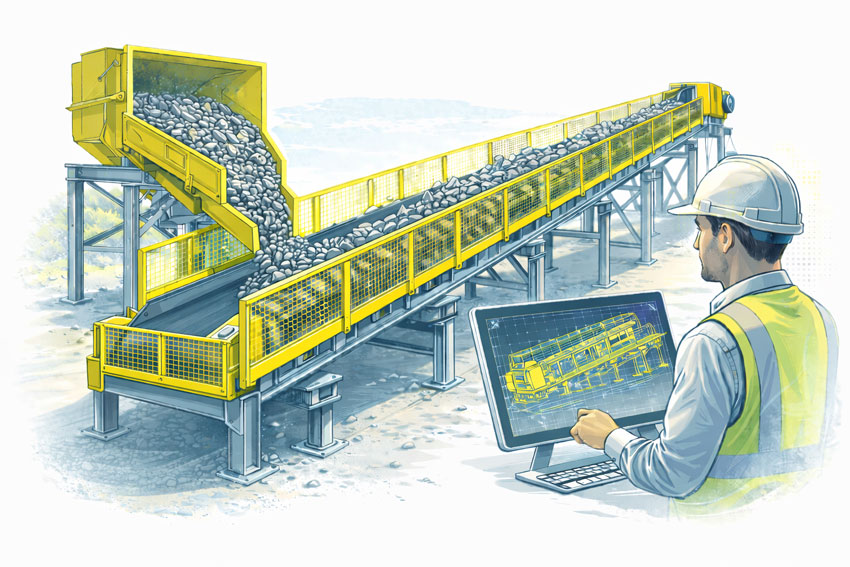

Bulk materials conveyor with compliant safety guarding at the hopper, tail end, and along the conveyor, shown with an engineer reviewing guarding design drawings.

Why Engineering-Grade Scanning Matters for Conveyor Design

Not all 3D scans are suitable for mechanical design or safety-critical decisions.

We use engineering-grade LiDAR scanning capable of delivering accuracy in the order of ยฑ2 mm over 70 metres, allowing engineers to:

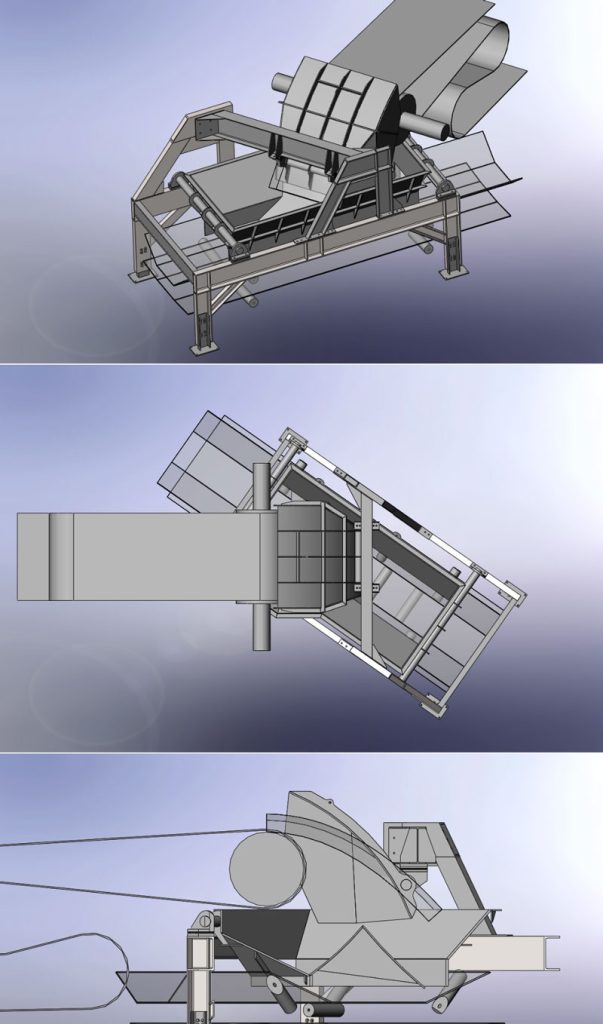
  • Model conveyor structures, frames, and supports
  • Accurately locate rollers, drives, guards, and transfer chutes
  • Verify clearances for new equipment and walkways
  • Identify clashes before fabrication and installation

The resulting point clouds and CAD models form a reliable digital baseline that engineers, safety teams, and maintenance planners can all work from.

When plant modifications are driven by accurate data, both design quality and safety outcomes improve.

Safe Design Starts with Knowing What Actually Exists

Safe Design is not something that can be retrofitted easily once steel is fabricated and installed.

Scan-based models allow hazards to be assessed during the design phase, including:

  • Access and egress routes for maintenance
  • Reach distances and pinch point exposure
  • Guarding coverage around rotating equipment
  • Space constraints that may encourage unsafe shortcuts

This is particularly important in conveyor corridors where multiple services, structures, and walkways compete for limited space.

Designing from accurate site geometry allows risks to be eliminated or reduced before they reach the worksite.


Risk Management Through Reality Capture

From a risk management perspective, 3D scanning supports more than just design accuracy. It also improves:

  • Hazard identification and risk assessments
  • Method statements and installation planning
  • Shutdown coordination and contractor interfaces
  • Compliance documentation and audit trails

Point cloud data also provides a permanent record of asset condition at a point in time, which can be invaluable for:

  • Future upgrade planning
  • Incident investigations
  • Asset integrity assessments

In high-risk conveyor environments, reliable data is a control measure in its own right.

Supporting Rockhampton Industry with Integrated Engineering Services

Hamilton By Design provides on-site 3D scanning and mechanical engineering support for projects in Rockhampton and Central Queensland, including:

  • Conveyor upgrades and replacements
  • Transfer point redesigns
  • Guarding and access improvements
  • Brownfield plant modifications
  • Fabrication and installation planning

Because we are an engineering-led team, scanning is directly integrated into mechanical design, drafting, and fabrication support โ€” not treated as a standalone survey service.

This ensures models are built to suit engineering workflows and deliver practical, buildable outcomes.


Hamilton By Design logo displayed on a blue tilted rectangle with a grey gradient background

From Point Cloud to Practical Results

Our typical workflow includes:

  1. On-site LiDAR scanning with minimal operational disruption
  2. Registration and processing of point cloud data
  3. Conversion into CAD models suitable for mechanical design
  4. Design development, safety reviews, and shop drawings

This approach reduces shutdown risk, improves installation accuracy, and helps ensure safety improvements are achieved in practice โ€” not just on paper.

Name
Would you like us to arrange a phone consultation for you?
Address

Learning From Industry Incidents

Engineers reviewing industrial design improvements in a mining fabrication workshop using engineering controls to reduce safety risks

Learning From Mining Industry Incidents | Engineering Insight

Why Engineers Study Failures Without Assigning Blame

In engineering, learning does not come only from success.

Some of the most valuable improvements in safety, reliability, and design practice come from studying incidents after they occur โ€” not to assign blame, but to better understand how systems behave under real-world conditions.

At Hamilton By Design, our interest in industry incidents is purely educational.
We do not provide legal opinions, and we do not involve ourselves in litigation.
Our focus is engineering learning and risk reduction.


Why Engineers Study Incidents

Engineering is a discipline built on:

  • Understanding failure modes
  • Learning from unintended outcomes
  • Improving designs so similar events are less likely to occur again

Courts determine liability.
Engineers determine how systems can be made safer.

These are very different roles.


Mining engineers applying design-for-safety principles to improve material handling systems in an industrial workshop

An Example From the Mining Fabrication Sector

A recent court-reported incident in the Australian mining fabrication sector involved a serious worker injury during the handling of a large steel plate.

This event has been widely reported in industry safety communications and regulator summaries.
The matter has been dealt with by the courts.

Our interest is not who was responsible โ€” but what can be learned from an engineering and design perspective.


Separating Legal Outcomes From Engineering Lessons

When incidents are discussed publicly, it is easy for conversations to drift toward:

  • Fault
  • Error
  • Individual actions
  • Compliance outcomes

From an engineering standpoint, a more useful question is:

โ€œWhy was this failure mode possible in the first place?โ€

This shifts the focus from people to systems.


The Engineering Perspective: Systems, Not Individuals

In fabrication, mining, and heavy industry environments, engineers routinely work with:

  • Large masses
  • Stored energy
  • Gravity-driven hazards
  • Tight workspaces
  • Time pressure

In these environments, safe outcomes should not rely on:

  • Perfect timing
  • Continuous vigilance
  • People always being in the right place

Good engineering design assumes:

  • Humans make mistakes
  • Conditions change
  • Equipment can fail
  • Distractions occur

And it designs accordingly.


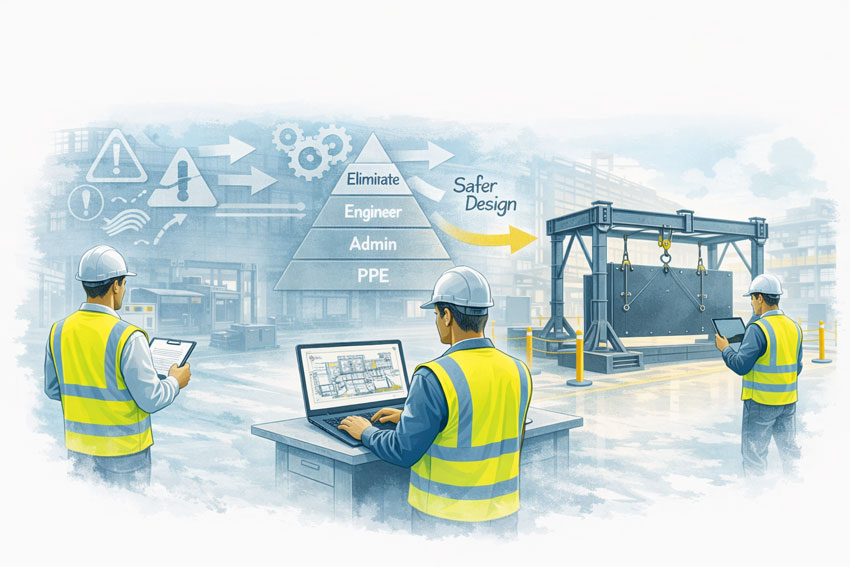
Learning Through the Hierarchy of Controls

One of the most useful tools engineers have for learning from incidents is the hierarchy of controls.

From a learning perspective, incidents often highlight opportunities to move risk higher up the hierarchy:

  • Can the hazard be eliminated?
  • Can the task be re-designed so people are not exposed?
  • Can engineering controls prevent a single failure from becoming an injury?
  • Are procedures being used where physical controls could exist instead?

These are design questions, not legal ones.


Why This Matters for Engineering Practice

Studying incidents like this helps engineers:

  • Identify hidden assumptions in workshop layouts
  • Improve material handling design
  • Reduce reliance on administrative controls
  • Design processes that are more tolerant of variation
  • Prevent โ€œnormalisedโ€ risk from becoming invisible

Importantly, these lessons apply well beyond a single incident or company.


The Link to Broader Engineering Failures

The same learning approach is used when engineers study:

  • Structural failures
  • Mining incidents
  • Equipment damage
  • Tailings dam collapses
  • Process plant upsets

In each case, the goal is the same:

Understand how design decisions influence risk over time.

Not to judge โ€” but to improve.


Our Position at Hamilton By Design

To be clear:

  • We do not comment on legal responsibility
  • We do not provide expert opinions on prosecutions
  • We do not participate in legal proceedings

Our interest is strictly:

  • Engineering learning
  • Design improvement
  • Risk reduction
  • Better outcomes for industry

We believe that open, professional learning from incidents strengthens engineering practice and improves safety across the sector.


Final Thought

Engineering advances when professionals are willing to say:

โ€œWhat can we learn from this?โ€

Without blame.
Without legal positioning.
Without hindsight judgement.

Just better design, informed by real-world experience.


๐Ÿ“ฉ Engineering-Led Design Matters

If youโ€™re working in mining, fabrication, or heavy industry and want to reduce risk through better design decisions, Hamilton By Design supports engineering-led thinking that prioritises:

  • Hazard elimination
  • Fit-first-time outcomes
  • Design-for-fabrication
  • Systems that donโ€™t rely on perfect behaviour

Talk to an engineer early.

Name
Would you like us to arrange a phone consultation for you?
Address