Why Graduate Engineers Quickly Become Addicted to LiDAR Scanning

Graduate engineer and senior engineer using LiDAR scanning on a Parramatta River construction site, reviewing point cloud data for accurate design.

Why Graduate Engineers Quickly Become Addicted to LiDAR Scanning

Ask any graduate engineer what surprised them most in their first few years on the job and youโ€™ll often hear the same answer:

โ€œThe drawings were wrong.โ€

Not maliciously wrong. Not incompetently wrong. Justโ€ฆ out of date, incomplete, or disconnected from what actually exists on site.

That realisation is often the moment graduate engineers discover LiDAR scanning โ€” and once they do, itโ€™s very hard to go back.

Across Greater Sydney, from dense inner-city refurbishments to industrial upgrades in the west, graduate engineers are finding that 3D laser scanning becomes indispensable almost as soon as theyโ€™ve worked with it properly. Itโ€™s not just helpful. Itโ€™s addictive โ€” because it replaces uncertainty with clarity.


The graduate engineerโ€™s first shock: reality doesnโ€™t match the drawing

Most graduate engineers come out of university trained to think in:

  • idealised geometry
  • clean load paths
  • well-defined dimensions
  • drawings that represent truth

Then they step onto a live site in Sydney CBD, Surry Hills, Parramatta, Mascot, Alexandria, Chatswood, or North Sydney and realise something important:

Existing buildings, plant, and infrastructure are messy.

Services donโ€™t run straight. Columns arenโ€™t perfectly plumb. Steel has been modified, trimmed, plated, or shifted over decades. Mechanical equipment has been replaced multiple times, often without full documentation. In inner suburbs especially, space constraints mean โ€œcreativeโ€ solutions become permanent.

For a graduate engineer trying to do the right thing, this mismatch creates anxiety:

  • Am I designing to the right information?
  • What happens if this doesnโ€™t fit?
  • How confident should I be signing this off?

This is where LiDAR scanning changes everything.
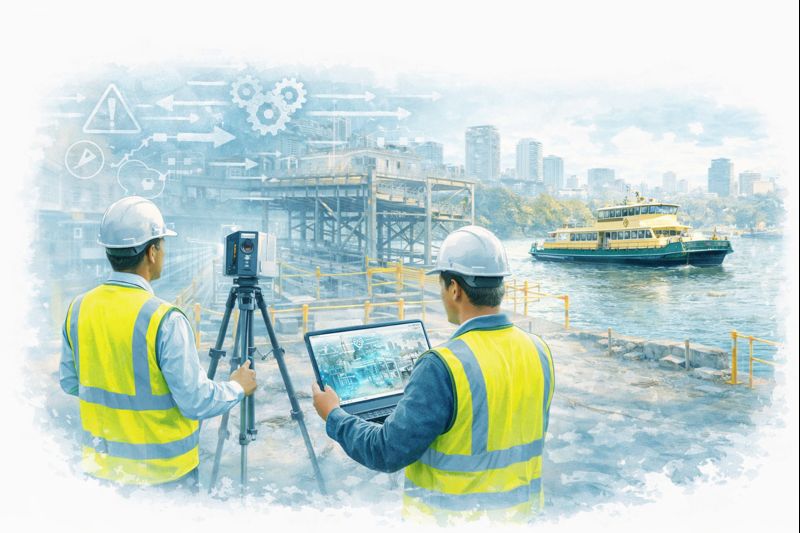

LiDAR scanning by engineers at a Sydney riverside construction site, capturing as-built data for digital quality assurance and design verification.

The first scan changes how graduates think

The first time a graduate engineer works with a real point cloud, something clicks.

Instead of guessing:

  • they can measure directly
  • they can see spatial relationships
  • they can verify assumptions
  • they can design in context

Suddenly, the question shifts from โ€œwhat does the drawing say?โ€ to โ€œwhat actually exists?โ€

Once that shift happens, itโ€™s very hard to go back to traditional workflows.

Hamilton By Designโ€™s approach to engineering-led LiDAR scanning highlights this transition clearly โ€” scanning isnโ€™t just data capture, itโ€™s digital quality assurance for engineering decisions.

๐Ÿ‘‰ 3D LiDAR Scanning & Digital Quality Assurance
https://www.hamiltonbydesign.com.au/home/3d-lidar-scanning-digital-quality-assurance/

For graduate engineers, this is often the first time they feel genuinely confident that their design inputs reflect reality.


Why LiDAR scanning becomes โ€œaddictiveโ€

LiDAR scanning is addictive to graduate engineers for one simple reason:

It removes doubt.

Once youโ€™ve experienced what itโ€™s like to design from verified geometry, going back to hand measurements and assumptions feels risky โ€” even irresponsible.

1. Confidence replaces guesswork

Instead of hoping clearances exist, graduates can prove they exist. Instead of estimating offsets, they can measure them. This builds technical confidence very quickly.

2. Mistakes become learning, not disasters

When designs are checked against a point cloud, errors are caught early โ€” in the model, not on site. Graduates learn faster because mistakes are visible and correctable.

3. Engineering judgement develops faster

Seeing real-world geometry helps graduates understand:

  • constructability
  • installation constraints
  • maintenance access
  • tolerance accumulation

These lessons are difficult to teach from textbooks alone.
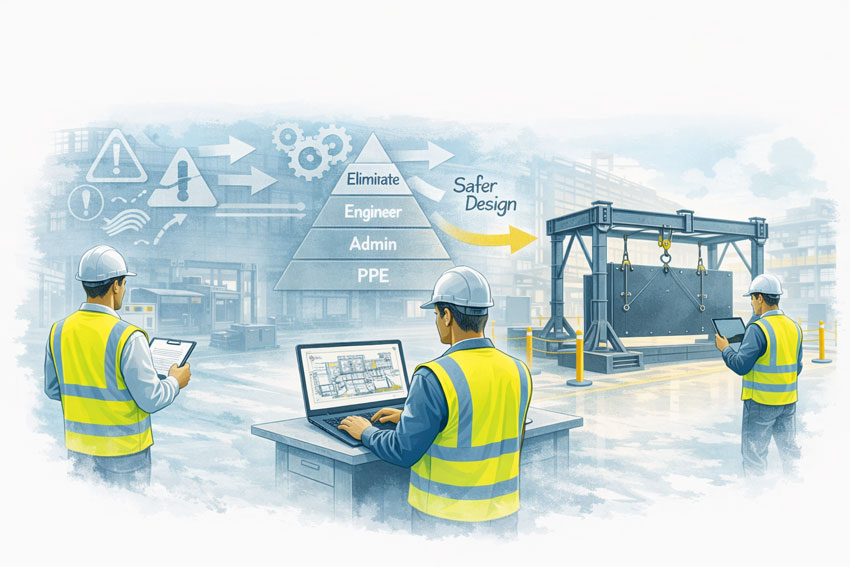


Mining engineers applying design-for-safety principles to improve material handling systems in an industrial workshop

Inner Sydney makes scanning essential, not optional

In inner Sydney suburbs, LiDAR scanning is not a luxury โ€” itโ€™s often the only practical way to work.

Areas like:

  • Sydney CBD
  • Ultimo
  • Pyrmont
  • Surry Hills
  • Redfern
  • Alexandria
  • Zetland
  • Newtown

are characterised by:

  • tight sites
  • layered services
  • heritage structures
  • mixed-use refurbishments
  • minimal tolerance for rework

Graduate engineers working on these projects quickly learn that:

  • traditional site measurement is slow and disruptive
  • access is limited and time-boxed
  • errors are expensive and highly visible

Scanning allows:

  • rapid capture without extended site shutdowns
  • remote review and collaboration
  • fewer repeat site visits
  • better coordination between disciplines

Once graduates experience this efficiency, they naturally push for scanning on future projects.


How scanning supports better engineering decisions

LiDAR scanning doesnโ€™t replace engineering judgement โ€” it supports it.

Hamilton By Design frames scanning as a core part of engineering projects, not a bolt-on service. That distinction matters, especially for younger engineers still developing confidence.

๐Ÿ‘‰ 3D Laser Scanning for Engineering Projects
https://www.hamiltonbydesign.com.au/home/engineering-services/3d-laser-scanning/3d-laser-scanning-for-engineering-projects/

For graduate engineers, scanning supports:

Design verification

They can check whether:

  • a beam is actually where the drawing says it is
  • a pipe has enough fall
  • a platform clears adjacent services
  • access zones meet safety requirements

Better communication

Point clouds make design reviews clearer. Instead of explaining issues abstractly, graduates can show the problem in 3D context โ€” especially helpful when working with senior engineers, fabricators, or clients.

Safer decisions

Designing from verified geometry reduces the risk of unsafe site improvisation. Graduates learn early that safety is tied directly to design certainty.


The โ€œdigital safety netโ€ for early-career engineers

For many graduates, LiDAR scanning acts as a digital safety net.

Early in a career, the fear of โ€œmissing something obviousโ€ is real. Scanning provides reassurance:

  • Have I considered the surrounding structure?
  • Did I allow enough clearance?
  • Is this installable?

Instead of relying solely on experience they havenโ€™t yet built, graduates can lean on measured reality.

Over time, this accelerates professional growth:

  • better spatial awareness
  • improved constructability thinking
  • stronger questioning of legacy documentation

Ironically, the more graduates use scanning, the faster they develop the intuition to know when itโ€™s needed โ€” and when itโ€™s not.


Greater Sydney: scanning as a standard workflow

Across Greater Sydney, LiDAR scanning is increasingly becoming standard practice for:

  • building refurbishments
  • industrial upgrades
  • mechanical plant modifications
  • structural alterations
  • asset verification and compliance work

In western Sydney industrial areas, scanning supports large-scale plant and warehouse projects. In the north and east, it supports constrained commercial and infrastructure upgrades. In the inner suburbs, it often makes projects feasible at all.

Graduate engineers exposed to this environment quickly learn:

  • projects that scan early run smoother
  • fewer RFIs come back from site
  • fabrication issues drop dramatically
  • install teams trust the drawings more

Once theyโ€™ve seen this pattern a few times, scanning stops being a โ€œspecial requestโ€ and becomes the default question:

โ€œCan we scan this first?โ€


Why engineers struggle to go back once theyโ€™ve scanned

After working with LiDAR scanning, graduates often struggle with projects that donโ€™t include it.

They notice:

  • more uncertainty
  • more site clarification calls
  • more โ€œweโ€™ll fix it on siteโ€ language
  • more reliance on assumptions

This is why scanning feels addictive โ€” not because itโ€™s flashy technology, but because it reduces friction at every stage of an engineering project.

For young engineers trying to build credibility, that reduction in friction is powerful. It allows them to:

  • deliver cleaner designs
  • ask better questions
  • contribute meaningfully earlier in their careers

Digital quality assurance becomes a mindset

Perhaps the biggest shift LiDAR scanning creates is cultural.

Graduate engineers exposed to scanning early start to think in terms of digital quality assurance:

  • verify before design
  • check before fabrication
  • confirm before installation

This mindset aligns closely with modern engineering governance, risk management, and professional accountability.

Hamilton By Designโ€™s emphasis on scanning as digital quality assurance reflects this evolution โ€” scanning isnโ€™t about technology for its own sake, itโ€™s about engineering confidence.

๐Ÿ‘‰ https://www.hamiltonbydesign.com.au/home/3d-lidar-scanning-digital-quality-assurance/


Hamilton By Design logo displayed on a blue tilted rectangle with a grey gradient background

Final thoughts: once you see clearly, you donโ€™t want to design blind again

For graduate engineers, LiDAR scanning often marks a turning point.

Itโ€™s the moment they realise engineering doesnโ€™t have to rely on best guesses, inherited drawings, or incomplete information. Itโ€™s the moment they understand that good engineering starts with seeing clearly.

In Greater Sydney, especially across dense inner suburbs, that clarity isnโ€™t optional โ€” itโ€™s essential.

Once graduate engineers experience what itโ€™s like to design from reality, not assumption, LiDAR scanning stops being a tool and becomes part of how they think. And thatโ€™s why, once theyโ€™ve scanned properly, most engineers never want to design without it again.

Name
Would you like us to arrange a phone consultation for you?
Address
3D LiDAR scanning and 3D modelling service button โ€” laser scanner capturing a point cloud for engineering and CAD modelling
Mechanical engineering services
Finite Element Analysis (FEA) engineering simulation button
Mechanical engineering services

Engineering Confidence: Using FEA to Validate Real-World Designs

Mechanical engineering has always been a balance between creativity and certainty.
Every bracket, frame, chute, or structural support we design must perform under real loads, temperatures, and conditions โ€” often in environments where failure simply isnโ€™t an option.

Thatโ€™s where Finite Element Analysis (FEA) earns its place as one of the most powerful tools in modern design. It allows engineers to move from assumption to verification โ€” transforming the way we predict, test, and optimise mechanical systems.


What Is FEA โ€” and Why It Matters

FEA divides complex geometry into a network of small, interconnected elements.
By solving the physical equations that govern stress, strain, and displacement across those elements, engineers can predict how a structure behaves under load, vibration, or temperature.

Instead of relying solely on hand calculations or over-built safety factors, FEA provides quantitative insight into performance โ€” letting us see where structures flex, where stress concentrates, and how design choices affect real-world outcomes.

In mechanical engineering, that means fewer prototypes, lower material costs, and far greater design confidence.


1. Static Analysis โ€” The Foundation of Structural Validation

Static linear analysis is the foundation of most FEA work.
It evaluates how a structure responds to steady, time-independent loads such as gravity, pressure, or fixed equipment weight.

Through static analysis, engineers can:

  • Visualise stress and displacement distribution across a part or assembly.
  • Evaluate safety factors under different loading conditions.
  • Check stiffness and material utilisation before fabrication.
  • Identify weak points or stress concentrations early in design.

This baseline validation is the difference between a design that โ€œshouldโ€ work and one that will.


2. Assembly-Level Simulation โ€” Seeing the Whole System

Few machines fail because a single part breaks.
Most failures happen when components interact under load โ€” bolts shear, brackets twist, or welds experience unplanned tension.

FEA allows engineers to simulate entire assemblies, including:

  • Contact between parts (bonded, sliding, or frictional).
  • Realistic boundary conditions such as bearings, springs, or pinned joints.
  • The influence of welds, fasteners, or gaskets on overall performance.

This system-level view helps mechanical engineers design not only for strength, but also for compatibility and reliability across the full structure.


3. Mesh Control โ€” Accuracy Where It Counts

A simulation is only as good as its mesh.
By controlling element size and density, engineers can capture critical detail in stress-sensitive regions like fillets, bolt holes, and weld toes.

Modern FEA tools use adaptive meshing โ€” refining the model automatically in areas of high stress until the solution converges.
That means precise, efficient results without excessive computation time.


4. Thermal-Structural Interaction โ€” When Heat Becomes a Load

Many mechanical systems face thermal as well as mechanical challenges.
Whether itโ€™s ducting in a process plant or hoppers near heat sources, temperature gradients can cause expansion, distortion, or thermal stress.

FEA allows engineers to:

  • Model steady-state or transient heat transfer through solids.
  • Apply convection, radiation, or temperature boundary conditions.
  • Combine thermal and structural analyses to study thermal expansion and thermal fatigue.

Understanding how heat and load combine helps ensure equipment remains stable, safe, and accurate throughout its lifecycle.


5. Modal and Buckling Analysis โ€” Designing Against Instability

Some risks are invisible until theyโ€™re simulated.
Vibration and buckling are two of the most overlooked โ€” yet most common โ€” causes of structural failure.

Modal Analysis

Determines a structureโ€™s natural frequencies and mode shapes, helping designers avoid resonance with operating machinery, fans, or conveyors.

Buckling Analysis

Predicts the critical load at which slender members or thin-walled panels lose stability โ€” allowing engineers to reinforce and optimise designs early.

By identifying these limits before fabrication, engineers can prevent problems that are expensive and dangerous to discover on site.


Design Optimisation โ€” Smarter, Lighter, Stronger

Good design is rarely about adding material; itโ€™s about using it wisely.
FEA supports parametric and goal-based optimisation, enabling engineers to vary geometry, thickness, or material and automatically test multiple configurations.

You can set objectives such as:

  • Minimising weight while maintaining strength.
  • Reducing deflection under fixed loads.
  • Optimising gusset or flange size for stiffness.

This process of โ€œdigital lightweightingโ€ drives better performance and cost efficiency โ€” especially valuable in industries where both material and downtime are expensive.


7. Communication and Confidence

FEA isnโ€™t only a calculation tool โ€” itโ€™s a communication tool.
Colour-coded plots, animations, and automated reports make it easier to explain complex mechanical behaviour to project managers, clients, or certifying bodies.

Clear visuals turn stress distributions and displacement fields into a shared language โ€” helping stakeholders understand why certain design choices are made.


Real-World Applications Across Mechanical Engineering

ApplicationType of AnalysisKey Benefit
Chutes & HoppersStatic + BucklingConfirm wall thickness and frame design for structural load and vibration
Conveyor FramesModal + StaticAvoid resonance and ensure adequate stiffness
Pressure EquipmentThermal + StaticEvaluate thermal stress and hoop stress under load
Machine BracketsStatic + OptimisationReduce weight while maintaining rigidity
Platforms & GuardingBucklingValidate stability under safety loading
Welded Frames & SupportsStaticCheck deformation, stress, and weld performance

These examples show how FEA becomes an everyday design partner โ€” embedded in the workflow of mechanical engineers across manufacturing, resources, and infrastructure.


The Engineerโ€™s Advantage: Data Over Assumption

In traditional design, engineers often relied on prototypes and conservative safety factors.
Today, simulation delivers the same assurance โ€” without the waste.

By applying FEA early in the design cycle, mechanical engineers can:

  • Predict failure modes before they occur.
  • Shorten development time.
  • Reduce material usage.
  • Justify design decisions with quantitative proof.

FEA enables engineers to focus less on guesswork and more on innovation โ€” designing structures that are both efficient and dependable.


Engineering Integrity in Practice

At Hamilton By Design, we integrate FEA into every stage of mechanical design and development.
Itโ€™s how we ensure that every frame, chute, and mechanical system we deliver performs as intended โ€” safely, efficiently, and reliably.

We use FEA not just to find the limits of materials, but to push the boundaries of design quality โ€” delivering engineering solutions that last in the toughest industrial environments.

Design backed by data isnโ€™t a slogan โ€” itโ€™s how we engineer confidence.


Building a Culture of Verified Design

When FEA becomes part of everyday engineering culture, it changes how teams think.
Designers begin to see structures not just as drawings, but as living systems under real forces.

That shift builds trust โ€” between engineer and client, between concept and reality.
Itโ€™s what defines the future of mechanical design: informed, optimised, and proven before the first bolt is tightened.

3D LiDAR scanning and 3D modelling service button โ€” laser scanner capturing a point cloud for engineering and CAD modelling
Mechanical engineering services
Finite Element Analysis (FEA) engineering simulation button
Mechanical engineering services