Drafting Capacity for Todayโ€™s Projects: An Integrated Scan โ†’ Model โ†’ Detail โ†’ Check Workflow

Drafting Capacity for Todayโ€™s Projects | Engineering-Led Documentation

Engineering and construction projects are increasingly delivered under compressed timeframes, constrained resources, and heightened compliance expectations. In this environment, access to reliable drafting capacityโ€”supported by robust processesโ€”is critical to maintaining quality and reducing project risk.

Hamilton By Design provides experienced drafting capacity, available for short-term support or longer-term secondment, delivered within a structured scan โ†’ model โ†’ detail โ†’ check workflow that aligns documentation with real-world conditions and engineering intent.


Drafting capacity aligned with contemporary project demands

Modern projects often require drafting support that can scale quickly to address:

  • Peak workloads during design development or shutdown preparation
  • Short-term resourcing gaps within engineering teams
  • Documentation demands driven by upgrades, modifications, or compliance works
  • Brownfield environments where existing information is incomplete or unreliable

In these situations, drafting capacity must be more than transactional. It must integrate with engineering workflows and reflect current site conditions.


Scan: establishing an accurate technical baseline

Where existing drawings cannot be relied upon, accurate documentation begins with engineering-grade reality capture.

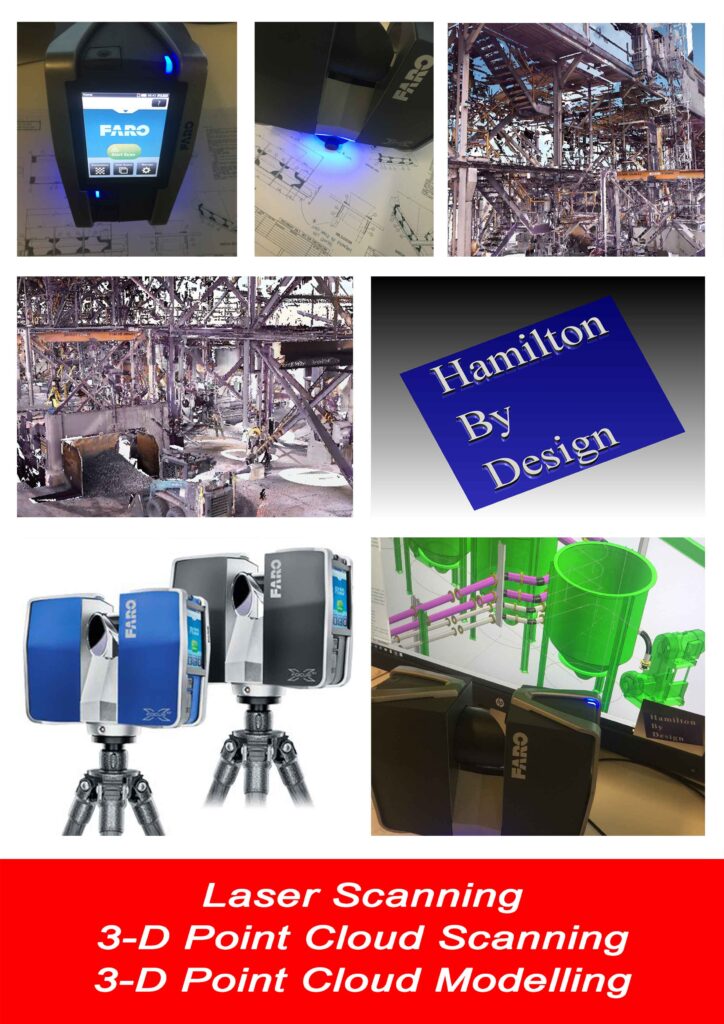
Our team utilises 3D laser scanning to establish a defensible geometric baseline of existing assets. This approach supports drafting activities by ensuring that models and drawings are developed from verified site data, rather than assumptions or legacy documentation.


Model: structured CAD developed for engineering use

Scan data is translated into purpose-built CAD models, developed to suit the intended engineering and documentation outcomes. Models are structured with appropriate datums, tolerances, and levels of detail to support:

  • Engineering assessment and design coordination
  • Structural and mechanical detailing
  • As-built documentation and future modification

This modelling stage ensures drafting activities are grounded in usable, engineering-aligned data.


Detail: producing clear, buildable documentation

Drafting output remains one of the most critical interfaces between design and construction.

From verified models, our draftspersons produce clear, fabrication-ready drawings that communicate engineering intent accurately and unambiguously. Documentation is prepared with consideration for:

  • Constructability and sequencing
  • Fabrication practicality
  • Coordination between disciplines
  • Alignment with relevant Australian Standards

The emphasis is on documentation that can be confidently issued to site.


Check: verification as a formal step, not an afterthought

Before issue, drawings and models are subject to structured review to confirm:

  • Consistency with scan data and models
  • Coordination across views and drawing sets
  • Technical clarity and buildability

This checking step reduces the likelihood of downstream rework and supports defensible documentation outcomes.


Why integrated drafting capacity matters

When drafting is separated from scanning, modelling, or checking, risk is introduced at each handover.

An integrated scan โ†’ model โ†’ detail โ†’ check workflow:

  • Improves documentation reliability
  • Reduces errors caused by assumptions
  • Supports compliance and verification
  • Enhances confidence during fabrication and construction

This approach is particularly effective for existing assets, industrial facilities, and brownfield upgrades.


Flexible drafting support and secondment

Hamilton By Designโ€™s drafting capacity can be provided as:

  • Short-term drafting support
  • Longer-term secondment within client teams
  • Targeted assistance during high-demand project phases

Drafting support is delivered within an engineering-led environment, ensuring alignment between documentation and technical intent.

To learn more about flexible resourcing options, visit our Secondment Services page:
๐Ÿ‘‰ https://www.hamiltonbydesign.com.au/home/secondment-services/


Hamilton By Design logo displayed on a blue tilted rectangle with a grey gradient background

Conclusion

As project complexity and delivery pressures continue to increase, drafting capacity must be current, integrated, and accountable.

By providing experienced draftspersons supported by a structured scan โ†’ model โ†’ detail โ†’ check workflow, Hamilton By Design enables project teams to scale documentation capability without compromising accuracy, buildability, or engineering quality.
Name
Would you like us to arrange a phone consultation for you?
Address

Engineering-Led 3D Laser Scanning in Bathurst

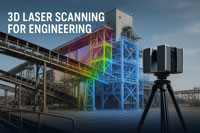
3D laser scanner capturing an industrial structure for engineering-grade digital modelling and verification

3D Scanning Bathurst | Engineering-Grade LiDAR & Scan-to-CAD

Bathurst and the Central West region support a diverse mix of manufacturing facilities, mining operations, quarries, infrastructure assets, utilities, and heritage structures. These environments demand more than survey-grade outputs.

Hamilton By Design combines LiDAR scanning with mechanical engineering expertise, ensuring that:

  • Scan coverage targets critical interfaces and load paths
  • Accuracy supports fabrication-ready design
  • Models reflect real-world constraints, not assumptions

This significantly reduces rework, clashes, and site uncertainty during upgrades or expansions.


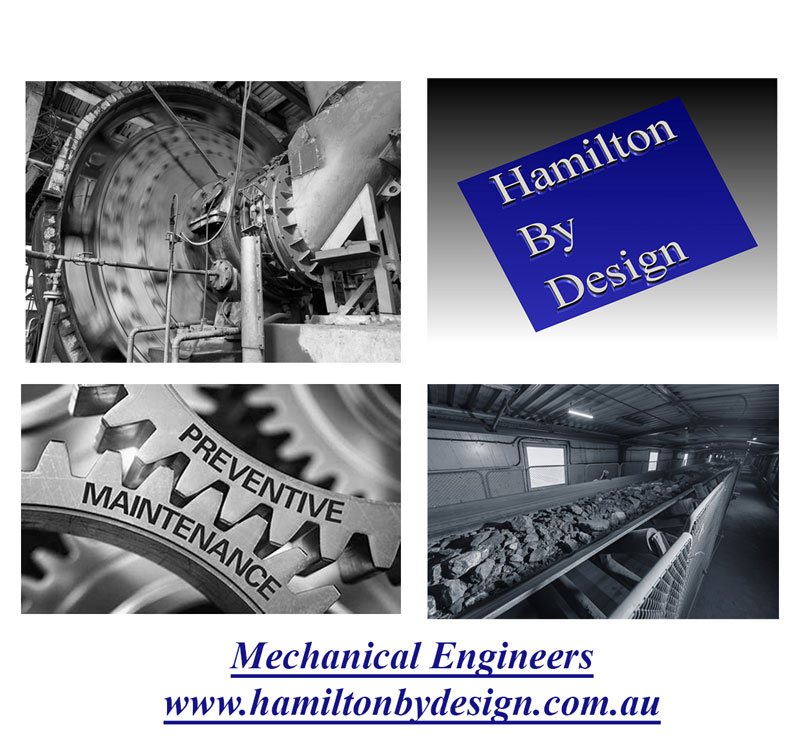
Mechanical engineering services by Hamilton By Design, featuring industrial machinery, conveyors, and maintenance engineering.

Our 3D Scanning Services in Bathurst

We provide a complete scan-to-engineering workflow, including:

  • High-resolution terrestrial LiDAR scanning
  • Registered point clouds (colourised and structured)
  • Scan-to-CAD modelling (SolidWorks & engineering CAD)
  • As-built documentation for existing assets
  • Clash detection & design validation
  • Support for mechanical, structural, and fabrication design

All deliverables are tailored to your project scope โ€” from concept planning through to construction and installation.


Typical Bathurst Applications

Our 3D scanning services are commonly used for:

  • Industrial plant upgrades and brownfield modifications
  • Mining and quarry infrastructure
  • Conveyors, chutes, hoppers, and bulk materials handling systems
  • Mechanical equipment replacement and tie-ins
  • Structural steel verification and retrofits
  • Asset documentation and digital twins
  • Risk reduction for shutdown and live-site works

Where required, scanning data is integrated directly into engineering calculations, FEA models, and fabrication drawings.


Hamilton By Design logo displayed on a blue tilted rectangle with a grey gradient background

Why Hamilton By Design

Engineer-Led Scanning

Your scan is planned and executed by engineers who understand loads, tolerances, constructability, and compliance, not just data capture.

Fit-for-Purpose Accuracy

We capture only the data that matters โ€” at the accuracy required for design, fabrication, and installation.

Single-Source Accountability

One team responsible for scanning, modelling, and engineering, eliminating scope gaps between consultants.

Regional & Mobile Delivery

We regularly support projects across Bathurst, Orange, Lithgow, Dubbo, Mudgee, and the broader Central West NSW, mobilising to site as required.


Deliverables You Can Build From

Depending on your project, we can supply:

  • Registered point clouds (E57 / RCP / compatible formats)
  • 3D CAD models aligned to engineering workflows
  • GA drawings and interface layouts
  • Fabrication-ready references
  • Digital records for asset management and future upgrades

Our clients:

3D Scanning Bathurst โ€“ Get Started

If you are planning a retrofit, upgrade, or new installation in Bathurst or Central West NSW, early 3D scanning can significantly reduce risk and cost.

Talk to an engineer about your site
Request a Bathurst 3D scanning proposal
On-site scanning available across the Central West

Name
Would you like us to arrange a phone consultation for you?
Address

Harnessing the Power of LiDAR: Revolutionizing Engineering with 3D Scanning & SolidWorks

Title: Harnessing the Power of LiDAR: Revolutionizing Engineering with 3D Scanning & SolidWorks

Introduction

At Hamilton By Design, we are committed to integrating cutting-edge technologies to enhance our engineering processes. One such technology that has transformed the landscape of design and construction is LiDAR (Light Detection and Ranging). This advanced 3D scanning tool offers unparalleled precision and efficiency, enabling us to deliver superior outcomes for our clients.

The Evolution of LiDAR Technology

LiDAR technology has come a long way since its inception in the 1960s. Initially developed for meteorological and atmospheric research, it has evolved into a versatile tool used across various industries, including civil engineering, architecture, and environmental monitoring. The integration of GPS and advancements in laser technology have significantly enhanced LiDAR’s accuracy and applicability.

Advantages of Incorporating LiDAR into Engineering

  1. Exceptional Accuracy and Detail LiDAR systems emit laser pulses to measure distances with remarkable precision, creating high-resolution point clouds that capture intricate details of structures and terrains. This level of accuracy is crucial for tasks such as topographic mapping, structural analysis, and as-built documentation.
  2. Efficiency in Data Collection Traditional surveying methods can be time-consuming and labor-intensive. LiDAR, on the other hand, can rapidly collect vast amounts of data, significantly reduce field time and accelerate project timelines.
  3. Enhanced Safety and Accessibility LiDAR enables remote data collection in hazardous or hard-to-reach areas, minimizing risks to personnel. Whether it’s scanning a deteriorating structure or surveying rugged terrain, LiDAR ensures safety without compromising data quality.
  4. Integration with BIM and Digital Twins The detailed 3D models generated by LiDAR can be seamlessly integrated into Building Information Modeling (BIM) systems, facilitating better design visualization, clash detection, and project coordination. This integration supports the creation of digital twins, allowing for real-time monitoring and maintenance planning.
  5. Cost-Effectiveness By reducing the need for repeated site visits and minimizing errors through accurate data capture, LiDAR contributes to cost savings throughout the project lifecycle. Its efficiency translates into reduced labor costs and optimized resource allocation.

Applications in Engineering Projects

At Hamilton By Design, we’ve leveraged LiDAR technology across various projects:

  • Infrastructure Development: Accurate terrain modeling for road and bridge design.
  • Heritage Conservation: Detailed documentation of historical structures for preservation efforts.
  • Urban Planning: Comprehensive city modeling to inform sustainable development.

Conclusion

The integration of LiDAR 3D scanning tools into our engineering processes has revolutionized the way we approach design and construction. Its precision, efficiency, and versatility align with our commitment to delivering innovative and high-quality solutions.

As technology continues to advance, we remain dedicated to adopting tools like LiDAR that enhance our capabilities and set new standards in engineering excellence.

Laser Scan | Hamilton By Design

For more information on how Hamilton By Design utilizes LiDAR technology in our projects, visit our website at www.hamiltonbydesign.com.au.

Mechanical Engineers Structural Engineers

Structural Drafting | Mechanical Drafting | 3D Laser Scanning

Mechanical Engineering

Want to know how 3D Scanning can help your next project?
Get in touch todayย atย sales@hamiltonbydesign.com.au