

Bulk Material Handling in Mining | ROM, Conveyors & Transfer Engineering
Bulk material handling is at the core of almost every mining operation. From the moment raw material is extracted at the Run-of-Mine (ROM) pad through to crushing, screening, processing, and stockpiling, the safe and efficient movement of material is critical to productivity, asset reliability, and worker safety.
At Hamilton By Design, we support mining and heavy-industry clients with engineering-led mechanical design, verification, and documentation for bulk material handling systems—focusing on conveyors, transfer points, chutes, ROM bins, hoppers, and associated steelwork.

What Is Bulk Material Handling in Mining?
Bulk material handling refers to the mechanical systems used to move large volumes of raw or processed material, including:
- Run-of-Mine (ROM) ore
- Crushed rock and coal
- Overburden and rejects
- Processed product and fines
These systems typically include:
- Apron feeders and ROM bins
- Primary, secondary, and tertiary crushers
- Conveyor belts and transfer stations
- Chutes, hoppers, and bins
- Stackers, reclaimers, and stockpiles
Each interface between machines is a design-critical point where poor geometry, misalignment, or incorrect loading assumptions can lead to blockages, excessive wear, spillage, downtime, and safety risks.
Engineering Challenges in Bulk Material Handling
Bulk handling systems operate under harsh conditions and face unique engineering challenges:
1. Variable Material Properties
- Changes in moisture content, particle size, and bulk density
- Segregation and fines generation
- Adhesion and carryback issues
2. Transfer Point Design
- Impact loading and wear at chute inlets
- Flow control and trajectory management
- Dust, spillage, and maintenance access
3. Structural and Mechanical Loads
- Dynamic loads from material flow
- Belt tensions and starting/stopping forces
- Fatigue in steelwork and supports
4. Brownfield Constraints
- Existing plant geometry and limited space
- Legacy drawings that don’t reflect as-built conditions
- Shutdown-driven installation windows
These challenges reinforce why engineering-led design, supported by accurate site data, is essential.
From ROM to Processing: A System-Based Engineering Approach
Hamilton By Design approaches bulk material handling as a complete system, not isolated components.
Our typical workflow includes:
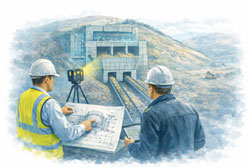
- Engineering-led site verification
Using high-accuracy 3D LiDAR scanning to capture existing conditions at ROM pads, conveyors, and plant interfaces. - Mechanical and structural design
Developing fit-for-purpose conveyor layouts, transfer chutes, supports, and access platforms using SolidWorks-based workflows. - Load definition and verification
Applying realistic material loads and operational scenarios to reduce over-design and manage fatigue risk. - Fabrication-ready documentation
Producing drawings and models that support fit-first-time fabrication and installation during shutdowns.
This integrated approach reduces rework, delays, and operational risk.
Conveyor Transfer Points: Where Most Problems Begin
Transfer points are the highest-risk locations in bulk material handling systems.
Common issues include:
- Poor material trajectory control
- Excessive impact and liner wear
- Dust escape and spillage
- Restricted inspection and maintenance access
Engineering-led transfer design considers:
- Material flow paths and impact angles
- Chute geometry and liner selection
- Maintenance clearances and access
- Compliance with guarding and safety standards
Well-designed transfer points improve availability, reduce maintenance costs, and enhance safety outcomes.
Why Engineering Matters More Than Ever in Mining Handling Systems
As mining operations push for higher throughput and tighter shutdown schedules, the tolerance for design error is shrinking.
Engineering-driven bulk material handling delivers:
- Predictable material flow
- Reduced downtime and blockages
- Improved safety and maintainability
- Defensible design records for audits and compliance
This is especially important in brownfield mining environments, where assumptions based on outdated drawings can introduce significant risk.
Supporting Mining Operations Across Australia
Hamilton By Design supports bulk material handling projects across:
- Coal handling and preparation plants (CHPPs)
- Hard-rock crushing and screening facilities
- Mineral processing plants
- Ports, stockyards, and materials terminals
Our experience spans ROM handling, conveyors, transfer chutes, and plant upgrades, backed by practical site experience and engineering accountability.

Speak With an Engineer
If you are planning:
- A ROM handling upgrade
- Conveyor or transfer chute modifications
- Crushing plant changes
- Shutdown-driven bulk handling works
👉 Contact Hamilton By Design to discuss an engineering-led approach that reduces risk and improves outcomes.
Our clients:
























