

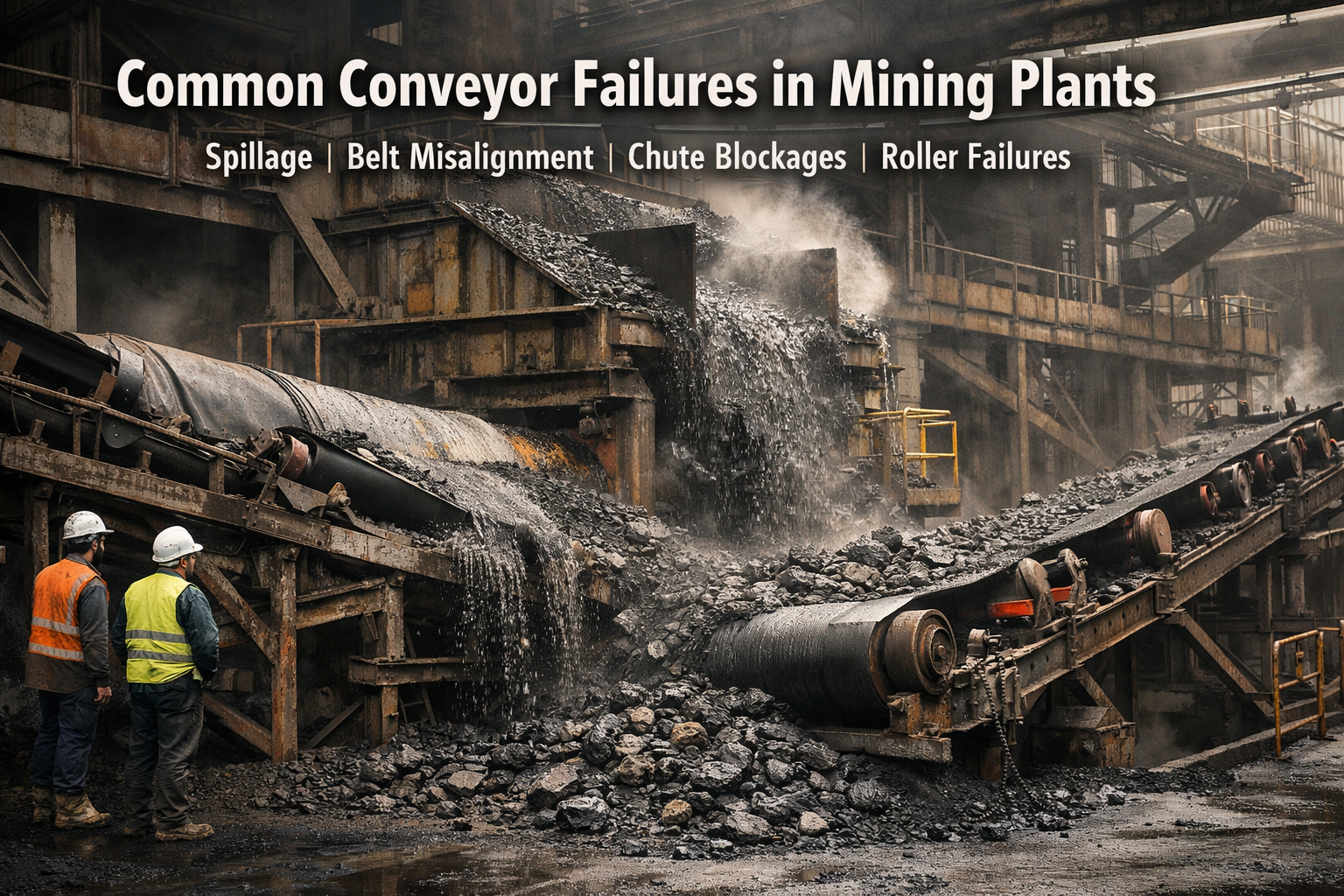
Conveyor systems are the backbone of most mining operations. They move thousands of tonnes of ore every hour between crushers, processing plants, stockpiles, and load-out facilities.
When a conveyor fails, the impact can be immediate and costly. Production stops, plant operators must respond quickly, and maintenance teams are forced to work under pressure to restore operations.
Understanding the common causes of conveyor failures in mining plants is essential for improving plant reliability and reducing unplanned downtime.
1. Conveyor Belt Damage
One of the most frequent conveyor failures in mining is damage to the conveyor belt itself.
Typical causes include:
- impact from large rocks at transfer points
- sharp materials cutting the belt
- misaligned loading onto the receiving belt
- worn or damaged idlers
When belts become damaged, operations may experience:
- belt tears
- belt mistracking
- material spillage
Over time this leads to reduced production efficiency and increased maintenance costs.
Proper chute design and impact control can significantly reduce belt damage.
2. Transfer Chute Blockages
Transfer chutes are often the most problematic areas in materials handling systems.
Poorly designed transfer chutes can cause:
- material build-up
- flow restrictions
- complete blockages
These problems are especially common when handling:
- wet ore
- sticky materials
- fine particles
When chutes block, the upstream conveyors continue feeding material until the system trips or operators intervene.
This can quickly escalate into major plant disruptions.
3. Conveyor Misalignment
Another common maintenance issue is belt misalignment.
Misalignment occurs when the belt does not track correctly along the conveyor structure.
Common causes include:
- uneven loading at transfer points
- worn idlers
- structural movement or damage
- incorrect installation
When conveyors run out of alignment they can cause:
- edge damage to belts
- excessive wear on idlers
- safety hazards from material spillage
Regular inspection and proper transfer design can reduce this risk.
4. Structural Fatigue and Failure
Mining conveyors operate in harsh environments and are subjected to constant vibration and loading.
Over time this can lead to structural issues such as:
- cracked steel structures
- damaged conveyor supports
- fatigue in transfer chute frames
These failures may not be immediately visible but can develop gradually over years of operation.
Engineering inspections and accurate plant modelling can help identify these risks before they become critical failures.
5. Wear in Materials Handling Equipment
Mining materials are often highly abrasive.
Components that commonly experience heavy wear include:
- chute liners
- skirt plates
- idlers
- pulley lagging
If these parts are not replaced in time, they can lead to larger system failures.
Preventative maintenance programs help ensure that wear components are replaced before reliability issues develop.
Improving Plant Reliability Through Engineering
Reducing conveyor failures in mining plants requires a combination of:
- good engineering design
- proper maintenance practices
- accurate understanding of existing plant infrastructure
Modern engineering techniques such as 3D laser scanning and digital modelling allow engineers to capture the true geometry of operating plants.
This helps identify problems such as:
- poor transfer geometry
- structural clashes
- restricted maintenance access
These issues can then be addressed before they lead to operational failures.
You can learn more about mining mechanical engineering design services here:
Preparing Conveyor Upgrades During Shutdowns
Many conveyor upgrades and maintenance projects are performed during planned plant shutdowns.
Because shutdown windows are limited, careful preparation is essential.
Engineering preparation may include:
- capturing existing plant conditions
- producing detailed engineering models
- planning structural modifications
- preparing fabrication drawings
Proper shutdown planning reduces the risk of installation delays and ensures that maintenance work is completed safely.
Learn more about shutdown preparation here:
Using Digital Engineering to Reduce Risk
Digital engineering tools now allow mining operations to develop accurate digital models of their processing plants.
These models help engineers:
- analyse conveyor systems
- redesign transfer chutes
- identify potential failure points
- plan upgrades with confidence
By using digital engineering models, mining companies can significantly reduce the risk of plant downtime and improve overall reliability.
More information on this approach can be found here:
Final Thoughts
Conveyor systems are critical to the performance of mining plants, but they are also one of the most common sources of operational failure.
By understanding the causes of conveyor failures in mining, operations teams can focus on improving:
- transfer chute design
- maintenance practices
- plant engineering preparation
Through proper engineering and planning, mining companies can improve reliability, reduce downtime, and ensure that their materials handling systems continue to operate safely and efficiently.