

3D Scanning in Greater Sydney NSW: From Point Cloud to BIM and Digital Twins for Smarter Projects

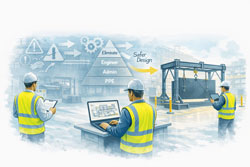
Engineers reviewing industrial design improvements in a mining fabrication workshop using engineering controls to reduce safety risks

3D Scanning in Greater Sydney NSW | Point Cloud to BIM & Digital Twins for Smarter Projects

Across Greater Sydney โ€” including industrial hubs like Blacktown โ€” asset owners and project teams are under increasing pressure to deliver upgrades, expansions, and maintenance projects with less downtime and lower risk. In congested brownfield environments, the biggest challenge is often not design โ€” it is knowing exactly what already exists on site.

This is where engineering-grade 3D laser scanning and point cloud to BIM workflows are transforming the way projects are planned and delivered across NSW.

At Hamilton By Design, we support industrial and infrastructure projects by converting accurate site data into practical engineering models that improve project certainty from concept through to construction.
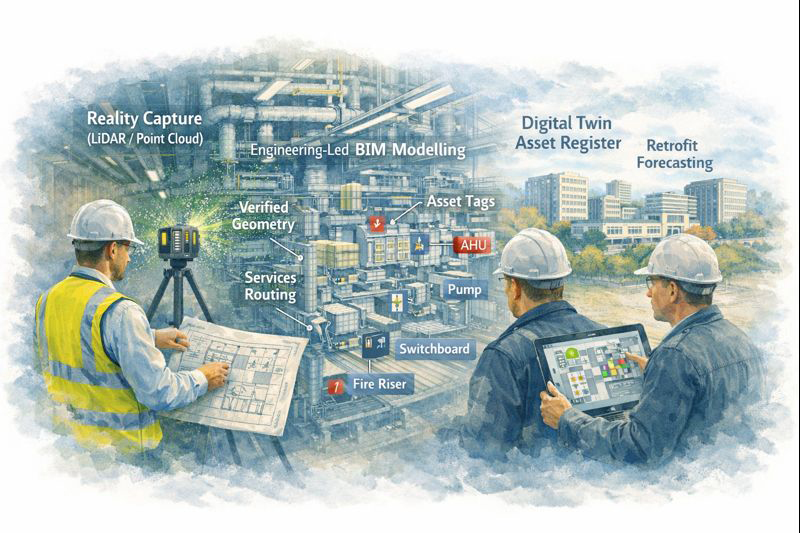

From point cloud to digital twin for lifecycle management of Sydney industrial and precinct assets

Why Accurate Site Data Matters in Greater Sydney

Many industrial facilities across Greater Sydney have evolved over decades. Services are added, conveyors rerouted, platforms extended, and temporary fixes become permanent. Unfortunately, drawings are rarely updated to reflect these changes.

For project managers, this creates risks such as:

  • Late discovery of clashes during installation
  • Unplanned scope changes and shutdown delays
  • Increased safety exposure during site rework
  • Cost overruns due to fabrication errors

Without accurate as-built data, project planning becomes reactive instead of proactive.

From 3D Scanning to Point Cloud to BIM

Using engineering-grade LiDAR scanners, we capture millions of spatial data points across entire facilities, producing highly accurate point clouds that represent the real-world geometry of structures, conveyors, services, and equipment.

These point clouds are then converted into:

  • BIM-ready 3D models
  • Fabrication-ready CAD geometry
  • Digital twins for ongoing asset management

This point cloud to BIM process allows project teams to design, coordinate, and review upgrades in a digital environment before any physical work begins.

For project management, this means fewer surprises and far better control over scope, schedule, and cost.

Digital Twin Creation for Ongoing Asset Management

Beyond individual projects, many asset owners in NSW are now adopting digital twins to manage facilities across their full lifecycle.

A digital twin created from accurate scan data allows teams to:

  • Visualise plant layouts remotely
  • Plan future upgrades with confidence
  • Improve maintenance access planning
  • Support safety reviews and training

In multi-site operations across Greater Sydney, digital twins also support consistent engineering standards and faster project scoping.

Rather than starting from scratch for every shutdown, project teams can build on a continually updated digital asset model.
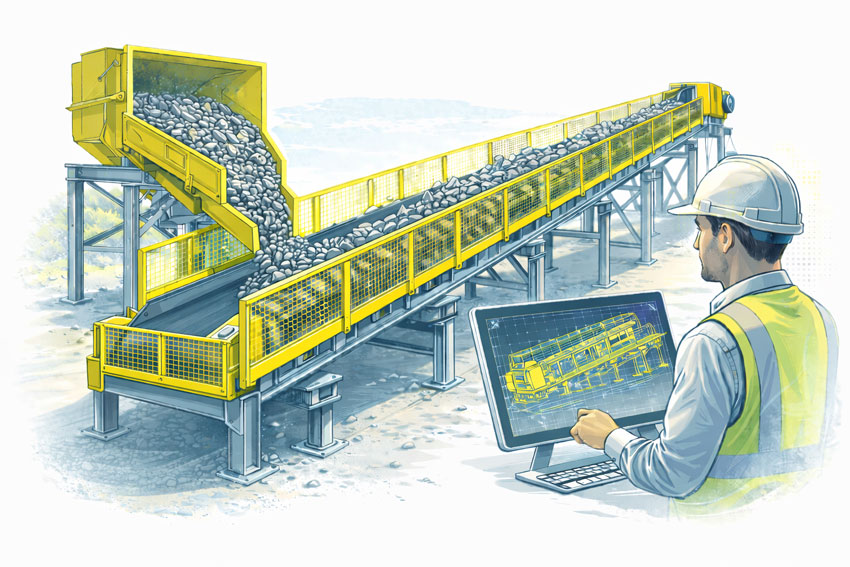

Bulk materials conveyor with compliant safety guarding at the hopper, tail end, and along the conveyor, shown with an engineer reviewing guarding design drawings.

Supporting Conveyor Design in Brownfield Environments

Conveyor systems remain critical to manufacturing, logistics, waste processing, and bulk materials handling facilities across Sydneyโ€™s western suburbs, including Blacktown and surrounding industrial precincts.

When conveyors are upgraded or rerouted, spatial constraints often drive:

  • Poor maintenance access
  • Compromised guarding
  • Clashes with services and structures

Scan-based conveyor modelling allows engineers to:

  • Verify belt paths, transfer points, and head drives
  • Design guarding that fits existing structures
  • Improve access platforms and walkways
  • Reduce installation time during shutdowns

For project managers, this directly translates into reduced safety risk and fewer installation delays.

Project Management Benefits of 3D Scanning

From a project delivery perspective, engineering-grade scanning supports:

  • More accurate scope definition
  • Better contractor coordination
  • Improved constructability reviews
  • Reduced variation claims
  • Safer installation planning

When all stakeholders are working from the same verified model, communication improves and decision-making becomes faster and more reliable.

This is particularly valuable on fast-tracked shutdown projects where every hour of downtime has a production cost.

Local Support Across Greater Sydney NSW

Hamilton By Design provides on-site 3D scanning, BIM modelling, and mechanical engineering support across Greater Sydney, including:

  • Blacktown
  • Western Sydney industrial precincts
  • Central Sydney infrastructure sites
  • Logistics and manufacturing facilities across NSW

As an engineering-led business, we integrate scanning directly into design, drafting, and fabrication support โ€” ensuring that digital models deliver practical, buildable outcomes.

Our focus is not just capturing data, but turning it into engineering solutions that reduce risk and improve project performance.

Turning Reality Capture into Project Confidence

Whether planning a conveyor upgrade, plant expansion, or long-term asset management strategy, accurate site data is the foundation of successful delivery.

By moving from point cloud to BIM and digital twins, project teams across Greater Sydney are gaining better visibility, stronger risk control, and far greater confidence in their project outcomes.


Name
Would you like us to arrange a phone consultation for you?
Address

Mechanical Engineering Services for Plant and Production Problems โ€” Sydney

Engineer-led reverse engineering with 3D scanning and drafting overlooking Sydney Harbour and the Harbour Bridge

Mechanical Engineering Services for Plant and Production Issues | Sydney

Practical engineering solutions when production issues, equipment failures, and compliance risks are impacting your business.

When production stops, costs rise quickly. Many operational problems arenโ€™t caused by staff or maintenance โ€” theyโ€™re caused by systems that are no longer fit for purpose. Whether your plant has grown, equipment has changed, or suppliers are no longer available, mechanical engineering support can help restore performance and reduce ongoing risk.

We provide engineering-led problem solving for operating facilities, focused on practical, buildable solutions that keep your business moving.


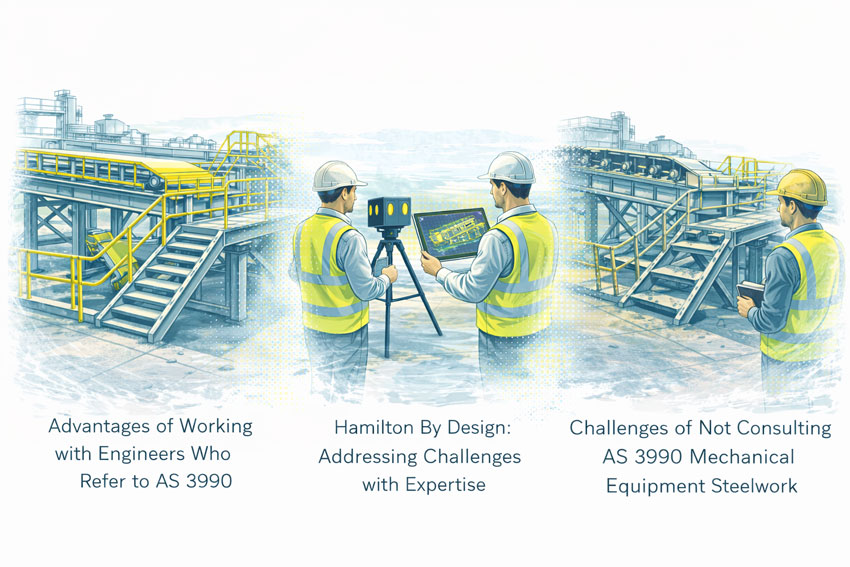
Engineers using LiDAR scanning and digital models to address challenges caused by not consulting AS 3990 mechanical equipment steelwork standards

When Businesses Typically Call a Mechanical Engineer

Most clients contact us when something critical is no longer working as it should โ€” not when everything is running smoothly.

Common triggers include:

  • Production line keeps jamming or backing up
  • Conveyor upgrades are needed to increase throughput
  • Plant layout no longer supports current operations
  • Original equipment supplier is no longer available
  • Compliance issues have been identified during audits or inspections

In these situations, quick fixes often fail because the underlying system was never designed for todayโ€™s operating conditions.


Production Line Keeps Jamming

If bottlenecks, product damage, or stoppages are becoming routine, the problem is often mechanical and systemic โ€” not operator error.

Engineering support can help by:

  • Identifying root causes of flow restrictions
  • Redesigning transfer points and interfaces
  • Improving guarding, access and maintenance zones
  • Reconfiguring equipment layout for smoother material movement

The goal is to improve reliability, not just reset alarms.


Conveyor Upgrade or Replacement Required

Conveyors are often the backbone of production and logistics systems. When capacity increases or materials change, existing conveyors may no longer perform as required.

Mechanical engineering services can support:

  • Conveyor capacity upgrades
  • Drive and structural modifications
  • Transfer chute redesign
  • Integration of new equipment into existing lines

Upgrades can often be achieved without full system replacement when engineered correctly.


Plant Layout No Longer Works

As facilities expand and processes change, original layouts can become inefficient or unsafe.

Engineering reviews can identify opportunities to:

  • Improve workflow and access
  • Reduce unnecessary material handling
  • Improve maintenance clearances
  • Support future equipment additions

Well-planned layout changes reduce downtime, improve safety, and increase operational flexibility.


Equipment Supplier Is No Longer Available

When OEMs stop supporting equipment or close operations, businesses are often left with:

  • No spare parts supply
  • No engineering documentation
  • No upgrade pathway

Mechanical engineers can reverse-engineer components, redesign systems, and develop replacement solutions that integrate with existing plant โ€” often improving performance at the same time.


Compliance Issues Raised

Compliance notices, insurance requirements, or safety audits can quickly become business-critical.

Engineering services can support:

  • Mechanical and structural assessments
  • Design of compliant modifications
  • Certification documentation where required
  • Implementation planning to minimise downtime

Addressing compliance early reduces operational and legal risk.


What We Provide

Our mechanical engineering services typically include:

  • Site assessments and problem diagnosis
  • Concept and detailed design solutions
  • Engineering drawings and documentation
  • Support for fabrication and installation
  • Design verification and compliance support

Where required, engineering services can be supported by 3D laser scanning and as-built modelling to ensure new designs fit accurately into existing facilities.


Why Use an Engineering Consultant Instead of Labour Hire

Labour hire provides people. Engineering consultants provide solutions and accountability.

Using an engineering service means:

  • Problems are diagnosed, not just worked around
  • Designs are developed and documented
  • Risk is managed through professional responsibility
  • Solutions are built to last, not patched temporarily

This approach reduces repeat failures and long-term maintenance costs.


Hamilton By Design logo displayed on a blue tilted rectangle with a grey gradient background

Supporting Businesses Across Sydney

We support manufacturing, processing, logistics, and industrial facilities across Sydney and surrounding regions, providing responsive engineering services for operating environments where downtime and rework are costly.

Whether the issue is urgent or part of a planned upgrade, engineering support can help stabilise operations and support future growth.


Talk to an Engineer About Your Plant Issues

If production problems, equipment limitations, or compliance risks are affecting your operation, early engineering input can prevent escalation into major shutdowns or capital replacements.

Contact us to discuss your facility and weโ€™ll help identify practical next steps.

Name
Would you like us to arrange a phone consultation for you?
Address