

3D Scanning Services Darwin: Industrial LiDAR for As-Builts, Shutdowns & Brownfield Upgrades

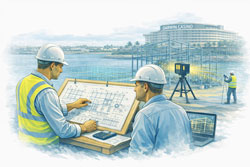
Mechanical engineer and client reviewing drawings while LiDAR scanning a site near Darwin Casino

3D Scanning Services Darwin | Industrial LiDAR for Engineering Projects

In Darwinโ€™s industrial and infrastructure sectors, accurate site data is critical before any upgrade, shutdown or retrofit project begins. Many facilities are operating with outdated drawings, undocumented modifications and congested plant layouts โ€” making traditional site measurement slow, risky and unreliable.

Engineering-grade 3D LiDAR scanning provides fast, highly accurate as-built data that engineers can rely on for design, fabrication and installation planning. At Hamilton By Design, we deliver industrial 3D scanning services in Darwin that support brownfield upgrades, shutdown works and asset documentation across mining, ports, defence and utilities.


What Is Engineering-Grade 3D Scanning?

Unlike basic surveying or photogrammetry, industrial LiDAR scanning captures millions of measurement points per second to generate a true-scale point cloud of your facility.

This allows engineers to:

  • Measure clearances accurately
  • Verify structural geometry
  • Detect clashes before fabrication
  • Design directly from real-world data

Our workflows convert point cloud data into:

  • CAD models
  • Fabrication drawings
  • BIM and coordination models
  • As-built documentation

This means scanning is not just a survey โ€” it becomes the foundation of your entire engineering workflow.


Key Industries Using 3D Scanning in Darwin

Darwin is a major hub for industrial and infrastructure projects across Northern Australia. The most common users of LiDAR scanning include:

Defence & Secure Facilities

  • Hangars, workshops and logistics buildings
  • Fuel systems and plant rooms
  • Retrofit and compliance upgrades

Scanning allows engineers to design remotely while reducing on-site access requirements and security risks.


Ports, Marine & Bulk Handling Infrastructure

  • Conveyors and transfer stations
  • Wharf structures and ship loaders
  • Upgrade planning without interrupting operations

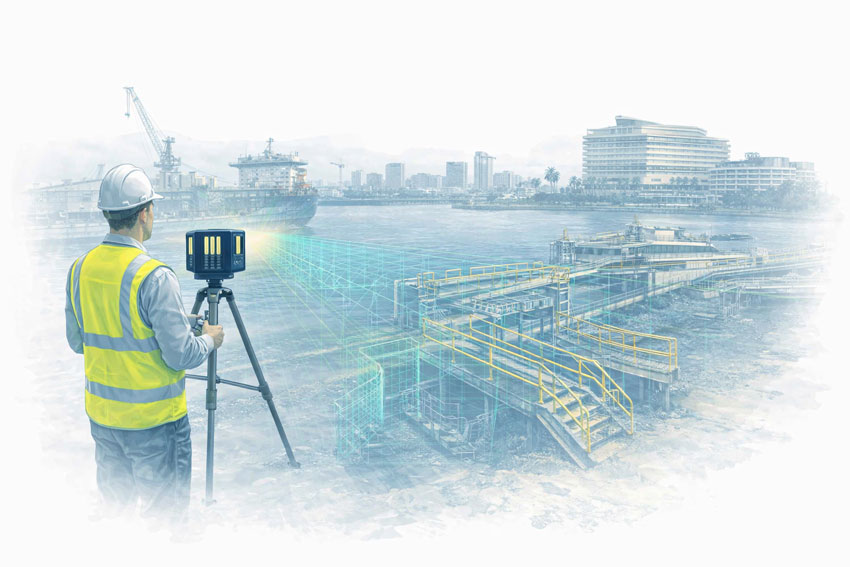
LiDAR scanning enables safe measurement of live operating assets and complex marine structures.


Mining Support & Materials Handling

While many mines are remote, engineering and fabrication is often coordinated through Darwin.

Typical applications include:

  • Transfer chute redesign
  • Conveyor upgrades
  • Structural tie-ins during shutdowns

Accurate scans reduce installation risk and minimise costly shutdown overruns.


Oil, Gas & LNG Support Facilities

  • Skid and modular plant design
  • Pipe routing and equipment replacement
  • Brownfield retrofit engineering

Scanning ensures new modules fit first time, even when original drawings are incomplete.


Government Infrastructure & Utilities

  • Water and wastewater treatment plants
  • Power generation and substations
  • Asset documentation and compliance works

As-built scanning supports long-term asset management and future upgrade planning.


Common Problems 3D Scanning Solves

Engineering teams typically engage scanning when they face:

  • Missing or inaccurate drawings
  • Congested plant layouts
  • High risk of installation clashes
  • Tight shutdown windows
  • Remote engineering coordination

By capturing the full environment, engineers can design with confidence and reduce rework during construction.


Typical Deliverables From a Darwin LiDAR Scan

Depending on your project, we can provide:

  • Registered point clouds (E57 / RCP formats)
  • 3D CAD models for design
  • Fabrication and installation drawings
  • Structural verification models
  • BIM coordination models
  • As-built documentation packages

This allows scanning data to be used directly by mechanical, structural and drafting teams.


Why Industrial Projects Choose Hamilton By Design

Hamilton By Design is an engineering-led scanning and modelling provider, not just a survey company.

Our clients value that we understand:

  • Shutdown scheduling pressures
  • Fabrication tolerances
  • Installation constraints
  • Australian Standards compliance
  • Mining and industrial safety requirements

This means the data we deliver is practical for real-world construction and maintenance projects, not just visually accurate.


When Should You Use 3D Scanning on Your Project?

3D scanning is most valuable when:

  • Modifying existing plant or structures
  • Designing replacement equipment
  • Planning shutdown installations
  • Verifying compliance or structural alignment
  • Preparing for major upgrades

Early scanning often prevents downstream engineering changes and costly site delays.


3D Scanning Services Available Across Darwin and the Top End

We support projects in:

  • Darwin industrial precincts
  • Port and marine facilities
  • Remote mining and processing sites
  • Defence infrastructure environments

Our team can mobilise scanning crews and deliver digital models suitable for immediate engineering use.


Hamilton By Design logo displayed on a blue tilted rectangle with a grey gradient background

Speak With an Engineer About Your Darwin Scanning Project

If you are planning upgrades, shutdown work or plant modifications, accurate site data is the first step toward reducing risk and improving delivery outcomes.

Contact Hamilton By Design to discuss industrial 3D scanning services in Darwin and how LiDAR data can support your engineering and fabrication workflow.
Name
Would you like us to arrange a phone consultation for you?
Address

3D Laser Scanning in Parramatta: Engineering-Grade Data for Safer Conveyor Systems and Better Risk Management

Watercolour illustration of engineers 3D laser scanning a warehouse conveyor system.

In consumer goods manufacturing, distribution centres and logistics facilities around Parramatta and Western Sydney, conveyor systems are mission-critical. Whether moving pallets, cartons, bottles, or bulk packaged goods, these systems must integrate with structural steel, mechanical equipment and building services without compromise.

Yet many existing facilities are built from legacy drawings, partial records or hand-measured surveys. This creates risk when planning upgrades, expansions or tie-ins โ€” especially where conveyors interface with mezzanines, sortation systems, robotics and utilities.

3D laser scanning provides a precise and reliable basis for understanding whatโ€™s actually on site before detailed engineering or shutdown activities begin.


Why Scan First? Engineering-Grade Reality Is the Backbone of Success

A good conveyor design solution depends on accurate understanding of:

  • where conveyors really sit in 3D space
  • how structural beams, columns and supports interact
  • exact locations of mechanical equipment
  • existing pipework, ducts and cable trays
  • access clearances for maintenance and shutdown execution

Traditional tape measures and manual field sketches are slow, error-prone and not suitable for complex conveyor networks. In contrast, 3D laser scanning captures millions of points in minutes and produces engineering-grade point clouds that reflect every surface, pipe, beam and conveyor geometry exactly as it exists.

This scan becomes the backbone of your engineering workflow โ€” a verified digital reference that informs design, reduces risk and underpins safe execution.


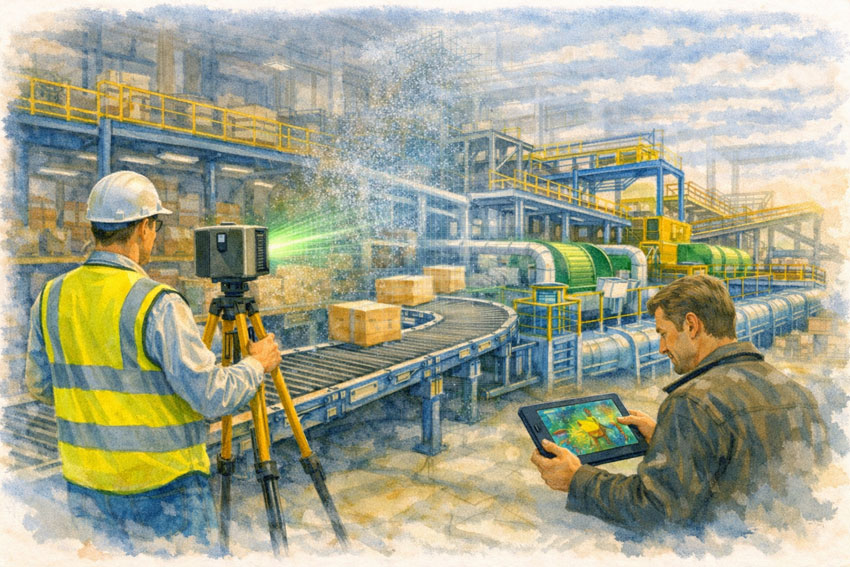
3D scanning of FMCG conveyor line shown in soft watercolour style.

From Reality Capture to Practical Engineering Outputs

A registered 3D point cloud delivers value throughout the project lifecycle. Typical deliverables include:

  • Full as-built point clouds: a complete digital record of existing conditions
  • Clash analysis models: identify conflicts between conveyors, structures and services
  • Fabrication-ready geometry: for skid frames, guards, support steel and pipe spools
  • DXF/STEP/Parasolid exports: for mechanical and structural drafting
  • Compatibility with Revit, AutoCAD, Navisworks: for design coordination

The result? Engineers spend more time solving real problems and less time correcting assumptions.


Designing for Safer Conveyor Integration

Upgrading or modifying conveyor systems in FMCG and logistics environments often involves:

  • adding sortation or scanning stations
  • rerouting belt paths to accommodate new equipment
  • expanding mezzanines or catwalks
  • integrating with automated storage and retrieval systems
  • adjusting utilities like compressed air, water or power services
  • installing guarding and safety infrastructure

Each of these tasks intersects with steelwork, services and building elements. Using 3D scan data for design coordination enables:

โœ” accurate spatial modelling
โœ” reduced field rework
โœ” clearer installation instructions
โœ” fewer late changes during shutdowns

This translates directly to lower cost, higher safety and greater schedule confidence.


Better Risk Management Through Verified Data

Conveyor upgrades and expansions are typically scheduled during short shutdown windows. Risk drivers commonly include:

  • uncertainty about existing conditions
  • interference with critical services
  • tight clearances that limit access
  • unexpected clashes on installation
  • insufficient documentation for permits or safety reviews

With scan-derived data, these risks are mitigated early. Design teams can model scenarios before fabrication, check for clashes electronically and articulate installation sequences with confidence.

This isnโ€™t just better practice โ€” itโ€™s good risk management.


As-Built Scanning for Handover Confidence

At project completion, a final 3D laser scan provides an accurate digital as-built model of the upgraded systems. This has several benefits:

  • avoids tape measure as-builts
  • records exact installation geometry
  • supports maintenance planning
  • provides a robust platform for future works
  • becomes an asset for ongoing risk assessments

The organisation receives not just installed equipment, but a verified digital twin for operations and design.


Applications Around Parramatta & Western Sydney

3D laser scanning is highly effective in these local industries:

โœ” FMCG production facilities
โœ” Beverage and food processing plants
โœ” Automated distribution centres
โœ” Parcel sortation hubs
โœ” Packaging and assembly lines
โœ” Warehouse conveyor networks
โœ” Industrial plant upgrades

Across these environments, conveyors are fundamental to throughput โ€” and accurate data is fundamental to success.


Hamilton By Design logo displayed on a blue tilted rectangle with a grey gradient background

Unlock Better Project Outcomes with 3D Scanning

A robust reality capture strategy delivers measurable improvements to:

  • safety protocols
  • design accuracy
  • fabrication efficiency
  • shutdown predictability
  • project cost control

In an industrial region like Parramatta โ€” where competitiveness depends on efficiency and certainty โ€” laser scanning is not just technology, itโ€™s a strategic engineering enabler.


Ready to Elevate Your Conveyor Project?

If youโ€™re planning a conveyor upgrade, system extension, or facility modification in the Parramatta or Western Sydney region, start with accurate reality capture.

Hamilton By Design Co. provides tailored 3D laser scanning services that support safer, more reliable, and more successful industrial outcomes.

Scan first.
Design with confidence.
Finish with a verified as-built.

Name
Would you like us to arrange a phone consultation for you?
Address