

AS 3990 – Mechanical Equipment Steelwork
Walkways, Conveyor Structures, Platforms and Gantries
Mechanical equipment steelwork is everywhere in industrial sites — conveyor structures, access walkways, maintenance platforms, gantries and support frames. Over time, these structures are modified, loaded differently, repaired, and upgraded. That’s where AS 3990 – Mechanical equipment – Steelwork becomes critical: it provides a framework for designing and verifying steelwork that supports mechanical equipment and associated access systems.
At Hamilton By Design, we help asset owners and project teams reduce risk by converting real as-built steelwork into engineering-grade digital models that can be checked, upgraded, and documented with confidence.
When AS 3990 Steelwork Becomes a Problem in the Real World
Steelwork rarely fails because it was “obviously wrong” on day one. The most common issues develop gradually due to changes in loading, upgrades, corrosion, or incomplete documentation.
Common triggers we see on site
- New conveyor drives, chutes, skirts, guards, or pull-wire systems added after commissioning
- Extra services added: cable trays, hose reels, water lines, pipework, and supports
- Walkway changes for access, maintenance, or guarding upgrades
- Localised damage from impact, vibration, or operational fatigue
- Corrosion or section loss in wash-down areas, coastal environments, or chemical exposure zones
- Legacy steelwork with missing drawings or unknown load assumptions
If you can’t prove what exists (accurately), it becomes difficult to prove compliance, fitness-for-purpose, or due diligence.
Key Engineering Risks with Walkways, Platforms, Gantries and Conveyor Structures
1) Design intent vs as-built reality
Many sites have steelwork that differs from drawings due to shutdown modifications or brownfield constraints. Small deviations in member size, connection detailing, or geometry can materially change structural performance.
2) Loads have changed — but the steelwork didn’t
A “simple” modification can add significant load: added services, heavier equipment, changed maintenance practices, or multiple personnel working in the same bay. These changes can push members or connections beyond the original assumptions.
3) Conveyor vibration and dynamic effects
Conveyor structures experience cyclic loading, start/stop effects, and vibration. Even if the structure looks acceptable, fatigue and resonance can become a long-term reliability problem — particularly around drive stations, transfer points, and cantilevered platforms.
4) Connection adequacy often governs
Field-welded brackets, modified gussets, bolt slip, corroded fasteners, and non-standard connection geometry can become the weak link. Connection performance is frequently the true limiting factor in older or heavily modified steelwork.
5) Access and safety interfaces
Walkways and platforms often sit at the intersection of multiple requirements: safe access geometry, handrails, toe-boards, gates, and guarding. If access steelwork was modified without a proper verification step, the risk becomes both structural and safety-related.
What “Verification” Looks Like in Practice
AS 3990 steelwork compliance is not just a box-tick. In a practical project environment, it means you can answer:
- What steelwork exists right now (as-built)?
- What loads and operational conditions apply today (not ten years ago)?
- Are members and connections adequate under realistic scenarios?
- What upgrades are required, and can they be fabricated to fit first time?
- Can the asset owner document compliance and risk controls for governance?
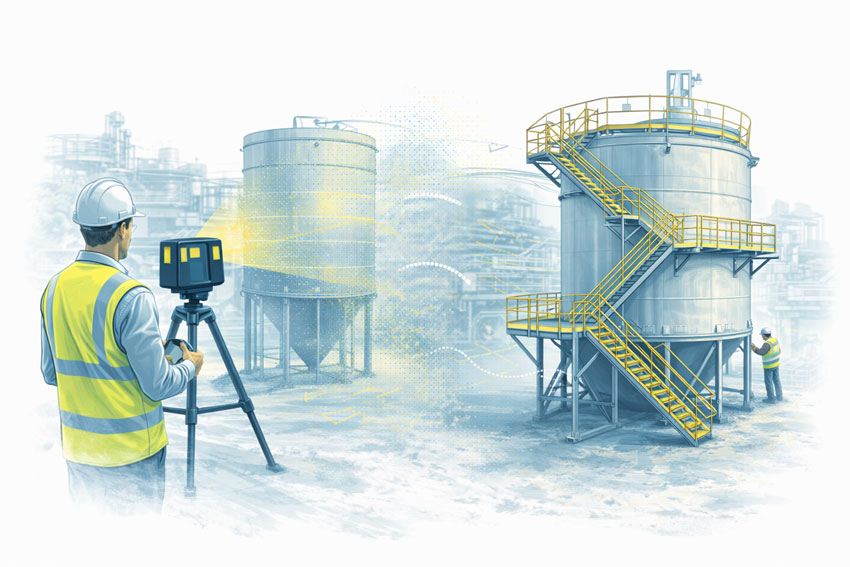
Hamilton By Design supports this process by bringing LiDAR scanning + mechanical engineering + fabrication-ready outputs together under one roof.
How Hamilton By Design Helps (Our Typical Deliverables)
1) Engineering-grade 3D LiDAR scanning of steelwork
We capture accurate geometry of:
- Walkways and access platforms
- Conveyor stringers, trestles, and transfer towers
- Gantries, monorails, and maintenance frames
- Supports, bracing, ladders, stairs, and access interfaces
Related service:
3D Laser Scanning: https://www.hamiltonbydesign.com.au/3d-laser-scanning/
2) As-built CAD model for verification and design
We convert the scan into usable engineering outputs such as:
- As-built 3D CAD models
- Key dimensions, levels, and clearances
- Interference checking and fit-up planning
- Fabrication-ready drawings for retrofit steelwork
3) Engineering checks and upgrade design
Where required, we support structural verification and upgrade design using engineering workflows suited to brownfield assets.
Related capability:
SolidWorks FEA / simulation workflows: https://www.hamiltonbydesign.com.au/home/solidworks/solidworks-fea-simulation/
Where This Matters Most (Typical Applications)
- Conveyor upgrades and transfer station modifications
- Walkway widening, new stair access, and maintenance platform additions
- Guarding upgrades, pull-wire additions, and access compliance programs
- Corrosion repairs and local strengthening
- Brownfield plant modifications with limited shutdown time
- Audit readiness and engineering documentation clean-up
If you’re working around conveyors, you may also find this relevant:
AS 1755 Conveyor Safety: https://www.hamiltonbydesign.com.au/as-1755-conveyor-safety/
And for safety leadership context:
Machine guarding lessons: https://www.hamiltonbydesign.com.au/machine-guarding-in-australia-a-decade-of-lessons-for-leaders-asset-owners-and-engineers/
Standards and Compliance Context (How AS 3990 Fits In)
AS 3990 typically sits alongside a broader compliance context depending on the asset and scope. In many industrial environments, it may interact with standards and guidance such as:
- AS 1657 (fixed platforms, walkways, stairways and ladders)
- AS 4100 (steel structures)
- AS/NZS 1170 (structural actions / loading)
- AS 1755 (conveyor safety and associated interfaces)
For official sources and governance context:
- Standards Australia: https://www.standards.org.au
- Safe Work Australia (WHS guidance): https://www.safeworkaustralia.gov.au
(Note: Always confirm the current revision and applicability of standards for your site, scope, and jurisdiction.)
Why Digital As-Built Matters for AS 3990 Steelwork
A verified as-built model reduces:
- Upgrade risk and fabrication rework
- Shutdown time lost to unexpected clashes
- Safety risks from undocumented modifications
- Compliance gaps during audits and governance reviews
It also supports “fit-first-time” fabrication because designers, engineers, and fabricators are working from the same geometry — not assumptions.
Talk to an Engineer About Your AS 3990 Steelwork
If you’re planning an upgrade, responding to an audit, or unsure whether existing walkways, platforms, gantries or conveyor structures still meet their intended duty, we can help you quickly establish a reliable baseline.
Start with scanning, modelling, and engineering verification — and build from facts.
Related service pages to explore:
- Engineering services: https://www.hamiltonbydesign.com.au/home/engineering-services/
- Mechanical engineering: https://www.hamiltonbydesign.com.au/home/mechanical-engineering-consulting/mechanical-engineering/

Our clients:
























