

Coal Plant Shutdown Engineering | Preparation for Mining & Industrial Shutdowns
Planned shutdowns are a critical part of maintaining reliability in coal handling plants, port infrastructure, and large industrial facilities. During these scheduled outages, engineers must inspect, upgrade, or replace equipment across complex mechanical systems including conveyors, transfer chutes, crushers, and structural infrastructure.
Effective coal plant shutdown engineering focuses on preparation before the shutdown begins. Accurate plant data, detailed engineering models, and well-planned maintenance activities allow shutdown teams to complete work safely and within tight time windows.
Shutdown planning is essential because many maintenance activities must be performed while equipment is offline, often under strict time constraints with multiple trades working simultaneously. Without careful planning, shutdowns can quickly become unsafe, inefficient, or costly.
Why Engineering Preparation Matters
Coal processing plants operate continuously for long periods. Over time equipment is modified, upgraded, or repaired during multiple shutdown cycles. As a result, the original plant drawings often no longer represent the true layout of the facility.
Before a shutdown begins, engineering teams must confirm:
- Existing conveyor alignments
- Transfer chute geometry
- Structural steel clearances
- Access platforms and walkways
- Equipment interfaces and installation areas
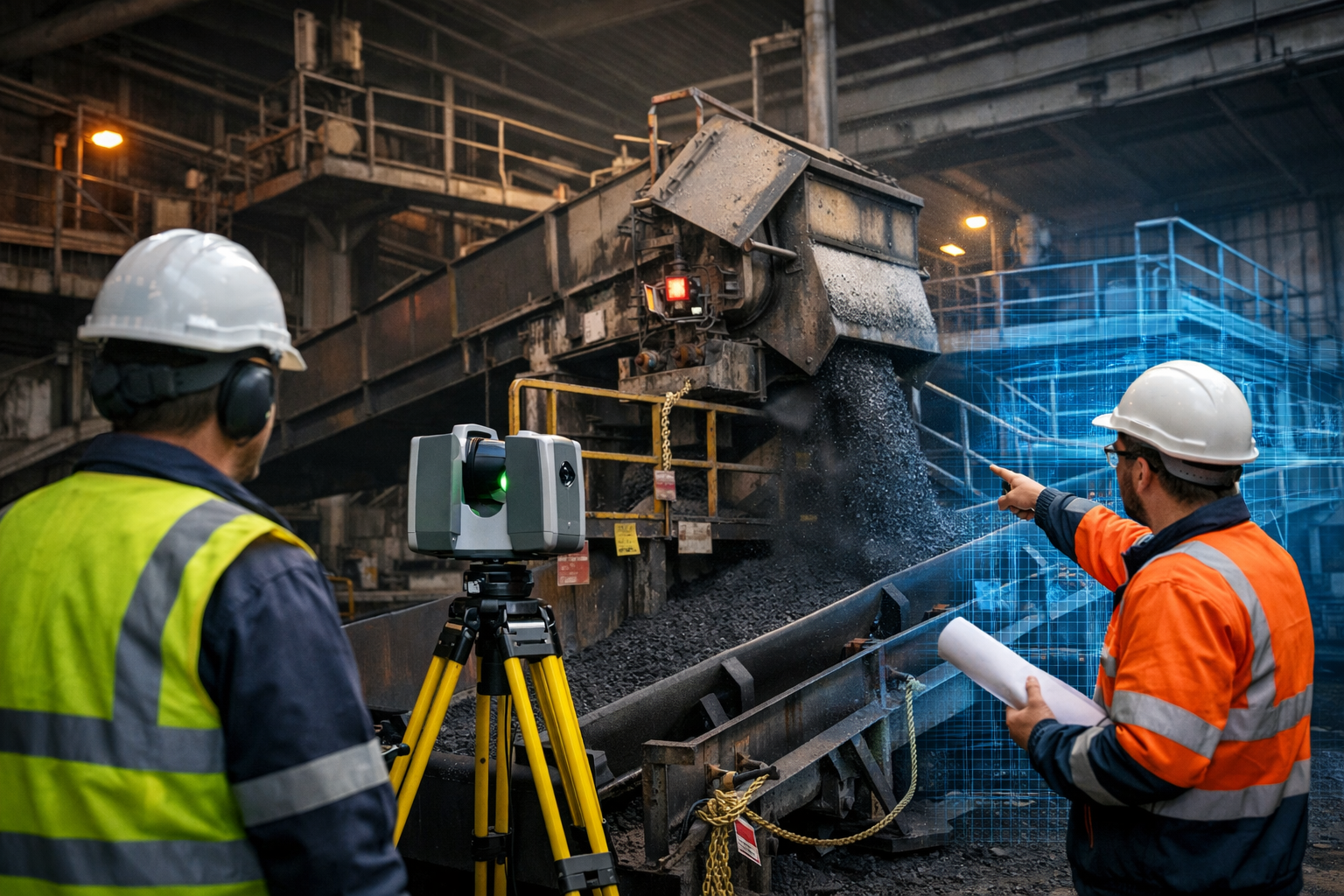
Modern engineering teams increasingly rely on laser scanning and digital modelling to capture the exact geometry of existing infrastructure. This produces a high-resolution point cloud of the plant that can be used to develop accurate engineering models before modifications begin.
These models allow engineers to validate equipment installations and reduce risk during the shutdown window.
The Role of Engineering Scanning Services
Engineering scanning services are now widely used across mining and industrial sectors to support shutdown planning.
Laser scanning technology can capture millions of measurement points across a facility, creating a detailed digital model of conveyors, chutes, structural steel and equipment installations.
Typical shutdown engineering scanning applications include:
- Coal handling plant conveyors and transfer stations
- Ship loader infrastructure at export terminals
- Port stockpile systems and stacker reclaimers
- Manufacturing production lines
- Industrial processing plants
These digital datasets can then be converted into engineering-grade CAD models, enabling detailed design work to be completed before the shutdown occurs.
This approach significantly reduces installation risk and allows fabrication work to begin before the plant outage.
For a deeper explanation of shutdown preparation workflows see:
Coal Handling Plant Infrastructure Challenges
Coal plants contain some of the most complex materials handling systems in heavy industry. Conveyors move thousands of tonnes of material per hour through crushers, screens, transfer chutes, and stockpiles.
Common shutdown engineering tasks include:
- Transfer chute redesign
- Conveyor upgrades
- Structural steel modifications
- Dust control improvements
- Maintenance access upgrades
These areas are typically congested with equipment and structural supports. Engineering teams must therefore confirm clearances and installation access before shutdown work begins.
Laser scanning and digital modelling allow engineers to identify clashes and installation constraints early in the design phase.
Learn more about mechanical engineering support for these systems:
Transfer Chute Design During Shutdowns
Transfer chutes are often a major focus of shutdown engineering work. Poorly designed chutes can cause:
- Conveyor belt wear
- Blockages and carryback
- Excessive dust generation
- Reduced throughput
Because chutes are located at conveyor transfer points, modifications must often be installed during shutdown windows when conveyors are offline.
Engineering models developed from site scans allow designers to develop improved chute geometries that optimise material flow and reduce maintenance issues.
Further design guidance can be found here:
https://www.hamiltonbydesign.com.au/coal-chute-design/
You may also find additional engineering insights in this technical article:
https://chutesandtransferstations.blogspot.com/2025/07/designing-for-durability-chutes.html
Shutdown Engineering Across Industrial Facilities
Although coal handling plants are a major focus, the same engineering preparation methods apply across many industries.
Shutdown engineering scanning is increasingly used in:
- Mining processing plants
- Bulk material handling facilities
- Manufacturing plants
- Power stations
- Port infrastructure
- Industrial processing facilities
By developing accurate digital models before shutdowns occur, engineering teams can plan work packages, confirm installation sequences, and minimise delays during the outage period.
Proper shutdown planning improves safety, reduces downtime, and helps ensure maintenance projects are completed efficiently.
The Future of Shutdown Engineering
As mining and industrial infrastructure becomes more complex, shutdown preparation is increasingly relying on digital engineering workflows.
Technologies such as:
- 3D laser scanning
- point cloud modelling
- digital twins
- engineering simulation
are transforming the way shutdowns are planned and executed.
For operators of coal plants, ports, and manufacturing facilities, investing in accurate engineering data before a shutdown begins is one of the most effective ways to reduce project risk and improve plant reliability.
