3D Scanning Engineering in Port Lincoln

3D Scanning in Port Lincoln

Port Lincoln is unlike any other regional centre in South Australia. Known as Australiaโ€™s seafood capital, it combines a working commercial harbour, marine-based industries, food processing, and export infrastructure within a tight coastal footprint. Engineering here must perform reliably in a marine environment, meet strict hygiene and biosecurity requirements, and minimise downtime in export-critical operations.

Hamilton By Design supports Port Lincoln projects with engineering-led 3D LiDAR laser scanning, 3D modelling, FEA, and easy-to-build fabrication drawings, helping clients upgrade, modify, and maintain assets with confidence.


Engineering in Port Lincoln: Marine, Food-Grade, and Export Driven

Engineering in Port Lincoln is shaped by a unique mix of conditions:

  • Saltwater corrosion and harsh coastal exposure
  • Continuous operations tied to fishing, aquaculture, and exports
  • Tight brownfield sites around wharves and processing facilities
  • High compliance expectations for hygiene, drainage, and separation

In this environment, assumptions are risky. Accurate as-built data and practical engineering solutions are essential to avoid rework, contamination risks, and unplanned downtime.


3D Laser Scanning for Port Lincoln Facilities

3D LiDAR laser scanning provides the foundation for successful engineering projects in Port Lincoln.

Hamilton By Design captures accurate as-built conditions of:

  • Seafood processing plants and cold-storage facilities
  • Port infrastructure, wharves, and marine interfaces
  • Conveyors, platforms, pipework, and structural steel
  • Buildings and plant within space-constrained coastal sites

Scanning records the true geometry of existing assets โ€” including misalignment, corrosion loss, undocumented modifications, and tight clearances โ€” all common in marine and food-processing environments.

This enables:

  • Reduced site visits
  • Safer design development
  • Fewer clashes during installation
  • Confident planning around live operations

Learn more about our scanning services:
3D Laser Scanning


3D Modelling Based on Real As-Built Data

From the point cloud, Hamilton By Design develops accurate 3D CAD models that reflect what is actually on site โ€” not what legacy drawings suggest.

Our 3D modelling services support:

  • Brownfield upgrades and plant modifications
  • Space-constrained layout changes
  • Clash detection around existing services
  • Fabrication planning and modular construction
  • Digital asset documentation

In Port Lincoln, where sites are tight and shutdown windows are limited, modelling from real data significantly reduces construction risk.

Explore our modelling capability:
3D CAD Modelling


FEA for Marine and Industrial Assets

Many Port Lincoln assets operate in corrosive, cyclic loading environments and must continue performing safely over long service lives. Finite Element Analysis (FEA) is used to verify performance and guide decision-making.

Hamilton By Design applies FEA to:

  • Assess structural capacity and fatigue
  • Check modifications to existing steelwork
  • Evaluate deflection, buckling, and load paths
  • Support life-extension and strengthening strategies

By analysing as-built geometry, FEA results are more representative of real behaviour โ€” especially important in marine and port environments.

Learn more here:
FEA Capabilities


Easy-to-Build Fabrication and Installation Drawings

Clear, practical documentation is critical for Port Lincoln projects, where fabrication and installation often occur under time pressure and around live operations.

Hamilton By Design delivers easy-to-build fabrication drawings, including:

  • General arrangement drawings
  • Fabrication and workshop details
  • Installation and lifting layouts
  • As-built documentation

Because drawings are generated directly from scanned data and validated 3D models, they align with site reality, reduce ambiguity, and support efficient construction.

View our drafting services:
Drafting Services


Hamilton By Design logo displayed on a blue tilted rectangle with a grey gradient background

Why Hamilton By Design in Port Lincoln?

Hamilton By Design offers an integrated digital engineering workflow โ€” from site capture through to modelling, analysis, and construction documentation.

For Port Lincoln clients, this means:

  • Fewer assumptions in marine and food-grade environments
  • Reduced risk in tight, brownfield sites
  • Designs that consider corrosion, hygiene, and constructability
  • Fabrication-ready drawings that support reliable installation

Whether youโ€™re upgrading seafood processing facilities, modifying port infrastructure, or maintaining marine-exposed assets, Hamilton By Design provides practical, engineering-led 3D scanning and digital engineering solutions tailored to Port Lincolnโ€™s unique conditions.

If youโ€™re planning a project in Port Lincoln, weโ€™re ready to help โ€” starting with accurate data and carrying it through to buildable outcomes.

Our Services

Name
Would you like us to arrange a phone consultation for you?

3D Scanning Engineering in Whyalla

3D Scanning in Whyalla

Whyalla is one of South Australiaโ€™s most engineering-driven regional cities. Built around steelmaking, port infrastructure, and heavy industry, it is a place where engineering is practical, site-focused, and shaped by decades of brownfield assets, modifications, and operational realities.

For engineers working in Whyalla, accuracy matters. Many assets have been upgraded, repaired, or adapted multiple times over their life, often with incomplete or outdated drawings. This is where engineering-led 3D LiDAR scanning and digital modelling become essential tools โ€” not just nice-to-have technology.

Hamilton By Design supports Whyallaโ€™s industrial, mining, port, and infrastructure sectors with 3D laser scanning, mechanical engineering, 3D modelling, FEA, and drafting, delivering data and designs that work in the real world.


Engineering Challenges Unique to Whyalla

Engineering in Whyalla is rarely greenfield. Most projects involve:

  • Existing steel structures and mechanical plant
  • Live operating environments
  • Marine corrosion and harsh conditions
  • Tight shutdown windows
  • Limited tolerance for rework

Successful projects depend on accurate as-built information, practical engineering judgement, and designs that can be fabricated and installed locally.

Hamilton By Design brings these elements together in a single workflow.


3D Laser Scanning for Whyalla Projects

High-accuracy 3D LiDAR laser scanning forms the foundation of our work in Whyalla.

Using engineering-grade scanners, we capture true as-built conditions of:

  • Steelworks and heavy industrial plant
  • Conveyors, chutes, and mechanical equipment
  • Port structures, wharves, and ship-loader interfaces
  • Buildings, platforms, and access structures

Unlike traditional surveys, 3D scanning records real geometry, including misalignment, deflection, corrosion loss, and historic modifications.

This data is used to:

  • Eliminate site rework
  • Reduce shutdown risk
  • Validate fit-ups before fabrication
  • Support safe and efficient upgrades

Learn more about our approach to
3D Laser Scanning


3D Modelling Built from Real As-Built Data

Once scanning is complete, the point cloud becomes the basis for accurate 3D CAD models.

Hamilton By Design produces SolidWorks-based models that reflect what is actually on site โ€” not what old drawings suggest should be there.

Our 3D modelling services support:

  • Brownfield mechanical upgrades
  • Structural modifications
  • Clash detection and spatial checks
  • Fabrication-ready designs
  • Asset documentation and digital twins

For Whyalla projects, this approach significantly reduces risk, especially where legacy assets and tight clearances are involved.

Explore our modelling capability here:
3D CAD Modelling


FEA for Heavy Industry and Steel Assets

Whyalla engineering often involves ageing assets that must continue operating safely under modern standards. This is where Finite Element Analysis (FEA) plays a critical role.

Hamilton By Design uses FEA to assess:

  • Structural capacity of existing steelwork
  • Fatigue and stress concentrations
  • Load changes from modifications or upgrades
  • Deflection, buckling, and thermal effects

FEA allows informed decisions about:

  • Strengthening versus replacement
  • Extending asset life
  • Verifying compliance with current requirements

All analysis is grounded in real as-built geometry, improving confidence in results and recommendations.

Learn more about our analysis services:
FEA Capabilities


Engineering Drafting That Supports Construction

Clear, accurate documentation is critical for fabrication and installation in Whyallaโ€™s industrial environment.

Hamilton By Design delivers engineering-ready drafting, including:

  • General arrangement drawings
  • Fabrication and workshop drawings
  • Installation and modification layouts
  • As-built documentation

Drafting is produced directly from scanned data and validated 3D models, ensuring drawings align with site reality.

View our drafting services here:
Drafting Services


Hamilton By Design logo displayed on a blue tilted rectangle with a grey gradient background

Why Hamilton By Design in Whyalla?

What sets Hamilton By Design apart is engineer-led scanning and modelling. We donโ€™t treat scanning as a standalone survey โ€” it is integrated directly into engineering, analysis, and drafting workflows.

For Whyalla clients, this means:

  • Fewer assumptions
  • Less rework
  • Better shutdown outcomes
  • Designs that fit and function first time

From steelworks and port infrastructure to industrial plant and buildings, Hamilton By Design supports Whyalla projects with practical, accurate, and construction-focused digital engineering.

If youโ€™re planning an upgrade, modification, or assessment in Whyalla, weโ€™re ready to help โ€” starting with the right data and carrying it through to fabrication-ready outcomes.

Our Clients

Name
Would you like us to arrange a phone consultation for you?

3D LiDAR Scanning Hunter Valley Power Stations

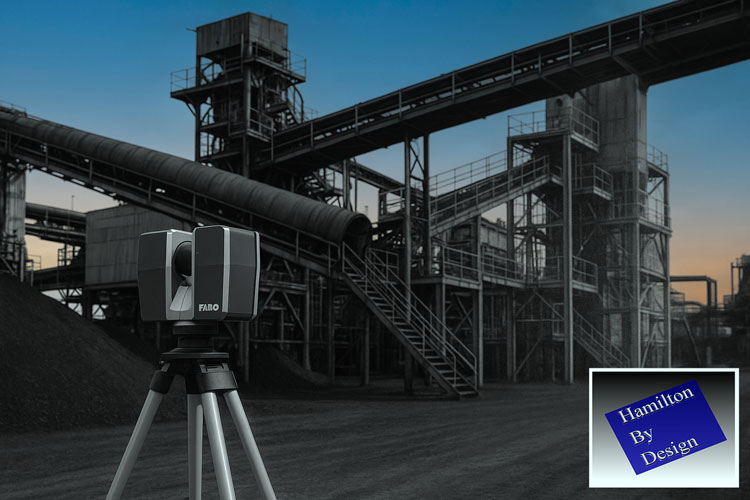
FARO 3D laser scanner set up on a tripod capturing an industrial plant for LiDAR scanning and digital modelling, with Hamilton By Design branding in the corner.

Unlocking Accuracy, Safety and Efficiency for Critical Infrastructure

The Hunter Valley is home to some of Australiaโ€™s most significant power generation assets. These power stations โ€” many of which have operated for decades โ€” supply energy to mining operations, manufacturing facilities, regional communities and industries throughout New South Wales. As these plants age and undergo continual maintenance, upgrades and redevelopment, the importance of accurate, reliable and safe measurement methods becomes increasingly critical.

Traditionally, engineers and maintenance teams have relied on manual measurements, outdated drawings or partial documentation to plan upgrades or execute shutdown work. But in complex, congested and ageing plant environments, this introduces risks, delays and expensive rework.

This is why 3D LiDAR scanning in Hunter Valley power stations has emerged as one of the most valuable tools for modern asset management, engineering and maintenance planning. LiDAR provides a millimetre-accurate digital snapshot of real-world conditions, enabling smarter, safer and more predictable project outcomes.

This article explores the benefits, applications, and pros and cons of 3D LiDAR scanning and explains why Hunter Valley power stations stand to gain significantly from adopting this technology.


Why Power Stations Need Accurate As-Built Data

Power stations are among the most complex industrial facilities in Australia. Over decades of operation, they experience:

  • Structural deformation
  • Settlement and movement
  • Corrosion and wear
  • Numerous undocumented modifications
  • Equipment realignments
  • Tight access restrictions
  • Ageing steelwork and infrastructure

In these environments, original construction drawings rarely match reality. As a result, engineers planning upgrades, shutdowns or replacements often face:

  • Inaccurate interface points
  • Misaligned structures
  • Unpredictable installation conditions
  • High rework costs
  • Safety delays
  • Poor shutdown timing

3D LiDAR scanning offers a precise, digital representation of the site, giving engineers the confidence they need to design upgrades accurately and eliminate guesswork.


The Benefits of 3D LiDAR Scanning for Hunter Valley Power Stations

1. Unmatched Measurement Accuracy for Complex Assets

A power station contains thousands of interconnected components:

  • Boilers
  • Turbines
  • Structural platforms
  • Pipe networks
  • Pressure vessels
  • Ducting systems
  • Conveyor bridges
  • Cooling towers
  • Electrical cabinets
  • Steel supports

Capturing these geometries manually is nearly impossible.

3D LiDAR scanning provides millimetre-level accuracy across enormous plant areas, allowing engineers to:

  • Create precise as-built models
  • Validate structural alignment
  • Check pipe routes and clearances
  • Identify interferences
  • Understand deformation over time
  • Design new works based on real geometry

This level of data is invaluable for maintaining safe and compliant power-generation operations.


2. Major Safety Improvements

Power stations present significant safety risks:

  • High-voltage environments
  • Confined spaces
  • Elevated platforms
  • Hot surfaces
  • Restricted access
  • Operational machinery

Manual measurement often requires workers to climb structures, enter hazardous zones or physically reach difficult areas.

3D LiDAR scanning dramatically reduces risk by:

  • Capturing data from safe distances
  • Eliminating the need for repeated access
  • Reducing time in hazardous zones
  • Minimising interaction with live equipment

For Hunter Valley power stations with strict safety requirements, this is a major benefit.


3. Reduced Shutdown Duration and Cost

Shutdowns are among the most expensive events for power-generation facilities. Every hour counts.

With 3D LiDAR scanning:

  • Engineers define accurate scopes before shutdown
  • Fabricators receive precise data and cut steel correctly
  • Digital fit checks identify issues early
  • Installation is faster and smoother
  • Delays due to bad measurements are eliminated

This leads to shorter outages, safer work and fewer unexpected problems.


4. Supports Engineering, Design and Structural Integrity Works

Power stations frequently require:

  • Boiler upgrades
  • Turbine area modifications
  • Ducting and flue replacements
  • Pipework rerouting
  • Cooling-system upgrades
  • Structural strengthening
  • Platform and walkway replacements
  • Electrical equipment relocations

All of these tasks depend on accurate geometry.

3D LiDAR scanning supports engineering teams by providing:

  • Reference geometry for load calculations
  • Verified connection points
  • True alignment data
  • Accurate slope and deflection measurements
  • High-resolution drawings and 3D models

This ensures engineering decisions are made using verified, real-world information.


5. Perfect for Brownfield and Congested Environments

Power stations are some of the most complex brownfield assets in the industrial landscape. They contain layers of modifications, years of retrofits and areas where access is extremely limited.

3D LiDAR scanning excels at capturing:

  • Tight clearances
  • Overlapping structures
  • Equipment clusters
  • Interconnected pipes
  • Hard-to-reach surfaces

This makes it ideal for planning:

  • New platforms
  • Replacement ducting
  • Pipe realignments
  • Structural upgrades
  • Asset lifecycle extensions

The result: fewer surprises during installation.


6. Better Collaboration Between Teams

Power stations typically involve:

  • Maintenance teams
  • OEMs
  • Engineering consultants
  • Fabricators
  • Shutdown managers
  • Safety personnel
  • Project delivery teams

3D LiDAR scanning enables everyone to work from the same digital truth.

Point clouds and 3D models allow:

  • Remote site understanding
  • Clear communication
  • Digital reviews instead of repeated site visits
  • Improved planning alignment

For Hunter Valley projects involving multiple contractors, this significantly boosts performance.


Pros and Cons of 3D LiDAR Scanning

Like any technology, LiDAR has strengths and limitations. Understanding both helps power station operators make informed decisions.


Pros

โœ” Extremely high accuracy

Millimetre precision for large and complex areas.

Fast data capture

Reduces time spent in hazardous areas.

Clear visibility of congested spaces

Captures geometry that traditional methods miss.

Enhances engineering confidence

Designers base work on verified conditions.

Reduces installation rework

Fabrication matches the real site exactly.

Supports digital engineering workflows

Perfect input for CAD, BIM, simulation and modelling.

Safer measurement practices

Less climbing, reaching and confined-space entry.


Cons

Requires skilled interpretation

Point cloud data must be processed by trained technicians or engineers.

Large file sizes

High-resolution scans require strong computing resources.

Reflective or transparent surfaces can create challenges

Requires technique or matte marking in some areas.

Upfront cost may seem higher

But it eliminates far greater downstream costs in rework and shutdown delays.

Despite these considerations, LiDAR scanning remains the most cost-effective measurement tool for power station environments.


Why Hunter Valley Power Stations Benefit More Than Most

The Hunter Valley industrial landscape presents unique challenges:

  • Ageing energy infrastructure
  • Multiple retrofits and undocumented modifications
  • Extremely tight maintenance windows
  • Harsh environmental conditions
  • Congested structures with difficult access
  • High safety standards
  • Heavy reliance on local fabrication accuracy

3D LiDAR scanning Hunter Valley power stations provides the one thing these facilities need most: confidence.

Confidence in measurements.
Confidence in fabrication.
Confidence during shutdowns.
Confidence in engineering decisions.
Confidence in safety performance.

Few regions stand to gain more from LiDAR than the Hunter.


Hamilton By Design: Supporting Hunter Valley Power Stations with Advanced LiDAR Solutions

Hamilton By Design brings together:

  • Engineering expertise
  • On-site scanning capability
  • CAD modelling and drafting
  • Fabrication-ready documentation
  • Digital fit-checking and clash detection
  • Mechanical and structural design experience

We understand the complex realities of power-station environments, and we deliver precise, reliable and engineering-ready digital data for:

  • Boiler upgrades
  • Turbine hall modifications
  • Structural replacements
  • Pipe rerouting
  • Platform and access upgrades
  • Ducting and flue modifications
  • Cooling tower projects
  • Balance-of-plant improvements

Every model, point cloud and drawing is produced with installation success and fabrication accuracy in mind.


Conclusion: 3D LiDAR Scanning is the New Standard for Hunter Valley Power Stations

As the Hunter Valley transitions into a future of renewable generation, asset extension and industrial redevelopment, 3D LiDAR scanning stands out as a technology that delivers real, immediate value.

It improves safety.
It increases accuracy.
It reduces rework.
It enables better engineering.
It shortens shutdowns.
It lowers project risk.

Power stations across the Hunter Valley rely on critical, ageing and highly complex infrastructure โ€” infrastructure that demands accurate, reliable digital measurement.

Hamilton By Design is proud to support the region with advanced laser scanning technologies that empower engineers, fabricators, supervisors and project managers to work smarter, safer and more efficiently.

Hamilton By Design logo displayed on a blue tilted rectangle with a grey gradient background

3D Laser Scanning

Hunter Valley Laser Scanning: Transforming Engineering Accuracy Across Mining, Manufacturing and Infrastructure

3D Laser Scanning in Singleton and the Hunter: Delivering Accuracy for Mining, Manufacturing and Industrial Projects

Laser Scanning Hunter Valley: Delivering Engineering-Grade Accuracy for Mining, Manufacturing and Industrial Projects

Our clients

Name
You would like to:

Stop Reacting โ€” Start Engineering

How Smart Mechanical Strategies Extend CHPP Life

Every coal wash plant in Australia tells the same story: constant throughput pressure, harsh operating conditions, and the never-ending battle against wear, corrosion, and unplanned downtime. The reality is simple โ€” if you donโ€™t engineer for reliability, youโ€™ll spend your time repairing failure.

At Hamilton By Design, we specialise in mechanical engineering, 3D scanning, and digital modelling for coal handling and preparation plants (CHPPs). Our goal is to help site teams transition from reactive maintenance to a precision, data-driven strategy that keeps production steady and predictable.

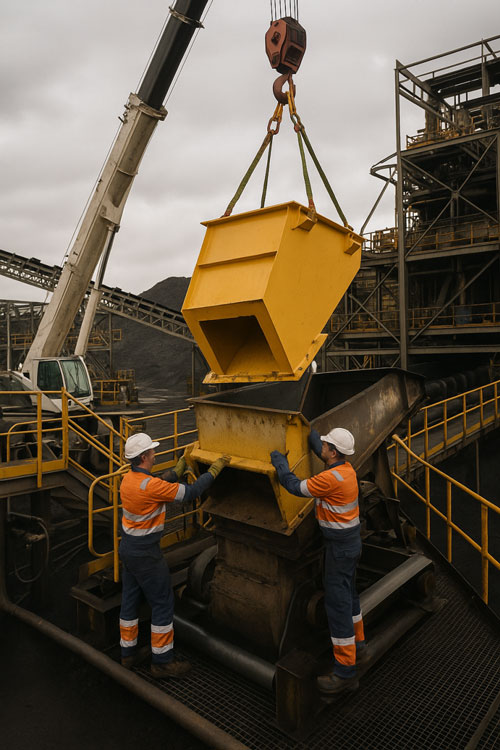
Workers guiding a crane-lifted yellow chute into position at a coal handling and preparation plant, with conveyor infrastructure and safety equipment visible on site

Design for Reliability โ€” Not Reaction

Reliability begins with smart mechanical design. Poor geometry, limited access, and undersized components lead to fatigue and repeated downtime. Instead, modern CHPP maintenance programs start by engineering for fit, lift, and life:

  • Fit: Design components that align with the existing structure โ€” every bolt, flange, and mating face verified digitally before fabrication.
  • Lift: Incorporate certified lifting points that comply with AS 4991 Lifting Devices, and ensure clear access paths for cranes or chain blocks.
  • Life: Select wear materials suited to the physics of the process โ€” quenched and tempered steel for impact, rubber or ceramic for abrasion, and UHMWPE for slurry lines.

Itโ€™s not just about parts; itโ€™s about engineering foresight. A well-designed plant component is safer to install, easier to inspect, and lasts longer between shutdowns.


Scan What You See โ€” Not What You Think You Have

Over time, every wash plant drifts from its original drawings. Field welds, retrofits, and corrosion mean that โ€œas-builtโ€ and โ€œas-existsโ€ are rarely the same thing.

Thatโ€™s where LiDAR scanning transforms maintenance. Using sub-millimetre accuracy, 3D laser scans capture your plant exactly as it stands โ€” every pipe spool, every chute, every bolt hole.

With this data, our engineers can:

  • Overlay new models directly into your point cloud to confirm fit-up before fabrication.
  • Identify alignment errors, corrosion zones, and clearance conflicts before shutdowns.
  • Generate true digital twins that allow for predictive maintenance and simulation.

LiDAR scanning isnโ€™t just a measurement tool; itโ€™s an insurance policy against rework and lost production.

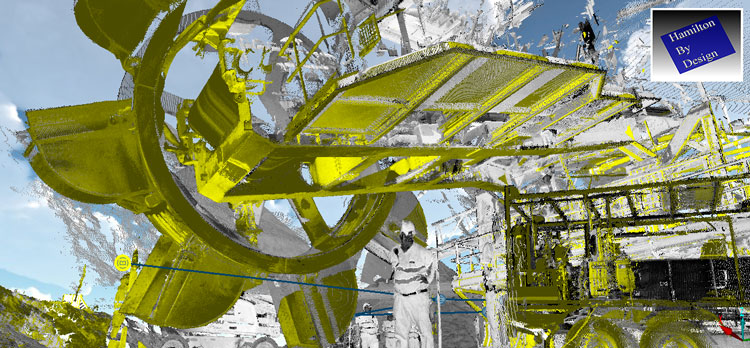
3D LiDAR point cloud of a CHPP plant showing detailed structural geometry, equipment, platforms, and personnel captured during an industrial site scan for engineering and upgrade planning.

Corrosion: The Hidden Killer in Every CHPP

Coal and water donโ€™t just move material โ€” they create acidic environments that eat through untreated or aging steel. In sumps, launders, and under conveyors, corrosion silently compromises strength until a structure is no longer safe to walk on.

Regular inspections are the first line of defence. At Hamilton By Design, we recommend combining:

  • Daily visual checks by operators for surface rust and coating damage.
  • Thickness testing during shutdowns to track wall loss on chutes and pipes.
  • 3D scan comparisons every 6โ€“12 months to quantify deformation and corrosion in critical structures.

With modern tools, you can see corrosion coming long before it becomes a failure.


From Data to Decision: Predictive Maintenance in Action

A coal wash plant produces a river of data โ€” motor loads, vibration levels, pump pressures, liner thickness, and flow rates. The key is turning that data into insight.

By integrating scanning results, maintenance records, and sensor data, plant teams can identify trends that point to future breakdowns. For example:

  • Vibration trending can reveal bearing fatigue weeks before failure.
  • Load monitoring can detect screen blinding or misalignment.
  • Scan data overlays can show sagging supports or displaced chutes.

When you understand what your plant is telling you, you move from reacting to problems to predicting and preventing them.


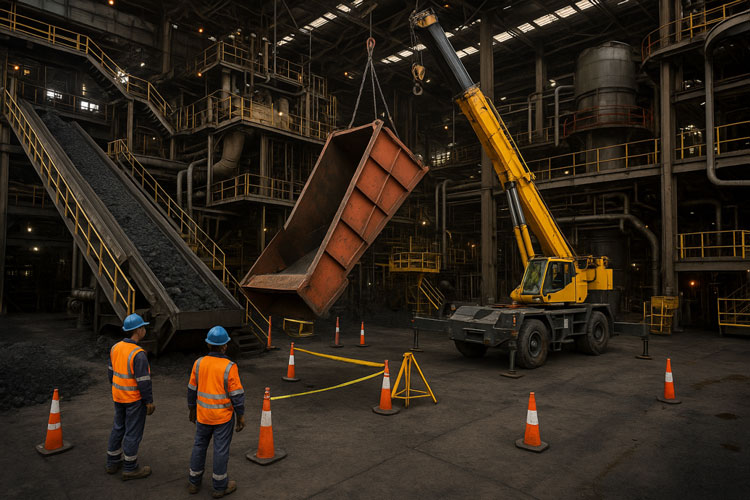
Industrial shutdown scene showing workers monitoring a mobile crane lifting a large steel chute inside a coal processing plant, with safety cones and exclusion zones in place

Shutdowns: Planned, Precise, and Productive

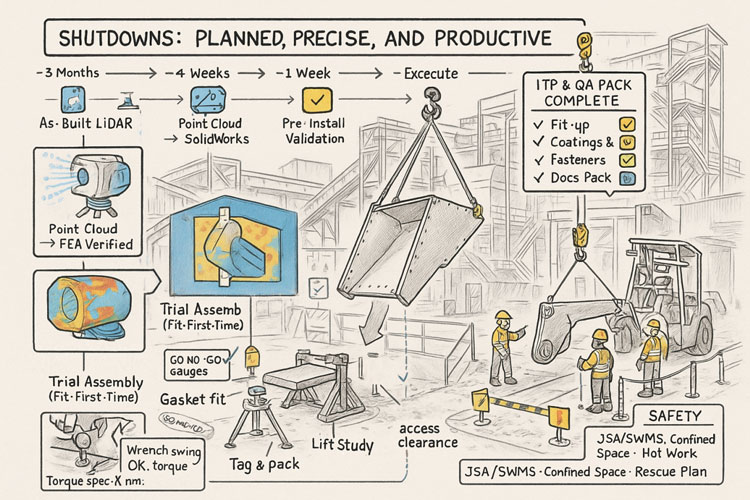
Every shutdown costs money โ€” the real goal is to make every hour count. The best shutdowns start months ahead with validated design data and prefabrication QA.

Before you cut steel or mobilise cranes, every component should be digitally proven to fit. Trial assemblies, lifting studies, and bolt access checks prevent costly surprises once youโ€™re on the clock.

At Hamilton By Design, our process combines:

  • LiDAR scanning to confirm as-built geometry.
  • SolidWorks modelling and FEA for mechanical verification.
  • Pre-installation validation to ensure bolt holes, flanges, and lift paths align on day one.

Thatโ€™s how you replace chutes, spools, and launders in a fraction of the usual time โ€” safely, and with confidence.

Hand-drawn infographic showing the shutdown workflow from LiDAR scanning and FEA verification through SolidWorks modelling, pre-install validation, trial assembly, lift study, and execution, including ITP and QA checks, safety steps, and onsite installation activities

The Payoff: Reliability You Can Measure

The plants that invest in engineering-led maintenance see results that are tangible and repeatable:

Improvement AreaTypical Gain
Reduced unplanned downtime30โ€“40%
Increased liner lifespan25โ€“50%
Shorter shutdown duration10โ€“20%
Fewer fit-up issues and rework60โ€“80%
Improved safety performance20โ€“30%

Reliability isnโ€™t luck โ€” itโ€™s engineered.


Your Next Step: A Confidential Mechanical Assessment

Whether your plant is in the Bowen Basin, Hunter Valley, or Central West NSW, our team can deliver a confidential mechanical and scanning assessment of your wash plant.

Weโ€™ll benchmark your current maintenance strategy, identify high-risk areas, and provide a clear roadmap toward predictive, engineered reliability.

๐Ÿ“ฉ For a confidential assessment of your current wash plant, contact:
info@hamiltonbydesign.com.au

Stop reacting. Start engineering. Build reliability that lasts.

Hamilton By Design Logo

Mechanical Engineering | Structural Engineering

Mechanical Drafting | Structural Drafting

3D CAD Modelling | 3D Scanning

Chute Design

Chute Design in the Mining Industry

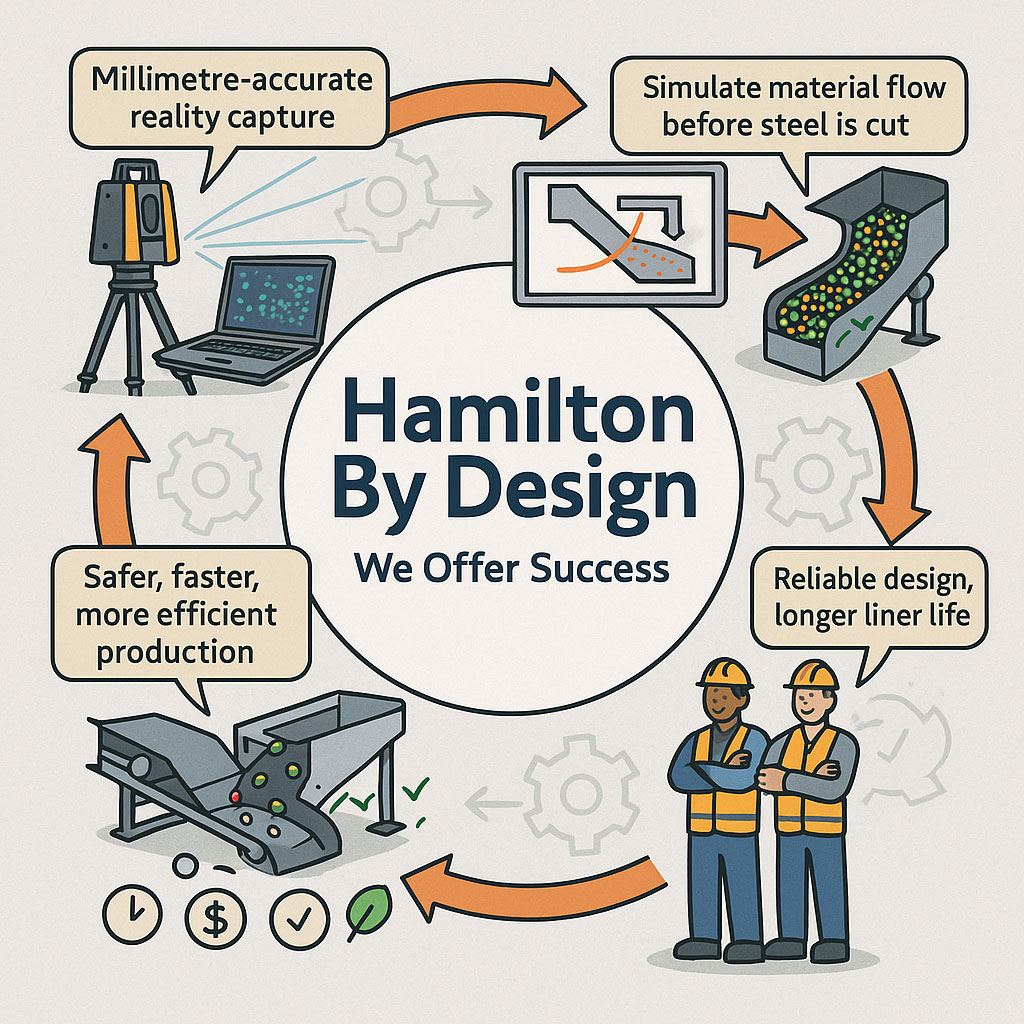
Infographic showing Hamilton By Designโ€™s engineering workflow, including millimetre-accurate LiDAR reality capture, material-flow simulation, optimised chute designs, and safer, more efficient production outcomes. Two workers in PPE highlight reliable design and longer liner life, with icons representing time, cost and quality benefits.

Getting Coal, Hard Rock, and ROM Material Flow Right

Chute design is one of the most critical yet challenging aspects of mining and mineral processing. Whether you are handling coal, hard rock ore, or raw ROM material, chutes and transfer stations are the unsung workhorses of every operation. When designed well, they guide material smoothly, minimise wear, and keep conveyors running. When designed poorly, they cause blockages, spillage, excessive dust, and expensive downtime.

Modern chute design has moved far beyond rules of thumb and back-of-the-envelope sketches. Today, successful projects rely on accurate as-built data, particle trajectory analysis, and advanced Discrete Element Method (DEM) simulation to predict, visualise, and optimise material flow before steel is cut. In this article, we explore why these tools have become essential, how they work together, and where software can โ€” and cannot โ€” replace engineering judgement.


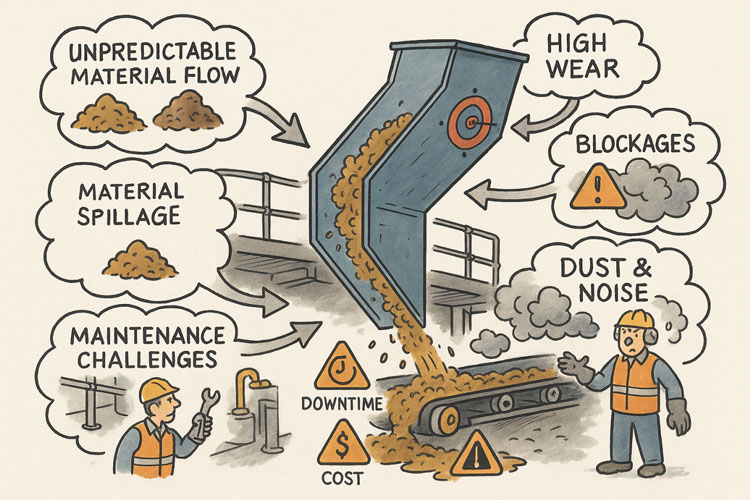
Illustration showing common problems with poorly designed material-handling chutes. A chute discharges material onto a conveyor while issues are highlighted around it: unpredictable material flow, material spillage, maintenance challenges, high wear, blockages, and dust and noise. Warning icons for downtime and cost appear on the conveyor, and workers are shown dealing with the resulting hazards and maintenance tasks.

The Challenge of Chute Design

Coal and hard rock have very different flow behaviours. Coal tends to be softer, generate more dust, and be prone to degradation, while hard rock is more abrasive and can damage chutes if impact angles are not controlled. ROM material adds another level of complexity โ€” oversize lumps, fines, and moisture variation can cause hang-ups or uneven flow.

Chute design must balance several competing objectives:

  • Control the trajectory of incoming material to reduce impact and wear
  • Prevent blockages by maintaining flowability, even with wet or sticky ore
  • Manage dust and noise to meet environmental and workplace health requirements
  • Fit within existing plant space with minimal modification to conveyors and structures
  • Be maintainable โ€” liners must be accessible and replaceable without excessive downtime

Meeting all these goals without accurate data and simulation is like trying to design in the dark.


Illustrated graphic showing a tripod-mounted 3D laser scanner capturing millimetre-accurate as-built data in an industrial plant with conveyors and walkways. Speech bubbles highlight issues such as โ€œOutdated drawings donโ€™t tell the full storyโ€ and โ€œModifications rarely get documented.โ€ The scan data is shown being visualised on a laptop, with notes describing full coverage of conveyors, walkways, and services. Benefits listed along the bottom include faster data collection, fewer site revisits, safer shutdowns, accurate starting point for design simulation, and safer outcomes that ensure designs fit first time.

Capturing the Truth with 3D Scanning

The first step in any successful chute project is to understand the as-built environment. In many operations, drawings are outdated, modifications have been made over the years, and the real plant geometry may differ from what is on paper. Manual measurement is slow, risky, and often incomplete.

This is where 3D laser scanning changes the game. Using tripod-mounted or mobile LiDAR scanners, engineers can capture the entire transfer station, conveyors, surrounding steelwork, and services in a matter of hours. The result is a dense point cloud with millimetre accuracy that reflects the true state of the plant.

From here, the point cloud is cleaned and converted into a 3D model. This ensures the new chute design will not clash with existing structures, and that all clearances are known. It also allows maintenance teams to plan safe access for liner change-outs and other work, as the scanned model can be navigated virtually to check reach and access envelopes.


Understanding Particle Trajectory

Once the physical environment is known, the next challenge is to understand the particle trajectory โ€” the path that material takes as it leaves the head pulley or previous transfer point.

Trajectory depends on belt speed, material characteristics, and discharge angle. For coal, fine particles may spread wider than the coarse fraction, while for ROM ore, large lumps may follow a ballistic path that needs to be controlled to prevent impact damage.

Accurately modelling trajectory ensures that the material enters the chute in the right location and direction. This minimises impact forces, reducing wear on liners and avoiding the โ€œsplashโ€ that creates spillage and dust. It also prevents the material from hitting obstructions or dead zones that could lead to build-up and blockages.

Modern software can plot the trajectory curve for different loading conditions, providing a starting point for chute geometry. This is a critical step โ€” if the trajectory is wrong, the chute design will be fighting against the natural path of the material.


The Power of DEM Simulation

While trajectory gives a first approximation, real-world flow is far more complex. This is where Discrete Element Method (DEM) simulation comes into play. DEM models represent bulk material as thousands (or millions) of individual particles, each following the laws of motion and interacting with one another.

When a DEM simulation is run on a chute design:

  • You can visualise material flow in 3D, watching how particles accelerate, collide, and settle
  • Impact zones become clear, showing where liners will wear fastest
  • Areas of turbulence, dust generation, or segregation are identified
  • Build-up points and potential blockages are predicted

This allows engineers to experiment with chute geometry before fabrication. Angles can be changed, ledges removed, and flow-aiding features like hood and spoon profiles or rock-boxes optimised to achieve smooth, controlled flow.

For coal, DEM can help ensure material lands gently on the receiving belt, reducing degradation and dust. For hard rock, it can ensure that the energy of impact is directed onto replaceable wear liners rather than structural plate. For ROM ore, it can help prevent oversize lumps from wedging in critical locations.


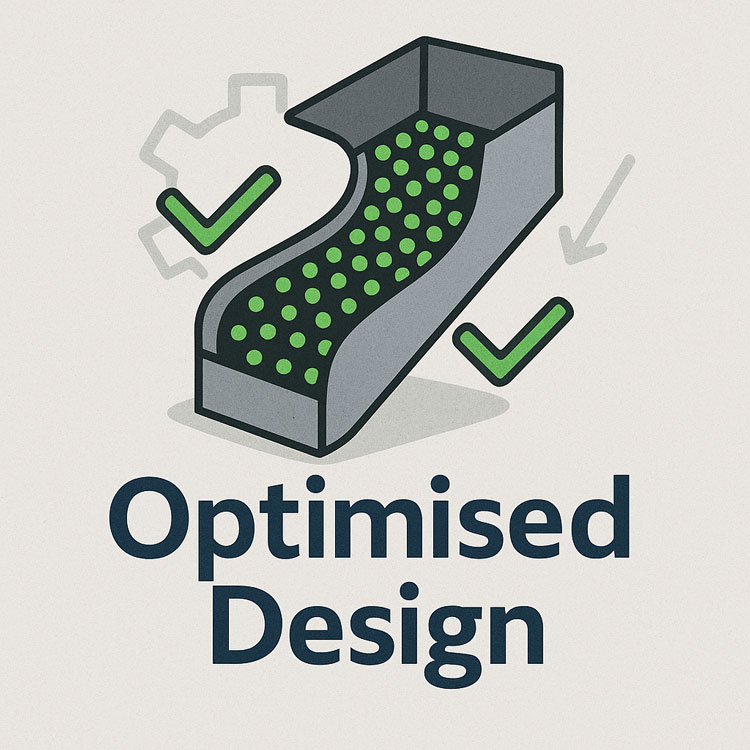
Illustration of an optimised chute design showing material flow represented by green particles, with check marks and gear icons indicating improved efficiency and engineered performance.

๐Ÿ–ฅ Strengths and Limitations of Software

Modern DEM packages are powerful, but they are not magic. Software such as EDEM, Rocky DEM, or Altairโ€™s tools can simulate a wide range of materials and geometries, but they rely on good input data and skilled interpretation.

Key strengths include:

  • Ability to model complex, 3D geometries and particle interactions
  • High visualisation power for communicating designs to stakeholders
  • Capability to run multiple scenarios (different feed rates, moisture contents, ore types) quickly

However, there are limitations:

  • Material calibration is critical. If the particle shape, friction, and cohesion parameters are wrong, the results will not match reality.
  • Computational cost can be high โ€” detailed simulations of large chutes with millions of particles may take hours or days to run.
  • Engineering judgement is still needed. Software will not tell you the โ€œbestโ€ design โ€” it will only show how a proposed design behaves under given conditions.

Thatโ€™s why DEM is best used as part of a holistic workflow that includes field data, trajectory analysis, and experienced design review.


From Model to Real-World Results

When the simulation results are validated and optimised, the design can be finalised. The point cloud model ensures the chute will fit in the available space, and the DEM results give confidence that it will perform as intended.

This means fabrication can proceed with fewer changes and less risk. During shutdown, installation goes smoothly, because clashes have already been resolved in the digital model. Once commissioned, the chute delivers predictable flow, less spillage, and longer liner life.


Why It Matters More Than Ever

Todayโ€™s mining operations face tighter production schedules, stricter environmental compliance, and increasing cost pressures. Downtime is expensive, and the margin for error is shrinking.

By combining 3D scanning, trajectory modelling, and DEM simulation, operations can move from reactive problem-solving to proactive improvement. Instead of waiting for blockages or failures, they can design out the problems before they occur, saving both time and money.


Partnering for Success

At Hamilton by Design, we specialise in turning raw site data into actionable insights. Our team uses advanced 3D scanning to capture your transfer stations with precision, builds accurate point clouds and CAD models, and runs calibrated DEM simulations to ensure your new chute design performs from day one.

Whether youโ€™re working with coal, hard rock, or ROM ore, we help you deliver designs that fit first time, reduce maintenance headaches, and keep production running.

Contact us today to see how our integrated scanning and simulation workflow can make your next chute project safer, faster, and more reliable.

Mechanical Engineering | Structural Engineering

Mechanical Drafting | Structural Drafting

3D Laser Scanning | 3D CAD Modelling | 3D Scanning

Chute Design

SolidWorks Contractors in Australia

Hamilton By Design โ€“ Blog

Consulting Engineers

About Us โ€“ Hamilton By Design

Hamilton By Design | 3D Scanning | Sydney | Perth | Brisbane | Mount Isa | Lidar Scanning

Contact us

Enhancing Plant Efficiency with Best Maintenance Practices: A White Paper by Hamilton By Design

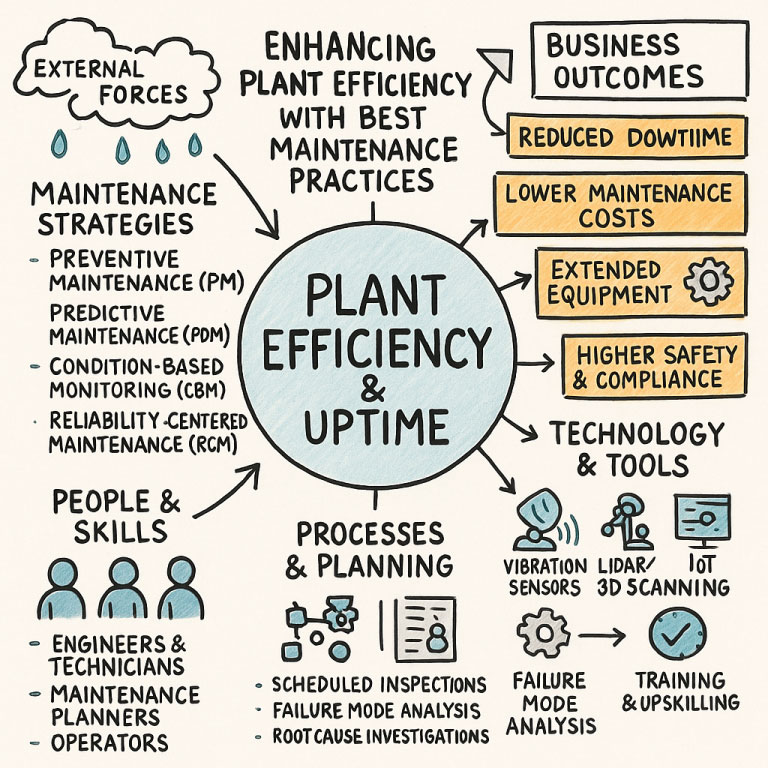
Hand-drawn infographic titled โ€œPlant Efficiency & Uptime,โ€ showing the key elements that enhance plant performance. Surrounding the central circle are categories including maintenance strategies (PM, PDM, CBM, RCM), people and skills (engineers, technicians, planners, operators), processes and planning (inspections, failure mode analysis, root-cause investigations), and technology and tools (vibration sensors, LiDAR/3D scanning, IoT, training). Benefits highlighted include reduced downtime, lower maintenance costs, extended equipment life, and higher safety and compliance.

ย 

In todayโ€™s competitive industrial landscape, maintaining high levels of Overall Equipment Effectiveness (OEE) is a cornerstone of operational success. Achieving this requires adopting advanced maintenance practices that minimize downtime, reduce operational costs, and extend the lifecycle of critical assets.

This white paper outlines best maintenance practices aligned with the ISO 18436.2 standard and highlights how Hamilton By Design’s team of mechanical engineers can partner with your organization to enhance your plantโ€™s OEE. By leveraging our expertise in condition-based and predictive maintenance, we can optimize equipment performance and drive measurable improvements in productivity and reliability.

The Role of Maintenance in Maximizing OEE

OEE is a comprehensive measure of manufacturing productivity, defined by three critical components:

  1. Availability: Minimizing downtime to maximize operational hours.
  2. Performance: Ensuring equipment runs at optimal speeds.
  3. Quality: Reducing defects and waste during production.

Maintenance strategies are key to influencing these factors. Moving beyond reactive approaches to predictive and condition-based maintenance can significantly enhance equipment reliability and efficiency, ensuring better alignment with OEE goals.


Adopting Best Maintenance Practices

Condition-Based Maintenance (CBM)

CBM involves monitoring the real-time condition of equipment to predict and prevent failures. At Hamilton By Design, we integrate cutting-edge technologies like vibration analysis, thermography, and ultrasonic testing to enable proactive interventions before problems escalate.

How CBM Enhances OEE:
  • Reduces unplanned downtime (Availability).
  • Maintains consistent performance by addressing issues early (Performance).
  • Prevents production disruptions that cause defects (Quality).

Predictive Maintenance (PdM)

Predictive maintenance leverages data analytics to anticipate potential failures. By applying ISO 18436.2-certified practices, we implement advanced diagnostic tools and algorithms to forecast maintenance needs with precision.

Our Approach:
  • Deploy vibration analysis tools managed by certified Level II and III analysts.
  • Use infrared thermography to detect heat anomalies in electrical and mechanical systems.
  • Employ ultrasonic testing to identify leaks and structural weaknesses.
Benefits for OEE:
  • Prolonged equipment lifespan by addressing issues at their inception.
  • Higher productivity with fewer interruptions.
  • Reduced maintenance costs through targeted interventions.

Reliability-Centered Maintenance (RCM)

RCM focuses on optimizing maintenance strategies for each asset, emphasizing a deep understanding of failure modes and effects. Our engineers employ RCM to prioritize maintenance tasks that align with your plant’s specific OEE goals.

Steps We Implement:
  1. Asset Function Analysis: Understanding the purpose and criticality of each asset.
  2. Failure Mode and Effects Analysis (FMEA): Identifying risks and developing mitigation strategies.
  3. Data-Driven Decision Making: Using condition monitoring data to guide maintenance schedules.
Impact on OEE:
  • Ensures maintenance is aligned with production priorities.
  • Reduces waste and rework caused by unexpected equipment malfunctions.

Leveraging ISO 18436.2 Standards

ISO 18436.2 defines the competencies required for condition monitoring personnel, ensuring a standardized approach to predictive maintenance. Hamilton By Designโ€™s mechanical engineers are certified under this standard, offering expertise in:

  • Vibration analysis for detecting unbalance, misalignment, and bearing faults.
  • Developing and managing comprehensive condition monitoring programs.
  • Interpreting and analyzing complex diagnostic data for actionable insights.

How Hamilton By Design Can Assist

Customized Maintenance Solutions

We recognize that every plant has unique operational challenges. Hamilton By Design tailors maintenance strategies to your specific needs, focusing on:

  • Asset Criticality Assessment: Identifying and prioritizing key equipment for monitoring and intervention.
  • Technology Integration: Implementing IoT-enabled sensors, data platforms, and diagnostic tools.
  • Program Development: Designing maintenance schedules aligned with production cycles and OEE targets.

Expert Training and Certification

Our team provides in-depth training for your personnel, ensuring they gain ISO 18436.2 certification and the skills to sustain advanced maintenance programs.

Ongoing Support and Continuous Improvement

Maintenance isnโ€™t static. Hamilton By Design offers ongoing support to refine your maintenance practices, ensuring your plant stays ahead of evolving operational demands.


Case Study: Improving OEE with Hamilton By Design

Challenge: A manufacturing plant experienced frequent equipment failures, leading to a 15% drop in OEE.

Solution: Hamilton By Design implemented a tailored predictive maintenance program:

  • Installed vibration sensors on critical rotating machinery.
  • Trained plant engineers to monitor and analyze data using ISO 18436.2 standards.
  • Provided ongoing diagnostics and recommendations.

Outcome:

  • Downtime was reduced by 40%, significantly improving availability.
  • Equipment performance stabilized, enhancing productivity.
  • Defects decreased by 25%, improving product quality.

Maximizing OEE requires a strategic approach to maintenance that integrates advanced tools, skilled personnel, and data-driven insights. Hamilton By Design’s mechanical engineers, certified under ISO 18436.2, are uniquely equipped to help your plant achieve these goals.

By partnering with us, you can transform your maintenance practices, boost operational efficiency, and secure a competitive edge in your industry. Let Hamilton By Design help you take the first step toward a more reliable and productive future.

WorkTrek โ€“ 8 Ways to Improve Your Plant Maintenance
Practical tips for improving maintenance processes, reducing downtime, and boosting productivity.
https://worktrek.com/blog/how-to-improve-plant-maintenance/

Petrochem Expert โ€“ Best Practices for Plant Maintenance
Explores how proper maintenance planning ensures efficiency, reliability, and safety in plant operations.
https://petrochemexpert.com/best-practices-for-plant-maintenance-ensuring-operational-efficiency-and-safety/

MaintBoard โ€“ Maintenance Planning Strategies
Highlights how scheduling, IoT tools, and predictive approaches improve plant reliability and uptime.
https://maintboard.com/maintenance-planning-strategies

Hamilton By Design โ€“ Mechanical Engineering for Mining & Industry
Showcases engineering solutions designed to reduce downtime, improve reliability, and optimize plant performance.
https://www.hamiltonbydesign.com.au/mechanical-engineering-mining-industry-australia/

Hamilton By Design โ€“ Drafting & LiDAR / Scanning Services
Describes how accurate scanning and drafting streamline retrofits, reducing errors and saving time during plant upgrades.
https://www.hamiltonbydesign.com.au/services-drafting-lidar-scanning/

Hamilton By Design โ€“ Blog: Maximising Uptime at Transfer Points
Focuses on optimising chutes, hoppers, and conveyors to minimise stoppages and keep production flowing.
https://www.hamiltonbydesign.com.au/blog-engineering-insights/

Mechanical Designers

Mechanical Engineers Design

3D Mechanical Engineering

Mechanical Engineering Consultants

3D Laser Scanning