Mechanical Engineering | 3D Scanning | 3D Modelling
Category: Engineering Consulting Services
Engineering Consulting Services
Engineering Consulting Services focuses on independent engineering advice and problem-solving that helps projects move forward with clarity and confidence.
This category covers consulting activities such as technical assessments, design reviews, feasibility input, risk identification, constructability advice, and engineering judgement applied to complex or uncertain situations. Rather than producing drawings alone, engineering consulting is about guiding decisions, validating assumptions, and helping clients understand their options before committing to cost or construction.
Articles explore how engineering consulting supports asset owners, project managers, and contractors across power, manufacturing, mining, and building & construction projects—particularly in brownfield, live, or constrained environments where experience and judgement matter.
Content is written for decision-makers who need clear, practical engineering advice, not generic theory, and who value defensible recommendations based on real-world engineering experience.
Discover how mechanical engineering, government funding, and digital innovation are driving the future of mining in Australia. Learn how Hamilton By Design leads the change.
Australia’s mining industry is undergoing one of its most significant transformations in decades. At the heart of this change lies the convergence of mechanical engineering innovation, government-backed funding, and cutting-edge technology.
With over $750 million in federal support for metals manufacturing and state-based funding for METS innovation, mechanical engineers are now in a position to redefine how mining operations are designed, maintained, and optimised.
At Hamilton By Design, we are helping clients across the country harness these changes—offering smart mechanical solutions that are efficient, resilient, and future-ready.
Key Opportunities: How Technology is Reshaping Mechanical Engineering in Mining
1. Government Funding is Fueling Innovation
In March 2025, the Australian Government announced a $750 million investment to boost advanced manufacturing and metals production in Australia.
Local manufacturing partnerships to reduce supply chain risk
At Hamilton By Design, we are already supporting mining clients to align their capital projects with these funding pathways.
2. Digital Tools Enhance Mechanical Performance
According to the CSIRO METS Roadmap, digitalisation and automation are critical for the next phase of mining growth.
We implement:
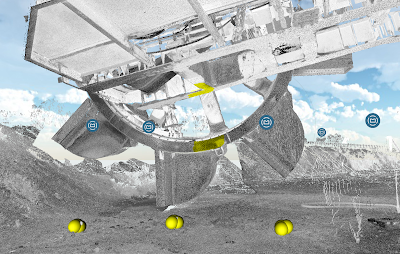
LiDAR scanning for as-built plant modelling
Finite Element Analysis (FEA) for structural design optimisation
Predictive maintenance planning using real-time sensor data
These tools not only extend the life of critical components but also enhance safety, reduce downtime, and support remote operations.
3. WA and NSW Governments Are Supporting METS Innovation
The Western Australian government continues to support Mining Equipment, Technology and Services (METS) innovation and commercialisation through its METS Innovation Grants.
This creates opportunities for mechanical engineering firms to:
Collaborate with OEMs and fabricators
Introduce novel materials and designs for harsh mining environments
Lead the push toward zero-emissions equipment and sustainable design
Hamilton By Design’s agile project delivery and deep mechanical experience allow us to integrate seamlessly with these innovation pipelines.
The Challenges: Bridging the Gap Between Legacy and Future
Despite the exciting momentum, the sector also faces critical challenges:
Skills Gaps: Many engineers are not yet equipped with digital or automation skills.
System Complexity: Mechanical systems are increasingly integrated with electrical and digital subsystems, requiring multidisciplinary design thinking.
Capital Risk: Large investments in automation must deliver measurable value, which requires robust mechanical frameworks.
Hamilton By Design addresses these risks by offering not only high-quality design services, but also strategy, planning, and training support to ensure seamless project delivery.
Why Hamilton By Design is Your Engineering Partner of the Future
We work with clients across NSW, WA, QLD, and SA, offering nationwide support for design, development, and delivery.
Let’s Engineer the Future Together
Mechanical engineering is no longer just about function—it’s about intelligence, adaptability, and sustainability.
At Hamilton By Design, we help mining companies, fabricators, and OEMs thrive in this new landscape. Whether you’re applying for funding, upgrading equipment, or redesigning your processing infrastructure, we have the tools, experience, and innovation to lead you forward.
Why Both Matter in Mechanical and Structural Engineering
In the fast-paced and high-stakes environment of the Australian mining industry, reliable engineering design isn’t just a competitive advantage — it’s a necessity. Across regions like the Pilbara, Kalgoorlie, the Hunter Valley, Bowen Basin, and Mount Isa, mining operations depend on complex mechanical systems that must perform under extreme loads, harsh conditions, and round-the-clock operation.
To ensure safety, reliability, and performance, mining engineers increasingly rely on advanced simulation tools like Rigid Body Dynamics (RBD) and Transient Structural Analysis (TSA). While these tools might appear similar, they serve fundamentally different purposes in mechanical and structural engineering. Using the right tool at the right time can dramatically reduce downtime, improve equipment longevity, and lower operating costs.
At Hamilton By Design, we bring the latest in engineering simulation and scanning technology directly to your mining operation — wherever you are in Australia. Whether you’re operating in the iron-rich Pilbara, the gold-rich Kalgoorlie, or deep in Mount Isa’s underground hard rock mines, we deliver world-class engineering solutions on-site or remotely.
What is Transient Structural Analysis?
Transient Structural Analysis (TSA) is a Finite Element Analysis (FEA) technique that models how structures respond to time-varying loads. It provides insights into:
Displacement and deformation under dynamic loads
Stress and strain distribution over time
Vibrations and impact response
Fatigue life prediction
This type of simulation is essential when you’re dealing with high-frequency loading, shock events, or long-term structural wear and fatigue. TSA is invaluable for assessing risk in static and semi-dynamic systems across mining sites.
Typical TSA applications in mining include:
Vibrating screens and feeder structures
Crusher housings and foundations
Chutes and hoppers exposed to high-velocity ore impact
Structural skids for processing equipment
Equipment subject to cyclic fatigue (e.g., slurry pumps, reclaimer arms)
What is Rigid Body Dynamics?
Rigid Body Dynamics (RBD) focuses on the motion of bodies under the assumption they do not deform. This tool models:
Position, velocity, and acceleration
Reaction forces at joints and actuators
Dynamic behaviour of moving parts and linkages
Contact, impact, and frictional interaction
Unlike TSA, RBD doesn’t solve for stress or strain. Instead, it calculates the kinematics and kinetics of motion systems — making it ideal for analysing mechanical assemblies where movement, timing, and loads are key.
Common RBD applications in mining include:
Stacker-reclaimer arms and boom articulation
Mobile equipment with hydraulic or mechanical actuators
Diverter chutes and gating systems
Rockbreaker arm kinematics
Conveyor take-up and tensioning systems
RBD also plays a pivotal role in process optimisation and troubleshooting — helping engineers simulate how mechanisms will respond under load, ensuring operational efficiency before physical prototypes are built.
Why TSA Can’t Replace RBD (and Vice Versa)
While TSA includes rigid body motion as part of the total displacement field, it is not designed for efficient or accurate motion simulation. Trying to model the dynamics of a moving mechanism in TSA can:
Lead to slow solve times and high computational cost
Produce unstable results due to unconstrained motion
Provide limited insight into timing, velocity, or actuation behaviour
Conversely, using RBD for structures that flex, vibrate, or wear over time won’t give you the data needed to assess material failure or fatigue.
The takeaway? Use TSA when deformation matters. Use RBD when motion matters. Use both when you need the complete picture.
Regional Applications Across Australian Mining
Hamilton By Design supports clients across Australia’s mining regions with tailored simulation services designed to meet real operational needs.
Pilbara – Iron Ore
With high-capacity iron ore operations, this region depends on large-scale materials handling systems.
Use RBD to simulate boom movement, slewing systems, and travel paths of stackers.
Use TSA to assess fatigue on booms, rail frames, and conveyor supports exposed to cyclic load.
Hamilton By Design helps model these systems efficiently, ensuring both accurate motion control and structural durability. Contact us for help simulating your Pilbara handling systems.
Kalgoorlie – Goldfields (Eastern Gold Region)
Gold operations rely on compact, high-force machinery in confined processing facilities.
Use TSA to simulate vibration-induced stress in equipment frames and foundations.
Use RBD to model diverter gates, hydraulic arms, and transport carts in processing facilities.
Whether you’re retrofitting a plant or building a new line, Hamilton By Design provides flexible support wherever you operate. Email info@hamiltonbydesign.com.au to learn more.
Hunter Valley – Coal (Thermal)
Thermal coal operations in NSW require robust, wear-resistant infrastructure.
RBD helps simulate automated diverters, boom stackers, and actuated gates.
TSA ensures the wear-prone chutes and hoppers withstand repetitive impacts.
We provide quick-turn simulations for both brownfield and greenfield projects. Get in touch to scope your simulation needs.
Bowen Basin – Coal (Metallurgical)
Queensland’s met coal operations power the global steel industry.
RBD enables accurate simulation of take-up systems and longwall motion.
TSA supports design of structural supports under repetitive and impact loading.
Our experts work with surface and underground operators, reducing risk through advanced motion and stress analysis. Request a quote at info@hamiltonbydesign.com.au.
Mount Isa – Hard Rock Mining
Mount Isa’s deep and abrasive ore bodies test every piece of equipment.
RBD is ideal for simulating rockbreaker motion, loader paths, and mobile assets.
TSA provides insights into vibration effects on headframes, bins, and fixed plant.
Hamilton By Design offers full analysis support for operators in remote locations. Contact us today for tailored advice.
When to Use Both Tools Together
A real advantage emerges when RBD and TSA are used in combination:
RBD identifies dynamic forces and timing on moving parts
TSA then evaluates the structural response to those forces
For example, in a diverter chute:
RBD determines the acceleration profile, impact forces, and system timing.
TSA uses that input to analyse whether the chute will survive years of repeated service.
This integrated approach results in more accurate models, fewer design revisions, and significantly lower project risk.
Why Work with Hamilton By Design?
As mechanical engineering consultants with national reach, Hamilton By Design offers:
Combined RBD and TSA simulation capability
Lidar scanning and digital plant modelling
Experience with mining-specific assets and constraints
Mobile, responsive teams that bring technology to you
From site scoping to final design verification, we help our clients solve the right problem, the right way.
Rigid Body Dynamics and Transient Structural Analysis are not interchangeable — they are complementary. Each method offers unique insights into how a mining system performs — whether moving, flexing, vibrating, or carrying tonnes of ore.
At Hamilton By Design, we believe engineering technology should move as fast and far as our clients do. That’s why we bring simulation, scanning, and design tools directly to you, wherever you operate across Australia.
If your system moves, simulate it with RBD. If your structure flexes, vibrates, or wears, model it with TSA. For full insight? Use both.
Let us help you design smarter, safer mining systems.
Hamilton By Design – Bringing Engineering Technology to You, Wherever You Are in Australia
Rigid Body Dynamics vs Transient Structural Analysis – How does it apply to the Mining industry?
In the Australian mining industry — where heavy equipment, high-value production, and harsh conditions are the norm — the ability to simulate, test, and validate mechanical systems before they are fabricated or fail in the field is not just beneficial, it’s essential.
From iron ore operations in the Pilbara, to gold mining east of Perth, across to coal in the Hunter Valley and Bowen Basin, and up to hard rock mines in Mount Isa, mining operations rely heavily on engineered systems that move, load, transfer, and endure extreme forces. These systems are increasingly modelled using computer-aided engineering (CAE) tools to improve design accuracy, increase reliability, and reduce downtime.
Two of the most powerful tools in the mechanical and structural engineering toolbox are Rigid Body Dynamics (RBD) and Transient Structural Analysis (TSA). Both play key roles — but they serve very different purposes.
At Hamilton By Design, we help clients across Australia choose and implement the right type of simulation, whether you’re evaluating motion, stress, fatigue, wear, or all of the above.
What is Transient Structural Analysis (TSA)?
Transient Structural Analysis is a finite element-based simulation used to evaluate how a structure deforms under time-dependent loads. It’s used to calculate:
Displacement and deformation
Internal stresses and strains
Vibrations and dynamic response
Fatigue or structural failure under repeated loading
TSA is essential for components subjected to impact, vibration, or varying loads over time — all of which are common in mining.
Mining Applications of TSA:
Vibrating screens and feeders
High-speed chutes or hoppers handling large volumes
Crusher housings and rotating equipment supports
Structural skids and frames under mobile loads
Transfer stations experiencing dynamic load shifts
What is Rigid Body Dynamics (RBD)?
Rigid Body Dynamics is used to simulate the motion of objects under the influence of forces, assuming the bodies themselves do not deform. RBD calculates:
Positions, velocities, and accelerations of components
Reaction forces at joints and constraints
Behaviour of actuators, linkages, and arms
Impact and collision between rigid parts
It’s particularly useful for modelling complex mechanisms and moving systems, such as hydraulic rams, rotary actuators, diverter gates, and articulated machinery.
Mining Applications of RBD:
Transfer chutes with moving diverter arms
Stacker-reclaimers and shiploaders
Drill mast articulation and boom operations
Hydraulic take-up systems on conveyors
Rockbreaker arms and crusher feed assemblies
Why TSA Isn’t a Substitute for RBD
Although TSA includes the ability to simulate rigid body motion as part of the total deformation field, it is not optimised for modelling systems where motion and kinematic behaviour are the primary focus. TSA solvers are geared towards tracking internal stresses, not joint movement or mechanical control.
If you try to use TSA for systems like diverter gates or mobile stackers:
The solver becomes slow and resource-heavy
You waste time calculating strain in components that are not expected to deform
You risk numerical instability if the system has insufficient structural constraints
RBD, on the other hand, is lean, fast, and perfectly suited for motion analysis. It handles joints, constraints, friction, impacts, and actuators efficiently without the complexity of a full finite element model.
Region-Specific Mining Examples
Let’s explore how these principles apply across key Australian mining regions.
🔶 Pilbara (Iron Ore – North of Perth)
In the Pilbara, high-throughput handling systems like stacker-reclaimers, conveyors, and train loadouts dominate. While TSA is critical for verifying the structural integrity of boom supports or transfer station bases, RBD is essential for simulating the precise motion of long booms, rotating car dumpers, and slewing mechanisms — especially when automated systems are involved.
🟡 Kalgoorlie & Goldfields (Gold – East of Perth)
In this region, we often see compact yet high-capacity systems like ball mills, crushers, and slurry pumps. TSA is ideal for evaluating fatigue life, support frame stresses, and dynamic loading from mill vibration. However, diverter systems in process plants or mobile material handling arms often require RBD to evaluate motion paths and ensure smooth operation under hydraulic or pneumatic control.
⚫ Hunter Valley (Thermal Coal)
Bulk handling is central in this region. TSA is used to assess the wear and fatigue life of chutes, hoppers, and vibrating feeders. For moving equipment like stackers, tripper cars, or sampler mechanisms, RBD provides fast, accurate insight into system dynamics, travel time, and constraint loads.
⚫ Bowen Basin (Metallurgical Coal)
Here, systems like longwall supports, draglines, and hydraulic roof supports dominate. RBD plays a crucial role in simulating the interaction between actuators and supports, ensuring control logic matches physical capability. TSA is then applied to determine structural integrity and fatigue under repetitive stress.
🔵 Mount Isa (Hard Rock Mining)
With aggressive ores and complex underground networks, Mount Isa operations demand robust systems. TSA is vital for verifying vibration resistance and structural life of crushers, vibrating screens, and bin supports. But the motion of equipment like rockbreakers, boom arms, and autonomous loaders must be analysed with RBD to ensure precise control and motion under harsh conditions.
Combining Both for Complete Insight
The real power comes when TSA and RBD are used together. For example:
Use RBD to simulate the motion of a diverter arm and identify peak reaction forces.
Feed those forces into a TSA model to evaluate stress and fatigue in the pivot brackets or mounting plates.
This combination provides full lifecycle analysis — motion, loads, stress, and safety.
Engineering Support from Hamilton By Design
At Hamilton By Design, we understand how to apply these tools to real-world mining problems. We specialise in:
Mechanical system simulation and analysis
Lidar scanning and digital plant modelling
Design for manufacturability and reliability
Integrated RBD + TSA solutions tailored to mining
Whether you’re developing a new materials handling system, upgrading an existing structure, or troubleshooting motion-related issues, our team can provide insight-driven solutions that save time and money.
👉 Learn more at www.hamiltonbydesign.com.au or contact us to request a capability statement or project discussion.
Final Thoughts
Rigid Body Dynamics and Transient Structural Analysis aren’t interchangeable — they are complementary. In the demanding environment of the mining industry, knowing when and how to use each tool can make the difference between a reliable plant and one plagued by maintenance issues and inefficiencies.
If your system moves, RBD gives you clarity. If it bends, vibrates, or wears, TSA gives you answers.
Hamilton By Design – Engineering Australia’s Mining Future.
1. Setting the Scene: The Central Coast & Its Industrial Backbone
Home to nearly 350,000 people across Gosford, Wyong, Terrigal, and beyond, the Central Coast is well-known for its beaches and bushland—yet it also supports a robust industrial and mining‑services sector (Jora, Wikipedia). With growing infrastructure demands and proximity to resource projects like the Wallarah 2 coal proposal near Wyong (Wikipedia), mechanical engineers play a pivotal role behind the scenes.
2. What Do Mechanical Engineers Do in Mining on the Coast?
Mechanical engineers in mining and related heavy industries are responsible for:
Design & Maintenance: Planning, designing, and overseeing maintenance of critical mineral processing plants, machinery, conveyors, trucks and drilling rigs (Jobsora).
Health & Safety Compliance: Ensuring mechanical systems meet stringent safety regulations and operator protection standards (Jora).
Environmental Efficiency: Optimising equipment to reduce energy use, emissions, and noise—all while supporting mine rehabilitation efforts .
3. Job Opportunities in the Region
Recent job listings highlight robust opportunities for mechanical engineers across the Coast:
Mining Mechanical Engineer roles are regularly advertised in Gosford/Lisarow, appearing in SEEK and Jora job postings (SEEK).
Roles span senior design positions to hands‑on maintenance engineering—offering full-time opportunities with firms like Wabtec, Hyundai Rotem, Boral, and Coffey (SEEK).
Entry-level and graduate engineering roles are also available through pathways like Central Coast Council traineeships and TAFE NSW programs (Central Coast Council).
4. Industry Trends and What You’ll Need
As described by Titan Recruitment, the mining sector is embracing several transformative trends (Titan Recruitment):
Automation & Robotics: Engineers are tasked with integrating autonomous machinery and control systems.
Digital & Data Analytics: Skills in condition monitoring, sensors, and predictive analytics are in demand.
Sustainability Focus: There’s emphasis on clean, efficient systems that reduce environmental footprint.
Complex Machine Design: As equipment sophistication grows, so does the need for mechanical expertise.
Asset Reliability & Safety: Mechanical engineers must ensure zero-fault operation in harsh mining environments.
Site-to-System Integration: Engineers coordinate across disciplines—mechanical, electrical, structural—to optimise operations.
Continuous Upskilling: Ongoing education—through TAFE NSW, professional certifications, and in-house training—is critical.
5. Training & Career Pathways on the Central Coast
🎓 Education & Apprenticeships
TAFE NSW (Hunter & Central Coast) offers mechanical and engineering trade training, forming a strong foundation for local roles (Wikipedia).
Central Coast Council provides apprenticeships and traineeships in mechanical fields—ideal stepping stones into industry .
🏢 Local Industry Experience
Firms like Wabtec, Hyundai Rotem, Boral, Coffey, and Wright Engineering in Somersby/Gosford offer vital on-the-job training and progression (SEEK).
Mining-support businesses across the Central Coast employ engineers to design, maintain, and improve heavy-duty plant and machinery.
6. Why the Central Coast Is a Great Base for Mining Engineers
Proximity to Projects: Infrastructure supporting coal drilling and mineral processing connects easily with local towns via major transport routes in and out of Gosford (Jobsora, Wikipedia).
Balanced Lifestyle: Work-life harmony blends regional industry jobs with coastal living and access to national parks (Indeed).
Clear Career Pathways: Education, apprenticeships, and employers form a supportive ecosystem—from bedrock training to senior site leadership.
Final Takeaway
Mechanical engineers are essential to mining operations on the Central Coast—ensuring machinery runs efficiently, safely, and sustainably. With strong local education pathways, active job markets, and growing tech trends, the region offers rewarding careers tied to both industrial innovation and community lifestyle.
Ready to design, maintain, and optimise the backbone of mining? The Central Coast has the foundation—and the opportunity—awaiting mechanical engineers eager to build the future.
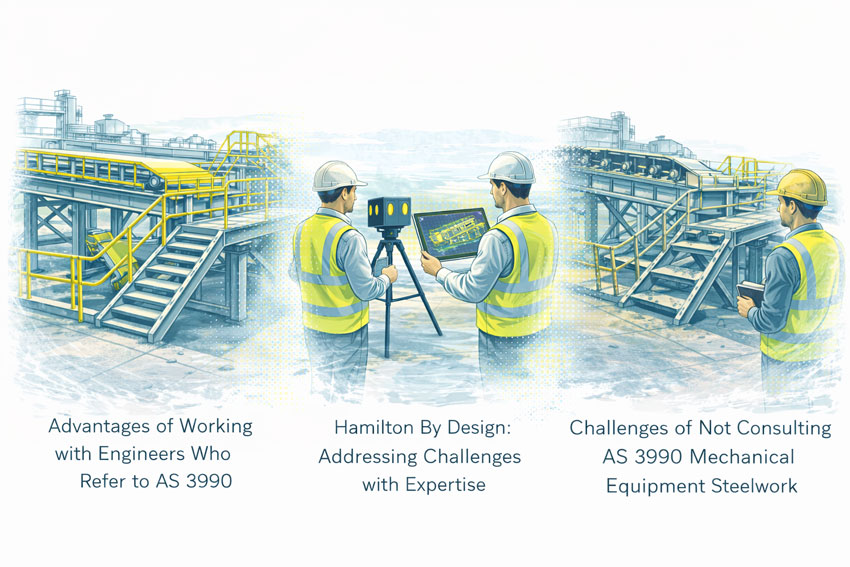
The Australian Standard AS 3990, “Mechanical Equipment – Steelwork,” is critical for ensuring the design and construction of safe, reliable, and durable steel structures in mechanical systems. It establishes guidelines for materials, construction practices, and stress analysis to meet the demanding requirements of industrial and mechanical applications. Failing to consult AS 3990 can lead to significant challenges for companies and individuals involved in engineering projects. Additionally, an engineering company like Hamilton By Design, with extensive experience in mechanical design and steelwork, can address these challenges effectively by leveraging its expertise and adherence to industry standards.
Our clients:
1. Structural Failures
One of the most severe consequences of not consulting AS 3990 is the risk of structural failures. Steelwork used in mechanical equipment must withstand specific stresses, loads, and environmental conditions. If these factors are not carefully calculated according to the standard, the structure may fail under operational stress, leading to catastrophic consequences.
Hamilton By Design’s Approach: Hamilton By Design ensures structural integrity through rigorous design analysis, leveraging advanced modeling tools and AS 3990 guidelines to predict and mitigate potential failure points. Their experience in various industries allows them to create robust steelwork designs that perform reliably under operational conditions.
2. Compliance and Legal Issues
Regulatory compliance is a cornerstone of modern engineering practices. Many industries, including mining, manufacturing, and construction, mandate adherence to AS 3990 for safety and operational approvals. Ignoring the standard can result in penalties, project delays, or even legal liabilities due to non-compliance.
Hamilton By Design’s Approach: The company prioritizes compliance by integrating AS 3990 requirements into every stage of the project. Their team stays updated with the latest revisions of the standard and ensures all designs meet regulatory expectations, providing clients with peace of mind and streamlined approval processes.
3. Reduced Equipment Longevity
Steel structures that do not conform to AS 3990 may suffer from premature wear, fatigue, or failure. This can lead to frequent repairs, replacements, or unplanned downtime, significantly reducing the lifespan of mechanical equipment.
Hamilton By Design’s Approach: Hamilton By Design employs precise material selection and stress analysis techniques, as prescribed by AS 3990, to optimize the durability and performance of their designs. Their focus on quality engineering ensures long-lasting equipment that minimizes maintenance requirements.
4. Safety Hazards
Non-compliance with AS 3990 poses serious safety risks. Equipment that fails unexpectedly can cause injuries or fatalities, creating an unsafe work environment and potential legal repercussions.
Hamilton By Design’s Approach: Safety is a core value for Hamilton By Design. The company conducts thorough risk assessments and designs steelwork that adheres to AS 3990’s stringent safety standards. Their commitment to safety reduces risks to operators and protects the overall workforce.
5. Increased Maintenance Costs
Improperly designed steelwork often requires frequent maintenance due to unforeseen stress points, material fatigue, or environmental damage. This not only increases operational costs but also disrupts productivity.
Hamilton By Design’s Approach: Hamilton By Design’s adherence to AS 3990 minimizes maintenance needs by delivering designs that perform reliably over extended periods. Their proactive approach to material selection and stress management ensures reduced long-term operational costs for their clients.
6. Loss of Reputation
Companies delivering substandard designs risk damaging their reputation and losing client trust. Poor performance or failure of mechanical equipment reflects negatively on both the engineers and the organization.
Hamilton By Design’s Approach: Hamilton By Design has built a solid reputation by consistently delivering high-quality, compliant designs. Their focus on excellence and attention to detail ensures that their clients receive reliable solutions, strengthening relationships and fostering repeat business.
Advantages of Working with Engineers Who Refer to AS 3990
1. Enhanced Structural Reliability
Engineers who follow AS 3990 guidelines ensure that steel structures are designed to handle expected loads and stresses safely. This enhances the overall reliability and performance of mechanical equipment.
Hamilton By Design’s Advantage: Hamilton By Design’s expertise in applying AS 3990 results in robust designs that exceed client expectations. Their thorough understanding of structural dynamics ensures optimal performance and safety.
2. Regulatory Compliance
Adhering to AS 3990 simplifies the process of meeting industry regulations, reducing risks of audits, fines, or project delays.
Hamilton By Design’s Advantage: Hamilton By Design’s commitment to compliance ensures that their projects pass inspections and meet all regulatory requirements, helping clients avoid costly delays and legal issues.
3. Optimized Design
Following AS 3990 enables engineers to create designs that balance safety, functionality, and cost-efficiency.
Hamilton By Design’s Advantage: The company uses advanced engineering tools and methodologies to develop optimized designs that align with clients’ operational goals while maintaining compliance with AS 3990.
4. Improved Safety
AS 3990 includes comprehensive guidelines for minimizing risks, ensuring a safer working environment.
Hamilton By Design’s Advantage: Hamilton By Design’s safety-first approach incorporates AS 3990’s recommendations to deliver solutions that prioritize the well-being of workers and operators.
5. Cost Savings
Properly designed steelwork reduces maintenance, repair, and replacement costs over the equipment’s lifecycle.
Hamilton By Design’s Advantage: By adhering to AS 3990, Hamilton By Design delivers cost-effective solutions that reduce long-term expenses, helping clients maximize their return on investment.
6. Increased Equipment Lifespan
AS 3990-compliant designs are engineered to withstand operational stresses, enhancing the durability of mechanical systems.
Hamilton By Design’s Advantage: Hamilton By Design’s focus on durability and reliability ensures that their designs deliver long-term performance, minimizing disruptions and extending equipment lifespan.
7. Competitive Advantage
Delivering high-quality, compliant systems provides a competitive edge, improving marketability and client trust.
Hamilton By Design’s Advantage: Hamilton By Design’s track record of excellence and adherence to AS 3990 positions them as a trusted partner for engineering projects, helping clients achieve their goals efficiently and effectively.
8. Risk Mitigation
Following AS 3990 minimizes the risk of unexpected failures, accidents, or operational delays.
Hamilton By Design’s Advantage: The company’s comprehensive approach to risk management ensures that their designs perform reliably under real-world conditions, reducing risks for their clients.
Hamilton By Design: Addressing Challenges with Expertise
Hamilton By Design is an engineering firm renowned for its dedication to excellence and adherence to industry standards. Their extensive experience in mechanical equipment and steelwork enables them to address the challenges of non-compliance with AS 3990 effectively. Here are some examples of how Hamilton By Design applies its expertise to deliver superior outcomes:
Case Study 1: Mining Equipment Steelwork
In a project involving heavy mining equipment, Hamilton By Design was tasked with designing a support structure for a conveyor system. By consulting AS 3990, they identified critical stress points and optimized the design to handle dynamic loads. The result was a durable and reliable structure that exceeded client expectations and minimized maintenance costs.
Case Study 2: Industrial Manufacturing Facility
Hamilton By Design worked on a manufacturing facility requiring custom steelwork for robotic assembly lines. By adhering to AS 3990, they ensured the steel structures could withstand repetitive stress and environmental factors, enhancing the safety and efficiency of the facility.
Case Study 3: Renewable Energy Project
In a renewable energy project, Hamilton By Design designed steel frameworks for wind turbine foundations. By following AS 3990, they accounted for wind loads, fatigue stresses, and environmental conditions, delivering a solution that met stringent safety and performance requirements.
Conclusion
Failing to consult AS 3990 can lead to significant challenges, including structural failures, compliance issues, reduced equipment lifespan, safety hazards, increased maintenance costs, and reputational damage. However, working with experienced engineers who prioritize adherence to AS 3990, such as those at Hamilton By Design, provides numerous advantages, including enhanced reliability, regulatory compliance, optimized design, improved safety, cost savings, increased equipment lifespan, and risk mitigation.
Hamilton By Design’s proven track record demonstrates their ability to navigate these challenges effectively, leveraging their expertise and commitment to quality to deliver exceptional results for their clients. By choosing Hamilton By Design, companies can ensure that their mechanical equipment steelwork projects are completed to the highest standards of safety, reliability, and performance.
For more information on the Hamilton By Design Consulting approach, feel free to email info@hamiltonbydesign.com.au
At Hamilton By Design, we know that keeping your equipment running efficiently isn’t just about quick fixes; it’s about adopting the right maintenance strategies to ensure long-term reliability and performance. With advancements in condition monitoring and diagnostic techniques, the ISO 18436.2 standard has become a cornerstone for effective maintenance practices—and it’s at the heart of how we help our clients optimize their operations.
In this blog post, we’ll explore the major maintenance strategies aligned with ISO 18436.2 and how they can transform your plant’s productivity.
What is ISO 18436.2?
ISO 18436.2 is an internationally recognized standard that defines the competencies required for personnel performing condition monitoring and diagnostics. It focuses on advanced tools like vibration analysis, helping engineers identify equipment issues before they lead to costly downtime.
At Hamilton By Design, our team is ISO 18436.2-certified, meaning we bring the highest level of expertise to your maintenance needs.
Maintenance Strategies That Deliver Results
ISO 18436.2 aligns with several key maintenance strategies designed to improve reliability, minimize downtime, and optimize equipment performance. Here’s how they work:
1. Reactive Maintenance
Reactive maintenance is the traditional “run-to-failure” approach where repairs are made after a breakdown. While not ideal for critical assets, tools like vibration analysis can still play a role by identifying root causes post-failure. This can help inform more proactive strategies in the future.
2. Preventive Maintenance (PM)
Preventive maintenance involves scheduling regular maintenance tasks to prevent failures. While effective to some extent, PM can lead to over-maintenance. By incorporating vibration analysis and other condition monitoring techniques, preventive measures can be more precisely targeted, reducing unnecessary downtime.
3. Condition-Based Maintenance (CBM)
Condition-Based Maintenance uses real-time equipment data to identify issues as they arise. This strategy is central to ISO 18436.2 and includes tools like vibration analysis, thermography, and ultrasonic testing. CBM ensures that maintenance is performed only when necessary, saving time and money.
Benefits:
Reduces unplanned downtime.
Optimizes maintenance schedules.
Extends equipment lifespan.
4. Predictive Maintenance (PdM)
Predictive Maintenance takes CBM a step further, using data trends and analytics to predict when failures are likely to occur. With the expertise of ISO 18436.2-certified personnel, PdM uses advanced tools to detect subtle signs of wear or stress, allowing for intervention before a problem becomes critical.
Key Tools:
Vibration analysis for early detection of imbalance or misalignment.
Infrared thermography to spot heat anomalies.
Ultrasonic testing to identify leaks and material defects.
5. Reliability-Centered Maintenance (RCM)
RCM focuses on understanding the specific failure modes of critical assets and tailoring maintenance strategies accordingly. This approach integrates condition monitoring insights to prioritize tasks that align with operational goals.
Benefits:
Aligns maintenance efforts with production priorities.
Reduces the risk of unexpected equipment failures.
6. Proactive Maintenance
Proactive maintenance identifies and addresses root causes of recurring issues. By analyzing data from vibration and other diagnostic tools, engineers can resolve underlying problems like misalignment, improper lubrication, or material fatigue.
Impact:
Prevents repetitive failures.
Improves long-term equipment reliability.
7. Total Productive Maintenance (TPM)
TPM involves a plant-wide effort, from operators to management, to ensure optimal equipment effectiveness. ISO 18436.2-certified personnel can support TPM by providing actionable condition monitoring insights and training operators in basic diagnostic techniques.
How Hamilton By Design Helps
At Hamilton By Design, we bring these strategies to life through tailored maintenance solutions that align with your plant’s needs. Here’s how we can help:
1. Advanced Condition Monitoring: Our team uses state-of-the-art tools to monitor equipment health, including vibration analysis, thermography, and ultrasonic testing.
2. Tailored Maintenance Plans: Every plant is unique. We develop maintenance strategies based on your specific equipment, production goals, and operational priorities.
3. Expert Training and Certification: We empower your team by offering ISO 18436.2 training, giving them the skills to sustain and enhance maintenance programs.
4. Ongoing Support: Maintenance is a journey, not a destination. We provide continuous support to refine and optimize your practices as your operations evolve.
The Hamilton By Design Advantage
Adopting advanced maintenance strategies aligned with ISO 18436.2 isn’t just about improving equipment reliability—it’s about unlocking greater productivity and profitability for your business.
With our expertise, you can transition from reactive to predictive maintenance, reduce unplanned downtime, and extend the lifespan of your critical assets.
Ready to take your plant’s maintenance strategy to the next level? Contact Hamilton By Design today to find out how we can help.
To provide the best experiences, we use technologies like cookies to store and/or access device information. Consenting to these technologies will allow us to process data such as browsing behaviour or unique IDs on this site. Not consenting or withdrawing consent, may adversely affect certain features and functions.
Functional
Always active
The technical storage or access is strictly necessary for the legitimate purpose of enabling the use of a specific service explicitly requested by the subscriber or user, or for the sole purpose of carrying out the transmission of a communication over an electronic communications network.
Preferences
The technical storage or access is necessary for the legitimate purpose of storing preferences that are not requested by the subscriber or user.
Statistics
The technical storage or access that is used exclusively for statistical purposes.The technical storage or access that is used exclusively for anonymous statistical purposes. Without a subpoena, voluntary compliance on the part of your Internet Service Provider, or additional records from a third party, information stored or retrieved for this purpose alone cannot usually be used to identify you.
Marketing
The technical storage or access is required to create user profiles to send advertising, or to track the user on a website or across several websites for similar marketing purposes.