3D Laser Scanning in Alexandria Sydney โ€“ Engineering-Grade Reality Capture for Industrial Facilities

Engineer-led reverse engineering with 3D scanning and drafting overlooking Sydney Harbour and the Harbour Bridge

3D Laser Scanning Alexandria Sydney | Point Cloud to CAD for Industrial Sites


Alexandria is one of Sydneyโ€™s most active industrial and mixed-use precincts, with ongoing refurbishment, services upgrades and plant modifications across manufacturing, logistics and commercial facilities.

Hamilton By Design provides engineering-grade 3D laser scanning and LiDAR services in Alexandria and across Inner Sydney, delivering accurate point cloud data that supports safe, buildable and cost-effective engineering outcomes for brownfield projects.


Why Accurate Site Data Matters in Alexandria

Industrial facilities in Alexandria often involve:

  • ageing structures and services
  • congested plant rooms and ceiling spaces
  • tight access and operational constraints
  • staged construction in live environments

Traditional survey methods frequently fail to capture:

  • complex service routes
  • structural interfaces
  • equipment clearances

3D laser scanning captures millions of spatial data points, creating a true digital record of existing conditions before design or fabrication begins โ€” significantly reducing design risk and costly site rework.


Engineering-led 3D LiDAR scanning at a Western Sydney construction site with a steel-frame building, client consultation, and Parramatta CBD visible in the background

From Point Cloud to Build-Ready CAD and BIM Models

Our service goes beyond data capture.

We convert scan data into:

  • engineering CAD models
  • fabrication and installation drawings
  • BIM-ready geometry
  • detailed as-built documentation

This enables reliable design for:

  • mechanical services upgrades
  • plant replacements and relocations
  • structural strengthening works
  • access and safety system modifications

All deliverables are produced with engineering and construction workflows in mind โ€” not just visualisation.


Typical Applications for 3D Scanning in Alexandria

3D scanning is commonly used for:

  • manufacturing plant upgrades
  • food and beverage processing facilities
  • warehouse mezzanine and conveyor installations
  • mechanical and electrical services coordination
  • compliance audits and access upgrades (AS 1657)

Scanning allows data capture to occur with minimal disruption to operations, making it well suited to live industrial environments.


Engineering-Led Scanning for Brownfield Projects

Hamilton By Design is an engineering-led consultancy, not just a scanning provider.

This means:

  • scans are planned around design requirements
  • critical mechanical and structural interfaces are prioritised
  • modelling supports fabrication and construction directly
  • risk is addressed early in the project lifecycle

This approach is particularly valuable in brownfield facilities where unknown site conditions frequently drive project delays and cost overruns.


Supporting Inner Sydney Industrial and Infrastructure Projects

In addition to Alexandria, we regularly support projects across:

  • Mascot
  • Banksmeadow
  • Port Botany
  • Zetland
  • Sydney CBD

And integrate scanning with mechanical, structural and drafting services where required, providing a single point of technical coordination from site capture through to construction-ready documentation.


Supporting Safe Design and Compliance Outcomes

Accurate reality capture enables:

  • early hazard identification
  • improved access and egress design
  • constructability reviews before shutdowns
  • reduced on-site modifications

This supports Safe Design obligations and improves project certainty in high-risk industrial environments.


Hamilton By Design logo displayed on a blue tilted rectangle with a grey gradient background

Talk to Us About 3D Scanning in Alexandria

If youโ€™re planning refurbishment, compliance upgrades or engineering works in Alexandria or across Inner Sydney, engineering-grade 3D scanning can eliminate costly unknowns before construction begins.

Contact Hamilton By Design to discuss site capture, modelling and engineering support for your project.

3D Laser Scanning in Parramatta: Engineering-Grade Data for Safer Conveyor Systems and Better Risk Management

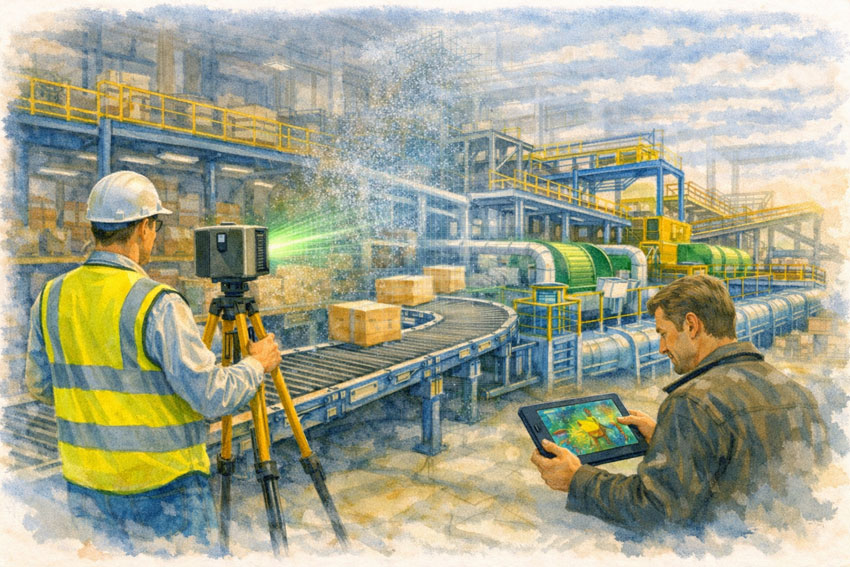
Watercolour illustration of engineers 3D laser scanning a warehouse conveyor system.

In consumer goods manufacturing, distribution centres and logistics facilities around Parramatta and Western Sydney, conveyor systems are mission-critical. Whether moving pallets, cartons, bottles, or bulk packaged goods, these systems must integrate with structural steel, mechanical equipment and building services without compromise.

Yet many existing facilities are built from legacy drawings, partial records or hand-measured surveys. This creates risk when planning upgrades, expansions or tie-ins โ€” especially where conveyors interface with mezzanines, sortation systems, robotics and utilities.

3D laser scanning provides a precise and reliable basis for understanding whatโ€™s actually on site before detailed engineering or shutdown activities begin.


Why Scan First? Engineering-Grade Reality Is the Backbone of Success

A good conveyor design solution depends on accurate understanding of:

  • where conveyors really sit in 3D space
  • how structural beams, columns and supports interact
  • exact locations of mechanical equipment
  • existing pipework, ducts and cable trays
  • access clearances for maintenance and shutdown execution

Traditional tape measures and manual field sketches are slow, error-prone and not suitable for complex conveyor networks. In contrast, 3D laser scanning captures millions of points in minutes and produces engineering-grade point clouds that reflect every surface, pipe, beam and conveyor geometry exactly as it exists.

This scan becomes the backbone of your engineering workflow โ€” a verified digital reference that informs design, reduces risk and underpins safe execution.


3D scanning of FMCG conveyor line shown in soft watercolour style.

From Reality Capture to Practical Engineering Outputs

A registered 3D point cloud delivers value throughout the project lifecycle. Typical deliverables include:

  • Full as-built point clouds: a complete digital record of existing conditions
  • Clash analysis models: identify conflicts between conveyors, structures and services
  • Fabrication-ready geometry: for skid frames, guards, support steel and pipe spools
  • DXF/STEP/Parasolid exports: for mechanical and structural drafting
  • Compatibility with Revit, AutoCAD, Navisworks: for design coordination

The result? Engineers spend more time solving real problems and less time correcting assumptions.


Designing for Safer Conveyor Integration

Upgrading or modifying conveyor systems in FMCG and logistics environments often involves:

  • adding sortation or scanning stations
  • rerouting belt paths to accommodate new equipment
  • expanding mezzanines or catwalks
  • integrating with automated storage and retrieval systems
  • adjusting utilities like compressed air, water or power services
  • installing guarding and safety infrastructure

Each of these tasks intersects with steelwork, services and building elements. Using 3D scan data for design coordination enables:

โœ” accurate spatial modelling
โœ” reduced field rework
โœ” clearer installation instructions
โœ” fewer late changes during shutdowns

This translates directly to lower cost, higher safety and greater schedule confidence.


Better Risk Management Through Verified Data

Conveyor upgrades and expansions are typically scheduled during short shutdown windows. Risk drivers commonly include:

  • uncertainty about existing conditions
  • interference with critical services
  • tight clearances that limit access
  • unexpected clashes on installation
  • insufficient documentation for permits or safety reviews

With scan-derived data, these risks are mitigated early. Design teams can model scenarios before fabrication, check for clashes electronically and articulate installation sequences with confidence.

This isnโ€™t just better practice โ€” itโ€™s good risk management.


As-Built Scanning for Handover Confidence

At project completion, a final 3D laser scan provides an accurate digital as-built model of the upgraded systems. This has several benefits:

  • avoids tape measure as-builts
  • records exact installation geometry
  • supports maintenance planning
  • provides a robust platform for future works
  • becomes an asset for ongoing risk assessments

The organisation receives not just installed equipment, but a verified digital twin for operations and design.


Applications Around Parramatta & Western Sydney

3D laser scanning is highly effective in these local industries:

โœ” FMCG production facilities
โœ” Beverage and food processing plants
โœ” Automated distribution centres
โœ” Parcel sortation hubs
โœ” Packaging and assembly lines
โœ” Warehouse conveyor networks
โœ” Industrial plant upgrades

Across these environments, conveyors are fundamental to throughput โ€” and accurate data is fundamental to success.


Hamilton By Design logo displayed on a blue tilted rectangle with a grey gradient background

Unlock Better Project Outcomes with 3D Scanning

A robust reality capture strategy delivers measurable improvements to:

  • safety protocols
  • design accuracy
  • fabrication efficiency
  • shutdown predictability
  • project cost control

In an industrial region like Parramatta โ€” where competitiveness depends on efficiency and certainty โ€” laser scanning is not just technology, itโ€™s a strategic engineering enabler.


Ready to Elevate Your Conveyor Project?

If youโ€™re planning a conveyor upgrade, system extension, or facility modification in the Parramatta or Western Sydney region, start with accurate reality capture.

Hamilton By Design Co. provides tailored 3D laser scanning services that support safer, more reliable, and more successful industrial outcomes.

Scan first.
Design with confidence.
Finish with a verified as-built.

Name
Would you like us to arrange a phone consultation for you?
Address

Establish a Baseline for Wall Movement in Your Property

Wall Crack Monitoring & Structural Movement Baseline Scans | NSW

Know When Cracks Are Cosmetic โ€” and When Theyโ€™re Not

Cracks in walls are common, but not all cracks are harmless. The real risk isnโ€™t just that a crack exists โ€” itโ€™s how fast itโ€™s changing. Without a baseline, thereโ€™s no reliable way to tell whether your property is stable or slowly moving toward serious structural damage.

Thatโ€™s where our Property Wall Movement Baseline Scan comes in.


What Is a Baseline Scan?

A baseline scan is a highโ€‘accuracy digital survey of your property taken at the moment cracking is first observed. Using precision scanning technology, we capture:

  • Wall alignment and deflection
  • Crack location, length, and width
  • Floor and ceiling reference planes
  • Structural reference points across the building

This scan becomes your timeโ€‘zero reference point โ€” a measurable snapshot of your buildingโ€™s condition today.


Why a Baseline Matters

Without a baseline:

  • Cracks are judged visually (subjective and unreliable)
  • Engineers lack historical movement data
  • Insurance claims become harder to substantiate
  • Small issues can quietly become major repairs

With a baseline:

  • Movement can be quantified in millimetres
  • Crack growth rates can be tracked over time
  • Engineers can make confident, dataโ€‘driven decisions
  • You gain early warning before damage becomes critical

How the Process Works

1. Initial Scan

We perform a nonโ€‘invasive scan of affected areas and key structural zones to establish your baseline condition.

2. Data Archiving

All scan data is securely stored and referenced to fixed control points within your property.

3. Followโ€‘Up Scans

Repeat scans (3, 6, or 12 months later) are compared against the baseline to calculate:

  • Crack propagation rate
  • Wall movement direction
  • Structural settlement or heave

4. Clear Reporting

You receive a clear, easyโ€‘toโ€‘understand report showing:

  • Measured movement (if any)
  • Rate of change over time
  • Professional recommendations

Ideal For

  • Homeowners noticing new or worsening cracks
  • Properties affected by reactive soils or subsidence
  • Buildings near excavation or construction activity
  • Insurance documentation and dispute resolution
  • Engineers requiring longโ€‘term movement data

Early Data Saves Money

Monitoring movement early often means minor intervention instead of major reconstruction. A baseline scan gives you certainty, evidence, and peace of mind.

If nothing is moving โ€” youโ€™ll know.
If something is โ€” youโ€™ll know before itโ€™s too late.


Hamilton By Design logo displayed on a blue tilted rectangle with a grey gradient background

Book a Baseline Scan

If youโ€™ve noticed cracking, now is the right time to act.

Contact us today to establish your propertyโ€™s movement baseline and protect its longโ€‘term structural integrity.


Precision data. Clear answers. Smarter decisions.

Name
Would you like us to arrange a phone consultation for you?
Address

Learning From Industry Incidents

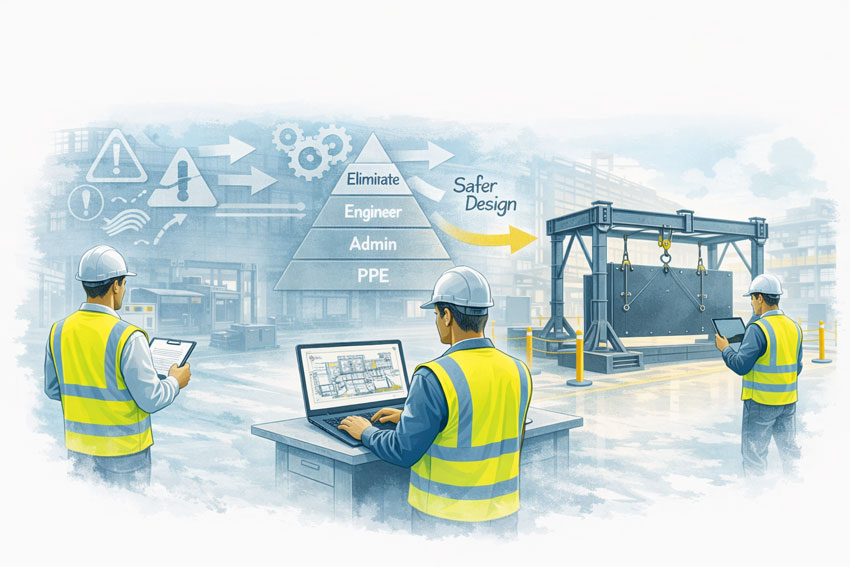
Engineers reviewing industrial design improvements in a mining fabrication workshop using engineering controls to reduce safety risks

Learning From Mining Industry Incidents | Engineering Insight

Why Engineers Study Failures Without Assigning Blame

In engineering, learning does not come only from success.

Some of the most valuable improvements in safety, reliability, and design practice come from studying incidents after they occur โ€” not to assign blame, but to better understand how systems behave under real-world conditions.

At Hamilton By Design, our interest in industry incidents is purely educational.
We do not provide legal opinions, and we do not involve ourselves in litigation.
Our focus is engineering learning and risk reduction.


Why Engineers Study Incidents

Engineering is a discipline built on:

  • Understanding failure modes
  • Learning from unintended outcomes
  • Improving designs so similar events are less likely to occur again

Courts determine liability.
Engineers determine how systems can be made safer.

These are very different roles.


Mining engineers applying design-for-safety principles to improve material handling systems in an industrial workshop

An Example From the Mining Fabrication Sector

A recent court-reported incident in the Australian mining fabrication sector involved a serious worker injury during the handling of a large steel plate.

This event has been widely reported in industry safety communications and regulator summaries.
The matter has been dealt with by the courts.

Our interest is not who was responsible โ€” but what can be learned from an engineering and design perspective.


Separating Legal Outcomes From Engineering Lessons

When incidents are discussed publicly, it is easy for conversations to drift toward:

  • Fault
  • Error
  • Individual actions
  • Compliance outcomes

From an engineering standpoint, a more useful question is:

โ€œWhy was this failure mode possible in the first place?โ€

This shifts the focus from people to systems.


The Engineering Perspective: Systems, Not Individuals

In fabrication, mining, and heavy industry environments, engineers routinely work with:

  • Large masses
  • Stored energy
  • Gravity-driven hazards
  • Tight workspaces
  • Time pressure

In these environments, safe outcomes should not rely on:

  • Perfect timing
  • Continuous vigilance
  • People always being in the right place

Good engineering design assumes:

  • Humans make mistakes
  • Conditions change
  • Equipment can fail
  • Distractions occur

And it designs accordingly.


Learning Through the Hierarchy of Controls

One of the most useful tools engineers have for learning from incidents is the hierarchy of controls.

From a learning perspective, incidents often highlight opportunities to move risk higher up the hierarchy:

  • Can the hazard be eliminated?
  • Can the task be re-designed so people are not exposed?
  • Can engineering controls prevent a single failure from becoming an injury?
  • Are procedures being used where physical controls could exist instead?

These are design questions, not legal ones.


Why This Matters for Engineering Practice

Studying incidents like this helps engineers:

  • Identify hidden assumptions in workshop layouts
  • Improve material handling design
  • Reduce reliance on administrative controls
  • Design processes that are more tolerant of variation
  • Prevent โ€œnormalisedโ€ risk from becoming invisible

Importantly, these lessons apply well beyond a single incident or company.


The Link to Broader Engineering Failures

The same learning approach is used when engineers study:

  • Structural failures
  • Mining incidents
  • Equipment damage
  • Tailings dam collapses
  • Process plant upsets

In each case, the goal is the same:

Understand how design decisions influence risk over time.

Not to judge โ€” but to improve.


Our Position at Hamilton By Design

To be clear:

  • We do not comment on legal responsibility
  • We do not provide expert opinions on prosecutions
  • We do not participate in legal proceedings

Our interest is strictly:

  • Engineering learning
  • Design improvement
  • Risk reduction
  • Better outcomes for industry

We believe that open, professional learning from incidents strengthens engineering practice and improves safety across the sector.


Final Thought

Engineering advances when professionals are willing to say:

โ€œWhat can we learn from this?โ€

Without blame.
Without legal positioning.
Without hindsight judgement.

Just better design, informed by real-world experience.


๐Ÿ“ฉ Engineering-Led Design Matters

If youโ€™re working in mining, fabrication, or heavy industry and want to reduce risk through better design decisions, Hamilton By Design supports engineering-led thinking that prioritises:

  • Hazard elimination
  • Fit-first-time outcomes
  • Design-for-fabrication
  • Systems that donโ€™t rely on perfect behaviour

Talk to an engineer early.

Name
Would you like us to arrange a phone consultation for you?
Address

Project Management, Programme Control & Safety on Thai Infrastructure Projects

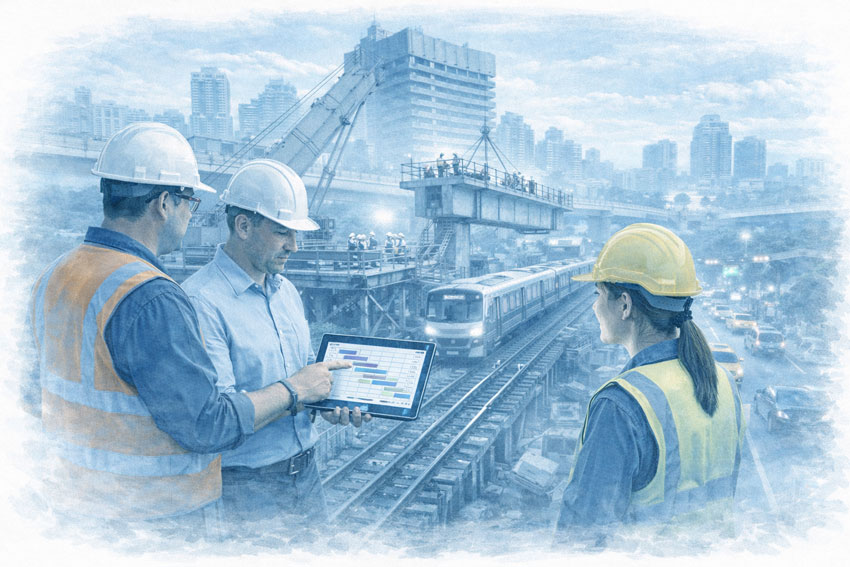
Engineers reviewing a project schedule beside live rail construction, illustrating the link between programme control, temporary works, and public safety in infrastructure projects.

Building the Case for Stronger Project-Management Governance on Thai Infrastructure Projects

Recent infrastructure failures in Thailand have highlighted an issue that extends beyond construction capability, technical standards, or nationality. The common thread running through these events is how large projects are governed, scheduled, and controlled.

This discussion is not about blame.
It is about delivery systems, incentives, and authority โ€” and whether current models are sufficiently robust for complex work undertaken beside live roads, rail, and the public.


The delivery context

Many major infrastructure projects in Thailand are delivered through government-to-government frameworks involving international state-linked partners, including Chinese state-owned enterprises such as China Railway Engineering Corporation and related entities.

Within these arrangements:

  • local contractors typically hold construction responsibility
  • international partners provide systems, standards, technical authority, or programme input
  • project milestones are tightly defined and politically significant

This model brings scale, funding certainty, and delivery speed. It also creates predictable pressure points that deserve closer examination.


Infrastructure project managers assessing schedules during crane operations near live rail, representing safety governance and programme control in complex urban construction.

What the recent failures tell us

The incidents that have triggered concern were not failures of rail technology or permanent structural design. They were predominantly:

  • temporary works failures
  • crane and staging incidents
  • work undertaken adjacent to live public corridors

These are execution and sequencing failures, not design failures โ€” and they are heavily influenced by programme structure and schedule control.

This leads to a fundamental governance question:

Who has the authority to change the programme when safe sequencing requires it?


Programme control is not neutral

When schedules are:

  • externally fixed
  • politically sensitive
  • commercially punitive to miss

risk does not disappear. It is transferred downward.

In practice, this often manifests as:

  • parallel work instead of sequential isolation
  • reduced exclusion zones
  • reliance on procedural controls rather than engineered separation
  • temporary works treated as โ€œmeans and methodsโ€ instead of engineered systems

None of this requires bad intent. It is a system response to inflexible programmes.


The role of Chinese state-owned enterprises

Chinese SOEs involved in these projects are not typically the principal construction contractors. However, they often exert significant influence over programme structure, milestones, and delivery expectations.

Across multiple countries, state-linked delivery models tend to exhibit consistent characteristics:

  • strong emphasis on schedule certainty
  • delegation of safety responsibility to downstream contractors
  • limited flexibility once programme commitments are set
  • incidents framed as execution issues rather than programme-design issues

Whether fair or not, this creates a perception that delivery behaviour is structurally stable and slow to change, even after serious failures.

That perception alone justifies a review of governance arrangements.


Why Australian project-management capability is relevant

Australian companies were not in project-management or programme-control roles on the projects that failed. As a result, Australian safety-governance practices were not embedded in the delivery model.

Australian project-management frameworks are shaped by:

  • acceptance that schedules must move to protect safety
  • independent temporary-works engineering and sign-off
  • explicit treatment of live-interface work as a programme risk
  • separation between commercial pressure and safety authority
  • deep experience in brownfield, shutdown, and live-asset environments

This does not make Australian firms better builders.
It makes them effective governance counterbalances in high-risk delivery environments.


The case for change

The argument is not to exclude existing partners.
It is to strengthen governance.

A more resilient delivery model could include:

  • Australian firms in programme-management or independent PM roles
  • independent temporary-works authorities reporting outside the construction chain
  • schedule-risk reviews with genuine authority to resequence work
  • clearer separation between political milestones and construction logic

These measures do not slow projects โ€” they prevent catastrophic delay caused by failure.


The central point

Safety outcomes are not determined by nationality or intent.
They are determined by who controls the programme, how flexible it is, and whether safety has real authority over time and cost.

Strengthening that authority is a rational, evidence-based step forward.


The power of the people

Real improvement in infrastructure delivery does not start with press releases.
It starts when engineers, supervisors, workers, and communities speak openly about how projects are actually delivered.

Those closest to the work experience programme pressure and safety trade-offs long before failures occur. Giving space to those voices is not about blame โ€” it is about learning, transparency, and better governance.

When people are allowed to speak, systems are forced to listen.


Hamilton By Design logo displayed on a blue tilted rectangle with a grey gradient background

Comments are open

This post is intended to encourage informed, professional discussion about project-management models, programme control, and safety governance.

The focus is on systems and incentives โ€” not nationality or individual blame.
Constructive perspectives from those with professional or on-the-ground experience are welcome.


Our clients:


Name
Would you like us to arrange a phone consultation for you?
Address

Drafting Capacity for Todayโ€™s Projects: An Integrated Scan โ†’ Model โ†’ Detail โ†’ Check Workflow

Drafting Capacity for Todayโ€™s Projects | Engineering-Led Documentation

Engineering and construction projects are increasingly delivered under compressed timeframes, constrained resources, and heightened compliance expectations. In this environment, access to reliable drafting capacityโ€”supported by robust processesโ€”is critical to maintaining quality and reducing project risk.

Hamilton By Design provides experienced drafting capacity, available for short-term support or longer-term secondment, delivered within a structured scan โ†’ model โ†’ detail โ†’ check workflow that aligns documentation with real-world conditions and engineering intent.


Drafting capacity aligned with contemporary project demands

Modern projects often require drafting support that can scale quickly to address:

  • Peak workloads during design development or shutdown preparation
  • Short-term resourcing gaps within engineering teams
  • Documentation demands driven by upgrades, modifications, or compliance works
  • Brownfield environments where existing information is incomplete or unreliable

In these situations, drafting capacity must be more than transactional. It must integrate with engineering workflows and reflect current site conditions.


Scan: establishing an accurate technical baseline

Where existing drawings cannot be relied upon, accurate documentation begins with engineering-grade reality capture.

Our team utilises 3D laser scanning to establish a defensible geometric baseline of existing assets. This approach supports drafting activities by ensuring that models and drawings are developed from verified site data, rather than assumptions or legacy documentation.


Model: structured CAD developed for engineering use

Scan data is translated into purpose-built CAD models, developed to suit the intended engineering and documentation outcomes. Models are structured with appropriate datums, tolerances, and levels of detail to support:

  • Engineering assessment and design coordination
  • Structural and mechanical detailing
  • As-built documentation and future modification

This modelling stage ensures drafting activities are grounded in usable, engineering-aligned data.


Detail: producing clear, buildable documentation

Drafting output remains one of the most critical interfaces between design and construction.

From verified models, our draftspersons produce clear, fabrication-ready drawings that communicate engineering intent accurately and unambiguously. Documentation is prepared with consideration for:

  • Constructability and sequencing
  • Fabrication practicality
  • Coordination between disciplines
  • Alignment with relevant Australian Standards

The emphasis is on documentation that can be confidently issued to site.


Check: verification as a formal step, not an afterthought

Before issue, drawings and models are subject to structured review to confirm:

  • Consistency with scan data and models
  • Coordination across views and drawing sets
  • Technical clarity and buildability

This checking step reduces the likelihood of downstream rework and supports defensible documentation outcomes.


Why integrated drafting capacity matters

When drafting is separated from scanning, modelling, or checking, risk is introduced at each handover.

An integrated scan โ†’ model โ†’ detail โ†’ check workflow:

  • Improves documentation reliability
  • Reduces errors caused by assumptions
  • Supports compliance and verification
  • Enhances confidence during fabrication and construction

This approach is particularly effective for existing assets, industrial facilities, and brownfield upgrades.


Flexible drafting support and secondment

Hamilton By Designโ€™s drafting capacity can be provided as:

  • Short-term drafting support
  • Longer-term secondment within client teams
  • Targeted assistance during high-demand project phases

Drafting support is delivered within an engineering-led environment, ensuring alignment between documentation and technical intent.

To learn more about flexible resourcing options, visit our Secondment Services page:
๐Ÿ‘‰ https://www.hamiltonbydesign.com.au/home/secondment-services/


Hamilton By Design logo displayed on a blue tilted rectangle with a grey gradient background

Conclusion

As project complexity and delivery pressures continue to increase, drafting capacity must be current, integrated, and accountable.

By providing experienced draftspersons supported by a structured scan โ†’ model โ†’ detail โ†’ check workflow, Hamilton By Design enables project teams to scale documentation capability without compromising accuracy, buildability, or engineering quality.

Name
Would you like us to arrange a phone consultation for you?
Address