Mackayโ€™s Industrial Edge

Mackayโ€™s Industrial Edge โ€” How 3D LiDAR, Modern Engineering & Digital Modelling Supercharge Regional Projects

Located on the tropical Queensland coast but powering heavy industry, mining support and agricultural logistics, Mackay stands as a unique regional powerhouse. With its massive sugar industry, proximity to the Bowen Basin coalfields, thriving fabrication sector, marine and port operations โ€” plus a growing push toward industrial expansion โ€” the cityโ€™s infrastructure demands are both diverse and complex.

At Hamilton By Design, we recognise that projects in Mackay need more than โ€œold-schoolโ€ drawings or rough-site surveys. Thatโ€™s why we offer state-of-the-art 3D LiDAR laser scanning, comprehensive mechanical and structural engineering, advanced 3D modelling, and fabrication-ready drafting โ€” all designed to meet Mackayโ€™s rigorous industrial, mining-support and agricultural demands.

If youโ€™re planning an upgrade to a processing facility, expanding a plant or fabricating complex steelwork, our services ensure precision, efficiency and reliability from start to finish.


Why Mackay Is a Perfect Fit for Digital Engineering & 3D Scanning

Mackayโ€™s blend of industries โ€” sugar mills, mining, fabrication, marine, port logistics and heavy machinery โ€” means that most facilities are a patchwork of legacy infrastructure, ongoing modifications and high-demand production cycles.

That brings challenges like:

  • undocumented pipework, conveyors or structural changes;
  • tight tolerances for retrofits or new installations;
  • heavy mechanical equipment requiring accurate alignment and structural support;
  • short windows for shutdowns or maintenance;
  • mixed use of fabrication, mining-grade components, and agricultural processing equipment.

For these reasons, the old ways of tape-measure site surveys and manual sketches are often not enough.

Enter 3D LiDAR scanning. By capturing the entire facility geometry with millimetre-level accuracy, you get a complete digital โ€œas-builtโ€ record โ€” capturing everything from structural steel, ductwork, conveyors, foundations, and terrain, to existing equipment and utilities.

Through Hamilton By Designโ€™s professional scanning services, Mackay clients receive real-world data that supports safer, faster and more accurate project planning, design and fabrication.


From Point Cloud to Precision Design: 3D Modelling & Drafting

Once your site is scanned, our team converts the raw scan data into intelligent 3D CAD models โ€” delivering:

  • accurate mechanical and structural layouts;
  • fabrication-ready drawings (GA, detail drawings, isometrics, BOMs);
  • clash detection and interference checking before fabrication starts;
  • easy visualisation for stakeholders, clients and contractors;
  • digital archives for future modifications or maintenance.

This kind of precision work dramatically reduces risk โ€” especially for brownfield sites or mixed-use facilities common in Mackayโ€™s industrial sector.


Engineering Support Built for Mackayโ€™s Key Industries

Whether itโ€™s a sugar mill retrofit, mining support workshop, marine fabrication yard, or industrial workshop expansion โ€” the range of engineering challenges in Mackay is enormous. Hamilton By Design brings specialist mechanical and structural engineering expertise to the table, offering:

  • structural assessments (supports, platforms, load-bearing frames, foundations)
  • alignment and vibration analysis for conveyors, heavy machinery, pumps
  • design of new equipment layouts, piping, ducting and supports
  • fatigue, stress and load-bearing analysis (FEA) when needed
  • compliance-ready drawings and design documentation for local regulations and safety standards

This level of engineering support is often critical for projects involving heavy loads, mining-grade equipment, or large-scale fabrication โ€” exactly the types of projects abundant across Mackay.


3D LiDAR Laser Scanning โ€” The Game Changer for Mackay Projects

Especially when plants are being upgraded, new modules added, or older sites refurbished, accurate spatial data is the foundation for success.

Our 3D LiDAR laser scanning service ensures:

  • complete, precise capture of existing site geometry โ€” steelwork, structure, terrain, utilities;
  • minimal site downtime โ€” faster capture than manual survey;
  • safer field operations (less need for manual measurements in active plants);
  • high-fidelity base for design, modelling and fabrication;
  • better coordination between contractors, fabricators and engineers.

Learn more about our 3D LiDAR services here: https://www.hamiltonbydesign.com.au/home/3d-lidar-scanning-digital-quality-assurance/3d-laser-scanning/

For a city like Mackay โ€” with fast-paced industrial demand, tight tolerances, and high-volume production โ€” this technology isnโ€™t just beneficial, itโ€™s essential.


One Integrated Workflow: From Scan to Delivery

What sets Hamilton By Design apart is our seamless, end-to-end service:

  1. Conduct 3D LiDAR scan of the facility or site
  2. Process point-cloud data and clean up for modelling
  3. Build detailed 3D CAD models โ€” mechanical, structural, architectural
  4. Perform engineering assessments, structural/ mechanical analysis or modifications as needed
  5. Produce fabrication-ready drawings and documentation
  6. Provide digital reports, QA data and as-built records for the client

Having a single point of accountability โ€” scan, model, engineer, deliver โ€” reduces miscommunication, avoids rework and ensures that every part of the project is aligned, documented, and traceable.


Hamilton By Design logo displayed on a blue tilted rectangle with a grey gradient background

Why Mackay Businesses Should Use Hamilton By Design

Whether youโ€™re running a sugar mill, a fabrication workshop servicing Bowen Basin mines, a workshop for heavy equipment repairs, or a marine engineering facility servicing port exports โ€” Mackayโ€™s industrial landscape is complex.

By using cutting-edge 3D laser scanning, accurate modelling, and expert engineering, Hamilton By Design helps you:

  • save time and money on site surveys;
  • avoid costly rework from inaccurate measurements;
  • ensure tighter tolerances, safer installations and compliance;
  • speed up design, fabrication and installation;
  • maintain digital records for ongoing maintenance or future upgrades.

For industries in Mackay that deal with heavy loads, tight schedules, and high-volume production โ€” this is a competitive advantage.

Our Clients

Name
Would you like us to arrange a phone consultation for you?

Mechanical Plant Optimisation

Mechanical Plant Optimisation: Boosting Throughput, Reliability and Safety Across Australia

Industrial plants are under more pressure than ever to deliver higher output, reduce downtime and operate safely. Ageing equipment, inconsistent maintenance, and brownfield constraints often limit performance โ€” but with the right engineering approach, even long-running plants can achieve major efficiency gains.

At Hamilton By Design, we specialise in mechanical plant optimisation using a powerful combination of engineering expertise, high-accuracy LiDAR scanning, precise 3D modelling, and practical redesign strategies that deliver measurable improvements.

If your goal is higher throughput, fewer breakdowns and safer shutdowns, this guide explains how mechanical optimisation transforms plant performance.


Why Mechanical Plant Optimisation Is Essential

Most processing plants โ€” from CHPPs and quarries to manufacturing and power stations โ€” suffer from the same long-term issues:

  • Reduced throughput
  • Conveyor misalignment
  • Flow bottlenecks in chutes and transfer points
  • Vibration, cracking and structural fatigue
  • Outdated drawings and unknown modifications
  • Premature wear and high maintenance costs
  • Shutdown overruns due to poor fit-up

Optimisation tackles these issues using real engineering data, not assumptions.


Step 1: LiDAR Scanning to Capture True As-Built Conditions

As equipment ages, it moves, twists and wears in ways that drawings rarely capture. Our FARO laser scanners map a complete digital twin of your plant with ยฑ1โ€“2 mm accuracy, giving engineers:

  • Full geometry of structural frames
  • Wear patterns inside chutes
  • Deflection in platforms, conveyor trusses and supports
  • Misalignment in pipes, pulleys and mechanical drives
  • Clash risks for future upgrades

This becomes the foundation of all optimisation work โ€” ensuring upgrades fit first time.


Step 2: 3D Modelling & Engineering Redesign

Hamilton By Design converts point-cloud data into SolidWorks models to identify optimisation opportunities such as:

  • Reprofiling chutes for smoother flow
  • Strengthening or realigning structural members
  • Repositioning pumps or motors
  • Correcting conveyor and drive alignment
  • Redesigning access platforms for maintenance
  • Improving liner selection and service life

Every model is fabrication-ready, eliminating costly rework during shutdowns.


Step 3: Material Flow & Conveyor Performance Improvement

Flow constraints are one of the biggest sources of lost production. Through engineering review, modelling and experience, we address:

  • Impact zones causing excessive wear
  • Restrictive chute geometry
  • Poorly performing transfer points
  • Belt-tracking issues
  • Flow blockages
  • Inefficient material transitions

These improvements often deliver immediate gains in throughput and reliability.


Step 4: Mechanical Integrity & Reliability Assessments

We also perform condition assessments to understand the root causes of downtime:

  • Vibration analysis
  • Cracking and corrosion detection
  • Bearing, gearbox and pulley assessment
  • Thermal/overload risks
  • Misalignment and load distribution issues

This supports predictive maintenance and informed upgrade planning.


Step 5: Shutdown Planning & Upgrade Execution

By combining scanning, modelling and mechanical design, we ensure that every upgrade:

  • Fits perfectly into existing brownfield spaces
  • Reduces time on tools
  • Eliminates site modifications
  • Improves safety during installation
  • Delivers predictable shutdown timelines

Clients commonly see ROI within the first shutdown cycle.


Benefits of Mechanical Plant Optimisation

When optimisation is done properly, plants experience:

โœ” Measurable throughput increases

โœ” Longer equipment life

โœ” Reduced wear and maintenance costs

โœ” Safer operation and shutdown execution

โœ” Accurate documentation for future projects

โœ” Extended reliability of mechanical systems

With the right engineering support, even ageing plants can operate like new.


Serving Clients Across Australia

Hamilton By Design supports mechanical plant optimisation projects across:
Sydney, Newcastle, Hunter Valley, Central Coast, Bowen Basin, Surat Basin, Pilbara, Perth, Adelaide, Melbourne and regional Australia.

We work across mining, CHPPs, quarries, ports, power stations, manufacturing and heavy industrial sites.


Hamilton By Design logo displayed on a blue tilted rectangle with a grey gradient background

Ready to Optimise Your Plant?

If you want higher throughput, better reliability and safer operation, mechanical plant optimisation is the smartest investment you can make.

Or reach out directly for a project discussion.

Hamilton By Design โ€” Engineering Certainty for Complex Plants.


Name
You would like to:

3D LiDAR Scanning Hunter Valley Power Stations

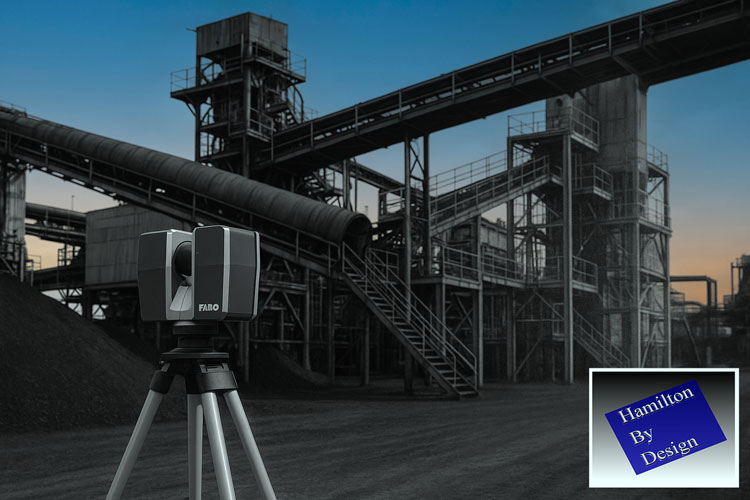
FARO 3D laser scanner set up on a tripod capturing an industrial plant for LiDAR scanning and digital modelling, with Hamilton By Design branding in the corner.

Unlocking Accuracy, Safety and Efficiency for Critical Infrastructure

The Hunter Valley is home to some of Australiaโ€™s most significant power generation assets. These power stations โ€” many of which have operated for decades โ€” supply energy to mining operations, manufacturing facilities, regional communities and industries throughout New South Wales. As these plants age and undergo continual maintenance, upgrades and redevelopment, the importance of accurate, reliable and safe measurement methods becomes increasingly critical.

Traditionally, engineers and maintenance teams have relied on manual measurements, outdated drawings or partial documentation to plan upgrades or execute shutdown work. But in complex, congested and ageing plant environments, this introduces risks, delays and expensive rework.

This is why 3D LiDAR scanning in Hunter Valley power stations has emerged as one of the most valuable tools for modern asset management, engineering and maintenance planning. LiDAR provides a millimetre-accurate digital snapshot of real-world conditions, enabling smarter, safer and more predictable project outcomes.

This article explores the benefits, applications, and pros and cons of 3D LiDAR scanning and explains why Hunter Valley power stations stand to gain significantly from adopting this technology.


Why Power Stations Need Accurate As-Built Data

Power stations are among the most complex industrial facilities in Australia. Over decades of operation, they experience:

  • Structural deformation
  • Settlement and movement
  • Corrosion and wear
  • Numerous undocumented modifications
  • Equipment realignments
  • Tight access restrictions
  • Ageing steelwork and infrastructure

In these environments, original construction drawings rarely match reality. As a result, engineers planning upgrades, shutdowns or replacements often face:

  • Inaccurate interface points
  • Misaligned structures
  • Unpredictable installation conditions
  • High rework costs
  • Safety delays
  • Poor shutdown timing

3D LiDAR scanning offers a precise, digital representation of the site, giving engineers the confidence they need to design upgrades accurately and eliminate guesswork.


The Benefits of 3D LiDAR Scanning for Hunter Valley Power Stations

1. Unmatched Measurement Accuracy for Complex Assets

A power station contains thousands of interconnected components:

  • Boilers
  • Turbines
  • Structural platforms
  • Pipe networks
  • Pressure vessels
  • Ducting systems
  • Conveyor bridges
  • Cooling towers
  • Electrical cabinets
  • Steel supports

Capturing these geometries manually is nearly impossible.

3D LiDAR scanning provides millimetre-level accuracy across enormous plant areas, allowing engineers to:

  • Create precise as-built models
  • Validate structural alignment
  • Check pipe routes and clearances
  • Identify interferences
  • Understand deformation over time
  • Design new works based on real geometry

This level of data is invaluable for maintaining safe and compliant power-generation operations.


2. Major Safety Improvements

Power stations present significant safety risks:

  • High-voltage environments
  • Confined spaces
  • Elevated platforms
  • Hot surfaces
  • Restricted access
  • Operational machinery

Manual measurement often requires workers to climb structures, enter hazardous zones or physically reach difficult areas.

3D LiDAR scanning dramatically reduces risk by:

  • Capturing data from safe distances
  • Eliminating the need for repeated access
  • Reducing time in hazardous zones
  • Minimising interaction with live equipment

For Hunter Valley power stations with strict safety requirements, this is a major benefit.


3. Reduced Shutdown Duration and Cost

Shutdowns are among the most expensive events for power-generation facilities. Every hour counts.

With 3D LiDAR scanning:

  • Engineers define accurate scopes before shutdown
  • Fabricators receive precise data and cut steel correctly
  • Digital fit checks identify issues early
  • Installation is faster and smoother
  • Delays due to bad measurements are eliminated

This leads to shorter outages, safer work and fewer unexpected problems.


4. Supports Engineering, Design and Structural Integrity Works

Power stations frequently require:

  • Boiler upgrades
  • Turbine area modifications
  • Ducting and flue replacements
  • Pipework rerouting
  • Cooling-system upgrades
  • Structural strengthening
  • Platform and walkway replacements
  • Electrical equipment relocations

All of these tasks depend on accurate geometry.

3D LiDAR scanning supports engineering teams by providing:

  • Reference geometry for load calculations
  • Verified connection points
  • True alignment data
  • Accurate slope and deflection measurements
  • High-resolution drawings and 3D models

This ensures engineering decisions are made using verified, real-world information.


5. Perfect for Brownfield and Congested Environments

Power stations are some of the most complex brownfield assets in the industrial landscape. They contain layers of modifications, years of retrofits and areas where access is extremely limited.

3D LiDAR scanning excels at capturing:

  • Tight clearances
  • Overlapping structures
  • Equipment clusters
  • Interconnected pipes
  • Hard-to-reach surfaces

This makes it ideal for planning:

  • New platforms
  • Replacement ducting
  • Pipe realignments
  • Structural upgrades
  • Asset lifecycle extensions

The result: fewer surprises during installation.


6. Better Collaboration Between Teams

Power stations typically involve:

  • Maintenance teams
  • OEMs
  • Engineering consultants
  • Fabricators
  • Shutdown managers
  • Safety personnel
  • Project delivery teams

3D LiDAR scanning enables everyone to work from the same digital truth.

Point clouds and 3D models allow:

  • Remote site understanding
  • Clear communication
  • Digital reviews instead of repeated site visits
  • Improved planning alignment

For Hunter Valley projects involving multiple contractors, this significantly boosts performance.


Pros and Cons of 3D LiDAR Scanning

Like any technology, LiDAR has strengths and limitations. Understanding both helps power station operators make informed decisions.


Pros

โœ” Extremely high accuracy

Millimetre precision for large and complex areas.

Fast data capture

Reduces time spent in hazardous areas.

Clear visibility of congested spaces

Captures geometry that traditional methods miss.

Enhances engineering confidence

Designers base work on verified conditions.

Reduces installation rework

Fabrication matches the real site exactly.

Supports digital engineering workflows

Perfect input for CAD, BIM, simulation and modelling.

Safer measurement practices

Less climbing, reaching and confined-space entry.


Cons

Requires skilled interpretation

Point cloud data must be processed by trained technicians or engineers.

Large file sizes

High-resolution scans require strong computing resources.

Reflective or transparent surfaces can create challenges

Requires technique or matte marking in some areas.

Upfront cost may seem higher

But it eliminates far greater downstream costs in rework and shutdown delays.

Despite these considerations, LiDAR scanning remains the most cost-effective measurement tool for power station environments.


Why Hunter Valley Power Stations Benefit More Than Most

The Hunter Valley industrial landscape presents unique challenges:

  • Ageing energy infrastructure
  • Multiple retrofits and undocumented modifications
  • Extremely tight maintenance windows
  • Harsh environmental conditions
  • Congested structures with difficult access
  • High safety standards
  • Heavy reliance on local fabrication accuracy

3D LiDAR scanning Hunter Valley power stations provides the one thing these facilities need most: confidence.

Confidence in measurements.
Confidence in fabrication.
Confidence during shutdowns.
Confidence in engineering decisions.
Confidence in safety performance.

Few regions stand to gain more from LiDAR than the Hunter.


Hamilton By Design: Supporting Hunter Valley Power Stations with Advanced LiDAR Solutions

Hamilton By Design brings together:

  • Engineering expertise
  • On-site scanning capability
  • CAD modelling and drafting
  • Fabrication-ready documentation
  • Digital fit-checking and clash detection
  • Mechanical and structural design experience

We understand the complex realities of power-station environments, and we deliver precise, reliable and engineering-ready digital data for:

  • Boiler upgrades
  • Turbine hall modifications
  • Structural replacements
  • Pipe rerouting
  • Platform and access upgrades
  • Ducting and flue modifications
  • Cooling tower projects
  • Balance-of-plant improvements

Every model, point cloud and drawing is produced with installation success and fabrication accuracy in mind.


Conclusion: 3D LiDAR Scanning is the New Standard for Hunter Valley Power Stations

As the Hunter Valley transitions into a future of renewable generation, asset extension and industrial redevelopment, 3D LiDAR scanning stands out as a technology that delivers real, immediate value.

It improves safety.
It increases accuracy.
It reduces rework.
It enables better engineering.
It shortens shutdowns.
It lowers project risk.

Power stations across the Hunter Valley rely on critical, ageing and highly complex infrastructure โ€” infrastructure that demands accurate, reliable digital measurement.

Hamilton By Design is proud to support the region with advanced laser scanning technologies that empower engineers, fabricators, supervisors and project managers to work smarter, safer and more efficiently.

Hamilton By Design logo displayed on a blue tilted rectangle with a grey gradient background

3D Laser Scanning

Hunter Valley Laser Scanning: Transforming Engineering Accuracy Across Mining, Manufacturing and Infrastructure

3D Laser Scanning in Singleton and the Hunter: Delivering Accuracy for Mining, Manufacturing and Industrial Projects

Laser Scanning Hunter Valley: Delivering Engineering-Grade Accuracy for Mining, Manufacturing and Industrial Projects

Our clients

Name
You would like to:

3-D Lidar Scanning Hunter Valley: Transforming Industrial Projects with Accuracy, Safety and Engineering Confidence

The Hunter Valley is one of Australiaโ€™s most strategically important industrial regions. It supports large mining operations, CHPP facilities, fabrication workshops, energy infrastructure, civil projects and heavy manufacturing. These industries depend on precision, safety and efficient project delivery โ€” yet most operate in aging brownfield environments where original drawings are outdated, equipment has shifted over time, and modifications have occurred for decades without accurate documentation.

In environments like these, traditional measuring methods often fail to provide the precision required for confident engineering and fabrication. This is why 3-D Lidar scanning in the Hunter Valley has become a critical tool for engineers, supervisors, fabricators and project managers. It captures the real-world site conditions with millimetre accuracy, creating a digital foundation for smarter, safer and more efficient project execution.

This article explores the benefits, pros and cons of 3-D Lidar scanning, and explains why the Hunter Valley is uniquely positioned to gain massive value from this technology.


Understanding 3-D Lidar Scanning

3-D Lidar (Light Detection and Ranging) scanning is a non-contact measurement technology that uses lasers to capture millions of points in seconds. The scanner emits laser pulses and measures the return time to determine distances, building a dense โ€œpoint cloudโ€ of the environment.

This point cloud is a precise 3-D representation of:

  • Structural steel
  • Conveyors and transfer towers
  • Chutes, bins and hoppers
  • Tanks, pipework and mechanical equipment
  • Platforms, walkways and buildings
  • Industrial plant rooms and process areas

Once captured, this digital data becomes the foundation for engineering models, fabrication drawings, digital fit checks and project planning.


Why 3-D Lidar Scanning Matters in the Hunter Valley

The Hunter Valley contains some of the most complex and heavily used industrial assets in Australia. Many facilities have been in operation for decades, and almost all have undergone modifications, expansions and repairs. Over time, the real-world geometry diverges significantly from the old drawings stored on paper or outdated CAD files.

This creates major challenges:

  • Measurements taken by hand are inaccurate or unsafe
  • Shutdown windows are extremely tight
  • Fabricators rely on precise data to avoid costly rework
  • Engineers require true geometry for load calculations and interface design
  • Supervisors need reliable information to scope replacement work

3-D Lidar scanning provides a millimetre-accurate representation of what exists onsite, removing guesswork and supporting engineering best practice.


The Benefits of 3-D Lidar Scanning in the Hunter Valley

1. Millimetre Accuracy Improves Engineering Outcomes

In heavy industrial environments, small measurement errors can create large, expensive problems. Structural misalignment, worn steel, bent frames, sagging conveyors and distorted chutes are all common in brownfield plants.

3-D Lidar scanning captures:

  • True dimensions
  • Variations from design
  • Deformation and misalignment
  • Complex curved surfaces
  • Differences caused by wear and tear

Engineers design with confidence because the digital model reflects actual site conditions โ€” not assumptions.


2. Huge Reduction in Rework and Fabrication Errors

Fabricators in Singleton, Muswellbrook, Rutherford, Tomago and throughout the Hunter region rely on accurate measurements to ensure steel and mechanical components fit the first time.

Without accurate data, common fabrication issues include:

  • Bolt holes misaligned
  • Steel members too short or too long
  • Chutes or hoppers not matching openings
  • Pipe spools missing clearances
  • Platforms not sitting square

These problems lead to:

  • Onsite cutting and welding
  • Delayed installations
  • Extended shutdown time
  • Additional crane costs
  • Extra labour expenses

3-D Lidar scanning eliminates these risks, ensuring every component is manufactured to match the as-built site geometry.


3. Improved Shutdown Planning and Faster Execution

Mining and CHPP shutdowns in the Hunter Valley operate under strict time constraints. Any unexpected measurement issue can cause delays affecting production and safety.

With 3-D Lidar scanning:

  • Scope is defined accurately before shutdown
  • Fabrication is completed correctly the first time
  • Digital fit checks identify problems early
  • Installation is faster and safer

Shutdowns become more predictable and efficient.


4. Massive Safety Improvements

Manual measurement often requires workers to:

  • Enter confined spaces
  • Access heights
  • Work around operating equipment
  • Lean over conveyors
  • Navigate dirty, uneven or hazardous areas

3-D Lidar scanning minimises physical access requirements. Technicians can scan large areas from safe positions, reducing:

  • Fall risks
  • Pinch-point exposure
  • Hot-work hazards
  • Time on elevated structures

This is a major benefit for HSE and maintenance teams across the Hunter Valley.


5. Better Communication, Collaboration and Visualisation

Point clouds and 3-D models make it easier for teams to understand the project environment, especially when stakeholders are spread across:

  • Mine sites
  • Fabrication workshops
  • Design offices
  • Engineering consultancies
  • Projects teams and OEM vendors

Digital data allows remote review, reducing the need for repeated site visits and improving decision-making.


6. Ideal for Brownfield Upgrades and Congested Areas

Many Hunter Valley facilities are decades old, with layers of modifications. Clearances are tight, geometry is irregular, and equipment alignment has changed over the years.

3-D Lidar scanning is perfect for:

  • Transfer towers with layered steel
  • Congested plant rooms
  • Pipe networks
  • Stockpile conveyors
  • Old building footprints
  • Complex structural junctions

The scanner captures the complexity instantly and precisely.

Hamilton By Design logo displayed on a blue tilted rectangle with a grey gradient background

Pros and Cons of 3-D Lidar Scanning

While 3-D Lidar scanning is a game-changing tool, it is important to understand both the advantages and limitations.

3D Scanning in The Hunter Valley

3D Laser Scanning

Hunter Valley Laser Scanning: Transforming Engineering Accuracy Across Mining, Manufacturing and Infrastructure

3D Laser Scanning in Singleton and the Hunter: Delivering Accuracy for Mining, Manufacturing and Industrial Projects

Laser Scanning Hunter Valley: Delivering Engineering-Grade Accuracy for Mining, Manufacturing and Industrial Projects

Name
You would like to:

Robotics and Human Relations: Balancing Innovation with Safety

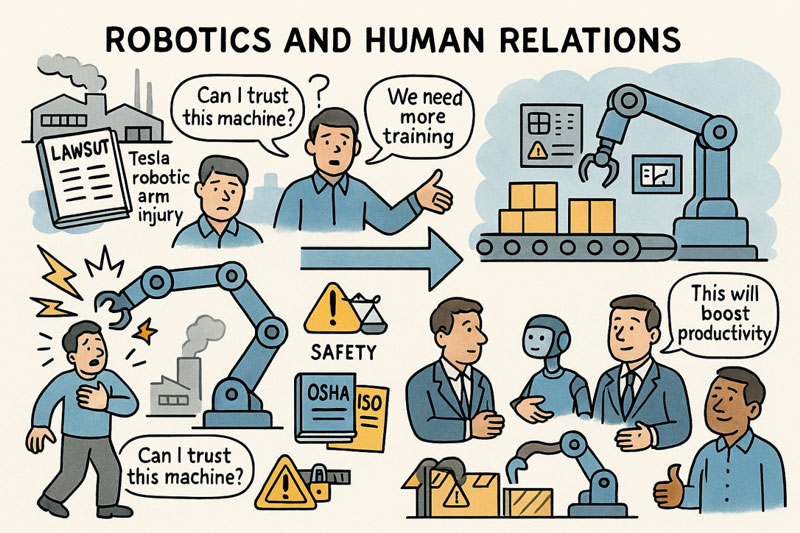
Robots are no longer the stuff of science fictionโ€”they are embedded in our factories, warehouses, and even food-processing plants. They promise efficiency, speed, and the ability to take on dangerous jobs humans shouldnโ€™t have to do. Yet, as recent headlines show, this promise comes with serious risks. From the lawsuit against Tesla over a robotic arm that allegedly injured a worker to the tragic death of a Wisconsin pizza factory employee crushed by a machine, the conversation about humanโ€“robot relations has never been more urgent.

This blog post explores the promise and peril of robotics in the workplace, drawing lessons from recent incidents and asking: how do we ensure humans and robots can coexist safely?

The Rise of Robotics in Everyday Work

Robotics is spreading quickly across industries. Automotive giants like Tesla rely on robotic arms for precision assembly, while food plants use automated systems to handle packaging and processing. According to the International Federation of Robotics, robot installations worldwide continue to grow year after year. For businesses, itโ€™s a clear win: fewer errors, lower costs, and reduced human exposure to dangerous tasks.

But with robots entering smaller facilitiesโ€”where safety infrastructure may be weakerโ€”the risks grow. A mis calibrated robot, a missed safety step, or a poorly trained operator can turn a productivity tool into a deadly hazard.

When Robots Go Wrong: Lessons from Recent Cases

  • Teslaโ€™s Robotic Arm Lawsuit
    A former technician at Tesla claims he was struck and knocked unconscious by a robotic arm while performing maintenance. The lawsuit highlights a crucial point: safety procedures like lockout/tagout arenโ€™t optionalโ€”they are lifesaving. When machines are energized during servicing, even a momentary slip can have devastating consequences.
  • Wisconsin Pizza Factory Fatality
    In a smaller manufacturing plant, a worker lost his life after being crushed by a robotic machine. Unlike Tesla, this wasnโ€™t a high-tech car factory but a food facilityโ€”showing that robotics risks extend far beyond Silicon Valley. Smaller plants may lack robust safety training, yet they are increasingly embracing automation.

Both cases are tragic reminders that technology alone canโ€™t guarantee safety. Human oversight, training, and organizational commitment to safety matter just as much.

The Human Side of Robotics

When people think about robots at work, they often picture job displacement. But for many workers, the immediate concern is safety. Studies show that trust plays a huge role: workers who believe robots are reliable tend to perform better. However, misplaced trustโ€”assuming a machine will always stop when neededโ€”can be just as dangerous as fear or mistrust.

Beyond physical risks, robots can also affect morale and mental health. Workers may feel devalued or expendable when machines take over critical tasks. The challenge isnโ€™t just engineering safer robotsโ€”itโ€™s creating workplaces where humans feel respected and protected.

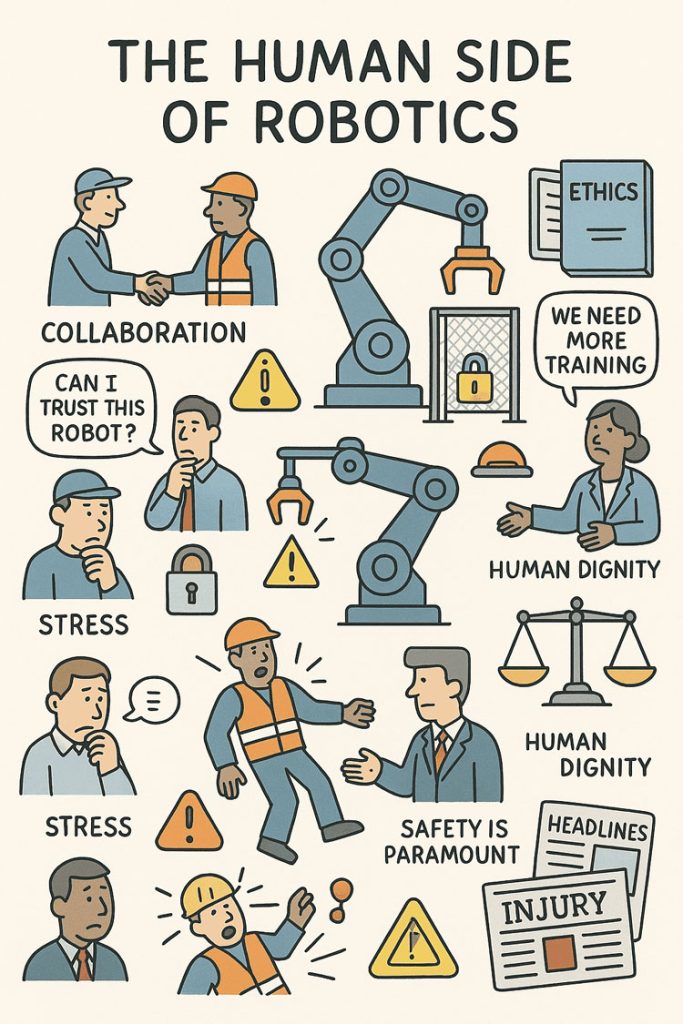
Illustrated infographic titled โ€œThe Human Side of Robotics,โ€ showing workers interacting with industrial robots and highlighting concerns such as collaboration, trust, stress, training needs, ethics, safety, and human dignity. Several people appear worried or stressed, with speech bubbles saying โ€œCan I trust this robot?โ€ and โ€œWe need more training.โ€ Warning symbols, safety locks, scales representing ethics, and a newspaper headline reading โ€œInjuryโ€ emphasize workplace risks. A robotic arm works within a safety cage while workers discuss safety and ethical implications. The overall theme contrasts human concerns with the increasing use of robotics.

Building a Safer Future Together

So how do we strike the right balance between robotics innovation and human well-being? A few key steps stand out:

  1. Design Safety Into the Machine: Emergency stops, advanced sensors, and fail-safes should be standard featuresโ€”not optional add-ons.
  2. Enforce Safety Protocols: OSHAโ€™s lockout/tagout rules exist for a reason. Employers must ensure that servicing robots without proper shutdowns is never allowed.
  3. Invest in Training: Robots are only as safe as the people who interact with them. Ongoing, practical training helps prevent accidents.
  4. Foster a Safety Culture: Workers should feel empowered to report unsafe practices without fear of retaliation.
  5. Update Regulations: As robots spread into more industries, regulators must adapt. International safety standards like ISO 10218 need to be more widely enforced, especially in smaller facilities.

Conclusion

Robotics is here to stay. It has the potential to make our workplaces more efficient, less physically demanding, and even safer. But incidents like those at Tesla and the Wisconsin pizza plant remind us that without proper safeguards, the cost of automation can be measured in human lives.

The future of humanโ€“robot relations doesnโ€™t have to be one of fear or tragedy. With the right mix of engineering, regulation, and workplace culture, robots and humans can work side by sideโ€”not as rivals, but as partners. The question isnโ€™t whether we should embrace robotics, but whether weโ€™ll do so responsibly, putting peopleโ€™s safety and dignity first.


Mechanical Engineering | Structural Engineering

Mechanical Drafting | Structural Drafting

Hamilton By Design logo displayed on a blue tilted rectangle with a grey gradient background

3D CAD Modelling | 3D Scanning

Chute Design

SolidWorks Contractors in Australia

Hamilton By Design โ€“ Blog

Wisconsin pizza factory worker Robert Cherone crushed to death by robotic machine

Worker Sues Tesla After Alleged Robotic Arm Attack, Is Now Seeking Millions

Lessons from a Landmark Case:

The Importance of Robust Structural Design Review

In 2024, SafeWork SA concluded a landmark case involving a spectator-roof collapse during a football club redevelopment project in South Australia. While no life-threatening injuries occurred, the incident highlighted how critical it is for design, review, and certification processes to work together to ensure safety on site.

This was the first successful design-related prosecution under South Australiaโ€™s Work Health and Safety Act, sending a clear signal to the engineering and construction sector: design decisions carry legal and safety obligations, not just technical ones.

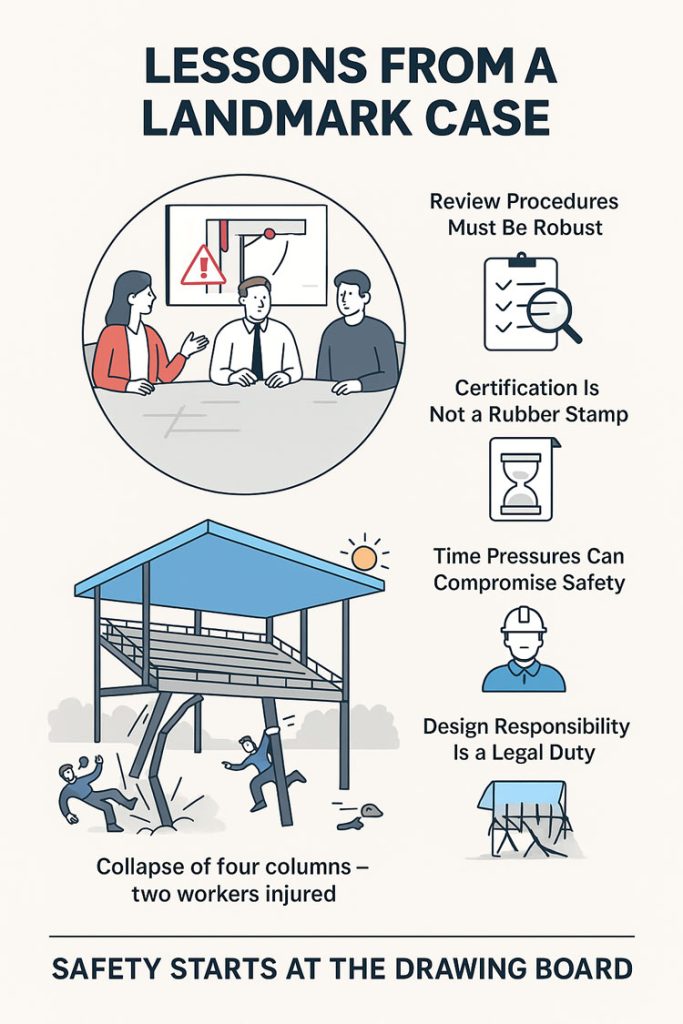
Infographic titled โ€œLessons from a Landmark Case,โ€ showing engineers reviewing a design, icons highlighting robust review procedures, proper certification, time-pressure risks, and legal design responsibilities. The lower illustration depicts a structure collapsing after four column failures with two workers falling, emphasising the message โ€œSafety starts at the drawing board

What Happened (Briefly)

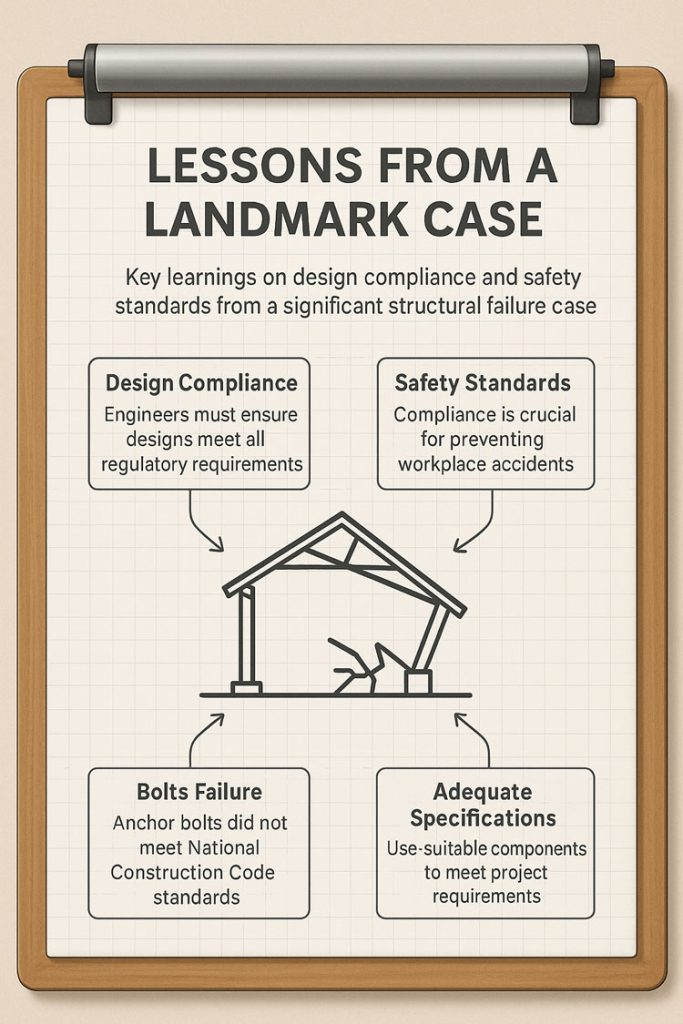
During roof sheeting works in late 2021, four of seven supporting columns of a cantilevered spectator roof failed, causing two apprentices to slide down the roof sheets. SafeWork SAโ€™s investigation found that the anchor bolts specified for the column base plates were inadequate and did not meet the requirements of the National Construction Code (NCC).

An independent compliance review also failed to detect this issue, allowing the error to pass unchecked into construction. The result was a collapse that could have had far more severe consequences had the roof been fully loaded or occupied.

Key Learnings for the Industry

This case underscores several important lessons for engineers, designers, project managers, and certifiers:

1. Design Responsibility Is a WHS Duty

Under the WHS Act, designers have a duty to ensure their work is safe not just in its intended use, but during construction. This means bolts, connections, and base plates must be designed for real-world loads โ€” including wind uplift, combined shear and tension, and concrete breakout limits per NCC and relevant Australian Standards.

2. Review Procedures Must Be Robust โ€” and Followed

Having a documented review procedure is not enough if it isnโ€™t rigorously applied. Independent verification and internal peer review are critical to catching design errors before they reach site.

3. Certification Is Not a Rubber Stamp

Independent certifiers play a key role in safeguarding public safety. They must actively verify that designs meet compliance, rather than simply sign off on documentation.

4. Time Pressures Can Compromise Safety

Compressed project timelines were noted as a factor in missed opportunities to catch the error. Project teams must resist the temptation to shortcut review steps when schedules are tight โ€” safety must remain non-negotiable.

5. Documentation & Traceability Protect Everyone

Maintaining calculation records, checklists, and review signoffs creates a clear audit trail. This helps demonstrate due diligence if something goes wrong.

Infographic titled โ€˜Lessons From a Landmark Caseโ€™ displayed on a clipboard. It highlights key learnings from a structural failure case: design compliance, safety standards, bolts failure, and adequate specifications. At the centre is a simple line drawing of a collapsed structure, with arrows pointing to four labelled boxes describing the importance of regulatory compliance, workplace safety standards, anchor bolt failures, and using suitable components to meet project requirements

Why This Matters

The collapse at Angaston Football Club was a relatively small incident with minor injuries โ€” but it could easily have been catastrophic. By learning from cases like this, the industry can improve its processes and prevent future failures.

As professionals, our role is to design for safety, verify rigorously, and document clearly. Doing so protects workers, end-users, and our own organisations.

Legal & Ethical Considerations

This post is intended as a learning resource, not as an allocation of blame. The case referenced is a matter of public record through SafeWork SA and SAET decisions, and all commentary here focuses on general principles of safe design and compliance.

We recommend that other practitioners review their own QA and certification procedures in light of this case to ensure compliance with the National Construction Code and WHS obligations.

More Information —> The Advertiser / Adelaide Now

Hamilton By Design logo displayed on a blue tilted rectangle with a grey gradient background

Mechanical Engineering | Structural Engineering

Mechanical Drafting | Structural Drafting

3D CAD Modelling | 3D Scanning

Chute Design

SolidWorks Contractors in Australia

Hamilton By Design โ€“ Blog