Mechanical Engineering Sydney: Why Local Expertise Beats Offshore Design

When Local Knowledge Makes All the Difference

Across Sydney, the Central Coast, and Newcastle, more contractors and plant managers are discovering a simple truth โ€” offshore engineering might look cost-effective, but local expertise delivers better outcomes every time.

When drawings donโ€™t meet Australian Standards, materials canโ€™t be sourced locally, or site measurements are off by just a few millimetres, โ€œcheapโ€ design quickly becomes expensive rework.

Thatโ€™s why businesses across NSW are turning to Hamilton By Design โ€” a Sydney-based mechanical engineering practice that understands how to bridge design and construction through real-world experience, compliance, and precision.
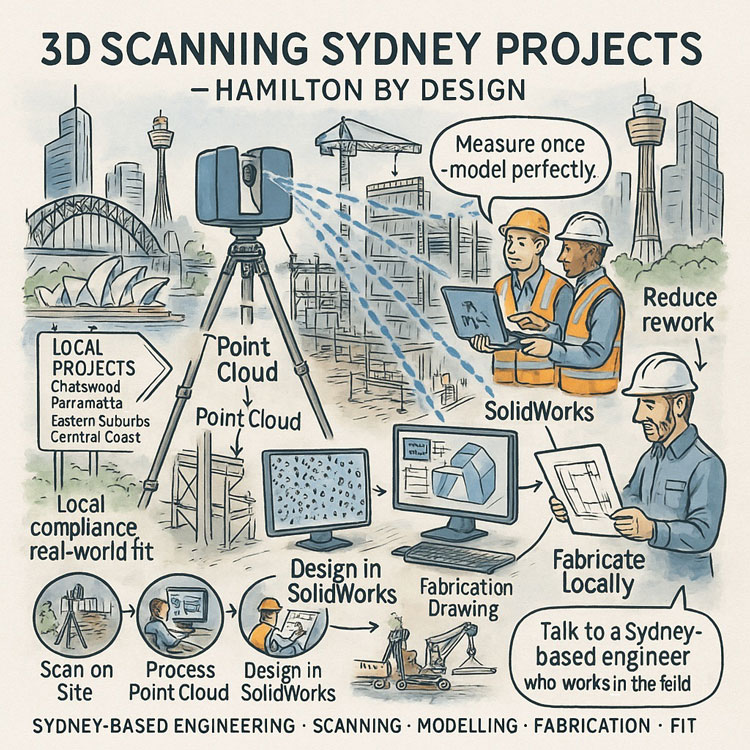
Illustrated infographic showing Hamilton By Designโ€™s 3D scanning workflow in Sydney, including onsite LiDAR scanning, point-cloud processing, SolidWorks modelling, and local fabrication, with Sydney landmarks in the background

Built for Australia, Not Adapted for It

Engineering design isnโ€™t universal.
Sydneyโ€™s environment, industry, and regulatory framework are unique โ€” from local council approval requirements to the coastal conditions that affect corrosion and material selection.

At Hamilton By Design, our drawings and models are created with Australian Standards front and centre. We design for:

  • AS 4100 (Steel Structures)
  • AS 3990 (Mechanical Equipment Design)
  • AS 1657 (Walkways, Platforms & Stairs)
  • AS 4991 (Lifting Devices)
  • AS 4024 (Machine Safety)

Designing to these standards means your project moves faster through approvals, fabrication, and certification โ€” with no surprises down the track.

Offshore designers often mean well, but they donโ€™t work within these standards every day.
A single misinterpreted load case or welding symbol can mean days of rework on site.
A local engineer gets it right the first time.


Drawings That Fabricators Love

A good drawing doesnโ€™t just look professional โ€” it saves hours in the workshop.
Hamilton By Design creates fabrication drawings that make sense to the people who use them.

We think like tradespeople because weโ€™ve been tradespeople.
Our background in fitting, machining, and CNC fabrication ensures every detail โ€” from weld prep to bolt clearances โ€” reflects how the job will actually be built.

That means fewer questions from the shop floor, cleaner fit-ups, and faster turnaround from fabrication to installation.
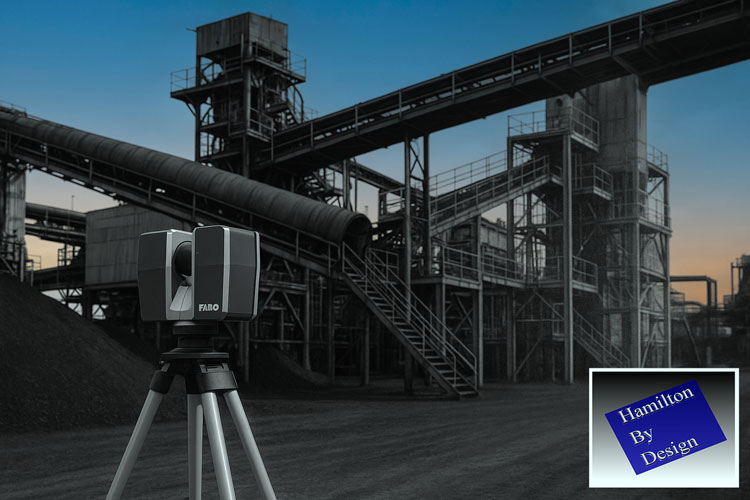
FARO 3D laser scanner set up on a tripod capturing an industrial plant for LiDAR scanning and digital modelling, with Hamilton By Design branding in the corner

Local Materials. Local Supply Chains. Fewer Delays.

Sydneyโ€™s fabrication and construction industry runs on locally available materials โ€” from Bluescope steel to Bisalloy plate.
When offshore drawings specify unavailable materials or imperial sizes, fabrication stalls.

Our team specifies components, sections, and finishes that Sydney and Central Coast suppliers actually stock.
That reduces lead times, avoids substitutions, and keeps projects moving.

We also design with Sydneyโ€™s coastal environment in mind โ€” using corrosion-resistant coatings, sealants, and fasteners suitable for marine-influenced locations like Parramatta, Botany, and Gosford.


Designed to Fit the Site โ€” The First Time

Itโ€™s one thing to design in CAD; itโ€™s another to make it fit in the field.
Sydney worksites can be complex โ€” restricted access, uneven terrain, or legacy structures that donโ€™t match the old drawings.

Thatโ€™s why Hamilton By Design uses 3D scanning and LiDAR technology to capture accurate site data before design begins.
We integrate those scans directly into SolidWorks, building models that align with real-world geometry.

Every bracket, pipe run, and platform is verified in 3D before fabrication starts โ€” ensuring a smooth installation with no rework.


Sydney Expertise with Regional Reach

We proudly serve clients across Sydney, Newcastle, and the Central Coast, working with builders, maintenance contractors, and fabrication workshops who value local knowledge.

Our typical projects include:

  • Plant upgrades and retrofits in brownfield sites.
  • Fabrication drawing packages for chutes, platforms, and pipework.
  • Reverse engineering from worn or obsolete components.
  • 3D scanning for as-built documentation.
  • Finite Element Analysis (FEA) for structural verification.

Every project benefits from our combined trade and engineering background โ€” practical solutions grounded in decades of hands-on experience.


Smooth Communication. Real Accountability.

When you work with a local engineer, youโ€™re not waiting overnight for an email response from another time zone.
You can pick up the phone, meet on site, or review models in person.

That direct collaboration saves time, reduces misunderstandings, and builds confidence between all stakeholders โ€” engineers, fabricators, and project managers alike.

At Hamilton By Design, we value clear communication. Youโ€™ll know exactly what stage your project is at, what weโ€™re designing, and how it aligns with your goals.


The Real Cost of Offshore Design

Offshore pricing often looks appealing โ€” until you factor in delays, non-compliance, or fabrication mismatches.
Hereโ€™s what typically happens when projects cut corners:

ChallengeOffshore DesignLocal Expertise (Hamilton By Design)
Standards & CodesOften missed or misappliedFully compliant with AS/NZS standards
Material AvailabilitySpecified incorrectlyDesigned for Australian supply chains
CommunicationDelayed and unclearDirect, same-day response
Site UnderstandingBased on photosBased on 3D scans and site visits
Rework RiskHighMinimal โ€“ verified before fabrication

When you calculate the true cost โ€” lost time, rework, freight, and approval delays โ€” offshore design rarely saves money.

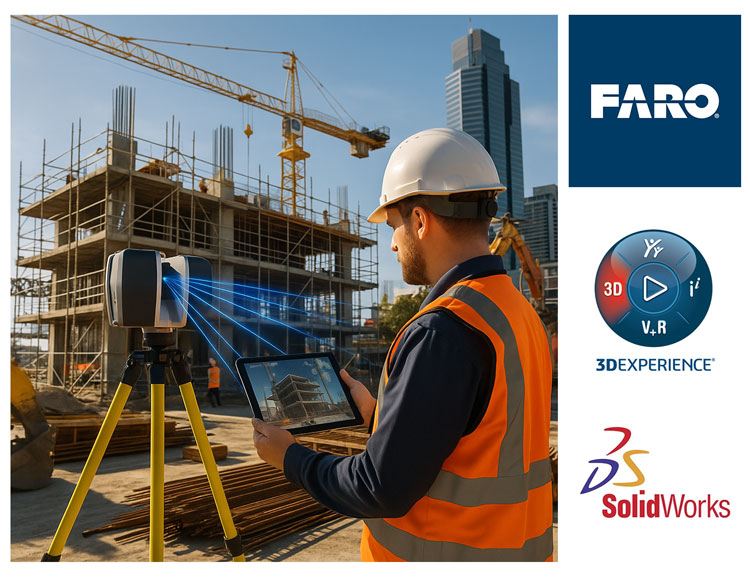
Technician using a FARO 3D laser scanner and tablet to capture a construction site for digital modelling, with 3DEXPERIENCE and SolidWorks logos shown on the side

Real Example: Central Coast Fabrication Success

A local contractor recently engaged Hamilton By Design to assist with a pump platform upgrade on the Central Coast.
Previous offshore drawings had mismatched hole patterns and unsupported loads.

We performed a quick 3D scan, remodelled the assembly in SolidWorks, and issued fabrication drawings ready for workshop production.
The new structure was installed without modification, saving the client several days of rework and earning rapid certifier approval.

Thatโ€™s what local insight delivers โ€” certainty and speed.


Why Choose a Sydney-Based Engineer

Sydney projects move quickly.
They need partners who can respond fast, understand the regulations, and coordinate seamlessly with site teams.

Hamilton By Design offers:
โœ… Over 25 years of trade and design experience
โœ… SolidWorks and FEA capability since 2011
โœ… 3D scanning and as-built modelling for existing plants
โœ… Fabrication drawings built for local workshops
โœ… Practical designs created by people whoโ€™ve worked in the field

Weโ€™re based in Sydney and proud to support regional clients in Newcastle, the Central Coast, and Western Sydney.


Talk to a Sydney-Based Engineer Whoโ€™s Worked in the Field

Every project is a partnership โ€” and great results come from working with people who understand your environment.
Hamilton By Design isnโ€™t just another design service; weโ€™re your local mechanical engineering partner โ€” practical, responsive, and invested in your success.

If youโ€™re planning a plant upgrade, mechanical installation, or fabrication project, letโ€™s make sure your drawings are done right the first time.
Banner displaying Hamilton By Design alongside partner and technology logos including SolidWorks, UTS, Dassault Systรจmes 3DEXPERIENCE, and FARO, with the text โ€˜3D Scanning 3D Modellingโ€™ and website www.hamiltonbydesign.com.au

๐Ÿ‘‰ Talk to a Sydney-based engineer whoโ€™s worked in the field.
Visit www.hamiltonbydesign.com.au or contact us today to discuss your next project.

Bridging Reality and Design: How 3D Scanning + 3D Modelling Supercharge Mining Process Plants

In mining and mineral processing environments, small mis-fits, outdated drawings, or inaccurate assumptions can translate into shutdowns, costly rework, or worse, safety incidents. For PMs, superintendents, engineering managers and plants operating under heavy uptime and safety constraints, combining 3D scanning and 3D modelling isnโ€™t just โ€œnice to haveโ€ โ€” itโ€™s becoming essential. At Hamilton By Design, weโ€™ve leveraged this combination to deliver greater predictability, lower cost, and improved safety across multiple projects.


What are 3D Scanning and 3D Modelling?

  • 3D Scanning (via LiDAR, laser, terrestrial/mobile scanners): captures the existing geometry of structures, equipment, piping, chutes, supports, tanks, etc., as a dense point cloud. Creates a digital โ€œreality captureโ€ of the plant in its current (often messy) state.
  • 3D Modelling: turning that data (point clouds, mesh) into clean, usable engineering-geometry โ€” CAD models, as-built / retrofit layouts, clash-detection, wear mapping, digital twins, etc.

The power comes when you integrate the two โ€” when the reality captured in scan form feeds directly into your modelling/design workflows rather than being a separate survey activity thatโ€™s then โ€œinterpretedโ€ or โ€œassumed.โ€


Why Combine Scanning + Modelling? Key Benefits

Here are the main advantages you get when you deploy both in an integrated workflow:

BenefitWhat it Means for PMs / Engineering / Plant OpsExamples / Impacts
Accuracy & Reality VerificationVerify whatโ€™s actually in the plant vs what drawings say. Identify deformations, misalignments, wear, obstructions, or changes that werenโ€™t captured in paper drawings.Mill liner wear profiles; chute/hopper buildup; misaligned conveyors or supports discovered post-scan.
Reduced Risk, Safer AccessScanning can be done with limited or no shutdown, and from safer vantage points. Less need for personnel to enter hazardous or confined spaces.Scanning inside crushers, under conveyors, or at height without scaffolding.
Time & Cost SavingsFaster surveying; fewer repeat field trips; less rework; fewer surprises during shutdowns or retrofit work.Scan once, model many; clashes found in model instead of in the field; pre-fabrication of replacement parts.
Better Shutdown / Retrofit PlanningUse accurate as-built models so new equipment fits, interferences are caught, installation time is optimized.New pipelines routed without conflict; steelwork/supports prefabricated; shutdown windows shortened.
Maintenance & Asset Lifecycle ManagementScan history becomes a baseline for monitoring wear or deformation. Enables predictive maintenance rather than reactive.Comparing scans over time to track wear; scheduling relining of chutes; monitoring structural integrity.
Improved Decision Making & VisualisationEngineers, superintendents, planners can visualise the plant as it is โ€” space constraints, access routes, clearances โ€” before making decisions.Clash-detection between new and existing frames; planning maintenance access; safety audits.
Digital Twin / Integration for Future-Ready PlantOnce you have accurate geometric models you can integrate with IoT, process data, simulation tools, condition monitoring etc.Digital twins that simulate flow, energy use, wear; using scan data to feed CFD or FEA; feeding into operational dashboards.

Challenges & How to Overcome Them

Of course, there are pitfalls. Ensuring scanning + modelling delivers value requires attention to:

  • Planning the scanning campaign (scan positions, control points, resolution) to avoid shadow zones or missing data.
  • Choosing hardware and equipment that can operate under plant conditions (dust, vibration, temperature, restricted access).
  • Processing & registration of point clouds, managing the large data sets, and ensuring clean, usable models.
  • Ensuring modelling workflow aligns with engineering design tools (CAD systems, formats, tolerances) so that the scan data is usable without excessive cleanup.
  • Maintaining the model: when plant layouts or equipment change, keeping the scan or model up to date so your decisions are based on recent reality.

At Hamilton By Design we emphasise these aspects; our scan-to-CAD workflows are built to align with plant engineering needs, and we help clients plan and manage the full lifecycle.


Real World Applications in Mining & Process Plants

Hereโ€™s how combined scanning + modelling is applied (and what you might look for in your own facility):

  • Wear & Relining: scanning mill, crusher liners, chutes or hoppers to model wear profiles; predict failures; design replacement parts that fit exactly.
  • Retrofits & Expansions: mapping existing steel, pipe racks, conveyors, etc., creating accurate โ€œas builtโ€ model, checking for clashes, optimizing layouts, prefabricating supports.
  • Stockpile / Volumetric Monitoring: using scans or LiDAR to measure stockpile volumes for planning and reporting; integrating with models to monitor material movement and flow.
  • Safety & Clearance Checking: verifying that walkways, egress paths, platforms have maintained their clearances; assess structural changes; check for deformation or damage.
  • Shutdown Planning: using accurate 3D models to plan the scope, access, scaffold/frame erection, pipe removal etc., so shutdown time is minimised.

Why Choose Hamilton By Design

To get full value from the scan + model combination, you need more than just โ€œweโ€™ll scan itโ€ or โ€œweโ€™ll make a modelโ€ โ€” you need a partner who understands both the field realities and the engineering rigour. Here’s where Hamilton By Design excels:

  • Strong engineering experience in mining & processing plant settings, so we know what level of detail, what tolerances, and what access constraints matter.
  • Proven tools & workflows: from LiDAR / laser scanner work that captures site conditions even under harsh conditions, to solid CAD modelling/reporting that aligns with your fabrication/installation requirements.
  • Scan-to-CAD workflows: not just raw point clouds, but models that feed directly into design, maintenance, procurement and operations.
  • Focus on accuracy, safety, and reduced downtime: ensuring that field work, design, installation etc., are as efficient and risk-averse as possible.
  • Use of modern digital techniques (digital twins, clash detection etc.) so that data isnโ€™t just stored, but actively used to drive improvements.

Practical Steps to Get Started / Best Practice Tips

If youโ€™re managing a plant or engineering project, here are some steps to adopt scanning + modelling optimally:

  1. Define Clear Objectives: What do you want from this scan + model? Wear profiles, retrofit, layout changes, safety audit etc.
  2. Survey Planning: Decide scan positions, control points, resolution (density) based on the objectives and site constraints. Consider access, safety, shutdown windows.
  3. Use Appropriate Hardware: Choose scanners suited to environment (dust, heat), also ensure regulatory and IP protection etc.
  4. Data Processing & Modelling Tools: Have the capacity/software to register, clean, mesh or extract CAD geometry.
  5. Integrate into Existing Engineering Processes: Ensure the outputs are compatible with your CAD standards, procurement, installation etc.
  6. Iterate & Maintain: Frequent scans over time to track changes; update models when plant changes; feed maintenance, design and operations with new data.

Conclusion

In mining process plants, time, safety, and certainty matter. By combining 3D scanning with sound 3D modelling you donโ€™t just get a snapshot of your plant โ€” you gain a powerful toolset to reduce downtime, avoid rework, improve safety, and enhance decision-making.

If youโ€™re responsible for uptime, capital works, maintenance or process improvements, this integration can reshape how you plan, maintain, and operate. At Hamilton By Design, weโ€™re helping clients in Australia harness this power โ€” turning reality into design confidence, and giving stakeholders peace of mind that the layout, equipment, and safety are aligned not to yesterdayโ€™s drawings but to todayโ€™s reality.

Name
Would you like us to arrange a phone consultation for you?
Address