Scan to CAD Brisbane

Scan to CAD Brisbane โ€“ Turning Real Site Conditions into Buildable Engineering

Brisbane has become one of Australiaโ€™s leading centres for digital engineering delivery. While many mining, industrial, and infrastructure assets are located across Queensland and remote regions of Australia, the engineering that supports them is increasingly completed in Brisbane using accurate digital site data.

At the centre of this shift is Scan to CAD Brisbaneโ€”a workflow that converts real-world site conditions into reliable 3D CAD models that engineers can design, analyse, and document from with confidence.

Hamilton By Design specialises in engineer-led scan to CAD workflows in Brisbane, combining on-site 3D laser scanning with Brisbane-based mechanical and structural engineering, 3D CAD modelling, FEA, and fabrication-ready drafting. This approach allows projects to progress without repeated site attendance, reducing risk and improving constructability.


Brisbane as a Scan to CAD engineering hub

Brisbane engineering teams support a wide range of assets, including:

  • Remote mining operations and CHPPs
  • Bulk materials handling systems
  • Ports and energy infrastructure
  • Brownfield industrial facilities

What makes Brisbane unique is its ability to process site data digitally and convert it into buildable engineering outcomes. Rather than relying on assumptions or legacy drawings, engineers work from accurate 3D models generated through scan to CAD processes.

By capturing site conditions once and completing engineering in Brisbane, projects benefit from:

  • Reduced travel and site exposure
  • Improved design coordination
  • Lower risk during fabrication and installation

Scan to CAD Brisbane: starting with accurate point clouds

Every successful scan to CAD project starts with high-quality point cloud data. 3D laser scanning captures millions of spatial measurements, creating a detailed digital representation of existing assets.

The importance of this data is explained in
3D Point Clouds Are a Game-Changer for Your Projects, where expert modelling from point clouds is shown to significantly improve accuracy, coordination, and constructability.

For Brisbane-based engineers, point clouds enable:

  • Design based on real geometry
  • Reduced reliance on outdated drawings
  • Early clash detection and fit-up verification
  • Fewer site changes and rework

This is the foundation of effective scan to CAD in Brisbane.


3D laser scanning feeding Scan to CAD Brisbane workflows

Hamilton By Design delivers high-accuracy 3D Scanning across mining and industrial sites throughout Queensland and Australia. Scanning is typically completed during short, controlled site visits, minimising disruption to operations.

3D laser scanning is particularly valuable for scan to CAD projects involving:

  • Remote or FIFO-based mining sites
  • Brownfield industrial environments
  • Assets with incomplete or outdated documentation
  • Tight shutdown and installation windows

Once scanning is complete, all data is transferred back to Brisbane for processing and modelling.


Engineer-led Scan to CAD Brisbane, not just drafting

A key difference in scan to CAD outcomes is whether the process is engineering-led or treated as a drafting exercise. Hamilton By Design integrates scanning, modelling, and engineering as a single workflow.

This approach is detailed in
Your Experts in 3D Laser Scanning & Mechanical Design, where scan data is used to directly inform mechanical and structural design decisions.

By combining scan to CAD with engineering expertise, Brisbane-based engineers can:

  • Design directly from real site geometry
  • Understand existing load paths and constraints
  • Optimise layouts for constructability and access

This is especially important for mining and heavy industry projects where accuracy and fit-for-purpose design are critical.


3D CAD modelling built from real site conditions

Scan data is converted into detailed 3D CAD Modelling using SolidWorks and related platforms. These models reflect what actually exists on site, forming a reliable digital baseline for future work.

Scan to CAD Brisbane workflows support:

  • Mechanical upgrades and plant modifications
  • Structural additions such as platforms and walkways
  • Integration of new equipment into existing facilities
  • Long-term asset documentation and reuse

Working from accurate models significantly reduces uncertainty and downstream design changes.


Reducing site attendance through Scan to CAD Brisbane

With reliable scan-derived CAD models available, most engineering work can be completed remotely from Brisbane. This allows:

  • Mechanical and structural design without repeated site visits
  • Digital design reviews with stakeholders
  • Reduced FIFO travel and project costs
  • Improved safety by limiting on-site exposure

For asset owners, scan to CAD Brisbane workflows deliver faster, more predictable project outcomes.


Coordinated engineering and verification from CAD models

Working within a single digital environment allows Brisbane engineers to coordinate mechanical and structural design efficiently. This reduces clashes, improves constructability, and limits late-stage design changesโ€”particularly in congested brownfield environments.

Scan-derived CAD models also support engineering verification, including load checks, fatigue assessment, and compliance review, ensuring designs perform as intended.


Fabrication-ready outputs from Scan to CAD Brisbane

Final designs are issued as fabrication-ready drawings developed directly from coordinated 3D CAD models. This improves clarity for workshops and installation teams and reduces errors during fabrication and installation.

Because everything is based on verified site geometry, components are far more likely to fit first time.


Hamilton By Design logo displayed on a blue tilted rectangle with a grey gradient background

Scan to CAD Brisbane supporting projects across Queensland

As digital engineering becomes standard practice, Brisbaneโ€™s role as a scan to CAD delivery hub continues to grow. Hamilton By Design uses scan to CAD Brisbane workflows to support mining and industrial projects across Queensland and Australiaโ€”capturing site reality once and engineering with confidence.

By integrating 3D scanning, point clouds, CAD modelling, and engineering verification, scan to CAD Brisbane delivers practical, buildable outcomes that work in the real world.

Our clients:
Name
Would you like us to arrange a phone consultation for you?
Address

Engineering in Dubbo and 3D Scanning

3D Scanning in Dubbo

How Hamilton By Design Supports Regional NSW With 3D LiDAR Scanning, Engineering, 3D CAD Modelling & Drafting

Dubbo is one of regional NSWโ€™s most important inland hubs โ€” a crossroads for agriculture, transport, utilities, manufacturing, defence, construction, and regional infrastructure. Its strategic central location and industrial diversity make it a city that relies heavily on precision engineering, reliable documentation, and efficient project delivery.

As facilities expand, upgrade, or transition into modern digital workflows, Dubboโ€™s industries increasingly require accurate site data, engineering-grade modelling, and fabrication-ready drawings.
Hamilton By Design delivers exactly that.

We bring 3D LiDAR laser scanning, mechanical and structural engineering, 3D CAD modelling, and professional drafting directly to Dubboโ€™s industrial, agricultural and construction sectors โ€” supporting clients who need certainty, accuracy, and efficient turnaround.

Why Dubbo Is Unique

What makes Dubbo stand out from other regional centres?

1. A major inland logistics & infrastructure hub
Dubbo sits at the intersection of key freight, rail and road corridors, supporting agriculture, mining supply lines, warehousing, utilities, and transport infrastructure.

2. Strong manufacturing and fabrication capability
Local workshops, steel fabricators, machinery builders, and transport-equipment manufacturers rely on accurate measurements and engineering documentation to minimise rework and site downtime.

3. Agriculture, water infrastructure & processing facilities
Irrigation systems, water treatment assets, processing facilities and agricultural mechanical plants demand precise alignment, structural integrity, and reliable as-built data.

4. Growing capital works & regional development
Government, utilities, councils, commercial builders and engineering firms increasingly require digital workflows โ€” 3D models, scans, clash detection and accurate documentation.

This combination makes Dubbo an ideal match for engineering-led scanning and digital-first design.


3D LiDAR Laser Scanning in Dubbo

Accurate data is the foundation of every successful engineering project.
Hamilton By Design provides high-accuracy 3D LiDAR scanning that captures real-world geometry to millimetre-level precision โ€” ideal for:

  • industrial plants & mechanical systems
  • agricultural processing equipment
  • structural steel, frames, conveyors & platforms
  • utilities, pumping stations & pipework
  • warehouses, sheds & fabrication workshops
  • site upgrades, retrofits and brownfield expansions

Our scans eliminate guesswork, reduce site time, and prevent costly fabrication errors.

Learn more about our scanning capabilities:
3D Laser Scanning


Turning Scans Into Intelligent Models โ€” 3D CAD Modelling

Once Dubbo sites are scanned, Hamilton By Design converts point-cloud data into accurate 3D CAD models for engineering, fabrication and construction.

We provide:

  • detailed mechanical assemblies
  • structural steel modelling
  • equipment and plant layouts
  • GA drawings, isometrics and BOMs
  • clash detection and fit-up verification
  • digital twins for future asset management

This ensures fabricators, installers and engineers all work from the same accurate source of truth.

Explore this service:
3D CAD Modelling


Engineering Services for Dubbo’s Industrial Needs

From agricultural machinery to pumping stations, civil structures, metal fabrication and industrial facilities, Dubbo relies on strong mechanical and structural engineering.

Hamilton By Design provides:

  • mechanical design and equipment layout
  • structural design of platforms, frames, supports
  • integrity assessments of existing structures
  • modification and upgrade design for brownfield assets
  • shutdown-driven engineering and fit-up solutions
  • workflow and plant-efficiency improvements

We also offer advanced simulation and verification tools.

Engineering validation & simulation:
FEA Capabilities

Whether youโ€™re fabricating a new platform, installing conveyors, adjusting equipment clearances or updating plant layouts โ€” we ensure every design decision is backed by engineering certainty.


Drafting & Fabrication-Ready Documentation

Good engineering is only as strong as the drawings that support it.
Hamilton By Design produces highly detailed, fabrication-ready drafting packages including:

  • GA drawings
  • detail drawings
  • weldment documentation
  • pipework & isometric drawings
  • assemblies & exploded views
  • bill of materials (BOM)
  • issue-for-construction (IFC) documentation
  • as-built updates from LiDAR scans

Our drawings are accurate, clean, and ready for immediate hand-off to fabricators and installers.

Drafting services:
Drafting


End-to-End Workflow for Dubbo Projects

With Hamilton By Design, clients benefit from a seamless engineering pipeline:

  1. Scan โ€” High-accuracy laser capture
  2. Model โ€” 3D CAD conversion and layout
  3. Engineer โ€” Structural & mechanical design
  4. Validate โ€” Simulation, FEA, fit-checks
  5. Draft โ€” Fabrication & construction documentation
  6. Deliver โ€” A complete, integrated package

One provider. One workflow. One accountable source.


Hamilton By Design logo displayed on a blue tilted rectangle with a grey gradient background

Why Dubbo Chooses Hamilton By Design

  • Millimetre-accurate scanning reduces fabrication risk
  • Engineers who understand real-world brownfield constraints
  • Fast turnaround for shutdowns and critical upgrades
  • Experience across agriculture, water treatment, utilities, workshops & manufacturing
  • Clear communication, professional standards and end-to-end compliance

Dubboโ€™s industrial economy keeps NSW moving. Our job is to ensure your assets, upgrades and fabrication projects are delivered with precision.

Our Clients

Name
Would you like us to arrange a phone consultation for you?
Address

3D Scanning & Engineering in Wagga Wagga

3D Scanning Engineering in Wagga Wagga

Wagga Wagga is one of Australiaโ€™s most strategically important inland cities โ€” a major defence hub, agricultural powerhouse, logistics centre and educational region supporting industries across the entire Riverina. As the largest inland city in NSW, Wagga continues to grow in population, infrastructure, industrial capability and economic relevance.

With this growth comes a rising demand for accuracy, efficiency and confidence in engineering design and upgrades. Whether itโ€™s agricultural processing, defence infrastructure, civil works, industrial facilities, logistics depots or fabrication workshops, Waggaโ€™s mix of new developments and brownfield environments requires precise digital data and robust engineering methods.

Hamilton By Design is proud to support the region with 3D LiDAR laser scanning, mechanical and structural engineering, 3D modelling and drafting โ€” a unified, end-to-end digital engineering service designed to reduce risk, improve accuracy and streamline delivery for Wagga Wagga projects.

This article explores why Wagga is such a unique engineering landscape โ€” and how modern 3D scanning and digital modelling are transforming how regional projects are measured, designed and executed.


Why Wagga Wagga Needs Modern 3D Scanning & Engineering

Wagga Waggaโ€™s infrastructure and economy are shaped by its diverse activity across defence, agriculture, manufacturing, logistics and civil development. This diversity creates a constant demand for accurate documentation, brownfield upgrades and precise spatial understanding.

1. Dual Defence Bases โ€” RAAF + Army

Wagga is home to:

  • RAAF Base Wagga
  • Kapooka Army Recruit Training Centre

This dual-defence identity means:

  • continuous construction and refurbishment
  • compliance-heavy engineering
  • complex facility upgrades
  • strict access and safety requirements

High-accuracy digital scanning reduces the risk of mismeasurement, clash issues and design delays across defence projects.

2. The Agricultural Heart of NSW

The Riverina is the stateโ€™s:

  • wheat capital
  • canola belt
  • lamb and beef centre
  • cotton and irrigation district
  • food-processing and logistics hub

Agricultural processing facilities, machinery sheds, silos, workshops, pumps, tanks and conveyors all benefit from precise digital as-built records.

3. A Logistics & Freight Crossroads

Wagga sits at major inland transport intersections:

  • Sturt Highway
  • Olympic Highway
  • Northโ€“South freight corridors
  • Inland Rail connectivity

3D scanning helps map freight depots, warehouses, storage yards, transport facilities and industrial estates with clarity.

4. A Strong Regional Manufacturing & Industrial Base

Waggaโ€™s fabrication and engineering industries service:

  • agriculture
  • heavy vehicles
  • defence
  • civil works
  • utilities
  • regional contractors

Upgrades, fit-outs and brownfield modifications require accuracy โ€” something traditional surveying often cannot deliver.


3D LiDAR Laser Scanning โ€” The New Standard for Accurate Engineering in Wagga

In any environment where equipment, structures or terrain must be measured, documented or redesigned, accuracy is everything. This is especially true in brownfield environments โ€” common across Waggaโ€™s industrial sites, workshops, irrigation systems, defence facilities and civil infrastructure.

Hamilton By Design uses engineering-grade 3D LiDAR scanning to capture millions of measurement points per second, generating a verified, millimetre-accurate digital twin of your site.

Our scanning captures:

  • structural steel, platforms, walkways
  • pipes, tanks, pumps, conveyors
  • building interiors and exteriors
  • workshops and fabrication areas
  • terrain, drainage lines and civil structures
  • mechanical equipment layouts
  • heritage or older buildings requiring accurate as-built documentation

Learn more about our scanning capability here:
๐Ÿ‘‰ 3D Laser Scanning

Benefits of 3D Scanning for Wagga Wagga Clients

  • fewer site visits
  • reduced rework during fabrication and installation
  • faster, more accurate design and drafting
  • safer site capture (less manual measurement)
  • reliable as-built documentation for tenders and approvals
  • better coordination between contractors

For defence, agriculture, logistics, manufacturing or civil projects โ€” the precision advantage is enormous.


From Scan Data to 3D Models โ€” Smarter, Safer, More Reliable Design

Once scanning is complete, the point cloud is transformed into intelligent 3D models using our engineering-modelling workflow. This allows us to design, modify and upgrade with total spatial awareness.

We produce:

  • SolidWorks mechanical models
  • structural framing and platform models
  • building and facility layouts
  • conveyor and process-system geometry
  • pipework and tank layouts
  • access and maintenance design
  • clash detection and interference checks
  • fabrication-ready drawings and BOMs

This ensures every component fits the first time โ€” a major benefit for rural and regional projects, where returning to site several times is costly.


Engineering Services Tailored to Wagga Waggaโ€™s Industrial Landscape

Hamilton By Design provides mechanical and structural engineering services built around real, verified site conditions.

Mechanical Engineering

  • materials-handling systems
  • mechanical retrofits and upgrades
  • pump, tank and pipework design
  • equipment mounting and alignment
  • flow optimisation and plant layout analysis
  • fatigue and stress calculations

Structural Engineering

  • platforms, frames, beams and supports
  • structural integrity assessments
  • upgrades to older or load-limited structures
  • civil/terrain interface modelling
  • building refurbishment engineering
  • compliance documentation

All engineering is backed by digital scanning for accuracy and clarity.


Where We Add the Most Value in Wagga Wagga

1. Defence Infrastructure Upgrades

Perfect for high-precision modifications to facilities that require:

  • as-built modelling
  • structural assessments
  • digital documentation
  • layout redesign
  • fit-outs and replacements

2. Agricultural Processing & Irrigation Systems

Scanning and modelling support:

  • tank farms
  • grain-handling facilities
  • mechanical conveyors
  • irrigation pump stations
  • machinery sheds and workshops

3. Manufacturing & Fabrication Workshops

Local fabricators gain:

  • accurate steelwork dimensions
  • verified tie-in points
  • reduced fit-up errors
  • dependable drafting packages

4. Civil & Terrain Modelling

Useful for:

  • drainage
  • culverts
  • bridges
  • access roads
  • levees
  • earthworks planning

5. Commercial Building Upgrades

3D scanning helps deliver:

  • accurate internal layouts
  • HVAC and services routing
  • renovation-ready documentation
  • concept models for redevelopment

Our Complete Workflow โ€” One Team, One Source of Accountability

Wagga clients often face challenges with multiple contractors handling scanning, modelling and engineering separately. Hamilton By Design unifies this into one seamless process:

  1. 3D LiDAR scanning
  2. Point cloud registration and precision review
  3. 3D modelling (mechanical, structural, architectural)
  4. Engineering design & analysis
  5. Fabrication-ready drafting
  6. Digital QA and documentation

This eliminates handover risks and ensures your project progresses smoothly from measurement to installation.


Hamilton By Design logo displayed on a blue tilted rectangle with a grey gradient background

Wagga Wagga Is Growing โ€” And Digital Engineering Helps It Grow Smarter

With major defence activity, expanding industrial sectors, agricultural innovation, logistics infrastructure and civil development, Wagga Waggaโ€™s future will rely heavily on accuracy, digital documentation and modern engineering methods.

Hamilton By Design is excited to support the region with:

  • precision 3D LiDAR scanning
  • mechanical & structural engineering
  • 3D modelling and drafting
  • documentation for tenders, fabrication and compliance
  • digital QA and long-term asset records

Whether your project involves a defence facility upgrade, an agricultural processing line, a logistics depot redesign, a civil structure, or a manufacturing fit-out โ€” we provide the accuracy and engineering confidence you need.

Whether you’re planning a new coastal asset, redesigning a workshop, improving a facility or upgrading existing infrastructure, our team ensures accuracy, safety and efficiency every step of the way.

Our Clients


Name
Would you like us to arrange a phone consultation for you?
Address

SolidWorks Mechanical Design Services

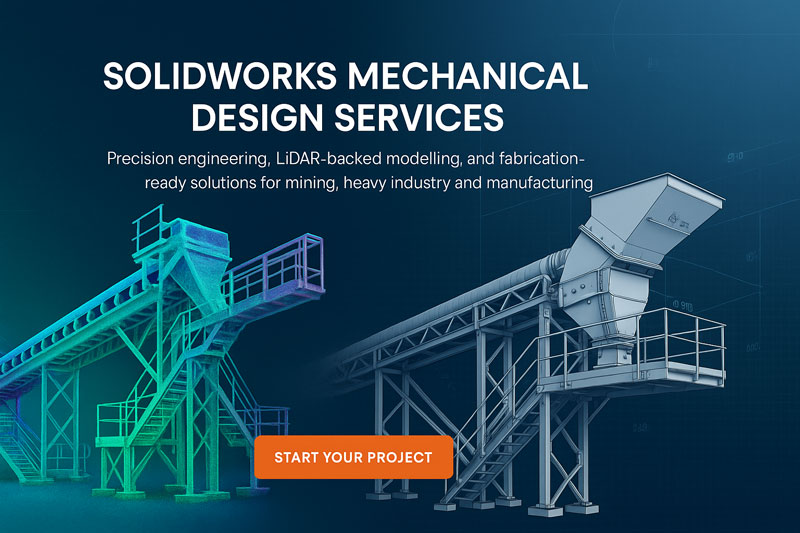
Hero image showing a LiDAR-coloured point-cloud model of an industrial conveyor system on the left transitioning into a detailed SolidWorks 3D CAD model on the right, with the heading โ€˜SolidWorks Mechanical Design Servicesโ€™ and a call-to-action button that reads โ€˜Start Your Projectโ€™

SolidWorks Design Services

The Many Faces of Mechanical Design: How SolidWorks Powers Modern Engineering Across Australia

At Hamilton By Design, we see the same pattern every day across mining, heavy industry, manufacturing, and complex brownfield environments: the quality of engineering outcomes depends directly on the quality of the models driving them. And when it comes to mechanical design, SolidWorks remains one of the most capable and versatile platforms on the planet.

From dragline components to sheet metal enclosures, from pressure vessel upgrades to bespoke robotics, SolidWorks enables engineers to turn ideas into precise, fabrication-ready models that reduce rework, eliminate uncertainty, and accelerate project delivery.

Below, we explore the full spectrum of mechanical design disciplines where SolidWorks excels โ€” and how Hamilton By Design uses this capability to deliver accurate, reliable, engineering-grade outcomes across Australia.


Why SolidWorks Remains the Backbone of Mechanical Design

SolidWorks brings together parametric modelling, simulation, large assembly performance, surfacing, sheet metal tools, weldments, routing and visualisation under a single environment. The result is powerful:

โœ” Engineering that is data-driven
โœ” Models that are precise and fabrication-ready
โœ” Assemblies that reflect true site conditions
โœ” Designs that respond intelligently to changes
โœ” Drawings that follow Australian Standards
โœ” Seamless integration with LiDAR-based as-builts

When paired with Hamilton By Designโ€™s LiDAR scanning workflows, SolidWorks becomes an engine for delivering zero-guesswork mechanical design.


Mechanical Design Disciplines Perfectly Suited to SolidWorks Modelling

SolidWorks supports a huge range of engineering tasks. Below is a deep dive into the disciplines where Hamilton By Design deploys it every day.


1. Machine Design: Precision for Moving Systems

SolidWorks is a natural fit for mechanical equipment upgrades and R&D design work, including:

  • Gearboxes, shafts, keys, couplings
  • Linear motion systems and actuators
  • Mechanical linkages, cams and levers
  • Robotic mechanisms
  • Safety guards, enclosures and subframes
  • Automation concept development

Whether weโ€™re modelling a drive assembly for a conveyor or designing a new piece of automated equipment, SolidWorks gives us full control over the mechanics, kinematics, clearances and manufacturability.


2. Structural Mechanical Design: Frames, Platforms & Fabrication

Mining and industrial plants rely heavily on welded structures and access systems. SolidWorks weldments excel at:

  • Platforms, walkways and stair systems
  • Equipment bases, skids and structural frames
  • Gantries, monorails and supports
  • Pipe supports and brackets
  • Structural reinforcements and upgrade scopes

Built-in cut lists, profile libraries and FEA ensure every frame is practical, safe and fabrication-ready.


3. Pressure Vessels, Tanks & Piping Systems

SolidWorks is an ideal tool for pressure-bound components and interconnected plant systems:

  • Tanks, vessels, bins and hoppers
  • Nozzles, flanges, stiffeners and ladders
  • Pipe routing and spooled sections
  • Chute systems, transitions and flow paths
  • Wear liners and maintenance-friendly redesigns

With stress linearisation, buckling analysis and accurate geometry import from LiDAR scans, we ensure designs meet engineering intent and fit up perfectly on site.


4. Sheet Metal: From Light Fabrication to Industrial Ducting

SolidWorks is the industry standard for sheet metal components:

  • Ducting and HVAC transitions
  • Guards, housings and folded enclosures
  • Electrical cabinets
  • Chute panels
  • Laser-cut and folded brackets

Automatic flat patterns and K-factor control mean fewer mistakes at the plasma/laser cutters and more predictable outcomes for fabricators.


5. Heavy Industry & Mining Equipment Modelling

Hamilton By Designโ€™s roots in mining and heavy industry make SolidWorks invaluable for:

  • Conveyor components and guarding
  • Diverter chutes, hoppers and flow-optimised transitions
  • Bucket-wheel reclaimer parts
  • Crusher and screen upgrades
  • Dragline component modelling
  • Structural deformation/realignment scopes

Combined with LiDAR scanning, SolidWorks becomes the tool that eliminates shutdown fit-up problems.


6. Product Design & Industrial Design

SolidWorksโ€™ surfacing and parametric tools are ideal for:

  • Consumer products
  • Power tools and ergonomic items
  • Injection-moulded components
  • Kitchen or appliance prototypes
  • Concept development for early-stage R&D

It supports rapid iterations, rendering, and export for 3D printing.


7. Robotics & Automation Systems

With the rise of automated processing and Industry 4.0, SolidWorks continues to shine in:

  • End effectors
  • Robotic arms and actuators
  • Kinematic studies
  • Sensor housings
  • Concept layouts for automated cells

We frequently pair this with our LiDAR models of existing plants to create automation solutions that genuinely fit the space.


8. Tooling, Jigs & Fixtures

Fabrication and machining rely on accurate tooling, and SolidWorks helps us design:

  • Welding jigs
  • Machining fixtures
  • Assembly tooling
  • Positioning and inspection gauges
  • Drill guides and alignment tooling

Parametric updates make future modifications simple and consistent.


9. Material Handling Systems

Across mining, ports, agriculture and waste facilities, SolidWorks supports:

  • Conveyor layouts
  • Screw and chain conveyors
  • Transfer chute redesigns
  • Feeders, bins and flow systems
  • Skids and support structures

We routinely pair mechanical redesign with simulation, checking wear patterns, stresses and clearances.


10. Reverse Engineering & As-Built Modelling from LiDAR

This is where Hamilton By Design leads the industry.

We scan sites with millimetre-level LiDAR, then rebuild clean parametric models in SolidWorks for:

  • Brownfield upgrades
  • Fit-up verification
  • Clash detection
  • Replacements and like-for-like manufacturing
  • Structural deformation assessments
  • Shutdown planning

It is the combination of LiDAR + engineering + SolidWorks that gives clients complete confidence in their next project.


How Clients Benefit from SolidWorks-Driven Mechanical Design

โœ” Reduced rework

โœ” Faster shutdown upgrades

โœ” Accurate manufacturing drawings

โœ” Better communication between engineers, fabricators and site teams

โœ” Safer and more predictable installations

โœ” Clear, simulation-backed decision-making

From CHPPs to ports, from power stations to manufacturing plants, SolidWorks modelling allows Hamilton By Design to deliver engineering outcomes you can trust.


Hamilton By Design logo displayed on a blue tilted rectangle with a grey gradient background

Partner With Hamilton By Design for SolidWorks Mechanical Design

We support clients across:

  • NSW (Sydney, Newcastle, Central Coast, Hunter Valley)
  • QLD (Bowen Basin, Surat Basin, Mount Isa)
  • WA (Perth, Pilbara)
  • SA, VIC and regional Australia

If your next project needs mechanical accuracy, design certainty or LiDAR-integrated engineering, our team is ready to support you.

Name
Address
You would like to:

Our clients

SolidWorks

3D Laser Scanning

Engineering Projects

Engineering Services

3D Laser Scanning for Engineering

3D LiDAR Scanning Hunter Valley Power Stations

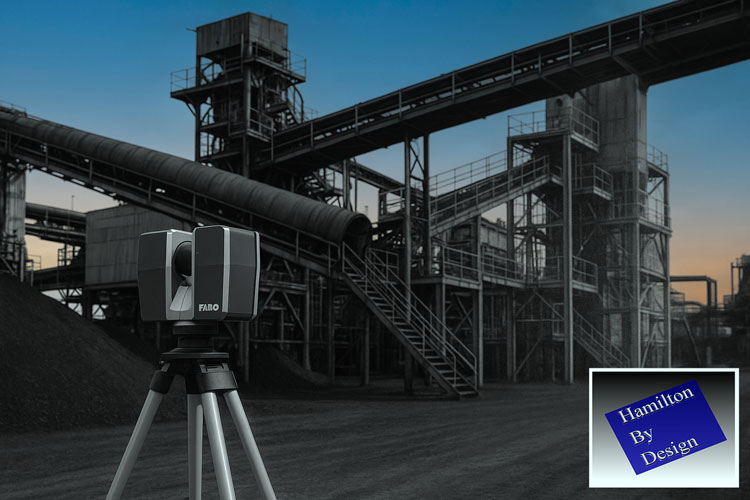
FARO 3D laser scanner set up on a tripod capturing an industrial plant for LiDAR scanning and digital modelling, with Hamilton By Design branding in the corner.

Unlocking Accuracy, Safety and Efficiency for Critical Infrastructure

The Hunter Valley is home to some of Australiaโ€™s most significant power generation assets. These power stations โ€” many of which have operated for decades โ€” supply energy to mining operations, manufacturing facilities, regional communities and industries throughout New South Wales. As these plants age and undergo continual maintenance, upgrades and redevelopment, the importance of accurate, reliable and safe measurement methods becomes increasingly critical.

Traditionally, engineers and maintenance teams have relied on manual measurements, outdated drawings or partial documentation to plan upgrades or execute shutdown work. But in complex, congested and ageing plant environments, this introduces risks, delays and expensive rework.

This is why 3D LiDAR scanning in Hunter Valley power stations has emerged as one of the most valuable tools for modern asset management, engineering and maintenance planning. LiDAR provides a millimetre-accurate digital snapshot of real-world conditions, enabling smarter, safer and more predictable project outcomes.

This article explores the benefits, applications, and pros and cons of 3D LiDAR scanning and explains why Hunter Valley power stations stand to gain significantly from adopting this technology.


Why Power Stations Need Accurate As-Built Data

Power stations are among the most complex industrial facilities in Australia. Over decades of operation, they experience:

  • Structural deformation
  • Settlement and movement
  • Corrosion and wear
  • Numerous undocumented modifications
  • Equipment realignments
  • Tight access restrictions
  • Ageing steelwork and infrastructure

In these environments, original construction drawings rarely match reality. As a result, engineers planning upgrades, shutdowns or replacements often face:

  • Inaccurate interface points
  • Misaligned structures
  • Unpredictable installation conditions
  • High rework costs
  • Safety delays
  • Poor shutdown timing

3D LiDAR scanning offers a precise, digital representation of the site, giving engineers the confidence they need to design upgrades accurately and eliminate guesswork.


The Benefits of 3D LiDAR Scanning for Hunter Valley Power Stations

1. Unmatched Measurement Accuracy for Complex Assets

A power station contains thousands of interconnected components:

  • Boilers
  • Turbines
  • Structural platforms
  • Pipe networks
  • Pressure vessels
  • Ducting systems
  • Conveyor bridges
  • Cooling towers
  • Electrical cabinets
  • Steel supports

Capturing these geometries manually is nearly impossible.

3D LiDAR scanning provides millimetre-level accuracy across enormous plant areas, allowing engineers to:

  • Create precise as-built models
  • Validate structural alignment
  • Check pipe routes and clearances
  • Identify interferences
  • Understand deformation over time
  • Design new works based on real geometry

This level of data is invaluable for maintaining safe and compliant power-generation operations.


2. Major Safety Improvements

Power stations present significant safety risks:

  • High-voltage environments
  • Confined spaces
  • Elevated platforms
  • Hot surfaces
  • Restricted access
  • Operational machinery

Manual measurement often requires workers to climb structures, enter hazardous zones or physically reach difficult areas.

3D LiDAR scanning dramatically reduces risk by:

  • Capturing data from safe distances
  • Eliminating the need for repeated access
  • Reducing time in hazardous zones
  • Minimising interaction with live equipment

For Hunter Valley power stations with strict safety requirements, this is a major benefit.


3. Reduced Shutdown Duration and Cost

Shutdowns are among the most expensive events for power-generation facilities. Every hour counts.

With 3D LiDAR scanning:

  • Engineers define accurate scopes before shutdown
  • Fabricators receive precise data and cut steel correctly
  • Digital fit checks identify issues early
  • Installation is faster and smoother
  • Delays due to bad measurements are eliminated

This leads to shorter outages, safer work and fewer unexpected problems.


4. Supports Engineering, Design and Structural Integrity Works

Power stations frequently require:

  • Boiler upgrades
  • Turbine area modifications
  • Ducting and flue replacements
  • Pipework rerouting
  • Cooling-system upgrades
  • Structural strengthening
  • Platform and walkway replacements
  • Electrical equipment relocations

All of these tasks depend on accurate geometry.

3D LiDAR scanning supports engineering teams by providing:

  • Reference geometry for load calculations
  • Verified connection points
  • True alignment data
  • Accurate slope and deflection measurements
  • High-resolution drawings and 3D models

This ensures engineering decisions are made using verified, real-world information.


5. Perfect for Brownfield and Congested Environments

Power stations are some of the most complex brownfield assets in the industrial landscape. They contain layers of modifications, years of retrofits and areas where access is extremely limited.

3D LiDAR scanning excels at capturing:

  • Tight clearances
  • Overlapping structures
  • Equipment clusters
  • Interconnected pipes
  • Hard-to-reach surfaces

This makes it ideal for planning:

  • New platforms
  • Replacement ducting
  • Pipe realignments
  • Structural upgrades
  • Asset lifecycle extensions

The result: fewer surprises during installation.


6. Better Collaboration Between Teams

Power stations typically involve:

  • Maintenance teams
  • OEMs
  • Engineering consultants
  • Fabricators
  • Shutdown managers
  • Safety personnel
  • Project delivery teams

3D LiDAR scanning enables everyone to work from the same digital truth.

Point clouds and 3D models allow:

  • Remote site understanding
  • Clear communication
  • Digital reviews instead of repeated site visits
  • Improved planning alignment

For Hunter Valley projects involving multiple contractors, this significantly boosts performance.


Pros and Cons of 3D LiDAR Scanning

Like any technology, LiDAR has strengths and limitations. Understanding both helps power station operators make informed decisions.


Pros

โœ” Extremely high accuracy

Millimetre precision for large and complex areas.

Fast data capture

Reduces time spent in hazardous areas.

Clear visibility of congested spaces

Captures geometry that traditional methods miss.

Enhances engineering confidence

Designers base work on verified conditions.

Reduces installation rework

Fabrication matches the real site exactly.

Supports digital engineering workflows

Perfect input for CAD, BIM, simulation and modelling.

Safer measurement practices

Less climbing, reaching and confined-space entry.


Cons

Requires skilled interpretation

Point cloud data must be processed by trained technicians or engineers.

Large file sizes

High-resolution scans require strong computing resources.

Reflective or transparent surfaces can create challenges

Requires technique or matte marking in some areas.

Upfront cost may seem higher

But it eliminates far greater downstream costs in rework and shutdown delays.

Despite these considerations, LiDAR scanning remains the most cost-effective measurement tool for power station environments.


Why Hunter Valley Power Stations Benefit More Than Most

The Hunter Valley industrial landscape presents unique challenges:

  • Ageing energy infrastructure
  • Multiple retrofits and undocumented modifications
  • Extremely tight maintenance windows
  • Harsh environmental conditions
  • Congested structures with difficult access
  • High safety standards
  • Heavy reliance on local fabrication accuracy

3D LiDAR scanning Hunter Valley power stations provides the one thing these facilities need most: confidence.

Confidence in measurements.
Confidence in fabrication.
Confidence during shutdowns.
Confidence in engineering decisions.
Confidence in safety performance.

Few regions stand to gain more from LiDAR than the Hunter.


Hamilton By Design: Supporting Hunter Valley Power Stations with Advanced LiDAR Solutions

Hamilton By Design brings together:

  • Engineering expertise
  • On-site scanning capability
  • CAD modelling and drafting
  • Fabrication-ready documentation
  • Digital fit-checking and clash detection
  • Mechanical and structural design experience

We understand the complex realities of power-station environments, and we deliver precise, reliable and engineering-ready digital data for:

  • Boiler upgrades
  • Turbine hall modifications
  • Structural replacements
  • Pipe rerouting
  • Platform and access upgrades
  • Ducting and flue modifications
  • Cooling tower projects
  • Balance-of-plant improvements

Every model, point cloud and drawing is produced with installation success and fabrication accuracy in mind.


Conclusion: 3D LiDAR Scanning is the New Standard for Hunter Valley Power Stations

As the Hunter Valley transitions into a future of renewable generation, asset extension and industrial redevelopment, 3D LiDAR scanning stands out as a technology that delivers real, immediate value.

It improves safety.
It increases accuracy.
It reduces rework.
It enables better engineering.
It shortens shutdowns.
It lowers project risk.

Power stations across the Hunter Valley rely on critical, ageing and highly complex infrastructure โ€” infrastructure that demands accurate, reliable digital measurement.

Hamilton By Design is proud to support the region with advanced laser scanning technologies that empower engineers, fabricators, supervisors and project managers to work smarter, safer and more efficiently.

Hamilton By Design logo displayed on a blue tilted rectangle with a grey gradient background

3D Laser Scanning

Hunter Valley Laser Scanning: Transforming Engineering Accuracy Across Mining, Manufacturing and Infrastructure

3D Laser Scanning in Singleton and the Hunter: Delivering Accuracy for Mining, Manufacturing and Industrial Projects

Laser Scanning Hunter Valley: Delivering Engineering-Grade Accuracy for Mining, Manufacturing and Industrial Projects

Our clients

Name
Address
You would like to:

Mechanical Engineering Sydney: Why Local Expertise Beats Offshore Design

When Local Knowledge Makes All the Difference

Across Sydney, the Central Coast, and Newcastle, more contractors and plant managers are discovering a simple truth โ€” offshore engineering might look cost-effective, but local expertise delivers better outcomes every time.

When drawings donโ€™t meet Australian Standards, materials canโ€™t be sourced locally, or site measurements are off by just a few millimetres, โ€œcheapโ€ design quickly becomes expensive rework.

Thatโ€™s why businesses across NSW are turning to Hamilton By Design โ€” a Sydney-based mechanical engineering practice that understands how to bridge design and construction through real-world experience, compliance, and precision.

Illustrated infographic showing Hamilton By Designโ€™s 3D scanning workflow in Sydney, including onsite LiDAR scanning, point-cloud processing, SolidWorks modelling, and local fabrication, with Sydney landmarks in the background

Built for Australia, Not Adapted for It

Engineering design isnโ€™t universal.
Sydneyโ€™s environment, industry, and regulatory framework are unique โ€” from local council approval requirements to the coastal conditions that affect corrosion and material selection.

At Hamilton By Design, our drawings and models are created with Australian Standards front and centre. We design for:

  • AS 4100 (Steel Structures)
  • AS 3990 (Mechanical Equipment Design)
  • AS 1657 (Walkways, Platforms & Stairs)
  • AS 4991 (Lifting Devices)
  • AS 4024 (Machine Safety)

Designing to these standards means your project moves faster through approvals, fabrication, and certification โ€” with no surprises down the track.

Offshore designers often mean well, but they donโ€™t work within these standards every day.
A single misinterpreted load case or welding symbol can mean days of rework on site.
A local engineer gets it right the first time.


Drawings That Fabricators Love

A good drawing doesnโ€™t just look professional โ€” it saves hours in the workshop.
Hamilton By Design creates fabrication drawings that make sense to the people who use them.

We think like tradespeople because weโ€™ve been tradespeople.
Our background in fitting, machining, and CNC fabrication ensures every detail โ€” from weld prep to bolt clearances โ€” reflects how the job will actually be built.

That means fewer questions from the shop floor, cleaner fit-ups, and faster turnaround from fabrication to installation.

FARO 3D laser scanner set up on a tripod capturing an industrial plant for LiDAR scanning and digital modelling, with Hamilton By Design branding in the corner

Local Materials. Local Supply Chains. Fewer Delays.

Sydneyโ€™s fabrication and construction industry runs on locally available materials โ€” from Bluescope steel to Bisalloy plate.
When offshore drawings specify unavailable materials or imperial sizes, fabrication stalls.

Our team specifies components, sections, and finishes that Sydney and Central Coast suppliers actually stock.
That reduces lead times, avoids substitutions, and keeps projects moving.

We also design with Sydneyโ€™s coastal environment in mind โ€” using corrosion-resistant coatings, sealants, and fasteners suitable for marine-influenced locations like Parramatta, Botany, and Gosford.


Designed to Fit the Site โ€” The First Time

Itโ€™s one thing to design in CAD; itโ€™s another to make it fit in the field.
Sydney worksites can be complex โ€” restricted access, uneven terrain, or legacy structures that donโ€™t match the old drawings.

Thatโ€™s why Hamilton By Design uses 3D scanning and LiDAR technology to capture accurate site data before design begins.
We integrate those scans directly into SolidWorks, building models that align with real-world geometry.

Every bracket, pipe run, and platform is verified in 3D before fabrication starts โ€” ensuring a smooth installation with no rework.


Sydney Expertise with Regional Reach

We proudly serve clients across Sydney, Newcastle, and the Central Coast, working with builders, maintenance contractors, and fabrication workshops who value local knowledge.

Our typical projects include:

  • Plant upgrades and retrofits in brownfield sites.
  • Fabrication drawing packages for chutes, platforms, and pipework.
  • Reverse engineering from worn or obsolete components.
  • 3D scanning for as-built documentation.
  • Finite Element Analysis (FEA) for structural verification.

Every project benefits from our combined trade and engineering background โ€” practical solutions grounded in decades of hands-on experience.


Smooth Communication. Real Accountability.

When you work with a local engineer, youโ€™re not waiting overnight for an email response from another time zone.
You can pick up the phone, meet on site, or review models in person.

That direct collaboration saves time, reduces misunderstandings, and builds confidence between all stakeholders โ€” engineers, fabricators, and project managers alike.

At Hamilton By Design, we value clear communication. Youโ€™ll know exactly what stage your project is at, what weโ€™re designing, and how it aligns with your goals.


The Real Cost of Offshore Design

Offshore pricing often looks appealing โ€” until you factor in delays, non-compliance, or fabrication mismatches.
Hereโ€™s what typically happens when projects cut corners:

ChallengeOffshore DesignLocal Expertise (Hamilton By Design)
Standards & CodesOften missed or misappliedFully compliant with AS/NZS standards
Material AvailabilitySpecified incorrectlyDesigned for Australian supply chains
CommunicationDelayed and unclearDirect, same-day response
Site UnderstandingBased on photosBased on 3D scans and site visits
Rework RiskHighMinimal โ€“ verified before fabrication

When you calculate the true cost โ€” lost time, rework, freight, and approval delays โ€” offshore design rarely saves money.

Technician using a FARO 3D laser scanner and tablet to capture a construction site for digital modelling, with 3DEXPERIENCE and SolidWorks logos shown on the side

Real Example: Central Coast Fabrication Success

A local contractor recently engaged Hamilton By Design to assist with a pump platform upgrade on the Central Coast.
Previous offshore drawings had mismatched hole patterns and unsupported loads.

We performed a quick 3D scan, remodelled the assembly in SolidWorks, and issued fabrication drawings ready for workshop production.
The new structure was installed without modification, saving the client several days of rework and earning rapid certifier approval.

Thatโ€™s what local insight delivers โ€” certainty and speed.


Why Choose a Sydney-Based Engineer

Sydney projects move quickly.
They need partners who can respond fast, understand the regulations, and coordinate seamlessly with site teams.

Hamilton By Design offers:
โœ… Over 25 years of trade and design experience
โœ… SolidWorks and FEA capability since 2011
โœ… 3D scanning and as-built modelling for existing plants
โœ… Fabrication drawings built for local workshops
โœ… Practical designs created by people whoโ€™ve worked in the field

Weโ€™re based in Sydney and proud to support regional clients in Newcastle, the Central Coast, and Western Sydney.


Talk to a Sydney-Based Engineer Whoโ€™s Worked in the Field

Every project is a partnership โ€” and great results come from working with people who understand your environment.
Hamilton By Design isnโ€™t just another design service; weโ€™re your local mechanical engineering partner โ€” practical, responsive, and invested in your success.

If youโ€™re planning a plant upgrade, mechanical installation, or fabrication project, letโ€™s make sure your drawings are done right the first time.

Banner displaying Hamilton By Design alongside partner and technology logos including SolidWorks, UTS, Dassault Systรจmes 3DEXPERIENCE, and FARO, with the text โ€˜3D Scanning 3D Modellingโ€™ and website www.hamiltonbydesign.com.au

๐Ÿ‘‰ Talk to a Sydney-based engineer whoโ€™s worked in the field.
Visit www.hamiltonbydesign.com.au or contact us today to discuss your next project.