Bulk Material Handling in Mining: Engineering the Movement of Raw Materials from ROM to Plant

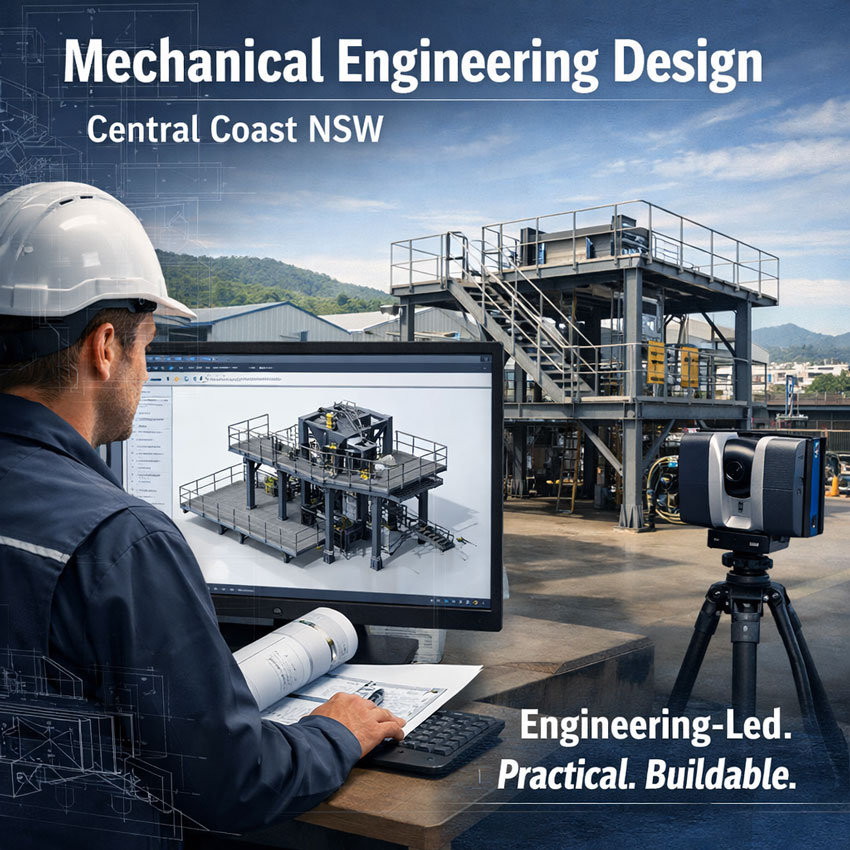
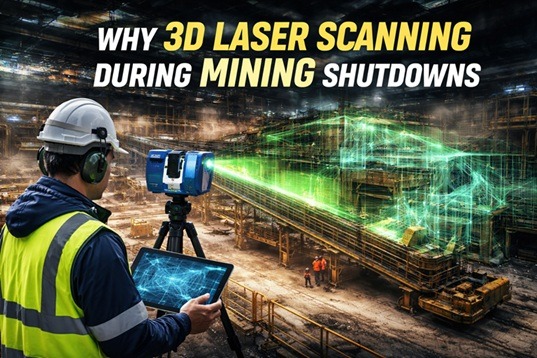
Mechanical engineer and client reviewing a ROM hopper with two discharge conveyors using LiDAR scanning at a mining bulk material handling facility

Bulk Material Handling in Mining | ROM, Conveyors & Transfer Engineering

Bulk material handling is at the core of almost every mining operation. From the moment raw material is extracted at the Run-of-Mine (ROM) pad through to crushing, screening, processing, and stockpiling, the safe and efficient movement of material is critical to productivity, asset reliability, and worker safety.

At Hamilton By Design, we support mining and heavy-industry clients with engineering-led mechanical design, verification, and documentation for bulk material handling systemsโ€”focusing on conveyors, transfer points, chutes, ROM bins, hoppers, and associated steelwork.


Engineering-led ROM hopper and dual conveyor discharge system being verified with LiDAR scanning in an open-cut mining operation

What Is Bulk Material Handling in Mining?

Bulk material handling refers to the mechanical systems used to move large volumes of raw or processed material, including:

  • Run-of-Mine (ROM) ore
  • Crushed rock and coal
  • Overburden and rejects
  • Processed product and fines

These systems typically include:

  • Apron feeders and ROM bins
  • Primary, secondary, and tertiary crushers
  • Conveyor belts and transfer stations
  • Chutes, hoppers, and bins
  • Stackers, reclaimers, and stockpiles

Each interface between machines is a design-critical point where poor geometry, misalignment, or incorrect loading assumptions can lead to blockages, excessive wear, spillage, downtime, and safety risks.


Engineering Challenges in Bulk Material Handling

Bulk handling systems operate under harsh conditions and face unique engineering challenges:

1. Variable Material Properties

  • Changes in moisture content, particle size, and bulk density
  • Segregation and fines generation
  • Adhesion and carryback issues

2. Transfer Point Design

  • Impact loading and wear at chute inlets
  • Flow control and trajectory management
  • Dust, spillage, and maintenance access

3. Structural and Mechanical Loads

  • Dynamic loads from material flow
  • Belt tensions and starting/stopping forces
  • Fatigue in steelwork and supports

4. Brownfield Constraints

  • Existing plant geometry and limited space
  • Legacy drawings that donโ€™t reflect as-built conditions
  • Shutdown-driven installation windows

These challenges reinforce why engineering-led design, supported by accurate site data, is essential.


From ROM to Processing: A System-Based Engineering Approach

Hamilton By Design approaches bulk material handling as a complete system, not isolated components.

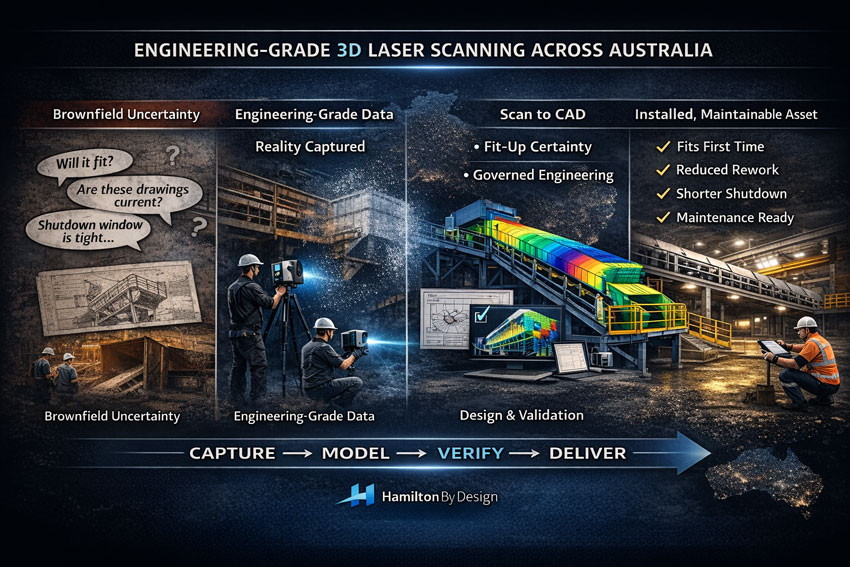
Our typical workflow includes:

  1. Engineering-led site verification
    Using high-accuracy 3D LiDAR scanning to capture existing conditions at ROM pads, conveyors, and plant interfaces.
  2. Mechanical and structural design
    Developing fit-for-purpose conveyor layouts, transfer chutes, supports, and access platforms using SolidWorks-based workflows.
  3. Load definition and verification
    Applying realistic material loads and operational scenarios to reduce over-design and manage fatigue risk.
  4. Fabrication-ready documentation
    Producing drawings and models that support fit-first-time fabrication and installation during shutdowns.

This integrated approach reduces rework, delays, and operational risk.


Conveyor Transfer Points: Where Most Problems Begin

Transfer points are the highest-risk locations in bulk material handling systems.

Common issues include:

  • Poor material trajectory control
  • Excessive impact and liner wear
  • Dust escape and spillage
  • Restricted inspection and maintenance access

Engineering-led transfer design considers:

  • Material flow paths and impact angles
  • Chute geometry and liner selection
  • Maintenance clearances and access
  • Compliance with guarding and safety standards

Well-designed transfer points improve availability, reduce maintenance costs, and enhance safety outcomes.


Why Engineering Matters More Than Ever in Mining Handling Systems

As mining operations push for higher throughput and tighter shutdown schedules, the tolerance for design error is shrinking.

Engineering-driven bulk material handling delivers:

  • Predictable material flow
  • Reduced downtime and blockages
  • Improved safety and maintainability
  • Defensible design records for audits and compliance

This is especially important in brownfield mining environments, where assumptions based on outdated drawings can introduce significant risk.


Mining engineers applying design-for-safety principles to improve material handling systems in an industrial workshop

Supporting Mining Operations Across Australia

Hamilton By Design supports bulk material handling projects across:

  • Coal handling and preparation plants (CHPPs)
  • Hard-rock crushing and screening facilities
  • Mineral processing plants
  • Ports, stockyards, and materials terminals

Our experience spans ROM handling, conveyors, transfer chutes, and plant upgrades, backed by practical site experience and engineering accountability.


Hamilton By Design logo displayed on a blue tilted rectangle with a grey gradient background

Speak With an Engineer

If you are planning:

  • A ROM handling upgrade
  • Conveyor or transfer chute modifications
  • Crushing plant changes
  • Shutdown-driven bulk handling works

๐Ÿ‘‰ Contact Hamilton By Design to discuss an engineering-led approach that reduces risk and improves outcomes.


Name
Would you like us to arrange a phone consultation for you?
Address

Our clients:


https://www.hamiltonbydesign.com.au/insights/bulk-materials-conveyor-transfer
https://www.hamiltonbydesign.com.au/standards/as-1755-conveyor-safety
https://www.hamiltonbydesign.com.au/insights/bulk-materials-conveyor-transfer

Learning From Industry Incidents

Engineers reviewing industrial design improvements in a mining fabrication workshop using engineering controls to reduce safety risks

Learning From Mining Industry Incidents | Engineering Insight

Why Engineers Study Failures Without Assigning Blame

In engineering, learning does not come only from success.

Some of the most valuable improvements in safety, reliability, and design practice come from studying incidents after they occur โ€” not to assign blame, but to better understand how systems behave under real-world conditions.

At Hamilton By Design, our interest in industry incidents is purely educational.
We do not provide legal opinions, and we do not involve ourselves in litigation.
Our focus is engineering learning and risk reduction.


Why Engineers Study Incidents

Engineering is a discipline built on:

  • Understanding failure modes
  • Learning from unintended outcomes
  • Improving designs so similar events are less likely to occur again

Courts determine liability.
Engineers determine how systems can be made safer.

These are very different roles.


Mining engineers applying design-for-safety principles to improve material handling systems in an industrial workshop

An Example From the Mining Fabrication Sector

A recent court-reported incident in the Australian mining fabrication sector involved a serious worker injury during the handling of a large steel plate.

This event has been widely reported in industry safety communications and regulator summaries.
The matter has been dealt with by the courts.

Our interest is not who was responsible โ€” but what can be learned from an engineering and design perspective.


Separating Legal Outcomes From Engineering Lessons

When incidents are discussed publicly, it is easy for conversations to drift toward:

  • Fault
  • Error
  • Individual actions
  • Compliance outcomes

From an engineering standpoint, a more useful question is:

โ€œWhy was this failure mode possible in the first place?โ€

This shifts the focus from people to systems.


The Engineering Perspective: Systems, Not Individuals

In fabrication, mining, and heavy industry environments, engineers routinely work with:

  • Large masses
  • Stored energy
  • Gravity-driven hazards
  • Tight workspaces
  • Time pressure

In these environments, safe outcomes should not rely on:

  • Perfect timing
  • Continuous vigilance
  • People always being in the right place

Good engineering design assumes:

  • Humans make mistakes
  • Conditions change
  • Equipment can fail
  • Distractions occur

And it designs accordingly.


Learning Through the Hierarchy of Controls

One of the most useful tools engineers have for learning from incidents is the hierarchy of controls.

From a learning perspective, incidents often highlight opportunities to move risk higher up the hierarchy:

  • Can the hazard be eliminated?
  • Can the task be re-designed so people are not exposed?
  • Can engineering controls prevent a single failure from becoming an injury?
  • Are procedures being used where physical controls could exist instead?

These are design questions, not legal ones.


Why This Matters for Engineering Practice

Studying incidents like this helps engineers:

  • Identify hidden assumptions in workshop layouts
  • Improve material handling design
  • Reduce reliance on administrative controls
  • Design processes that are more tolerant of variation
  • Prevent โ€œnormalisedโ€ risk from becoming invisible

Importantly, these lessons apply well beyond a single incident or company.


The Link to Broader Engineering Failures

The same learning approach is used when engineers study:

  • Structural failures
  • Mining incidents
  • Equipment damage
  • Tailings dam collapses
  • Process plant upsets

In each case, the goal is the same:

Understand how design decisions influence risk over time.

Not to judge โ€” but to improve.


Our Position at Hamilton By Design

To be clear:

  • We do not comment on legal responsibility
  • We do not provide expert opinions on prosecutions
  • We do not participate in legal proceedings

Our interest is strictly:

  • Engineering learning
  • Design improvement
  • Risk reduction
  • Better outcomes for industry

We believe that open, professional learning from incidents strengthens engineering practice and improves safety across the sector.


Final Thought

Engineering advances when professionals are willing to say:

โ€œWhat can we learn from this?โ€

Without blame.
Without legal positioning.
Without hindsight judgement.

Just better design, informed by real-world experience.


๐Ÿ“ฉ Engineering-Led Design Matters

If youโ€™re working in mining, fabrication, or heavy industry and want to reduce risk through better design decisions, Hamilton By Design supports engineering-led thinking that prioritises:

  • Hazard elimination
  • Fit-first-time outcomes
  • Design-for-fabrication
  • Systems that donโ€™t rely on perfect behaviour

Talk to an engineer early.

Name
Would you like us to arrange a phone consultation for you?
Address

Why Good Design Matters More Than Project Management

Why Engineering Design Matters More Than Project Management

Lessons from Tailings Dam Failures in the Global Mining Industry

In engineering-led industries such as mining, construction, and heavy manufacturing, project management is often seen as the key to success โ€” on time, on budget, and on scope.

However, history shows that when failures occur, they are rarely caused by poor project management alone.

Some of the most serious industrial failures in the world โ€” including tailings dam collapses โ€” demonstrate a critical truth:

Project management cannot compensate for poor or marginal engineering design.

At Hamilton By Design, we believe design sets the safety ceiling. Project management operates within it.


Project Management Executes โ€” Design Determines Risk

Project management is essential. It coordinates people, schedules, procurement, and delivery. But it does not:

  • Increase a structureโ€™s factor of safety
  • Prevent liquefaction
  • Change material behaviour
  • Improve drainage capacity
  • Create resilience to abnormal conditions

Those outcomes are locked in at the design stage.

If a system requires perfect execution to remain safe, then the design is already fragile.

Good engineering design assumes:

  • Humans make mistakes
  • Weather exceeds forecasts
  • Equipment fails
  • Maintenance is imperfect

And it builds in margin, redundancy, and tolerance accordingly.


Tailings Dam Failures: A Clear Engineering Example

Tailings dam failures provide one of the clearest illustrations of the difference between design responsibility and project management responsibility.

Post-failure investigations across multiple countries consistently show that:

  • Many failed dams were operating as intended
  • Rainfall events were often within design assumptions
  • Operators followed approved procedures
  • Warning signs existed but reflected systemic weakness, not isolated mistakes

The common thread was not poor scheduling or cost control โ€” it was design philosophy.

Typical design-level issues identified:

  • Excess water retained in tailings
  • Low-density slurry disposal
  • Marginal stability under normal variability
  • Reliance on operational controls to maintain safety
  • Legacy designs never upgraded to match increased production

When a dam fails after a rainfall event, the rain is usually the trigger โ€” not the root cause.


Why Design Must Be Forgiving of Operations

Engineering design should be robust, not optimistic.

A safe design is one where:

  • Small operational deviations do not create instability
  • Water balance can tolerate extreme events
  • Safety does not depend on constant intervention
  • Failure modes are slow, visible, and recoverable

When operators or project managers are forced to โ€œmanage aroundโ€ design weaknesses, risk accumulates silently.

If safety relies on perfect behaviour, the system is unsafe by design.


The Australian Perspective: Design First, Then Manage

Australiaโ€™s generally strong tailings safety record reflects a broader engineering mindset:

  • Conservative design assumptions
  • Strong emphasis on water recovery and thickened tailings
  • Avoidance of high-risk construction methods
  • Independent engineering review
  • Design-for-closure thinking

Project management remains critical โ€” but it is not asked to compensate for marginal engineering.

This philosophy extends beyond tailings dams into:

  • Bulk materials handling
  • Structural steelwork
  • Brownfield upgrades
  • Shutdown-critical fabrication
  • Plant modifications

What This Means for Mining and Industrial Projects

The lesson is simple but powerful:

Engineering design controls risk.
Project management controls delivery.

When design is done properly:

  • Project management becomes easier
  • Variability is absorbed safely
  • Failures become unlikely rather than inevitable

When design is compromised:

  • Project management is left managing risk it cannot remove
  • The system becomes fragile
  • Incidents become a matter of when, not if

Our Approach at Hamilton By Design

At Hamilton By Design, we work from the principle that:

  • Design must be defensible
  • Assumptions must be explicit
  • Failure modes must be understood
  • Engineering judgement must lead delivery

Whether weโ€™re supporting:

  • Mining infrastructure
  • Tailings-adjacent plant systems
  • Bulk materials handling
  • Brownfield modifications
  • Shutdown-critical upgrades

We prioritise engineering-led design decisions that reduce reliance on operational heroics.


Final Thought

Project management is essential โ€” but it should never be asked to solve problems that only engineering design can prevent.

The safest projects are not the best managed ones โ€”
they are the best designed ones.

Hamilton By Design logo displayed on a blue tilted rectangle with a grey gradient background

Talk to an Engineer First

If your project involves:

  • High-risk infrastructure
  • Brownfield modifications
  • Water-sensitive systems
  • Shutdown-critical works

Get engineering involved early.
Contact Hamilton By Design to discuss an engineering-led approach that reduces risk before construction begins or Be part of the discussion.

Name
Would you like us to arrange a phone consultation for you?
Address

Project Management, Programme Control & Safety on Thai Infrastructure Projects

Engineers reviewing a project schedule beside live rail construction, illustrating the link between programme control, temporary works, and public safety in infrastructure projects.

Building the Case for Stronger Project-Management Governance on Thai Infrastructure Projects

Recent infrastructure failures in Thailand have highlighted an issue that extends beyond construction capability, technical standards, or nationality. The common thread running through these events is how large projects are governed, scheduled, and controlled.

This discussion is not about blame.
It is about delivery systems, incentives, and authority โ€” and whether current models are sufficiently robust for complex work undertaken beside live roads, rail, and the public.


The delivery context

Many major infrastructure projects in Thailand are delivered through government-to-government frameworks involving international state-linked partners, including Chinese state-owned enterprises such as China Railway Engineering Corporation and related entities.

Within these arrangements:

  • local contractors typically hold construction responsibility
  • international partners provide systems, standards, technical authority, or programme input
  • project milestones are tightly defined and politically significant

This model brings scale, funding certainty, and delivery speed. It also creates predictable pressure points that deserve closer examination.


Infrastructure project managers assessing schedules during crane operations near live rail, representing safety governance and programme control in complex urban construction.

What the recent failures tell us

The incidents that have triggered concern were not failures of rail technology or permanent structural design. They were predominantly:

  • temporary works failures
  • crane and staging incidents
  • work undertaken adjacent to live public corridors

These are execution and sequencing failures, not design failures โ€” and they are heavily influenced by programme structure and schedule control.

This leads to a fundamental governance question:

Who has the authority to change the programme when safe sequencing requires it?


Programme control is not neutral

When schedules are:

  • externally fixed
  • politically sensitive
  • commercially punitive to miss

risk does not disappear. It is transferred downward.

In practice, this often manifests as:

  • parallel work instead of sequential isolation
  • reduced exclusion zones
  • reliance on procedural controls rather than engineered separation
  • temporary works treated as โ€œmeans and methodsโ€ instead of engineered systems

None of this requires bad intent. It is a system response to inflexible programmes.


The role of Chinese state-owned enterprises

Chinese SOEs involved in these projects are not typically the principal construction contractors. However, they often exert significant influence over programme structure, milestones, and delivery expectations.

Across multiple countries, state-linked delivery models tend to exhibit consistent characteristics:

  • strong emphasis on schedule certainty
  • delegation of safety responsibility to downstream contractors
  • limited flexibility once programme commitments are set
  • incidents framed as execution issues rather than programme-design issues

Whether fair or not, this creates a perception that delivery behaviour is structurally stable and slow to change, even after serious failures.

That perception alone justifies a review of governance arrangements.


Why Australian project-management capability is relevant

Australian companies were not in project-management or programme-control roles on the projects that failed. As a result, Australian safety-governance practices were not embedded in the delivery model.

Australian project-management frameworks are shaped by:

  • acceptance that schedules must move to protect safety
  • independent temporary-works engineering and sign-off
  • explicit treatment of live-interface work as a programme risk
  • separation between commercial pressure and safety authority
  • deep experience in brownfield, shutdown, and live-asset environments

This does not make Australian firms better builders.
It makes them effective governance counterbalances in high-risk delivery environments.


The case for change

The argument is not to exclude existing partners.
It is to strengthen governance.

A more resilient delivery model could include:

  • Australian firms in programme-management or independent PM roles
  • independent temporary-works authorities reporting outside the construction chain
  • schedule-risk reviews with genuine authority to resequence work
  • clearer separation between political milestones and construction logic

These measures do not slow projects โ€” they prevent catastrophic delay caused by failure.


The central point

Safety outcomes are not determined by nationality or intent.
They are determined by who controls the programme, how flexible it is, and whether safety has real authority over time and cost.

Strengthening that authority is a rational, evidence-based step forward.


The power of the people

Real improvement in infrastructure delivery does not start with press releases.
It starts when engineers, supervisors, workers, and communities speak openly about how projects are actually delivered.

Those closest to the work experience programme pressure and safety trade-offs long before failures occur. Giving space to those voices is not about blame โ€” it is about learning, transparency, and better governance.

When people are allowed to speak, systems are forced to listen.


Hamilton By Design logo displayed on a blue tilted rectangle with a grey gradient background

Comments are open

This post is intended to encourage informed, professional discussion about project-management models, programme control, and safety governance.

The focus is on systems and incentives โ€” not nationality or individual blame.
Constructive perspectives from those with professional or on-the-ground experience are welcome.


Our clients:


Name
Would you like us to arrange a phone consultation for you?
Address

SolidWorks Perth | Engineering-Led SolidWorks Drafting Services

Engineering-led SolidWorks drafting in Perth with 25 years of Hamilton By Design experience

If youโ€™re searching for SolidWorks Perth, youโ€™re likely looking for reliable SolidWorks drafting support that produces drawings and models that fabricate and install correctly โ€” not just CAD files that look good on screen.

Hamilton By Design provides engineer-led SolidWorks drafting services in Perth, supporting WA fabricators, contractors, and industrial operators with fabrication-ready documentation and practical engineering judgement.


Engineer-Led SolidWorks Drafting Support for Perth & WA Projects

Perth projects often involve brownfield assets, tight access, and programmes where mistakes turn into rework, delays, and cost. The biggest risk isnโ€™t โ€œcan we model it?โ€ โ€” itโ€™s whether the drawings reflect:

  • Site reality
  • Fabrication constraints
  • Tolerances and interfaces
  • Installation sequencing and access

Thatโ€™s why our SolidWorks drafting is engineering-led.


Who Engages SolidWorks Drafting Services in Perth

Perth clients commonly engage us when they need to:

  • Outsource SolidWorks drafting with engineering oversight
  • Update or recreate drawings that no longer match existing plant
  • Add drafting capacity during tenders, shutdowns, or project spikes
  • Produce workshop drawings that fabricators can build from
  • Reduce fit-up risk on modifications and upgrades

Many enquiries start as โ€œhire a SolidWorks drafter Perthโ€ โ€” but our service is built for clients who also want engineering judgement behind every drawing.


SolidWorks Drafting Services We Provide in Perth

Our Perth SolidWorks drafting support includes:

  • Mechanical part and assembly drafting
  • Fabrication-ready workshop drawings
  • Structural and support steel detailing (where applicable)
  • Upgrade and modification drawing packages
  • Reverse-engineered part drawings (from site data)
  • As-built documentation and drawing updates
  • CAD outputs suitable for fabrication workflows and project handover

All deliverables are created with fabrication and installation readiness in mind โ€” not just CAD accuracy.


Why Engineering-Led Drafting Matters

SolidWorks is a powerful platform, but CAD alone does not prevent project failure.

Engineering-led drafting helps Perth teams by:

  • Reducing tolerance and interface clashes before fabrication
  • Producing drawings that are clear and buildable under real constraints
  • Supporting tender-stage decisions with accurate documentation
  • Minimising rework and improving shutdown certainty

This approach is particularly valuable on brownfield and shutdown-critical works in WA.


SolidWorks 30 years cube with Hamilton By Design highlighting 25 years of SolidWorks use in Perth, Western Australia

Need Extra Drafting Capacity? Secondment Available

If your Perth team needs extra drafting capacity integrated into your workflow, we also offer engineering-led secondment services.

Learn more about Secondment Services

Secondment is ideal for:

  • Fabricators scaling up for tenders
  • Project teams during peak design / drafting loads
  • Shutdown and brownfield upgrade packages requiring close coordination

Industries We Commonly Support Around Perth

We support SolidWorks drafting and engineering documentation for:

  • Mining services and resources contractors
  • Oil & gas / energy infrastructure
  • Fabrication and structural steel workshops
  • Ports, logistics, and bulk handling facilities
  • Manufacturing and industrial maintenance teams

Whether youโ€™re in Perth metro, Kwinana, Henderson, or supporting regional WA operations, we can deliver drafting support with clear scope and disciplined outputs.


Our clients:


How We Differ From Drafting-Only Providers

Many drafting vendors deliver CAD files but do not own fit-up risk.

Hamilton By Design provides:

  • Engineering ownership, not drafting in isolation
  • Fabrication-aware drawings aligned to real build constraints
  • Better interface clarity and reduced interpretation risk
  • Accountable outputs suited to procurement, fabrication, and installation

This is drafting designed to perform on site.


Hamilton By Design logo displayed on a blue tilted rectangle with a grey gradient background

Speak With an Engineer About SolidWorks Drafting in Perth

If youโ€™re looking for SolidWorks drafting support in Perth โ€” whether as a defined drafting package or embedded secondment โ€” letโ€™s talk early and reduce risk before fabrication begins.

Use the contact form below to discuss your Perth SolidWorks drafting requirements.

Name
Would you like us to arrange a phone consultation for you?
Address

Mechanical Engineering Melbourne | Engineer-Led Industrial Support

Mechanical engineer and client reviewing drawings while LiDAR scanning a Melbourne site with the Skipping Girl Vinegar sign in the background

Mechanical Engineering Melbourne | Engineer-Led Industrial Support

Engineer-Led Mechanical Engineering for Melbourne & Victorian Projects

Mechanical engineering projects across Melbourne and Victoria are rarely greenfield. Most involve existing plant, constrained sites, legacy equipment, and drawings that no longer reflect reality. In dense urban and industrial environments, errors quickly translate into fabrication rework, access issues, and shutdown delays.

Hamilton By Design provides engineer-led mechanical engineering services in Melbourne, supporting industrial operators, manufacturers, and fabricators where accuracy, accountability, and constructability are critical.

This is mechanical engineering for projects where fit-up certainty and engineering ownership matter.


Engineer-led mechanical design review during LiDAR scanning at a Melbourne industrial site

Who This Service Is For

Our Melbourne mechanical engineering services are commonly engaged by:

  • Manufacturing and industrial operators across Victoria
  • Steel fabricators and mechanical contractors
  • Project teams delivering brownfield upgrades and plant modifications
  • Clients working with missing, outdated, or unreliable drawings
  • Contractors who need engineering accountability, not drafting-only services

If your Melbourne project involves existing assets, tight access, or zero tolerance for fabrication error, this service is designed for you.


Common Problems We Help Melbourne Clients Solve

We are often brought in when projects encounter issues such as:

  • Fabricated components that do not fit existing plant or structures
  • Installation delays caused by unverified site conditions
  • Designs produced without understanding fabrication and installation constraints
  • Engineering scopes that stop at drawings, with no one owning fit-up risk

These issues reflect the same systemic failures discussed in our published case studies, including the Kew Swimming Pool structural collapse and the sporting ground awning installation failure, both highlighting the consequences of poor engineering judgement and lack of accountability.


What โ€œEngineer-Ledโ€ Means in Melbourne

For Melbourne and Victorian projects, engineer-led means:

  • A qualified mechanical engineer is directly involved from early assessment through to fabrication-ready documentation
  • Engineering judgement is applied โ€” not blind replication of legacy drawings or unverified data
  • Designs are developed with fabrication, access, transport, and installation constraints in mind
  • Fit-up risk is actively managed before fabrication begins
  • Documentation is defensible, sign-off-ready, and aligned with applicable Australian Standards

This approach is essential in Melbourneโ€™s dense industrial and urban environments.


Mechanical Engineering Services We Provide in Melbourne

Our services are focused on industrial, manufacturing, and fabrication-driven outcomes, including:

  • Brownfield mechanical upgrades and plant modifications
  • Tender-stage engineering support for fabricators and contractors
  • Equipment replacement where original drawings are missing or unreliable
  • Shutdown-critical mechanical works planning
  • Fabrication-ready mechanical design and detailing
  • Engineering verification and certification where required

We specialise in bridging the gap between site reality, engineering intent, and fabrication execution.


3D Scanning


Why Melbourne Fabricators Engage Us at Tender Stage

Many Melbourne fabricators engage us before fabrication starts.

Early engineering involvement allows clients to:

  • Reduce pricing risk from incomplete or unreliable site information
  • Identify access, tolerance, and fit-up issues early
  • Avoid costly rework and programme delays
  • Submit tenders backed by engineering accountability, not assumptions

In Melbourne, early engineering involvement often determines whether a project proceeds smoothly or becomes constrained by rework and compliance issues.


Our clients


How We Differ from Large Consultancies

Melbourne clients engage Hamilton By Design because we offer:

  • Clear engineering ownership with minimal hand-offs
  • Direct access to the engineer performing the work
  • Practical, fabrication-aware engineering
  • Targeted scopes aligned to real construction and shutdown risk
  • Accountability through to fabrication and installation readiness

This is particularly valuable in Victoria, where regulatory scrutiny and buildability expectations are high.


Hamilton By Design logo displayed on a blue tilted rectangle with a grey gradient background

Request a Tender-Stage Engineering Review

If youโ€™re preparing a tender, planning a shutdown, or dealing with uncertain site information, early engineering involvement can significantly reduce risk.

Request a tender-stage engineering review to discuss your Melbourne project with a mechanical engineer who understands fabrication, installation, and real-world industrial constraints.

Use the contact form below to start the conversation.

Name
Would you like us to arrange a phone consultation for you?
Address