


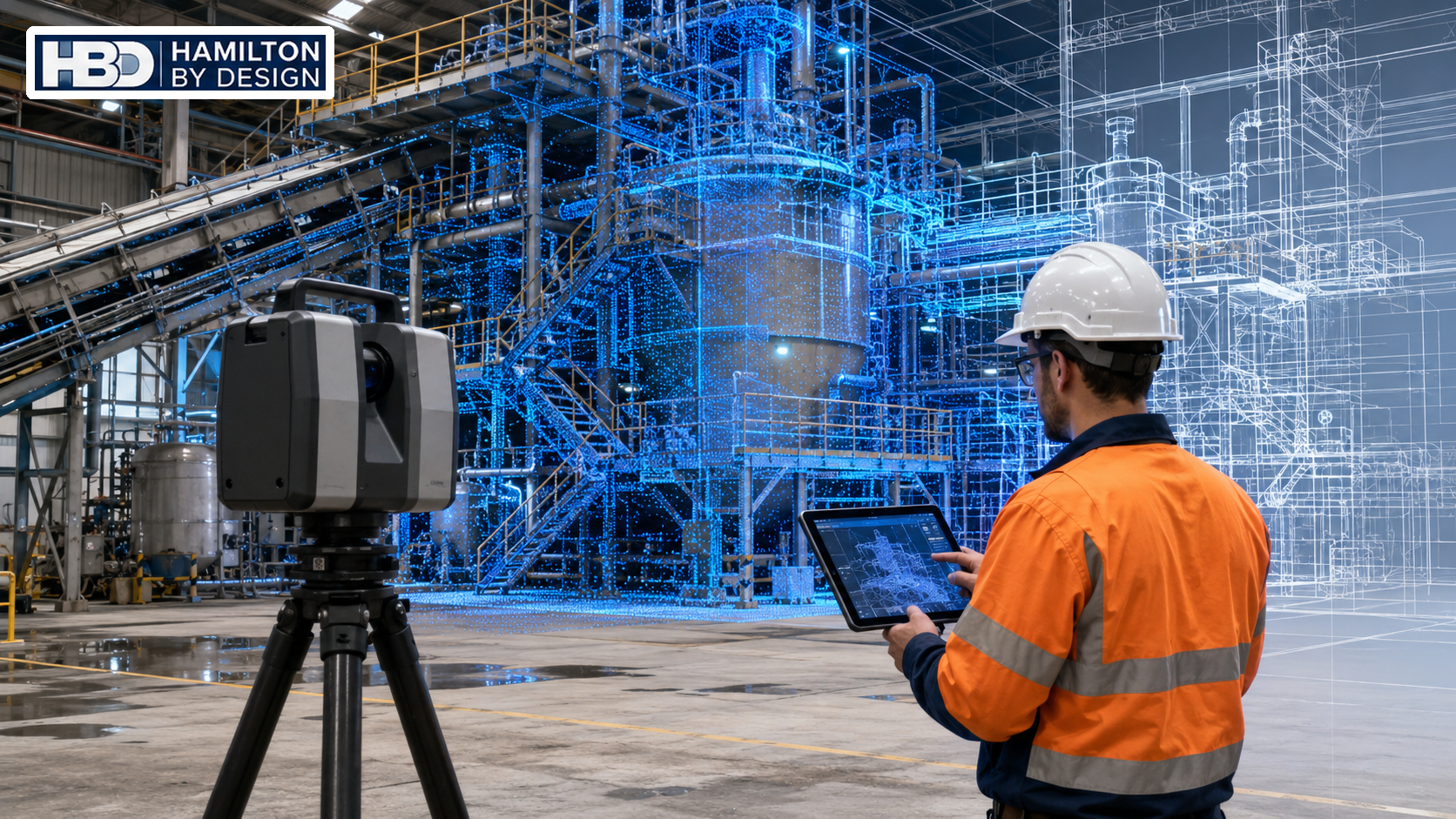

Processing plants around Blayney NSW often include a mix of production equipment, conveyors, transfer systems, tanks, pipework, platforms, structural steel, access areas and packaging or handling equipment. Over time, these sites change. Equipment is upgraded, pipework is rerouted, platforms are modified, guarding is added and shutdown repairs are completed.
The problem is that the drawings do not always keep up with the real plant.
For engineers, maintenance teams, shutdown planners and fabricators, this can create delays and uncertainty before a project even begins. If the existing plant layout is difficult to verify from old drawings, it becomes harder to design new work, plan shutdowns, check access or fabricate components with confidence.
Hamilton By Design provides engineering-grade 3D LiDAR scanning, scan-to-CAD modelling and mechanical design support for processing plants and industrial sites in Blayney NSW and the wider Central West region.
Why Processing Plants Need Accurate As-Built Information
Many operating plants rely on old drawings, marked-up PDFs, previous project files or site sketches. These records may still be useful, but they are not always accurate enough for current design or fabrication work.
A processing plant may have changed through:
- Conveyor or transfer system upgrades
- New pipework or service routes
- Modified platforms, stairs and handrails
- Added guarding or access systems
- Equipment replacement
- Structural steel changes
- Shutdown repairs
- Production line upgrades
- Packaging or palletising changes
- Maintenance modifications not captured in the final drawing set
When the drawings no longer match the plant, the team is forced to work with assumptions. That can lead to extra site visits, delayed design decisions, fabrication rework and increased shutdown risk.
How 3D LiDAR Scanning Helps
3D LiDAR scanning captures the existing plant in detail and creates a measured point cloud of the site. This gives the project team a reliable digital reference of what is actually installed.
The scan data can be used to verify layouts, check clearances, measure difficult areas, model existing structures and support engineering design.
For brownfield processing plants, this is especially useful because new work often has to fit around existing equipment, steelwork, pipework and access constraints.
3D scanning can assist with:
- Plant layout verification
- Shutdown planning
- Mechanical design
- Structural upgrades
- Conveyor and transfer system reviews
- Pipework routing
- Access platform modifications
- Clash checking
- Scan-to-CAD modelling
- Fabrication planning
- As-built documentation
Supporting The Site Team
Poor information affects the whole team.
Engineers spend more time checking dimensions. Designers need to make assumptions. Maintenance teams are asked to confirm measurements during already busy periods. Fabricators may build from information that no longer reflects the site. Shutdown planners carry more risk when access, lifting and installation details are not fully understood.
A 3D scan helps reduce that pressure.
It gives engineers, maintenance supervisors, project managers, fabricators and contractors a shared reference point. Instead of relying only on old drawings or manual measurements, the team can review the actual site conditions from the point cloud.
This can reduce site revisits, improve communication and help identify problems before fabrication or installation begins.
Tools And Deliverables
Hamilton By Design uses 3D scanning and engineering design tools suited to industrial plant work.
Typical tools and formats may include:
- FARO terrestrial laser scanning
- FARO SCENE
- Autodesk ReCap
- E57, RCP, RCS and LAS point cloud formats
- SolidWorks
- AutoCAD
- Inventor
- Navisworks
- Scan-to-CAD modelling workflows
Depending on the project, deliverables may include point cloud data, 3D CAD models, general arrangement drawings, sections, elevations, fabrication drawings or design review information.
The goal is not just to scan the plant. The goal is to turn the scan into practical engineering information the team can use.

Local Support For Blayney NSW
Blayney NSW and the surrounding Central West region include industrial, agricultural, food production, mining support and processing-related facilities. These sites often need practical engineering support when existing layouts are difficult to confirm.
Hamilton By Design can assist with 3D LiDAR scanning for processing plants, industrial facilities and brownfield upgrade projects in Blayney, Orange, Bathurst, Millthorpe and the wider Central West NSW region.
Talk to Us – Contact Us
Our clients:
























