Singleton sits at the heart of the Hunter’s industrial engine room. Surrounded by major mines, CHPPs, power stations, fabrication workshops and heavy industrial precincts, the region depends on accurate information, efficient planning and safe, predictable project execution. With assets that have operated for decades, countless undocumented modifications and structures that no longer match original drawings, engineering teams face a constant challenge — how to measure, model and design with confidence.
This is exactly where 3D laser scanning in Singleton and Hunter regions is transforming project workflows. Hamilton By Design provides millimetre-accurate digital capture that eliminates guesswork and supports engineering, fabrication, maintenance and shutdown planning across the entire industrial sector.
Whether you’re a CHPP superintendent in Singleton, a fabrication manager in Muswellbrook, a maintenance engineer in the Hunter Valley, or a project manager responsible for upgrades across multiple sites, accurate laser scanning has become essential. This article explores why the demand for 3D scanning has surged, how the technology works, and how Hamilton By Design uses it to support safer, more efficient and more reliable outcomes across the Hunter region.
Why Singleton and the Hunter Need 3D Laser Scanning
The Hunter region is home to some of Australia’s most active heavy industrial environments. These operations consist of massive structural steel assemblies, conveyors, process equipment, platforms, chutes, bins and pipework — all subject to wear, deformation and ongoing modification. Many facilities were built long before digital documentation became standard. As a result:
- Original drawings rarely reflect the current condition
- Measurements taken by hand are slow, risky and often inaccurate
- Shutdown windows are extremely tight
- Brownfield constraints make new installations complex
- Fabricators rely heavily on accurate data to ensure perfect fitment
Incorrect measurements don’t just cause inconvenience — they create costly fabrication errors, installation delays, safety risks and additional shutdown time.
3D laser scanning removes these risks entirely by creating a verified digital record of what is actually on site.
What 3D Laser Scanning Delivers
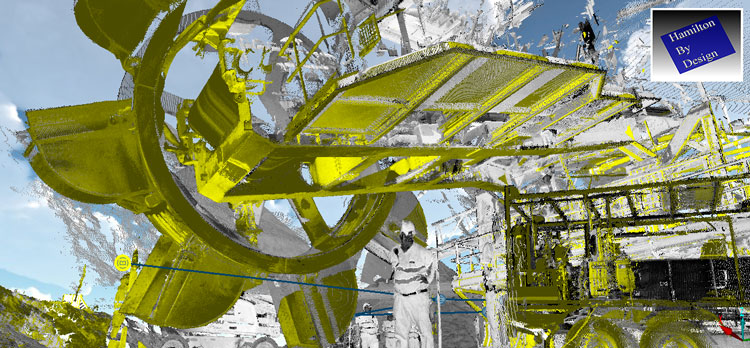
Hamilton By Design uses engineering-grade LiDAR scanners to capture millions of precise data points across a site. These points form a point cloud, which is a detailed 3D representation of the real environment. This data can then be used to create accurate models, drawings, simulations and digital checks.
With 3D laser scanning in Singleton and Hunter you get:
- Accurate as-built geometry
- Digital templates for fabrication
- Reliable interface points for new steel or equipment
- Precise alignment and clearance data
- Clash identification before installation
- Improved shutdown planning and safety
For engineers, fitters, boilermakers and fabricators, this accuracy becomes the foundation for smarter decision-making and better project outcomes.
Key Industries Using 3D Laser Scanning in Singleton and the Hunter
1. Mining & CHPP Operations
Singleton is surrounded by some of the most productive mines in the country. Mines and CHPP operations rely heavily on scanning for:
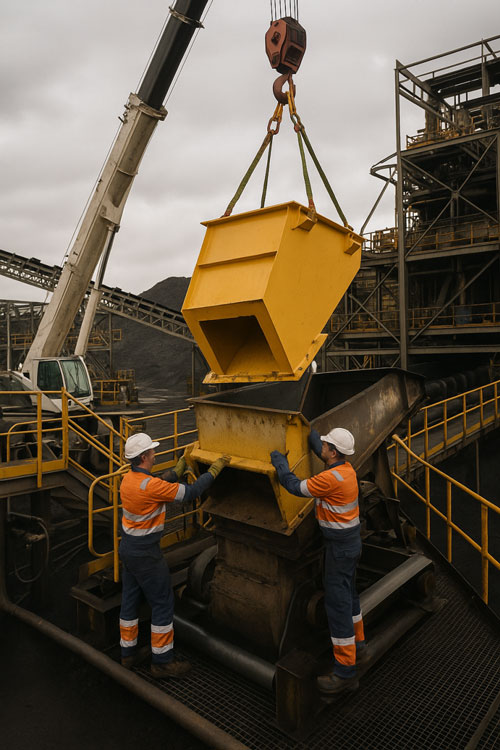
- Chute and hopper replacements
- Conveyor alignment checks
- Transfer tower redesigns
- Structural integrity assessments
- Bin, screen and crusher upgrades
- Digital twins for long-term planning
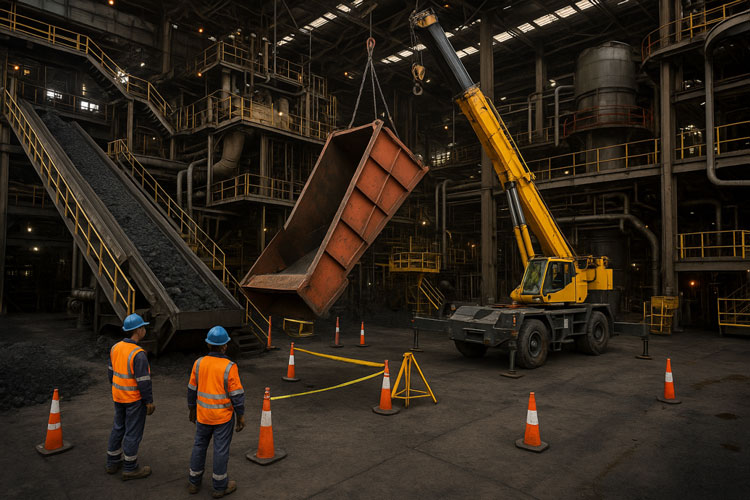
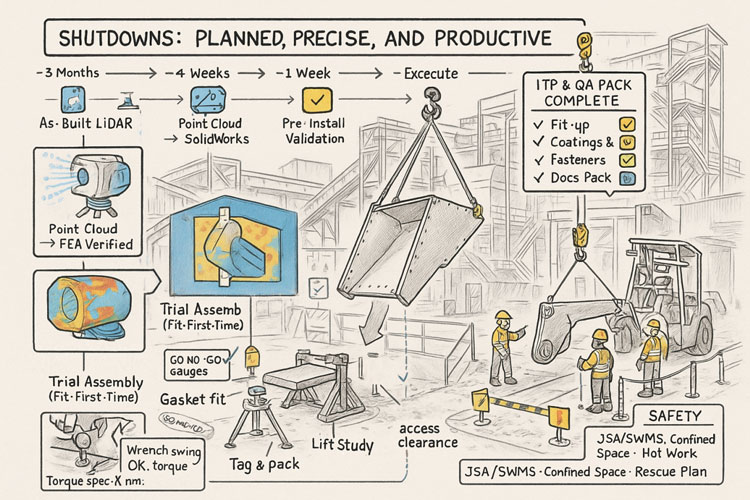
Because these plants operate continuously, shutdown windows are limited. Laser scanning allows accurate pre-planning, reducing time spent onsite during shutdowns and eliminating unexpected clashes.
2. Fabrication & Manufacturing
The Hunter has a strong fabrication industry, supplying steel structures, mechanical components, platforms, tanks and pipework to mining and energy clients. But fabrication quality relies on measurement quality.
3D laser scanning ensures:
- Components fit the first time
- Bolt holes align correctly
- Flanges match perfectly
- Structural steel connects without modification
- Expensive rework on site is eliminated
Workshops across Singleton, Muswellbrook, Thornton and Rutherford increasingly depend on digital accuracy to remain competitive.
3. Power Stations & Energy Infrastructure
The Hunter region includes major power generation assets and critical energy infrastructure. Many structures are ageing, and modifications require absolute accuracy.
Laser scanning supports:
- Platform replacements
- Pipe rerouting
- Structural upgrades
- Boiler house modifications
- Maintenance planning
- Deformation analysis
Reliable as-built data ensures compliance and reduces risk during shutdowns.
4. Industrial, Civil and Commercial Upgrades
Singleton’s industrial footprint is expanding, and many facilities require:
- As-built documentation
- Renovations and extensions
- Spatial coordination
- Facility redevelopment
- BIM integration
Laser scanning provides the foundation for safe and efficient project planning across commercial and industrial facilities.
The Hamilton By Design Workflow
Hamilton By Design offers a complete digital engineering solution, from scanning to modelling to fabrication-ready drawings. Our workflow includes:
1. On-Site Scanning
We capture every detail — structural steel, mechanical equipment, conveyors, platforms, bins, hoppers, pipework and building geometry.
2. Processing & Registration
Individual scans are stitched together into a single, accurate point cloud representing the full environment.
3. CAD Modelling
We convert point cloud data into:
- 3D models
- GA drawings
- Fabrication details
- DXF files for laser cutting
- Assembly and installation references
4. Digital Fit Checks
Before fabrication begins, we overlay new designs to check for:
- Clashes
- Misalignments
- Interference with existing structures
- Access and maintenance constraints
5. Project Delivery
Clients receive data that supports safe installation and reduces downtime.
Benefits of 3D Laser Scanning in Singleton and the Hunter
Reduced Rework
Accurate digital data means fabricators build with confidence and installers avoid modifications on site.
Safer Data Capture
Laser scanning reduces the need for manual measuring in hazardous areas.
Faster Shutdown Execution
Pre-planning with accurate data speeds up installation and reduces plant downtime.
Improved Engineering and Design
Designers work from verified geometry rather than guessing from old drawings.
Better Communication
Point clouds and 3D models allow all stakeholders to visualise the site clearly.
Cost Savings from Start to Finish
Less rework, fewer delays and more efficient fabrication combine to deliver real financial value.
Why Choose Hamilton By Design?
Hamilton By Design is uniquely positioned to support Singleton and Hunter clients because:
- We combine laser scanning expertise with real engineering capability
- We understand mining, CHPP, fabrication and industrial environments
- We provide end-to-end digital workflows, not just raw data
- Our models and drawings are created with fabrication and installation in mind
- We deliver millimetre-accurate results you can trust
Our team works closely with mine sites, fabricators, energy providers and industrial operators across the region, delivering practical solutions built on real data.
Work With Hamilton By Design
If your project requires precise measurement, modelling, redesign or fabrication, 3D laser scanning in Singleton and the Hunter is the most reliable way to ensure accuracy and reduce risk.
Hamilton By Design is ready to support your next upgrade, shutdown, replacement or maintenance campaign with:
- On-site laser scanning
- Point cloud processing
- CAD modelling
- Fabrication drawings
- Digital engineering support
Reach out to discuss your upcoming project — and experience the confidence that only accurate, high-quality 3D data can provide.