Maximising Uptime at Transfer Points: How Hamilton By Design Optimises Chutes, Hoppers, and Conveyors for the Mining Industry

In the mining industry, system uptime isn’t just a goal—it’s a necessity. Transfer points such as chutes, hoppers, and conveyors are often the most failure-prone components in processing plants, especially in high-wear environments like HPGR (High Pressure Grinding Rolls) circuits. Abrasive ores, heavy impact, fines accumulation, and moisture can all combine to reduce flow efficiency, damage components, and drive up maintenance costs.

At Hamilton By Design, we help mining clients minimise downtime and extend the life of their material handling systems by applying advanced 3D scanning, DEM simulation, smart material selection, and modular design strategies. This ensures that transfer points operate at peak efficiency—day in, day out.

Here’s how we do it:

Optimised Flow with DEM-Based Chute & Hopper Design

Flow blockages and misaligned velocities are among the biggest contributors to transfer point failure in the mining industry. That’s why we use Discrete Element Method (DEM) simulations to model bulk material flow through chutes, hoppers, and transfer transitions.

Through DEM, we can simulate how different ores—ranging from dry coarse rock to sticky fines—move, compact, and impact structures. This allows us to tailor chute geometry, outlet angles, and flow paths in advance, helping:

  • Prevent material buildup or arching inside hoppers and chutes
  • Align material velocity with the conveyor belt speed using hood & spoon or trumpet-shaped designs
  • Reduce wear by managing trajectory and impact points

Optimised flow equals fewer shutdowns, longer equipment life, and better plant throughput.

Wear-Resistant Liners & Material Engineering

Not all wear is the same—and neither are the materials we use to combat it. By studying the abrasion and impact zones in your chute and hopper systems, we strategically apply wear liners suited to each application.

Our engineering team selects from:

  • AR (Abrasion-Resistant) steels for high-wear areas
  • Ceramic liners in fines-rich or ultra-abrasive streams
  • Rubber liners to absorb shock and reduce noise

This approach reduces liner replacement frequency, improves operational safety, and lowers the risk of unplanned shutdowns at key transfer points.

3. Dust and Spillage Control: Cleaner, Safer Operation

Dust and spillage around conveyors and transfer chutes can lead to extensive cleanup time, increased maintenance, and health hazards. At Hamilton By Design, we treat this as a core design challenge.

We design chutes and hoppers with:

  • Tight flange seals at interface points
  • Enclosed transitions that contain dust at the source
  • Controlled discharge points to reduce turbulent material drops

This reduces environmental risk and contributes to more consistent plant performance—especially in confined or enclosed processing facilities in the mining industry.

4. Modular & Accessible Designs for Faster Maintenance

When liners or components need replacement, every minute counts. That’s why our chute and hopper systems are built with modular sections—each engineered for fast removal and reinstallation.

Key maintenance-driven design features include:

  • Bolt-on panels or slide-in liner segments
  • Accessible inspection doors for safe visual checks
  • Lightweight modular components for easy handling

These details reduce labour time, enhance safety, and keep your plant online longer—especially critical in HPGR zones where throughput is non-stop.

5. Precision 3D Scanning & 3D Modelling for Retrofit Accuracy

One of the most powerful tools we use is 3D scanning. In retrofit or brownfield projects, physical measurements can be inaccurate or outdated. We solve this by conducting detailed laser scans that generate accurate point cloud data—a precise digital twin of your plant environment.

That data is then transformed into clean 3D CAD models, which we use to:

  • Design retrofits that precisely match existing structure
  • Identify interferences or fit-up clashes before fabrication
  • Reduce install time by ensuring right-first-time fits

This scan-to-CAD workflow dramatically reduces rework and error margins during installation, saving time and cost during shutdown windows.

Real-World Application: HPGR & Minerals Transfer Systems

In HPGR-based circuits, transfer points between crushers, screens, and conveyors experience high rates of wear, dust generation, and blockages—particularly where moisture-rich fines are present.

Here’s how Hamilton By Design’s methodology addresses these pain points:

  • DEM-based flow modelling ensures the HPGR discharge flows cleanly into chutes and onto conveyors without buildup.
  • Hood/spoon geometries help track material to belt velocity—minimising belt wear and reducing misalignment.
  • Strategic liner selection extends life in critical wear zones under extreme abrasion.
  • Modular chute designs allow for fast liner swap-outs without major disassembly.
  • 3D scanning & CAD design ensures new chute sections fit seamlessly into existing HPGR and conveyor frameworks.

By designing smarter transfer systems with these technologies, we enable operators to reduce downtime, increase liner life, and protect critical assets in high-throughput mining applications.

Uptime Benefits at a Glance

Performance AreaImpact on Mining Operations
Smooth bulk material flowFewer clogs, improved throughput, longer operating cycles
Velocity-matched dischargeLower conveyor belt wear and downtime
Robust wear protectionLonger life, fewer liner replacements
Modular designFaster maintenance turnarounds during scheduled shutdowns
3D scanning & CAD integrationPrecise fit, reduced installation time, fewer errors during retrofit

Final Word: Engineering That Keeps the Mining Industry Moving

At Hamilton By Design, we combine mechanical engineering expertise with 3D modelling, material flow simulation, and smart fabrication practices to deliver high-performance chute, hopper, and transfer point systems tailored for the mining industry.

Whether you’re dealing with a problematic HPGR discharge, spillage issues, or planning a brownfield upgrade, our integrated design process delivers results that improve reliability, extend service life, and protect uptime where it matters most.

Looking to retrofit or upgrade transfer systems at your site?
Let’s talk. We bring together 3D scanning, DEM modelling, practical engineering, and proven reliability to deliver systems that work—from concept through to install.

Reach out at contact@hamiltonbydesign.com.au

#3DScanning #MiningIndustry #Chutes #Hoppers #TransferPoints #3DModelling #MechanicalEngineering #HPGR #PlantUptime #HamiltonByDesign

Structural Drafting | Mechanical Drafting | 3D Laser Scanning

Mechanical Engineering

Rigid Body Dynamics vs Transient Structural Analysis in Mining

Why Both Matter in Mechanical and Structural Engineering

In the fast-paced and high-stakes environment of the Australian mining industry, reliable engineering design isn’t just a competitive advantage — it’s a necessity. Across regions like the Pilbara, Kalgoorlie, the Hunter Valley, Bowen Basin, and Mount Isa, mining operations depend on complex mechanical systems that must perform under extreme loads, harsh conditions, and round-the-clock operation.

To ensure safety, reliability, and performance, mining engineers increasingly rely on advanced simulation tools like Rigid Body Dynamics (RBD) and Transient Structural Analysis (TSA). While these tools might appear similar, they serve fundamentally different purposes in mechanical and structural engineering. Using the right tool at the right time can dramatically reduce downtime, improve equipment longevity, and lower operating costs.

At Hamilton By Design, we bring the latest in engineering simulation and scanning technology directly to your mining operation — wherever you are in Australia. Whether you’re operating in the iron-rich Pilbara, the gold-rich Kalgoorlie, or deep in Mount Isa’s underground hard rock mines, we deliver world-class engineering solutions on-site or remotely.


What is Transient Structural Analysis?

Transient Structural Analysis (TSA) is a Finite Element Analysis (FEA) technique that models how structures respond to time-varying loads. It provides insights into:

  • Displacement and deformation under dynamic loads
  • Stress and strain distribution over time
  • Vibrations and impact response
  • Fatigue life prediction

This type of simulation is essential when you’re dealing with high-frequency loading, shock events, or long-term structural wear and fatigue. TSA is invaluable for assessing risk in static and semi-dynamic systems across mining sites.

Typical TSA applications in mining include:

  • Vibrating screens and feeder structures
  • Crusher housings and foundations
  • Chutes and hoppers exposed to high-velocity ore impact
  • Structural skids for processing equipment
  • Equipment subject to cyclic fatigue (e.g., slurry pumps, reclaimer arms)

What is Rigid Body Dynamics?

Rigid Body Dynamics (RBD) focuses on the motion of bodies under the assumption they do not deform. This tool models:

  • Position, velocity, and acceleration
  • Reaction forces at joints and actuators
  • Dynamic behaviour of moving parts and linkages
  • Contact, impact, and frictional interaction

Unlike TSA, RBD doesn’t solve for stress or strain. Instead, it calculates the kinematics and kinetics of motion systems — making it ideal for analysing mechanical assemblies where movement, timing, and loads are key.

Common RBD applications in mining include:

  • Stacker-reclaimer arms and boom articulation
  • Mobile equipment with hydraulic or mechanical actuators
  • Diverter chutes and gating systems
  • Rockbreaker arm kinematics
  • Conveyor take-up and tensioning systems

RBD also plays a pivotal role in process optimisation and troubleshooting — helping engineers simulate how mechanisms will respond under load, ensuring operational efficiency before physical prototypes are built.


Why TSA Can’t Replace RBD (and Vice Versa)

While TSA includes rigid body motion as part of the total displacement field, it is not designed for efficient or accurate motion simulation. Trying to model the dynamics of a moving mechanism in TSA can:

  • Lead to slow solve times and high computational cost
  • Produce unstable results due to unconstrained motion
  • Provide limited insight into timing, velocity, or actuation behaviour

Conversely, using RBD for structures that flex, vibrate, or wear over time won’t give you the data needed to assess material failure or fatigue.

The takeaway? Use TSA when deformation matters. Use RBD when motion matters. Use both when you need the complete picture.


Regional Applications Across Australian Mining

Hamilton By Design supports clients across Australia’s mining regions with tailored simulation services designed to meet real operational needs.

⚫ Pilbara – Iron Ore

With high-capacity iron ore operations, this region depends on large-scale materials handling systems.

  • Use RBD to simulate boom movement, slewing systems, and travel paths of stackers.
  • Use TSA to assess fatigue on booms, rail frames, and conveyor supports exposed to cyclic load.

Hamilton By Design helps model these systems efficiently, ensuring both accurate motion control and structural durability. Contact us for help simulating your Pilbara handling systems.


💛 Kalgoorlie – Goldfields (Eastern Gold Region)

Gold operations rely on compact, high-force machinery in confined processing facilities.

  • Use TSA to simulate vibration-induced stress in equipment frames and foundations.
  • Use RBD to model diverter gates, hydraulic arms, and transport carts in processing facilities.

Whether you’re retrofitting a plant or building a new line, Hamilton By Design provides flexible support wherever you operate. Email sales@hamiltonbydesign.com.au to learn more.


⚫ Hunter Valley – Coal (Thermal)

Thermal coal operations in NSW require robust, wear-resistant infrastructure.

  • RBD helps simulate automated diverters, boom stackers, and actuated gates.
  • TSA ensures the wear-prone chutes and hoppers withstand repetitive impacts.

We provide quick-turn simulations for both brownfield and greenfield projects. Get in touch to scope your simulation needs.


⚫ Bowen Basin – Coal (Metallurgical)

Queensland’s met coal operations power the global steel industry.

  • RBD enables accurate simulation of take-up systems and longwall motion.
  • TSA supports design of structural supports under repetitive and impact loading.

Our experts work with surface and underground operators, reducing risk through advanced motion and stress analysis. Request a quote at sales@hamiltonbydesign.com.au.


🔵 Mount Isa – Hard Rock Mining

Mount Isa’s deep and abrasive ore bodies test every piece of equipment.

  • RBD is ideal for simulating rockbreaker motion, loader paths, and mobile assets.
  • TSA provides insights into vibration effects on headframes, bins, and fixed plant.

Hamilton By Design offers full analysis support for operators in remote locations. Contact us today for tailored advice.


When to Use Both Tools Together

A real advantage emerges when RBD and TSA are used in combination:

  • RBD identifies dynamic forces and timing on moving parts
  • TSA then evaluates the structural response to those forces

For example, in a diverter chute:

  1. RBD determines the acceleration profile, impact forces, and system timing.
  2. TSA uses that input to analyse whether the chute will survive years of repeated service.

This integrated approach results in more accurate models, fewer design revisions, and significantly lower project risk.


Why Work with Hamilton By Design?

As mechanical engineering consultants with national reach, Hamilton By Design offers:

  • Combined RBD and TSA simulation capability
  • Lidar scanning and digital plant modelling
  • Experience with mining-specific assets and constraints
  • Mobile, responsive teams that bring technology to you

From site scoping to final design verification, we help our clients solve the right problem, the right way.

Have a project in mind? Reach out via our contact page or email sales@hamiltonbydesign.com.au.


Conclusion: Technology That Moves With You

Rigid Body Dynamics and Transient Structural Analysis are not interchangeable — they are complementary. Each method offers unique insights into how a mining system performs — whether moving, flexing, vibrating, or carrying tonnes of ore.

At Hamilton By Design, we believe engineering technology should move as fast and far as our clients do. That’s why we bring simulation, scanning, and design tools directly to you, wherever you operate across Australia.

If your system moves, simulate it with RBD. If your structure flexes, vibrates, or wears, model it with TSA. For full insight? Use both.

Let us help you design smarter, safer mining systems.

Hamilton By Design – Bringing Engineering Technology to You, Wherever You Are in Australia


www.hamiltonbydesign.com.au/contact-us

Email: sales@hamiltonbydesign.com.au

Hamilton By Design | Mechanical Drafting | Structural Drafting | 3-D Lidar Scanning

Enhancing Plant Efficiency with Best Maintenance Practices: A White Paper by Hamilton By Design

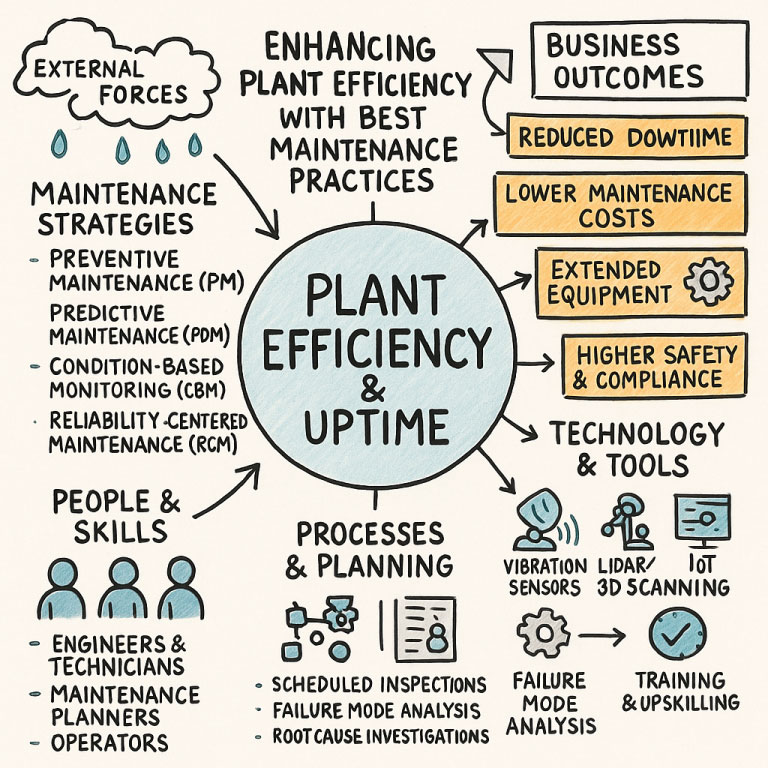
Hand-drawn infographic titled “Plant Efficiency & Uptime,” showing the key elements that enhance plant performance. Surrounding the central circle are categories including maintenance strategies (PM, PDM, CBM, RCM), people and skills (engineers, technicians, planners, operators), processes and planning (inspections, failure mode analysis, root-cause investigations), and technology and tools (vibration sensors, LiDAR/3D scanning, IoT, training). Benefits highlighted include reduced downtime, lower maintenance costs, extended equipment life, and higher safety and compliance.


In today’s competitive industrial landscape, maintaining high levels of Overall Equipment Effectiveness (OEE) is a cornerstone of operational success. Achieving this requires adopting advanced maintenance practices that minimize downtime, reduce operational costs, and extend the lifecycle of critical assets.

This white paper outlines best maintenance practices aligned with the ISO 18436.2 standard and highlights how Hamilton By Design’s team of mechanical engineers can partner with your organization to enhance your plant’s OEE. By leveraging our expertise in condition-based and predictive maintenance, we can optimize equipment performance and drive measurable improvements in productivity and reliability.

The Role of Maintenance in Maximizing OEE

OEE is a comprehensive measure of manufacturing productivity, defined by three critical components:

  1. Availability: Minimizing downtime to maximize operational hours.
  2. Performance: Ensuring equipment runs at optimal speeds.
  3. Quality: Reducing defects and waste during production.

Maintenance strategies are key to influencing these factors. Moving beyond reactive approaches to predictive and condition-based maintenance can significantly enhance equipment reliability and efficiency, ensuring better alignment with OEE goals.


Adopting Best Maintenance Practices

Condition-Based Maintenance (CBM)

CBM involves monitoring the real-time condition of equipment to predict and prevent failures. At Hamilton By Design, we integrate cutting-edge technologies like vibration analysis, thermography, and ultrasonic testing to enable proactive interventions before problems escalate.

How CBM Enhances OEE:
  • Reduces unplanned downtime (Availability).
  • Maintains consistent performance by addressing issues early (Performance).
  • Prevents production disruptions that cause defects (Quality).

Predictive Maintenance (PdM)

Predictive maintenance leverages data analytics to anticipate potential failures. By applying ISO 18436.2-certified practices, we implement advanced diagnostic tools and algorithms to forecast maintenance needs with precision.

Our Approach:
  • Deploy vibration analysis tools managed by certified Level II and III analysts.
  • Use infrared thermography to detect heat anomalies in electrical and mechanical systems.
  • Employ ultrasonic testing to identify leaks and structural weaknesses.
Benefits for OEE:
  • Prolonged equipment lifespan by addressing issues at their inception.
  • Higher productivity with fewer interruptions.
  • Reduced maintenance costs through targeted interventions.

Reliability-Centered Maintenance (RCM)

RCM focuses on optimizing maintenance strategies for each asset, emphasizing a deep understanding of failure modes and effects. Our engineers employ RCM to prioritize maintenance tasks that align with your plant’s specific OEE goals.

Steps We Implement:
  1. Asset Function Analysis: Understanding the purpose and criticality of each asset.
  2. Failure Mode and Effects Analysis (FMEA): Identifying risks and developing mitigation strategies.
  3. Data-Driven Decision Making: Using condition monitoring data to guide maintenance schedules.
Impact on OEE:
  • Ensures maintenance is aligned with production priorities.
  • Reduces waste and rework caused by unexpected equipment malfunctions.

Leveraging ISO 18436.2 Standards

ISO 18436.2 defines the competencies required for condition monitoring personnel, ensuring a standardized approach to predictive maintenance. Hamilton By Design’s mechanical engineers are certified under this standard, offering expertise in:

  • Vibration analysis for detecting unbalance, misalignment, and bearing faults.
  • Developing and managing comprehensive condition monitoring programs.
  • Interpreting and analyzing complex diagnostic data for actionable insights.

How Hamilton By Design Can Assist

Customized Maintenance Solutions

We recognize that every plant has unique operational challenges. Hamilton By Design tailors maintenance strategies to your specific needs, focusing on:

  • Asset Criticality Assessment: Identifying and prioritizing key equipment for monitoring and intervention.
  • Technology Integration: Implementing IoT-enabled sensors, data platforms, and diagnostic tools.
  • Program Development: Designing maintenance schedules aligned with production cycles and OEE targets.

Expert Training and Certification

Our team provides in-depth training for your personnel, ensuring they gain ISO 18436.2 certification and the skills to sustain advanced maintenance programs.

Ongoing Support and Continuous Improvement

Maintenance isn’t static. Hamilton By Design offers ongoing support to refine your maintenance practices, ensuring your plant stays ahead of evolving operational demands.


Case Study: Improving OEE with Hamilton By Design

Challenge: A manufacturing plant experienced frequent equipment failures, leading to a 15% drop in OEE.

Solution: Hamilton By Design implemented a tailored predictive maintenance program:

  • Installed vibration sensors on critical rotating machinery.
  • Trained plant engineers to monitor and analyze data using ISO 18436.2 standards.
  • Provided ongoing diagnostics and recommendations.

Outcome:

  • Downtime was reduced by 40%, significantly improving availability.
  • Equipment performance stabilized, enhancing productivity.
  • Defects decreased by 25%, improving product quality.

Maximizing OEE requires a strategic approach to maintenance that integrates advanced tools, skilled personnel, and data-driven insights. Hamilton By Design’s mechanical engineers, certified under ISO 18436.2, are uniquely equipped to help your plant achieve these goals.

By partnering with us, you can transform your maintenance practices, boost operational efficiency, and secure a competitive edge in your industry. Let Hamilton By Design help you take the first step toward a more reliable and productive future.

WorkTrek – 8 Ways to Improve Your Plant Maintenance
Practical tips for improving maintenance processes, reducing downtime, and boosting productivity.
https://worktrek.com/blog/how-to-improve-plant-maintenance/

Petrochem Expert – Best Practices for Plant Maintenance
Explores how proper maintenance planning ensures efficiency, reliability, and safety in plant operations.
https://petrochemexpert.com/best-practices-for-plant-maintenance-ensuring-operational-efficiency-and-safety/

MaintBoard – Maintenance Planning Strategies
Highlights how scheduling, IoT tools, and predictive approaches improve plant reliability and uptime.
https://maintboard.com/maintenance-planning-strategies

Hamilton By Design – Mechanical Engineering for Mining & Industry
Showcases engineering solutions designed to reduce downtime, improve reliability, and optimize plant performance.
https://www.hamiltonbydesign.com.au/mechanical-engineering-mining-industry-australia/

Hamilton By Design – Drafting & LiDAR / Scanning Services
Describes how accurate scanning and drafting streamline retrofits, reducing errors and saving time during plant upgrades.
https://www.hamiltonbydesign.com.au/services-drafting-lidar-scanning/

Hamilton By Design – Blog: Maximising Uptime at Transfer Points
Focuses on optimising chutes, hoppers, and conveyors to minimise stoppages and keep production flowing.
https://www.hamiltonbydesign.com.au/blog-engineering-insights/

Mechanical Designers

Mechanical Engineers Design

3D Mechanical Engineering

Mechanical Engineering Consultants

3D Laser Scanning

The Superiority of 3D Point Cloud Scanning Over Traditional Measurement Tools

Innovation has always been the lifeblood of engineering, driving the relentless pursuit of precision, efficiency, and progress. In the field of measurement, where accuracy defines the success of a project, the evolution from traditional tools to modern 3D point cloud scanning has been nothing short of revolutionary. What was once a domain dominated by tape measures, calipers, and theodolites is now enhanced by cutting-edge technologies capable of capturing millions of data points in mere seconds. For engineers who thrive on precision, the advent of 3D point cloud scanning isn’t just a step forward—it is a leap into a new dimension of possibilities.

This essay explores why 3D point cloud scanning is superior to traditional measurement tools and how it has transformed industries reliant on meticulous measurements. From its unparalleled accuracy to its versatility across disciplines, 3D scanning has redefined what engineers can achieve. Moreover, understanding its historical context and transformative applications paints a vivid picture of its indispensability in modern engineering.


The Precision Revolution: Why Accuracy Matters

In engineering, precision is non-negotiable. Whether designing a suspension bridge, reverse-engineering a turbine, or analyzing a historical artifact, even the smallest measurement error can cascade into catastrophic results. Traditional measurement tools, such as rulers, micrometers, and even advanced total stations, have served well for centuries. However, they are inherently limited by human error, labor-intensive processes, and a lack of data richness.

Enter 3D point cloud scanning—a method capable of capturing reality in its entirety, down to sub-millimeter accuracy. Using lasers, structured light, or photogrammetry, these devices create dense clouds of data points that map every surface of an object or environment. This precision is not only reliable but repeatable, providing engineers with the confidence needed to tackle complex challenges. A tape measure might tell you the height of a column, but a 3D scanner reveals its curvature, texture, and deviations, offering insights that traditional tools simply cannot.


Speed Meets Sophistication: Efficiency Redefined

Time is often as critical as accuracy in engineering projects. Traditional methods of measurement require repetitive manual effort—measuring, recording, and verifying. This process, while effective, can be painstakingly slow, especially for large-scale projects such as construction sites, manufacturing plants, or natural landscapes.

3D point cloud scanning redefines efficiency. Imagine capturing a sprawling construction site, complete with every structural element, terrain feature, and anomaly, within hours. Such speed transforms workflows, allowing engineers to allocate time to analysis and design rather than tedious data collection. For example, laser scanners used in construction can document an entire building with intricate details, enabling real-time adjustments and reducing costly delays.

Moreover, this efficiency does not come at the expense of quality. A scanner’s ability to gather millions of data points in seconds ensures that no detail is overlooked, offering engineers a comprehensive dataset to work with.


Beyond Measurement: The Power of Data Richness

Traditional measurement tools excel at providing dimensions—length, width, and height. While sufficient for many applications, this linear data often falls short when dealing with irregular shapes, complex geometries, or intricate textures. The richness of data captured by 3D scanners, however, goes far beyond basic dimensions.

Point clouds provide a three-dimensional map of an object or space, capturing every nuance of its geometry. This data is invaluable in engineering disciplines such as reverse engineering, where understanding the intricacies of an object’s design is critical. For instance, when reconstructing a turbine blade, knowing its exact dimensions isn’t enough. Engineers need to understand its curvature, surface finish, and wear patterns—all of which are effortlessly captured by 3D scanning.

Furthermore, point clouds are digital assets, easily integrated into software like AutoCAD, Revit, and SolidWorks. This seamless compatibility enables engineers to create detailed models, run simulations, and even conduct structural analyses without revisiting the physical site. It is the bridge between physical and digital realms, offering possibilities limited only by imagination.


Non-Invasive Precision: The Gentle Touch of Technology

Engineers often face challenges where physical contact with a measurement object is either impractical or damaging. Traditional tools struggle in such scenarios, but 3D point cloud scanning thrives.

Take, for example, the preservation of historical monuments. Measuring tools like calipers or rulers could harm fragile artifacts or fail to capture their intricate details. Conversely, 3D scanners use non-contact methods to create accurate digital replicas, preserving the artifact’s integrity while providing a permanent record for future study. Similarly, in hazardous environments, such as inspecting a high-voltage power station or assessing structural damage post-earthquake, scanners allow engineers to collect precise data from a safe distance.


A Look Back: The Evolution of Measurement Tools

To appreciate the impact of 3D scanning, it’s worth understanding the tools it has replaced. The history of measurement dates back to ancient civilizations, where rudimentary tools like plumb bobs and measuring rods were used to construct awe-inspiring structures like the pyramids. Over centuries, tools evolved into more sophisticated instruments, including the theodolite for angular measurements and micrometers for minute details.

While these tools marked significant advancements, they remained limited by their analog nature and reliance on human skill. The 20th century introduced electronic and laser-based tools, bridging the gap between traditional methods and digital innovation. However, even these modern instruments are eclipsed by the capabilities of 3D point cloud scanning, which represents the culmination of centuries of progress in measurement technology.


Applications Across Industries: A Versatile Tool

The versatility of 3D scanning makes it indispensable in various engineering fields. In construction and architecture, it enables Building Information Modeling (BIM), where precise scans of a site are used to create digital twins. This helps architects and engineers visualize and plan projects with unmatched accuracy.

In manufacturing, 3D scanners streamline quality control by detecting defects or deviations from design specifications. They also facilitate reverse engineering, allowing engineers to replicate or improve existing products.

In surveying and mapping, scanners revolutionize topographical surveys by capturing vast terrains in remarkable detail. This data aids urban planning, flood risk analysis, and infrastructure development. Even in healthcare, engineers rely on 3D scans to design prosthetics and surgical implants tailored to individual patients.

Each application underscores the scanner’s ability to adapt to diverse challenges, proving its superiority over traditional tools.


Challenges with Traditional Tools: Lessons from the Past

Traditional tools, despite their utility, often fell short in large-scale projects. Consider the surveying of a mountainous region using theodolites—a task requiring days, if not weeks, of effort, with no guarantee of perfect accuracy. Similarly, in manufacturing, calipers and gauges might miss microscopic defects that compromise product quality. These limitations highlight the need for tools capable of capturing comprehensive and precise data.


Looking Forward: The Future of 3D Scanning

The future of 3D scanning is bright. Advances in technology promise even faster scanning, higher resolutions, and better integration with artificial intelligence and augmented reality. Engineers will soon work with real-time 3D data overlaid on physical objects, enabling on-the-spot analysis and decision-making.


A Paradigm Shift in Measurement

For engineers, measurement is more than a task—it is the foundation of innovation. The transition from traditional tools to 3D point cloud scanning represents a paradigm shift, offering unparalleled accuracy, efficiency, and versatility. Whether documenting the past, designing the present, or envisioning the future, 3D scanning empowers engineers to achieve what was once thought impossible. In embracing this technology, the engineering community not only enhances its craft but also lays the groundwork for a future where precision knows no bounds.

Recent News & Reports on 3D Scanning / LiDAR / Laser Scanning

Revolutionising Industries: 3D Scanners’ New Tricks in 2025
Details how 3D scanners are being applied across sectors with enhanced capabilities.
https://www.objective3d.com.au/docs/revolutionising-industries-3d-scanners-new-tricks-in-2025/ Objective3D

Artec 3D scanning to take center stage at Australian Manufacturing Week
Highlights how 3D scanning is being featured in major manufacturing events in Australia.
https://www.artec3d.com/events/australian-manufacturing-week-2025 artec3d.com

Emerging Trends in 3D Laser Scanning and LiDAR Technologies: The Future
A forward-looking article on trends in 3D laser scanning / LiDAR and their industry impact.
https://iscano.com/laser-scanning-lidar-future-trends/emerging-trends-3d-laser-scanning-lidar-technologies/ Iscano

The future of 3D Scanning: Trends to Watch for in 2025
Predictions on how 3D scanning will evolve in various industries.
https://digitalscan3d.com/the-future-of-3d-scanning-trends-to-watch-for-in-2025/ digitalscan3d.com

3D Scanner LiDAR: How It’s Changing Architecture and Engineering
Discusses how LiDAR scanning is influencing construction, design, visualization, and engineering workflows.
https://www.foxtechrobotics.com/a-news-3d-scanner-lidar-how-it-s-changing-architecture-and-engineering.html foxtechrobotics.com

How Blue Laser Technology is Transforming 3D Scanning
Reports on the technical advancement of blue-laser scanning and its improved data capture performance.
https://industry-australia.com/technical-articles/99722-how-blue-laser-technology-is-transforming-3d-scanning Industry Australia

How AI & 3D Scanning Will Shape Manufacturing in 2025
Explores integration of scanning + AI in manufacturing sectors.
https://manufacturingdigital.com/articles/ai-3d-scanning-impacting-manufacturing-verticals Manufacturing Digital

3D Scanners Global Report 2025: Market to Reach $8.8B by 2030
Market analysis showing projected growth in 3D scanning globally.
https://www.globenewswire.com/news-release/2025/04/02/3054347/0/en/3D-Scanners-Global-Report-2025-Market-to-Reach-8-8-Billion-by-2030-as-Wider-Adoption-of-3D-Scanners-Still-Faces-Certain-Roadblocks.html GlobeNewswire

Intelligent Execution: Leveraging 3D Scanning Technology for Enhanced Project Delivery
Article on how mobile scanning + LiDAR is improving project delivery in engineering / construction.
https://energynow.com/2025/01/intelligent-execution-leveraging-3d-scanning-technology-for-enhanced-project-delivery-in-engineering-and-construction/ EnergyNow

“Revealed: Chopper laser stopping Aussie disaster”
Example of aerial LiDAR scanning used in Australia for disaster assessment / terrain mapping.
https://www.couriermail.com.au/real-estate/national/laser-giving-superhero-vision-following-natural-disasters/news-story/890ed3ab1b57f780f37ea113005a735b The Courier-Mail


Hamilton By Design | 3D Scanning

Mechanical Engineers Structural Engineers

Mechanical Engineering Consultants in the Mining Industry


The mining industry, particularly in resource-rich countries like Australia, is a cornerstone of economic activity and development. However, it faces an array of complex challenges including technological advancements, process optimization, and regulatory compliance. Mechanical engineering consultants play a crucial role in helping mining companies navigate these challenges, leveraging their expertise to enhance efficiency, sustainability, and profitability. This essay explores the various ways in which mechanical engineering consultants contribute to the mining sector by providing specialized knowledge and solutions in technology, process optimization, and regulatory compliance.

Technological Advancements

Equipment Design and Selection

One of the primary contributions of mechanical engineering consultants to the mining industry is in the area of equipment design and selection. Mining operations rely heavily on specialized machinery, from excavators and drilling rigs to conveyor systems and crushers. Consultants possess the technical knowledge to design custom equipment tailored to specific mining environments and operational requirements.

For instance, in deep mining operations, consultants can design robust and durable machinery capable of withstanding extreme conditions such as high pressure and temperature. They can also recommend the most suitable equipment based on factors like ore type, mining method, and production capacity. This ensures that mining companies invest in machinery that maximizes productivity while minimizing operational costs.

Automation and Robotics

The integration of automation and robotics in mining operations is another area where mechanical engineering consultants add significant value. Automation technologies, such as autonomous haul trucks and robotic drilling systems, can greatly enhance efficiency and safety in mining operations. Consultants help mining companies implement these technologies by designing and programming automated systems, selecting appropriate sensors and control units, and ensuring seamless integration with existing operations.

For example, autonomous vehicles can operate continuously without the need for breaks, significantly increasing productivity. Additionally, automation reduces the risk of accidents and injuries by removing human workers from hazardous environments. Consultants also provide training and support to ensure that mine operators can effectively manage and maintain these advanced systems.

Digitalization and IoT

The adoption of digital technologies and the Internet of Things (IoT) is transforming the mining industry. Mechanical engineering consultants play a pivotal role in this digital transformation by developing and implementing IoT solutions that provide real-time data and analytics. These technologies enable mining companies to monitor equipment performance, track production metrics, and optimize maintenance schedules.

Consultants can design IoT systems that collect data from various sensors installed on mining equipment. This data is then analyzed to identify patterns and predict potential equipment failures before they occur, allowing for proactive maintenance. This approach not only reduces downtime but also extends the lifespan of mining machinery. Furthermore, real-time data analytics enable better decision-making, as managers have access to up-to-date information on all aspects of mining operations.

Process Optimization

Lean Manufacturing Principles

Process optimization is critical for enhancing efficiency and reducing costs in mining operations. Mechanical engineering consultants bring expertise in lean manufacturing principles, which focus on eliminating waste, improving workflow, and maximizing value. By applying these principles, consultants help mining companies streamline their processes and improve overall productivity.

For instance, consultants can conduct value stream mapping to identify bottlenecks and inefficiencies in mining processes. They can then develop strategies to eliminate these bottlenecks, such as reconfiguring workflows, optimizing material handling systems, and improving communication and coordination among different departments. Lean manufacturing techniques also promote continuous improvement, ensuring that mining operations remain efficient and competitive over time.

Energy Efficiency

Energy consumption is a significant cost driver in mining operations. Mechanical engineering consultants can help mining companies improve energy efficiency by conducting energy audits and identifying opportunities for energy savings. This can involve optimizing the operation of energy-intensive equipment, such as grinding mills and pumps, or implementing energy-efficient technologies, such as variable frequency drives and high-efficiency motors.

For example, consultants can recommend the installation of advanced control systems that optimize the operation of grinding mills based on real-time ore characteristics. This ensures that the mills operate at their most efficient point, reducing energy consumption and operating costs. Additionally, consultants can design heat recovery systems that capture and reuse waste heat from mining processes, further enhancing energy efficiency.

Maintenance Optimization

Effective maintenance strategies are essential for ensuring the reliability and longevity of mining equipment. Mechanical engineering consultants can help mining companies develop and implement maintenance optimization programs that maximize equipment availability and minimize downtime. This includes predictive maintenance, which uses data analytics to predict equipment failures before they occur, and preventive maintenance, which involves regularly scheduled maintenance tasks to prevent unexpected breakdowns.

Consultants can design and implement condition monitoring systems that continuously monitor the health of mining equipment. These systems use sensors to collect data on parameters such as vibration, temperature, and pressure, which are then analyzed to detect early signs of wear and tear. By addressing potential issues before they lead to equipment failure, mining companies can avoid costly downtime and extend the lifespan of their machinery.

Regulatory Compliance

Environmental Regulations

Compliance with environmental regulations is a major challenge for mining companies. Mechanical engineering consultants play a crucial role in helping companies meet these requirements by designing and implementing systems that minimize environmental impact. This includes pollution control technologies, waste management systems, and sustainable mining practices.

For example, consultants can design dust control systems that reduce the amount of airborne particulate matter generated by mining operations. These systems can include water sprays, dust suppression chemicals, and ventilation systems that capture and filter dust particles. Consultants can also develop waste management plans that ensure the safe disposal and recycling of mining by-products, such as tailings and slag.

Furthermore, consultants can assist in the design and implementation of sustainable mining practices, such as water conservation and land reclamation. By helping mining companies minimize their environmental footprint, consultants ensure that operations remain compliant with environmental regulations and contribute to sustainable development.

Safety Regulations

Ensuring the safety of workers is paramount in the mining industry, which is subject to strict safety regulations. Mechanical engineering consultants can help mining companies comply with these regulations by designing and implementing safety systems and protocols. This includes the development of risk assessments, safety audits, and emergency response plans.

Consultants can design safety systems that protect workers from hazards such as falling rocks, equipment failures, and exposure to harmful substances. For example, they can design and implement rock fall protection systems, such as mesh nets and rock bolts, that prevent loose rocks from falling in underground mines. They can also develop equipment maintenance protocols that ensure machinery is regularly inspected and maintained to prevent accidents.

In addition to physical safety systems, consultants can provide training and support to ensure that workers are aware of safety protocols and know how to respond in emergency situations. By enhancing safety measures, consultants help mining companies protect their workforce and comply with safety regulations.

Reporting and Documentation

Regulatory compliance requires comprehensive reporting and documentation. Mechanical engineering consultants can assist mining companies in developing and maintaining the necessary records and reports to demonstrate compliance with environmental, safety, and other regulations. This includes the preparation of environmental impact assessments, safety audits, and compliance reports.

Consultants can also implement data management systems that streamline the collection, storage, and retrieval of compliance-related data. These systems ensure that mining companies have access to accurate and up-to-date information needed for regulatory reporting. By managing regulatory documentation, consultants help companies avoid fines and penalties associated with non-compliance.

Case Studies

Automation and Robotics in Mining

One notable example of mechanical engineering consultants aiding mining companies is the implementation of autonomous haul trucks in large mining operations. These trucks, guided by advanced GPS and sensor technologies, operate without human drivers. Mechanical engineering consultants played a pivotal role in designing the automation systems, selecting the appropriate hardware and software, and integrating these technologies with existing mining operations.

The result was a significant increase in productivity and a reduction in operating costs. The autonomous trucks could operate 24/7, without the need for breaks, leading to higher throughput. Additionally, the removal of human drivers from hazardous environments reduced the risk of accidents and injuries, enhancing overall safety.

Energy Efficiency in Grinding Operations

Another case where mechanical engineering consultants made a substantial impact was in improving energy efficiency in grinding operations at a major Australian mining company. Grinding mills are among the most energy-intensive equipment in mining operations. Consultants conducted a comprehensive energy audit and identified opportunities to optimize mill operations.

They recommended the installation of variable frequency drives on the mill motors, which allowed for better control of the grinding process. They also designed an advanced control system that adjusted the mill operation based on real-time ore characteristics. These improvements resulted in a significant reduction in energy consumption, lowering operating costs and reducing the environmental footprint of the mining operation.

Environmental Compliance in Tailings Management

Tailings, the waste materials left after the extraction of valuable minerals, pose significant environmental challenges. A mining company faced regulatory pressure to improve its tailings management practices to prevent environmental contamination. Mechanical engineering consultants were brought in to design a comprehensive tailings management system.

The consultants developed a plan that included the construction of tailings storage facilities with advanced liner systems to prevent leachate contamination. They also designed a water treatment system to treat any water that came into contact with the tailings, ensuring that it met environmental discharge standards. Additionally, the consultants implemented a monitoring system to continuously track the condition of the tailings storage facilities and detect any potential issues.

As a result, the mining company was able to meet regulatory requirements and significantly reduce the environmental impact of its tailings management practices. The comprehensive approach ensured that the company could continue its operations without facing regulatory penalties or damaging its reputation.

Future Trends and Challenges

Advanced Materials and Nanotechnology

As the mining industry continues to evolve, new challenges and opportunities will arise. Advanced materials and nanotechnology are poised to revolutionize mining equipment and processes. Mechanical engineering consultants will play a crucial role in integrating these technologies into mining operations, enhancing efficiency and sustainability.

For instance, nanotechnology can be used to develop stronger and lighter materials for mining equipment, reducing wear and tear and extending the lifespan of machinery. Consultants will need to stay abreast of these technological advancements and provide expertise in selecting and implementing the most promising innovations.

Cybersecurity in Mining

With the increasing reliance on digital technologies and IoT, cybersecurity is becoming a critical concern for the mining industry. Mechanical engineering consultants will need to work closely with cybersecurity experts to ensure that automated and digital systems are protected from cyber threats. This includes designing secure.

To Get in contact with Mechanical Engineering Consultants

Contact Hamilton By Design