Townsvilleโ€™s Industrial Frontier

Townsvilleโ€™s Industrial Frontier โ€” How 3D LiDAR, Digital Engineering and Modern Drafting Are Powering North Queensland Projects

Townsville is much more than a tropical coastal city โ€” itโ€™s the beating industrial heart of Northern Australia. As the largest urban centre north of the Sunshine Coast, Townsville connects mining, maritime, defence, manufacturing and export logistics in a way few other regional centres can.

With rapid growth across the port, military infrastructure, mining-supply networks, marine services and export facilities, the region demands precision, reliability and future-ready engineering solutions. Thatโ€™s where Hamilton By Design steps in โ€” offering tailored 3D LiDAR laser scanning, comprehensive mechanical and structural engineering, advanced 3D modelling, and fabrication-ready drafting to meet Townsvilleโ€™s unique and complex needs.

If youโ€™re planning a warehouse expansion, a plant upgrade, port logistics facility, or maintenance overhaul โ€” we give you data-driven confidence from day one.


Why Townsville Needs Digital Engineering & 3D Scanning

Townsville stands out among Australian regional cities because of its diverse economy and heavy industrial footprint:

  • It hosts one of Australiaโ€™s busiest multi-cargo seaports โ€” Port of Townsville โ€” handling minerals, metals, bulk exports, container freight, and supporting exports from Western and North-West Queensland mining regions.
  • It supports major mining supply chains, metal-refining operations and logistics infrastructure across the region.
  • It hosts the largest defence garrison in northern Australia โ€” Lavarack Barracks โ€” plus associated military, infrastructure and support-facility requirements.
  • Townsvilleโ€™s urban and industrial centre sits beside a sensitive coastal environment, with proximity to the Great Barrier Reef and marine ecosystems โ€” meaning infrastructure must often balance heavy-duty utility with environmental and spatial constraints.

This mix of heavy industry, maritime logistics, defence requirements, and environmental sensitivity demands more than standard surveys โ€” it needs digital accuracy, thorough engineering, careful planning and future-ready documentation.


3D LiDAR Laser Scanning โ€” The Foundation of High-Integrity Projects

When dealing with port terminals, refinery installations, mining supply warehouses, defence facilities, or heavy-machinery workshops, inaccurate site measurements can be costly โ€” leading to misaligned equipment, interference, regulation compliance risks, fabrication errors or rework.

At Hamilton By Design, our 3D LiDAR laser scanning service captures full as-built environments with high precision, including:

  • structural steel, supports and framing
  • complex pipework, conveyors, fittings
  • terrain, civil features and existing utilities
  • machinery layout, clearances, and tie-in points

The result: a complete, millimetre-accurate digital record of your siteโ€™s geometry โ€” ideal for analysis, retrofits, expansions or maintenance.

Discover our full capabilities here: 3D Laser Scanning
https://www.hamiltonbydesign.com.au/home/3d-lidar-scanning-digital-quality-assurance/3d-laser-scanning/

For Townsville clients, this means fewer shutdowns, safer project planning, faster fabrication, and minimized risk of unexpected clashes or construction rework.


From Point Cloud to Precision โ€” 3D Modelling, Drafting & Engineering

Once the scan is complete and point-cloud data processed, we build intelligent 3D models and fabrication-ready documentation:

  • mechanical and structural CAD models (existing and proposed)
  • general arrangement (GA), detailed drawings, isometrics and BOMs
  • clash detection and interference checking before fabrication or retrofit
  • layout optimisation for workflow, maintenance access, and safety compliance
  • digital archives for future maintenance or expansion

For heavy-duty environments such as port facilities, refineries, warehouses, defence-related infrastructure or mining supply workshops โ€” having accurate 3D models eliminates costly guesswork and supports efficient execution.

In short: we give you digital twins, not just drawings.


Engineering Support for Townsvilleโ€™s Key Industries

Townsvilleโ€™s industrial profile spans mining, export logistics, maritime, defence, metals processing and large-scale fabrication โ€” each with its own engineering demands.

Hamilton By Design offers:

  • structural assessments (platforms, supports, frames, foundations) for retrofits or new installations
  • mechanical layout and alignment design (conveyors, cranes, heavy equipment, storage systems)
  • load, stress and fatigue analysis (FEA) for steelwork, pressure equipment, supports or chassis
  • piping, chute or conveyor design and re-routing for upgrading plants or refineries
  • compliance documentation and fabrication-ready drawings ready for procurement, tendering or regulatory approval

Whether youโ€™re upgrading a shipping-container terminal, expanding a warehouse, installing new refinery modules, building maintenance workshops for mining machinery, or constructing support facilities for defence or export operations โ€” our engineering-led workflow ensures you build right the first time.


Streamlined Workflow โ€” From Scan to Delivery, One Trusted Partner

One common problem for regional projects is coordinating between multiple service providers โ€” surveyors, draftspeople, engineers, fabricators โ€” which often leads to miscommunication, delays, or misaligned deliverables.

Hamilton By Design offers a single-source bundle:

  1. 3D LiDAR site scan
  2. Point-cloud data processing and registration
  3. 3D CAD modelling
  4. Engineering assessment and design
  5. Fabrication-ready drafting and documentation
  6. Digital QA and delivery

We handle everything โ€” you get consistent quality, clear responsibility, and projects that move smoothly from concept to construction.


Real-World Use Cases for Townsville Clients

Port Expansion & Upgrade Projects

As the Port of Townsville expands and modernises to handle larger cargo, new cranes, heavier loads and increased throughput, accurate 3D scans and structural/foundation assessments are critical. Our scanning + modelling + design services ensure new installations fit existing layouts perfectly, avoid clashes, and meet structural integrity and safety standards.

Mining Supply, Maintenance & Fabrication Workshops

Supporting the North-West mining region means heavy machinery maintenance, parts fabrication, and workshop upgrades. Accurate laser scans and CAD models allow fabricators to pre-validate alignments, clearances, and fit-outs before steel is cut.

Defence Infrastructure & Facility Upgrades

With the presence of large defence bases and logistics hubs, upgrades, extensions, or refurbishments often demand strict compliance and precise structural layouts. Our end-to-end digital engineering approach ensures regulations, load requirements, and integration requirements are met without surprises.

Industrial Refineries & Metals Processing Plants

Whether itโ€™s zinc, copper or other metals processing, heavy-duty installations often include pipework, structural supports, conveyors, and complex layout constraints โ€” perfect candidates for digital twin creation, clash detection, and fabrication-ready design.

Multi-use Warehouses, Logistics Hubs & Fabrication Yards

As Townsville grows, so does demand for supply-chain infrastructure. For logistics hubs and fabrication yards, accurate site scans and 3D planning streamline material flow, design logistics, safety compliance, and maintenance scheduling.


Hamilton By Design logo displayed on a blue tilted rectangle with a grey gradient background

Why Townsville โ€” and Hamilton By Design โ€” Is a Winning Combination

Townsville is uniquely placed as a northern Australia hub that supports mining, port exports, defence, fabrication, metallurgy and logistics โ€” all under a tropical but manageable climate. That diversity means clients across sectors demand precision, reliability and best-practice engineering.

Hamilton By Design is ready to deliver just that โ€” combining modern 3D laser scanning, smart CAD modelling, thorough engineering discipline and fabrication-ready design in one seamless package.

If youโ€™re operating in Townsville or servicing projects across North Queensland โ€” whether mining supply, port infrastructure, fabrication yards, defence facilities, metal processing, or logistics hubs โ€” weโ€™re equipped to support your next project, reduce risk, and deliver results on time and on spec.

Our Clients

Name
Would you like us to arrange a phone consultation for you?

Rockhampton a Unique Environment for Engineering

Why Rockhampton Is a Unique Environment for Engineering & Digital Technology

Rockhampton stands out for several reasons that directly influence how engineering and design work is executed in the region.

1. A City at the Centre of Agriculture, Mining and Defence

Few regional cities in Australia support as many sectors simultaneously:

  • cattle production & feedlots
  • abattoirs and food-processing plants
  • mining workflow (Bowen Basin)
  • fabrication and workshop environments
  • major road & rail logistics
  • defence operations at Shoalwater Bay

This diversity creates an environment where brownfield projects, plant upgrades and operational changes are constant โ€” and where accurate digital engineering is invaluable.

2. A Heritage-Rich Built Environment

Rockhamptonโ€™s colonial architecture and historic precincts add engineering complexity, especially for:

  • renovation and extension planning
  • capturing building geometry
  • ensuring compliance during upgrades
  • modelling concealed or irregular structures

Accurate scanning and modelling reduce the risks associated with modifying older buildings.

3. A Rapidly Growing Industrial Corridor

With expansions across Gracemere, Parkhurst and the Port Alma supply chain, Rockhampton is strengthening its role as a:

  • fabrication hub
  • transport distribution centre
  • industrial service precinct

Digital engineering ensures these facilities deliver maximum efficiency with minimal downtime.


3D LiDAR Laser Scanning: Rockhamptonโ€™s Path to More Accurate, Data-Driven Projects

One of the biggest challenges in Central Queensland is managing complexity in brownfield industrial environments: tight tie-in points, undocumented modifications, legacy equipment, unknown clearances and misaligned plant sections.

This is exactly where 3D LiDAR scanning becomes a game-changing tool.

Hamilton By Design uses engineering-grade scanning to produce:

  • complete as-built environments
  • millimetre-accurate spatial data
  • structural geometry and deflection insights
  • clash detection for new installations
  • alignment checks for equipment
  • precise digital documentation for tendering and fabrication

Learn more about our scanning process here:
3D Laser Scanning โ€“ https://www.hamiltonbydesign.com.au/home/3d-lidar-scanning-digital-quality-assurance/3d-laser-scanning/

For Rockhampton industries, the value is immediate:

  • reduced rework and fewer shutdown overruns
  • accurate fit-up when fabricators install new components
  • better engineering decisions based on real data
  • faster turnaround for designs and feasibility planning

From abattoirs to feed mills, mining workshops to energy infrastructure, LiDAR scanning ensures every project begins with precise, reliable site information.


3D Modelling & Drafting: Turning Reality Into Intelligent Engineering Models

Once the point cloud is captured, Hamilton By Design transforms the data into:

  • SolidWorks parts and assemblies
  • mechanical models for plant upgrades
  • fabrication-ready drawings (GA, detail, isometric & BOMs)
  • structural models for platforms, supports, conveyors and frames
  • mechanical layout concepts and optimisation studies

For Rockhampton businesses, this is particularly valuable because:

  • fabrication teams rely on correct geometry
  • shutdown windows are small
  • misaligned or undocumented equipment is common
  • design changes often must occur quickly

With 3D modelling, plant owners, contractors and fabricators can visualise the project before steel is cut โ€” dramatically improving accuracy and reducing cost.


Mechanical Engineering for Rockhamptonโ€™s Industrial & Agricultural Sectors

Rockhamptonโ€™s diverse economy means the region is constantly upgrading:

  • processing plants
  • abattoirs
  • feed mills
  • grain-handling systems
  • water-treatment infrastructure
  • conveyor systems
  • workshops and industrial machinery

Hamilton By Design provides engineering support such as:

  • mechanical design for new or upgraded equipment
  • structural assessments on frames, platforms, chutes and conveyors
  • vibration, deflection and alignment analysis
  • flow optimisation for materials-handling systems
  • FEA (Finite Element Analysis) for components and assemblies
  • lifting, access and maintenance design

Our engineer-led workflow ensures that every design is based on reality โ€” captured by LiDAR and validated through modelling and analysis.


How Digital Engineering Helps Rockhamptonโ€™s Key Industries

1. Beef Processing & Agri-Food Operations

Rockhamptonโ€™s processing facilities are often complex, space-constrained and continuously operating.

Scanning assists with:

  • plant upgrades
  • layout efficiency studies
  • tie-in accuracy for new conveyors or equipment
  • compliance documentation

2. Bowen Basin Mining Support

Rockhampton is a major hub for:

  • mining contractors
  • fabrication workshops
  • equipment repair
  • maintenance logistics

LiDAR scanning and engineering reduce rework in fabricated components destined for:

  • Moranbah
  • Blackwater
  • Middlemount
  • Dysart and surrounding mines

3. Industrial Precincts & Port Supply Chains

Industrial estates across Parkhurst and Gracemere benefit from:

  • warehouse fit-outs
  • crane runway checks
  • processing-line layout design
  • mechanical and structural upgrades

4. Heritage & Architectural Redevelopment

Scanning enables:

  • accurate modelling of old buildings
  • conflict detection for new internal services
  • faรงade preservation planning

No risk of relying on inaccurate tape-measure surveys.


A Fully Integrated Workflow: Scan โ†’ Model โ†’ Engineer โ†’ Deliver

One of the biggest advantages Hamilton By Design provides to Rockhampton businesses is single-source accountability.

Our streamlined process includes:

  1. 3D LiDAR scanning of the site
  2. Processing & registering point-cloud data
  3. SolidWorks modelling of the environment
  4. Engineering assessments & calculations
  5. Fabrication-ready drawings
  6. Digital QA for installation

Thereโ€™s no handover between scanning companies, designers and engineers โ€” everything is delivered by one team, reducing miscommunication and improving project outcomes.


Rockhamptonโ€™s Future Is Digital โ€” And Weโ€™re Ready to Support It

Rockhampton is experiencing a period of sustained growth driven by agriculture, mining, defence and industrial expansion. As facilities upgrade and capacity increases, accurate engineering data, digital design tools and advanced scanning technology will be central to delivering smarter, safer and more efficient projects.

Hamilton By Design logo displayed on a blue tilted rectangle with a grey gradient background

Hamilton By Design is proud to support Central Queensland with:

  • 3D LiDAR laser scanning
  • Mechanical engineering consulting
  • 3D modelling and drafting
  • Digital documentation and quality assurance

Whether youโ€™re planning an upgrade to a processing plant, modernising a workshop, designing a conveyor system or documenting an entire facility, our engineering-led team provides the precision and reliability your project needs.

Our Clients
Name
Would you like us to arrange a phone consultation for you?

Toowoombaโ€™s Engineering Future

Toowoombaโ€™s Engineering Future: How 3D LiDAR Scanning & Digital Modelling Are Transforming Projects Across the Darling Downs


Toowoomba is quickly becoming one of Australiaโ€™s most important regional powerhouses โ€” a city where agriculture, logistics, mining, construction and manufacturing intersect at a scale rarely seen outside capital cities. With major infrastructure investments, the growth of the Toowoomba Wellcamp Airport, and its position as a gateway to the Surat Basin and the Darling Downs, the region is undergoing a steady shift toward digitally enabled engineering and smarter project delivery.

At Hamilton By Design, weโ€™re incredibly proud to support this growth by providing 3D LiDAR laser scanning, mechanical engineering consulting, 3D modelling and drafting, and digital quality assurance tailored specifically for the demands of Toowoombaโ€™s industrial, commercial and rural sectors.

In this article, we explore why Toowoomba is so unique, the role of modern engineering technology in the region, and how accurate site data and digital models are helping local businesses reduce rework, improve safety and deliver better project outcomes.


Why Toowoomba Is the Perfect Fit for Modern Digital Engineering

Toowoomba is Australiaโ€™s largest inland city outside Canberra, with more than 180,000 people and an economy driven by a mix of agriculture, logistics, manufacturing, construction and energy projects. Its elevated position on the Great Dividing Range, combined with its access to the Surat Basin and major rural supply chains, makes it a critical service hub for heavy industry and regional infrastructure.

But what really sets Toowoomba apart is its transformation into a logistics and engineering centre. With Inland Rail connections, Wellcamp Airportโ€™s freight terminal and constant agricultural expansion, the demand for precise, reliable engineering data has grown rapidly.

This is where 3D LiDAR scanning and digital engineering provide enormous value.


3D LiDAR Laser Scanning: Bringing Millimetre-Level Accuracy to Local Projects

Whether youโ€™re working on a feed mill upgrade, a manufacturing facility expansion, a rural processing plant, a logistics warehouse fit-out or a mining-related modification, accurate site measurements are essential. Traditional surveys struggle to capture the complex geometry, alignment issues or hidden interferences common in brownfield environments.

Engineering-grade 3D LiDAR scanning solves this problem instantly.

Hamilton By Design uses high-accuracy terrestrial laser scanners capable of capturing:

  • complex plant layouts
  • conveyors, chutes, structural frames
  • pipework routing and clashes
  • equipment misalignment
  • deflections, corrosion and wear
  • existing foundations and tie-in points
  • site terrain and building envelopes

All delivered with millimetre-level accuracy.

For Toowoomba businesses, this means:

  • reduced rework
  • faster fabrication
  • fewer shutdown overruns
  • safer installations
  • accurate as-built documentation

In a region where travel, mobilisation and shutdown timing matter, these improvements translate directly into cost savings and smoother project execution.


3D Modelling & Drafting for Toowoomba Industry

After scanning, the next step is turning point-cloud data into intelligent 3D models and fabrication-ready drawings.

Hamilton By Design specialises in:

  • SolidWorks mechanical modelling
  • structural modelling for plant systems
  • equipment layouts and upgrade designs
  • skid-based systems
  • brownfield modification design
  • drawing packages (GA, detail, isometric, BOMs)

For Toowoomba industries โ€” especially manufacturing workshops, agri-processing facilities, grain-handling plants, transport depots and rural engineering contractors โ€” accurate 3D models significantly improve design coordination.

We often hear clients say:

โ€œWe used to rely on tape measures and photos. Now we can see the entire plant from our office.โ€

That is exactly the transformation 3D modelling provides.


Mechanical Engineering for Brownfield Upgrades Across the Darling Downs

The Toowoomba region is rich in brownfield mechanical assets:
farm infrastructure, conveyor systems, grain silos, batching plants, food-processing lines, workshops, energy facilities and quarry machinery.

Hamilton By Design provides engineering support such as:

  • mechanical design for upgrades
  • structural integrity assessments
  • vibration, alignment and deflection reviews
  • buckling, fatigue and stress analysis (FEA)
  • chute, pipework and mechanical flow improvements
  • equipment mounting, lifting and access design

Our combination of engineer-led scanning + mechanical design ensures that every upgrade fits the first time and is supported by real data.


Why 3D Laser Scanning Is a Game-Changer for Toowoomba

Hereโ€™s where Toowoomba really benefits compared to many inland cities:

1. Large Agricultural Facilities Need Accurate Layouts

Feedlots, grain silos, packing sheds, processing plants and cold-storage facilities often evolve over many years. Scanning helps document these environments for compliance, redesign and expansion.

2. The Region Supports Mining & Energy Projects

Toowoomba acts as a service centre for the Surat Basin โ€” Dalby, Chinchilla, Miles, Roma.
LiDAR enables accurate tie-in points, pipe upgrades and shutdown planning.

3. Manufacturing & Fabrication Are Growing

Local workshops need precise data to avoid rework. Models based on point clouds give fabricators total confidence before cutting steel.

4. Logistics Infrastructure Continues Expanding

Wellcamp Airport, industrial estates and new warehousing projects benefit from accurate as-built documentation to speed up development approvals and construction decisions.

5. Reducing Travel Costs Is Critical for Regional Projects

A single scan eliminates multiple site trips โ€” crucial for Toowoombaโ€™s broad geographic service area.


Types of Toowoomba Projects Hamilton By Design Supports

Here are some of the local project types where our team adds immediate value:

  • grain-handling plant upgrades
  • feed mill expansions
  • water treatment & pumping stations
  • abattoir & food facility engineering
  • conveyor & materials-handling systems
  • batching plant upgrades
  • workshop fit-outs and machinery layouts
  • logistics warehouse redesigns
  • rural industrial buildings
  • mechanical equipment retrofits
  • energy & utility infrastructure

Whether itโ€™s a small workshop or a multi-hectare industrial site, LiDAR scanning gives project teams a crystal-clear digital representation of the site.


Single-Source Accountability:

Scanning โ†’ Modelling โ†’ Engineering โ†’ Drawings

One of the biggest frustrations in regional engineering is fragmented contractors โ€” one team scans, another models, another designs, and nobody takes responsibility when things donโ€™t align.

Hamilton By Design solves this with an integrated workflow:

  1. 3D LiDAR scan of the site
  2. Registration and accuracy validation
  3. 3D CAD modelling (SolidWorks)
  4. Mechanical & structural engineering
  5. Fabrication-ready drawings
  6. Digital QA and installation support

Everything is handled by a single engineering-led team.


Toowoombaโ€™s Future Needs Digital Engineering โ€” And Weโ€™re Here to Support It

Toowoomba is entering a decade of growth โ€” new industrial estates, expansions in agri-processing, energy transformation, airport-driven logistics and inland infrastructure.
Digital engineering will be a major part of how these projects are delivered efficiently and safely.

Hamilton By Design logo displayed on a blue tilted rectangle with a grey gradient background

Hamilton By Design is excited to provide Toowoomba businesses with:

  • precise 3D LiDAR scanning
  • mechanical engineering and assessment
  • professional 3D modelling and drafting
  • fabrication-ready design
  • digital documentation and QA

Whether youโ€™re planning a small plant improvement or a major regional upgrade, our data-driven approach helps you design with confidence.

Mechanical Plant Optimisation

Mechanical Plant Optimisation: Boosting Throughput, Reliability and Safety Across Australia

Industrial plants are under more pressure than ever to deliver higher output, reduce downtime and operate safely. Ageing equipment, inconsistent maintenance, and brownfield constraints often limit performance โ€” but with the right engineering approach, even long-running plants can achieve major efficiency gains.

At Hamilton By Design, we specialise in mechanical plant optimisation using a powerful combination of engineering expertise, high-accuracy LiDAR scanning, precise 3D modelling, and practical redesign strategies that deliver measurable improvements.

If your goal is higher throughput, fewer breakdowns and safer shutdowns, this guide explains how mechanical optimisation transforms plant performance.


Why Mechanical Plant Optimisation Is Essential

Most processing plants โ€” from CHPPs and quarries to manufacturing and power stations โ€” suffer from the same long-term issues:

  • Reduced throughput
  • Conveyor misalignment
  • Flow bottlenecks in chutes and transfer points
  • Vibration, cracking and structural fatigue
  • Outdated drawings and unknown modifications
  • Premature wear and high maintenance costs
  • Shutdown overruns due to poor fit-up

Optimisation tackles these issues using real engineering data, not assumptions.


Step 1: LiDAR Scanning to Capture True As-Built Conditions

As equipment ages, it moves, twists and wears in ways that drawings rarely capture. Our FARO laser scanners map a complete digital twin of your plant with ยฑ1โ€“2 mm accuracy, giving engineers:

  • Full geometry of structural frames
  • Wear patterns inside chutes
  • Deflection in platforms, conveyor trusses and supports
  • Misalignment in pipes, pulleys and mechanical drives
  • Clash risks for future upgrades

This becomes the foundation of all optimisation work โ€” ensuring upgrades fit first time.


Step 2: 3D Modelling & Engineering Redesign

Hamilton By Design converts point-cloud data into SolidWorks models to identify optimisation opportunities such as:

  • Reprofiling chutes for smoother flow
  • Strengthening or realigning structural members
  • Repositioning pumps or motors
  • Correcting conveyor and drive alignment
  • Redesigning access platforms for maintenance
  • Improving liner selection and service life

Every model is fabrication-ready, eliminating costly rework during shutdowns.


Step 3: Material Flow & Conveyor Performance Improvement

Flow constraints are one of the biggest sources of lost production. Through engineering review, modelling and experience, we address:

  • Impact zones causing excessive wear
  • Restrictive chute geometry
  • Poorly performing transfer points
  • Belt-tracking issues
  • Flow blockages
  • Inefficient material transitions

These improvements often deliver immediate gains in throughput and reliability.


Step 4: Mechanical Integrity & Reliability Assessments

We also perform condition assessments to understand the root causes of downtime:

  • Vibration analysis
  • Cracking and corrosion detection
  • Bearing, gearbox and pulley assessment
  • Thermal/overload risks
  • Misalignment and load distribution issues

This supports predictive maintenance and informed upgrade planning.


Step 5: Shutdown Planning & Upgrade Execution

By combining scanning, modelling and mechanical design, we ensure that every upgrade:

  • Fits perfectly into existing brownfield spaces
  • Reduces time on tools
  • Eliminates site modifications
  • Improves safety during installation
  • Delivers predictable shutdown timelines

Clients commonly see ROI within the first shutdown cycle.


Benefits of Mechanical Plant Optimisation

When optimisation is done properly, plants experience:

โœ” Measurable throughput increases

โœ” Longer equipment life

โœ” Reduced wear and maintenance costs

โœ” Safer operation and shutdown execution

โœ” Accurate documentation for future projects

โœ” Extended reliability of mechanical systems

With the right engineering support, even ageing plants can operate like new.


Serving Clients Across Australia

Hamilton By Design supports mechanical plant optimisation projects across:
Sydney, Newcastle, Hunter Valley, Central Coast, Bowen Basin, Surat Basin, Pilbara, Perth, Adelaide, Melbourne and regional Australia.

We work across mining, CHPPs, quarries, ports, power stations, manufacturing and heavy industrial sites.


Hamilton By Design logo displayed on a blue tilted rectangle with a grey gradient background

Ready to Optimise Your Plant?

If you want higher throughput, better reliability and safer operation, mechanical plant optimisation is the smartest investment you can make.

Or reach out directly for a project discussion.

Hamilton By Design โ€” Engineering Certainty for Complex Plants.


Name
You would like to:

3D LiDAR Scanning Hunter Valley Power Stations

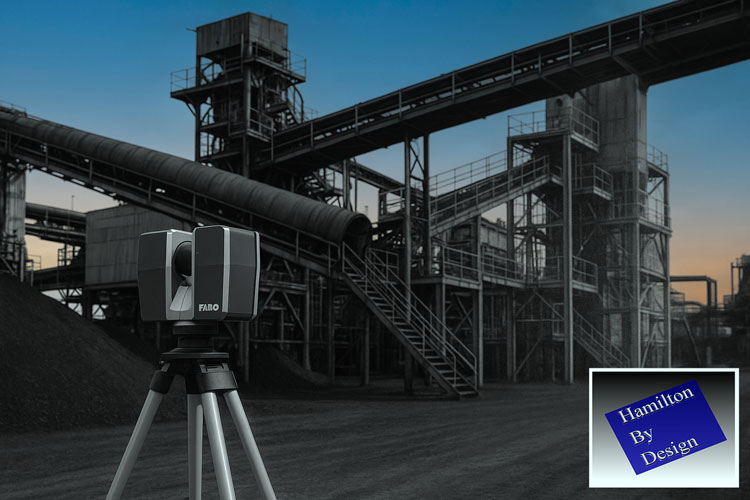
FARO 3D laser scanner set up on a tripod capturing an industrial plant for LiDAR scanning and digital modelling, with Hamilton By Design branding in the corner.

Unlocking Accuracy, Safety and Efficiency for Critical Infrastructure

The Hunter Valley is home to some of Australiaโ€™s most significant power generation assets. These power stations โ€” many of which have operated for decades โ€” supply energy to mining operations, manufacturing facilities, regional communities and industries throughout New South Wales. As these plants age and undergo continual maintenance, upgrades and redevelopment, the importance of accurate, reliable and safe measurement methods becomes increasingly critical.

Traditionally, engineers and maintenance teams have relied on manual measurements, outdated drawings or partial documentation to plan upgrades or execute shutdown work. But in complex, congested and ageing plant environments, this introduces risks, delays and expensive rework.

This is why 3D LiDAR scanning in Hunter Valley power stations has emerged as one of the most valuable tools for modern asset management, engineering and maintenance planning. LiDAR provides a millimetre-accurate digital snapshot of real-world conditions, enabling smarter, safer and more predictable project outcomes.

This article explores the benefits, applications, and pros and cons of 3D LiDAR scanning and explains why Hunter Valley power stations stand to gain significantly from adopting this technology.


Why Power Stations Need Accurate As-Built Data

Power stations are among the most complex industrial facilities in Australia. Over decades of operation, they experience:

  • Structural deformation
  • Settlement and movement
  • Corrosion and wear
  • Numerous undocumented modifications
  • Equipment realignments
  • Tight access restrictions
  • Ageing steelwork and infrastructure

In these environments, original construction drawings rarely match reality. As a result, engineers planning upgrades, shutdowns or replacements often face:

  • Inaccurate interface points
  • Misaligned structures
  • Unpredictable installation conditions
  • High rework costs
  • Safety delays
  • Poor shutdown timing

3D LiDAR scanning offers a precise, digital representation of the site, giving engineers the confidence they need to design upgrades accurately and eliminate guesswork.


The Benefits of 3D LiDAR Scanning for Hunter Valley Power Stations

1. Unmatched Measurement Accuracy for Complex Assets

A power station contains thousands of interconnected components:

  • Boilers
  • Turbines
  • Structural platforms
  • Pipe networks
  • Pressure vessels
  • Ducting systems
  • Conveyor bridges
  • Cooling towers
  • Electrical cabinets
  • Steel supports

Capturing these geometries manually is nearly impossible.

3D LiDAR scanning provides millimetre-level accuracy across enormous plant areas, allowing engineers to:

  • Create precise as-built models
  • Validate structural alignment
  • Check pipe routes and clearances
  • Identify interferences
  • Understand deformation over time
  • Design new works based on real geometry

This level of data is invaluable for maintaining safe and compliant power-generation operations.


2. Major Safety Improvements

Power stations present significant safety risks:

  • High-voltage environments
  • Confined spaces
  • Elevated platforms
  • Hot surfaces
  • Restricted access
  • Operational machinery

Manual measurement often requires workers to climb structures, enter hazardous zones or physically reach difficult areas.

3D LiDAR scanning dramatically reduces risk by:

  • Capturing data from safe distances
  • Eliminating the need for repeated access
  • Reducing time in hazardous zones
  • Minimising interaction with live equipment

For Hunter Valley power stations with strict safety requirements, this is a major benefit.


3. Reduced Shutdown Duration and Cost

Shutdowns are among the most expensive events for power-generation facilities. Every hour counts.

With 3D LiDAR scanning:

  • Engineers define accurate scopes before shutdown
  • Fabricators receive precise data and cut steel correctly
  • Digital fit checks identify issues early
  • Installation is faster and smoother
  • Delays due to bad measurements are eliminated

This leads to shorter outages, safer work and fewer unexpected problems.


4. Supports Engineering, Design and Structural Integrity Works

Power stations frequently require:

  • Boiler upgrades
  • Turbine area modifications
  • Ducting and flue replacements
  • Pipework rerouting
  • Cooling-system upgrades
  • Structural strengthening
  • Platform and walkway replacements
  • Electrical equipment relocations

All of these tasks depend on accurate geometry.

3D LiDAR scanning supports engineering teams by providing:

  • Reference geometry for load calculations
  • Verified connection points
  • True alignment data
  • Accurate slope and deflection measurements
  • High-resolution drawings and 3D models

This ensures engineering decisions are made using verified, real-world information.


5. Perfect for Brownfield and Congested Environments

Power stations are some of the most complex brownfield assets in the industrial landscape. They contain layers of modifications, years of retrofits and areas where access is extremely limited.

3D LiDAR scanning excels at capturing:

  • Tight clearances
  • Overlapping structures
  • Equipment clusters
  • Interconnected pipes
  • Hard-to-reach surfaces

This makes it ideal for planning:

  • New platforms
  • Replacement ducting
  • Pipe realignments
  • Structural upgrades
  • Asset lifecycle extensions

The result: fewer surprises during installation.


6. Better Collaboration Between Teams

Power stations typically involve:

  • Maintenance teams
  • OEMs
  • Engineering consultants
  • Fabricators
  • Shutdown managers
  • Safety personnel
  • Project delivery teams

3D LiDAR scanning enables everyone to work from the same digital truth.

Point clouds and 3D models allow:

  • Remote site understanding
  • Clear communication
  • Digital reviews instead of repeated site visits
  • Improved planning alignment

For Hunter Valley projects involving multiple contractors, this significantly boosts performance.


Pros and Cons of 3D LiDAR Scanning

Like any technology, LiDAR has strengths and limitations. Understanding both helps power station operators make informed decisions.


Pros

โœ” Extremely high accuracy

Millimetre precision for large and complex areas.

Fast data capture

Reduces time spent in hazardous areas.

Clear visibility of congested spaces

Captures geometry that traditional methods miss.

Enhances engineering confidence

Designers base work on verified conditions.

Reduces installation rework

Fabrication matches the real site exactly.

Supports digital engineering workflows

Perfect input for CAD, BIM, simulation and modelling.

Safer measurement practices

Less climbing, reaching and confined-space entry.


Cons

Requires skilled interpretation

Point cloud data must be processed by trained technicians or engineers.

Large file sizes

High-resolution scans require strong computing resources.

Reflective or transparent surfaces can create challenges

Requires technique or matte marking in some areas.

Upfront cost may seem higher

But it eliminates far greater downstream costs in rework and shutdown delays.

Despite these considerations, LiDAR scanning remains the most cost-effective measurement tool for power station environments.


Why Hunter Valley Power Stations Benefit More Than Most

The Hunter Valley industrial landscape presents unique challenges:

  • Ageing energy infrastructure
  • Multiple retrofits and undocumented modifications
  • Extremely tight maintenance windows
  • Harsh environmental conditions
  • Congested structures with difficult access
  • High safety standards
  • Heavy reliance on local fabrication accuracy

3D LiDAR scanning Hunter Valley power stations provides the one thing these facilities need most: confidence.

Confidence in measurements.
Confidence in fabrication.
Confidence during shutdowns.
Confidence in engineering decisions.
Confidence in safety performance.

Few regions stand to gain more from LiDAR than the Hunter.


Hamilton By Design: Supporting Hunter Valley Power Stations with Advanced LiDAR Solutions

Hamilton By Design brings together:

  • Engineering expertise
  • On-site scanning capability
  • CAD modelling and drafting
  • Fabrication-ready documentation
  • Digital fit-checking and clash detection
  • Mechanical and structural design experience

We understand the complex realities of power-station environments, and we deliver precise, reliable and engineering-ready digital data for:

  • Boiler upgrades
  • Turbine hall modifications
  • Structural replacements
  • Pipe rerouting
  • Platform and access upgrades
  • Ducting and flue modifications
  • Cooling tower projects
  • Balance-of-plant improvements

Every model, point cloud and drawing is produced with installation success and fabrication accuracy in mind.


Conclusion: 3D LiDAR Scanning is the New Standard for Hunter Valley Power Stations

As the Hunter Valley transitions into a future of renewable generation, asset extension and industrial redevelopment, 3D LiDAR scanning stands out as a technology that delivers real, immediate value.

It improves safety.
It increases accuracy.
It reduces rework.
It enables better engineering.
It shortens shutdowns.
It lowers project risk.

Power stations across the Hunter Valley rely on critical, ageing and highly complex infrastructure โ€” infrastructure that demands accurate, reliable digital measurement.

Hamilton By Design is proud to support the region with advanced laser scanning technologies that empower engineers, fabricators, supervisors and project managers to work smarter, safer and more efficiently.

Hamilton By Design logo displayed on a blue tilted rectangle with a grey gradient background

3D Laser Scanning

Hunter Valley Laser Scanning: Transforming Engineering Accuracy Across Mining, Manufacturing and Infrastructure

3D Laser Scanning in Singleton and the Hunter: Delivering Accuracy for Mining, Manufacturing and Industrial Projects

Laser Scanning Hunter Valley: Delivering Engineering-Grade Accuracy for Mining, Manufacturing and Industrial Projects

Our clients

Name
You would like to:

Hunter Valley Laser Scanning: Transforming Engineering Accuracy Across Mining, Manufacturing and Infrastructure

The Hunter Valley stands as one of Australiaโ€™s most important industrial regions, supporting mining, energy, heavy fabrication, processing, manufacturing and major commercial development. Across this diverse landscape, one challenge consistently affects project performance: the need for accurate, reliable and up-to-date site information.

For engineers, maintenance planners, fabricators and construction managers, relying on outdated drawings or manual tape measurements introduces unnecessary risk. Plants evolve over decades. Structures deform. Equipment shifts alignment. Site conditions rarely match legacy documentation.

This is why Hunter Valley laser scanning has become essential. The ability to capture millimetre-accurate as-built data is transforming how projects are planned, designed and executedโ€”reducing cost, increasing safety and ensuring that every component fits the first time.

Hamilton By Design is proud to support the region with advanced, engineering-grade laser scanning services designed specifically for heavy industry and complex brownfield environments. This article explores how laser scanning works, why the Hunter Valley relies on it, and how it strengthens everything from shutdown planning to fabrication accuracy.


Why the Hunter Valley Depends on Laser Scanning

The Hunterโ€™s operating assets are large, complex and often decades old. Across mines, processing facilities, power stations, port handling infrastructure and manufacturing plants, very few sites match their original drawings.

Typical challenges include:

  • Numerous undocumented modifications
  • Wear, deformation and structural movement
  • Limited or unreliable legacy drawings
  • Tight shutdown windows
  • Hazardous access for manual measuring
  • Brownfield constraints that complicate upgrades

These conditions make traditional measurement methods slow, risky and error-prone. A wrong measurement in a transfer tower, a misaligned conveyor frame, or an incorrect chute dimension can create thousands of dollars in rework and delay.

Hunter Valley laser scanning eliminates these risks completely by capturing the site exactly as it exists todayโ€”not as it was decades ago.


How Hunter Valley Laser Scanning Works

Laser scanning uses high-precision LiDAR technology to record millions of data points across structures, equipment and plant areas. These points combine to create a three-dimensional โ€œpoint cloudโ€โ€”a highly accurate digital representation of real-world conditions.

The Hamilton By Design workflow typically includes:

1. On-Site Reality Capture

Our laser scanner is deployed across key vantage points to capture the full environment, including:

  • Structural steel
  • Conveyors and walkways
  • Chutes, bins, hoppers and material-handling equipment
  • Pipework networks
  • Equipment footprints
  • Building geometry
  • Confined or elevated spaces

The capture process is fast, safe and non-intrusiveโ€”ideal for operational sites.

2. Registration & Point Cloud Processing

Data from each scan position is aligned into a complete, unified point cloud representing the entire area with millimetre accuracy.

3. Modelling & Analysis

From the point cloud we can create:

  • True as-built CAD models
  • Structural layouts
  • Mechanical assemblies
  • Pipework geometry
  • Digital templates for fabrication
  • Probe measurements for checking clearances and alignment

4. Engineering & Fabrication Support

Once converted into a usable engineering environment, the data supports:

  • Shutdown planning
  • Structural redesign
  • Chute and conveyor optimisation
  • Digital fit checks
  • Fabrication drawings
  • Reverse engineering of worn components

The result is a reliable, verified understanding of your siteโ€”available digitally to your entire project team.


Where Hunter Valley Laser Scanning Delivers the Most Value

The unique industrial profile of the Hunter Valley means laser scanning is useful across a broad range of applications. Here are the areas where it delivers the highest impact.


Mining & CHPP Operations

Mining infrastructure in the region is constantly under pressure to operate safely and efficiently. For CHPP upgrades, conveyor realignments, chute replacements and structural modifications, laser scanning provides:

  • True as-built dimensions
  • Clearances and offset measurements
  • Verified alignment data
  • Digital templates for safe, accurate fabrication
  • Reduced shutdown duration
  • Fewer fitment issues onsite

Upgrades become predictable instead of stressful, and fabricators can manufacture with confidence.


Processing Plants & Material-Handling Systems

Transfer towers, bin replacements, screening arrangements and crusher areas often contain congested layouts with poor access. Manual measurement is difficult and unsafe.

Laser scanning solves this by allowing the entire environment to be measured remotely. This supports:

  • Clash prevention
  • Redesign of worn systems
  • Smoother installation
  • Accurate interface points
  • Digital verification before fabrication

Heavy Fabrication & Workshop Integration

Fabricators across the Hunter Valley consistently face the same problem: components not fitting onsite due to bad measurements.

Hunter Valley laser scanning ensures:

  • Perfectly matched bolt hole patterns
  • Correct flange alignment
  • True geometry of mating parts
  • Accurate templates for bending, rolling and welding
  • Reduced rework and scrap

It is a direct cost saver for both workshops and clients.


Energy, Power Stations & Utilities

Power stations and energy sites require sophisticated maintenance planning. Laser scanning helps engineers:

  • Document aging structures
  • Compare deformation over time
  • Plan retrofits and upgrades
  • Replace platforms, pipework and supports with confidence
  • Identify clashes before installation

This improves compliance and reduces risk.


Commercial, Industrial and Infrastructure Projects

Beyond heavy industry, the Hunter region features growing precincts of commercial and industrial developments. Laser scanning supports:

  • Renovations and extensions
  • As-built documentation
  • BIM workflows
  • Accurate drafting and facility mapping

It ensures architects, builders and property owners are working with verified building conditions instead of assumptions.


Why Choose Hamilton By Design for Hunter Valley Laser Scanning?

Hamilton By Design is not simply a scanning serviceโ€”we are engineers first. This is what sets our work apart.

Our Engineering Mindset

We understand plant design, structural requirements, chute behaviour, mechanical layouts and fabrication constraints. This allows us to interpret the point cloud with engineering intent, not just technical detail.

Millimetre Accuracy

Our laser scanning systems deliver the precision required for heavy industry, ensuring designs and fabrication match the real-world geometry exactly.

Complete Digital Workflow

We provide:

  • Point clouds
  • 3D models
  • General arrangement drawings
  • Fabrication drawings
  • DXFs and model exports

Our deliverables integrate seamlessly with fabrication shops and engineering teams across the Hunter.

Local Expertise

We understand the regionโ€™s industries, shutdown pressures, safety expectations and operational challenges.

Confidence Before Steel Is Cut

Every design can be checked digitally for clash, alignment and fitmentโ€”reducing uncertainty and rework.


The Future of Engineering in the Hunter Valley

As sites age and operational demands increase, precise as-built information is becoming essential. Hunter Valley laser scanning is now the standard for safe, efficient and accurate engineering work across the region.

Whether you are replacing structural steel, redesigning a chute, installing new conveyors, upgrading a plant room or fabricating new components, laser scanning gives your project the foundation it needs for success.


Work With Hamilton By Design

Hamilton By Design is ready to support your next project with high-accuracy Hunter Valley laser scanning, modelling and drafting services.

Contact our team to discuss:

  • Your scanning requirements
  • Project constraints
  • Fabrication goals
  • Engineering support needs

We will help you build a digital foundation that improves safety, reduces downtime and ensures every component fits the first time.

Hamilton By Design logo displayed on a blue tilted rectangle with a grey gradient background

3D Scanning in The Hunter Valley

Enhancing Plant Efficiency with Best Maintenance Practices

3D Point Clouds Are a Game-Changer for Your Projects

Lessons from a Landmark Case