3-D Lidar Scanning Hunter Valley: Transforming Industrial Projects with Accuracy, Safety and Engineering Confidence

The Hunter Valley is one of Australiaโ€™s most strategically important industrial regions. It supports large mining operations, CHPP facilities, fabrication workshops, energy infrastructure, civil projects and heavy manufacturing. These industries depend on precision, safety and efficient project delivery โ€” yet most operate in aging brownfield environments where original drawings are outdated, equipment has shifted over time, and modifications have occurred for decades without accurate documentation.

In environments like these, traditional measuring methods often fail to provide the precision required for confident engineering and fabrication. This is why 3-D Lidar scanning in the Hunter Valley has become a critical tool for engineers, supervisors, fabricators and project managers. It captures the real-world site conditions with millimetre accuracy, creating a digital foundation for smarter, safer and more efficient project execution.

This article explores the benefits, pros and cons of 3-D Lidar scanning, and explains why the Hunter Valley is uniquely positioned to gain massive value from this technology.


Understanding 3-D Lidar Scanning

3-D Lidar (Light Detection and Ranging) scanning is a non-contact measurement technology that uses lasers to capture millions of points in seconds. The scanner emits laser pulses and measures the return time to determine distances, building a dense โ€œpoint cloudโ€ of the environment.

This point cloud is a precise 3-D representation of:

  • Structural steel
  • Conveyors and transfer towers
  • Chutes, bins and hoppers
  • Tanks, pipework and mechanical equipment
  • Platforms, walkways and buildings
  • Industrial plant rooms and process areas

Once captured, this digital data becomes the foundation for engineering models, fabrication drawings, digital fit checks and project planning.


Why 3-D Lidar Scanning Matters in the Hunter Valley

The Hunter Valley contains some of the most complex and heavily used industrial assets in Australia. Many facilities have been in operation for decades, and almost all have undergone modifications, expansions and repairs. Over time, the real-world geometry diverges significantly from the old drawings stored on paper or outdated CAD files.

This creates major challenges:

  • Measurements taken by hand are inaccurate or unsafe
  • Shutdown windows are extremely tight
  • Fabricators rely on precise data to avoid costly rework
  • Engineers require true geometry for load calculations and interface design
  • Supervisors need reliable information to scope replacement work

3-D Lidar scanning provides a millimetre-accurate representation of what exists onsite, removing guesswork and supporting engineering best practice.


The Benefits of 3-D Lidar Scanning in the Hunter Valley

1. Millimetre Accuracy Improves Engineering Outcomes

In heavy industrial environments, small measurement errors can create large, expensive problems. Structural misalignment, worn steel, bent frames, sagging conveyors and distorted chutes are all common in brownfield plants.

3-D Lidar scanning captures:

  • True dimensions
  • Variations from design
  • Deformation and misalignment
  • Complex curved surfaces
  • Differences caused by wear and tear

Engineers design with confidence because the digital model reflects actual site conditions โ€” not assumptions.


2. Huge Reduction in Rework and Fabrication Errors

Fabricators in Singleton, Muswellbrook, Rutherford, Tomago and throughout the Hunter region rely on accurate measurements to ensure steel and mechanical components fit the first time.

Without accurate data, common fabrication issues include:

  • Bolt holes misaligned
  • Steel members too short or too long
  • Chutes or hoppers not matching openings
  • Pipe spools missing clearances
  • Platforms not sitting square

These problems lead to:

  • Onsite cutting and welding
  • Delayed installations
  • Extended shutdown time
  • Additional crane costs
  • Extra labour expenses

3-D Lidar scanning eliminates these risks, ensuring every component is manufactured to match the as-built site geometry.


3. Improved Shutdown Planning and Faster Execution

Mining and CHPP shutdowns in the Hunter Valley operate under strict time constraints. Any unexpected measurement issue can cause delays affecting production and safety.

With 3-D Lidar scanning:

  • Scope is defined accurately before shutdown
  • Fabrication is completed correctly the first time
  • Digital fit checks identify problems early
  • Installation is faster and safer

Shutdowns become more predictable and efficient.


4. Massive Safety Improvements

Manual measurement often requires workers to:

  • Enter confined spaces
  • Access heights
  • Work around operating equipment
  • Lean over conveyors
  • Navigate dirty, uneven or hazardous areas

3-D Lidar scanning minimises physical access requirements. Technicians can scan large areas from safe positions, reducing:

  • Fall risks
  • Pinch-point exposure
  • Hot-work hazards
  • Time on elevated structures

This is a major benefit for HSE and maintenance teams across the Hunter Valley.


5. Better Communication, Collaboration and Visualisation

Point clouds and 3-D models make it easier for teams to understand the project environment, especially when stakeholders are spread across:

  • Mine sites
  • Fabrication workshops
  • Design offices
  • Engineering consultancies
  • Projects teams and OEM vendors

Digital data allows remote review, reducing the need for repeated site visits and improving decision-making.


6. Ideal for Brownfield Upgrades and Congested Areas

Many Hunter Valley facilities are decades old, with layers of modifications. Clearances are tight, geometry is irregular, and equipment alignment has changed over the years.

3-D Lidar scanning is perfect for:

  • Transfer towers with layered steel
  • Congested plant rooms
  • Pipe networks
  • Stockpile conveyors
  • Old building footprints
  • Complex structural junctions

The scanner captures the complexity instantly and precisely.
Hamilton By Design logo displayed on a blue tilted rectangle with a grey gradient background

Pros and Cons of 3-D Lidar Scanning

While 3-D Lidar scanning is a game-changing tool, it is important to understand both the advantages and limitations.

3D Scanning in The Hunter Valley

3D Laser Scanning

Hunter Valley Laser Scanning: Transforming Engineering Accuracy Across Mining, Manufacturing and Infrastructure

3D Laser Scanning in Singleton and the Hunter: Delivering Accuracy for Mining, Manufacturing and Industrial Projects

Laser Scanning Hunter Valley: Delivering Engineering-Grade Accuracy for Mining, Manufacturing and Industrial Projects

Name
You would like to:

Why 3D Point Clouds + Expert Modelers Are a Game-Changer for Your Projects

Infographic illustrating the 3D project data workflow, showing LiDAR scanners and drones capturing millions of data points, a designer modelling on a computer, and project teams validating accurate 3D data, highlighting benefits such as speed, accuracy, cost savings and project success.

Level Up your 3D Scans

In todayโ€™s world, accuracy and efficiency can make or break a project. Whether youโ€™re working in architecture, construction, engineering, or product design, you need reliable data โ€” and you need it fast. Thatโ€™s where 3D point clouds come in.

But thereโ€™s an important catch: not all scans are created equal. The difference between an average scan and a great one often comes down to the person behind the scanner. Having someone who understands 3D modeling take the scans can dramatically improve your projectโ€™s accuracy, reliability, and overall success.

Letโ€™s break down why.


The Power of 3D Point Clouds

Point clouds are essentially millions of tiny data points that capture the shape of an object, room, or entire site. Together, they create a highly detailed digital snapshot of the real world.

Hereโ€™s why this matters:

  • Precision you can trust โ€“ Point clouds deliver incredibly detailed measurements, capturing even the smallest curves and angles.
  • Nothing gets missed โ€“ Multiple scan angles ensure a full, 360ยฐ view of your site or object.
  • Speed and efficiency โ€“ What used to take hours (or days) with manual measurements can be captured in minutes.
  • Built-in context โ€“ Youโ€™re not just getting numbers; youโ€™re getting a complete digital environment to work inside.
  • Future-proof data โ€“ Once you have a scan, you have a permanent record of your space, ready to use months or years later.

From clash detection to as-built verification, point clouds save time, reduce errors, and make collaboration across teams smoother than ever.


Why the Person Taking the Scan Matters

While technology is powerful, experience is what makes the results reliable. Having a skilled 3D modeler operate the scanner can be the difference between a good project and a great one.

Hereโ€™s why an expert makes all the difference:

  • They know what matters โ€“ A modeler understands which details are critical for your project and ensures theyโ€™re captured.
  • Fewer gaps, fewer surprises โ€“ Experienced pros know how to plan scan positions to cover every angle and avoid blind spots.
  • Cleaner, more accurate data โ€“ They reduce common issues like noise, misalignment, or missing sections that can throw off your model.
  • Time saved, headaches avoided โ€“ No one wants to redo a scan halfway through a project. A professional ensures you get it right the first time.
  • Confidence from start to finish โ€“ When you know your model is accurate, you can move forward with design and construction decisions without second-guessing.

In short: a great scanner operator doesnโ€™t just deliver data โ€” they deliver peace of mind.


The Bottom Line

3D point clouds are already transforming how projects are planned and delivered. But pairing them with an experienced 3D modeler takes things to the next level.

Youโ€™ll get better data, faster turnarounds, and a far lower risk of costly mistakes. And when your goal is to deliver projects on time, on budget, and with zero surprises, thatโ€™s an edge you canโ€™t afford to miss.

Hamilton By Design logo displayed on a blue tilted rectangle with a grey gradient background

3D Modelling | 3D Scanning | Point Cloud Scanning

Maximising Uptime at Transfer Points: How Hamilton By Design Optimises Chutes, Hoppers, and Conveyors for the Mining Industry

In the mining industry, system uptime isnโ€™t just a goalโ€”itโ€™s a necessity. Transfer points such as chutes, hoppers, and conveyors are often the most failure-prone components in processing plants, especially in high-wear environments like HPGR (High Pressure Grinding Rolls) circuits. Abrasive ores, heavy impact, fines accumulation, and moisture can all combine to reduce flow efficiency, damage components, and drive up maintenance costs.

At Hamilton By Design, we help mining clients minimise downtime and extend the life of their material handling systems by applying advanced 3D scanning, DEM simulation, smart material selection, and modular design strategies. This ensures that transfer points operate at peak efficiencyโ€”day in, day out.

Hereโ€™s how we do it:

Optimised Flow with DEM-Based Chute & Hopper Design

Flow blockages and misaligned velocities are among the biggest contributors to transfer point failure in the mining industry. Thatโ€™s why we use Discrete Element Method (DEM) simulations to model bulk material flow through chutes, hoppers, and transfer transitions.

Through DEM, we can simulate how different oresโ€”ranging from dry coarse rock to sticky finesโ€”move, compact, and impact structures. This allows us to tailor chute geometry, outlet angles, and flow paths in advance, helping:

  • Prevent material buildup or arching inside hoppers and chutes
  • Align material velocity with the conveyor belt speed using hood & spoon or trumpet-shaped designs
  • Reduce wear by managing trajectory and impact points

Optimised flow equals fewer shutdowns, longer equipment life, and better plant throughput.

Wear-Resistant Liners & Material Engineering

Not all wear is the sameโ€”and neither are the materials we use to combat it. By studying the abrasion and impact zones in your chute and hopper systems, we strategically apply wear liners suited to each application.

Our engineering team selects from:

  • AR (Abrasion-Resistant) steels for high-wear areas
  • Ceramic liners in fines-rich or ultra-abrasive streams
  • Rubber liners to absorb shock and reduce noise

This approach reduces liner replacement frequency, improves operational safety, and lowers the risk of unplanned shutdowns at key transfer points.

3. Dust and Spillage Control: Cleaner, Safer Operation

Dust and spillage around conveyors and transfer chutes can lead to extensive cleanup time, increased maintenance, and health hazards. At Hamilton By Design, we treat this as a core design challenge.

We design chutes and hoppers with:

  • Tight flange seals at interface points
  • Enclosed transitions that contain dust at the source
  • Controlled discharge points to reduce turbulent material drops

This reduces environmental risk and contributes to more consistent plant performanceโ€”especially in confined or enclosed processing facilities in the mining industry.

4. Modular & Accessible Designs for Faster Maintenance

When liners or components need replacement, every minute counts. That’s why our chute and hopper systems are built with modular sectionsโ€”each engineered for fast removal and reinstallation.

Key maintenance-driven design features include:

  • Bolt-on panels or slide-in liner segments
  • Accessible inspection doors for safe visual checks
  • Lightweight modular components for easy handling

These details reduce labour time, enhance safety, and keep your plant online longerโ€”especially critical in HPGR zones where throughput is non-stop.

5. Precision 3D Scanning & 3D Modelling for Retrofit Accuracy

One of the most powerful tools we use is 3D scanning. In retrofit or brownfield projects, physical measurements can be inaccurate or outdated. We solve this by conducting detailed laser scans that generate accurate point cloud dataโ€”a precise digital twin of your plant environment.

That data is then transformed into clean 3D CAD models, which we use to:

  • Design retrofits that precisely match existing structure
  • Identify interferences or fit-up clashes before fabrication
  • Reduce install time by ensuring right-first-time fits

This scan-to-CAD workflow dramatically reduces rework and error margins during installation, saving time and cost during shutdown windows.

Real-World Application: HPGR & Minerals Transfer Systems

In HPGR-based circuits, transfer points between crushers, screens, and conveyors experience high rates of wear, dust generation, and blockagesโ€”particularly where moisture-rich fines are present.

Hereโ€™s how Hamilton By Designโ€™s methodology addresses these pain points:

  • DEM-based flow modelling ensures the HPGR discharge flows cleanly into chutes and onto conveyors without buildup.
  • Hood/spoon geometries help track material to belt velocityโ€”minimising belt wear and reducing misalignment.
  • Strategic liner selection extends life in critical wear zones under extreme abrasion.
  • Modular chute designs allow for fast liner swap-outs without major disassembly.
  • 3D scanning & CAD design ensures new chute sections fit seamlessly into existing HPGR and conveyor frameworks.

By designing smarter transfer systems with these technologies, we enable operators to reduce downtime, increase liner life, and protect critical assets in high-throughput mining applications.

Uptime Benefits at a Glance

Performance AreaImpact on Mining Operations
Smooth bulk material flowFewer clogs, improved throughput, longer operating cycles
Velocity-matched dischargeLower conveyor belt wear and downtime
Robust wear protectionLonger life, fewer liner replacements
Modular designFaster maintenance turnarounds during scheduled shutdowns
3D scanning & CAD integrationPrecise fit, reduced installation time, fewer errors during retrofit

Final Word: Engineering That Keeps the Mining Industry Moving

At Hamilton By Design, we combine mechanical engineering expertise with 3D modelling, material flow simulation, and smart fabrication practices to deliver high-performance chute, hopper, and transfer point systems tailored for the mining industry.

Whether youโ€™re dealing with a problematic HPGR discharge, spillage issues, or planning a brownfield upgrade, our integrated design process delivers results that improve reliability, extend service life, and protect uptime where it matters most.

Looking to retrofit or upgrade transfer systems at your site?
Letโ€™s talk. We bring together 3D scanning, DEM modelling, practical engineering, and proven reliability to deliver systems that workโ€”from concept through to install.

Reach out at contact@hamiltonbydesign.com.au

#3DScanning #MiningIndustry #Chutes #Hoppers #TransferPoints #3DModelling #MechanicalEngineering #HPGR #PlantUptime #HamiltonByDesign

Structural Drafting | Mechanical Drafting | 3D Laser Scanning

Mechanical Engineering

Conveyor Drives in Underground Coal Mines

Operation, Design Challenges, and the Role of Direct Drive Units
In the highly demanding and regulated world of underground coal mining, the reliable and efficient transport of coal from the mining face to the surface is critical. Among the many systems involved in this process, conveyor drives play a pivotal role. These systems are tasked with powering conveyor belts that haul coal over long distances through often confined and hazardous environments. A vital part of this setup includes the use of direct drive units (DDUs), particularly in low-profile applications such as underground operations.

This document explores the functionality of conveyor drives in underground coal mines, the unique challenges faced in their operation, the complexities design engineers encounter in their development, and the concept of the phase “outbye”โ€”a term widely used in underground mining to describe the direction and location of operations.


Conveyor Drives in Underground Coal Mining

A conveyor drive is a mechanical system that powers conveyor belts used to transport materials, in this case, coal. In underground mines, these conveyor belts often run for several kilometers, extending from the coal face (the area where coal is actively being cut and mined) to the shaft or drift that brings the coal to the surface.

The drive systems can be located at several points along the belt:

  • Head drive: Located at the discharge end of the conveyor.
  • Tail drive: Located at the loading end.
  • Mid-belt drives: Installed partway along long conveyors to help manage torque and reduce belt tension.

In the context of underground coal mines, the term “conveyor drive” is generally associated with the head or tail drive unit, which powers the movement of the belt.


Role of Direct Drive Units (DDUs)

Direct Drive Units are electric motors directly coupled to the drive shaft of the conveyor pulley, eliminating the need for intermediary gearboxes or belt drives. These units are especially advantageous in underground mining due to their compact design, reliability, and reduced maintenance.

Benefits of DDUs in Underground Coal Mines

  1. Compact Size: Ideal for low-profile mining applications where vertical space is restricted.
  2. Energy Efficiency: With fewer mechanical components, DDUs offer less friction and mechanical losses.
  3. Lower Maintenance: No gearboxes or belt couplings to service.
  4. Increased Reliability: Fewer parts mean fewer failure points.
  5. Improved Safety: The enclosed design minimizes exposure to moving parts and flammable materials.

Australian Mining, Hamilton By Design, Mechanical Engineering

Operational Challenges of Conveyor Drives Underground

Underground coal mining presents a set of challenges not commonly encountered in surface operations. Conveyor drives, as the lifeblood of coal transportation, are central to these operational difficulties.

1. Space Constraints

Underground roadways are typically narrow and low, especially in coal seams with minimal thickness. This limitation forces the use of low-profile conveyor systems, which in turn limits the size and configuration of the drive units.

2. Dust and Moisture Exposure

Coal dust is highly abrasive and, in certain concentrations, explosive. Moisture from groundwater or the mining process further complicates the reliability of drive components. Ensuring DDUs are properly sealed and rated for these harsh conditions is critical.

3. Heat and Ventilation

Electric motors generate heat, which must be dissipated. However, underground mines have limited ventilation. Overheating can be a major issue, requiring cooling systems or specialized motor enclosures.

4. Explosion-Proof Requirements

Due to the potential presence of methane gas and coal dust, all electrical equipment, including conveyor drives, must comply with stringent explosion-proof standards (e.g., IECEx or ATEX ratings).

5. Long Haul Distances

Modern coal faces can be several kilometers from the shaft bottom. Transporting coal over long distances places mechanical stress on conveyor belts and drive units, increasing the risk of failure if not properly engineered.

6. Maintenance Access

Accessing conveyor drives for inspection or maintenance can be difficult in tight underground environments. Failures that require replacement or repair can cause significant production delays.

7. Load Variability

The volume of coal being hauled can vary significantly during a shift, which places variable demands on the drive system. The control systems must be able to accommodate fluctuating loads without mechanical strain.


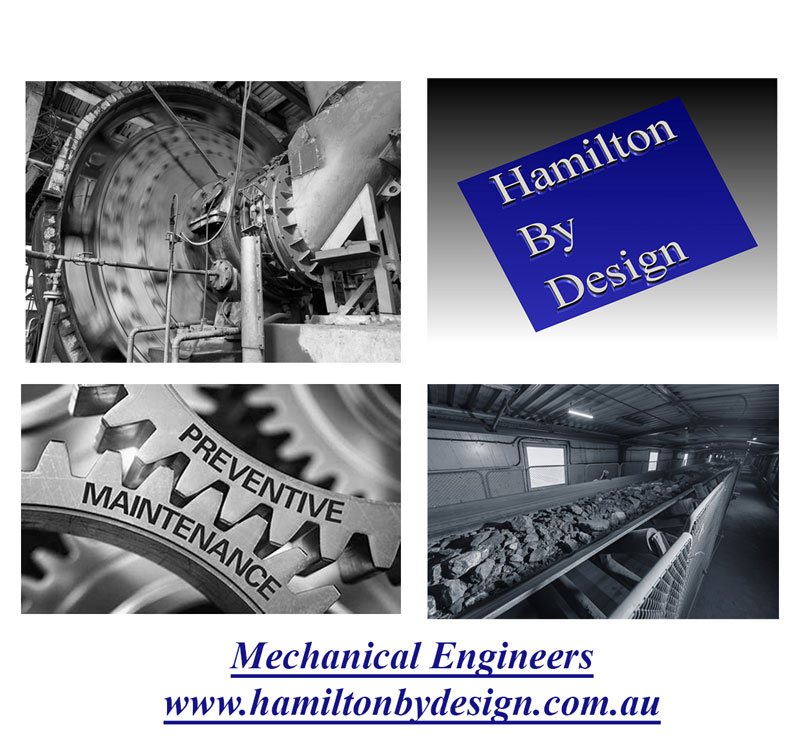
Hamilton By Design promotional graphic featuring industrial machinery imagesโ€”including a rotating mill, preventive maintenance gears, and a coal conveyorโ€”alongside the Hamilton By Design logo and the text โ€˜Mechanical Engineers โ€“ www.hamiltonbydesign.com.auโ€™.โ€

Engineering and Design Challenges

Design engineers are tasked with creating conveyor drive systems that are not only robust and efficient but also compact and compliant with mining regulations. Some of the key design challenges include:

1. System Integration in Confined Spaces

Engineering a system that fits into limited space while delivering the necessary power is a fundamental challenge. Direct drive units help address this by eliminating gearboxes, but the motor itself must still be sized correctly.

2. Material Selection

Materials used must be corrosion-resistant, non-sparking, and capable of withstanding vibration, dust ingress, and moisture. This often limits design options and increases costs.

3. Thermal Management

Ensuring that the drive units do not overheat requires careful thermal modeling and the use of heat-resistant components. In some cases, passive or active cooling systems are integrated.

4. Compliance with Standards

Designs must adhere to a host of mining and electrical standards for flameproof and intrinsically safe equipment. Certification processes can be lengthy and expensive.

5. Modularity and Transportability

Since access to underground sites is limited, equipment must be modular or transportable in pieces small enough to be moved through shafts or drifts. Assembling and commissioning underground adds another layer of complexity.

6. System Control and Monitoring

Advanced drives require smart control systems that can adjust to load demands, monitor for faults, and integrate with mine-wide automation systems. Designing these systems requires interdisciplinary expertise.

7. Redundancy and Reliability Engineering

System failure underground can halt production and pose safety risks. Engineers must design for redundancy and easy switch-over between drive systems when necessary.


Understanding the Term โ€œOutbyeโ€

In underground mining terminology, directionality is essential for communication and logistics. The terms โ€œinbyeโ€ and โ€œoutbyeโ€ are commonly used to describe relative directions underground.

What Does โ€œOutbyeโ€ Mean?

  • Outbye refers to the direction away from the coal face and toward the surface or the mine entrance.
  • Conversely, inbye means toward the coal face.

For example:

  • If a miner is walking from the coal face toward the conveyor belt transfer station, they are walking outbye.
  • If a service vehicle is heading toward the longwall face, it is moving inbye.

Relevance of โ€œOutbyeโ€ in Conveyor Systems

In conveyor operations:

  • The coal face is the inbye starting point.
  • The belt head drive and transfer points to the main conveyor system are located outbye.
  • Maintenance and service activities often take place outbye to avoid interfering with production at the face.

Understanding this term is critical for coordinating activities underground, as directions are often communicated using inbye and outbye references rather than compass points or distances.


Digital engineering graphic featuring a central robotic arm icon surrounded by futuristic interface elements, cloud and AI symbols, and motion-blurred technology backgrounds. The SolidWorks logo appears on the left and the Hamilton By Design logo on the right, representing advanced 3D modelling and digital engineering capabilities.

Innovations and Future Trends

The mining industry continues to evolve, and conveyor drive systems are no exception. Some of the emerging trends and technologies include:

1. Variable Speed Drives (VSDs)

VSDs allow precise control over motor speed and torque, improving efficiency and reducing mechanical stress. They are increasingly paired with direct drive units to optimize performance.

2. Condition Monitoring

Sensors embedded in motors and drive systems can provide real-time feedback on vibration, temperature, and load. Predictive maintenance models reduce downtime.

3. Permanent Magnet Motors

These motors offer higher efficiency and torque density compared to traditional induction motors, making them well-suited for space-constrained environments.

4. Automation and Remote Control

Fully integrated systems that allow operators to monitor and control conveyor drives from surface control rooms are becoming standard.

5. Modular, Plug-and-Play Designs

Future drive units are being designed with ease of installation and replacement in mind, enabling faster deployment and lower maintenance impact.


Conclusion

Conveyor drive systems in underground coal mining are vital to the continuous flow of material and, by extension, the productivity of the entire mining operation. The adoption of direct drive units is helping to meet the unique demands of underground environments by providing compact, reliable, and efficient power transmission solutions.

However, these systems are not without their challenges. From the operational constraints of underground environments to the rigorous demands placed on design engineers, the development and maintenance of these systems require specialized knowledge, innovative thinking, and strict adherence to safety standards.

Moreover, understanding mining-specific terminology such as “outbye” provides important context for the deployment and maintenance of conveyor systems. As technology continues to advance, we can expect to see more intelligent, adaptive, and efficient conveyor drive systems that are better suited to the evolving demands of underground coal mining.

#CoalMining #EngineeringSolutions #MechanicalEngineering #ConveyorSystems #MiningIndustry #UndergroundMining #AustralianEngineering #HamiltonByDesign

Hamilton By Design | Mechanical Drafting | Structural Drafting | 3-D Lidar Scanning

3D Laser Scanning and CAD Modelling Services | Hamilton By Design


There are two things weโ€™ve always believed at Hamilton By Design:

  1. Accuracy matters.
  2. If you can model it before you make it, do it.

Thatโ€™s why when the FARO Focus S70 hit the scene in 2017, we were early to the party โ€” not just because it was shiny and new (though it was), but because we knew it would change how we support our clients in mining, processing, and manufacturing environments.

The S70 didnโ€™t just give us a tool โ€” it gave us a superpower: the ability to see an entire site, down to the bolt heads and pipe supports, in full 3D before anyone picked up a wrench. Dust, heat, poor lighting โ€” no problem. With its IP54 rating and extended temperature range, this scanner thrives where other tools tap out.

And weโ€™ve been putting it to work ever since.

3D laser scan of mechanical plant

โ€œMeasure Twice, Cut Onceโ€ Just Got a Whole Lot More Real

Laser scanning means we no longer rely on outdated drawings, forgotten markups, or that sketch someone did on the back of a clipboard in 2004.

Weโ€™re capturing site geometry down to millimetres, mapping full plant rooms, structural steel, conveyors, tanks, ducts โ€” you name it. And the moment we leave site, weโ€™ve already got the data we need, registered and ready to drop into SolidWorks.

Which, by the way, weโ€™ve been using since 2001.

Yes โ€” long before CAD was cool, we were deep into SolidWorks building models, simulating loads, tweaking fit-ups, and designing smarter mechanical solutions for complex environments. Itโ€™s the other half of the story โ€” scan it, then model it, all in-house, all under one roof.

Safety by Design โ€“ Literally

Hereโ€™s the part people often overlook: 3D laser scanning isnโ€™t just about accuracy โ€” itโ€™s about safety.

Weโ€™ve worked across enough plants and mine sites to know that the real hazards are often the things you donโ€™t see in a drawing. Tight access ways. Awkward pipe routing. Obstructions waiting to drop something nasty when a shutdown rolls around.

By scanning and reviewing environments virtually, we can spot those risks early โ€” hazard identification before boots are even on the ground. We help clients:

  • Reduce time-on-site
  • Limit the number of field visits
  • Minimise exposure to high-risk zones
  • Plan safer shutdowns and installations

Thatโ€™s a big win in any plant or processing facility โ€” not just for compliance, but for peace of mind.

SolidWorks 3D Modelling
CAD model from site scan

From Point Cloud to Problem Solved

Since 2017, our scanning and modelling workflows have supported:

  • Brownfield upgrade projects
  • Reverse engineering of legacy components
  • Fabrication and installation validation
  • Creation of digital twins
  • Asset audits and documentation updates

And when you pair that with 24 years of SolidWorks expertise, you get more than just a pretty point cloud โ€” you get practical, buildable, fit-for-purpose engineering solutions backed by deep industry knowledge.


Thinking about your next project? Letโ€™s make it smarter from the start.

Weโ€™ll scan it, model it, and engineer it as we have been doing for decades โ€” with zero guesswork and full confidence.

๐Ÿ“ www.hamiltonbydesign.com.au


Mechanical Engineering | Structural Engineering

Mechanical Drafting | Structural Drafting

3D CAD Modelling | 3D Scanning

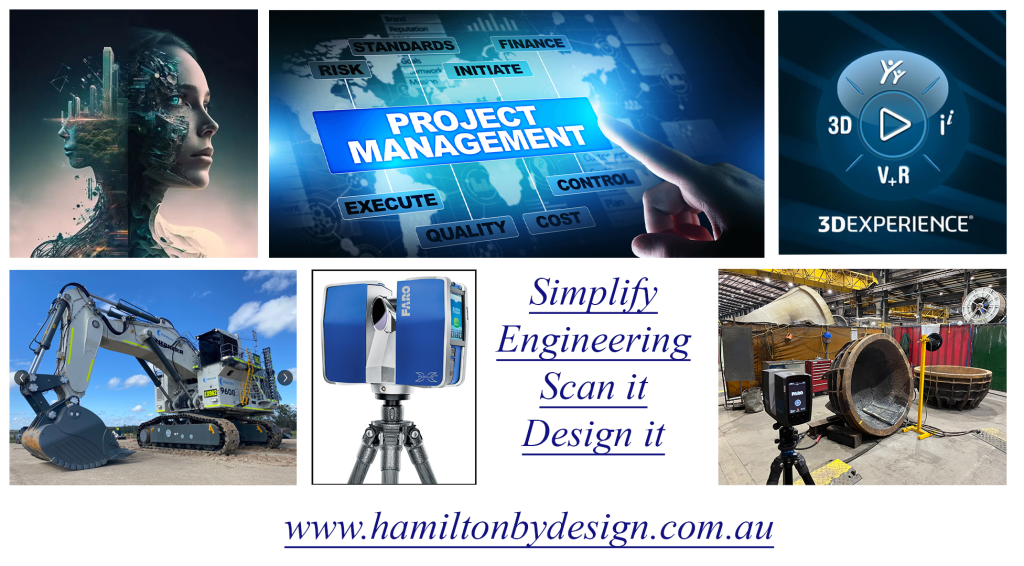
Simplify Engineering Scan it Design it

Hamilton By Design

3D Cad Design | 3D Modelling | 3D Laser Scanning | Local Scanning

3D Scanning Brisbane | 3D Scanning Perth | 3D Scanning Melbourne

Laser scanning Central Coast

Laser Scanning for Engineering

SolidWorks | SolidWorks CAD Design | SolidWorks Mechanical Design

SolidWorks Structural Design | SolidWorks Smart Structures